
Share this
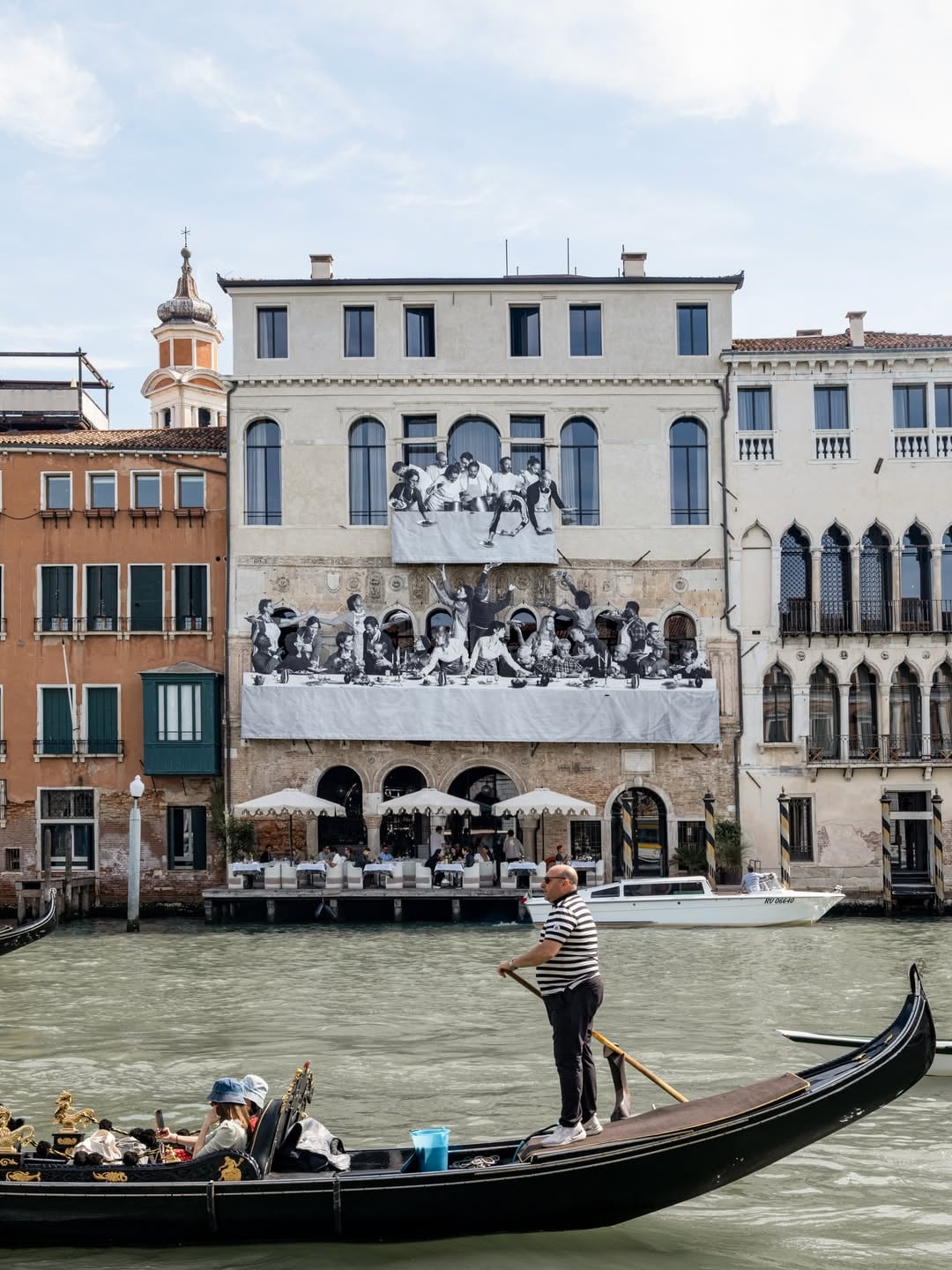
Il Gesto brings 176 real people onto the façade of Palazzo Ca’ da Mosto, transforming a Renaissance masterpiece into a contemporary story of care, dignity, and shared presence
Venice is a city where images rarely stay still. They travel across water, migrate between churches and museums, survive through copies, restorations, thefts, souvenirs, and projections. For his latest intervention, JR steps directly into that history by returning to one of the city’s most monumental paintings: Paolo Veronese’s The Wedding at Cana.
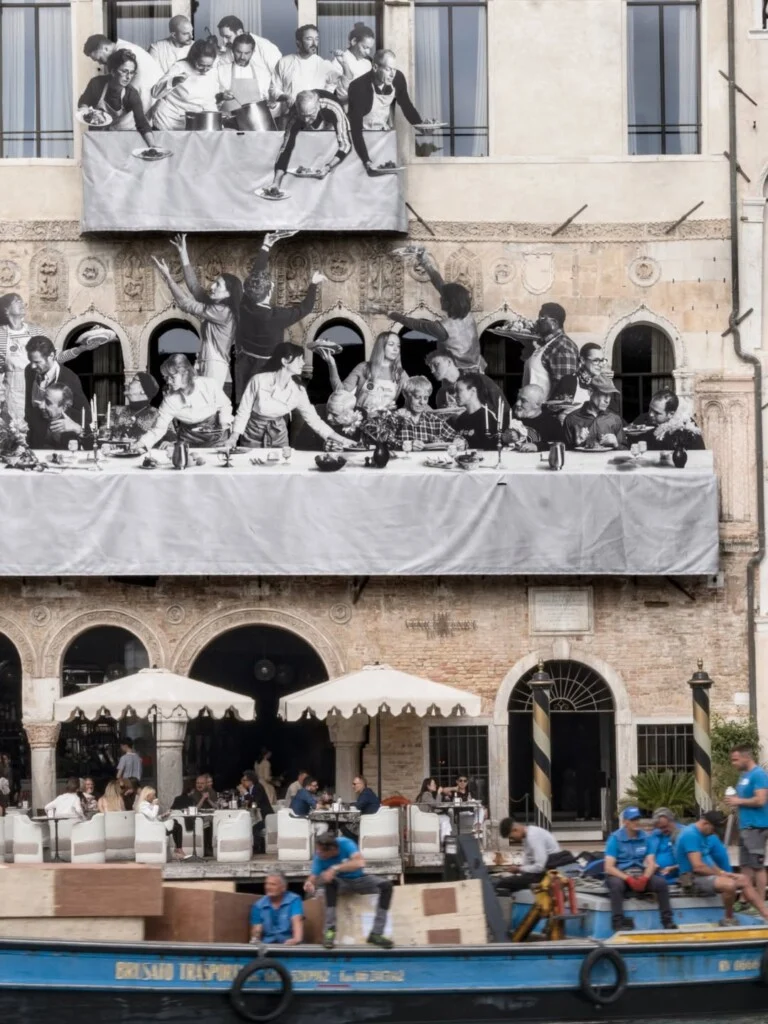
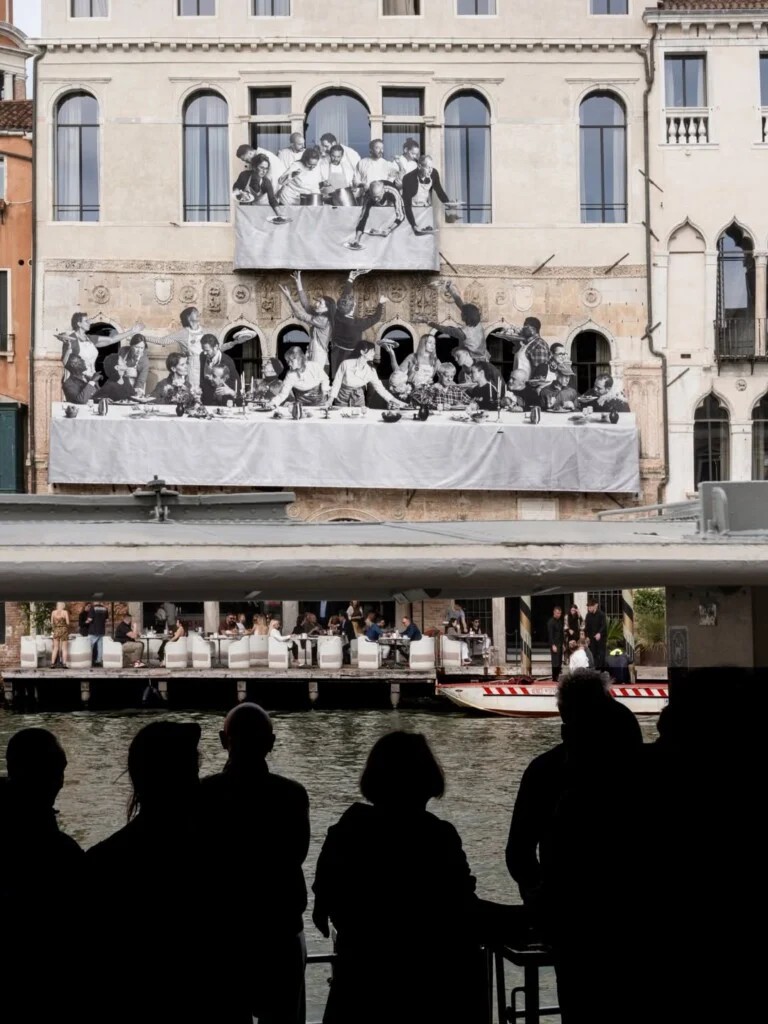
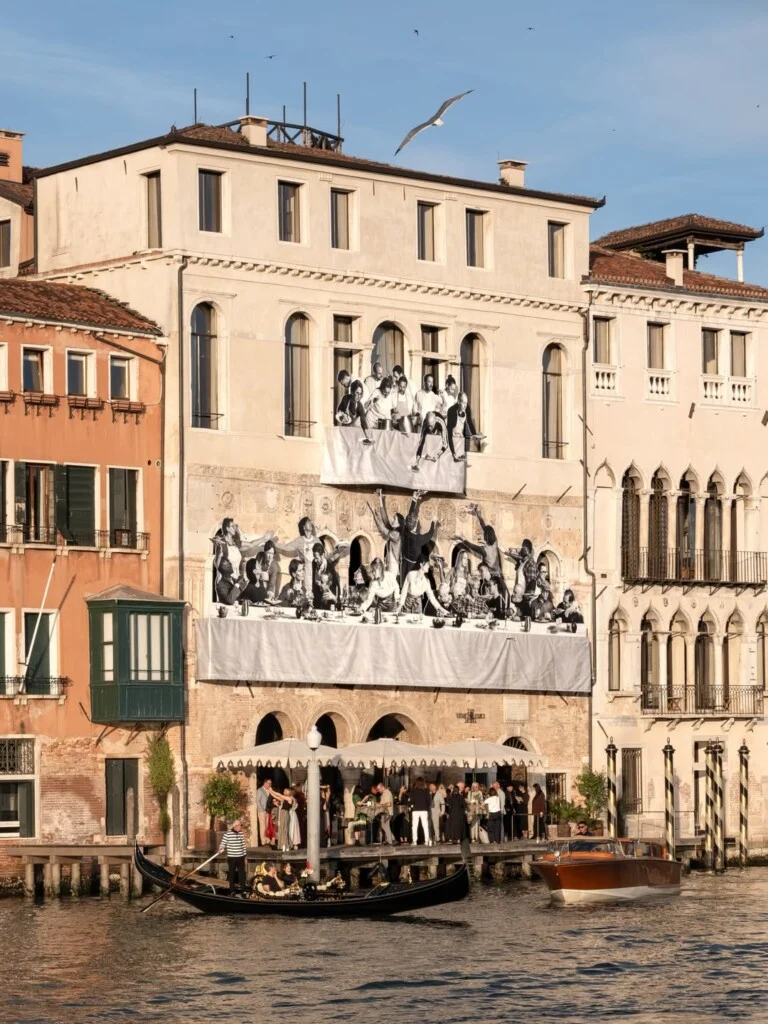
Titled Il Gesto, the project reimagines Veronese’s Renaissance masterpiece not as a biblical spectacle, but as a contemporary act of gathering. Installed for one week across the façade of Palazzo Ca’ da Mosto, from the Grand Canal up to the Piano Nobile, the work moves between public street theatre and private interior encounter before continuing inside The Venice Venice Hotel as an immersive installation.
Instead of saints, nobles, servants, and religious figures, JR’s version is populated by 176 real members of Refettorio Paris: guests, volunteers, and chefs. The miracle is no longer water turning into wine, but something quieter and more human — the transformation of hardship into hospitality, isolation into community, survival into shared ritual.
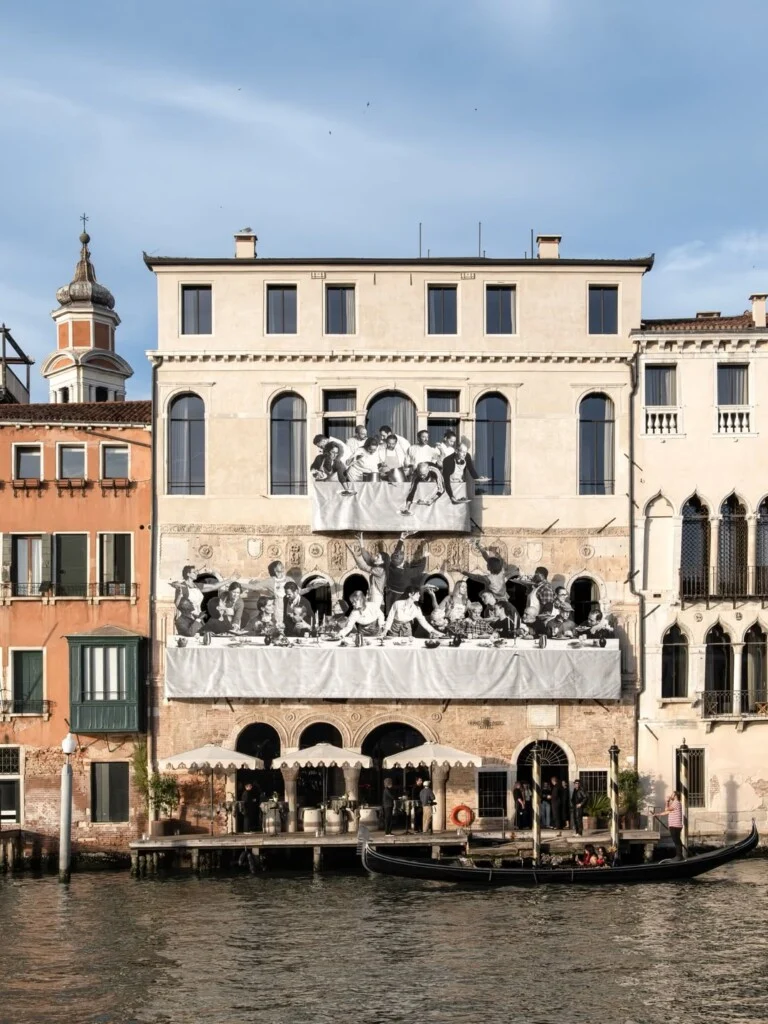
That shift matters. Refettorio Paris welcomes people facing difficult circumstances as honoured guests, building an experience around food, culture, and dignity rather than charity alone. In keeping with the organisation’s rules, guests are not photographed without consent; in JR’s work, only those who chose to take part appear. The image becomes public, but the people inside it are not reduced to symbols.
As in JR’s broader Chronicles series, every figure is held in focus. There is no obvious hierarchy, no single protagonist, no central body that absorbs all attention. The composition becomes democratic by force: a crowd where each person matters, where the eye is asked to wander rather than obey.
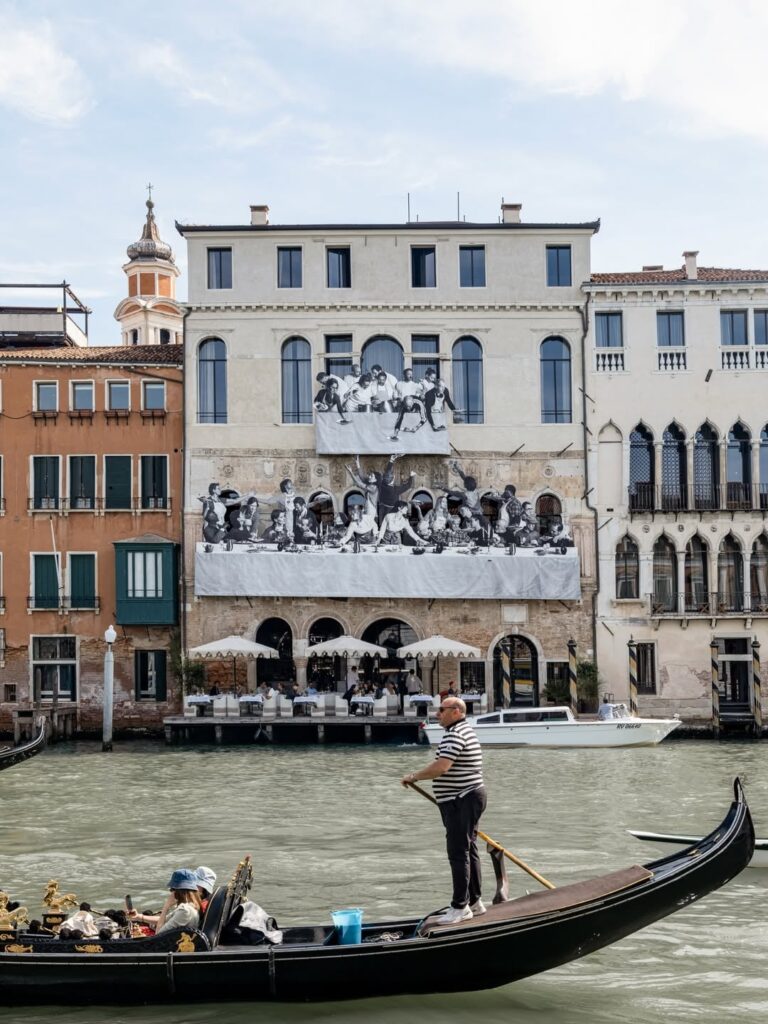
The project also folds several histories into one another. Veronese’s original painting was made for San Giorgio Maggiore in Venice and now hangs in the Louvre. JR’s intervention brings that displaced image back into Venetian memory, while connecting it to Paris through Refettorio Paris and to his earlier work on San Giorgio Maggiore. The result is not a restoration of the past, but a living remix of it.
What makes Il Gesto feel powerful is its refusal to treat the Renaissance as untouchable. JR doesn’t destroy the original image or parody it. He uses its scale, ceremony, and visual authority to ask a different question: who gets placed at the centre of the feast today?
In a city built on beauty, tourism, and historical spectacle, Il Gesto insists on another kind of looking. Not at saints or patrons, but at the people usually kept outside the frame.