
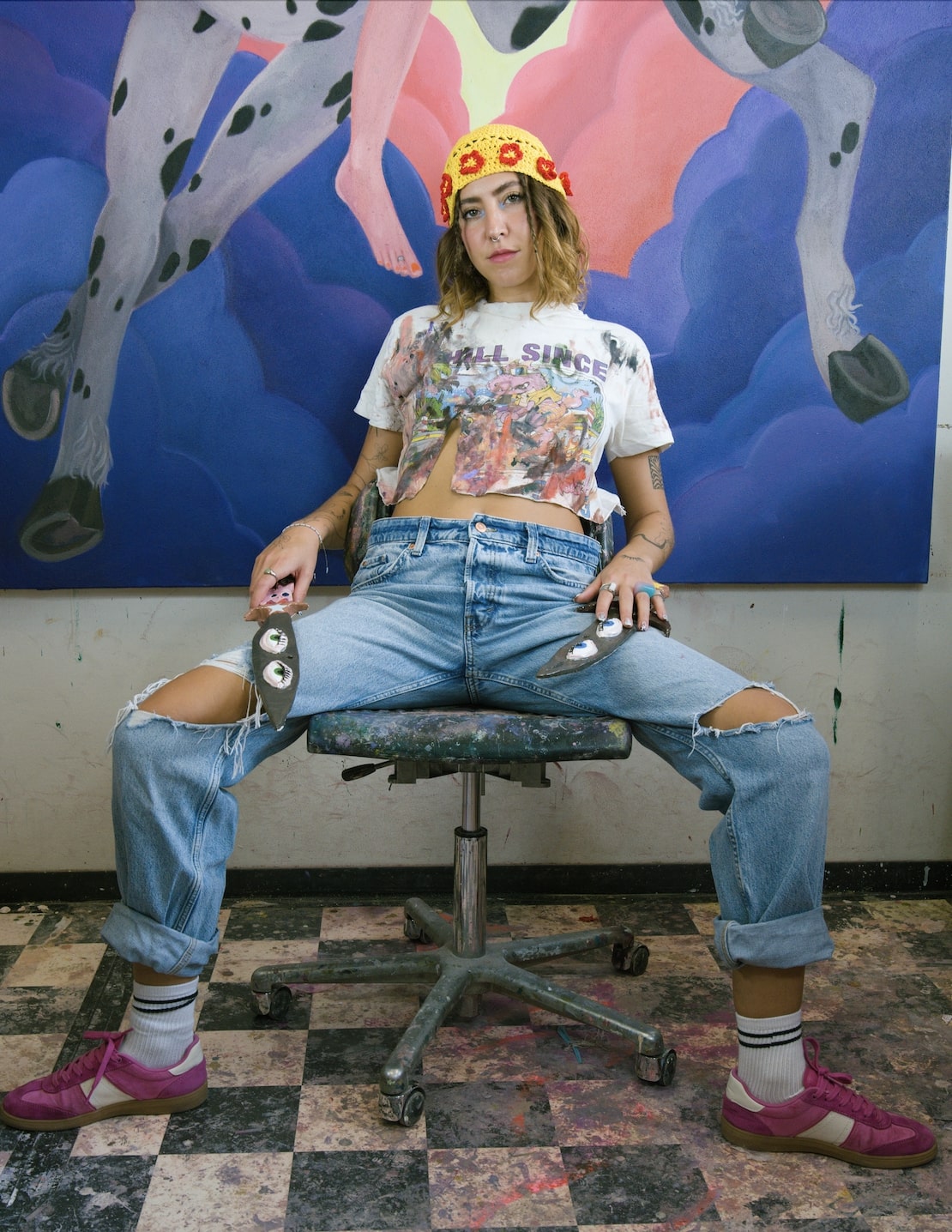
Florine Imo’s is a painter and sculptor whose practice merges mythology, pop culture, and feminist critique. Working across painting, ceramics, and installation, she constructs a mythology of contemporary femininity; one that embraces contradiction, spectacle, and power.
Imo’s figures move between predator and prey, saint and sinner, goddess and meme. They inhabit a world where beauty operates as both weapon and trap, where glamour becomes resistance, and where rebellion is never free from commodification.
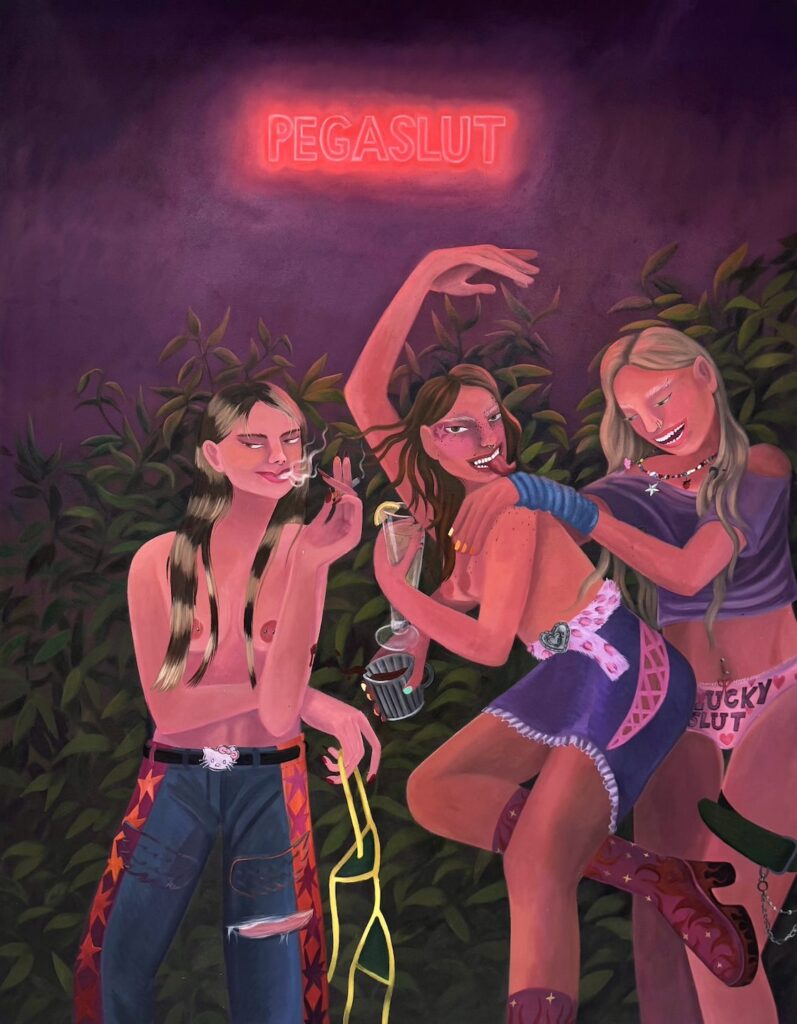
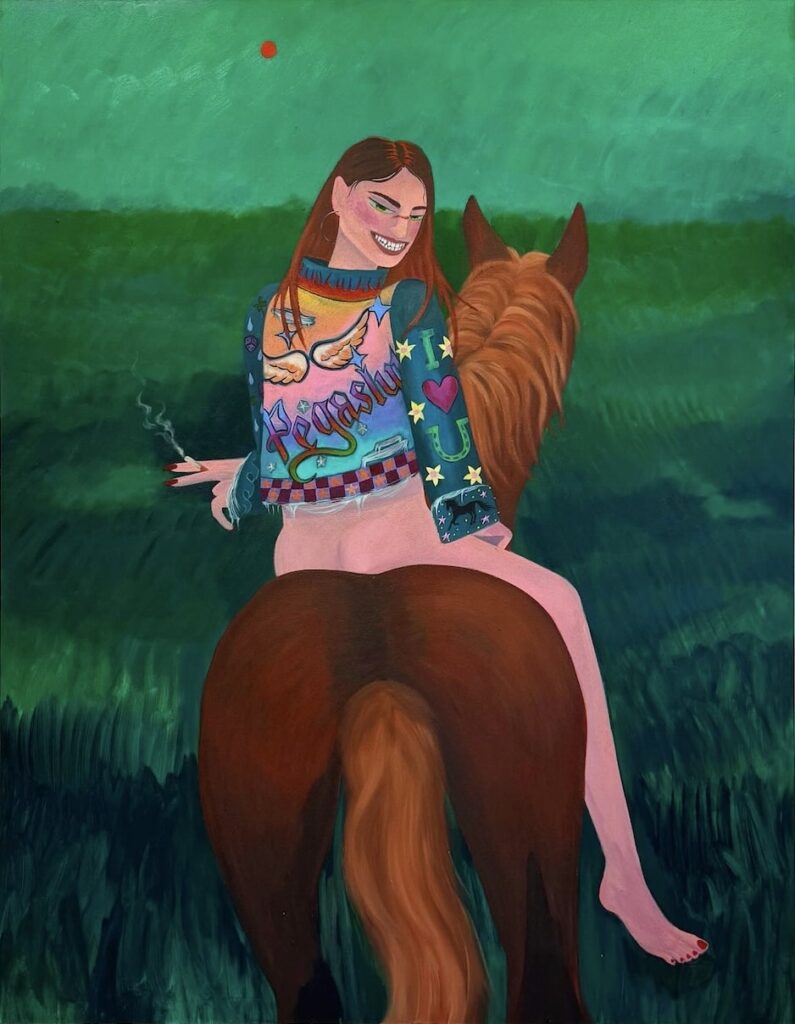
In her latest series “Pegaslut” Imo explores mythology through appetite and excess as forms of agency, questioning how female empowerment can exist within capitalist systems that immediately repackage it. Her work turns consumption into a site of power; an act of reclaiming what was meant to exploit.
By pushing the language of beauty to the point of collapse, Imo reveals its instability: how something sacred can become synthetic, how worship can turn into performance. Her universe is luring, ironic, and deeply human: a meditation on what it means to create images of women in an age where desire itself has been industrialized.
Profile pictures by Ines Frieda Försterling.
Hi Florine! It’s a pleasure to sit down with you! First question that I always ask — how does a regular day look like for you in Vienna?
Florine Imo: I travel a lot, but when I’m in Vienna my days always oscillate between chaos and calm. I usually start late, I’m not a morning person, and spend the first hours grounding myself, getting a coffee from my favorite spot, maybe sketching or just walking to the studio. If I’m lucky, I slip into this trance-like mode where time disappears. I work with fast-paced music or some kind of taboo podcast in the background, and I often switch between painting and sculpting.
I like to work on several pieces at once, and when I’m in full exhibition-prep mode, the studio turns into a complete madhouse: drawings, notes, to-do lists, Red Bull everywhere. It’s a bit like stepping into my own mythology.
I’m curious, growing up… what kind of kid were you? What did you enjoy doing, and how did you spend your time?
Florine Imo: I grew up between nature and imagination, in a small town near the Vienna woods — we barely had anything there. I spent most days outside, up to some kind of mischief with the other kids in the village. My mother was a riding and vaulting teacher, so horses were a huge part of my childhood. I used to stand on their backs while they ran in circles. That image of balance, fear, and trust never left me.
I think it shaped my whole artistic language — being strong but exposed, playful but serious. I was always drawing, building, performing. I already understood that creating was my way of making sense of contradictions.
Alright, so when did you start to paint, and when did you start taking being an artist seriously?
Florine Imo: Painting was always there, already since I was a little girl. Growing up, I had no clue about the art market, the gallery system, or anything connected to what I’m dealing with now. I never thought that painting could even be a job, haha.
At the Academy of Fine Arts in Vienna, I found my voice. That’s when I began building my own visual mythology, working through themes like femininity, spirituality, and judgment. For years there, I focused on what painting actually is, and everything it could be. Then I started traveling, leaving Vienna, entering different scenes, and I understood what’s out there.
That’s when it clicked and I was like, okay, I want to do this. When I went back to the Academy, I stopped trying to fit into what painting “should” look like and started painting the world the way it feels from the inside.
Ok Florine, with these next series of questions, I’ll try to delve into your work as best as possible. So… your new work rewrites the Pegasus myth into “Pegaslut,” transforming it from divine gift to feminist emblem. What drew you specifically to this myth as a site for rewriting, and how does it resonate with your personal or artistic story?
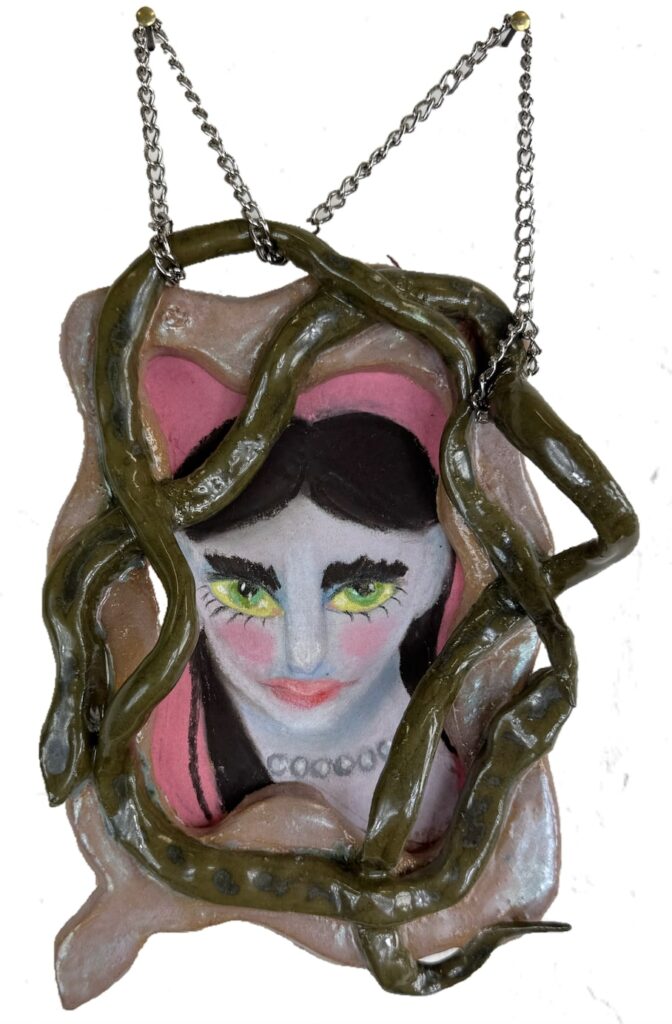
Florine Imo: Pegasus is such a loaded symbol — purity, transcendence, divine creation — but when you trace the myth back, you realize he was born from Medusa’s blood when she was beheaded. That always haunted me, something so beautiful emerging from violence, from the body of a woman punished for being abused. Before Medusa was cursed, she was said to be the most beautiful goddess of them all.
It resonates with me because I’ve often felt that same tension — being drawn to beauty, but aware of how it’s weaponized; embracing vulnerability, but knowing how quickly it can be turned against you. My work comes from that friction. Pegaslut is my way of reclaiming both sides, the monstrous and the divine, the shame and the shine.
It’s about creating space for a female body that isn’t defined by fear or by someone else’s narrative. Pegaslut reclaims that moment; it gives the wings back to the body that created them. It’s about confronting how myth and history have always romanticized female suffering, turning women’s pain into symbols of purity or inspiration. I wanted to flip that narrative — to create an image of power that isn’t born from victimhood but from resistance.
For me, it’s a feminist resurrection, but also a deeply personal one. I’m interested in how beauty and monstrosity, sexuality and divinity, can coexist in the same being, in the same body.
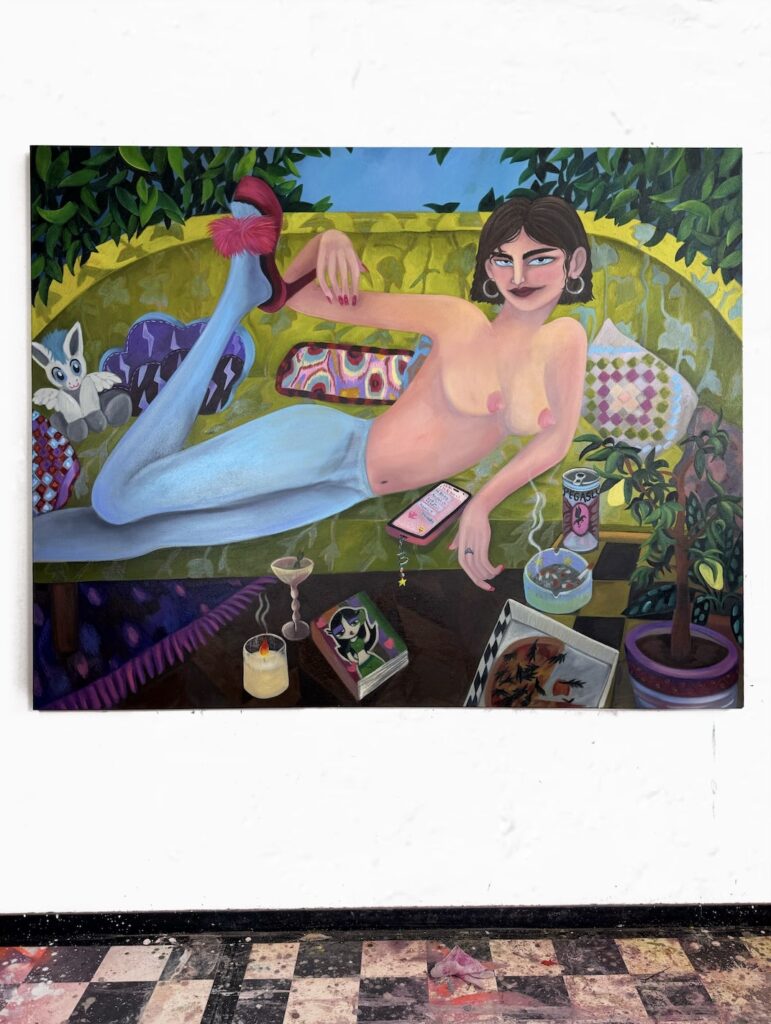
So tell me about Pegaslut. What is it, and what does it represent?
Florine Imo: Pegaslut started as an idea — what if instead of only painting in and around mythology, I created one? A living system that performs everything it critiques. I wanted to see what happens when a (feminist) artwork stops pointing at the problem and starts becoming it, inhabiting the language of desire, branding, and spectacle.
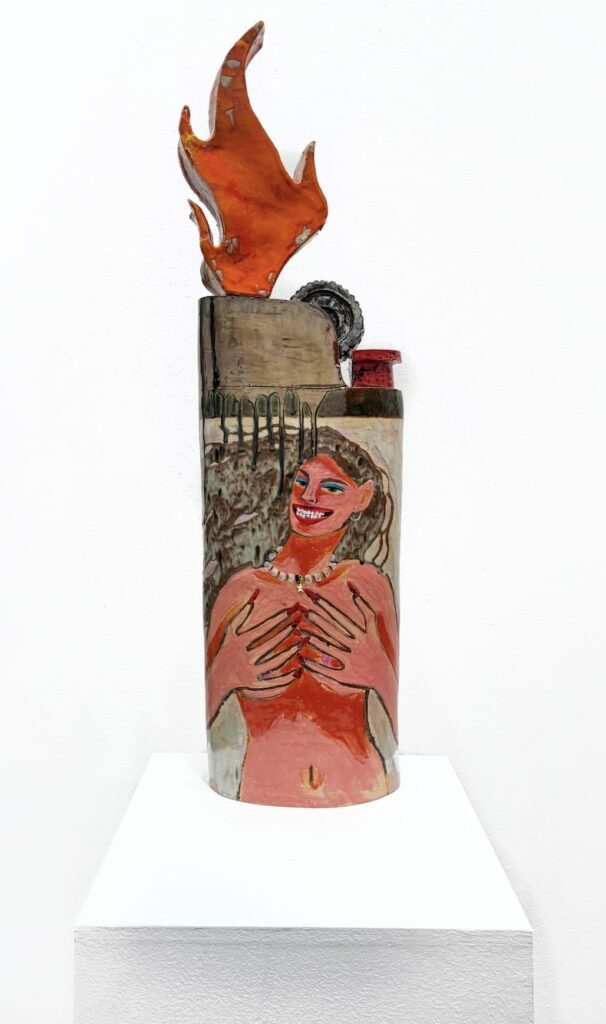
So Pegaslut became a fictional brand, a mythology disguised as marketing. She moves like a product, but she’s actually a virus — she lives inside the same systems that exploit and sexualize women but turns them inside out. She’s hyper-feminine, excessive, seductive, and self-aware. She eats herself to stay alive.
To me, Pegaslut represents the tension between empowerment and commodification. She’s both the fantasy and the critique of that fantasy — the brand that refuses to sell, the icon that refuses to be pure.
Medusa’s story often gets told through Perseus’ perspective. How do you approach reclaiming her narrative in your own visual language?
Florine Imo: What’s always disturbed me about this story is how the woman’s body becomes both the site of violence and the source of creation, yet she’s erased from her own myth. Medusa is never allowed to speak; her power is narrated only through fear.
In my work, I try to give her that authorship back, not by painting her as a victim, but as the origin of everything that follows. If Medusa can’t stare, my figures stare for her. And if she can’t be looked at, my figures will demand confrontation for her.
It’s not about the male gaze anymore, it’s about reclaiming the act of looking itself. If we decenter men, the whole structure of mythology begins to collapse — and something new can finally emerge. Reclaiming Medusa isn’t about softening her, it’s about restoring her complexity. She’s not a monster, but a mirror… both the threat and the source, the one who sees and is seen.
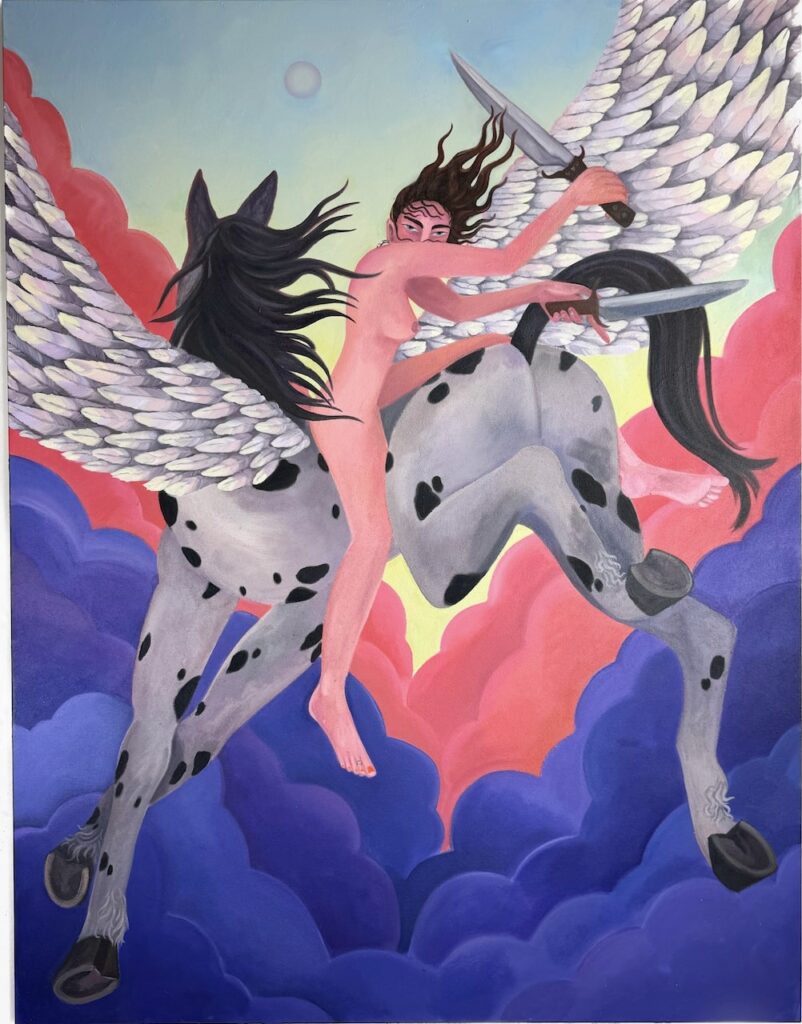
By making Pegasus a Gemini figure, you emphasize duality — sacred and profane, strength and vulnerability. What is it about contradiction and paradox that excites you as an artist?
Florine Imo: I think contradiction is the most honest state of being. Especially as a woman, you’re constantly told to choose — to be soft or strong, holy or seductive, pure or corrupted. But what happens if we stop choosing?
For me, Pegaslut exists in that space — both divine and carnal, victim and creator, monster and muse. I’m drawn to the moment where those polarities collapse into each other, because that’s where something real starts to live.
Contradiction is a feminist strategy. When you embrace paradox, you stop being legible through patriarchal logic. You become too complex to categorize, too fluid to own. That’s what excites me — when something feels sacred and fucked-up at the same time, when it refuses to settle into a single meaning.
Tell me about how you came up with the title “She Ate.” What’s the story there?
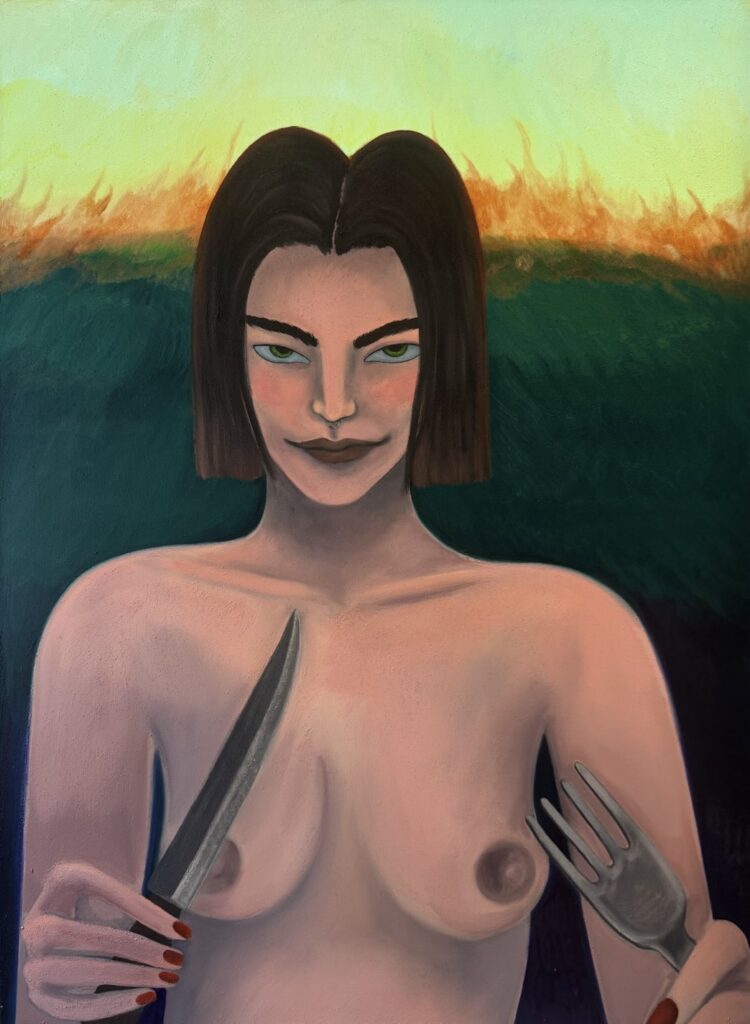
Florine Imo: “She Ate” came from internet slang, from that moment when people say she ate to mean someone did something flawlessly, with power, with confidence — “she ate and left no crumbs.”
I was fascinated by how this phrase, which sounds playful and a bit superficial, actually carries something primal — it’s about appetite, about taking up space without apology. For me, She Ate became a way of exploring hunger as both a physical and emotional condition: hunger for validation, love, beauty, transcendence.
In patriarchal culture, women are often told to suppress their appetite, to be light, controlled, decorative. But what happens when we eat everything? When we consume the systems that consume us?
So She Ate is both an affirmation and a threat. It’s funny, but it’s also about power. The title also plays into the cycle I’m terrified of and obsessed with — how women’s energy gets aestheticized, sold back, digested by culture.
I wanted to flip that, to show what happens when the feminine appetite is not something to be controlled but celebrated. In that sense, it’s connected to Pegaslut. Both ideas are about inhabiting what’s usually forbidden and turning it into fuel. Therefore appetite itself becomes sacred — it’s no longer gluttony, it’s survival.
Your work seems to merge ancient archetypes with internet-born rituals. Do you see today’s digital culture as a new mythology in its own right?
Florine Imo: Yes, definitely. I think the internet is the most powerful myth-making machine we’ve ever created. It produces gods and monsters every day — influencers, icons, cancellations, devotions — all based on collective belief.
It’s not that different from ancient religion; we still worship beauty, performance, and spectacle. The rituals just happen through screens now.
You move between painting and ceramics. How do these two mediums speak differently to myth, body, and iconography in your practice?
Florine Imo: Painting feels like dreaming (sometimes haha) — it’s emotional, fluid, psychological. It allows me to construct my own mythology through atmosphere and color, to let figures dissolve and reappear in a kind of visual fog.
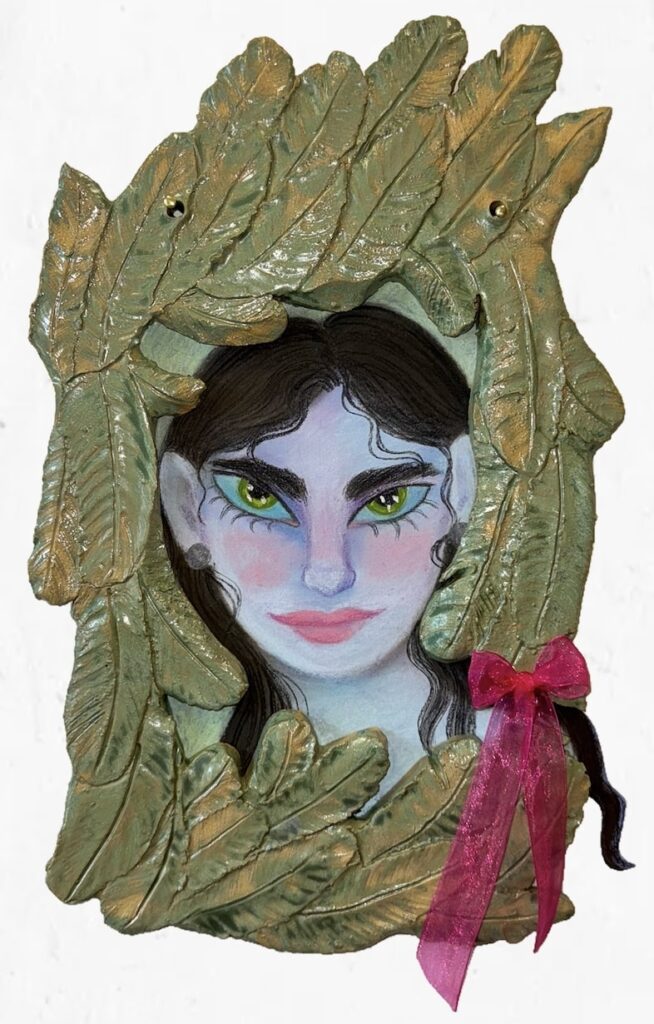
Ceramics, on the other hand, are physical. They belong to the earth. They carry weight, temperature, fragility. When I work with clay, I feel like I’m literally shaping a relic — something that could have existed thousands of years ago or a thousand years from now. It connects myth to touch, to skin, to decay. The body becomes material again.
I think of ceramics as the bones of my world, and painting as the spirit. In painting I can stretch emotion, exaggerate, play with illusion. In clay I can test what survives, what happens when the myth leaves the image and becomes a body you could break.
Both mediums talk to each other — they’re part of the same ecosystem. Painting imagines the world, and ceramics ground it in reality… like breath and blood.
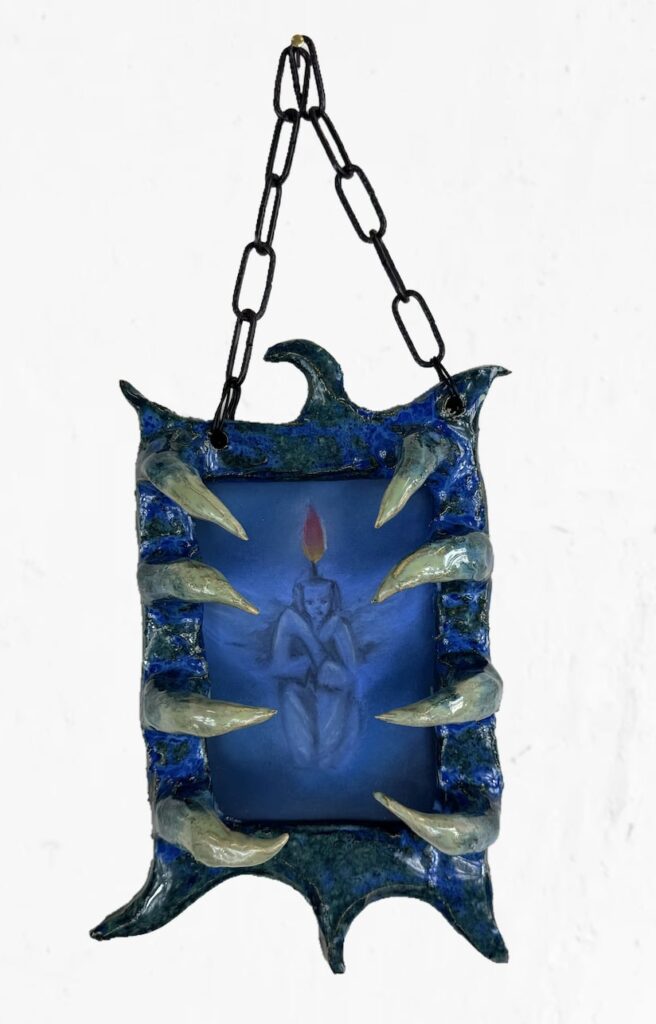
The exhibition text mentions “synthetic relics” and “digital sirens.” How does materiality — paint, clay, glitter — play into creating objects that feel both ancient and futuristic?
Florine Imo: I love the idea that materials can lie… that something can look ancient but be made yesterday, or feel sacred but come from the most ordinary source. That friction between the holy and the artificial fascinates me.
My works are built out of those contradictions — they’re relics from a world that never existed. They’re oracles to a future told thousands of years ago, prophecies and merchandise all at once.
Each material carries a different kind of memory: paint creates illusion, clay remembers touch, fabric absorbs presence. When I combine them, they become evidence of something that hasn’t happened yet.
I like to think of them as physical myths, where faith and commerce, ritual and display, collapse into one another. They might look like devotional objects, but they’re also self-aware — they know they’re products of this time, touched by desire, consumption, and longing. Maybe that’s what a relic is now… something that still believes in transcendence, even after the world has turned everything into content.
The text leaves us with the question: are we liberated by these icons, or trapped inside them? Do you think art should provide answers, or is it more important to hold viewers in that suspension?
Florine Imo: I think liberation and entrapment are part of the same spell. Every icon begins as a promise of freedom and then slowly becomes a cage. That’s the cycle of worship — we build symbols to feel closer to something divine, but once they exist, they start to define us.
In my work, I’m not trying to free anyone or offer answers. I’m more interested in building spaces where contradictions can breathe — where the viewer can feel devotion and doubt at the same time.
That’s where art has power: in the moment before belief turns into doctrine. The figures in my paintings and installations are aware of their own mythology. They know they’re being looked at, and they play with that awareness. They lure you in, but they also hold a mirror up to your gaze.
That tension — between revelation and reflection, seduction and resistance — is the point. For me, painting isn’t about resolution. It’s about holding space for complexity, for paradox, for the uncomfortable beauty of not knowing.
Do you see your audiences as witnesses, consumers, or participants in this mythology you’re building?
Florine Imo: I think they’re all of that at once: witnesses, consumers, believers, and sometimes even intruders. The moment someone looks at a work, the mythology activates. It’s not finished until someone projects their own stories, fears, or fantasies onto it.
I see the audience as part of the ritual. When they stand in front of a painting or a ceramic piece, they’re not just looking — they’re offering something of themselves. Maybe that’s attention, maybe desire, maybe resistance. The exchange is emotional and spiritual, not transactional.
But of course, we live in a world where everything becomes a commodity, including attention. So I like to play with that tension — to make the viewer aware of their own consumption, while still seducing them. It’s not about rejecting the gaze; it’s about transforming it into a dialogue.
Can you walk me through your creative process from beginning to end result?
Florine Imo: It usually starts with an idea that turns into an obsession. I research for weeks before beginning a new series, and somewhere in that process, the images start appearing in my head like a chain reaction. My new work always grows out of the last one; they all exist in the same cosmos, constantly feeding each other.
Right now, I’m researching the European witch hunts. I’m interested in reimagining the archetype of the bride through the lens of pop culture — how purity, power, and fear still shape how women are seen today. Once you figure out the logic of a series, it almost begins to create itself.
When I feel that the research has settled, I start painting and sculpting. I work on canvas with acrylic and oil, and since traveling through Mexico earlier this year, sand has become part of my materials. Painting at the beach made it happen naturally — I loved how it transformed the surface.
The sand, and now other textured materials, make the canvas feel aged, like something painted on a castle wall — and on it stands a contemporary, unapologetic woman. I love that contradiction.
I usually work on many pieces simultaneously, often through the night; it’s the best time for me to focus. With painting, I just know when a piece is finished — it’s a feeling, nothing logical. I never plan every detail or know exactly how it will turn out, and I like it that way. My sketches stay simple so I can work from intuition and energy, not from control.
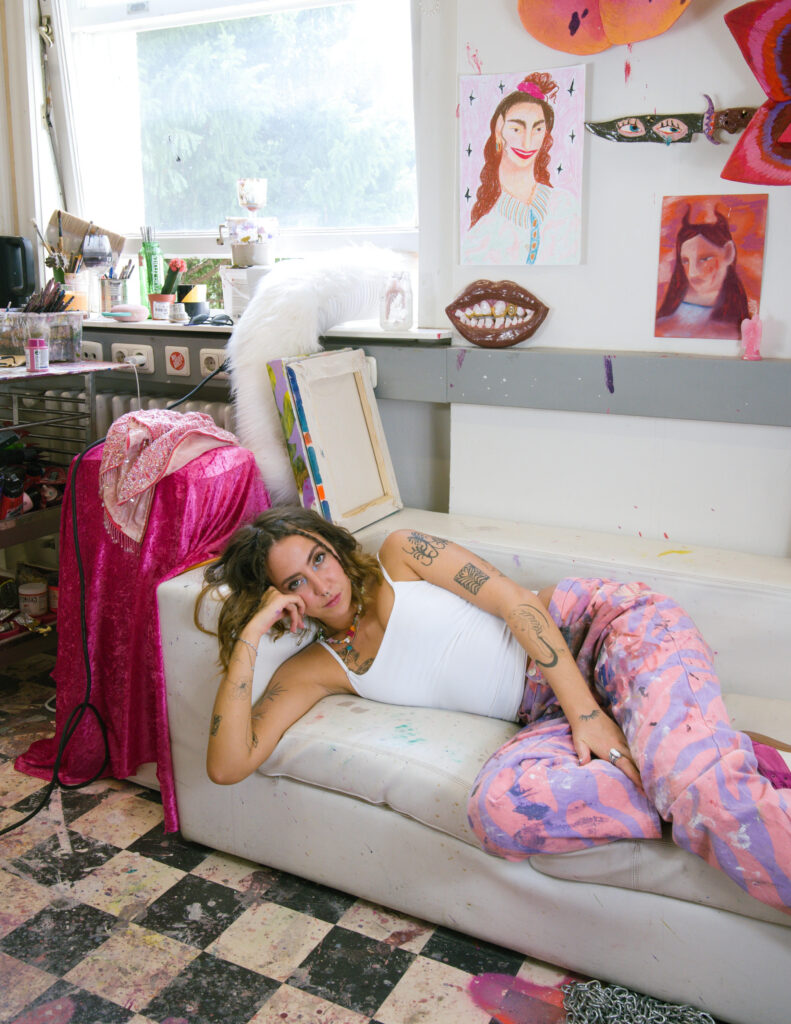
With ceramics or other multimedia sculptures, the process is completely different. Ceramics break — a lot — so I make many at once and try not to get too attached, haha. But I love translating elements from my paintings into real space this way, giving them a kind of physical afterlife.
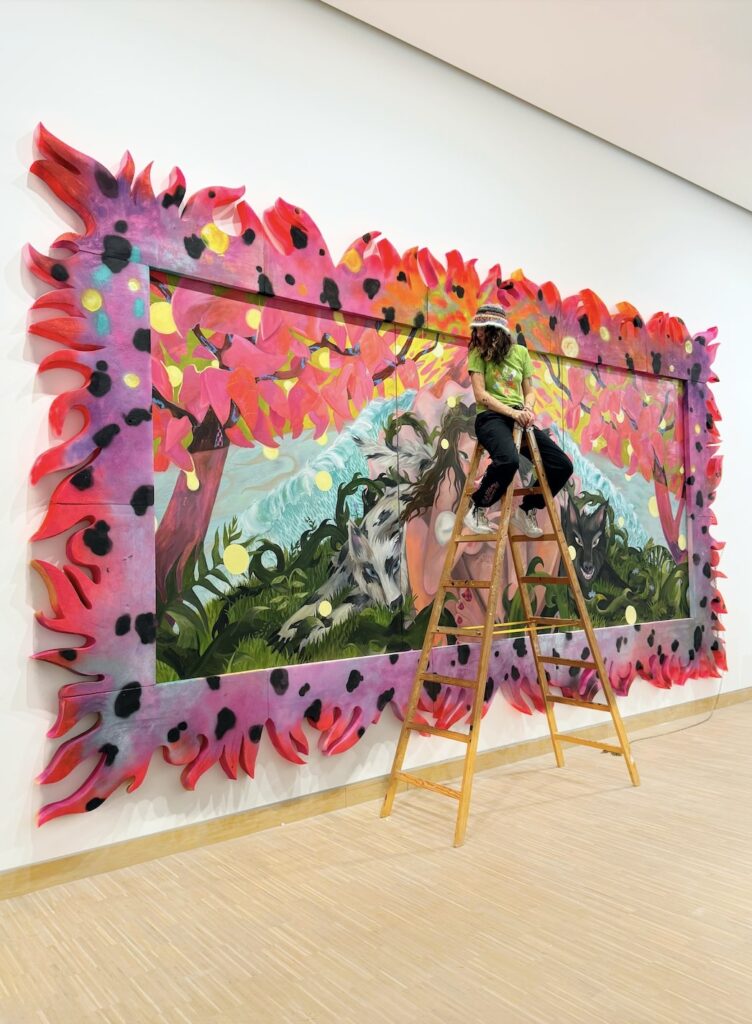
With larger sculptures, it becomes almost architectural. I’ve been working with styrofoam, rabbit wire, and basically whatever the piece demands. I like starting with a vision and then hunting for the right material — what could work as hair, what’s light enough to hang even if it’s three meters tall? That search itself becomes part of the work.
Can you also tell me about your use of symbolism?
Florine Imo: For me, symbols are alive — they shift, contradict, and never mean just one thing. I love when an image carries double meanings or when I can transform its purpose completely.
Like angel wings: they’re supposed to represent purity and lightness, but in my work they’ve become a metaphor for weight, for the pressure of perfection, the heaviness that comes with transcendence.
I use symbols as emotional codes rather than fixed signs. They change depending on where I am and what I’m trying to understand. A wing can be freedom or burden, a horse can be strength or fear. I’m interested in that instability — when something sacred becomes sensual, or something violent becomes tender. In that sense, symbolism is not decoration, it’s consciousness. It’s how I think through painting, how I translate emotion into myth.
How do you approach color?
Florine Imo: Color is emotion to me — it’s never purely aesthetic. It carries temperature, rhythm, mood, and story. I use color instinctively, almost like sound. It’s what tells me how a work feels before I even understand what it’s about.
I’m drawn to intensity — to colors that clash or vibrate, that feel slightly “too much.” That tension between attraction and discomfort mirrors the emotional world I paint from. My colors are not polite; they’re alive — sometimes violent, sometimes healing.
Color also works like a code in my mythology. Blue and white can be divine or poisonous, pink can be tenderness or power, red can be love or danger. I don’t want color to behave; I want it to contradict itself. In the end, I treat color as energy. It’s spiritual and bodily at the same time — something that can burn, soothe, or blind.
So with what we just talked about, what are you hoping to convey?
Florine Imo: I think I’m trying to show what it means to exist fully — with all the contradictions, hunger, and mess that come with being alive.
My work is about women who are allowed to be everything at once: divine and dangerous, fragile and untouchable, sacred and sexual. I want to reclaim spaces that have always been defined through judgment, myth, religion, beauty, and fill them with new meanings.
It’s not about rewriting history to make it softer; it’s about making it honest. I hope people feel a kind of recognition, even if it’s uncomfortable — like looking at a part of themselves they forgot existed or are only just exploring now. The figures in my world are not there to be admired; they’re there to be met.
I hope to convey what it means to be a woman who contains everything: power and doubt, desire and danger, faith and fatigue. With Pegaslut, I want to show how femininity can be both a weapon and a wound, a performance and a prayer. Across all my series — from the angels to the wolves, the sirens, and the sinners — I’ve been building a language that holds contradictions instead of hiding them.
Pegaslut is where all of that merges. She’s what happens when beauty stops apologizing, when myth becomes self-aware, when the divine looks in the mirror and laughs. In the end, my work is about transformation — how we survive the gaze, the violence, the expectations, and still find a way to glow.
I want to capture that fragile space between worship and exhaustion, between fantasy and survival. That’s where I think truth lives — somewhere between the sacred and the absurd.
Ok Florine, now to something totally different. In a parallel universe, who would you be and what would you be doing?
Florine Imo: Probably still creating worlds, just in a different language. Maybe I’d be a filmmaker, a musician, or someone designing costumes for a religion that doesn’t exist yet. I’m obsessed with systems of belief — how people build meaning out of chaos — so I think whatever I’d be doing, it would still involve storytelling, emotion, and transformation.
Or maybe I’d live somewhere by the sea, working with sea creatures and donkeys, spending my time building things with my hands. Something that still connects to intuition, to movement, to instinct. I think art would find me anyway… even in another universe, I’d be making something that feels alive.
Outside of art, what’s something you’re obsessed with right now — maybe a hobby, a show, or even a food — that keeps you grounded or inspired?
Florine Imo: I’ve been really into podcasts lately — especially Soft White Underbelly or Other People’s Lives. They’re heavy, often dark stories: people living on the street, sex workers, people with strange or taboo hobbies.
It’s raw and uncomfortable, but I love it. Listening to people telling their story so honestly makes me feel connected to humanity in a very real way. That probably links to my new obsession: researching the European witch hunts. It started as curiosity and turned into something deeper. Those women were punished for being different — for knowing too much, for wanting freedom, for existing outside control.
It’s one of the biggest erased traumas in European history. I’m looking at it as a foundation for my next series, trying to understand how fear, desire, and judgment have shaped the image of women for centuries.
What qualities do you find most important in the people you choose to spend time with?
Florine Imo: Humorous, honest, loyal — and lowkey a bit insane <3
Anybody you look up to?
Florine Imo: I look up to artists who paint with honesty, who aren’t afraid of contradiction or emotion. People like Maria Lassnig or Hayv Kahraman, who turn the female psyche into something both vulnerable and powerful. I think of Lisa Yuskavage, who took the language of the male gaze and used it against itself — her work taught me that softness can be radical.
I’m inspired by Kiki Smith and Naudline Pierre for how they deal with spirituality and myth — the sacred as something intimate and embodied. I’m obsessed with the surfaces of Robin Francesca Williams and the confidence and softness of Sofia Mitsola.
And honestly, I find as much inspiration in pop culture as in galleries or museums. Doja Cat, Nicki Minaj, Lady Gaga, Paris Hilton, Rosalía, and Grimes — the way they perform femininity, danger, and absurdity at the same time feels like contemporary mythology. I look up to anyone who creates their own universe and isn’t afraid to live inside it.
What motivates you?
Florine Imo: Spiritual alchemy.
How would you describe a perfect day?
Florine Imo: Good light, no men explaining things to me, remembering that being alive is already kind of absurd and perfect.
Alright Florine, I always ask these two questions at the end of an interview. The first is: what’s your favorite movie(s) and why?
Florine Imo: I don’t think it’s my all-time favorite, but since it’s part of my new research, I stumbled across The Witch. I love how it turns fear into freedom — it’s about a woman realizing that everything she’s been told is evil might actually be her power.
The film plays with religion, hysteria, and guilt in a way that feels timeless… it could be the 1600s or right now. I relate to that transformation — the moment when judgment becomes liberation.
And visually, it’s so beautiful and quiet — you can almost feel the air.
The second is: what song(s) are you currently listening to the most right now?
Florine Imo: Literally any track from Bitschu Batschu. Apart from being my boyfriend, he’s also the best trance producer and DJ — absolute slyest.