Isamaya Ffrench has never treated beauty as something soft or obedient. Across makeup, image-making, product design, and art direction, her work has always felt closer to transformation: bodies sharpened, faces rebuilt, identity pushed into stranger, more sculptural territory.
Now she is extending that instinct into physical space with Studio Iron, a new platform dedicated to collectible design, experimental furniture, and contemporary objects. Developed with Saatchi Yates, the project opens with an inaugural exhibition in London, running from April 30 to June 14, 2026, before moving into its permanent Soho home at The Painting Rooms.

The name matters. Studio Iron takes its cue from the medieval Germanic meaning of Isamaya: “iron strength.” It is a fitting title for a project that feels heavy, industrial, and slightly hostile in the best way. Part gallery, part concept store, part design experiment, the platform asks artists to move beyond familiar formats and think through objects that sit somewhere between sculpture, furniture, interior design, and use.
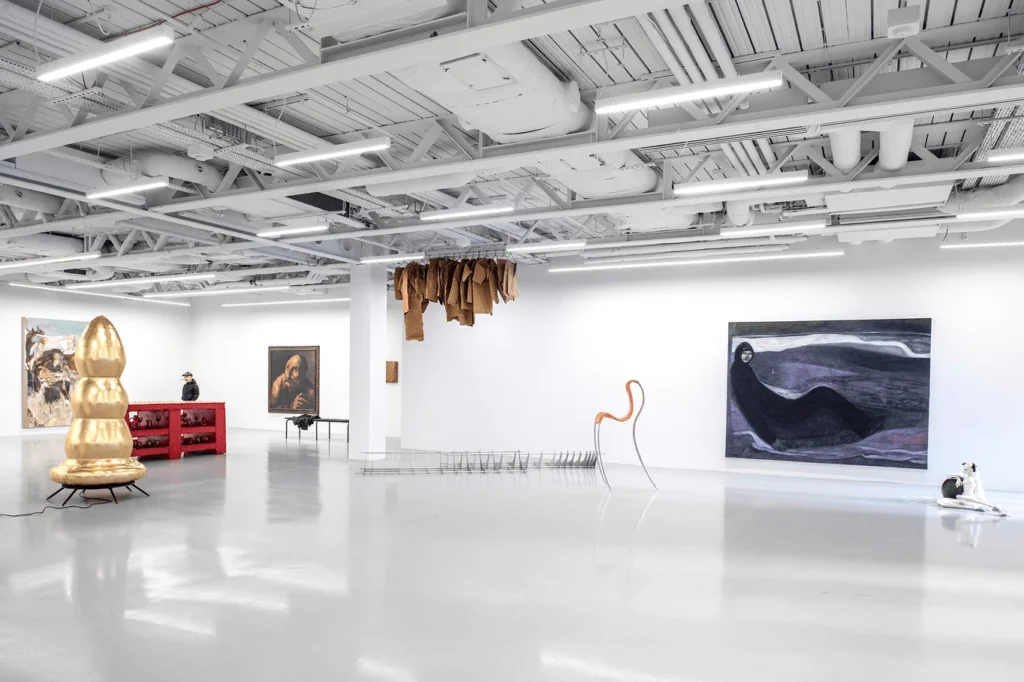
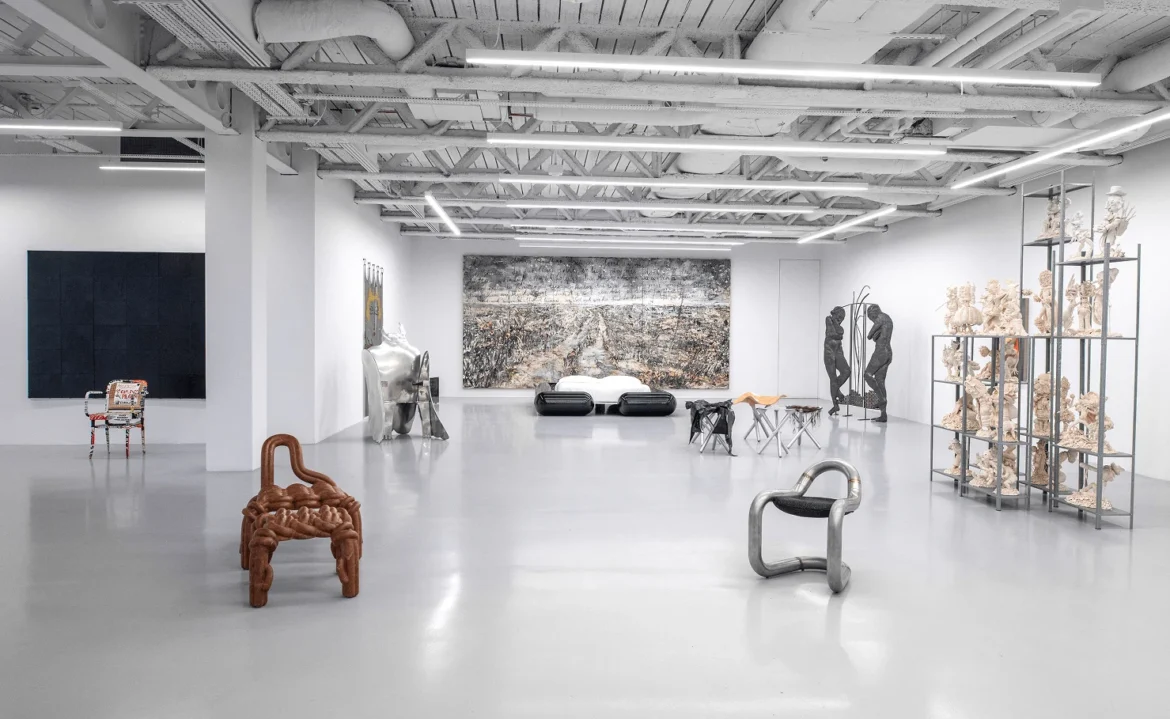
More than 60 works are presented inside a stark environment of steel, iron, and concrete, creating a mood that feels less like a showroom and more like a post-industrial dream someone forgot to wake up from. The pieces are not simply functional. They seem to watch you back, carrying the strange emotional charge of objects that know they are more than objects.
Among the works is Benjamin Kustow’s Untitled (Wolf), a snarling, exposed-ribbed creature caught between threat and fragility. Nearby, Kouros Maghsoudi’s Hug Bed turns the idea of comfort into something darker, enclosing a king-sized bed inside a glossy black tubular frame that feels intimate, protective, and almost imprisoning at once.

The artist list stretches across generations and disciplines, with names including Marina Abramović, Kelly Wearstler, Jordan Wolfson, Paul McCarthy, and Anne Imhof, alongside emerging voices. That mix gives the project its charge: not a neat design fair, but a collision of people who understand objects as psychological, theatrical, bodily things.
What makes Studio Iron interesting is its refusal to decide what it is. It is not fully art, not fully furniture, not fully retail, not fully installation. It sits in the uncomfortable space between categories, where a bed can become a trap, a bench can feel like a memory, and a chair can stop being polite.
For Ffrench, that ambiguity feels natural. She has always worked where surfaces become unstable. With Studio Iron, the face becomes a room, the object becomes a body, and design starts to look a little more dangerous.