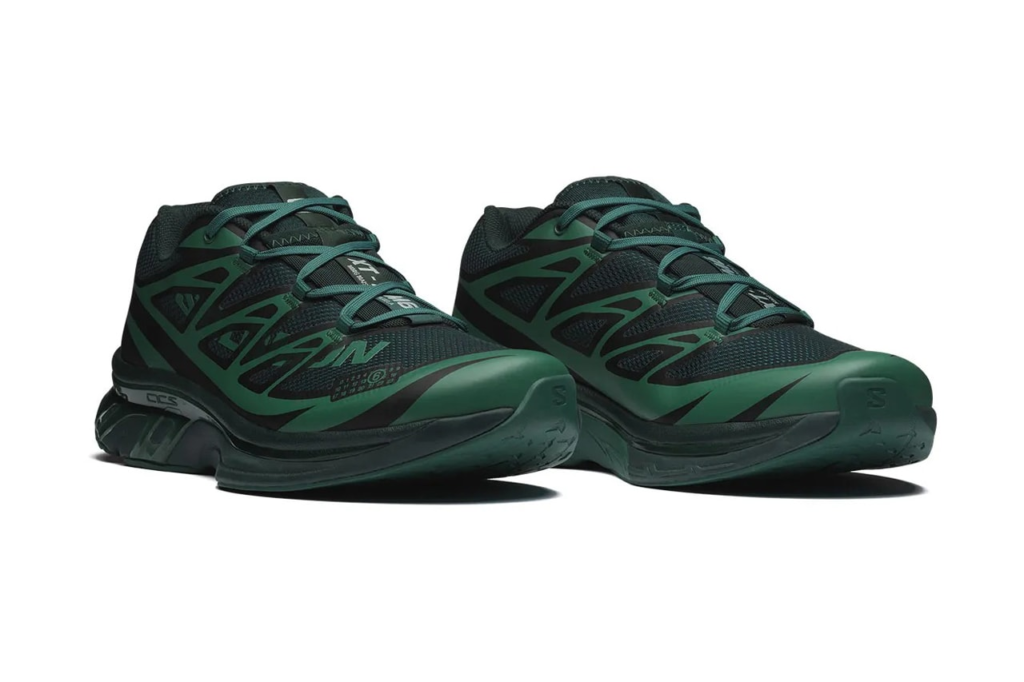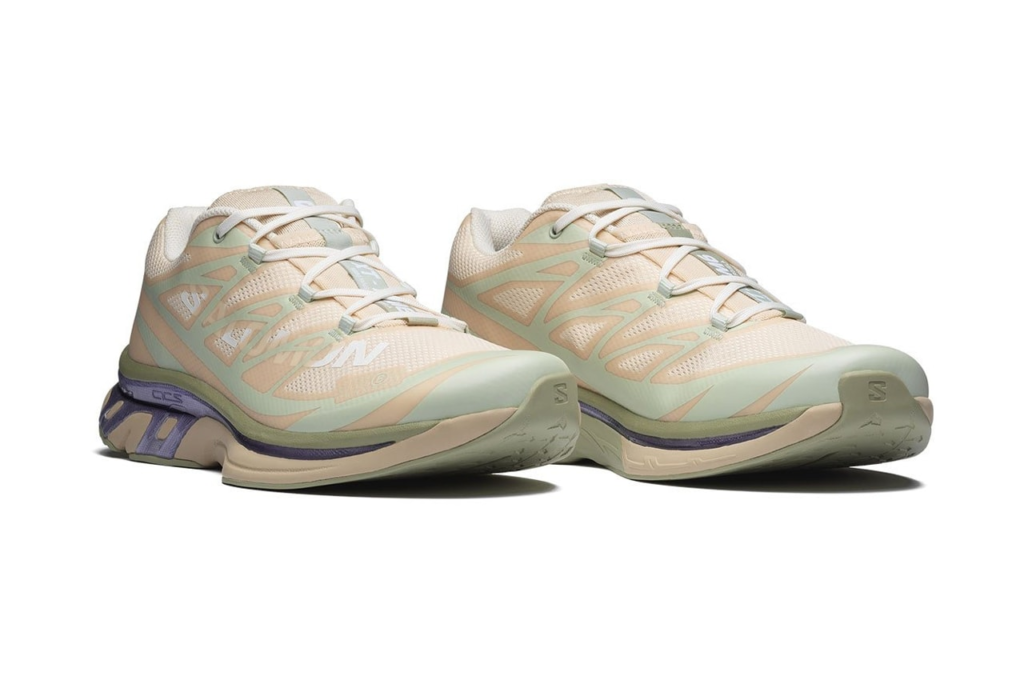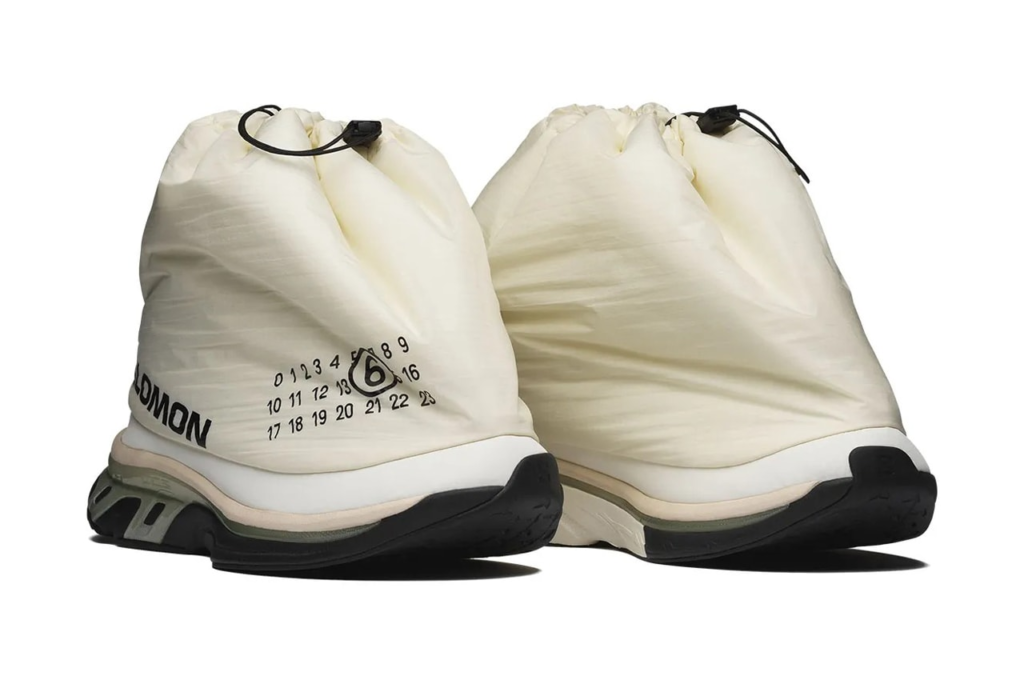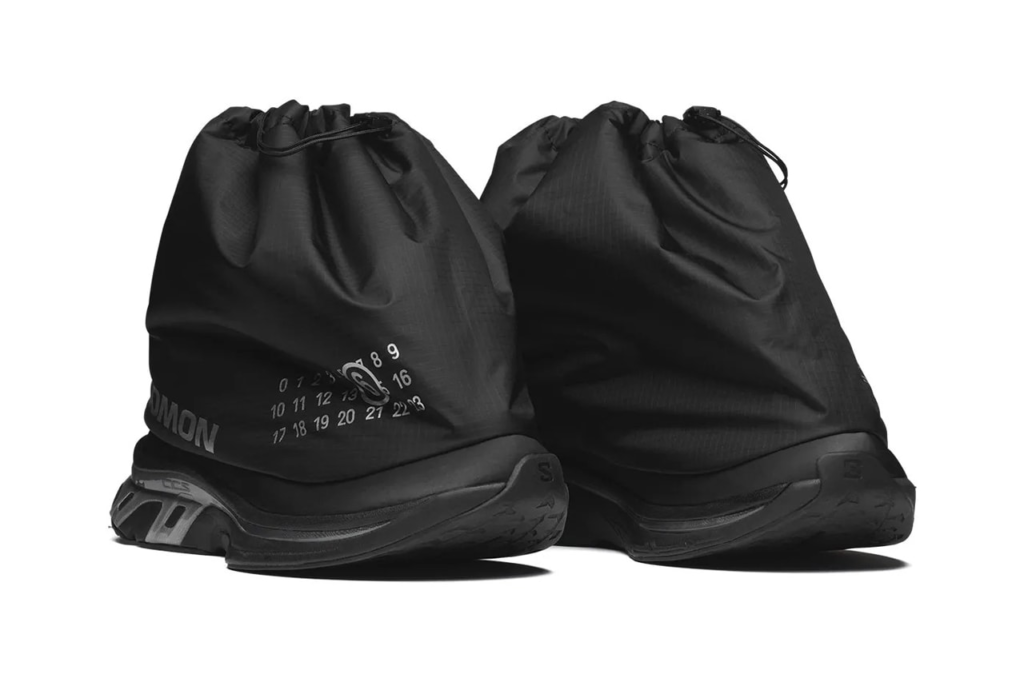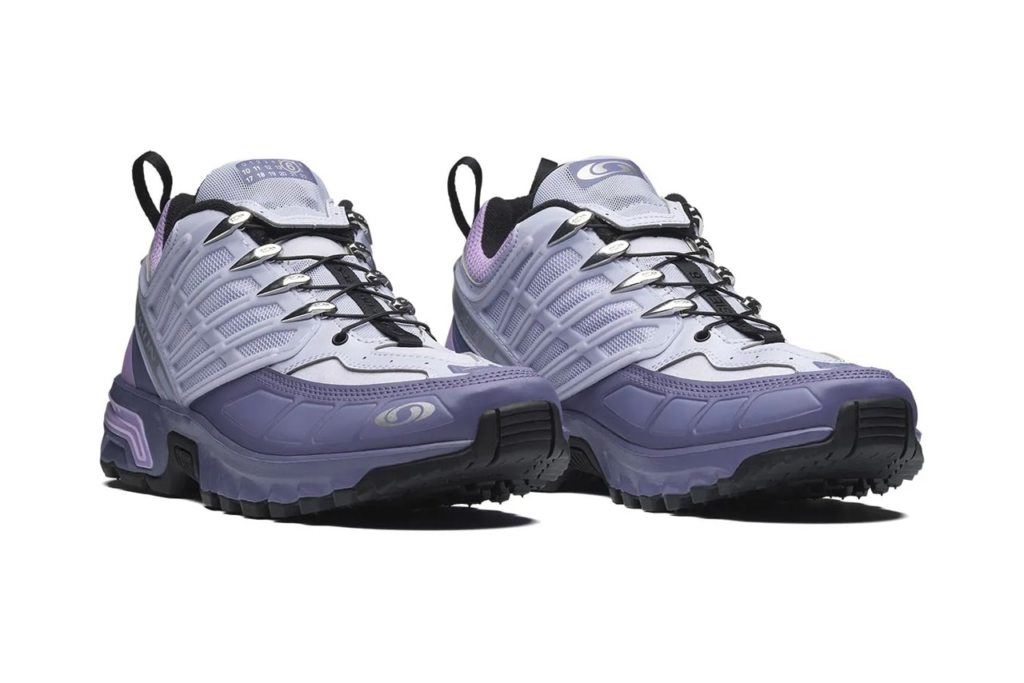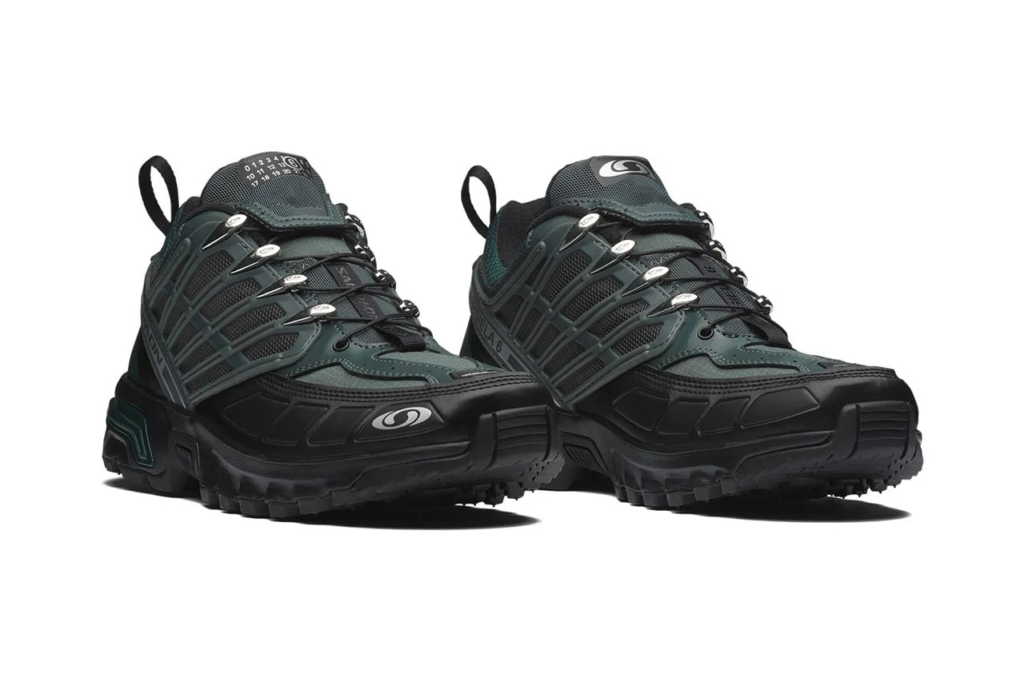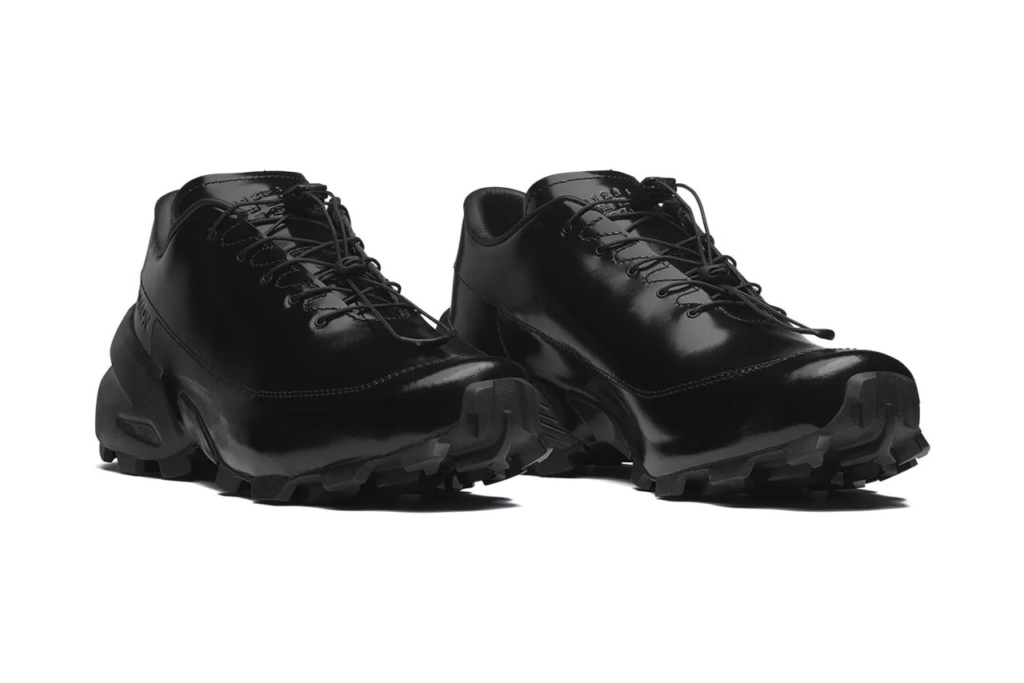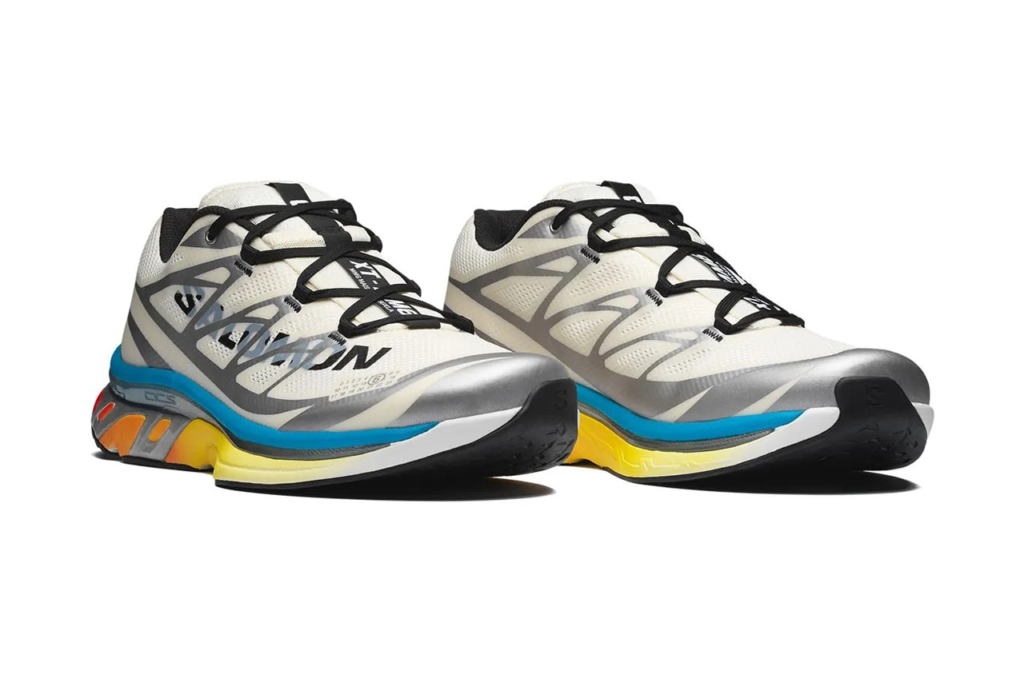
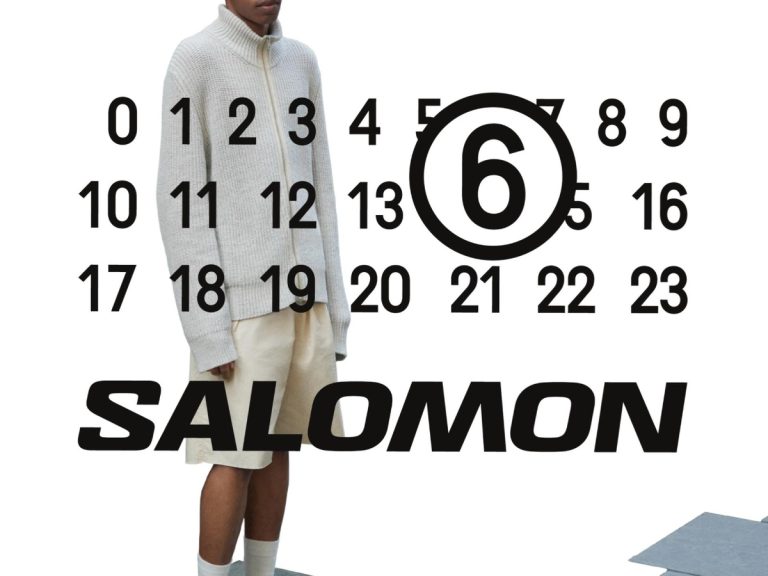
Blurring the boundary between Parisian conceptual tailoring and technical trail utilitarianism, the ongoing alliance introduces hybridized dress shoes, oversized gator boots, and fresh colorways.
Since first locking horns back in Fall/Winter 2022, MM6 Maison Margiela and Salomon have consistently redefined the intersection of outdoor performance and high-fashion subversion. For their expansive FW26 chapter, the duo are back with an eight-piece lineup that pushes their experimental hybrid formula further than ever before.
The crown jewel of the new delivery is the debut of the Crossderby MM6—a glossy leather dress shoe that surgically swaps a traditional leather sole for Salomon’s rugged, quick-laced trail tooling.
The capsule also breathes new life into fan-favorite silhouettes. The XT-MM6 returns in three vibrant colorways—“Scarab/Bistro Green”, “Tapioca/Sea Foam/Violet Tulip”, and “Vanilla Ice/Ftw Silver”—complete with signature numeric branding stamped across the toe box and outsole. Following in November, the oversized, puffer-inspired XT-BOOT MM6 arrives in stealth black and white alongside dual-tone iterations of the ACS Pro MM6.