
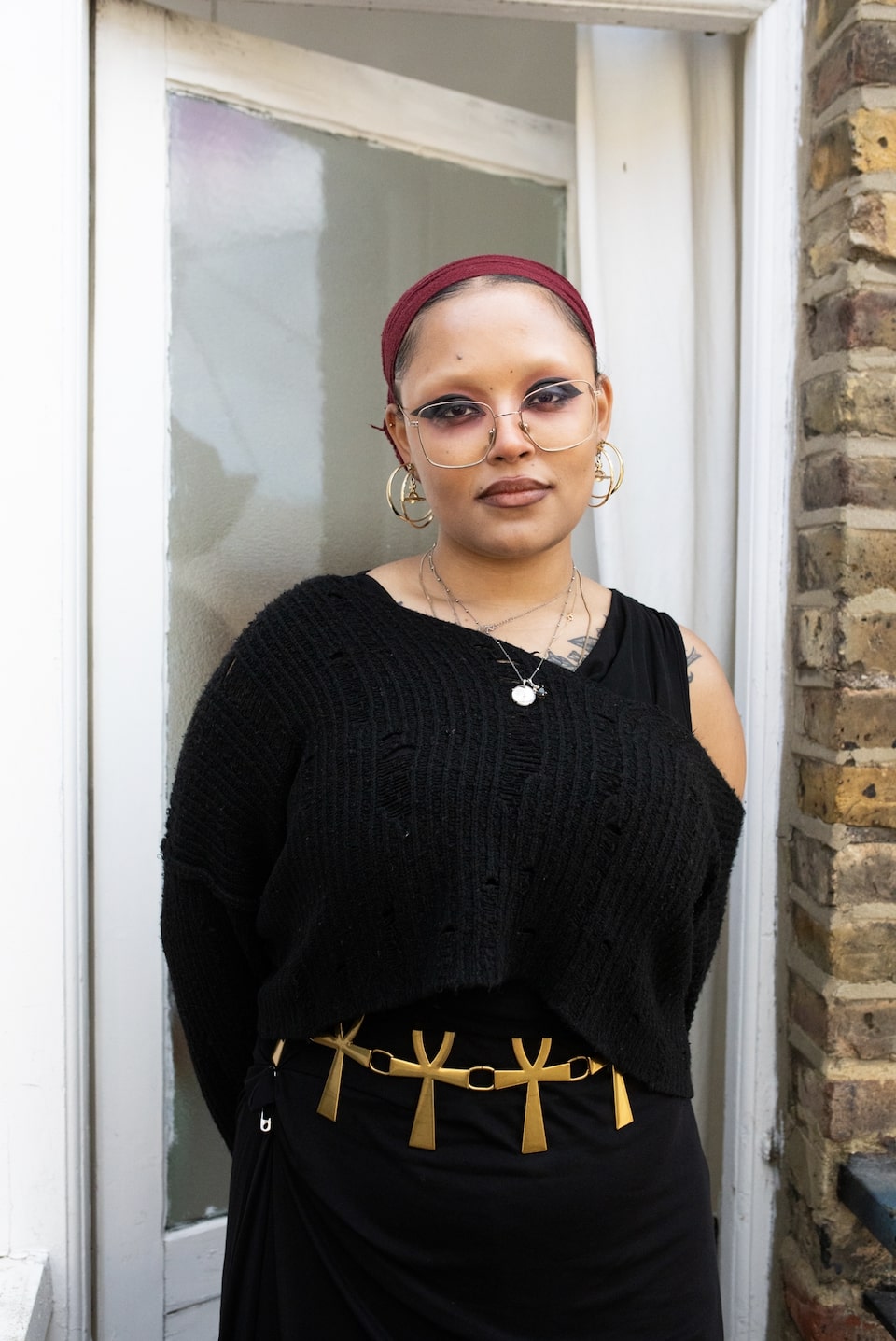
I met Olivia a few years ago and was immediately struck by her uniqueness. Dressed in striking Gothic clothes and carrying herself with unmistakable London confidence, she was impossible to ignore. As we talked, I discovered she is a florist, part of a long family tradition of floristry with roots in Barbados. I knew then that if I ever had the chance, I needed to document her world and bring her story to life.
Interview and photos by Brynley Odu Davies.
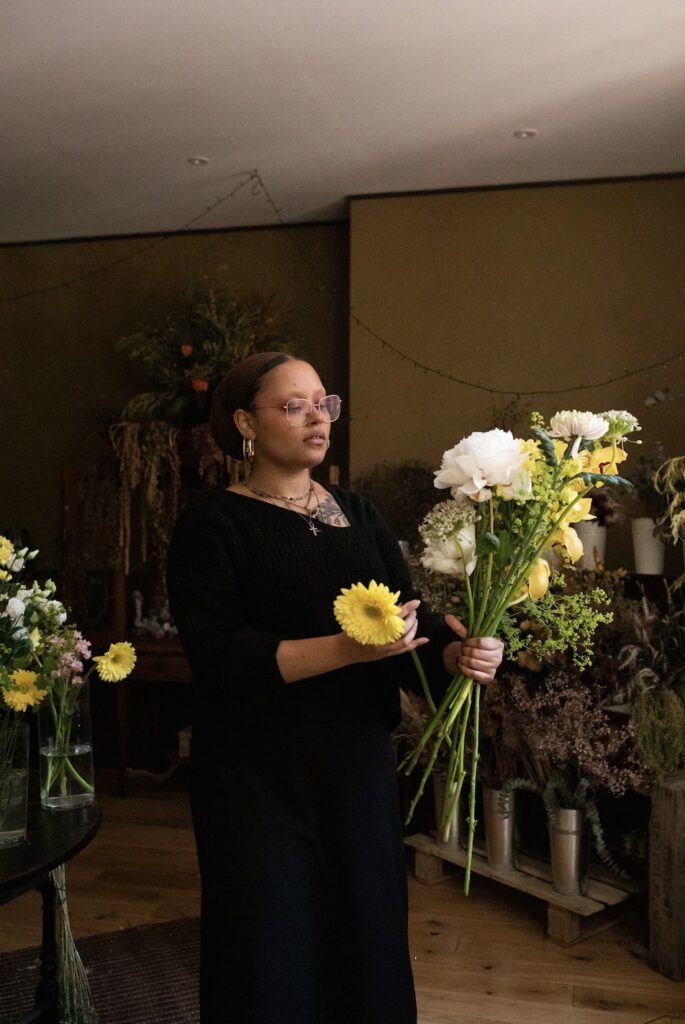
What first drew you to flowers?
Not to sound too cliché, but I’ve always been drawn to the beauty of flowers. I was lucky enough to have a garden growing up — despite living in a North London estate — and I have such fond memories of planting, tending, and marvelling at the beauty of nature. Both sides of my family were quite traditional in teaching my brother and me how our cultures related to nature. I remember making May Day flower crowns with my Nan, binding them one by one as she explained what each flower meant to five-year-old me. Flowers have just always been there, y’know? I genuinely couldn’t imagine my life without them.
Your mum and aunt are both florists too. What’s it like being part of that family tradition?
It feels like an honour — but also kinda surreal. My mum started floristry with my Nan in the late ’80s and kept it up into my early childhood. She has albums filled with her work, and I’d flip through them in awe. Even now, I look and think: how on earth did she do that? My aunt in Barbados has been at it longer than I’ve been alive. She’s one of the island’s best florists, growing and cultivating flowers straight out of her back garden. That, to me, is the ideal life.
Both of them shaped me massively. They’re the reason I went independent and started freelancing. My first job in floristry was such a random opportunity — an industry I’d never really considered. Honestly, it was fate. I don’t have another word for it.
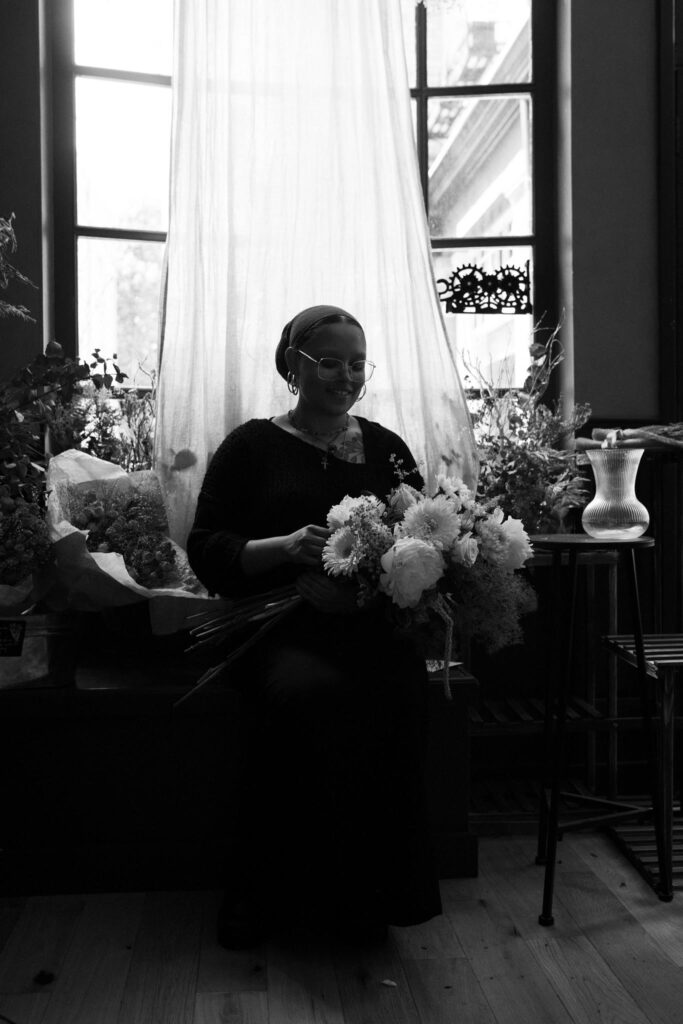
How are flowers in Barbados different from the ones in London?
Nature-wise, Barbados is insanely diverse, producing tropical flowers that are either indigenous or thrive under cultivation. Sadly, like a lot of Caribbean islands, natural spaces have been eaten up for tourism — hotels, golf courses, that kind of thing.
Industry-wise, London can import so much more. The tropicals they grow, we can often get too, in season. But floristry in the Caribbean is still deeply rooted in ceremony. Every event has some kind of floral arrangement, no matter how small. In the UK, it feels like that tradition has faded, which I find kinda sad. Flowers should be for everyone, all the time — especially in a city like London where green spaces are scarce.
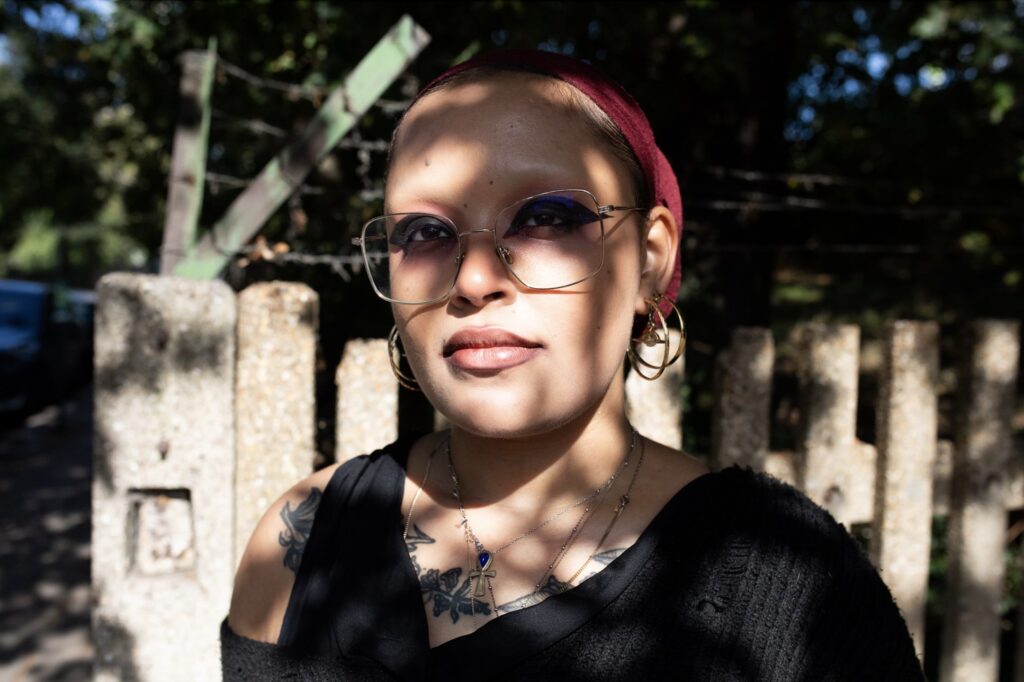
You’re a true Londoner, born and raised in North London. What does the city mean to you?
I always say I’d never live anywhere else, and I mean that. London shaped everything about me: how I talk, how I dress, how I think. But I grew up in a North London estate, so the city I love is filtered through my teenage brain from the 2000s. That’s why gentrification feels so jarring.
Don’t get me wrong — I love the diversity, the people moving here, the connections. But it’s an issue when working-class communities are pushed out of areas they’ve called home for generations. In my borough, the class divide is insane. I’ve seen community-pillar businesses close, only to be replaced by artisan bakeries no one can afford. London means everything to me, but it scares me that I could lose it just because I’m not in the “right” tax bracket.
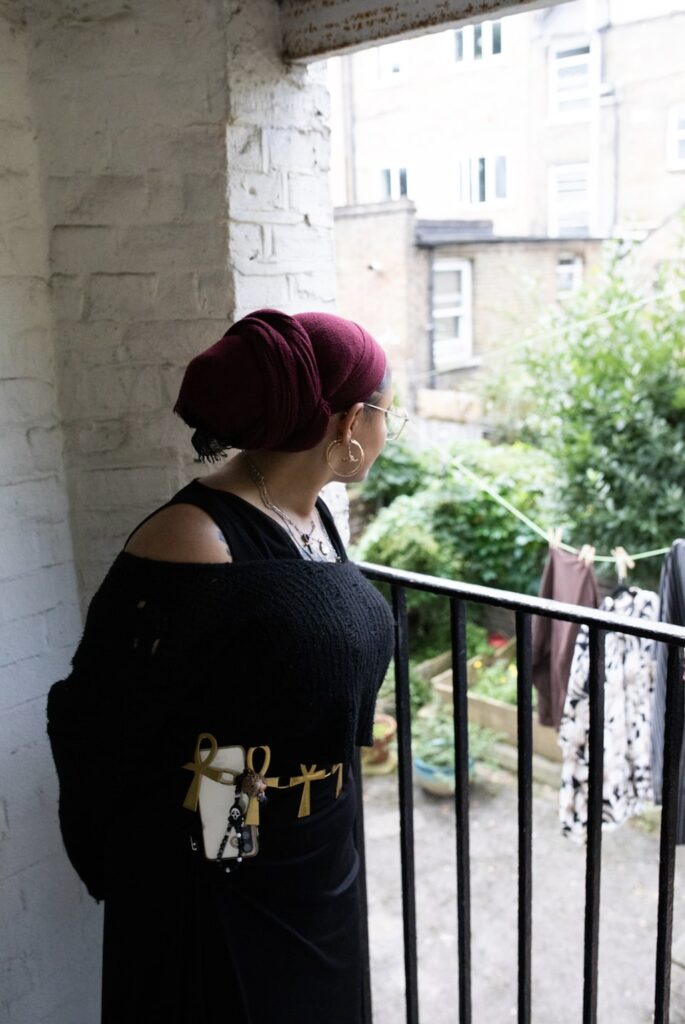
Why Gothic fashion? What do you love about dressing that way?
Like flowers, Goth has always been around me. I grew up next to Camden — Goth central — and my babysitter was Goth. The media I consumed as a kid was Gothic too: Young Dracula, Grizzly Tales, Goosebumps, Darren Shan, Mona the Vampire… even Twilight. It was everywhere, so I just accepted it.
As I got older, I realised alternative fashion gave me freedom. It took me out of the “normal scale” of what’s cool. Within Goth there are so many sub-genres and nuances that you can really find your niche. In the end, it’s all about music, ideals, and community.
Where do you find your clothes and inspiration?
My style’s Romantic Goth, a sub-subculture within Goth. It’s inspired by Gothic literature, art, architecture, and the 19th-century Romantics: corsetry, velvet, lace, Shelley, Poe. I want to look like I’ve stepped out of Dorian Gray.
Most of my clothes are second-hand or custom-made by friends. Post-punk subcultures have always been about sustainability — DIY, thrifting, making do. I don’t follow trend cycles, so when I buy something new, I keep it for years. That’s how it should be.
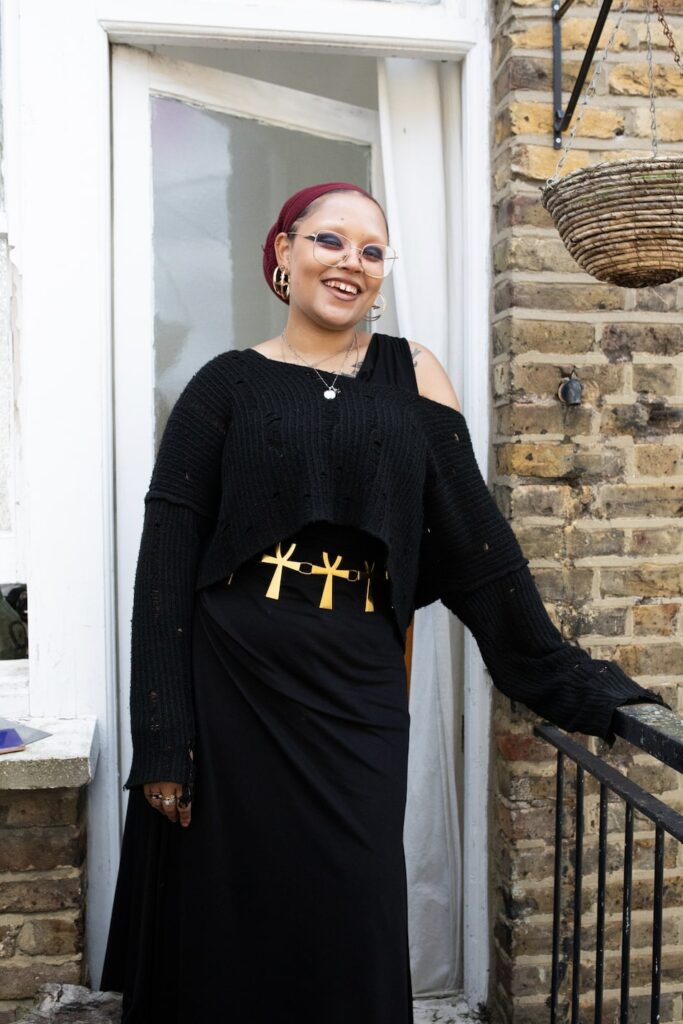
What kind of music do you connect with most?
I listen to everything, but Goth music is my foundation — mainly OG ’80s Goth: The Cure, Depeche Mode, Bauhaus, Siouxsie and the Banshees, Kate Bush. Lots of melancholy and longing. People think Goth music is scary or harsh, but often it’s poetic, even tender.
That said, I also love classical, grime, jazz, punk, indie. Growing up in 2000s London meant flipping between BBK and Arctic Monkeys daily.
What’s a small thing that always makes you happy?
Cooking and baking for people. It’s 100% my love language. Giving people something I’ve made that they’ll enjoy — it’s small for me, but meaningful for them. I was a stress-baker at uni, constantly giving people cakes, and seeing them happy made me happy.