
Share this
Some buildings sit by the sea like memories waiting to be used again. Westbrook Loggia, the long-neglected pavilion on Margate’s seafront, is one of them: a structure built for public life, left to fade, and now being pulled back into the town’s cultural imagination.
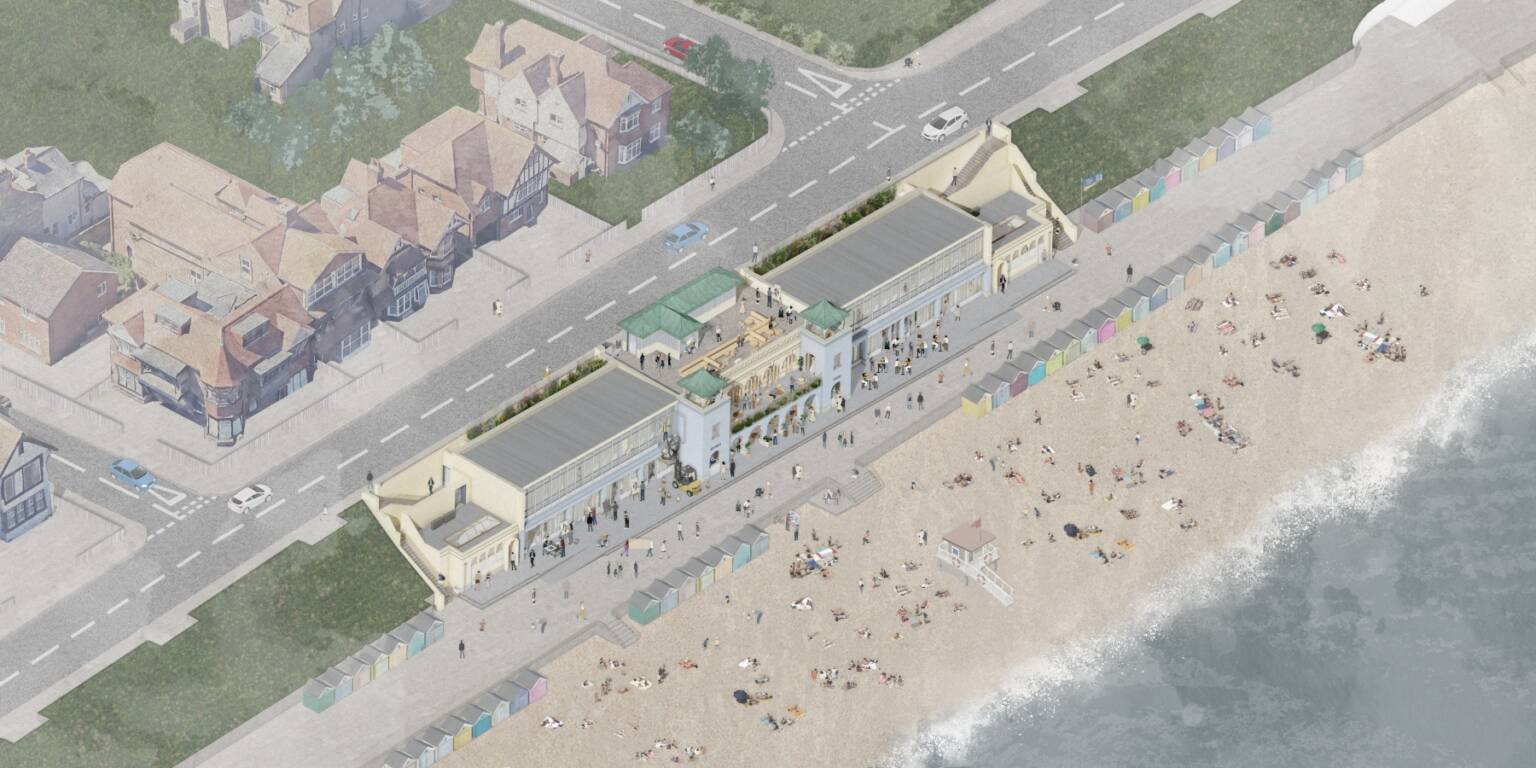
Tracey Emin is leading the revival. The British artist is moving ahead with plans to transform the historic pavilion into a £5 million arts and community hub, with designs by Waugh Thistleton now unveiled as the project enters the planning process. The aim is not simply to restore a building, but to return a piece of Margate’s seaside architecture to the people who live around it.
Built in 1910 as a seaside shelter and social space, Westbrook Loggia has stood derelict for years. Emin has been pursuing its revival since 2020, and the new plans would turn the pavilion into an 11,000-square-foot cultural destination, combining artists’ studios, an events space, a restaurant, sauna, public facilities, and kiosks serving coffee and ice cream.
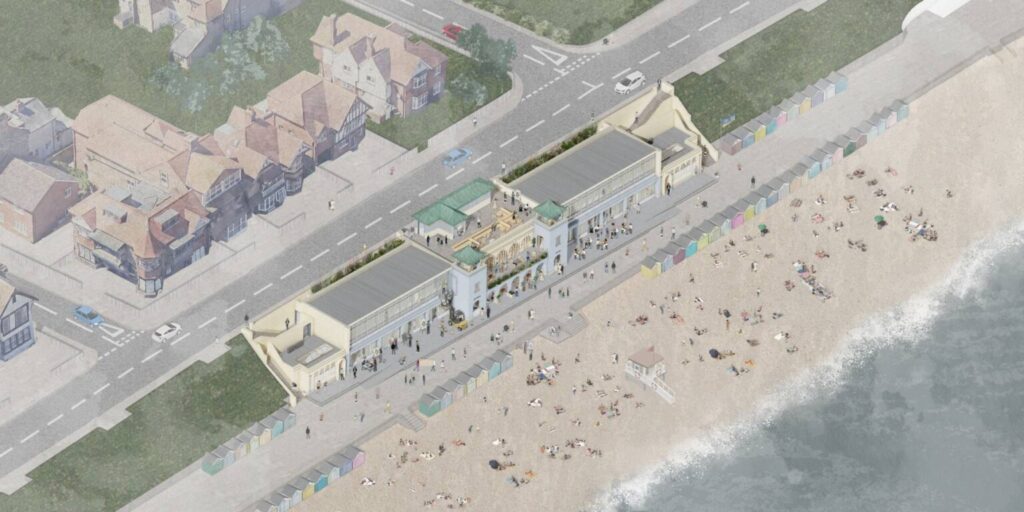
That mix matters. The project does not imagine culture as something sealed away from ordinary life. It puts art beside swimming, eating, working, resting, meeting, and looking out at the sea. In a town where the line between tourism, community, regeneration, and creative labour is already charged, the pavilion becomes a test of what an arts hub can actually be.
The architecture leans into that tension between past and future. Waugh Thistleton’s design restores lost features including rooftop belvederes, an arched colonnade, and a public terrace, while preserving surviving details such as the arched entrance windows and cast-iron balustrade. The point is not to erase the building’s age, but to let its history become useful again.
For Emin, the project extends a much larger commitment to her hometown. Since returning from London, she has helped shape Margate’s cultural landscape through TKE Studios, offering affordable studios, gallery spaces, and residency programmes. She has also invested in local buildings and initiatives, including Perfect Place to Grow, a café and training kitchen supporting young people facing barriers to employment.
But Margate’s art-driven revival has always carried complications. The town’s transformation into a major creative destination has brought new galleries, new audiences, and new energy, but also rising rents and difficult questions about who regeneration is really for. That makes Westbrook Loggia more than another cultural project. It becomes part of a broader argument about how artists, institutions, and communities share space.
What makes the pavilion compelling is its publicness. It does not belong to the white cube fantasy of art as distance. It belongs to the beach, to wet feet, towels, coffee, changing weather, sea air, and the social mess of a town in motion.