
Share this
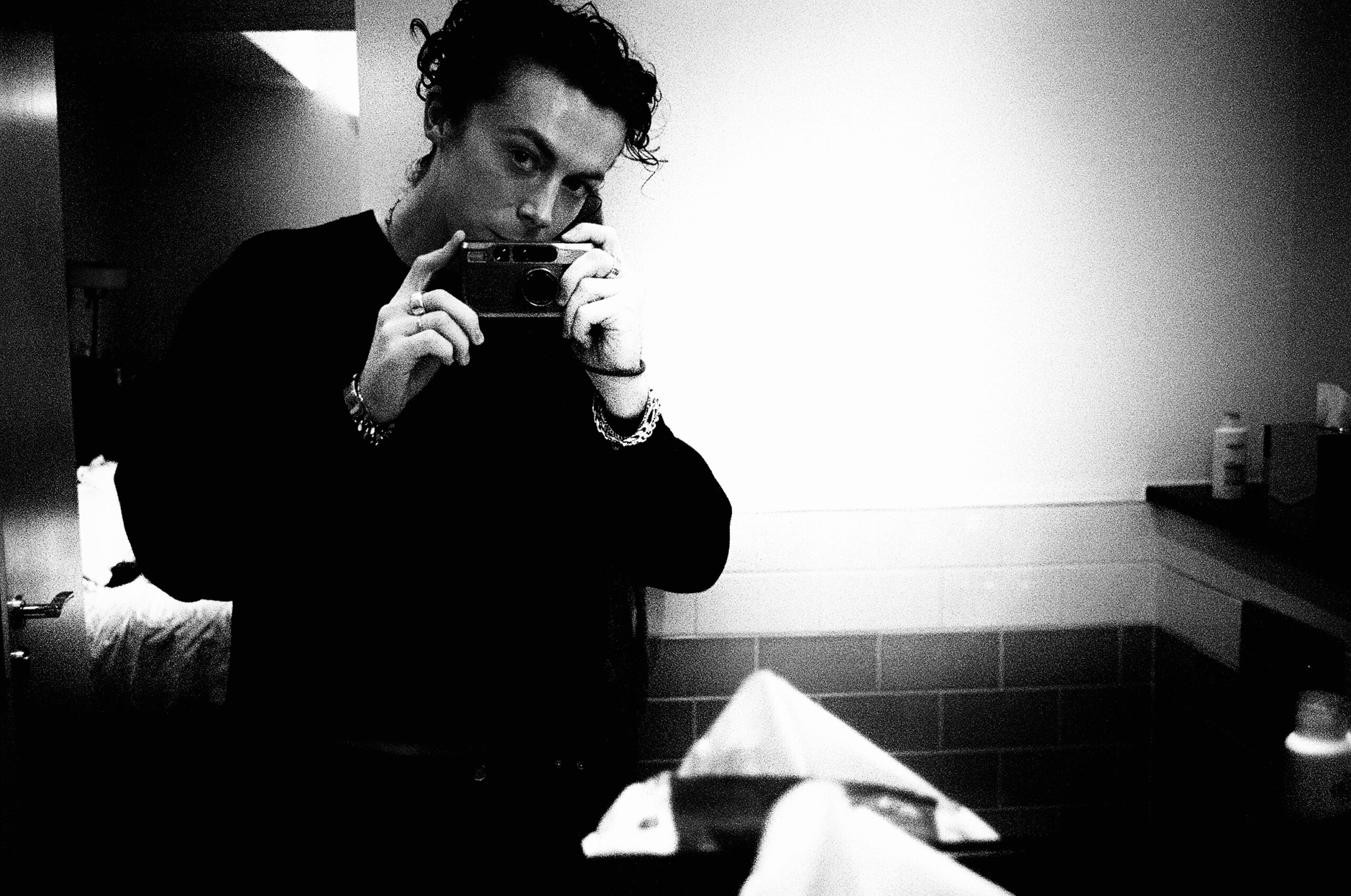
Belfast-born, London-based artist Jack Coulter experiences the world through synesthesia—a rare neurological condition where sound manifests as vivid, pulsating color. In doing so, he joins a distinguished lineage of synaesthete creators spanning both visual art and music, from Wassily Kandinsky, Vincent van Gogh, and David Hockney to Duke Ellington, Pharrell Williams, and Billie Eilish.
Drawing early inspiration from the raw, kinetic energy of American Abstract Expressionists like Jackson Pollock, Willem de Kooning, and Mark Rothko, Coulter finds his deepest resonance in the work of Joan Mitchell, a fellow synesthete who famously referred to the condition as her “secret magic.” Yet for Coulter, painting is never a literal transcription of noise. Approaching each canvas with a commitment to pure emotion over raw sound, he harmonises melody with colour, form, and texture to deliver a deeply felt visual translation of the music that shapes our lives.
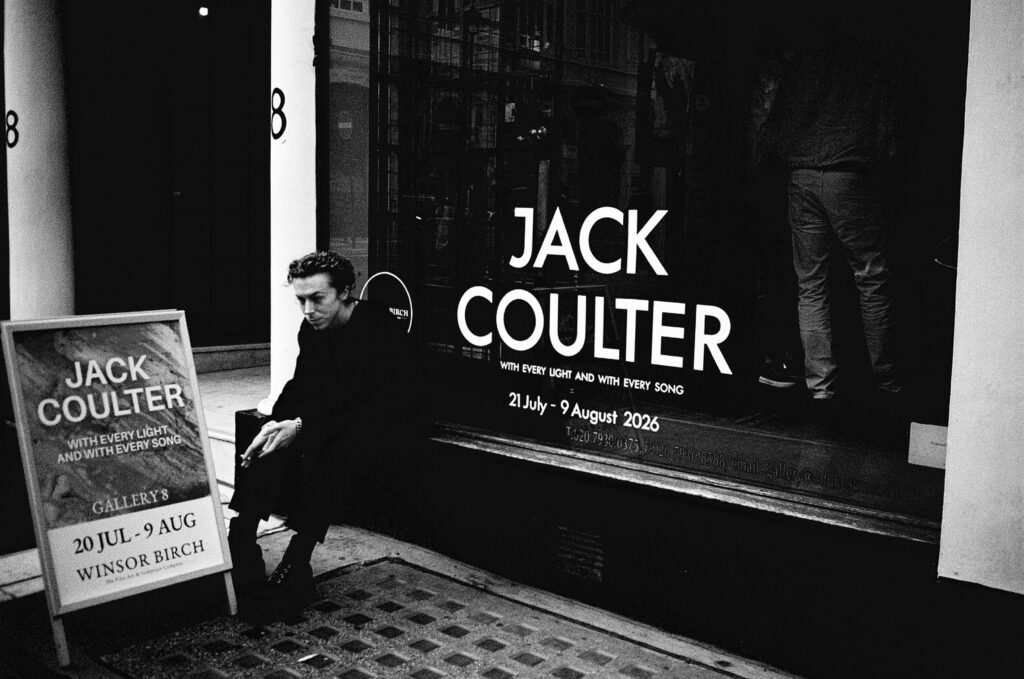
This interview was conducted in August. Jack has since signed with Winsor Birch, enquiries@winsorbirch.com.
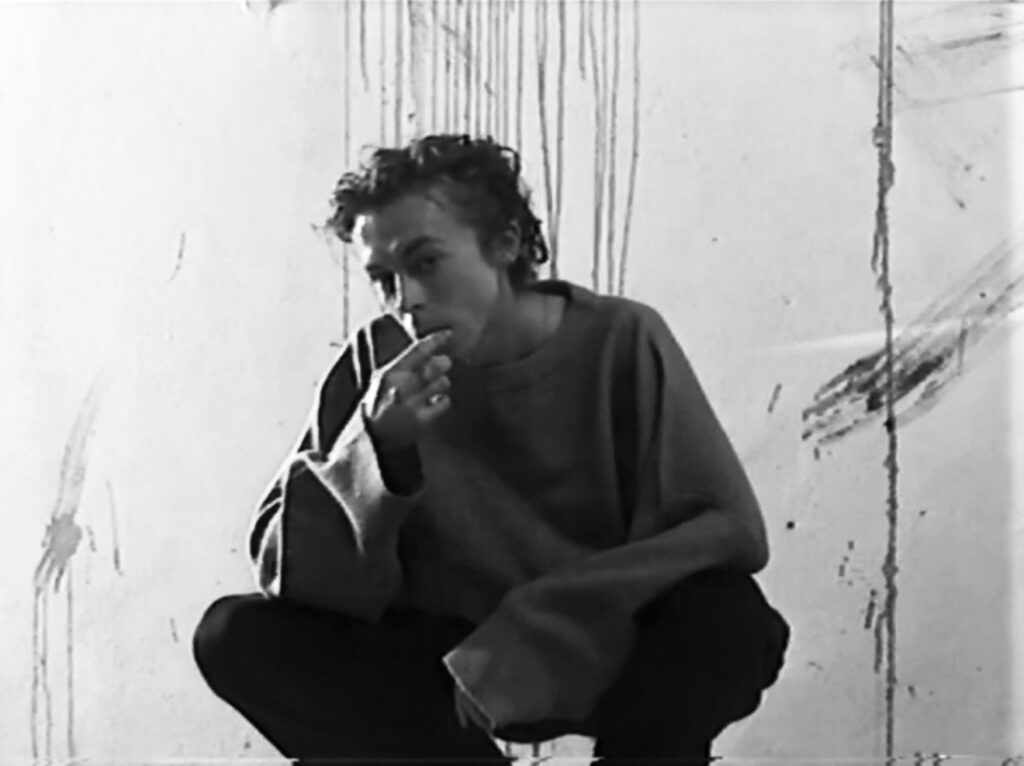
Hi Jack! It’s a pleasure to sit down with you! First question that I always ask. How does a regular day look like for you in London?
Jack: It usually revolves around the studio! Or it depends on whether I have somewhere to be or something to get to. It all depends really on how much work I need to do. I always like to stay ahead on paintings and online stuff. Away from that, my wife Laura and I usually end up in Hyde Park and then the pub!
I’m curious, growing up in Belfast, what was life like there? And what kind of kid were you? What did you enjoy doing?
Jack: It’s a small place with huge history, for many reasons. And you’re very aware of that growing up. Because I was born in 1994, I had a different experience, obviously, from those growing up now in Belfast. And obviously the generation before me, and so on. Belfast is a unique place to grow up in. I wouldn’t want to be from anywhere else in the world. I’m incredibly proud to be from there. I was a shy kid, and I loved the usual things everyone does, like playing football, and I was a bit mad at times. There was no internet, so of course you had to find things to do. That usually involved getting in some sort of trouble. I was always creative and loved doing creative things. Some of my core memories are actually going down to the video shop (VHS) near my house and renting a movie every weekend. I always felt inspired, and looking back now, it was the golden age for great movies. Film still is probably the most inspiring thing for me.

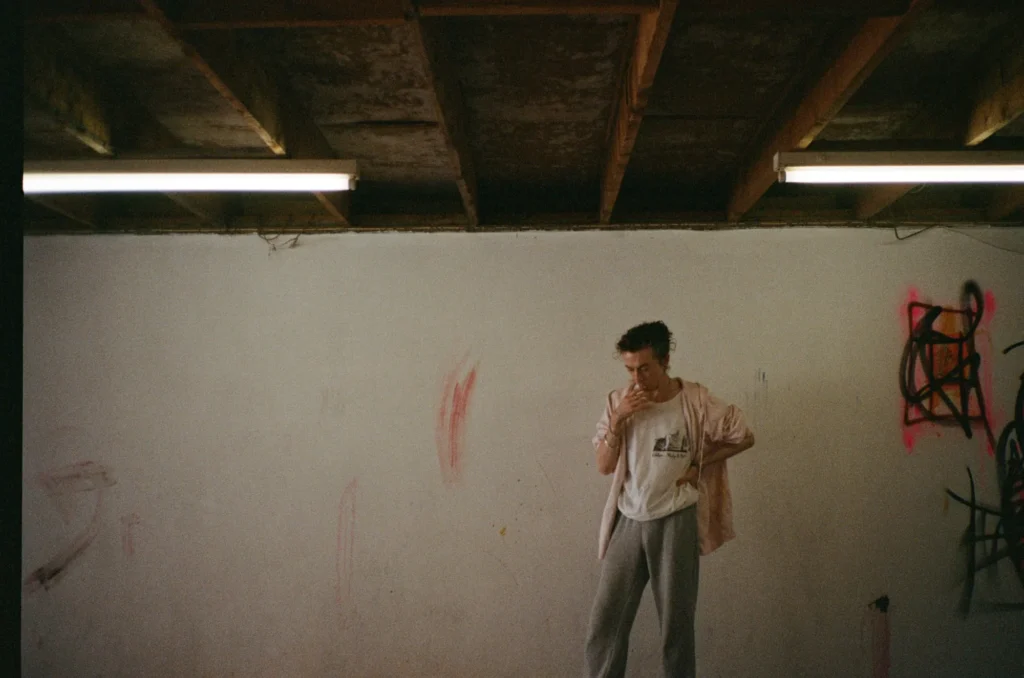
So what brought you to London?
Jack: A lot of things! My wife and I always wanted to live there, and we just wanted a change. And work-wise, I simply had to be there, to be honest. Around 2021, things hit another level, and most of what I was doing was either in London or the USA. I’ve always loved London, and was there a lot as a kid, too.
Do you remember approximately at what age your creative side started to show? And when did you start taking being an artist seriously?
Jack: It was very young. I was always creating things, and I knew that side of me was there, and I was an artist. Making a career out of being an artist is a mountain to climb, especially when you’re on your own and doing everything by yourself. But it’s possible, of course. I knew early on that things would take off. I started putting stuff online, and the responses were very deep and emotive. I remember someone got one of my paintings tattooed when no one even knew about me. There were small signs that things were going to get bigger.
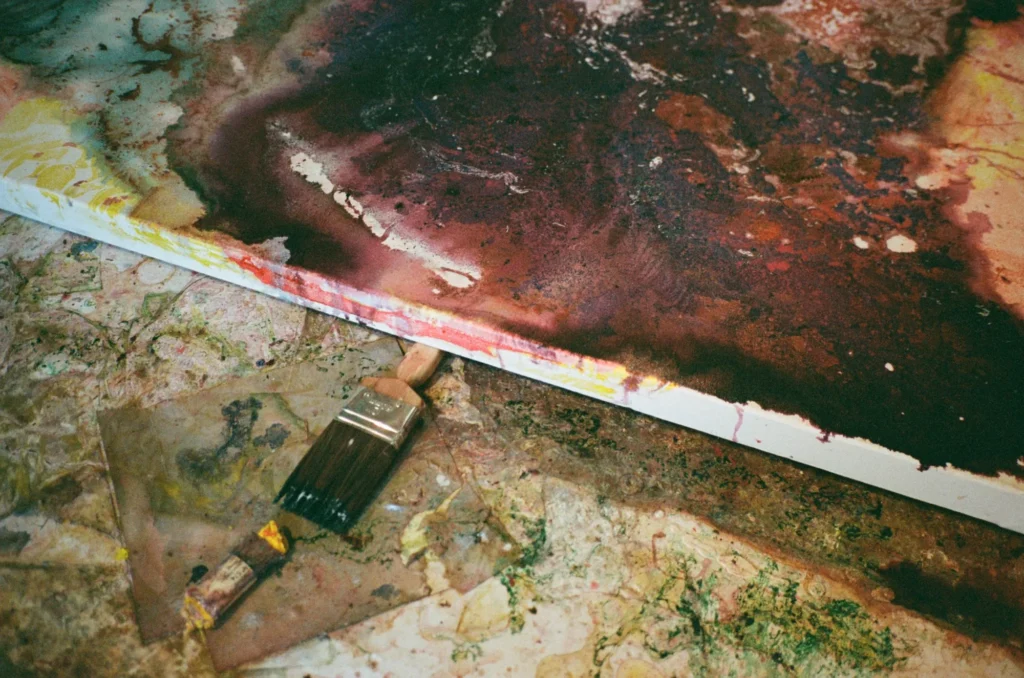
You’ve spoken about first realizing you had synesthesia as a child when you saw vivid, pulsating yellow-orange shapes in response to the sound of your own heartbeat. Beyond listening to curated tracks or live music, what does the ambient, non-musical noise of the modern world look like to you on a daily basis?
Jack: It depends where I am. London’s sound ‘looks’ very different to Ireland, for obvious reasons. Though there are similarities. Clusters of non-musical noise go into distortion and merges of form, if that makes sense. It’s hard to explain. A bit like clusters of colourful static.
Joan Mitchell famously referred to synaesthesia as her “secret magic.” Because your mind visually responds automatically to sound, where does your conscious agency begin when you step in front of a canvas, how do you choose not to paint a color you are seeing, or edit the sensory overload?
Jack: I go by what the painting needs, as a painter first and foremost. Structure, form, fluency, immediacy and instinct. I use every color I see, but it’s how I place them that makes it work.
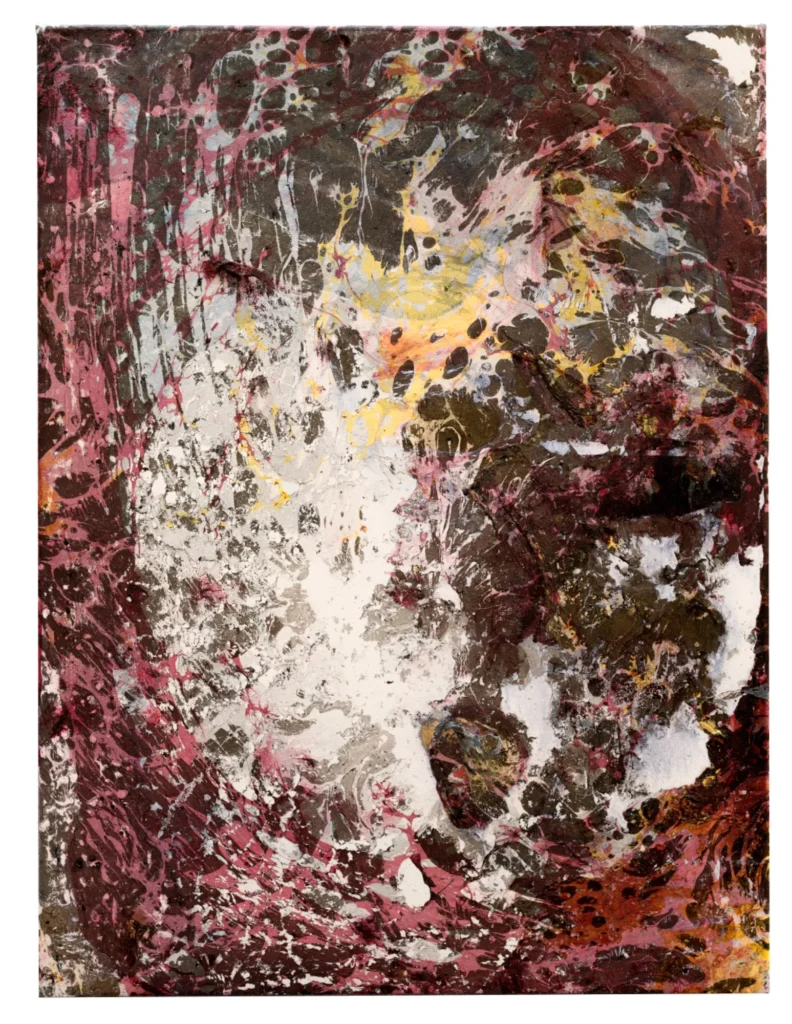
You’ve mentioned focusing first on conveying pure feeling rather than just creating a literal chart of raw sounds. When a song’s visual palette directly conflicts with its emotional weight, how do you negotiate that tension on the canvas?
Jack: I try to take both into account, depicting the colors of what I’m seeing as best as I can. Then I let the song and painting come alive emotionally and physically. It’s all interlinked and done very naturally. I want the rawness and purity of both areas to come through.
You join a lineage of famous synesthete creators, from Kandinsky to Pharrell and Billie Eilish. Do you ever feel a sense of shared visual vocabulary or “kinship” when you look at the work of fellow synesthete painters, or is your internal color-sound map entirely personal?
Jack: The only artist I relate to in this way is Joan Mitchell. Synesthesia contributed to her work, though she had the visual vocabulary to articulate it within her utterly unique painterly style.
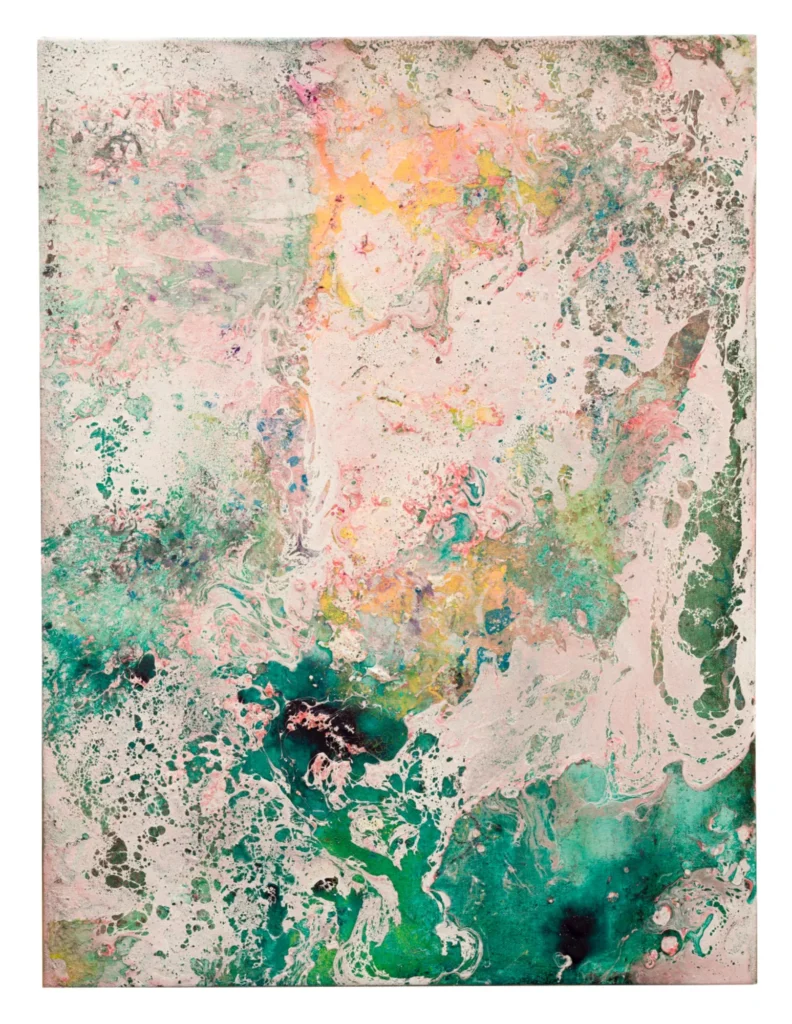
People often describe synesthesia as a gift. Is that how you experience it, or can it also be exhausting, intrusive or overwhelming?
Jack: For me personally, I see it as something of a gift now that I’m older. I never really thought about it growing up, as I thought everyone saw things the way I did. It used to be one of those things you mentioned when I was younger, but with age and audiovisual experience, it’s much less intrusive in my day-to-day life. I used to have severe migraines, and I still have them occasionally, but it’s not as overwhelming as it used to be. Sensory overload is still there at times, though it’s usually when there’s something very new that brings it on. I think it all comes down to exposure.
You recently completed a live painting performance of Tiny Dancer alongside Sir Elton John, and your work translates tracks ranging from Amy Winehouse to Radiohead. How does painting a live, organic performance differ visually from translating a heavily produced, studio-engineered track?
Jack: Live is totally different, as it’s unpredictable. That’s what I love, to be honest. My process is unpredictable and experimental, so a live performance really mirrors that. I’m essentially painting live every time I work.
Was there a moment during that Elton John performance when you became conscious of being watched, and if so, did that interfere with the instinctive part of painting?
Jack: Not at all when I was painting. I was locked in on the painting and music. Only after I looked up, finished the painting, and Elton stopped playing did I become aware of the cameras and film crew. Very few people were allowed in. It was Elton’s team, the film crew, photographers and my wife Laura.
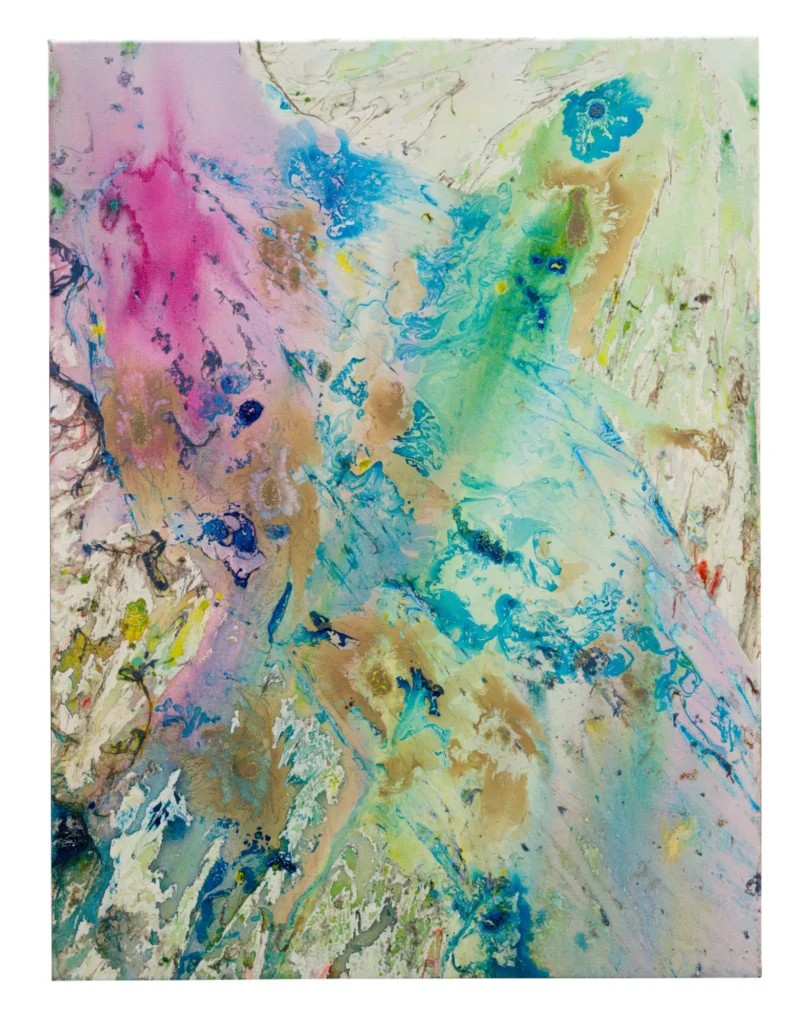
Your recent exhibition moved between musicians as different as Amy Winehouse, Radiohead, Madonna, My Bloody Valentine, Bowie and Mk.gee. Do certain kinds of music give you a richer visual experience than others?
Jack: It all depends on how you feel, honestly. If I feel a piece of music, you can see it very clearly in the work. There’s a weight to the painting. There are songs I don’t necessarily feel that much, and it’s more just the song that’s painted.
Your paintings bridges the gap between the music world and fine art. Because overstandard sits squarely at that intersection of subculture and pop culture, what is it about contemporary music that makes it such an endless engine for contemporary visual art?
Jack: It’s the perfect blend. The greatest painters and musicians have come before us, and today’s work nods to the past while pushing us into the future in a unique way. I love listening to and hearing new music, and it’s always inspiring. I think that’s why – it’s an endless source.
Seeing sound is fluid and temporal, but painting is static and permanent. What is the hardest part about trapping a fleeting, fluid sonic moment into a fixed physical medium like paint and canvas?
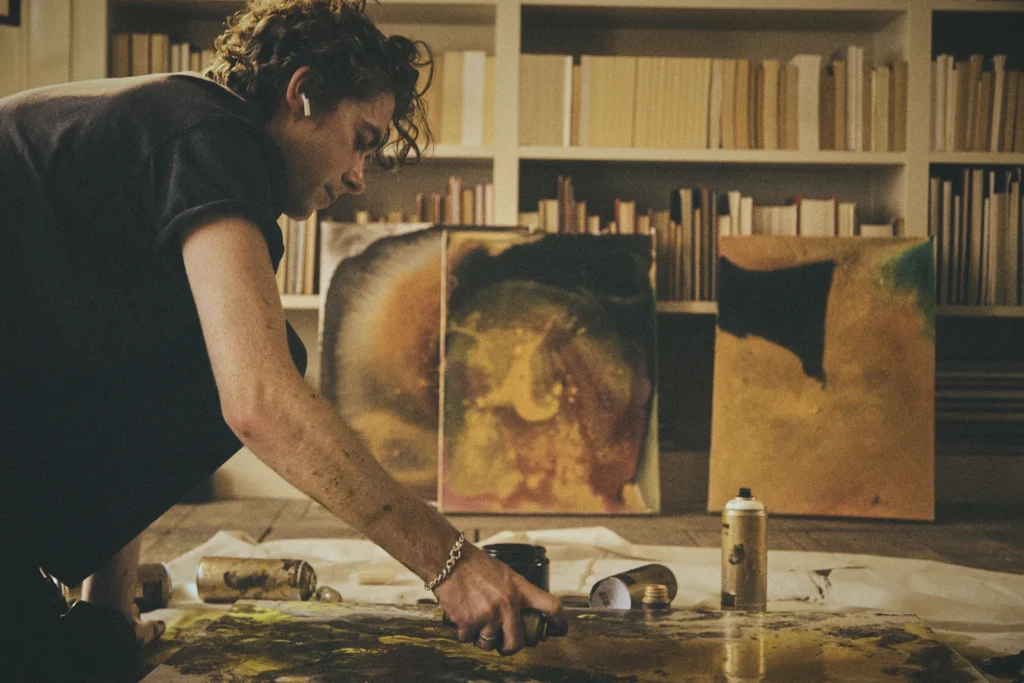
Jack: I don’t find it very difficult, to be honest. I work in a way that allows me to capture very complex moments. This mainly comes from using liquid paint, letting it move with the music. Often it takes on a life of its own and allows those moments to form. I physically move the canvas and direct the paint.
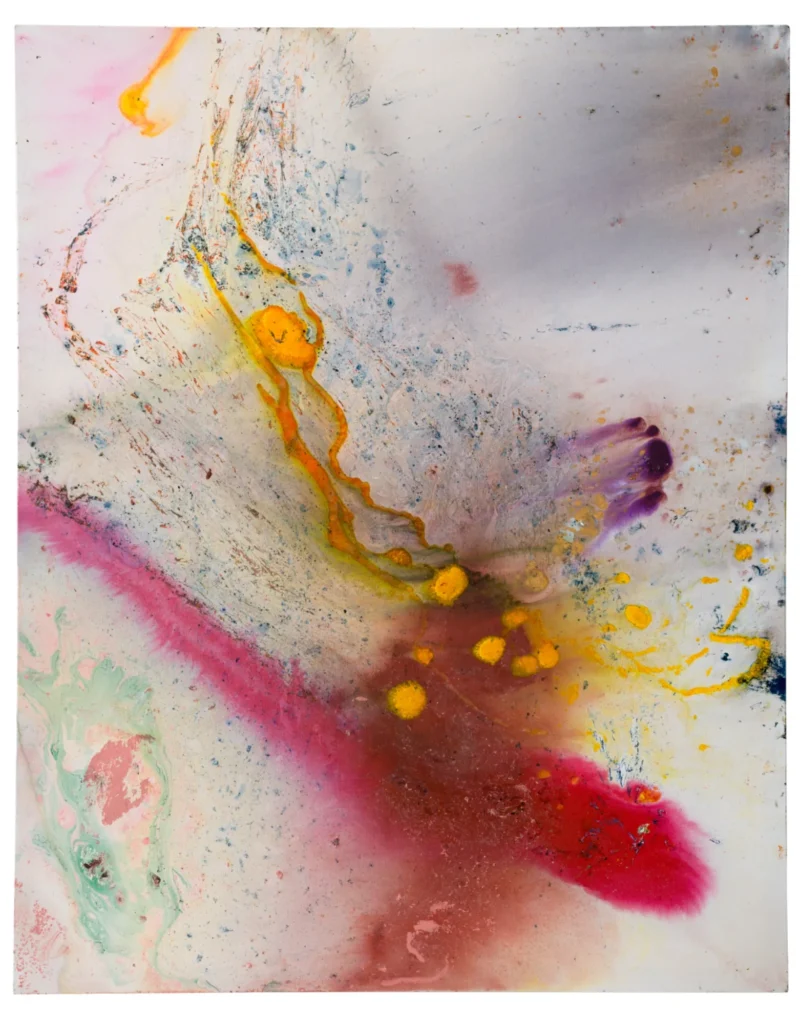
Synaesthesia has inevitably become central to how people describe your work. Do you ever worry that it can overshadow the fact that you are simply a painter making decisions about colour, composition and form?
Jack: I don’t worry about it at all. I know it’s a very interesting part of the work, and it’s amazing that people find it so interesting. I think what really grabs people is that the work has an almost classic painterly look in a sense, but it’s laced with this bizarre neurological thing. It’s not for me to say! My main intention is feeling. So, everything combined somehow works! I feel very honoured to have this much support and for things to have reached this level. I’ll never take any of it for granted.
You became successful relatively young and built much of your career independently. Has success changed your relationship with the private, almost compulsive reason you started painting in the first place?
Jack: It has. The only part that feels the same is when I’m physically painting – it still feels the same as when I was a teenager painting in my garage in Belfast. Every other part of my life has changed. I sometimes take a step back and think about how amazing it’s all been so far. I’ve been trying to do that more, as I’m always so busy and focused on the next thing. It’s a dream come true.
Abstract painting is often described as non-representational, but your paintings arguably represent something extremely specific: an experience that other people simply cannot see. Do you think of your work as abstract at all?
Jack: I’m honestly not sure how I’d describe it! It’s abstract in a conventional, painterly sense. Though, it borders on something very elusive, which I’m trying to bring to life. It’s like trying to catch and portray a vivid dream. Speed is very important.
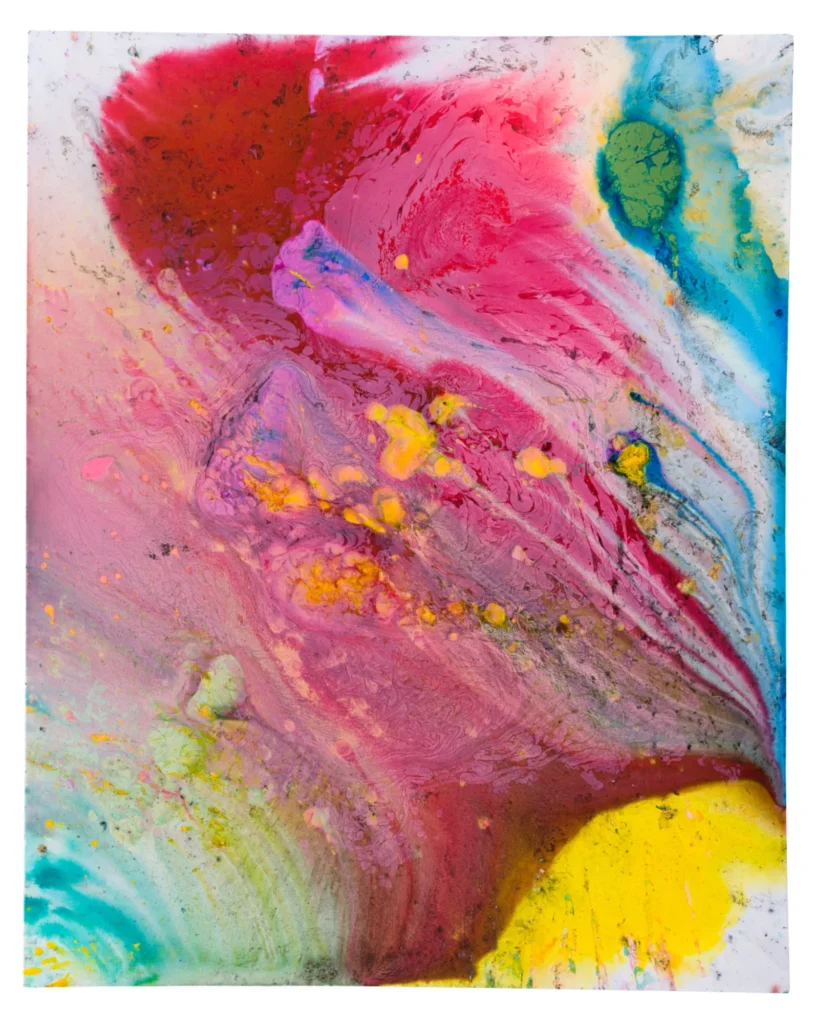
Music is unusually powerful at transporting us back into memories. When you paint a song that means something personally to you, are you painting what you hear in the present or everything that song has accumulated over your life?
Jack: A mixture of both! I think that if I have a specific memory and feeling tied to something, it will come across in a universal sense, just like a song does. That’s the main thing, not ‘showing’ people how to feel. And I think that’s an interesting thing. Some of the saddest songs ever have the brightest colours for me. And equally, a very happy song can be dark. I think that mirrors the association with music – there are very happy songs that you can’t listen to anymore because of a memory. And the same goes for sad songs.
Abstract Expressionists like Pollock and de Kooning relied on raw movement, gesture, and physical rhythm. Given that your work is deeply kinetic, how much of your process is an instinctual physical performance versus an intentional exercise in composition?
Jack: It’s a combination of both, because the way I paint is like a performance. I don’t consciously think about composition, as it’s automatic. I think if you do, you’ll lose the work. It should be instinctual. I think the perfect artists that represent both in your question are Janet Sobel and Hilma af Klint.
With that In mind, can you walk me through your creative process from beginning to end result?
Jack: There are core things that I do when approaching a canvas. There’s always liquid, of all kinds. Although the surrounding elements change every time. I’m not sure I’d be able to walk anyone through my process, as there’s always something new popping up, and that’s what is most exciting. I always like to go beyond the technique once I understand and exhaust it.
Can you also tell me about your use of symbolism?
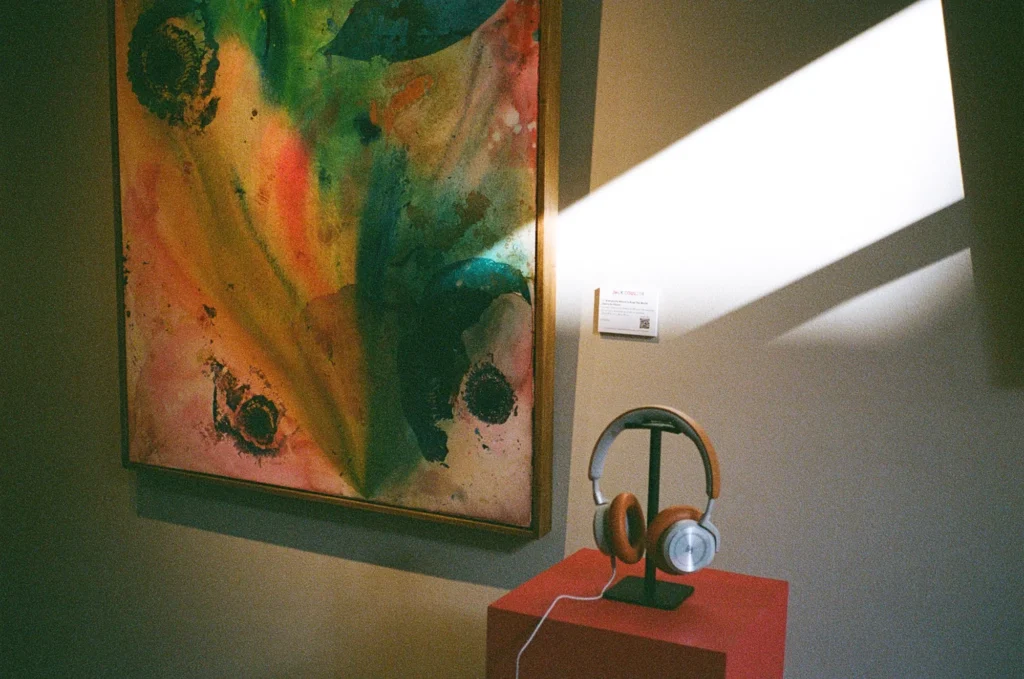
Jack: If you look closely, it’s in every single piece. There are nods and subtleties, easter eggs almost. If you can spot them! The most recent example, which is quite obvious, would be the ‘You Can’t Hurry Love’ (The Supremes) painting in my recent show. There’s a heart form which isn’t quite full as it’s growing into the piece. Anne Hathaway bought that painting, which was fantastic. Another, which is less obvious, is in ‘Tears Dry On Their Own’. Once you see it, it’s hard to unsee. There’s a side-profile face figure, and it looks as if there are tears flowing down to the right. Even if people don’t notice these, I find them very important. I always love what people see in the work, and these are deliberate, though sometimes completely unintentional. It’s like something giving it the ‘yes’ if I’m painting a song. Painting such huge songs in musical history is difficult enough, and I like to go beyond painting the song.
How do you approach color?
Jack: I think all color works together in paint – it’s just how you place them and how they merge. It’s like the colors in nature – your brain doesn’t question it.
So with what we just talked about, what are you hoping to convey?
Jack: For me, and in a neurological sense, I want to show people what I see through paint. Overall, it’s about conveying feeling and freedom.
Ok Jack, now to something totally different. In a parallel universe who would you be? and what would you be doing?
Jack: Truthfully, I’d love to work in film, either in the editing department or in art direction. Film is hugely inspiring to me. I’m obsessed with perfect music choices paired with the perfect visuals. It’s almost like it was found rather than made. There’s an unmatched power and inspiration. Some of my favourites that are flawless, in my opinion, are Thelma & Louise, The Handmaid’s Tale, The Bear and the Basquiat film.
Outside of art, what’s something you’re obsessed with right now, maybe a hobby, a show, or even a food, that keeps you grounded or inspired?
Jack: I love cooking. That’s definitely always one. My wife and I cooking together – that’s my favorite time of the day. And also just hanging out with our three cats and pup!
Can you tell me a story about a time when a connection with someone had a big impact on you?
Jack: Definitely meeting my wife, Laura. We understand each other on a level I wouldn’t even know how to explain. We’ve been together for over 10 years now, and it’s only grown stronger with each year. Laura will always have the biggest impact on me.
What qualities do you find most important in the people you choose to spend time with?
Jack: To be honest, just feel like there’s no effort when you’re around someone. There’s nothing worse than when you have to change yourself to speak to someone. I think it’s just clicking with people. I’m very introverted. I do all these crazy things with art and end up in absolutely bizarre, amazing situations and have these experiences, but when I’m home, I just want to hang out with Laura and our pets.
Anybody you look up to?
Jack: My wife, Laura. She’s the realest.
What motivates you?
Jack: It’s hard to pinpoint. I think it’s just acting on the instinct of creativity. Go with it when it comes.
How would you describe a perfect day?
Jack: Hanging out with Laura and our pets, and painting. Then watching a new film that’s out.
Alright Jack, I always ask these two questions at the end of an interview. The first is. What’s your favorite movie(s) and why?
Jack: Billy Elliot is my favourite film. I’ve always loved it.
The second is. What song(s) are you currently listening to the most right now?
Jack: I love the new Fontaines song ‘Marianne’.
This interview was conducted in August. Jack has since signed with Winsor Birch, enquiries@winsorbirch.com.