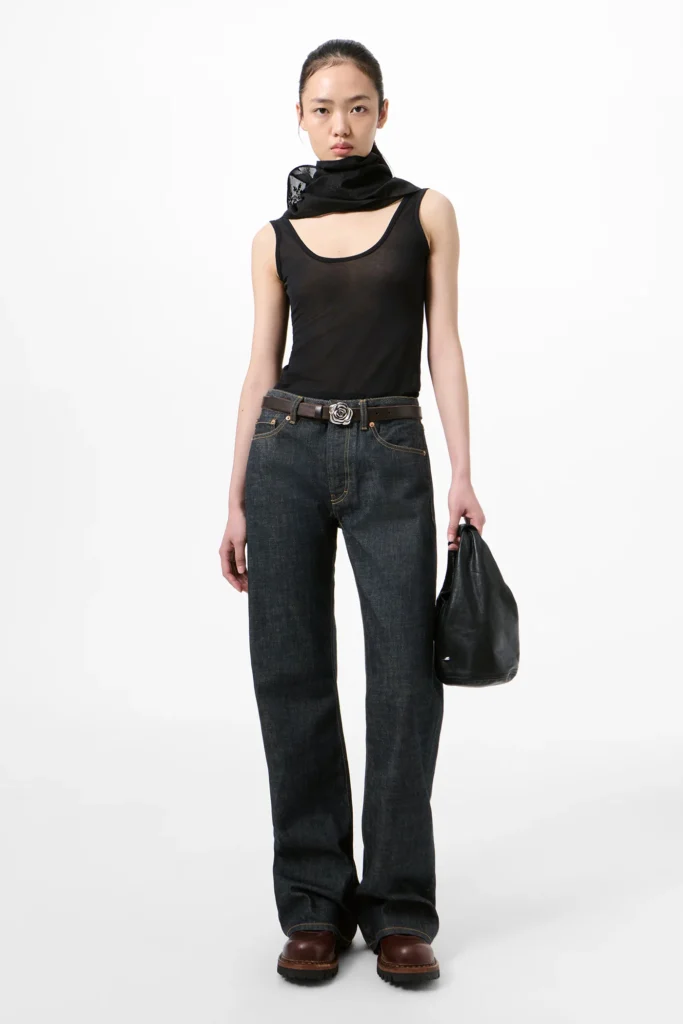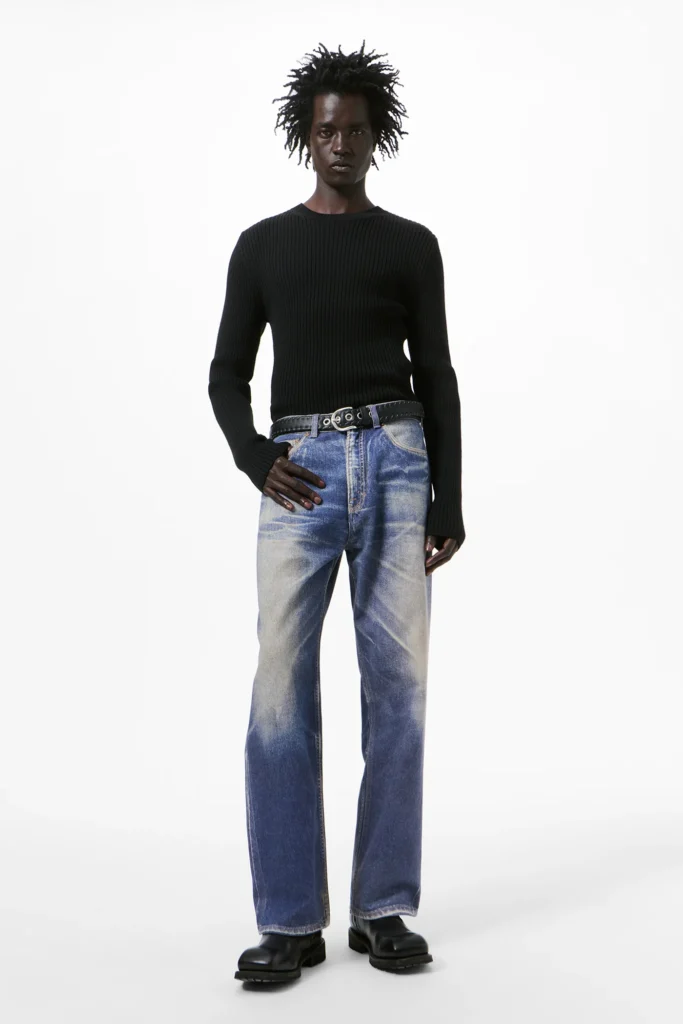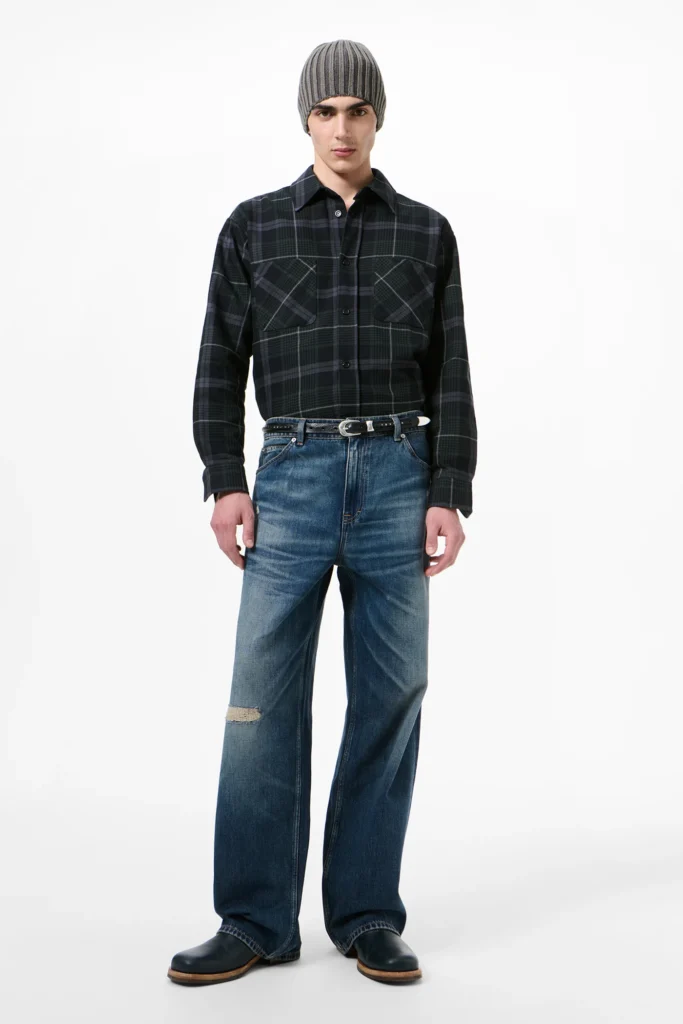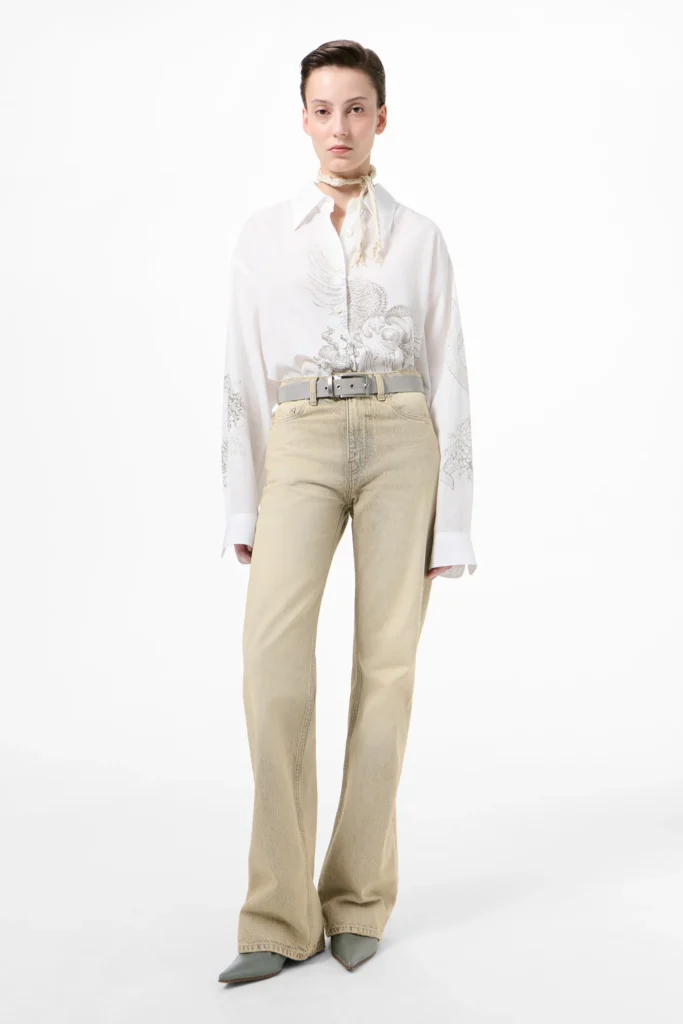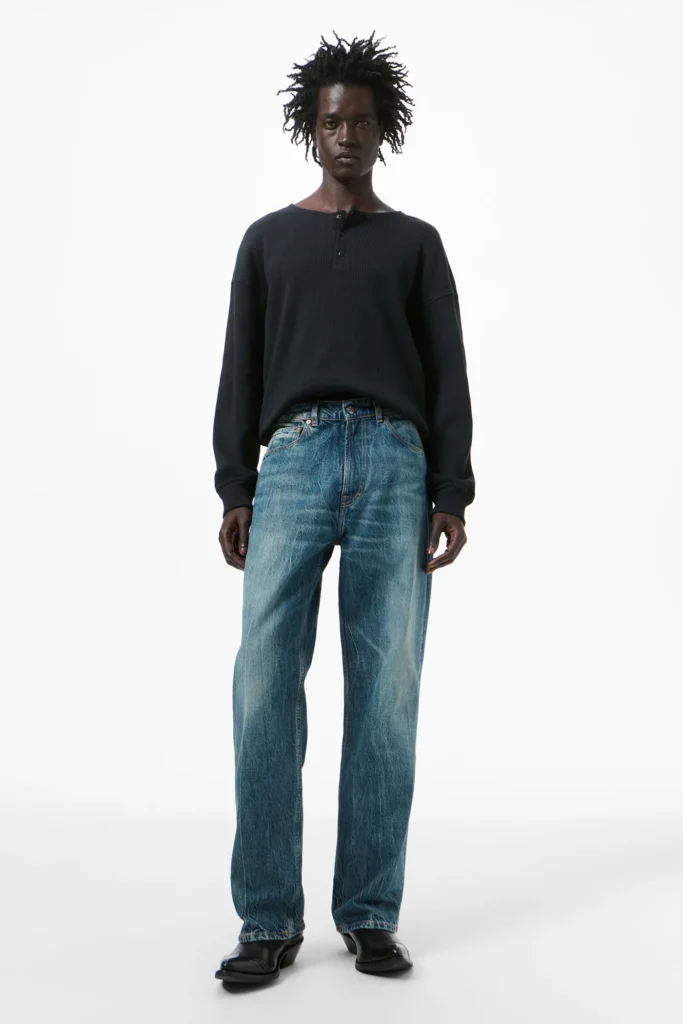
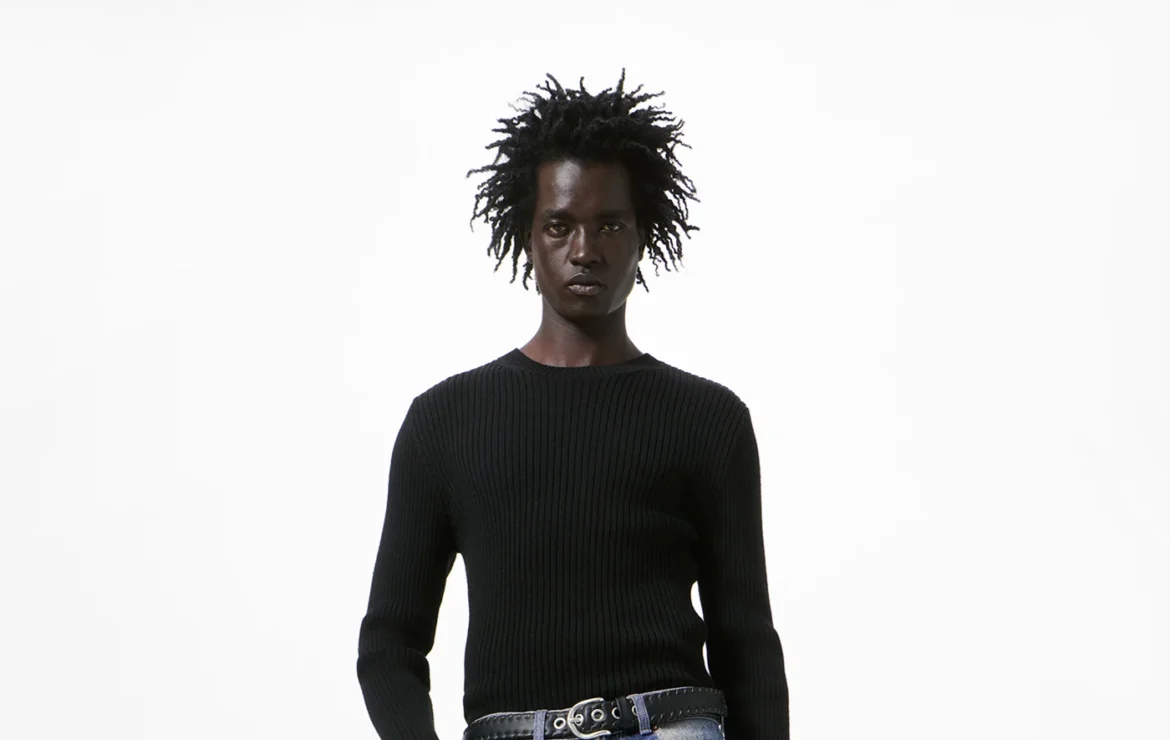
Few labels understand the emotional decay of everyday garments quite like Our Legacy. For Fall/Winter 2026, the Stockholm-based creative powerhouse doubles down on its obsession with living fabrics and artificial age, presenting a denim collection that feels less like a seasonal drop and more like a collection of unearthed, heavily worn artifacts.
Instead of chasing crisp, rigid raw denims or predictable vintage fades, the brand subjects classic 5-pocket jeans, trucker jackets, and oversized button-ups to radical chemical and wash treatments. Highlighted by trompe-l’œil pigment prints, sun-bleached treatments, and heavily hand-distressed distressing, each piece carries an uncanny, ghostly patina. The signature Third Cut jeans return alongside sweeping, ultra-wide wide-leg cuts, draped in washes that blur the line between dirt, paint, and decades of genuine exposure.
The subversion lies in the tension between raw industrial weight and delicate tailoring. Heavier indigo and washed-black denims are paired against fluid, translucent top layers, showing off the brand’s uncanny ability to make rugged workwear feel ethereal, moody, and deeply intimate. Subtle details—like distressed leather back patches, tarnished metal hardware, and intentionally frayed hems—reinforce the feeling that these clothes have already lived a long, chaotic life before ever touching a hanger.