Share this
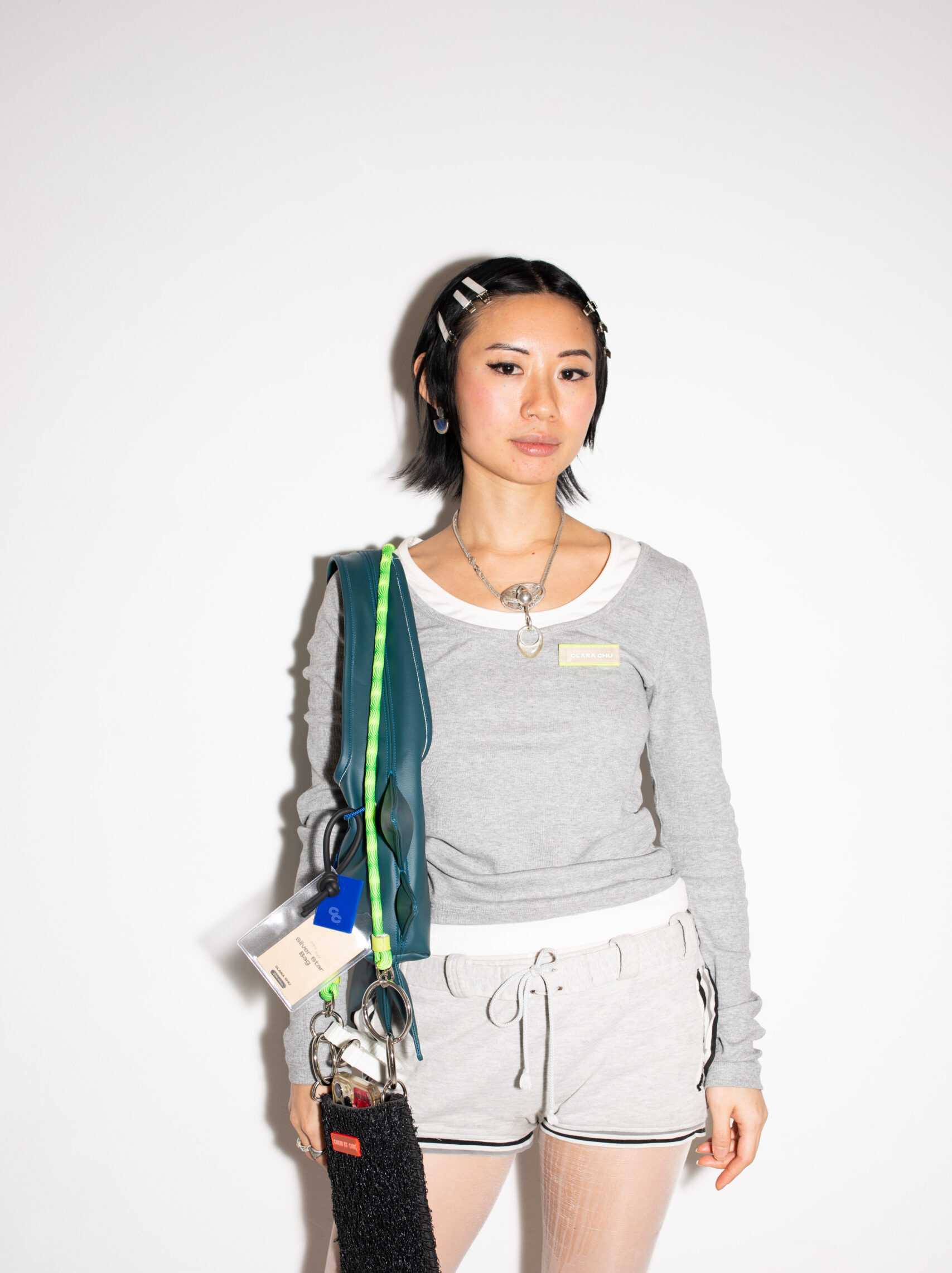
The first time I met Clara Chu was brief, or rather, I observed her at work. I first saw her in an artist’s studio building in White City. The building was modern, with large windows high up and a big central space. As I walked through, past other studios and creatives, I passed Clara. She was standing beside a backdrop, working with others, photographing her handbags under bright studio lights. She glanced up and smiled as I walked past. I remember thinking: whatever’s happening there, with those bags, with her, looks serious, but also fun.
Over the years, I’ve watched that commitment continue. I’ve photographed her in different studios as her practice has evolved, workshops, teaching, new collections, residencies, new spaces. Each time, there was a sense of progression. Of someone steadily building something distinctive while staying committed to her values of upcycling and material reuse.
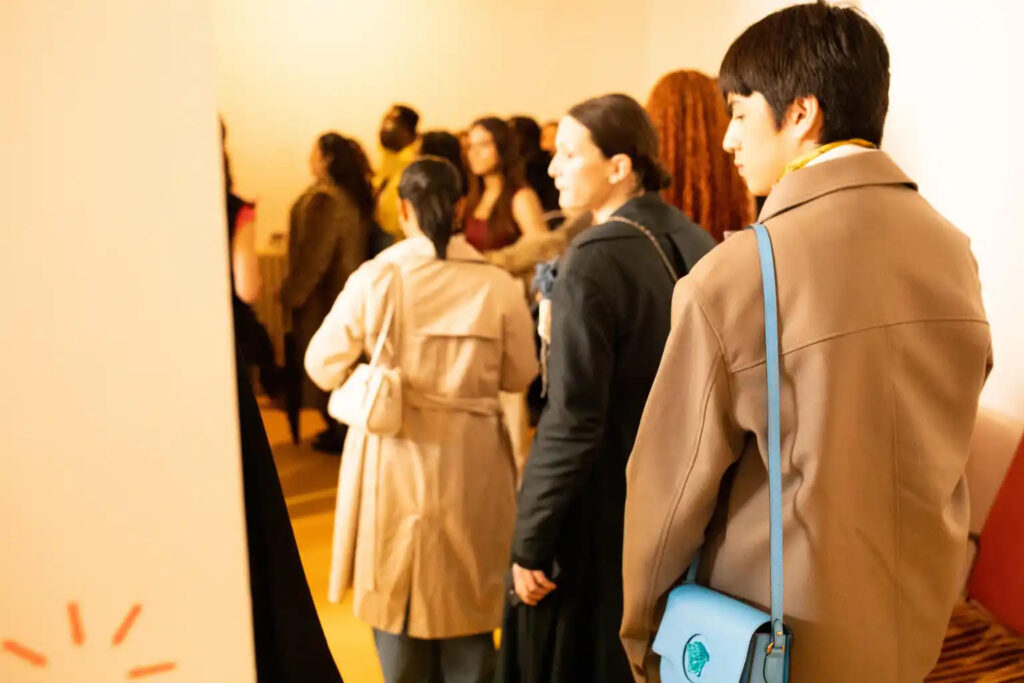
So when I reached out to her about doing a feature this year, and she invited me to attend her debut show at London Fashion Week, it felt right. Like this was the moment it had all been leading towards. I took the train in from North London. At each stop, more people got on, dressed in fantastical outfits, looking incredible. It felt like something was happening.
This was London Fashion Week. When the train arrived and I got off to walk towards the venue, it became clear. The same people I had noticed on the train, the ones dressed so distinctly, were now moving in the same direction.
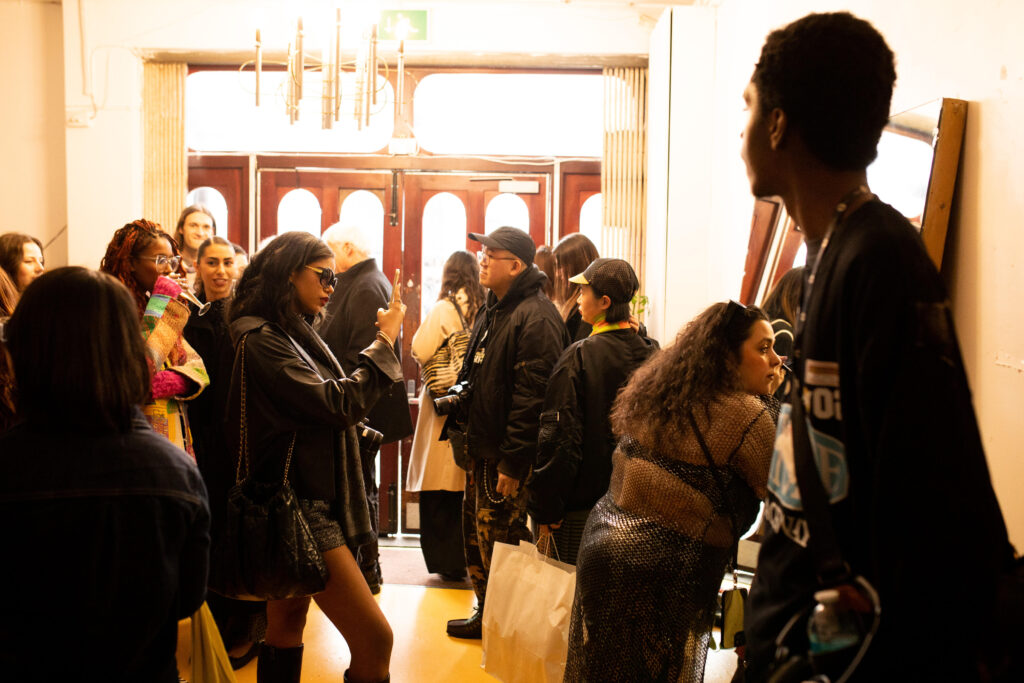
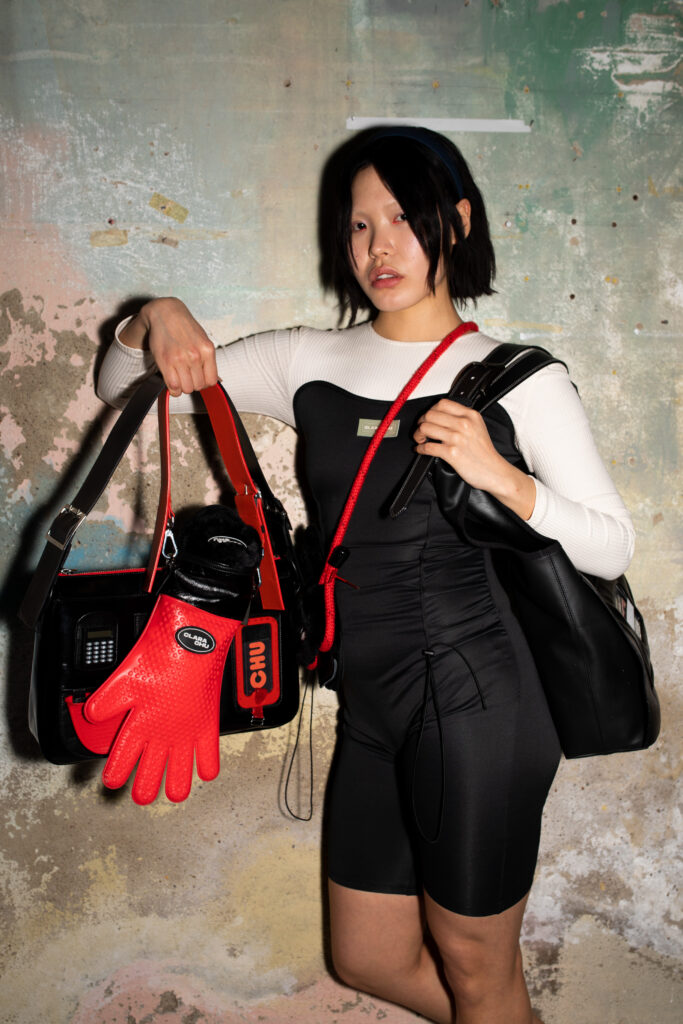
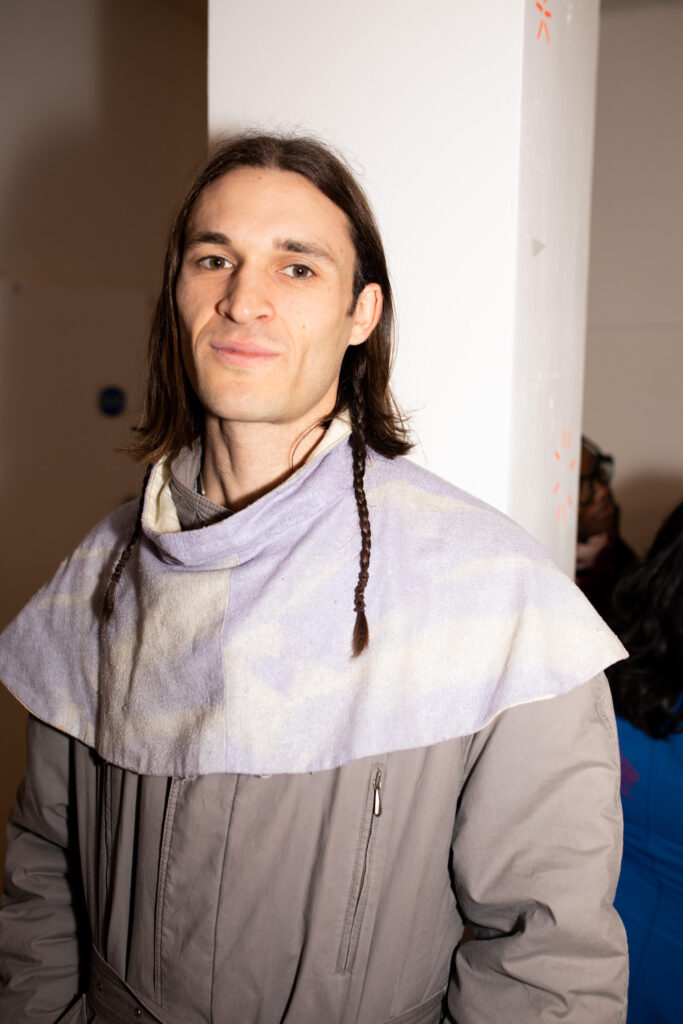
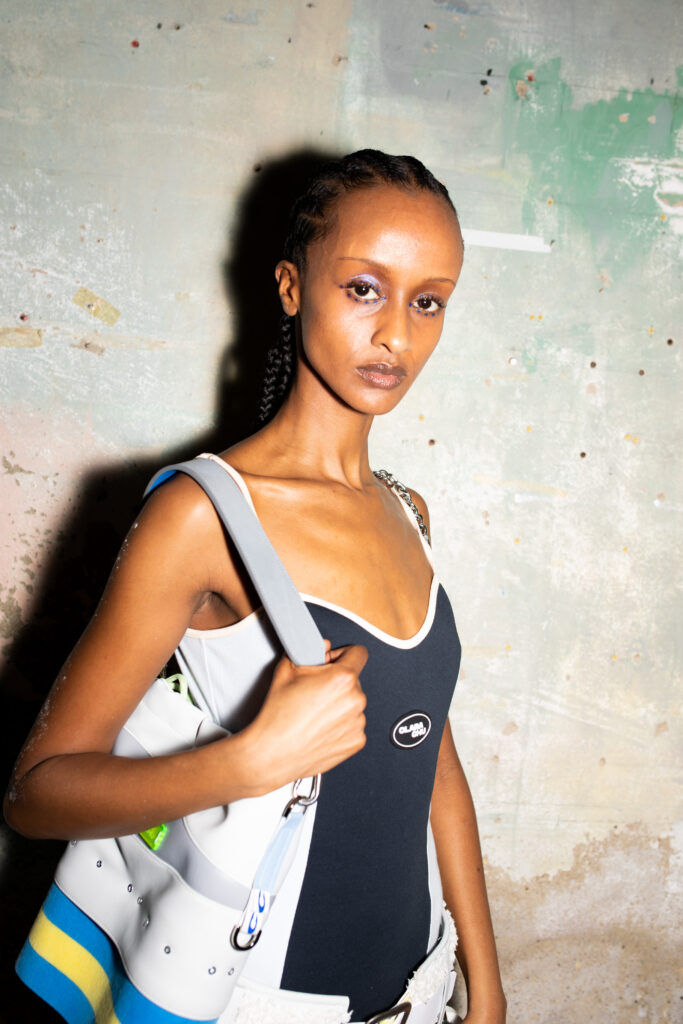
We were all heading to Clara’s show. Backstage was a world in motion, makeup artists, photographers, hair and styling, everyone working in sync, building towards a moment that was about to unfold. Then the main space. The handbags hung on carefully constructed forms. The lights were set. The room was quiet. And then it began. The models entered, and as they did, the room started to fill. People flooded in. It felt continuous, like it could go on indefinitely.
The models didn’t simply walk, they performed. Working with choreographer Chantel Foo, they moved through the crowd, sometimes confrontational, hissing, locking eyes with people. There were giggles, moments of shock, excitement. The energy didn’t spike or fade, it sustained, high and constant. People kept arriving. Photographing. Talking. Watching. Documenting.
The performance extended beyond the main room, spilling into corridors and entranceways. Models moved through the crowds, shaking the bags, carrying the work with them. It was dramatic. Choreographed. Constantly shifting. It felt like more than fashion. And at the centre of it all was Clara.
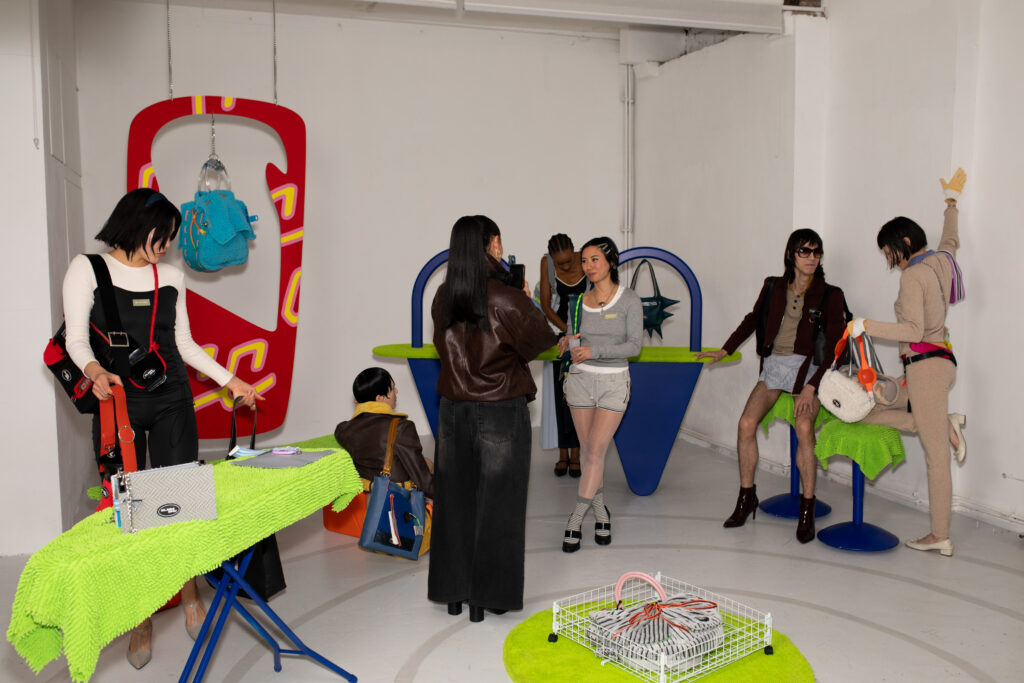
As I stood there, I found myself thinking back to when I had first seen her, in that studio, working with that same level of focus and intent. And how that consistency, that dedication, had led to this.
It didn’t feel surprising. It felt inevitable. Years of work. Of building. Of refining. Of showing up again and again. And now people were there for it. To see her work. To witness it. To be part of it. It felt like a privilege to be there, to watch it unfold, camera in hand. It felt like a big moment. And you could sense that everyone in the room knew it. To see what she had built, through her own effort, her own consistency, arrive at this point was genuinely exciting.
And I’m very glad I was there to see it.
Text and photography, by Brynley Odu Davies.
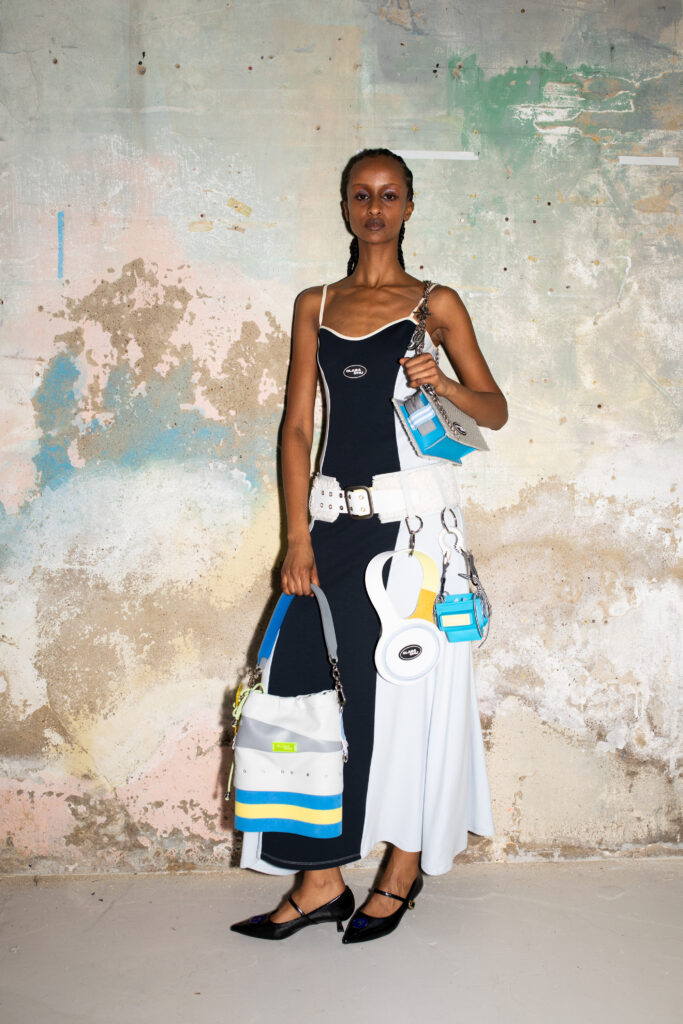
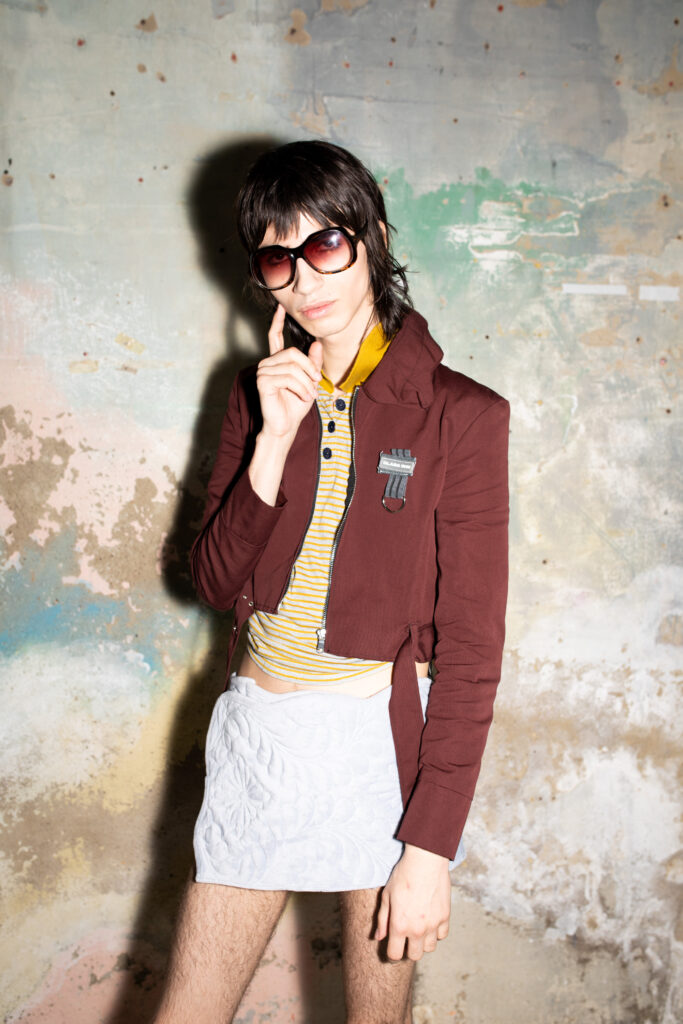
Is showing at London Fashion Week something you’ve always wanted to achieve? And how did it feel when it finally happened?Clara: It wasn’t always a fixed goal, but it became more meaningful over time. When it happened, it felt unreal, more like everything I’d been building finally aligned, rather than just a milestone. It felt like the right moment to show the core of the brand, its quirks and slightly bizarre nature and just have fun with it, especially after working mostly in static formats.
What’s your earliest memory of fashion being part of your life? At what point did you realise you wanted to become a fashion designer?
Clara: I didn’t grow up wanting to be a fashion designer. I actually wanted to be a painter. It wasn’t until I started Womenswear at uni when I went in not knowing how to sew or what pattern cutting even was. What pulled me in was the process and simply understanding how things are made by hand. I’ve always had an instinct for mismatching elements in how I dress. I just didn’t realize that instinct could become a practice, all about something playful, spontaneous, and expressive.
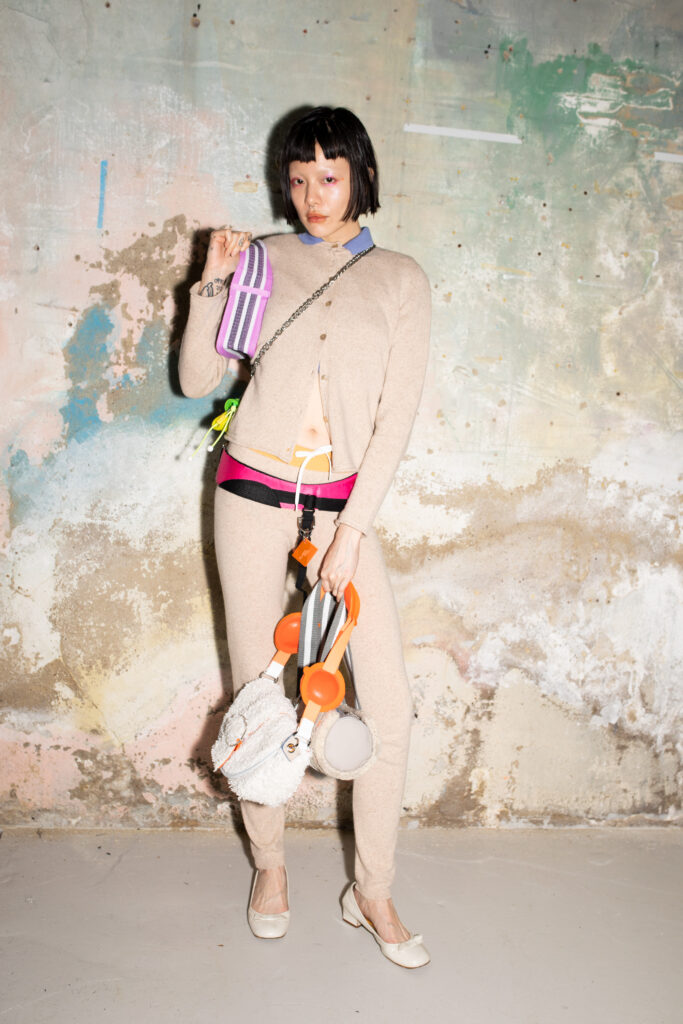
You’ve been building your name in London for several years now, running workshops and working with institutions like the V&A. What’s the most rewarding part of being a fashion designer in London today? And what’s the most challenging?
Clara: The most rewarding part is connection and using fashion as something beyond product. The workshops especially have shifted how I see my role, making it less about exclusivity and more about access, sharing, and process. I’ve also built collaborations across different creative fields, from material donations, exchanges to joint projects. The hardest part is the business side. At the start, you’re everything, designer, manager, accountant. I’m still figuring that out, but that’s part of it.
Sustainability was a major conversation when you first started, and it continues to be. What changes have you seen in that space since you began working as a designer?
Clara: It’s shifted from being material-focused to thinking more in systems, especially end-of-life and circularity. It’s also more embedded in education now. It’s no longer an afterthought but rather where design begins.
Do you feel your designs are understood differently in different parts of the world, for example between London and Hong Kong?
Clara: Definitely. Ideas like reuse, repurpose or upcycling are understood very differently depending on context. In some places, there’s more awareness around waste and lifecycle, so the work is read through that lens. In others, it’s more about form or function. I’m interested in that shift, and how the same object can feel ‘valuable’ in one place and ‘disposable’ in another.
You worked with a choreographer for the show. Why was movement important to you for your debut?
Clara: I didn’t want the work to sit still. Before I’d shown in more static formats, but this time I wanted the pieces to be embodied. Working with Chantel had been so fun. Each performer became a character, activating the details and interactions within the designs. A lot of my work transforms or does something unexpected, so movement allowed that to reveal itself naturally.
What is something within the fashion world you would like to see change, and how are you contributing to that shift?
Clara: More cross-industry collaboration. Fashion often tries to solve its problems in isolation, but issues like waste are bigger than that. I’ve been working with interiors and architecture, exploring how materials can move between industries. For me, it’s about building systems not just products.
Looking ahead, what are you most excited about building next?
Clara: More collaborations, especially across disciplines. Expanding how the work exists beyond just fashion. I’m also interested in building larger-scale waste partnerships, working with bigger volumes and companies so we can tackle these issues collectively.
If you could have anyone, past or present, casually carrying one of your bags to the supermarket, who would it be and why?
Clara: Takashi Murakami
AW26 “Handwritten notes” collection credits:
CREATIVE DIRECTION – Clara Chu @clarachuu
SET DESIGN – Greg Orrom Swan @gregorromswan
MOVEMENT DIRECTION – Chantel Foo @chanfyx
MOVEMENT ASSIST – Mya Cavner @myacav
CASTING – Terry Tao @terrytao._ , Lou Maretto @loumaretto
MAKE UP – Molly Whiteley @molly_whiteley
MAKE UP ASSIST – Rafa Garcia Sanchez @rafa.garcia.makeup , @glisten_cosmetics , Fenella Whiteley @aglitchinthemakeup
HAIR – Elijah Hourrides @elijah_hourrides
HAIR ASSIST – Troy Normington @troy_n__
STYLING – Brydie Perkins @brydieperkins
MUSIC / SOUND – Richard Wilkins @richard.enterprises , Stella Franke @serenforever
TALENT 1 – Amo @the_amoe
TALENT 2 – Naran @naran_oyu
TALENT 3 – Ssong @kr_ssong
TALENT 4 – Aykay @0.0747
TALENT 5 – Goran @sofuckingcxnt
MATERIAL PARTNER – Ocee & Four @oceefourdesign
DESIGN ASSIST: Maddie Scott @madztaaa , Pelin Goreli @green.grotesque , Deniz Parker @denizpakerdesign , Daisy Kennedy @daisykennedyfashion , Zahra Jelassi @house_of_eclectics , Marysa Ciach @colourblotch , Sasha Clegg @theeenglishmann