Share this
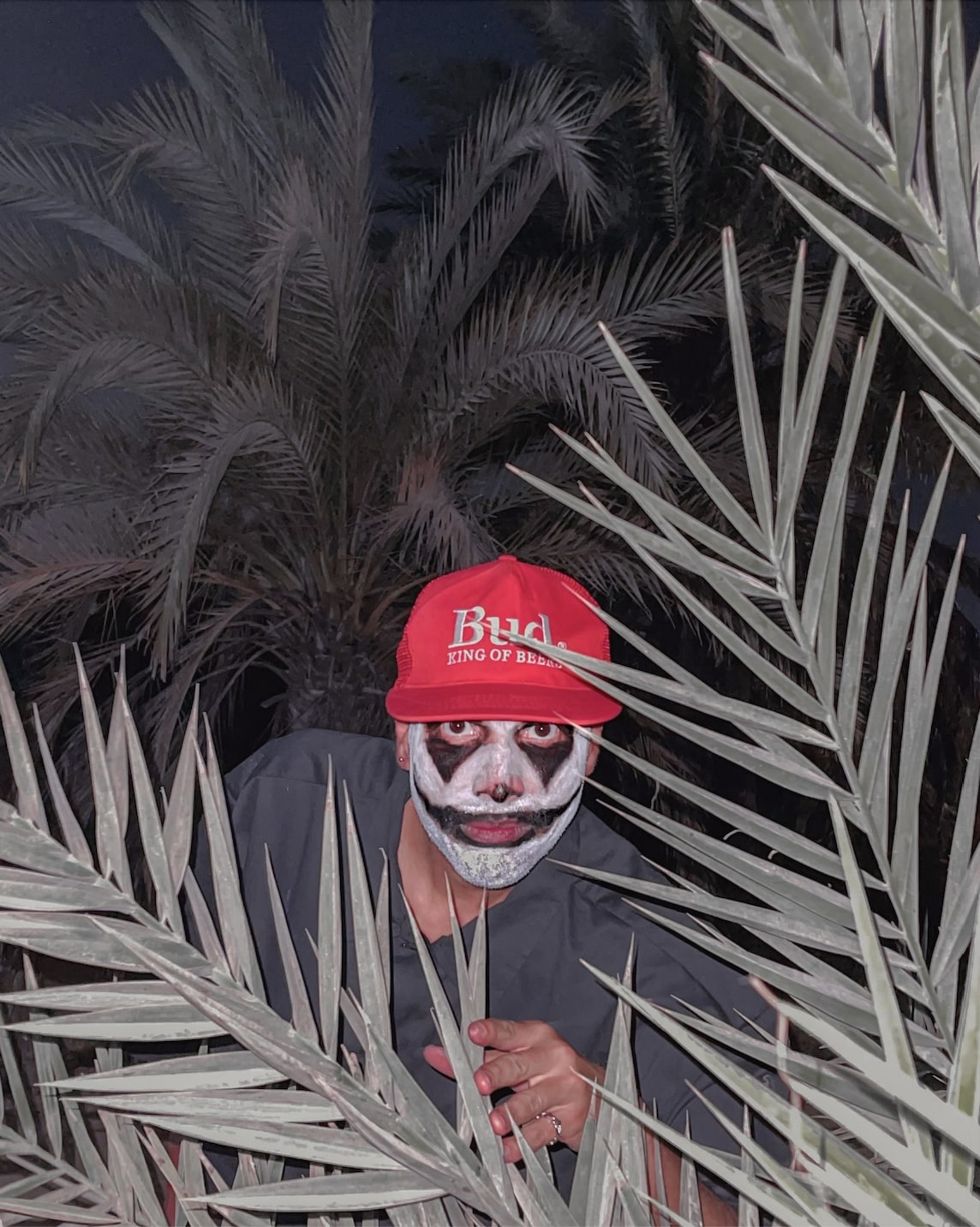
Eduardo Enrique (b. 1989, Venezuela) is a UAE-based contemporary mixed-media artist whose incisive work probes the intersections of consumerism, pop culture, and globalization. Raised in Caracas by his mother in a non-traditional family, Enrique describes his upbringing as conservative yet pivotal to his artistic lens. A scholarship to Parsons School of Design in New York shaped his early career, where he honed a conceptual approach over technical precision, drawing inspiration from figures like Barbara Kruger and Jean-Michel Basquiat.
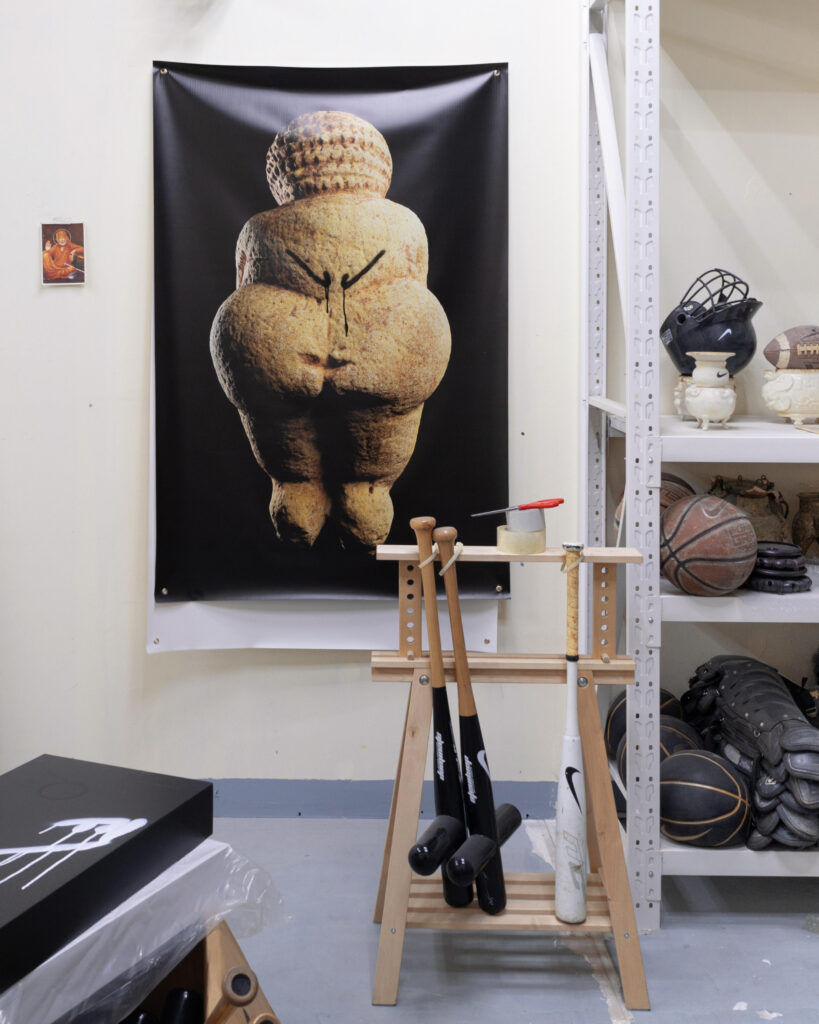
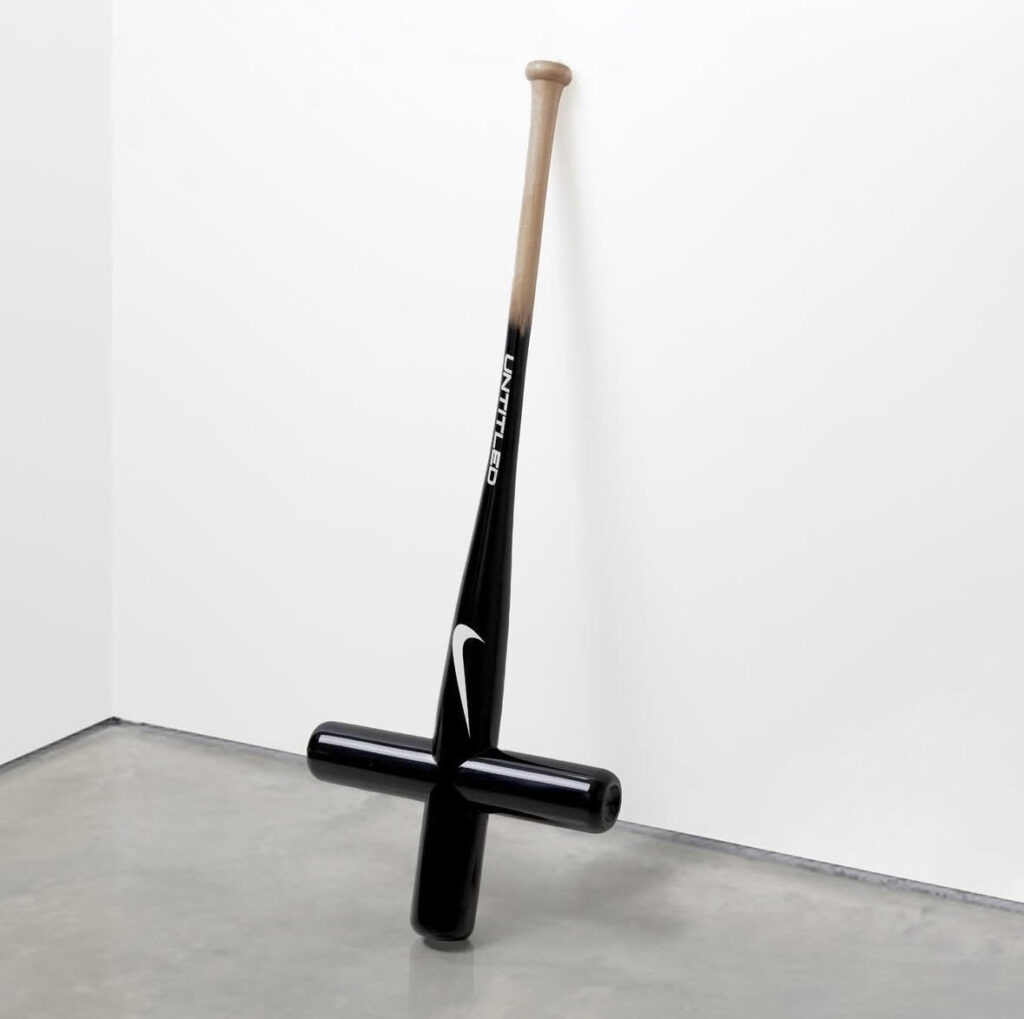
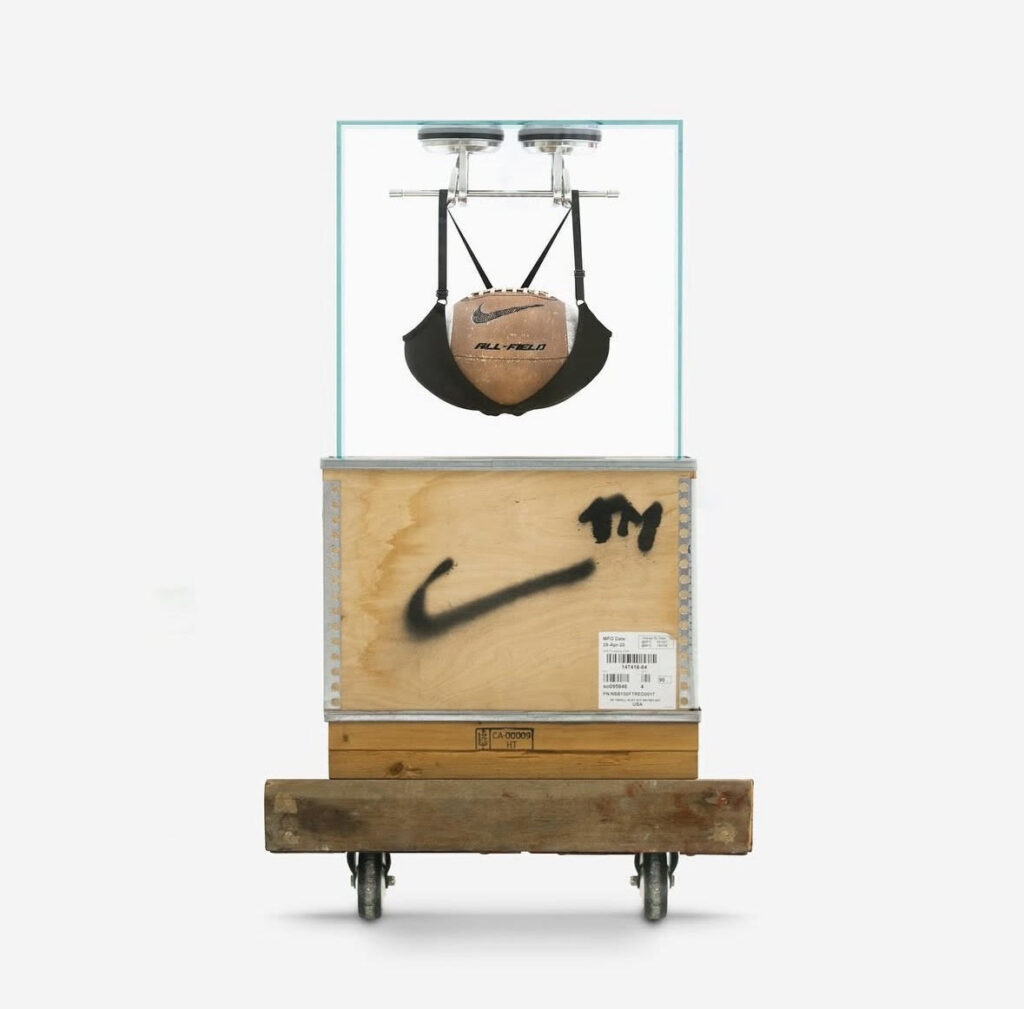
With over a decade in the creative industry as a freelance creative director, Enrique channels his marketing expertise into art that doubles as social commentary. His practice spans spray-painted canvases, sculptures, and installations, often recontextualizing everyday objects—Nike logos on BDSM gear, luxury goods morphed into provocative forms—to critique society’s fetishistic relationship with brands. Exhibitions like New Painting (2020, Singapore) and Brand Love (2022, Singapore) showcase his knack for blending humor, absurdity, and critique, while his anonymous Instagram project Dick Worldwide (2019) pushed boundaries with transformed luxury items.
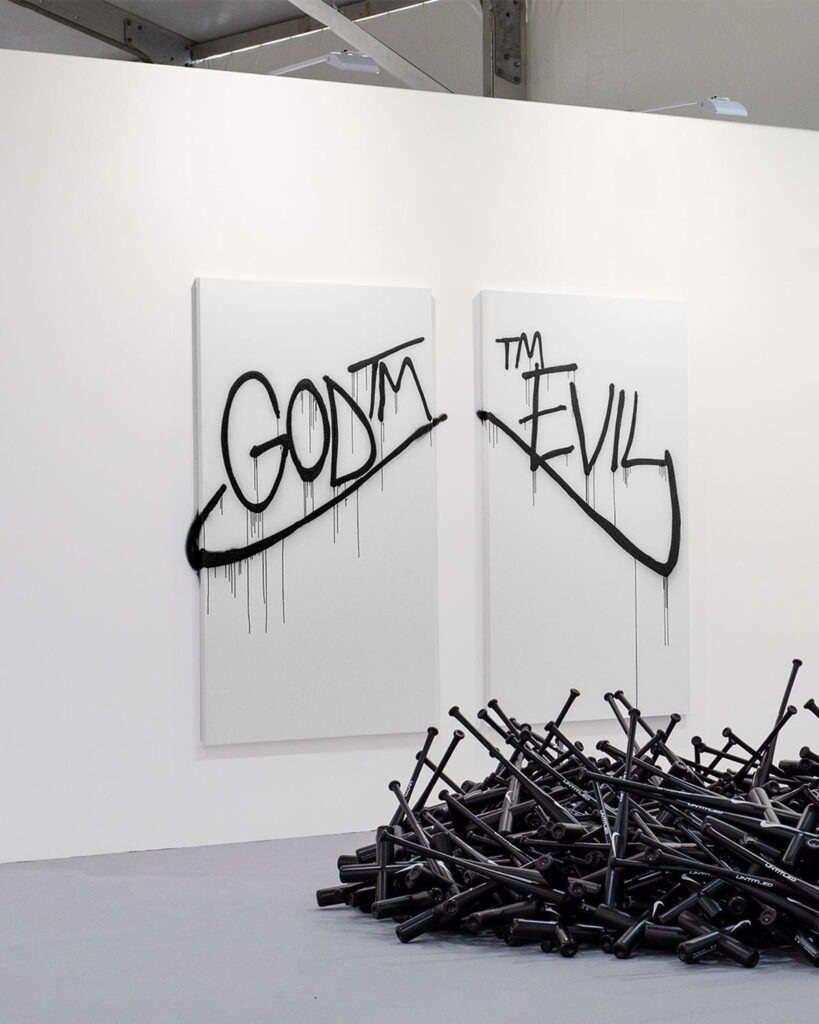
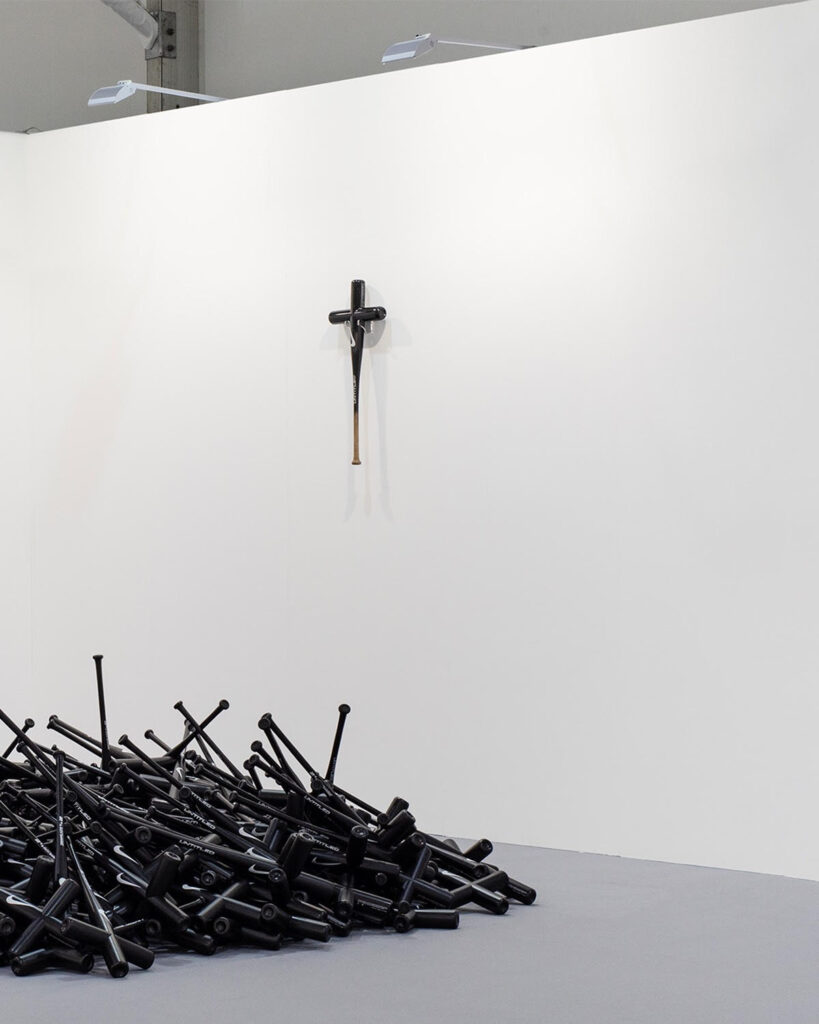
Enrique resists tying his identity to nationality, focusing instead on universal themes that resonate globally. His 2021 Vogue Singapore residency explored “fashion paintings,” posing questions about art’s role in culture. Now based in UAE, Enrique continues to challenge perceptions, creating work that invites viewers to rethink the mundane and the monumental.
Hi Eduardo! It’s a pleasure to sit down with you! First question that I always ask. How does a regular day look like for you UAE?
Eduardo: I wake up and do my best to honor the fact that I’m still around.
I’m curious, growing up in Venezuela, what kind of kid were you? What did you enjoy doing, and how did you spend your time?
Eduardo: I moved a lot growing up in Venezuela, so I got used to feeling out of place. Microsoft Paint was the only constant—everything else felt temporary.
With that in mind, what brought you to places like UAE and Singapore?
Eduardo: Curiosity. Geopolitics. And the addiction to feel out of place.
Do you remember aproximately at what age your creative side started to show?
Eduardo: Since I can remember, I was lucky to be born to a mother who was incredibly creative. She never got to pursue it—her father didn’t allow her to follow that path. So she passed it on to me and nurtured it like it was her second chance.
You’ve spent over a decade as a creative director helping brands shape culture. How did that world push you into art, and what’s one moment that made you say, “I need to create this for myself”?
Eduardo: There’s only so far up you can climb the leadership ladder in creativity until you become the person in charge to ensure the work is mediocre-enough to serve its function, I understood
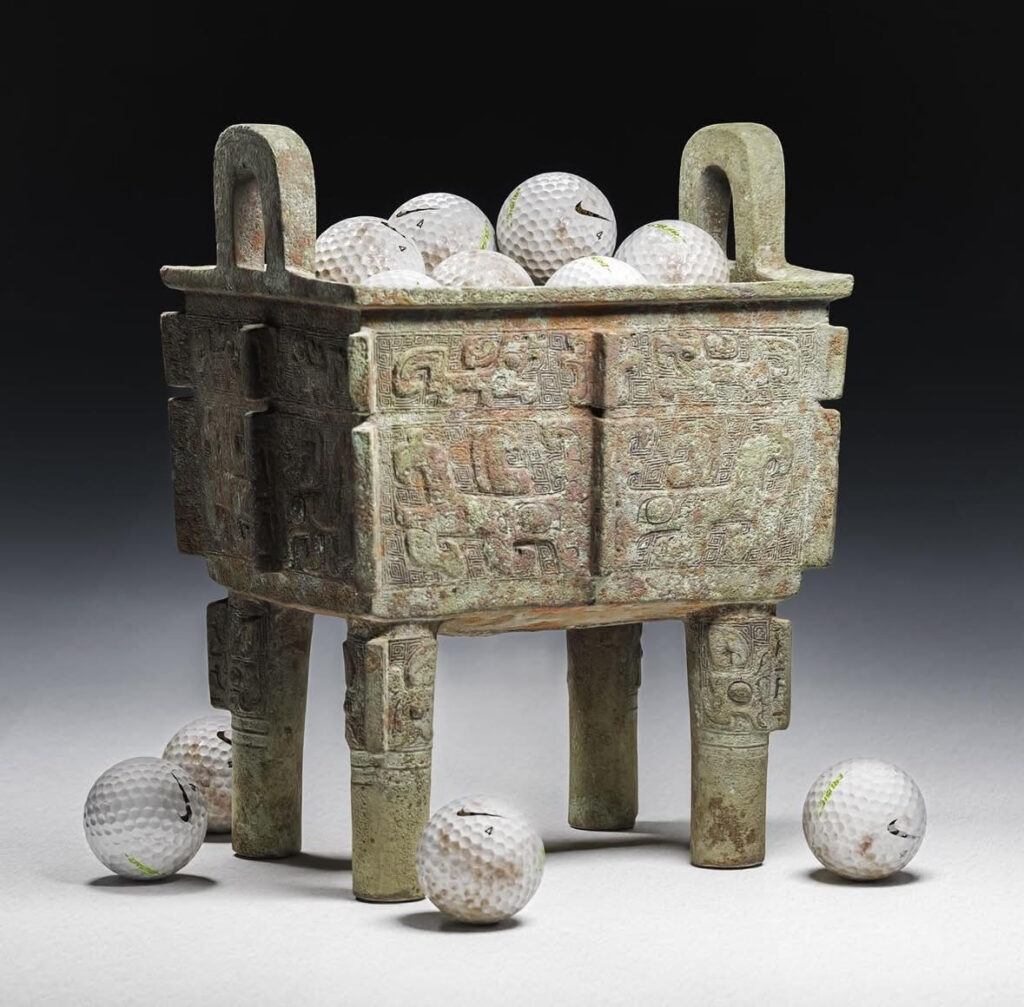
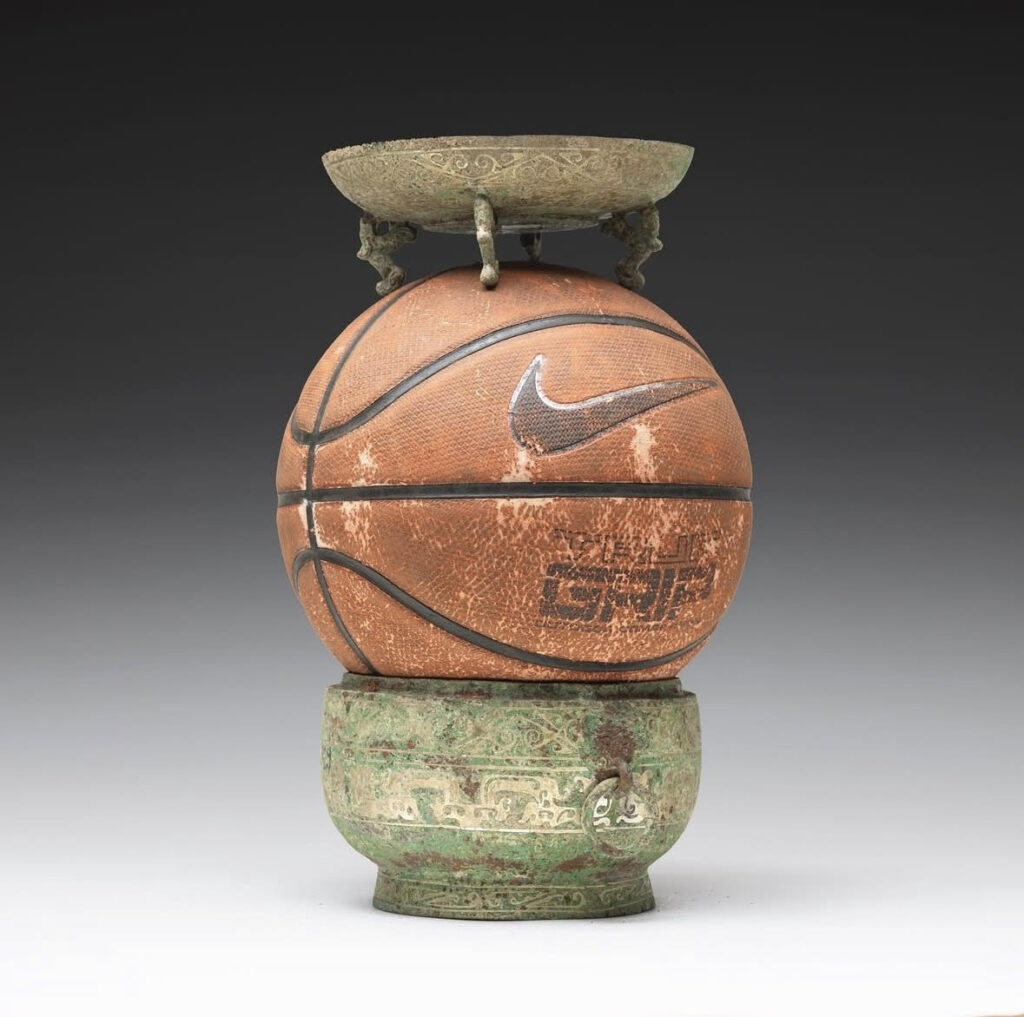
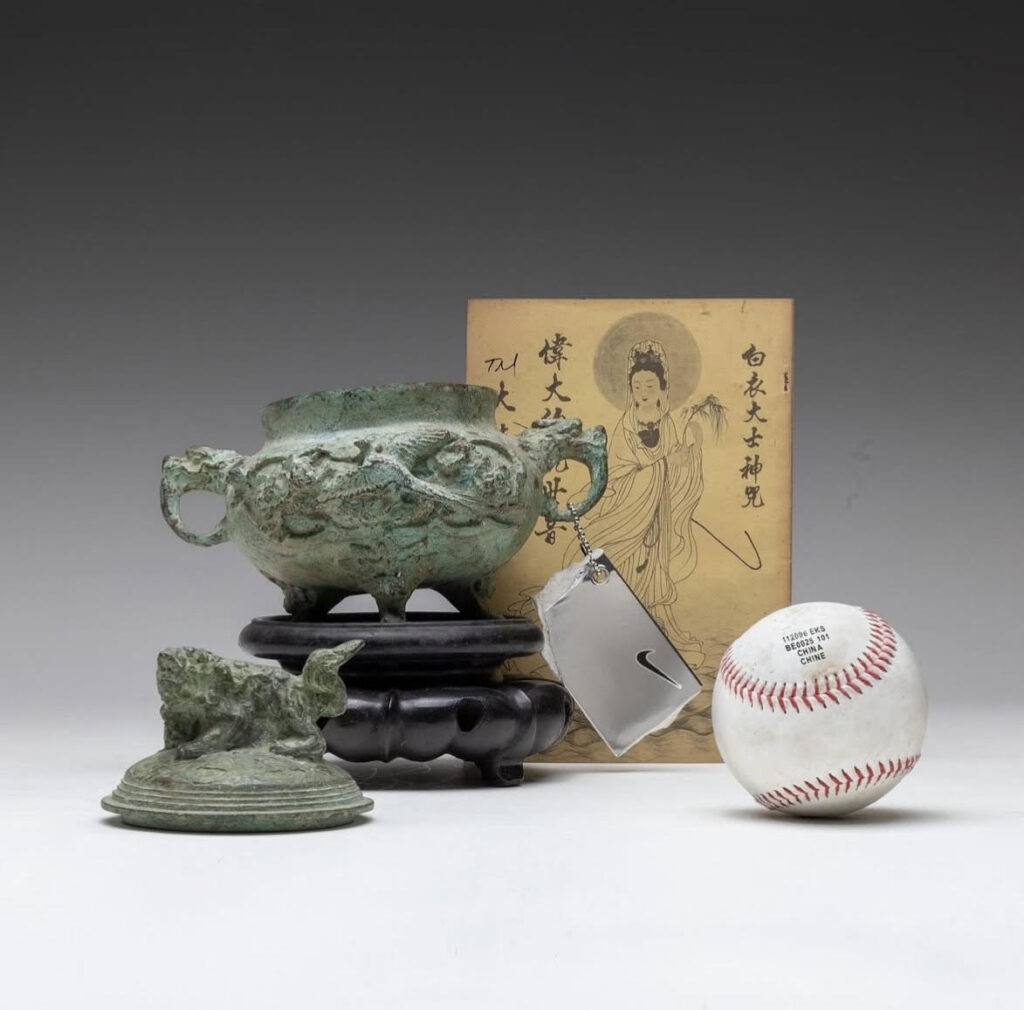
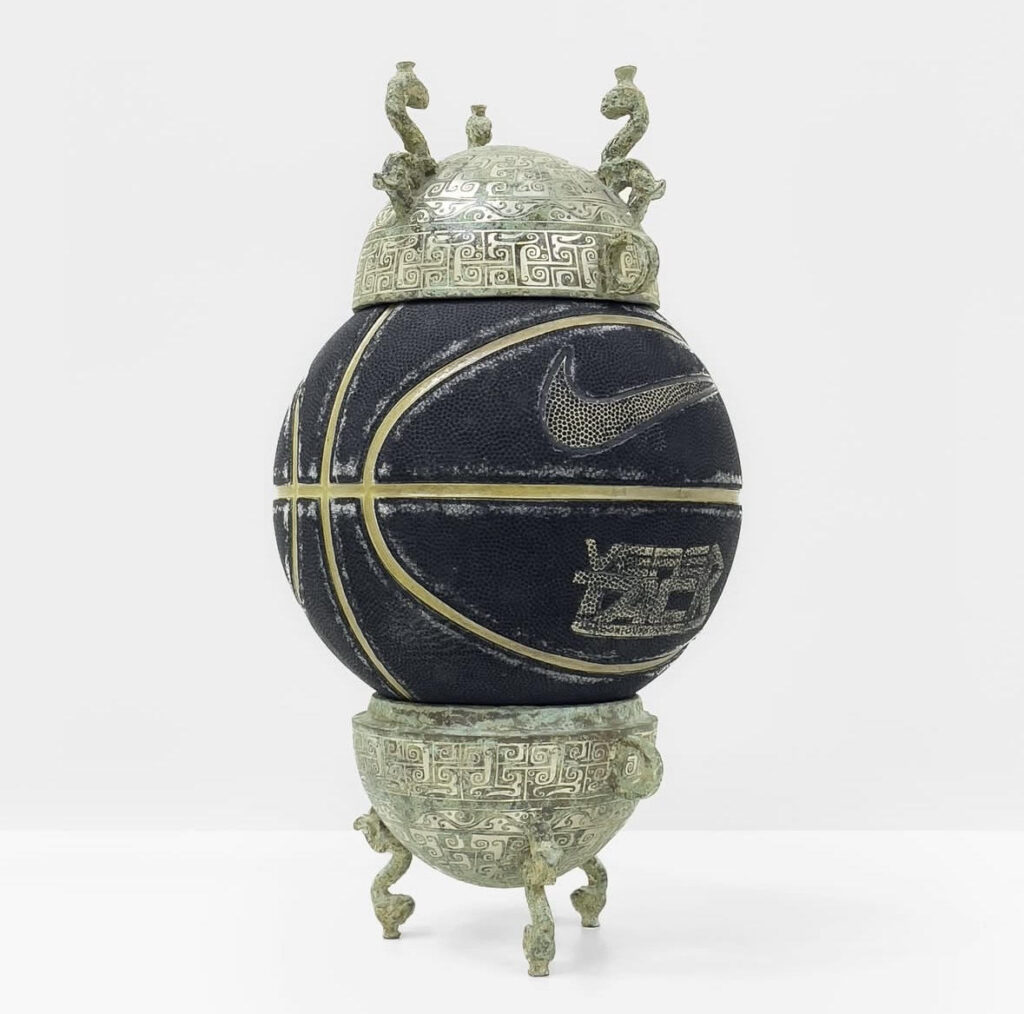
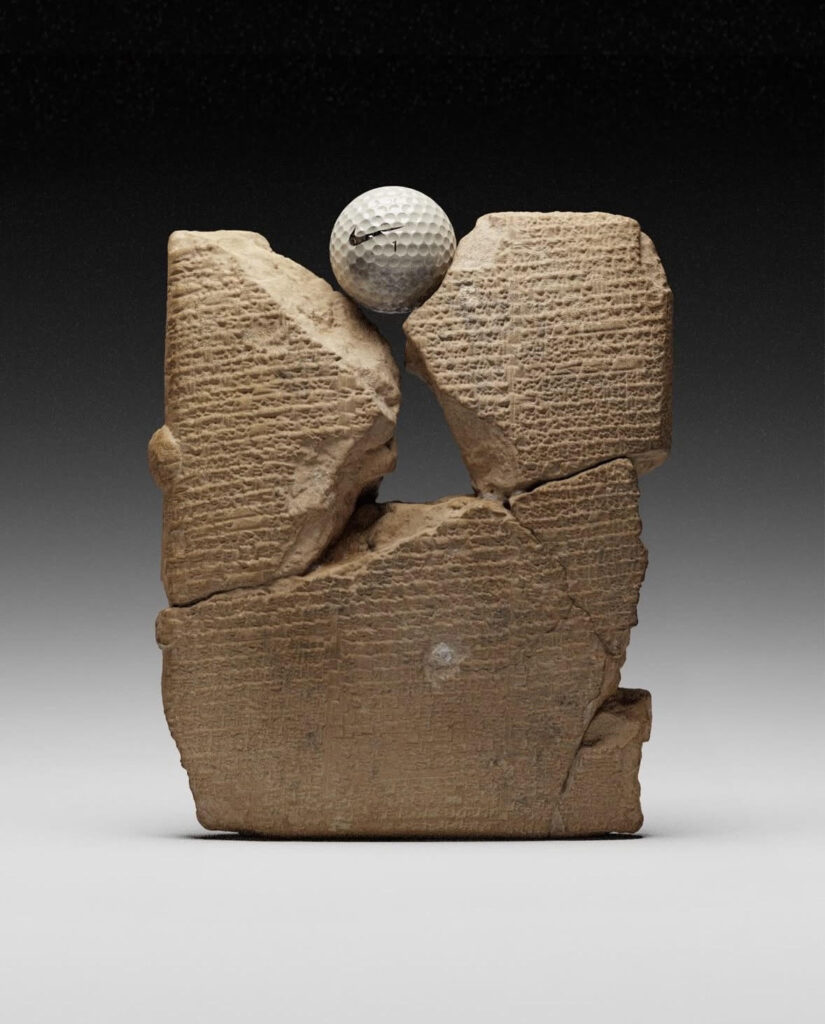
Your work often mashes up sacred relics—like antiques—with modern consumerism, like Nike logos. What’s the story behind your favorite “cultural accident” that you’ve turned into a piece?
Eduardo: When I was 17, I saw a plastic bottle discreetly disposed of into the mouth of a dragon statue in Santo Domingo’s Chinatown. That moment still haunts me. Authority revealed as a symbol, and its collapse. That’s where my work lives.
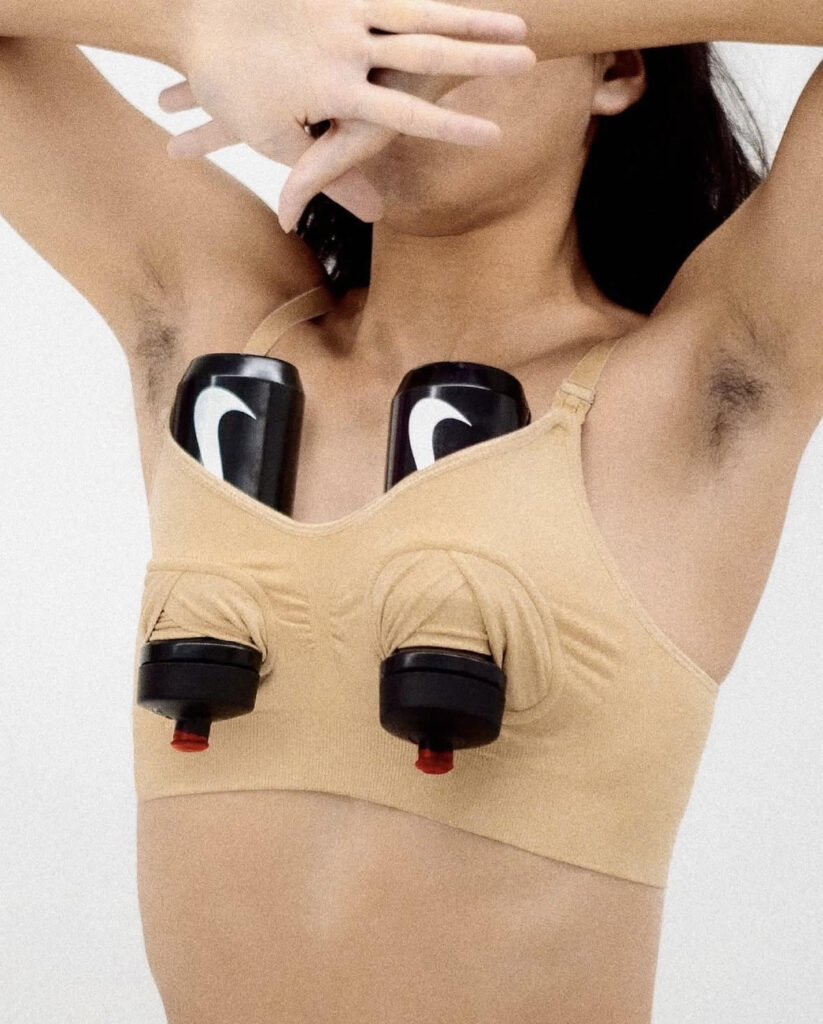
You’ve talked about not signing your art or hovering at exhibitions—letting it speak for itself. What’s the wildest interpretation someone’s had of your work that made you rethink it?
Eduardo: I try very hard for my work to hold multiple entry points—some are theoretical, and some more instinctual. I’m careful with the vast territory of possible interpretations, and often, whether some favor the work or not, I still go for it. That part is never really in your control.
Your “What is a fashion painting?” series for Vogue Singapore was a self-assigned brief. How do you keep that discipline to challenge yourself, and what’s a question you’re itching to tackle next?
Eduardo: I’m still grateful the editors brought me on board for that issue—it came early in my practice and gave me confidence and validation. Lately, the question is how do I make work that feels meaningful while still meeting the expectations of the structure it thrives in? You can’t lean too far into commerciality, but you also can’t be entirely self-serving. It’s a very hard balance.
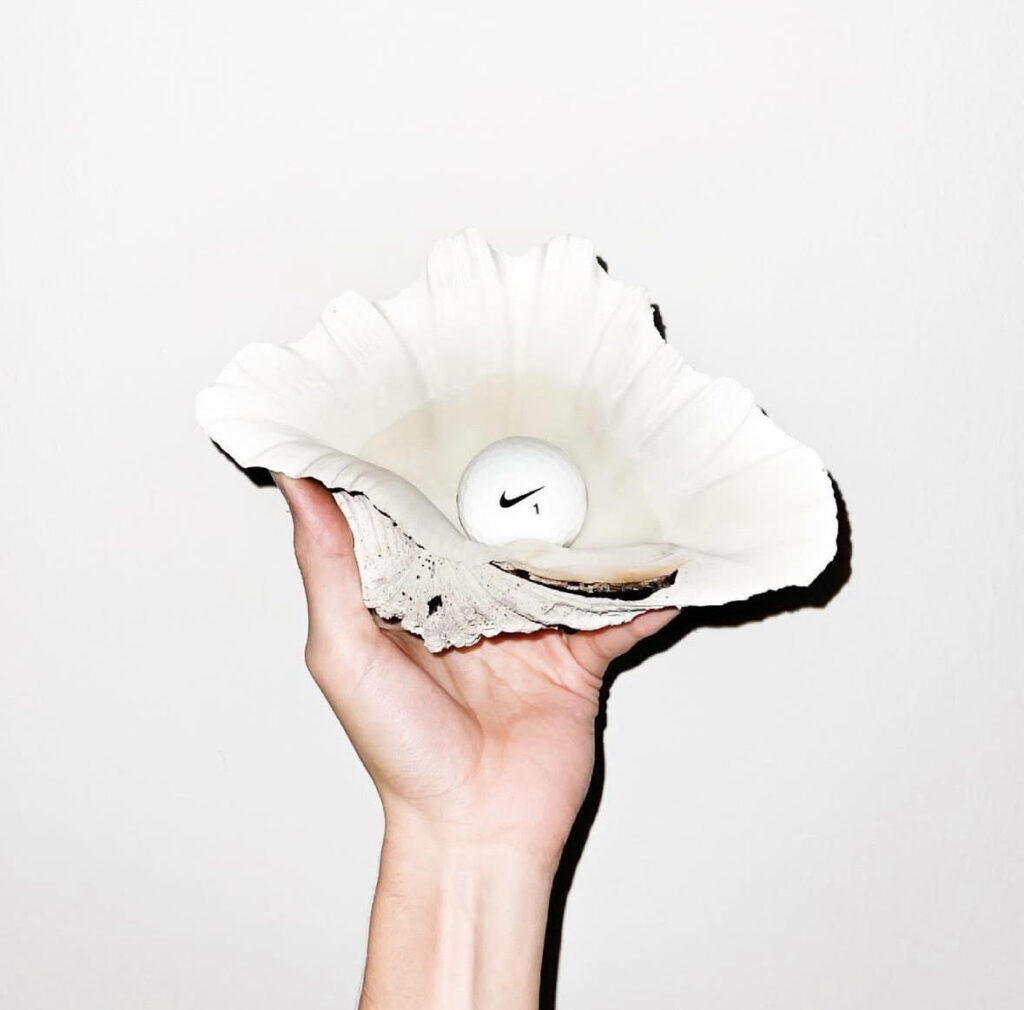
You’ve called some of your work “vandalism” but not street art. What’s the line for you, and is there a piece you’ve made that felt like it crossed into dangerous territory?
Eduardo: When you work with symbols like I do, offense is always close by. I recently placed a “swoosh” in the lower corner of an image of Gaza’s ruins, echoing the visual structure of an ad. It felt wrong, but also necessary. If your intent is clear, you can confront even what hurts you. That’s the risk of meaning.
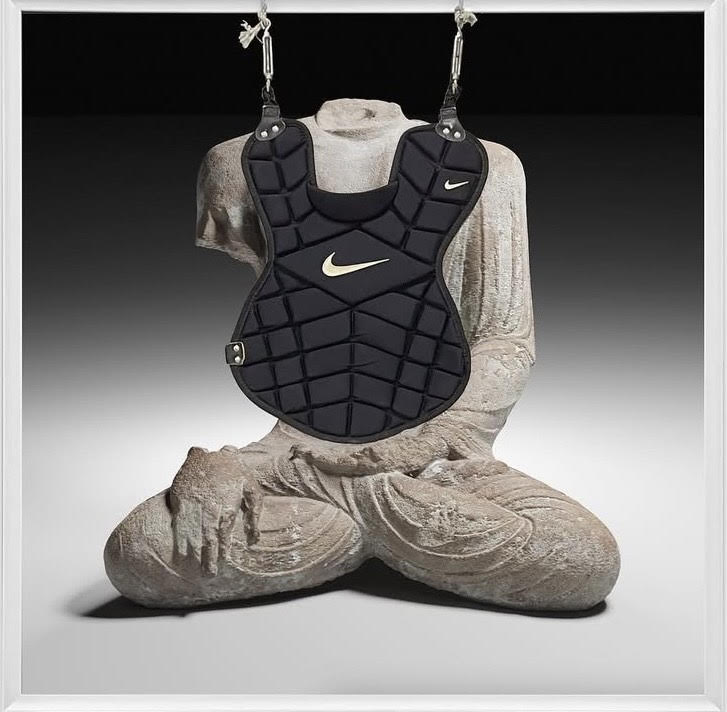
That Santo Domingo Chinatown lion with a plastic bottle in its teeth—such a raw image. What’s another real-world clash you’ve seen lately that’s begging to become art?
Eduardo: I have hundreds of news screenshots showing brands on corpses. Because brands thrive on meaning, their presence in the wrong context becomes an accidental endorsement of society’s collapse. It’s pure poetry. That tension—between promised joy and lived reality—is what I try to channel. A rupture in our collective numbness.
You’ve previously said that creativity can seduce you into overdoing it. Can you elaborate on that? And what’s a time you had to reel yourself back from going too far?
Eduardo: My process isn’t joyful; it’s a kind of struggle. Most of my time is spent removing things, ignoring techniques I know too well. It’s not an adventure—it’s control. The work only starts to mean something when it stops being about me and what I can technically do.
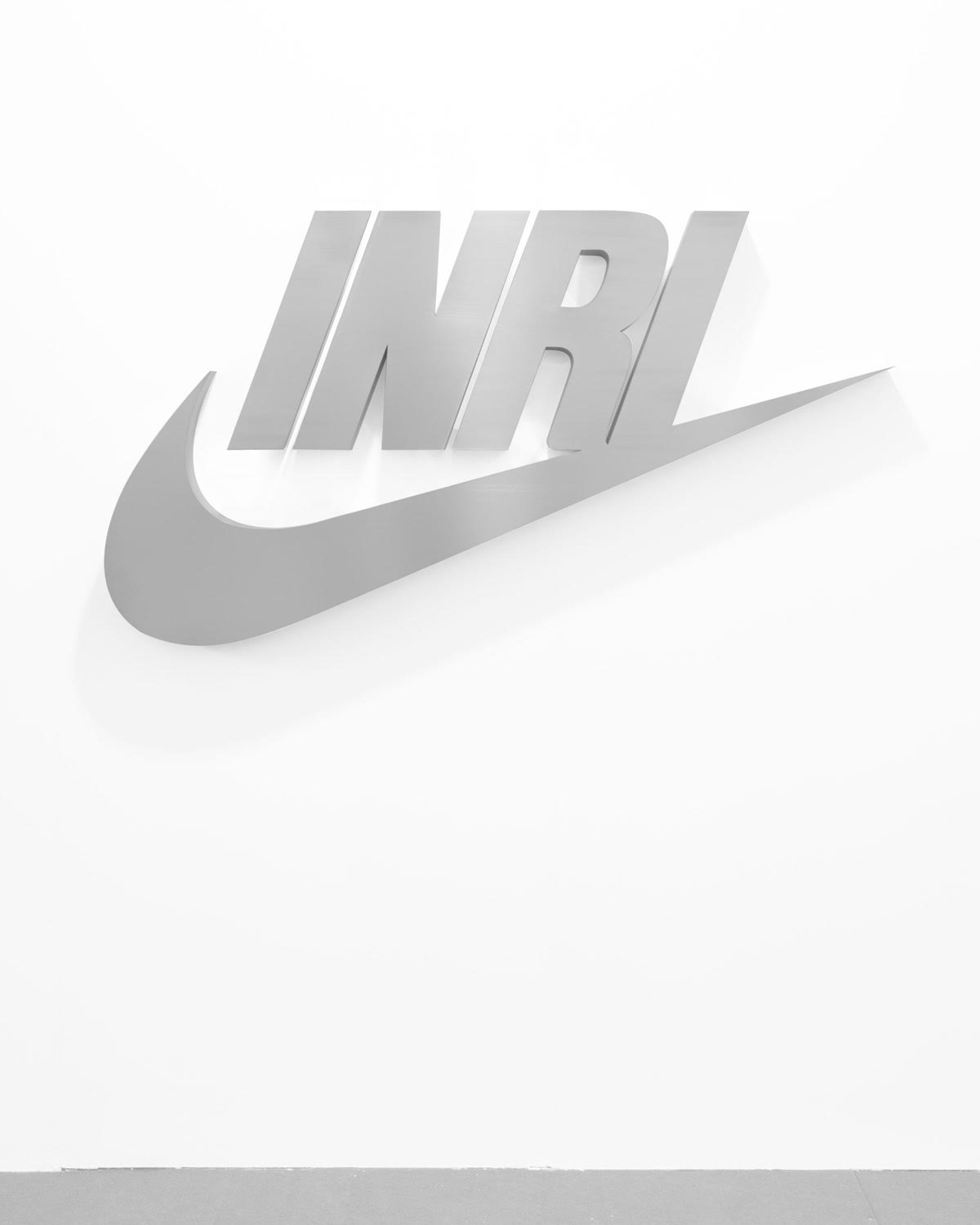
Your pieces, like The Doll Ball or Birth of a Necklace No.2, mix odd materials—footballs, seashells, concrete. What do you look for when choosing your next object or motif to work on?
Eduardo: Symbols don’t have stable meanings, and today they’re more volatile than ever. They change depending on who’s looking, and from where. I recently sat on a Balinese shrine, legs crossed in a familiar artist pose, for a portrait in an Asian magazine. The object isn’t the point—it’s the context in which it’s presented.
Can you walk me through your creative process from beginning to end result?
Eduardo: Although my work always looks different, my process always seems to follow the same logic: I came, I saw, I rejected the logic of conquest. Modern conquest is cultural; it can be tracked through patterns of collective opinion, lifestyle, and consumption—in the quiet adoption and normalization of certain things.
Can you also tell me about your use of symbolism?
Eduardo: The “swoosh” is a soft weapon. It abstracts the very essence of capital into the promise of inclusion. It sells survival as a sport, individualism as identity, and consumption as collective belonging—all of it framed as aspiration, as worldview. I don’t think there’s a more loaded symbol of Western ideology today.
How do you approach color?
Eduardo: I try to avoid color whenever I can. I find it incredibly distracting. There are stories of my mother arguing with preschool teachers because I refused to use color in art class—and they failed me for it.
So with what we just talked about, what are you hoping to convey?
Eduardo: “Day-O (The Banana Boat Song),” tragically misused in the famous dinner scene from Beetlejuice, is rooted in the experience of exploited Caribbean dock workers. Its author once said during the U.S. civil rights movement that artists have a valuable function in any society, since it is the artist who reveals society to itself. I live by both truths: my work as an act of service, and the awareness that I can’t control what popular culture chooses to do with it.
Outside of art, what’s something you’re obsessed with right now—maybe a hobby, a show, or even a food—that keeps you grounded or inspired?
Eduardo: Outside my work, I’m trying to want less. No hobbies, no new obsessions. Just the news, which reminds me daily how unusual it is to live safely, to have time and choice. That reality check keeps me grounded. It keeps the urgency in my work real.
Ok Eduardo, now to something totally different. In a parallel universe who would you be? and what would you be doing?
Eduardo: It’s hard to say who I’d be in a parallel universe. I imagine I’d still be caught in the same search—somewhere between an armed militant and a saxophone player, if that makes any sense.
Can you tell me a story about a time when a connection with someone had a big impact on you?
Eduardo: I worked on Erik Ravelo’s final team at Benetton. He’s one of the most radical creatives alive. Our egos clashed constantly, but I owe him more than I realized at the time. The experience taught me how unconscious influence can be. His way of working—loud, stripped to its essence, and accessible—still shapes mine.
What qualities do you find most important in the people you choose to spend time with?
Eduardo: I like being around people who don’t constantly center themselves in conversation. Identity is a double-edged sword: not enough and you fade, too much and you mistake performance for presence.
Anybody you look up to?
Eduardo: I look up to people I can admire beyond their work—those whose approach to life transcends what they create. Art cannot be an exercise in ego or commerce. In that sense, I’m a huge fan of people like Wade Kelly, Adrian Castañeda, and Teebai, to mention a few. People who stay grounded while continuing to create with honesty.
What motivates you?
Eduardo: The illusion that I can make a difference; Sometimes even the opportunity.
How would you describe a perfect day?
Eduardo: A perfect day is one that leaves me unaffected—no extreme highs or lows. Just enough space to remain present.
Alright Eduardo, I always ask these two questions at the end of an interview. The first is. What’s your favorite movie(s) and why?
Eduardo: “Oh, Jesus. I’m going to say American Beauty. It’s one of the few films that makes you love America for exactly what it is.”
The second is. What song(s) are you currently listening to the most right now?
Eduardo: I’ll put a mixtape together for you. Here it is!