
Share this
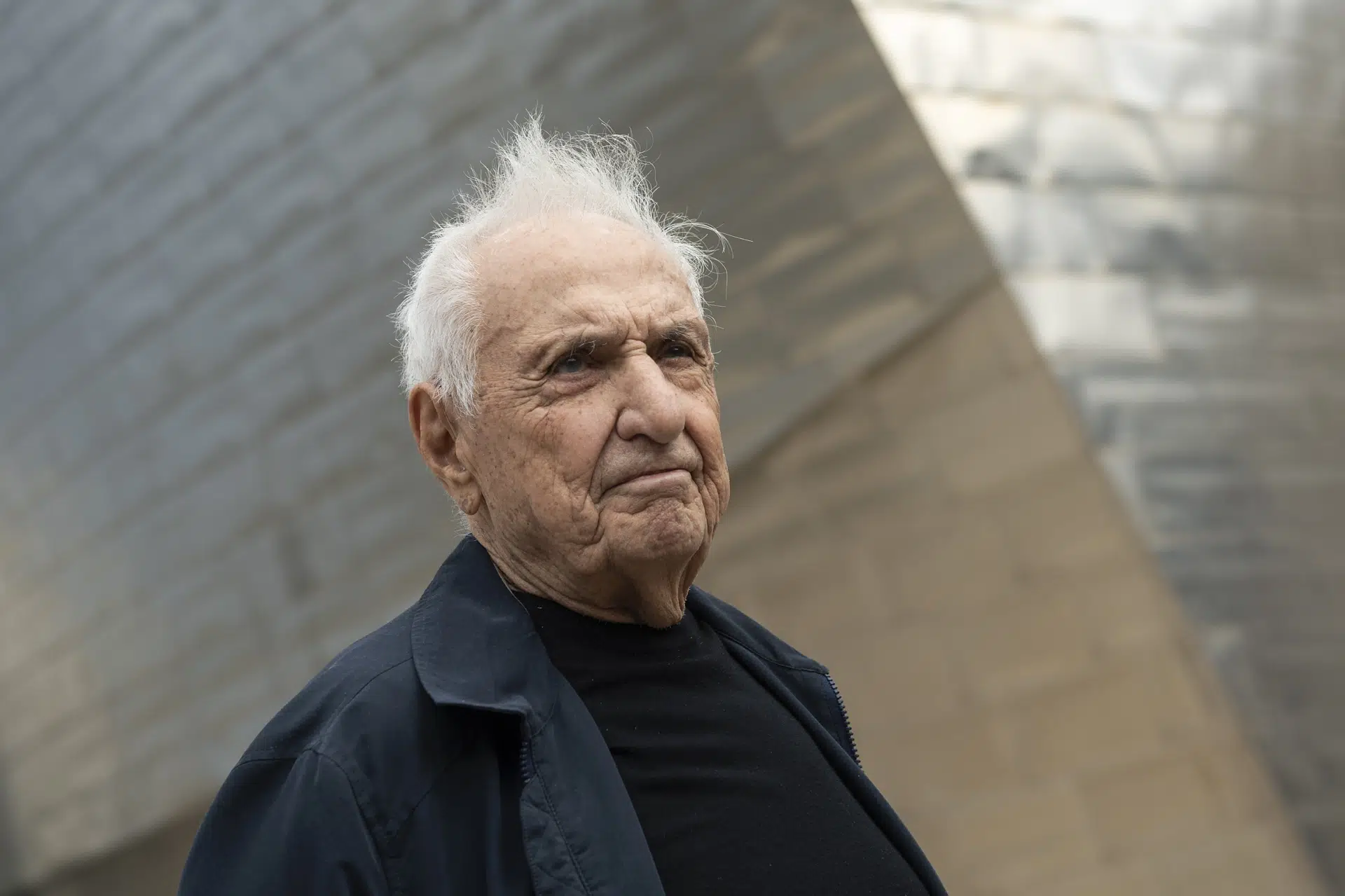
Photo: Ander Gillenea/AFP/Ritzau Scanpix
Frank Gehry — the man who turned sheet metal into poetry and skylines into sculptures, has died at his home in Santa Monica at the age of 96, following a brief illness. The news was confirmed to The New York Times, closing the chapter on one of architecture’s most influential, rebellious, and widely recognised figures.
For most people, Gehry’s name instantly evokes the Guggenheim Museum Bilbao: a building that didn’t just change a city, but rewired global expectations of what architecture could look like. Its curved titanium panels, swooping forms, and impossible angles sent shockwaves through the cultural world when it opened in 1997, turning Gehry into an international celebrity. But the text reminds us that his rise began much earlier — in 1989, he received the Pritzker Prize, long before the world started chasing “the Bilbao effect.”
His résumé reads like a map of late-20th-century landmarks: the Dancing House in Prague, completed in 1996; the Walt Disney Concert Hall in Los Angeles, finally unveiled in 2003 — a building so luminous and fluid it looks like sound frozen in motion. These works solidified Gehry’s place among the era’s so-called “starchitects,” a label he famously hated. He once told The Independent in 2009: “There are people who design buildings that are neither technically nor economically sound, and then there are those who do.” It was Gehry in a single sentence — cutting through the noise, uninterested in flattery, focused only on the work.
What made Gehry different wasn’t just the drama of his buildings, but the emotional architecture beneath them. He was an unlikely celebrity: a kid born Frank Owen Goldberg in Toronto in 1929, raised in a working-class Jewish family, who later changed his name to avoid antisemitic discrimination after moving to the U.S. in the late 1940s. He studied at USC, dipped briefly into Harvard, then spent decades experimenting in Southern California before the world finally caught up to his ideas.
His influence stretched far beyond the discipline — he appeared on The Simpsons, inspired generations of fashion designers, sculptors, and filmmakers, and turned “architect” into a pop-culture figure at a time when no one expected the profession to be glamorous.
Gehry is survived by his wife, Berta, and their children. His buildings remain scattered across the world like giant, shimmering signatures — reminders that architecture can be unruly, emotional, and full of life.
Photo: Ander Gillenea/AFP/Ritzau Scanpix