
Share this
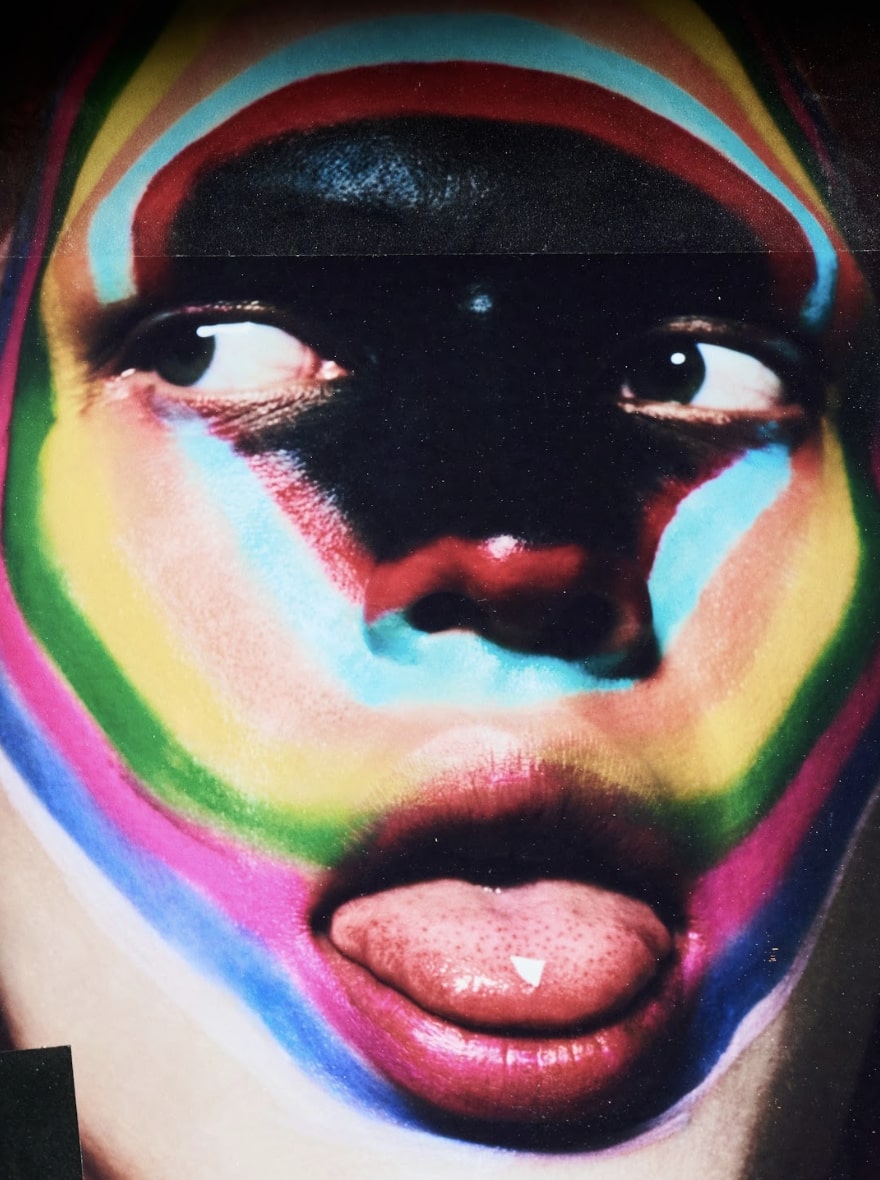
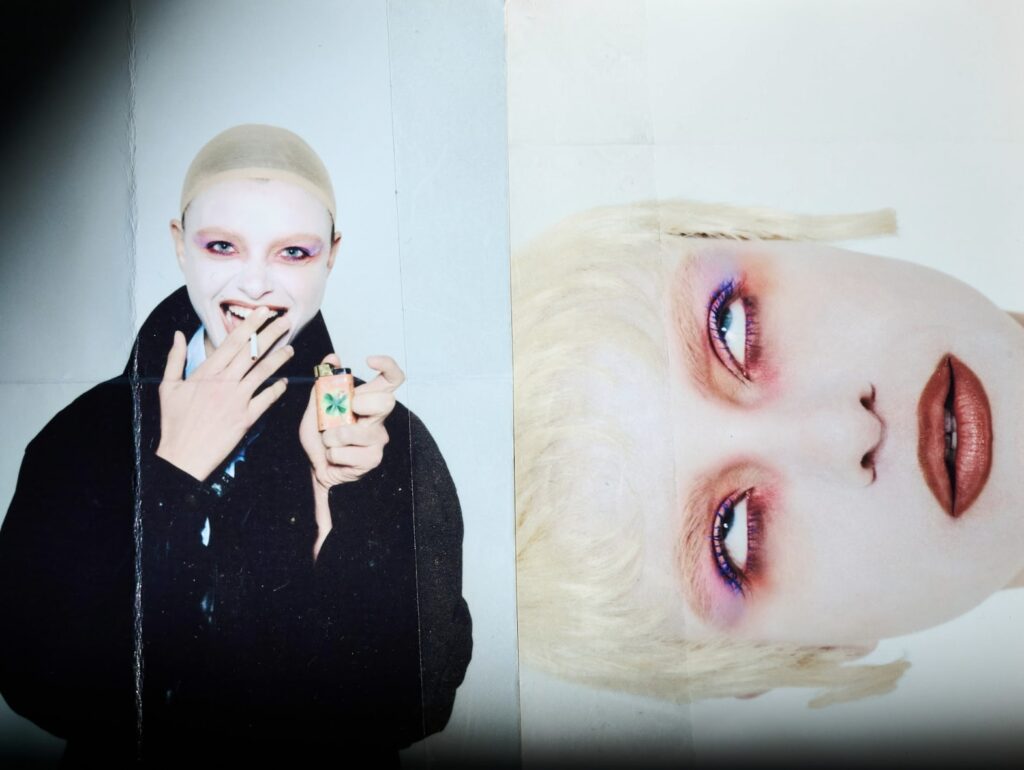
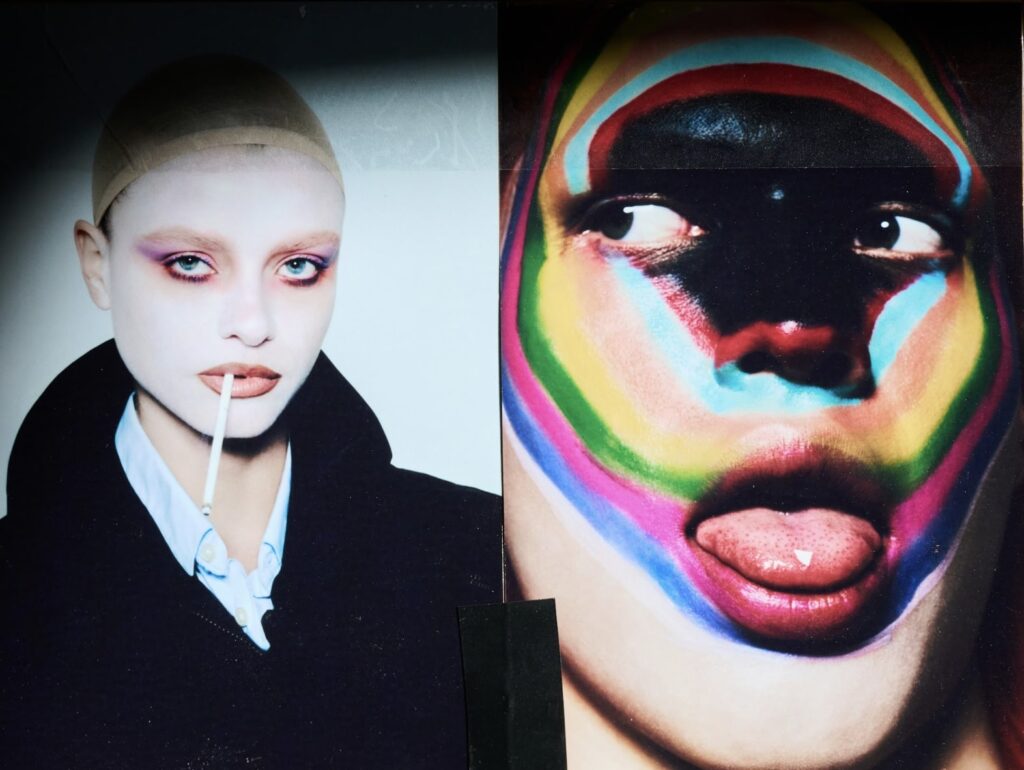
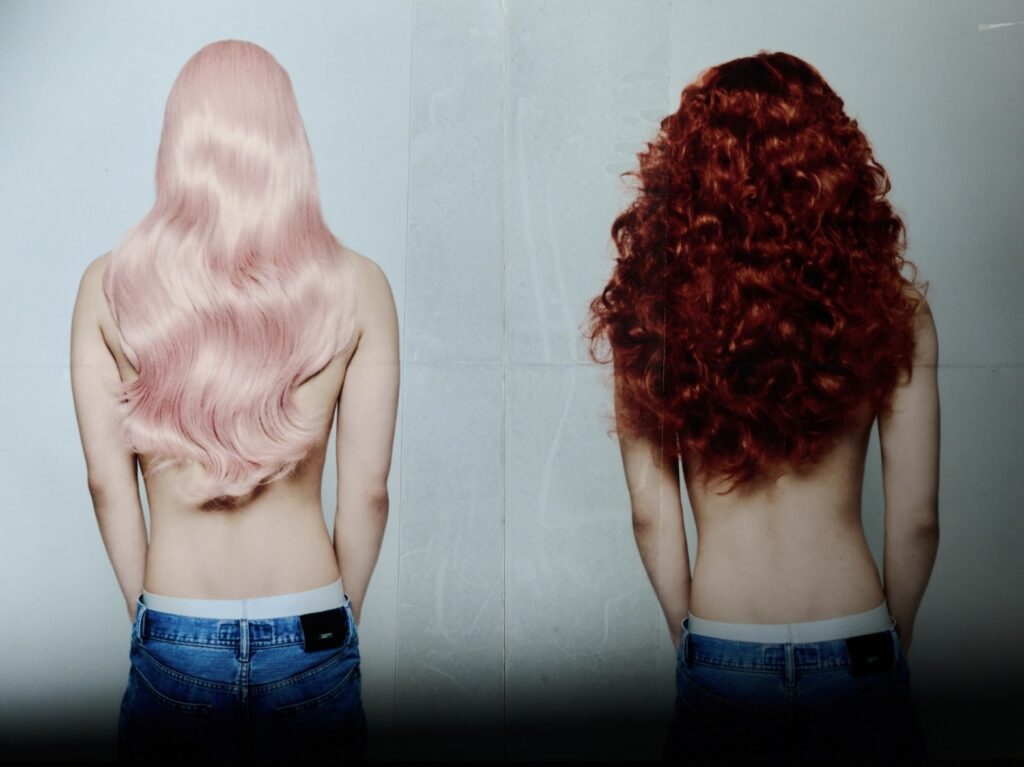
In a beauty landscape increasingly shaped by repetition, polish, and digital perfection, Thais Vandanezi and Sharbel Hasbany move in the opposite direction. Their collaborative series, Psychedelic Beauty, explores makeup as something freer, stranger, and far less predictable — a space where alien-like references, saturated color, intuitive casting, and evolving light come together to create images that feel both surreal and tactile. Built through a dialogue between makeup, photography, and atmosphere, the project also pushes beyond the frame itself: after the shoot, selected images were printed, manipulated by hand, and rephotographed in natural light, adding new layers of texture, shadow, and depth. The result is a body of work that feels experimental without losing its sense of beauty, inviting the viewer into a world where transformation, instinct, and imperfection take center stage. I sat down with Thais and Sharbel to talk more about the project and the ideas behind it.
Team:
Photography: Thais Vandanezi
Beauty: Shabel Hasbany
Hair Stylist: Maya Roget
Retoucher: André Kawart
Casting Director: Fernando Herbert
Models: Ana Jorge , Yan J, Lais Oliveira, Gleb S
Thais, Sharbel, it’s a pleasure to sit down with you guys. Let’s jump right into it, how did you guys meet?
Thais: We met through mutual friends and social media. We connected through our work.
So what sparked the idea behind this collaboration? And what does the creative dialogue between photographer and makeup artist look like in practice?
Thais: We wanted to create something together because we admire each other’s work. So we started building a moodboard inspired by something lysergic and almost supernatural.
Sharbel: We’ve always wanted to do something that felt free not tied to trends or commercial expectations. Usually, it starts with a visual exchange, references, and textures we both get obsessed with. Then on set, it becomes very intuitive. I might react to her lighting, and she reacts to the makeup it’s a real back-and-forth energy.
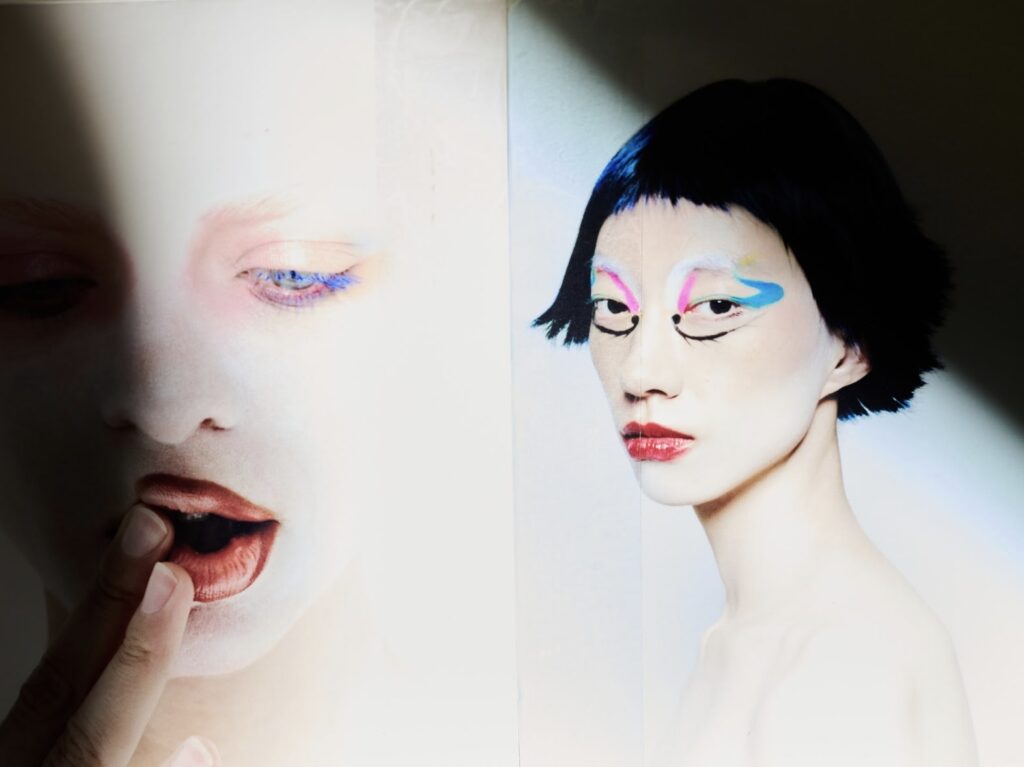
And what’s the story behind the title “Psychedelic Beauty”?
Thais: The idea was to create something with psychedelic references that could bring a sense of beauty back to what we usually see as ordinary.
Sharbel: The title came from wanting to explore beauty that feels altered, almost trippy like stepping into a dream. It’s about colors and textures that mess with perception, but still feel emotional and human at the core.
When you talk about breaking away from “the obvious,” what does that obvious actually look like to you, and how do you rebel against it?
Thais: We thought about breaking away from standard beauty by creating lysergic images that almost touch strangeness. The idea is to find beauty in what is uncommon.
Sharbel: For me, “the obvious” is that perfectly polished, retouched beauty we see everywhere. I wanted to go against that to let things feel raw, imperfect, and more real. Beauty can be strange and still be beautiful.
Psychedelia, alien-like touches, color, what was the spark that first set this visual universe in motion?
Thais: The first impulse was something alien-like, and as we moved forward in the process, it naturally evolved into something more lysergic and experimental.
Sharbel: I think we both got inspired by the idea of transformation like beauty that doesn’t try to fit into one identity. The alien-like elements came from wanting faces to look slightly unearthly but still human. It’s playful, not literal.
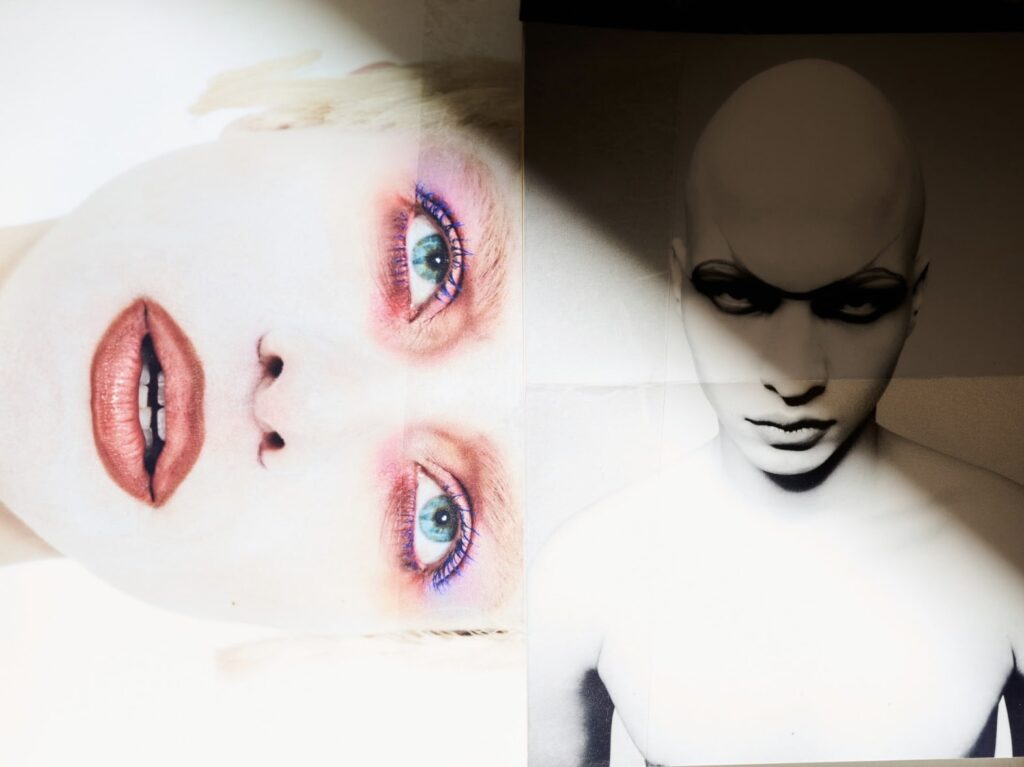
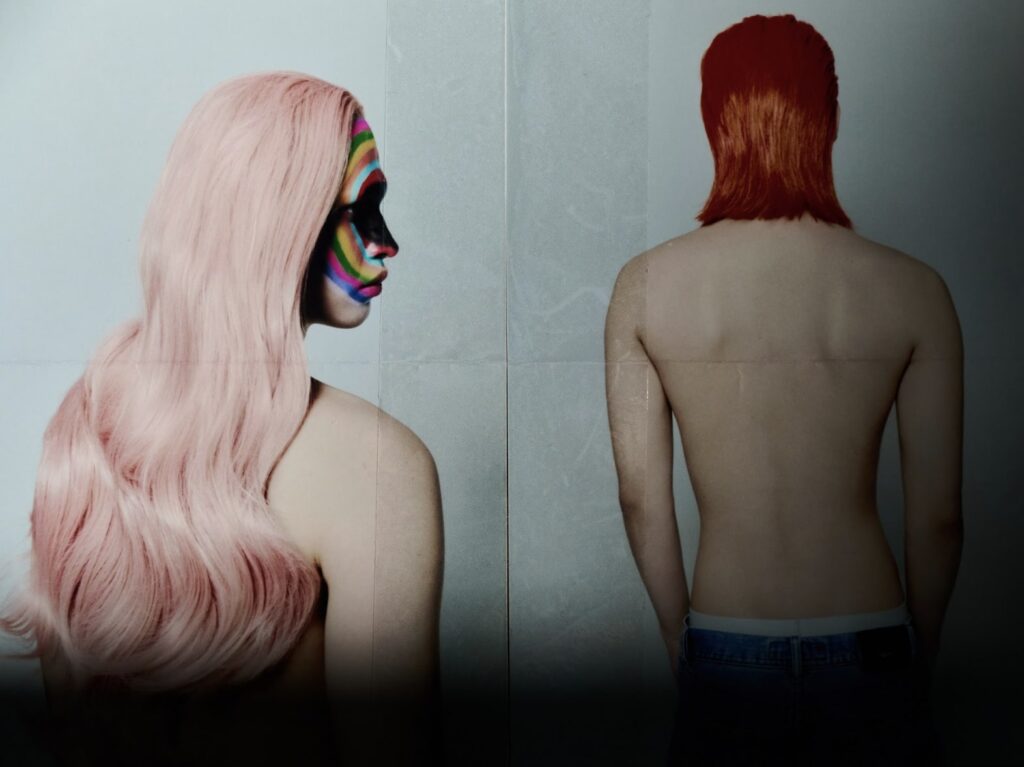
The images feel otherworldly, but also intimate. Were you chasing emotion, or just letting color lead the way?
Thais: I believe this duality between distance and intimacy is something very present in my photographic work, as well as color. Color is extremely important in my creative process. I’m a Latin American woman, I was born in a place full of colors, textures, sounds, flavors, these references are deeply rooted in me.
Sharbel: Honestly, a bit of both. I always let emotion guide the direction, but color was the tool. It’s like painting feelings sometimes I start with a tone and it ends up dictating the whole mood.
How do you personally define beauty when you’re not trying to please anyone’s idea of it?
Thais: I define it simply as beauty. But something important to consider is that beauty standards have always been socially imposed. Today, the standard has become the standard itself, through surgeries, aesthetic procedures, makeup, and digital filters, it turns into a kind of formula. When you look at it, it removes surprise, removes curiosity, you already know what you’re going to see. Imperfections bring real beauty. Differences bring real beauty and identity. We can’t stop appreciating what is different.
Sharbel: When I stop thinking about what’s “flattering.” Beauty for me is expression when something feels alive and has energy. It’s not about perfection, it’s about presence.
There’s a sense of transformation in the images, almost as if the faces were shifting species. Is that conscious or instinctive?
Thais: It was a conscious decision, but executed in an intuitive way.
Sharbel: Totally instinctive. I don’t plan those things it happens while creating. You start blending, layering, and suddenly it feels like the face becomes something new.
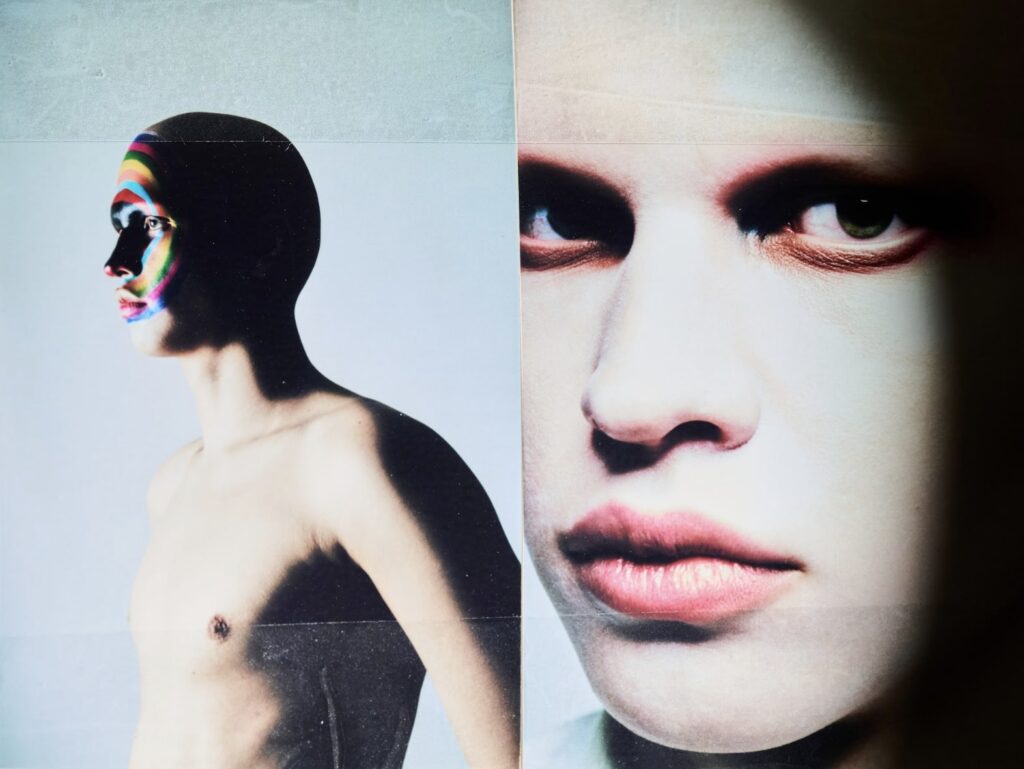
When you’re shooting, who leads, the light, the makeup, or the moment?
Thais: It depends. I think we’re very flexible and create together as one. There are moments when makeup needs to lead, and I have to understand how to light it in the best possible way.
Sharbel: The moment. You can plan everything, but what really matters is when all the elements start talking to each other light, texture, emotion. That’s when magic happens.
You mixed analog and digital, what kind of tension or chemistry does that create in your workflow?
Thais: Yes, I really enjoy mixing processes and creating experimental materials. It definitely changes the workflow, but it also brings unexpected results that come from the materiality of the process.
Sharbel: It brings a beautiful unpredictability. Analog gives soul and grain, while digital gives clarity. When they mix, you get something that feels nostalgic and futuristic at the same time.
Thais: The hand-manipulated prints are fascinating. What made you want to literally touch the image again, to push it beyond the lens?
Thais: I like transforming an image that is created by light into something tangible. It creates different kinds of experiences. The process is alive and intuitive, and I believe it helps build meaning alongside the photograph.
Sharbel: I love that Thais wanted to rework the prints by hand it adds this physical connection to the image, like extending the makeup beyond the face and into the photograph itself.
How much of what we see was planned, and how much just happened when you surrendered control?
Thais: I would say 50/50.
Sharbel: Probably 50/50. We always have a direction, but the best parts are the accidents when color bleeds in a way you didn’t expect, or the light shifts suddenly. That’s when it feels alive.
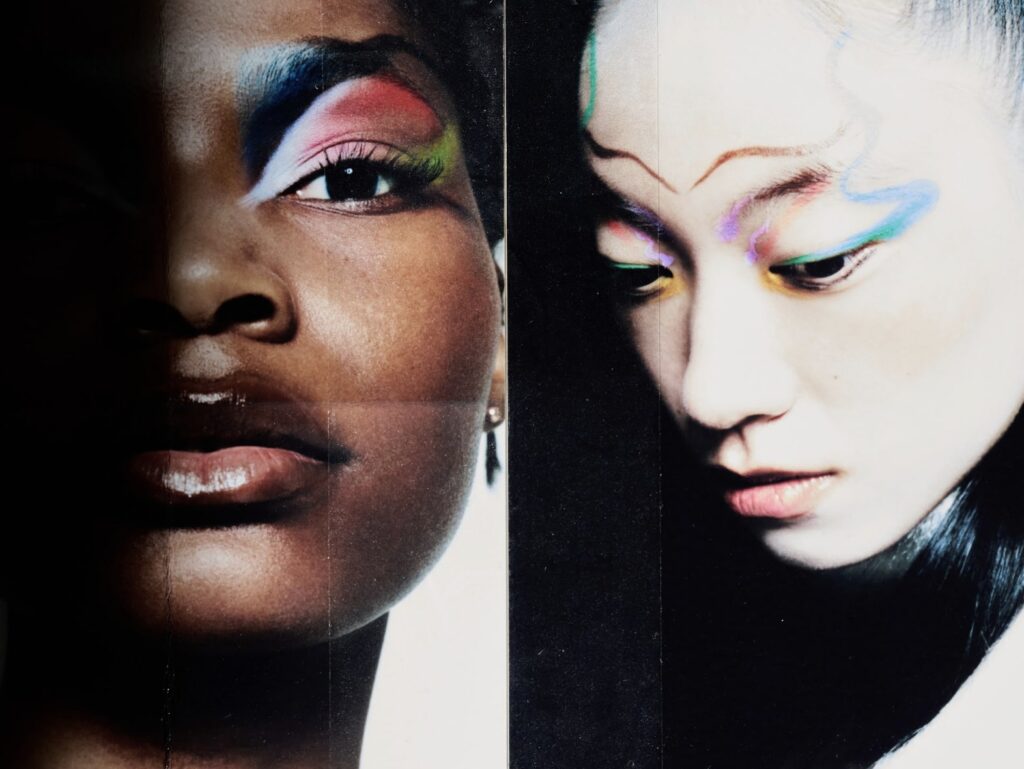
The light feels almost like another character in the story, how did it evolve during the shoot?
Thais: Light is definitely a character, and an essential one. It helps shape the narrative and create the atmosphere we’re looking for, and it evolves as the images are being built. “The path is made by walking”, this idea is very present in many of my creative processes.
Sharbel: Light changes the entire emotion of an image. Sometimes it was harsh, sometimes soft, but we used it to shape the story. It became this invisible collaborator.
You mentioned playing with sunlight and shadow, what do those contrasts mean to you emotionally or symbolically?
Thais: I believe the contrast between light and shadow symbolizes duality, but also completeness. One doesn’t exist without the other, even if they are opposites.
Sharbel: For me, they represent honesty. Light shows everything; shadow hides things. I think beauty exists between those two not fully revealed, not fully hidden.
Do you ever chase accidents, those moments when light or film does something you couldn’t predict?
Thais: Chance is always welcome in my work.
Sharbel: Always! Accidents are what make an image feel real. You can’t plan emotion, and sometimes the best thing you can do is just let go of control.
The casting feels very deliberate, what kind of presence were you looking for in your models?
Thais: Yes, casting is part of the process. We were looking for people with a singular kind of beauty, because they were an important part of the narrative. We weren’t looking for blank canvases.
Sharbel: We wanted faces that already told a story not blank canvases. People who bring emotion, who aren’t afraid to look strange or vulnerable.
Did the people in front of the camera change the direction of the shoot once they entered the frame?
Thais: Definitely. When something is experimental, things can be more organic, and that’s the beauty of it. Let’s see what happens if we try this or that. Experimentation is essential to discover new paths.
Sharbel: Completely. Once they step in, everything shifts. Their energy dictates the atmosphere and we adapt around that.
There’s something deeply human under all the experimental beauty, how did you balance strangeness with vulnerability?
Thais: In a way, what is strange is also a bit vulnerable, especially nowadays, when the standard is to fit into a standard.
Sharbel: By never trying to make it “cool.” The goal wasn’t shock it was emotion. I wanted the makeup to still let the person breathe through it.
How do you see your work sitting within today’s beauty landscape, where so much feels filtered and hyper-controlled?
Thais: I see it as an experience of an unfiltered aesthetic. Something that makes me reflect on the types of standards we’ve been building in visual environments, and the pressure these standards impose on real bodies, especially female bodies. It’s a kind of manifesto for freedom, toward the strange, the atypical, and chance.
Sharbel: I think people are tired of perfection. We crave something that feels honest again. My work is about bringing texture, imperfection, and emotion back into beauty.
Can makeup still be an act of freedom, or even rebellion?
Thais: Makeup has often been an act of freedom and rebellion, like in the Punk movement, for example. It can definitely still be used that way, it’s a tool. The question is, when things become aesthetically standardized, those standards expand. So it’s about whether people want to subvert that with freedom and rebellion, or just follow trends in search of validation. It’s a choice.
Sharbel: Absolutely. Makeup is one of the purest forms of self-expression. It’s rebellion when it’s done for yourself, not for approval.
Your images feel both nostalgic and futuristic. Is that clash something you’re drawn to?
Thais: Very much. I’m inspired by the space between tradition and avant-garde. I come from Minas Gerais, a state in Brazil that is rich in nature, history, and art. It’s a place where tradition and avant-garde sit together at the same table, almost like sharing a coffee. This has shaped me throughout my life. And it’s interesting because I only realized this recently, and you immediately noticed it. It shows how important external exchange is, how sometimes we need the other to better understand ourselves.
Sharbel: Yes, totally. I love that space where past and future meet where analog texture meets digital clarity. It feels timeless.
Thais: So with what we just talked about, what are you guys hoping to convey?
Thais: I hope to communicate whatever each person chooses to see, based on their own references. I believe that what is created visually doesn’t always need to be explained, because the meaning completes itself in the viewer. You might take something from these images that I wouldn’t, for example. If I give you an explanatory caption, then the mind becomes lazy, it stops imagining and immediately assumes that the image is only what the caption says.
Sharbel: That beauty can be limitless. It’s not about fitting in; it’s about exploring. I hope people feel inspired to see beauty differently to let it be weird, emotional, and free.