

Share this
For a designer so defined by absence, Martin Margiela has always left behind unusually physical traces. White paint. Blank labels. Tabi footprints. Reworked garments. Anonymous uniforms. Clothes that looked as if they had been taken apart, questioned, and returned with a secret still inside them.
Now, part of that private world is being released into public view. On July 9, 2026, Maurice Auction and Kerry Taylor Auctions will stage a major Paris sale dedicated to Margiela’s personal archive, bringing together rare pieces that trace the Belgian designer’s career from 1987 to 2008. A public exhibition will take place in Paris from July 4 to 8, before the auction itself.
The sale includes around 150 lots, ranging from garments and prototypes to sketches, documents, and personal objects. Among the most intimate items is Margiela’s 1988 office telephone, still bearing his number from the period, alongside pieces connected to his time at Hermès, where he served as artistic director of womenswear from 1997 to 2003.
There is something strange about seeing Margiela’s world enter the auction system. His work was always suspicious of fashion’s usual theatre: the celebrity designer, the glamorous reveal, the perfect surface. He refused the cult of personality while somehow creating one of the strongest myths in modern fashion. The anonymity became an image. The absence became a signature.
That tension gives the auction its charge. These are not just collectible garments. They are fragments from a career that changed how fashion thinks about deconstruction, authorship, reuse, uniformity, and the beauty of the unfinished. A pair of graffiti-covered Tabi boots, a personal Blouse Blanche, or a piece from the Hermès years does not simply represent a season. It holds a way of looking at clothes as evidence: of labour, time, memory, and transformation.
Margiela left the fashion world in 2009 and later moved into the art world, but his influence has only become louder. Designers still return to his codes, collectors hunt the traces, and younger fashion audiences treat the archive almost like a sacred text. The irony is perfect: the man who stepped away from visibility has become impossible to stop looking at.
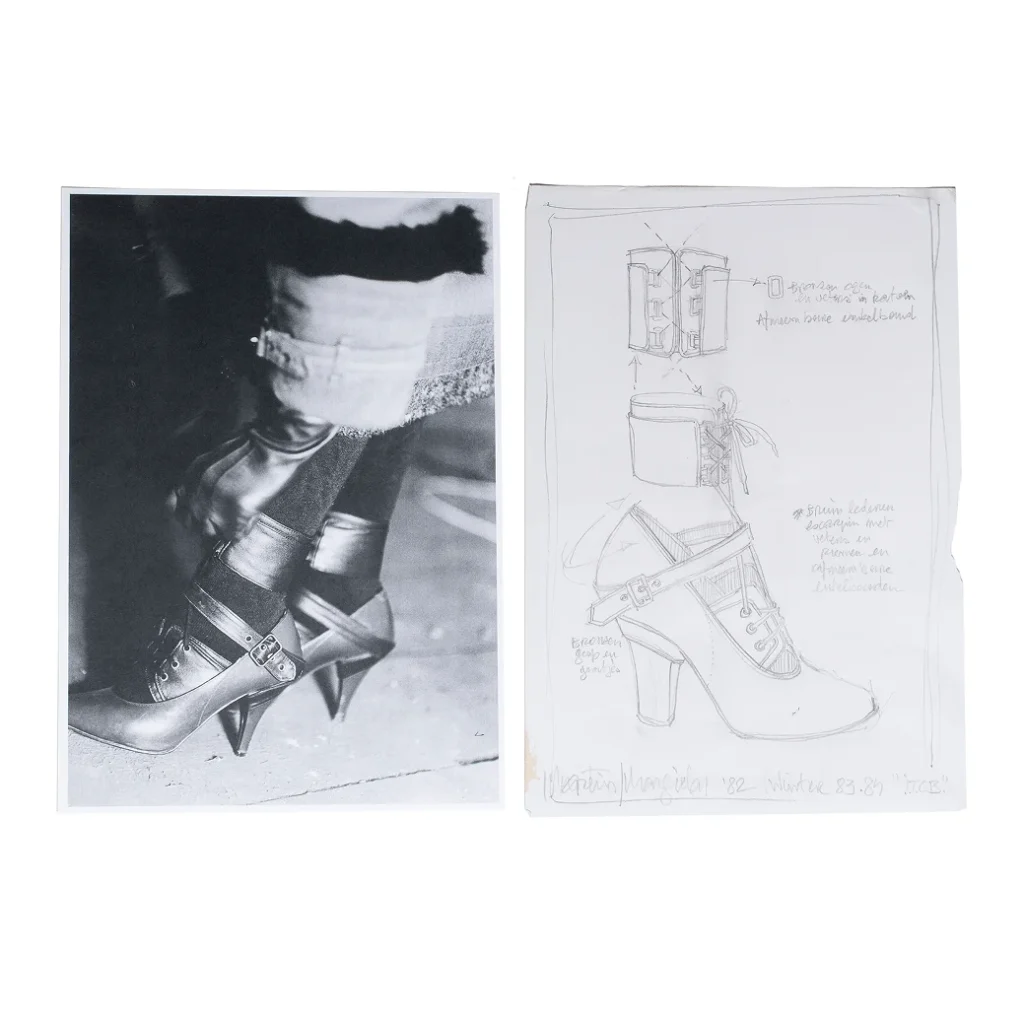
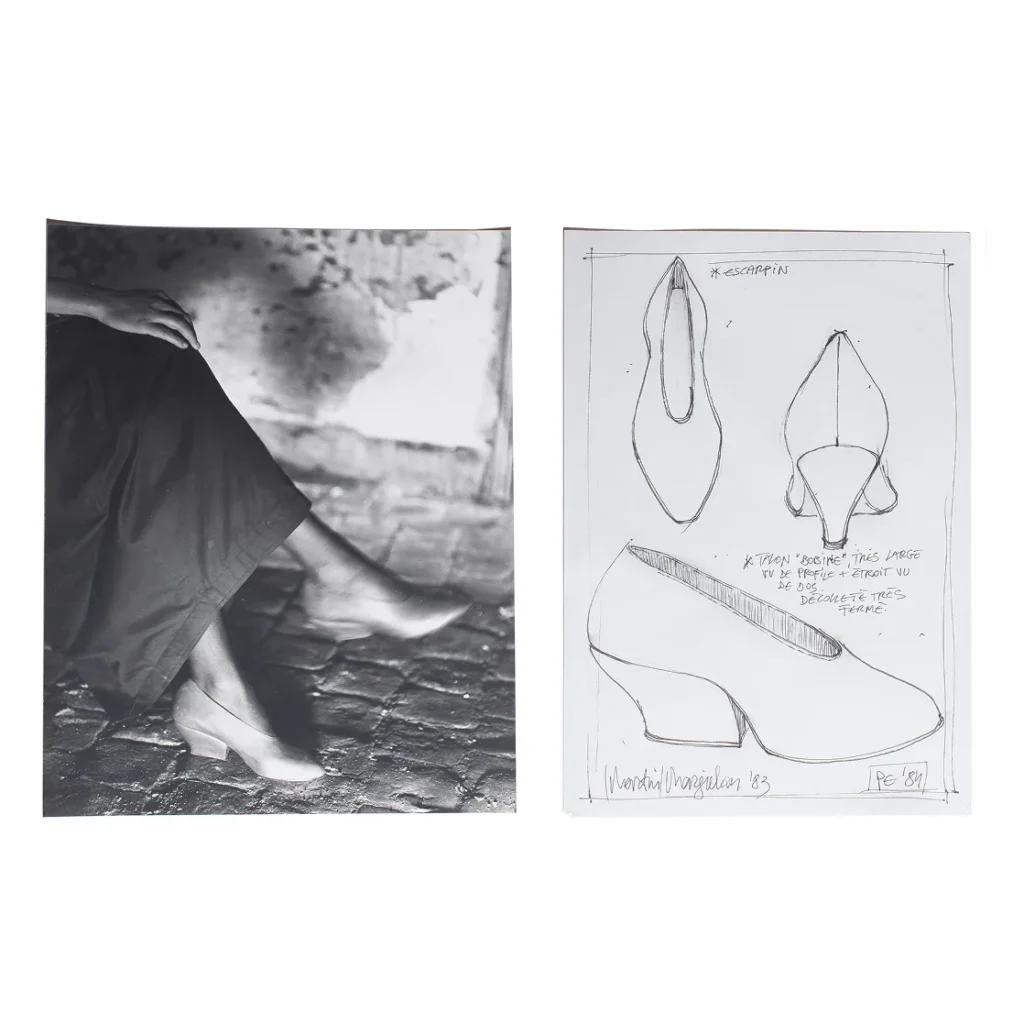


Photography courtesy of MARC CHATELARD


Photography courtesy of MARC CHATELARD

Photography courtesy of MARC CHATELARD

Photography courtesy of MARC CHATELARD