
Share this
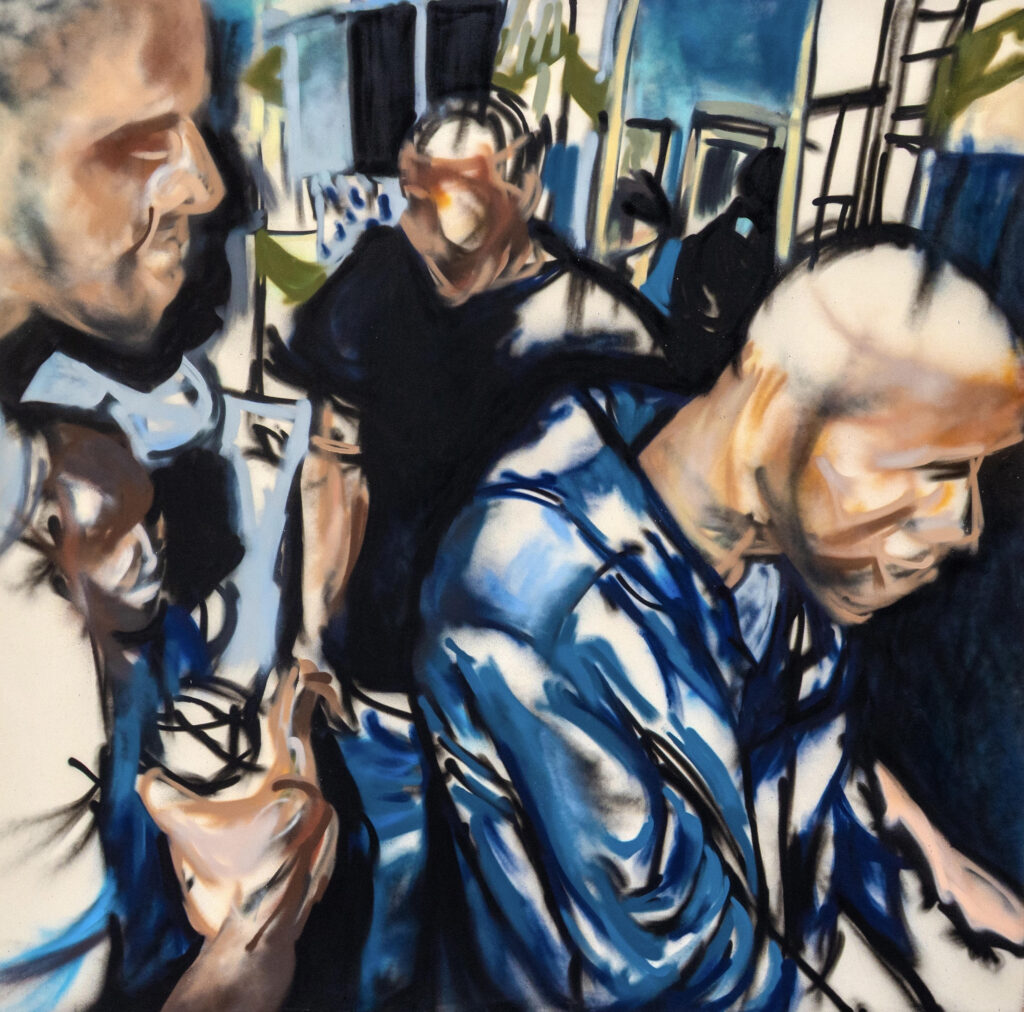
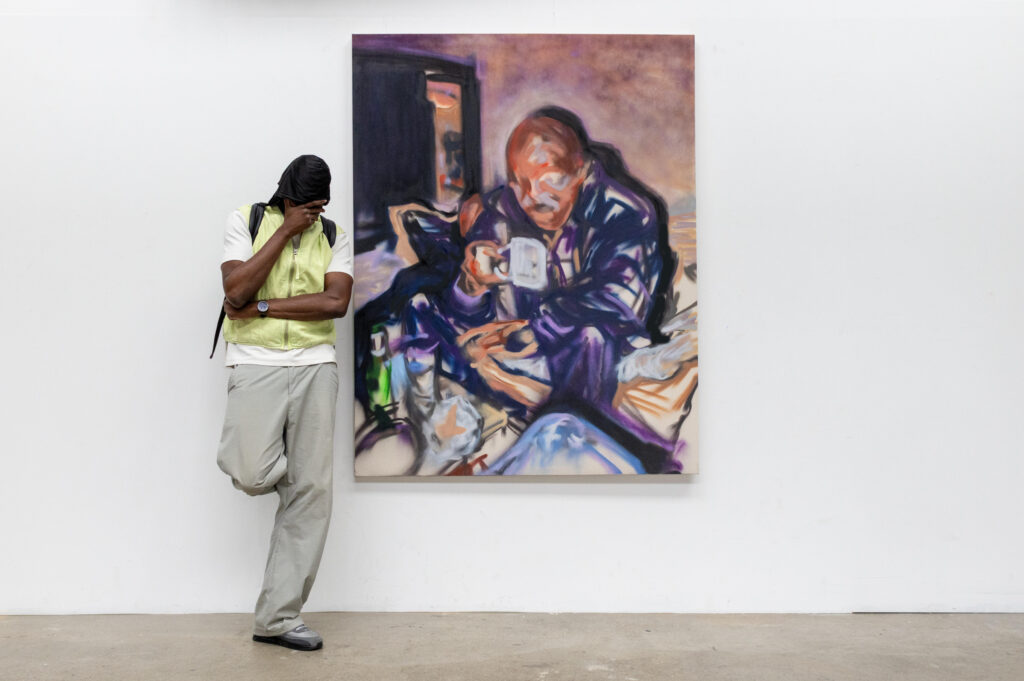
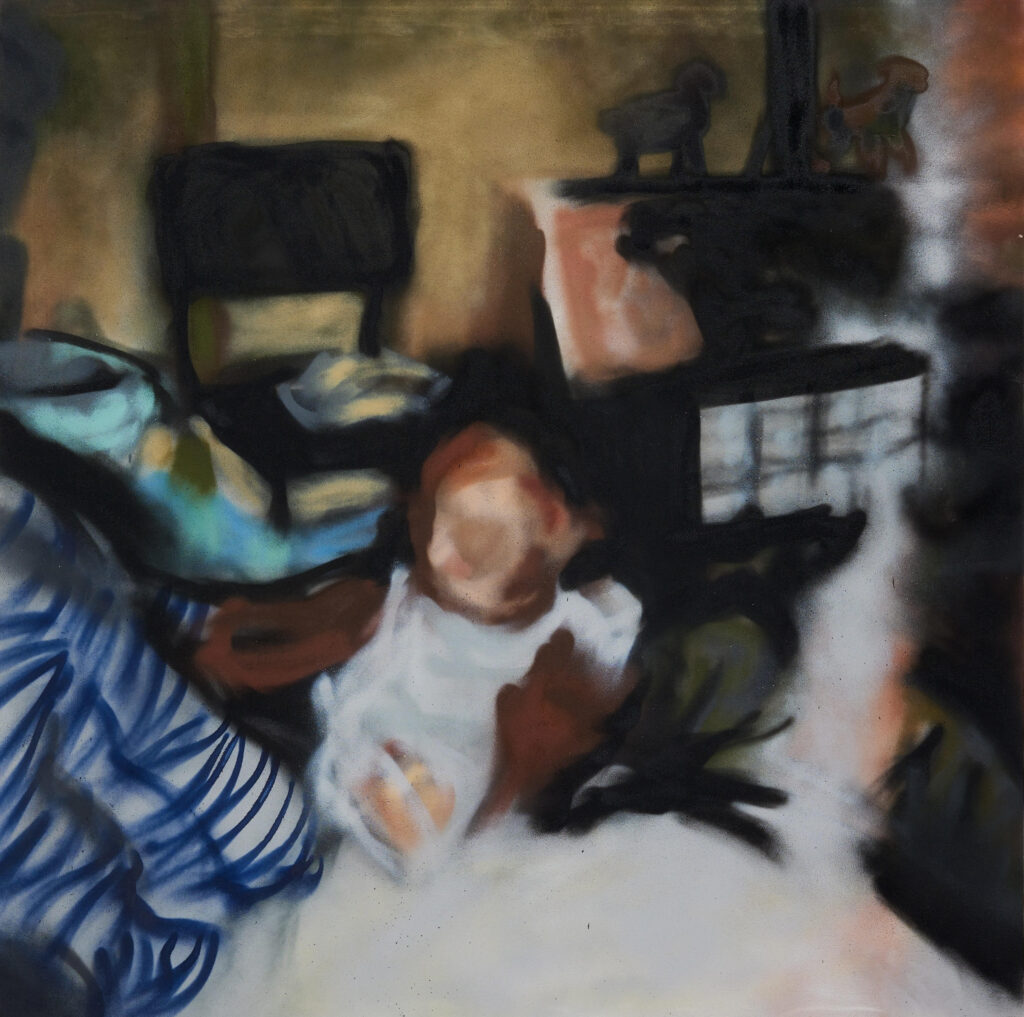
Born and raised in Hackney, Ramone K Anderson has been making art for as long as he can remember. Working between graffiti and painting, his figures emerge through layers of spray paint — ghostly, blurred, and full of movement. A recent RCA graduate, he’s now preparing for his first solo show with Bolanle Contemporary. We spoke about growing up in East London, painting outdoors, and what it means to stay both visible — and invisible.
Exhibition: Minor Attractions, The Mandrake Hotel, 14–18 October 2025
Words & profile picture by Brynley Odu Davies.
You grew up in Hackney – what was it like growing up there, and how has the area changed over the course of your lifetime?
Ramone: It’s changed a lot now. Gentrification has become more rampant across Hackney and surrounding areas, from new developments in Stoke Newington, through Dalston to Shoreditch. There was an undercurrent of violence that permeated throughout the borough at one point. A small group of us got chased by 30 guys out of the KFC in Stokey on my friend’s 13th birthday, and in the estate behind that KFC, one of my friend’s close friends was shot in the head on his doorstep.
This kid who was friends with a lot of people I was close with, got shanked outside Town Hall after school by the cousin of someone in my class who was in the year above us. He bled out in Mare Street and died. On the same Narroway, my boy got his 3410 jacked at knife point. Hackney was a different beast back then. I was always in proximity to death and violence, but due to gentrification, I don’t feel that same sense of having to always be on point anymore, and things appear safer. It’s a complex thing. Or maybe I’m just older and further separated from the madness.
Do you feel Hackney still shapes the way you see and make art?
Ramone: Yes. I think about these stories a lot and use my art to document and archive these occurrences because they live and die with us. I went to Lauren Halsey’s show at the Serpentine, and it’s crazy how many of the landmarks in LA I was familiar with due to rap music, and that being an oral tradition of keeping communal stories alive. I want to do that with my art, and so it informs who I want to reach.
There are a lot of kids out here that are not being nurtured creatively, in the ways that I was by my Mum and peers growing up. With increased focus on STEM subjects, the arts are suffering, and funding is being cut. At some point, I want to create mentorship programs for kids in the borough so they can have someone who cares to give them access to information and the guidance that I didn’t have. That’s one of the reasons I created Extra-Medium magazine – so kids can perhaps see themselves in a diverse group of people with diverse creative practices. Perhaps it will make them think that they can do it too, if they see me and whoever else doing what they do.
You use spray paint to make your paintings – how did that start, and what do you enjoy about working with it?
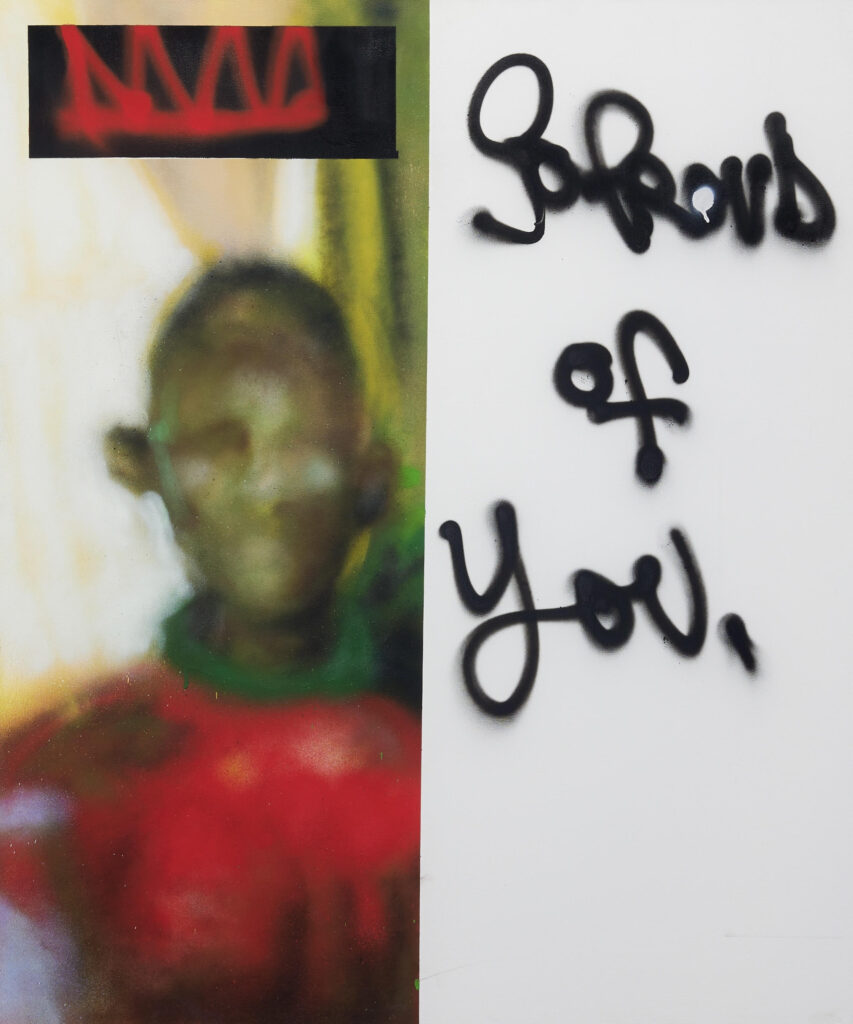
Ramone: During my MA at RCA, a friend suggested that I make a portrait in spray paint. I wanted to paint, but I was more focused on making music at the time and didn’t know how to give painting the time it deserved. My oil painting skills are mid, and I was only decent in acrylic. I gave it a go, and it resonated with a lot of people. That was the painting I made called ‘So Proud of You’. But also, it helped me get out of my head. I needed more immediacy in my work. I was watching Basquiat documentaries and a lot of stuff about Tupac, and their speed of production was interesting to me. There’s something incredibly visceral about their work that still resonates years after their departure, despite it being made so quickly. I wanted to lock into that because being so cerebral gets in my way a lot of the time.
You don’t show your face in photos because of your graffiti – does keeping some privacy make the work feel freer?
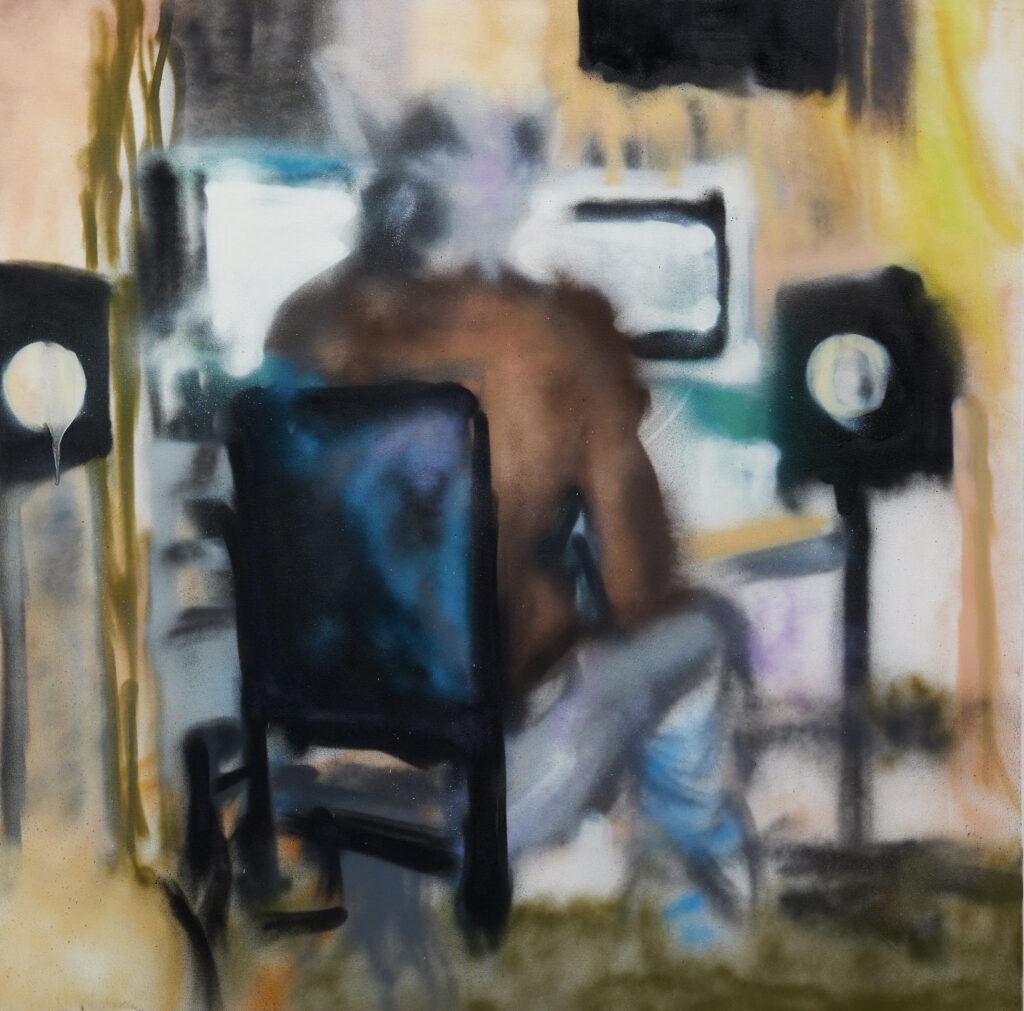
Ramone: Firstly, I wanna go on record and say that I don’t consider myself a graffiti artist because I think it’s important to respect the medium and those who have dedicated their lives to the art form, and who do it for love and have never made a penny from it. But something I’m always thinking about is this idea of mediating boundaries between artist and audience.
I was reading a story about MF DOOM serving people at the bar before one of his shows, then putting on the mask, getting on stage, and killing it. And no one knew it was him at the bar. I like that freedom to pass between those different spaces uninterrupted. I’m aware that once you enter the public sphere, people feel like they have ownership of you, and you’re seen as a commodity before a human.
My humanity and the connections I have with people inform a lot of my work. People are precarious creatures as it is, so I don’t desire to have navigating that become more complex by having to assess the masks people create to disguise their intentions. I like being able to walk to the shop and think out loud. A lot of my ideas come from mundane activities, and that freedom is integral to my making work.

You’ve said you’ve always made art – when did it start to feel serious or like something you wanted to do full-time?
Ramone: Cliché story, but when I was eight. In year 3, they had this exercise where they told us to take off our shoes and draw them, and my drawing was the best in the class. I’d always drawn vigorously as a kid, but that was the first time I received widespread public validation for my skills. Drawing always brought me the most joy, so that plus validation made doing art a no-brainer. As I got older and better, people became more invested. I used to draw pictures from video game magazines and sell them to raise lunch money because, at times, we had no money. When people started paying me for my art and I had a consistent “collector base” amongst people in my school, I started working towards being a commercial illustrator.

You paint outside in your garden – what’s that environment like for you, and how does it affect your work?
Ramone: It’s pure practicality at this point. No bread for a studio space elsewhere, but also, I work in spray paint, and most studio spaces don’t have the ventilation required to accommodate my practice. It’s coming up to winter now, so I’ve moved into the house and work with dust sheets and the windows wide open. Shout out to my Mum for always being so supportive.
You’ve only just started using social media – why weren’t you into it before, and what made you start now?
Ramone: It’s been proven that social media is intentionally engineered to hack your brain’s awareness and attention span, hooking people with certain types of content. As a result, our engagement with art has suffered. Songs are now shorter, music is catered for TikTok reels, and there’s less musicianship because creatives are now focused on turning art into content.
Similarly, people are making visual work that caters to tastes and trends that are forever in flux because things move so quickly due to the speed of the internet. I haven’t been there in six years because it’s integral for me to protect my peace. I believe you’re either a seller or a consumer, and I had nothing to sell, so there was no reason for me to be there, and there wasn’t anything I wanted to buy either. After I started getting attention from institutions at my RCA graduate show, people told me to make an Insta because it was necessary to connect with industry heads to make bread. But as soon as my name has enough clout in those spaces, I’m off this thing again for sure.

You have your first show with Bolanle Contemporary coming up – what’s it about, and what do you hope people take from it?
Ramone: I’ve titled it ‘Moving on Swiftly’. It’s something we used to say to kids a lot, that holds the sentiment of acknowledgement without investment. A lot of my practice plays on words or recontextualizes colloquialisms and phrases because heritage and culture are important in shaping who we are, and that’s important to honor. The paintings I’ve made for the show commemorate relationships that have had an impact on shaping who I am for better or for worse, and in moving on to a different chapter of my life, I want to use the space to honor those experiences while leaving them behind for good. The show takes place in a hotel, which is a liminal space or transitory in nature. I thought it would be a good way to use that site intentionally.