Share this
At first glance, Sophie Calle’s work can appear deceptively dry, almost administrative, as if it might offer the emotional charge of a washing machine manual. Then, suddenly, it pulls you under. With Something Missing?, on view at Louisiana Museum of Modern Art from March 26 to September 6, 2026, the French artist transforms the museum’s West Wing into a sprawling meditation on love, longing, memory, beauty, presence, and loss.
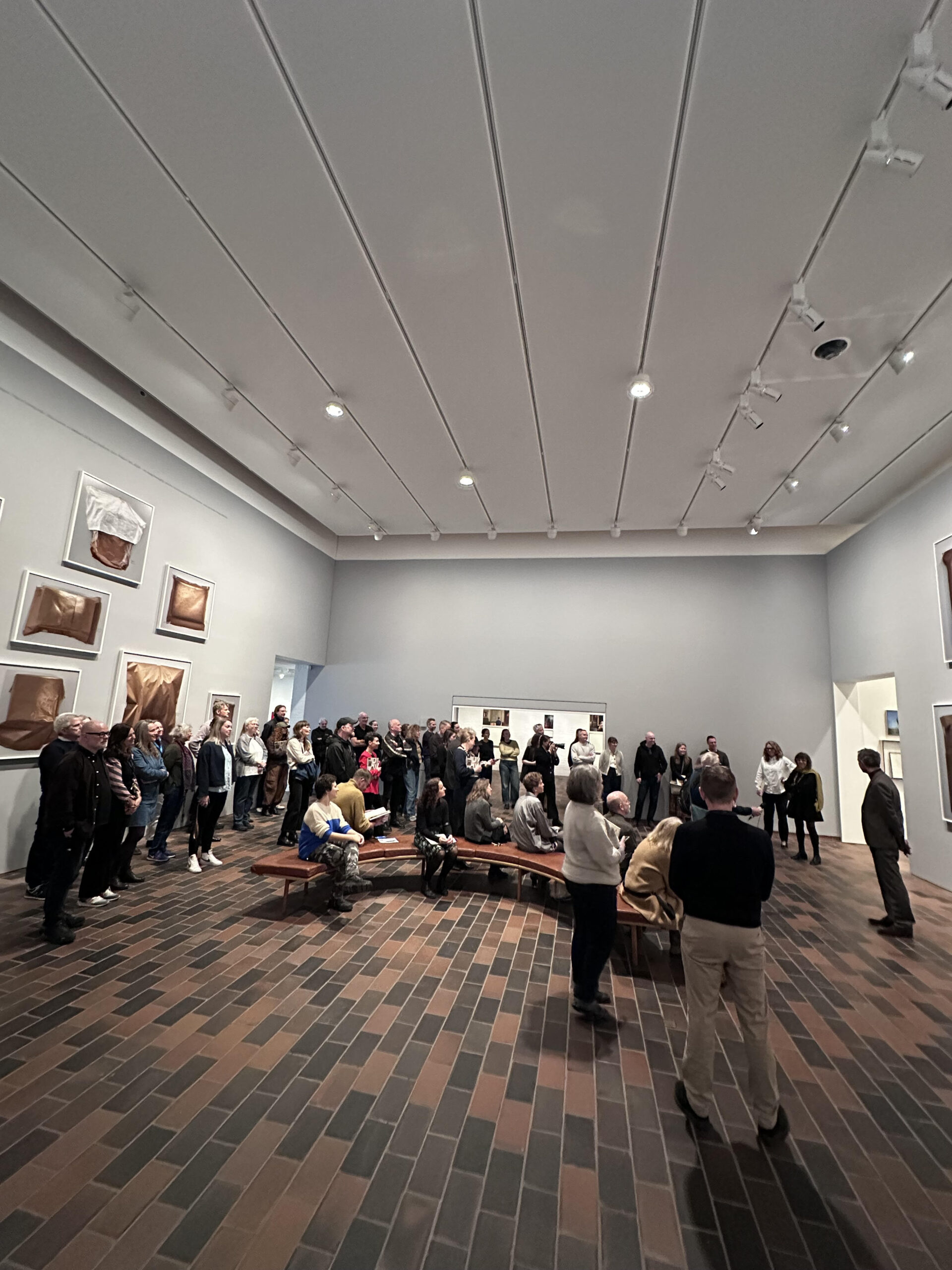
Bringing together more than 300 individual elements — including photographs, texts, and video works, the exhibition presents seven of Calle’s major series alongside a focused selection of works circling her own mortality. Spanning nearly four decades, from 1986 to 2024, the show offers a sweeping encounter with an artist who has spent much of her career probing the fragile structures through which people understand themselves and each other.
For over fifty years, Calle has built one of contemporary art’s most distinctive practices, positioned somewhere between confession, investigation, fiction, conceptual art, and autobiography. Her works often begin with something outwardly ordinary, a conversation, a photograph, a missing object, a private gesture, only to open onto larger questions about how we construct meaning from what is seen, remembered, hidden, or imagined. In her hands, the banal never stays banal for long.
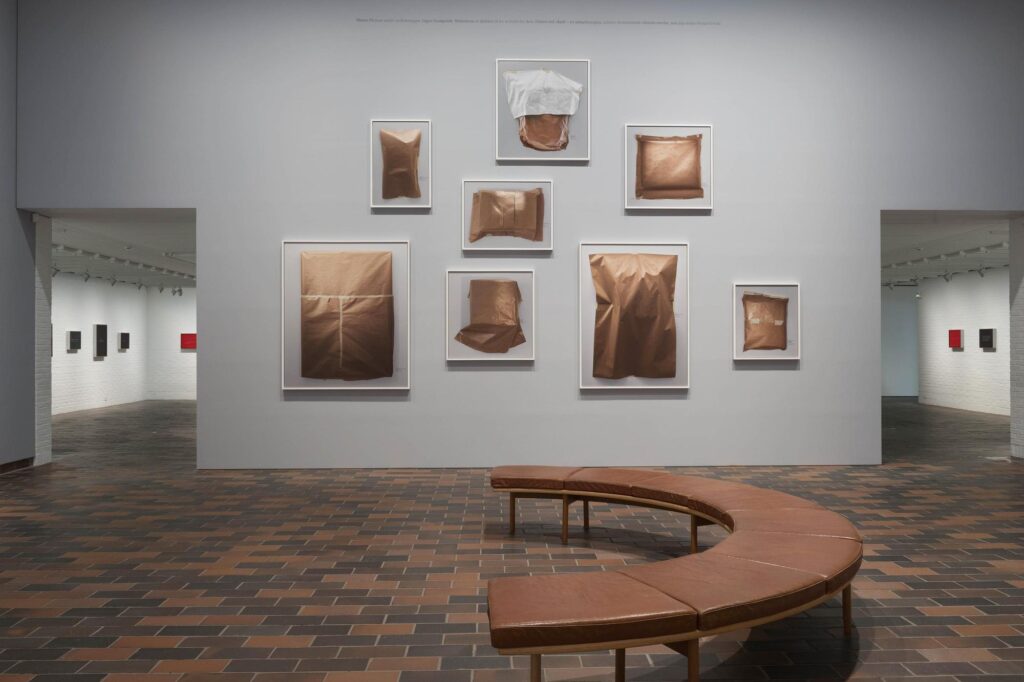
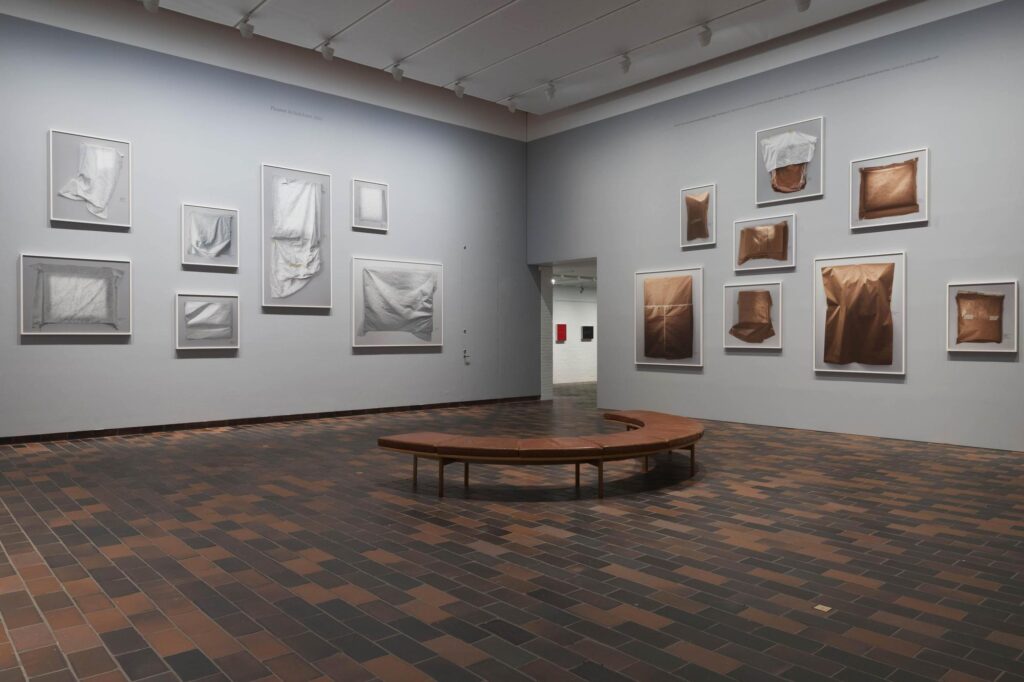
What defines Calle’s work, perhaps more than anything, is her singular use of image and text. This pairing has long been her trademark: words do not simply explain the photographs, and photographs do not merely illustrate the words. Instead, the two forms lean against, contradict, destabilise, and deepen one another. The result is a body of work that is at once warm, humorous, poetic, and conceptually precise.
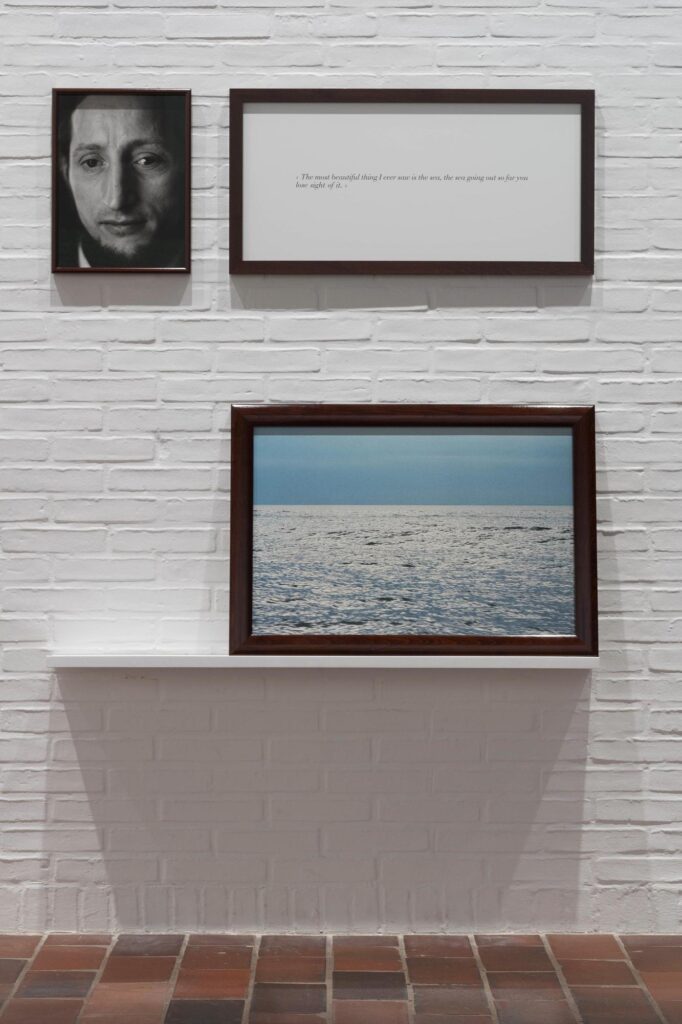
A central work in the exhibition is The Blind from 1986, an early and now iconic piece that was acquired by Louisiana in 2024 and is being shown at the museum for the first time. In it, Calle spoke with people who were born blind and asked them to describe their idea of beauty. The work cuts straight to one of the artist’s enduring concerns: the tension between the visible and the invisible, and the strange power of the image that exists only in the mind.
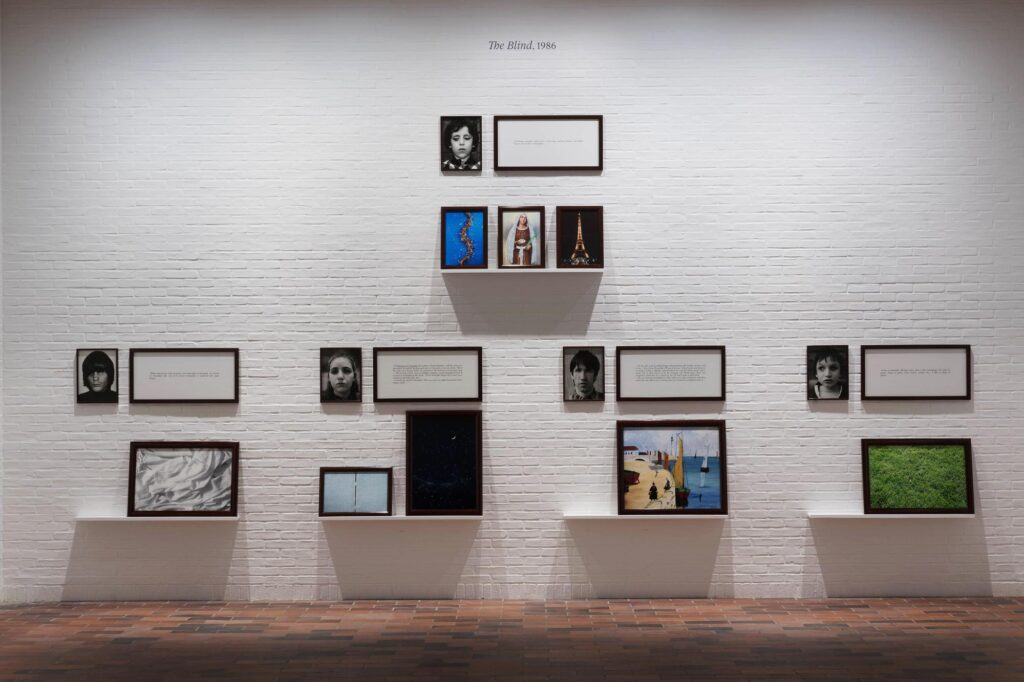
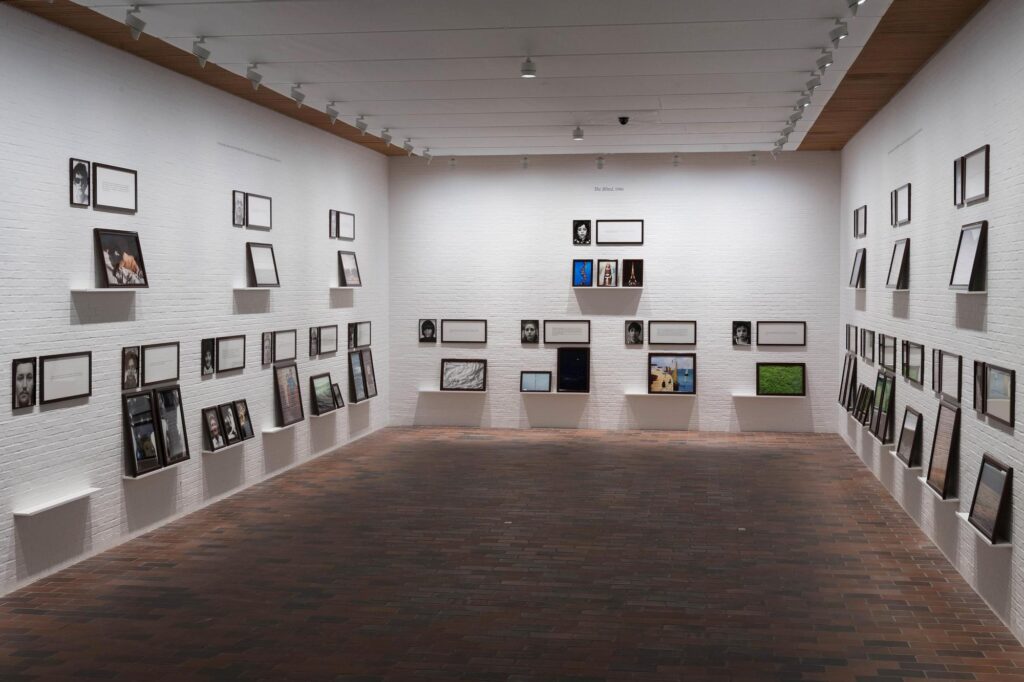
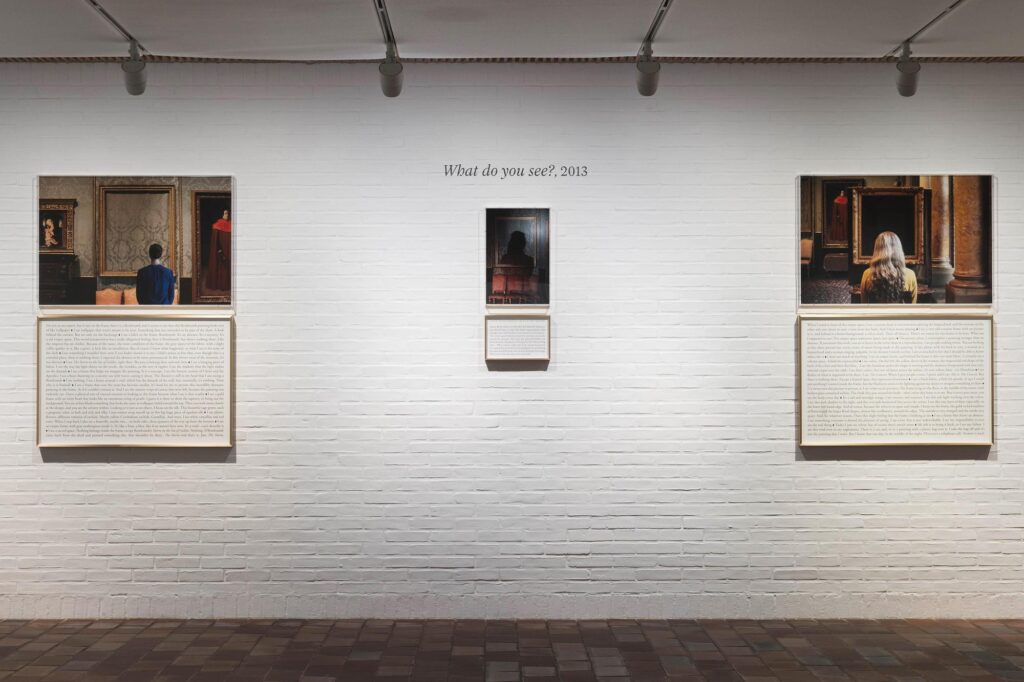
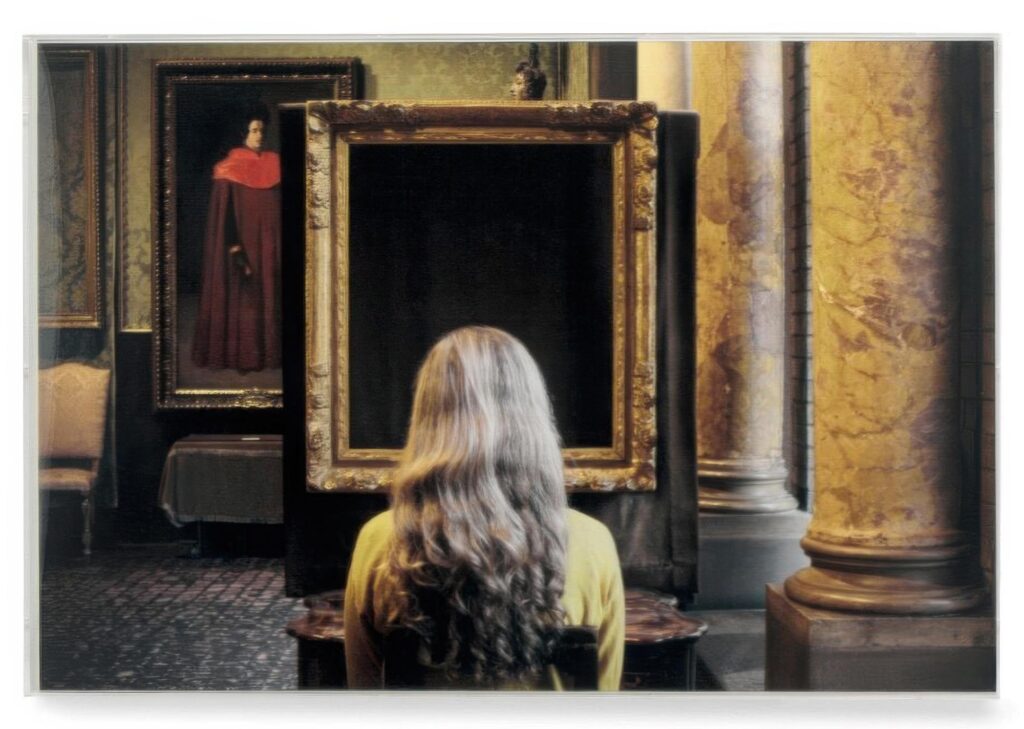
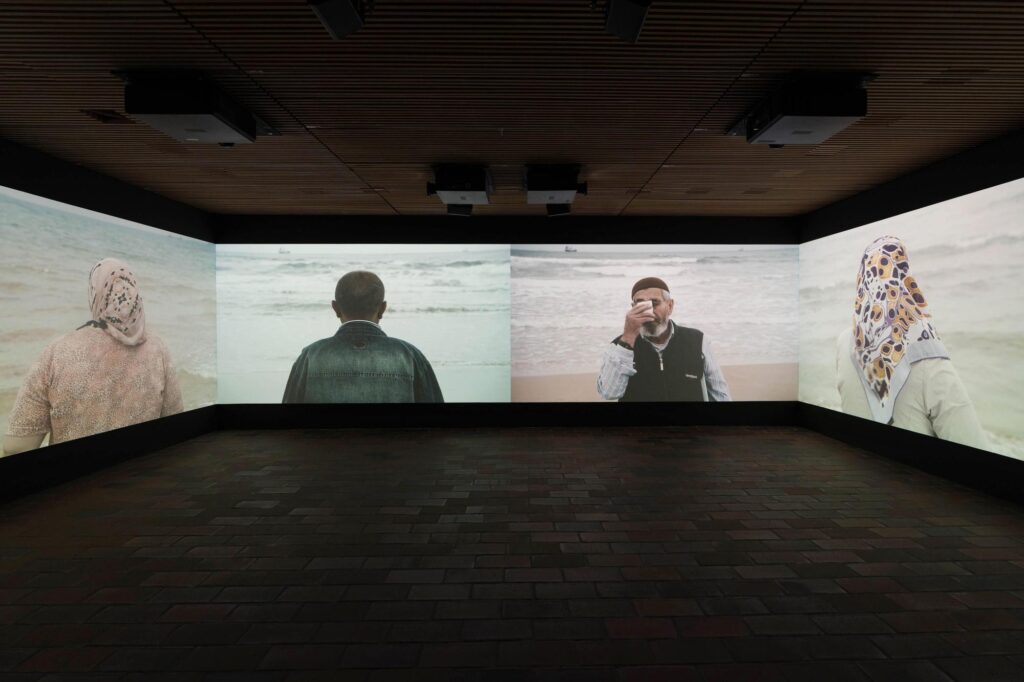
That same preoccupation runs throughout the exhibition. In What do you see? from 2013, Calle turns to the infamous theft at the Isabella Stewart Gardner Museum in Boston, where empty frames left behind by stolen paintings became haunting monuments to absence. Rather than attempting to reconstruct the lost masterpieces, she asked museum staff and visitors to describe what they saw within the vacant borders. Elsewhere, in Voir la mer from 2011, she filmed people in Istanbul seeing the sea for the first time, capturing the emotional force of a first encounter with something vast, elemental, and long imagined.
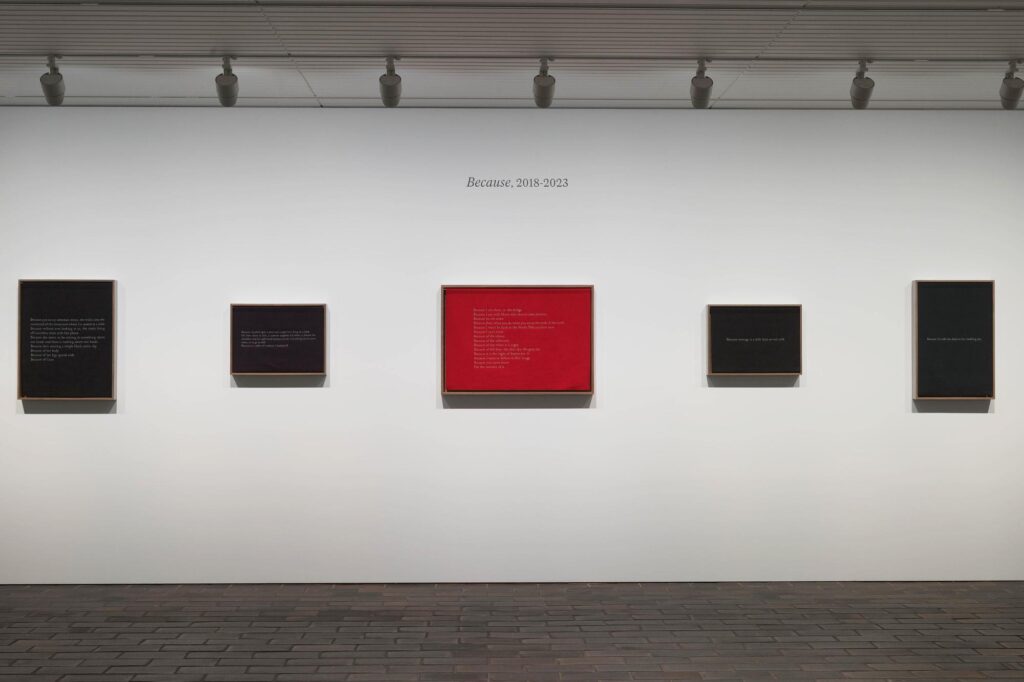
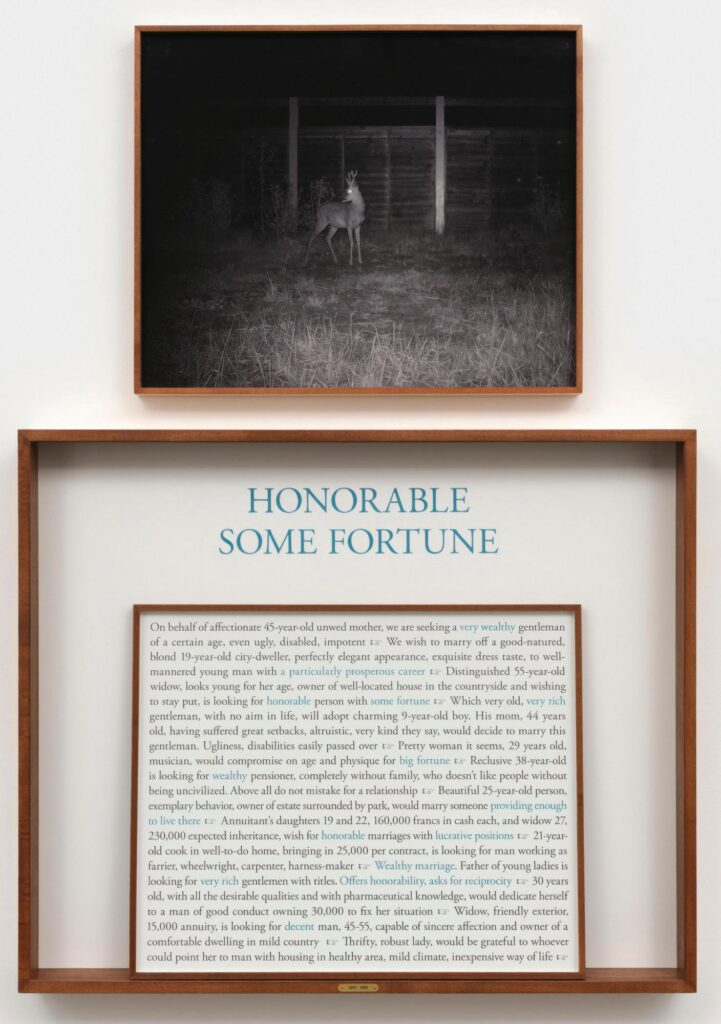
Other series push Calle’s fascination with desire, concealment, and projection in different directions. Because layers veiled images with embroidered texts that reveal the motives behind each photograph. Picassos in Lockdown emerged after the Musée Picasso in Paris covered its works during the pandemic, turning Picasso’s overpowering legacy into something ghostly, wrapped, and newly photographable. On the Hunt traces what men and women have historically sought in one another through personal ads and Tinder messages, pairing those desires with images of hunting towers and nocturnal animals, blurring the line between hunter and prey.
The exhibition also leans into the unfinished, the abandoned, and the unresolved. In Catalogue raisonné of the unfinished, Calle takes stock of projects that never came to life — unrealised ideas, drafts, sketches, and failed attempts preserved in drawers and boxes. It is an archival gesture, but also something more intimate: a confrontation with what remains undone at the edge of a life. That thread extends into The End, a final grouping of works from 2013 to 2023 that revolve explicitly around the artist’s own death.
Organised in close collaboration with Calle, Something Missing? expands on Louisiana’s long relationship with the artist, whose work has been part of the museum’s collection and history since 2008. Following earlier presentations, including the 2010 solo exhibition Take Care of Yourself, this new show brings together works not previously seen in Denmark and, in several cases, not previously shown together at all.
What emerges is not simply a survey, but a powerful reminder of why Sophie Calle remains such a singular figure in contemporary art. Few artists have explored with such elegance the unstable border between fact and fiction, private and public, seeing and knowing. In Something Missing?, absence is never empty. It is charged, restless, and alive.