Share this
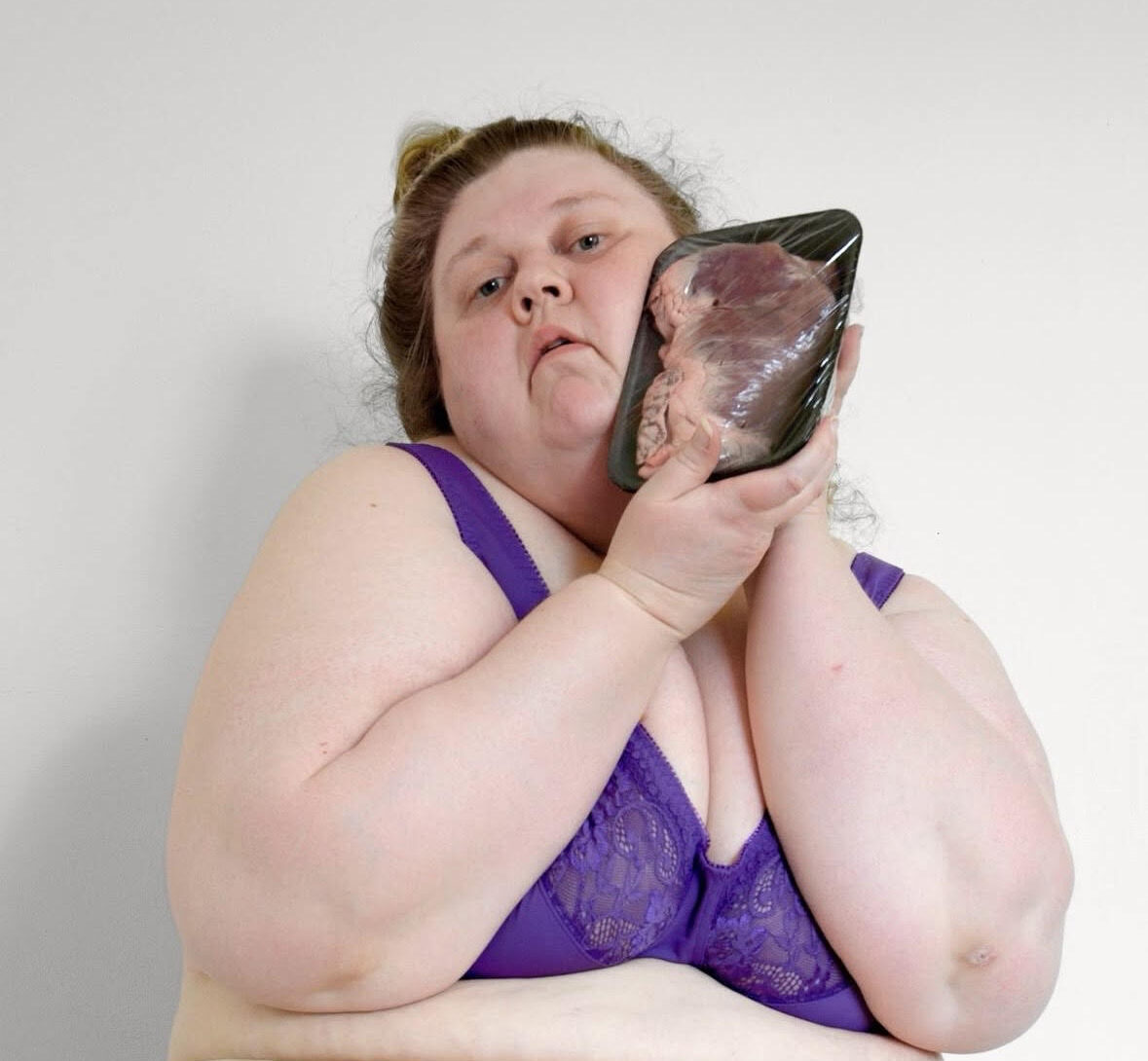
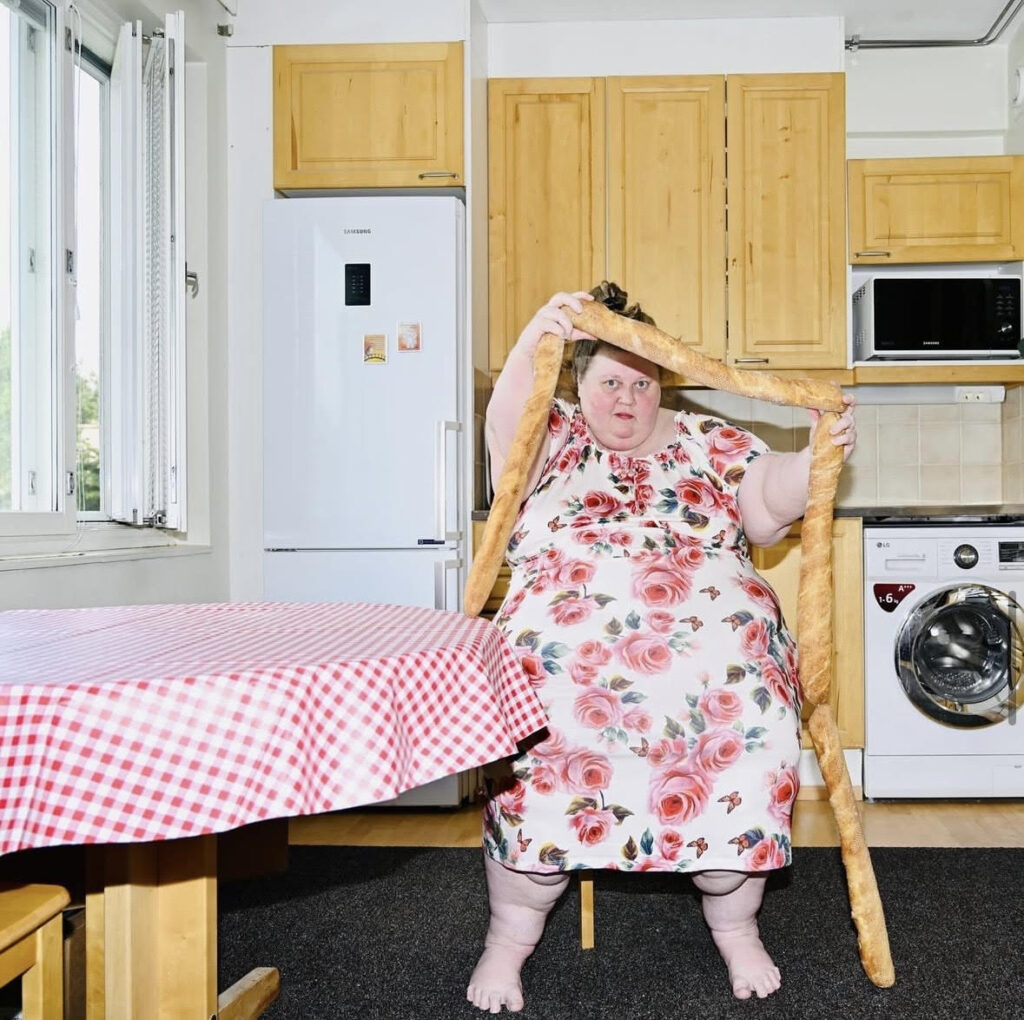
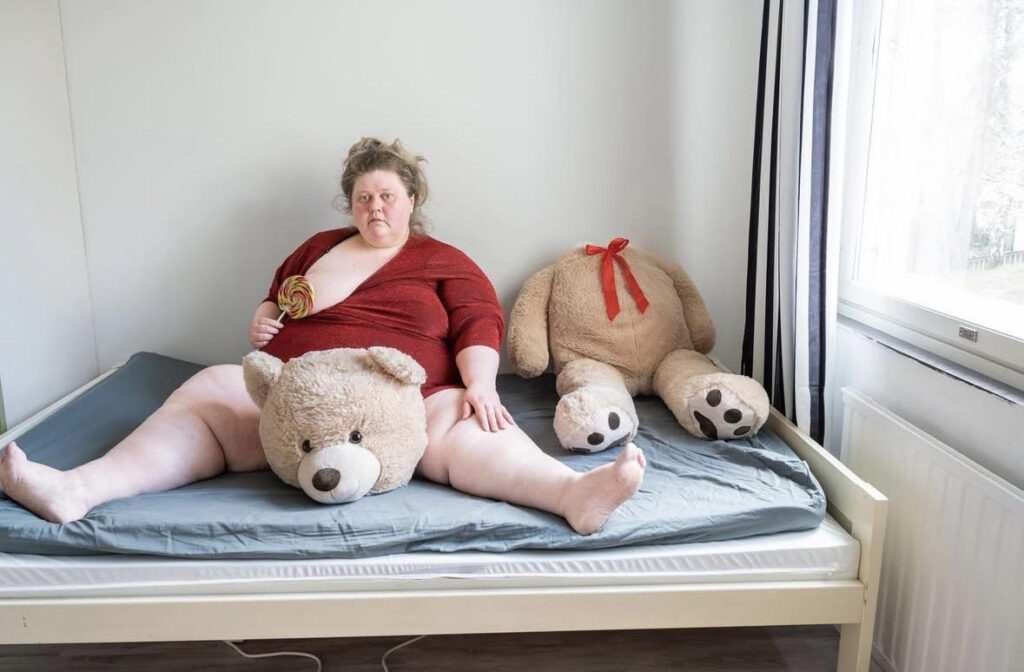
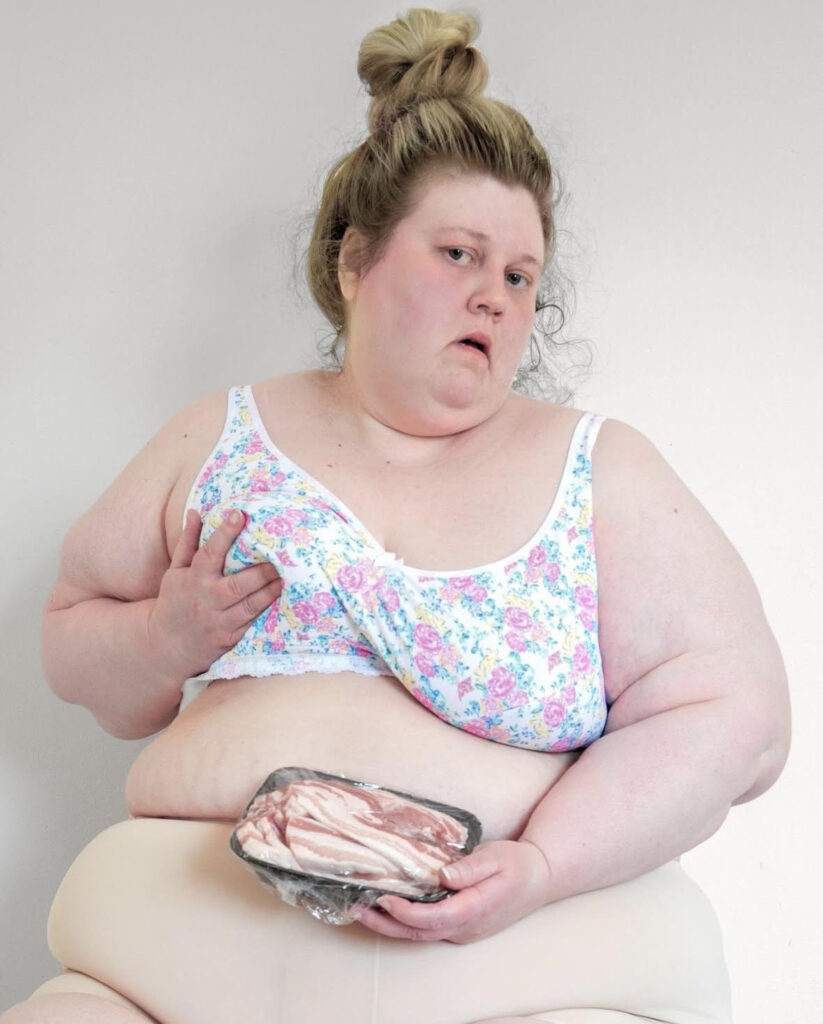
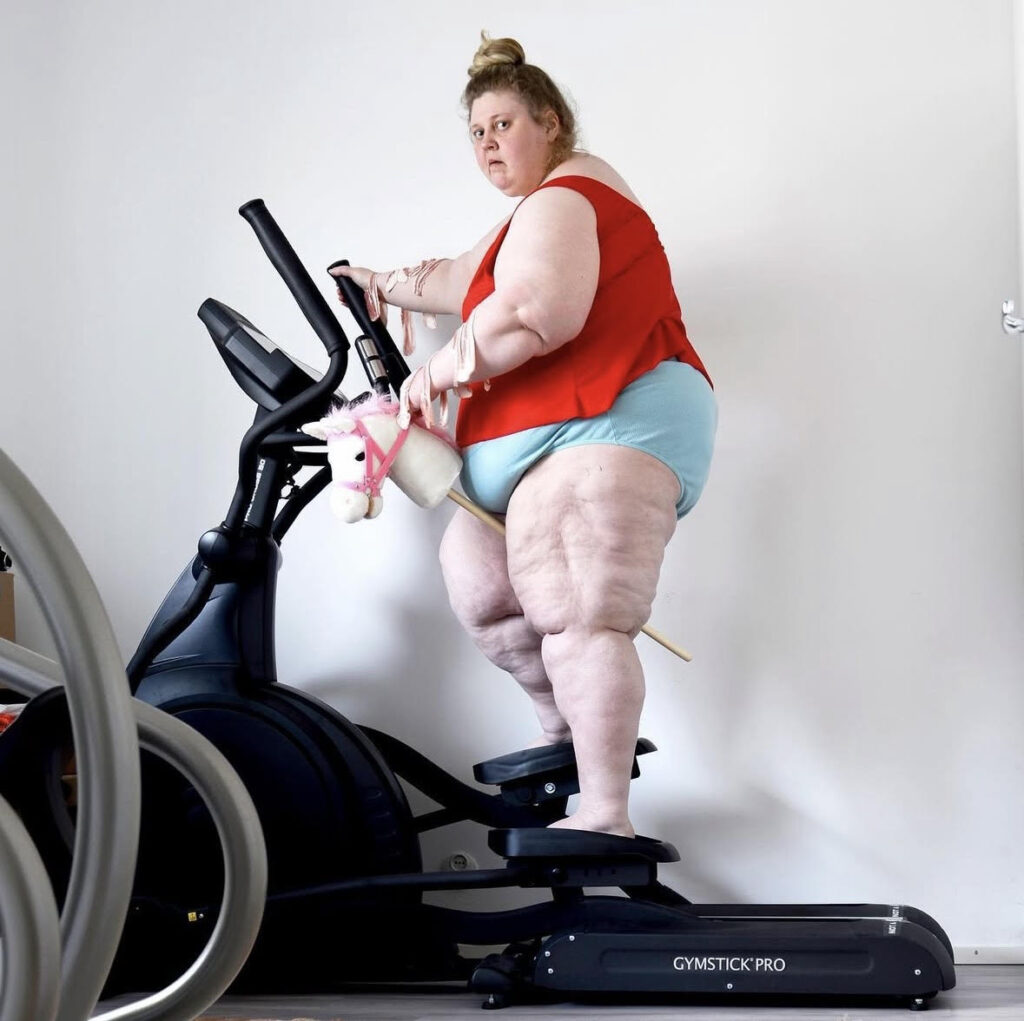
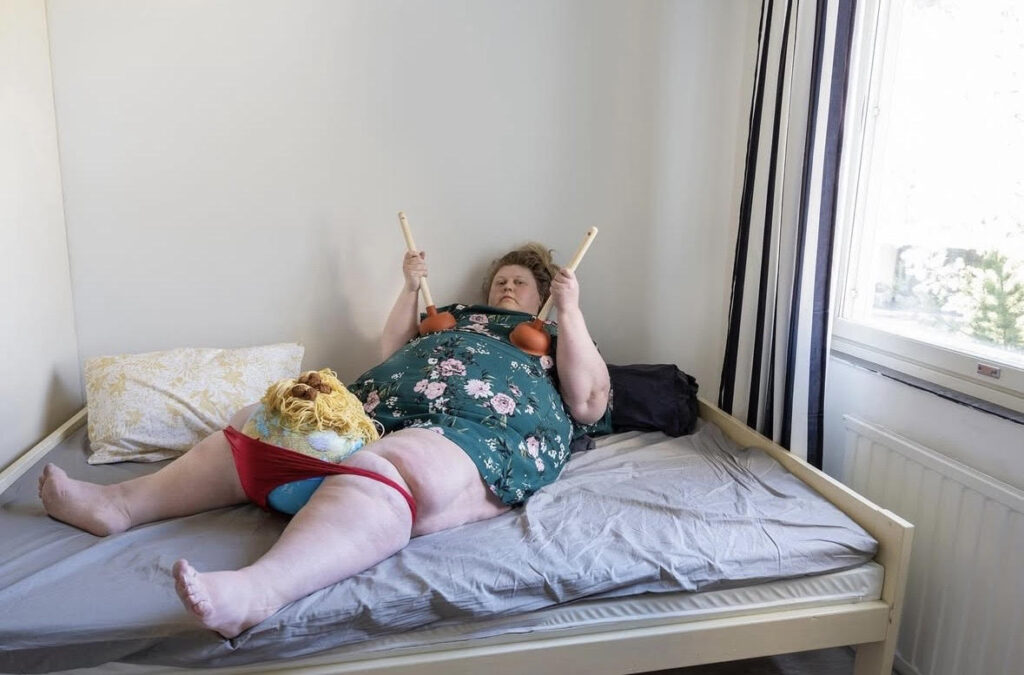
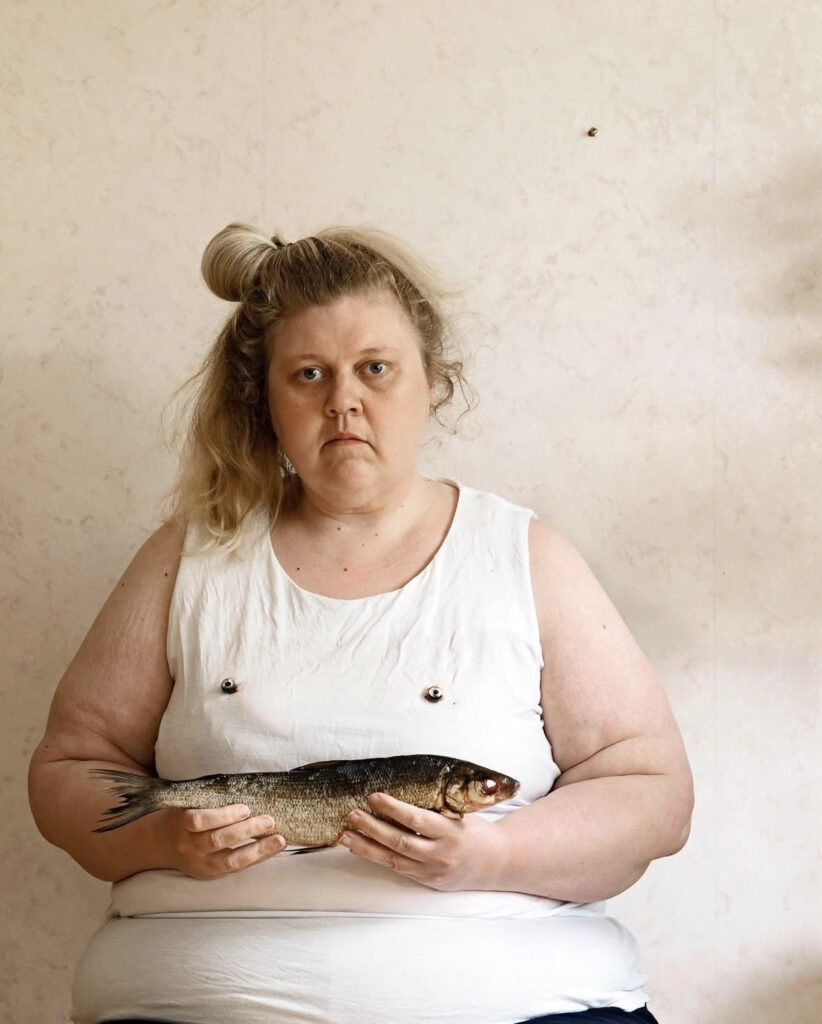
Since 2008, Finnish artist Iiu Susiraja (b. 1975) has used unremarkable domestic interiors in Turku — her own apartment or her parents’ home, as a stage for deadpan, meticulously composed self-portraits and videos. Posing with everyday objects pushed into surreal territory — sausages, rubber gloves, herrings, toilet plungers — she borrows the visual codes of still life, fashion imagery, and pornography, then drains them of glamour with a poker-faced stare. “I try to reach as blank a state as possible… being blank is the same as being real,” she’s said. Across photography and short single-take videos. Susiraja opens a raw, darkly funny space to think about shame, beauty standards, taboo, sex, and self-representation.
Iiu is currently looking for gallery representation.
Hi liu! It’s a pleasure to sit down with you! First question that I alwaysask. How does a regular day look like for you in Finland??
liu: Basic daily routine, breakfast and shower. I also picked up a package with props for a photography session. I’ll probably take photos on Saturday or Sunday this week. It depends on whether the weather is sunny, because I mainly use natural light. Today is Thursday.
I’m curious, growing up, what was life like there? And what kind of kidwere you? What did you enjoy doing?
liu: My childhood was really ordinary. Nothing exciting. And nothing artistic. We lived in the suburbs called “Hepokulta” for my first 15 years. Like other kids in the suburbs, I enjoyed swimming, skiing, skating, playing in the forest, playing in the snow. I wasn’t particularly interested in drawing or painting. So I wasn’t a kid who got excited when he saw colored pencils or watercolors. I got excited about animalsand nature. There were good sports opportunities and lots of nature in Hepokulta suburbs. And there were no problems, no drugs or violence.
I was a quiet and kind and a bit shy child, so I didn’t show myself in anyway. If people are introverts or extroverts, I was and still am definitely an introvert. A couple of years ago, as a joke, my mom bought me a keychain thatread: “Always ready for an adventure”. I’m anything but an adventurer. My mother and I have a very similar sense of humor.
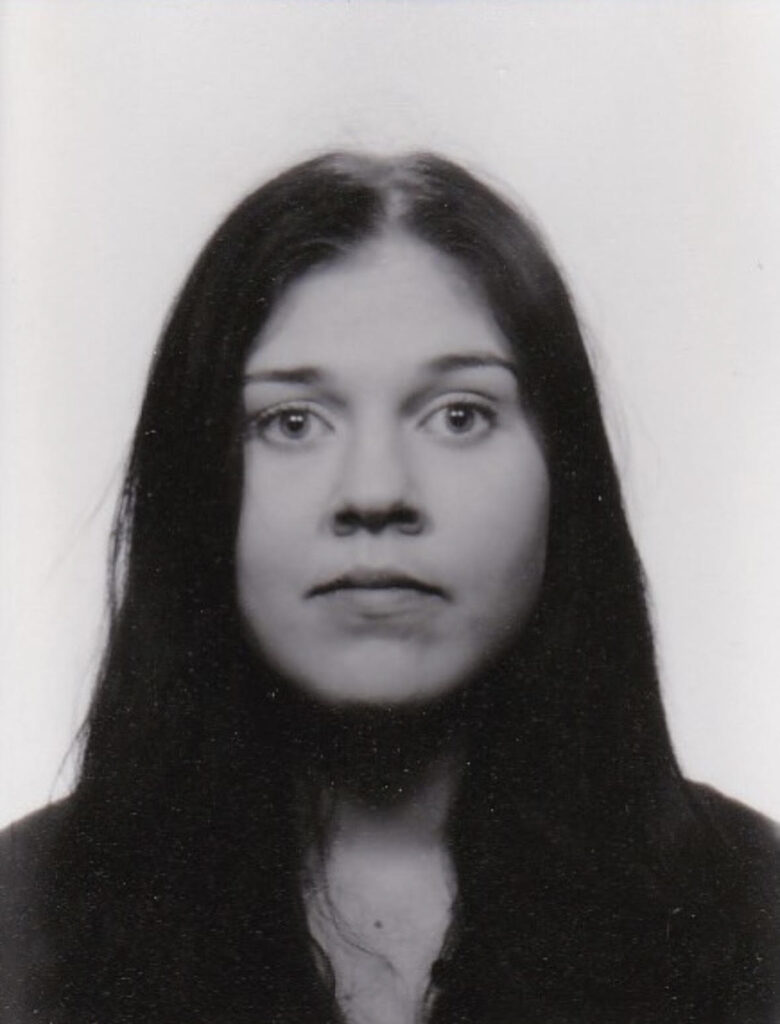
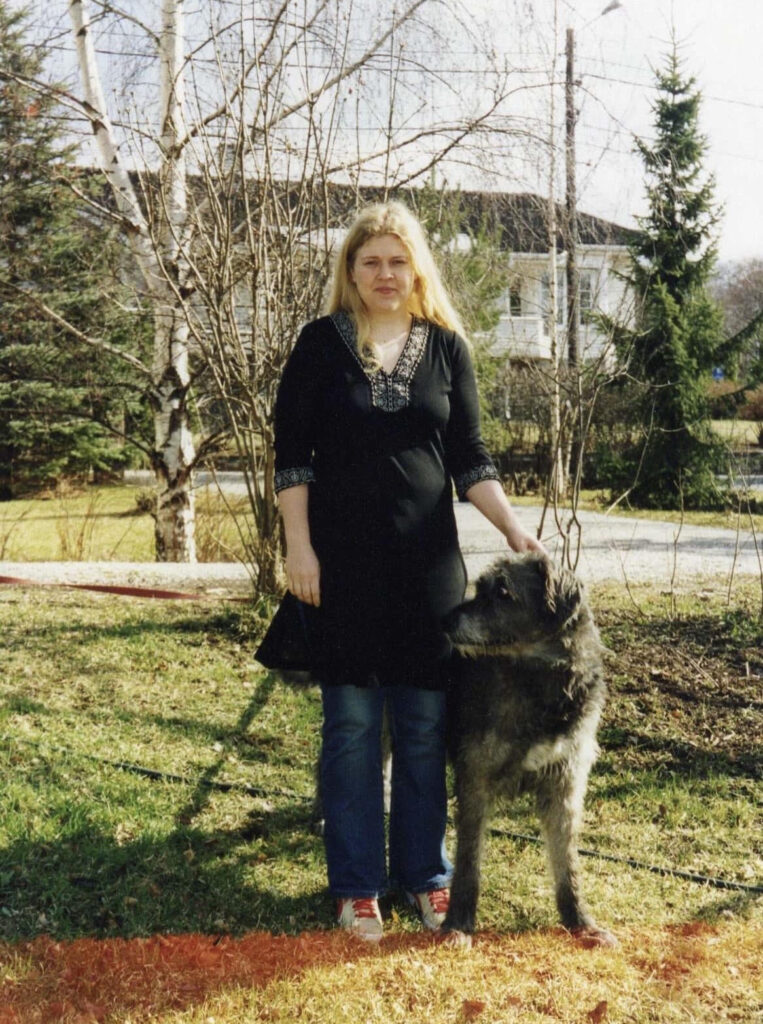
Do you remember approximately at what age your creative side startedto show? And when did you start taking being an artist seriously?
liu: I became interested in art when I was 17. As a child I liked making ceramics. But when I was 17 I started visiting art exhibitions. I also started taking hobby art courses at affordable prices. They were held a couple of hours a week. The organizer was “työväenopisto”. The courses price was at that time maybe 20€ for six months. If I remember correctly. So very cheap.
I also try many years to get into art school. But I got into art school in 2008. Before that, I had studied two degrees in the field of craft sector: “Artesaani-maalari” and “Artenomi-tekstiili”. I only started calling myself an artist after I received my Art bachelor’sdegree in 2012. After that, I also studied for Master of Arts degree. So my path to becoming an artist was long. But that’s a good thing because earlier I wouldn’t have anything to say artistically. First I had to live life. And have experiences in life, both good and bad.
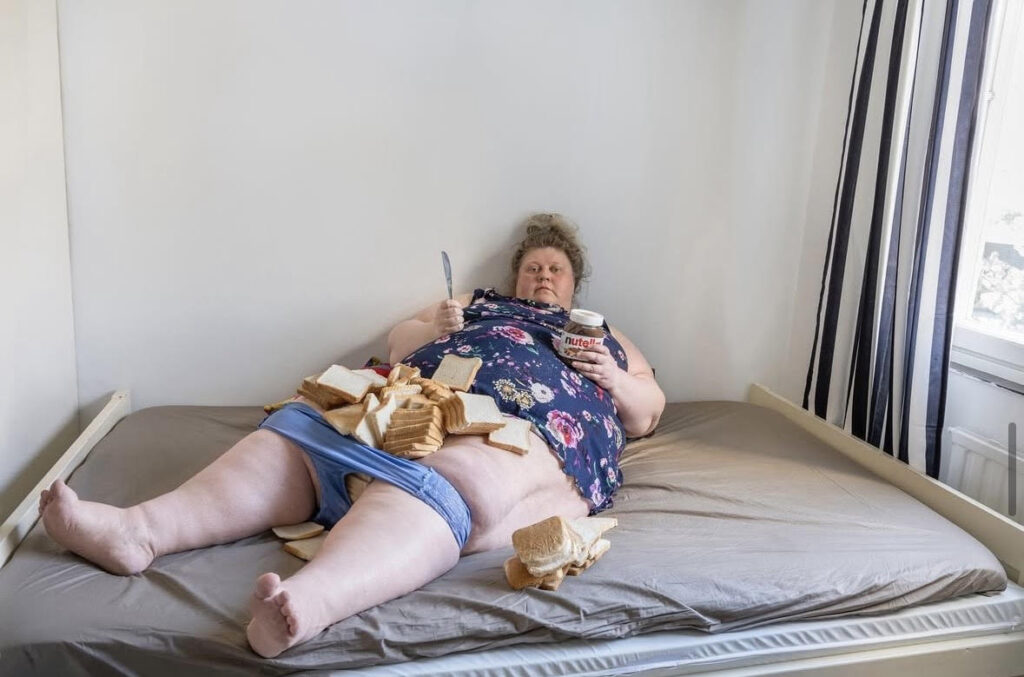
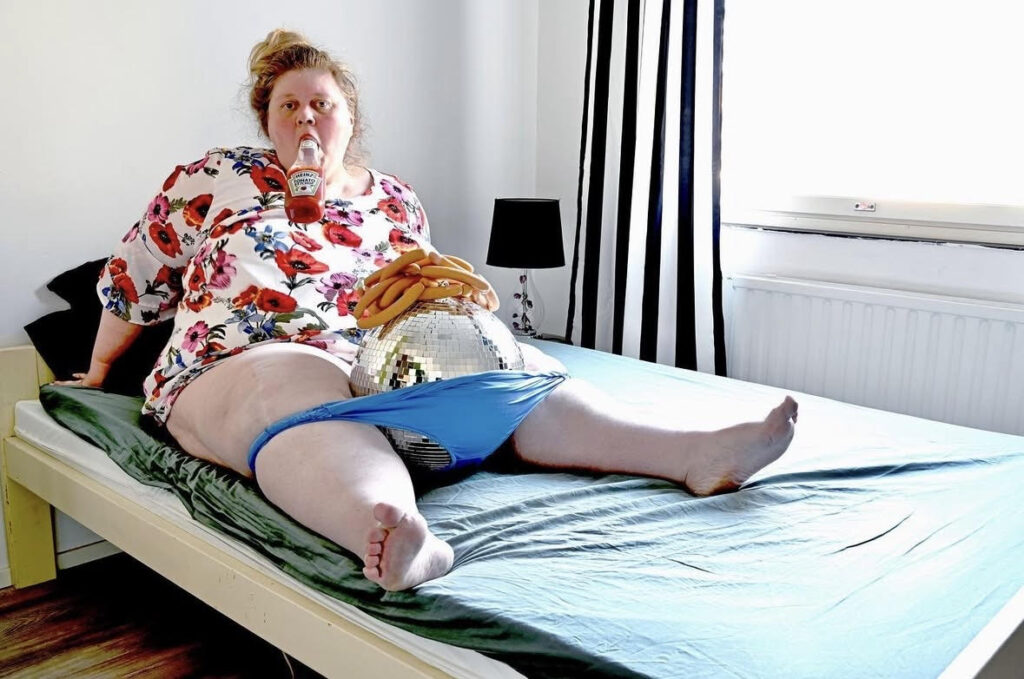
Ok liu, with these next series of questions, I will try to delve into your work as best as possible. So…. You’ve said you try to reach “as blank a state as possible,” and that blankness feels like being “real.” What is that blankness for you: protection, honesty, refusal, or something else?
liu: Being blank is I don’t let any thoughts enter my head when I’m taking pictures. That would mess things up so that you could read too much or wrong things into my face. We Finns are just poker faces, without trying. But I have noticed that the camera is one devil, it sometimes captures too much “for film” when it comes to facial expressions. We Finns are honest and we like honesty. So maybe it’s about formula: blank = real. I wouldn’t trust the smile of a clown. Clowns are suitable for horror movies.
When you’re setting up a scene alone at home, what comes first: the object, the body idea, or the title?
liu: Usually first comes the object that immediately follows the idea. Finally the title.
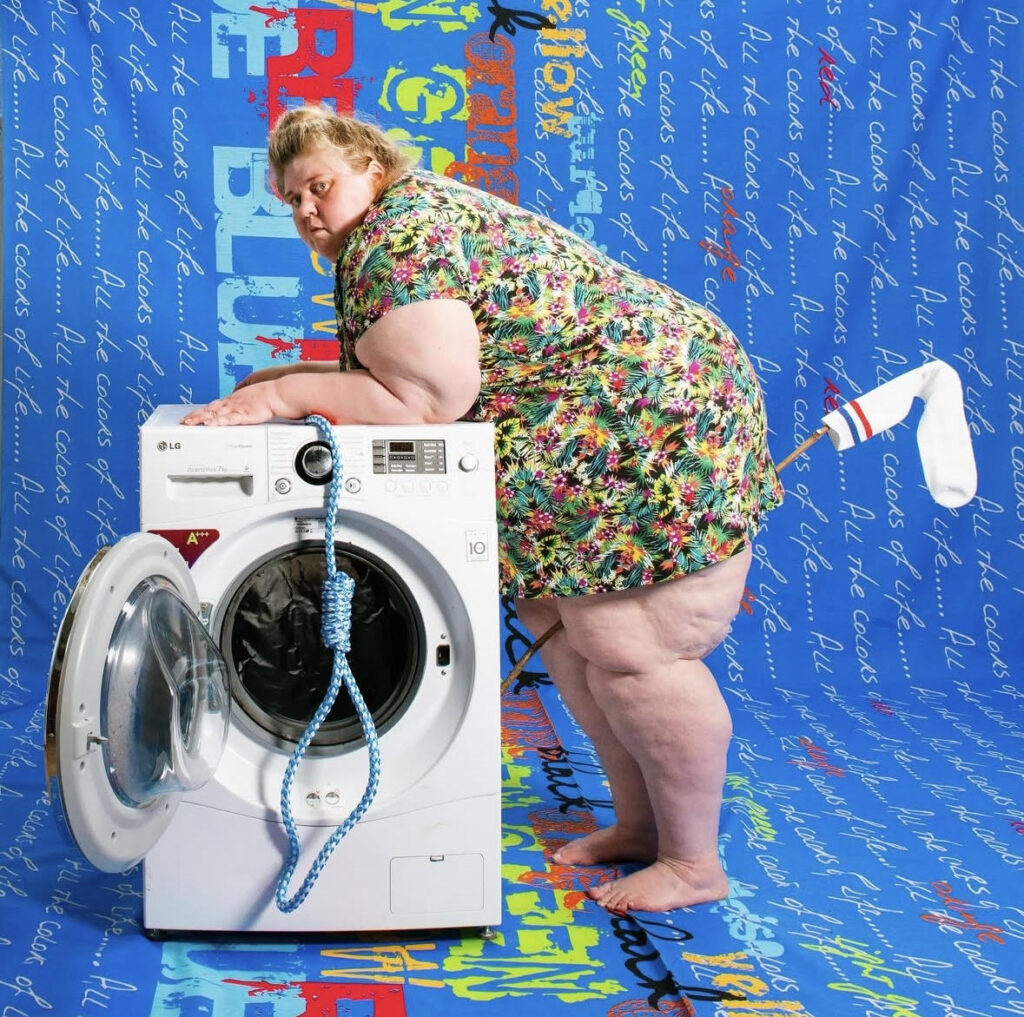
Your actions often look ritualistic, simple gestures done with quiet inevitability (egg, toy car, buttered baguette, etc.). Do you feel like you’re performing a character, or revealing a state?
liu: I’m not playing any character. If you want to make yourself crazy, that’s a good way to do it. Playing too much of a game with your mind,
How do you know when a work is “done” if the expression stays constant, what’s the success signal for you?
liu: A successful photo, when I wonder if I dare to publish this photo or not. That is, the danger of crossing my own boundaries. Some unpleasant feeling is a sign that I have a potential jackpot in my hands. The madness I talked about in my previous answer is trying to take over, in a good way, that’s what it’s all about.
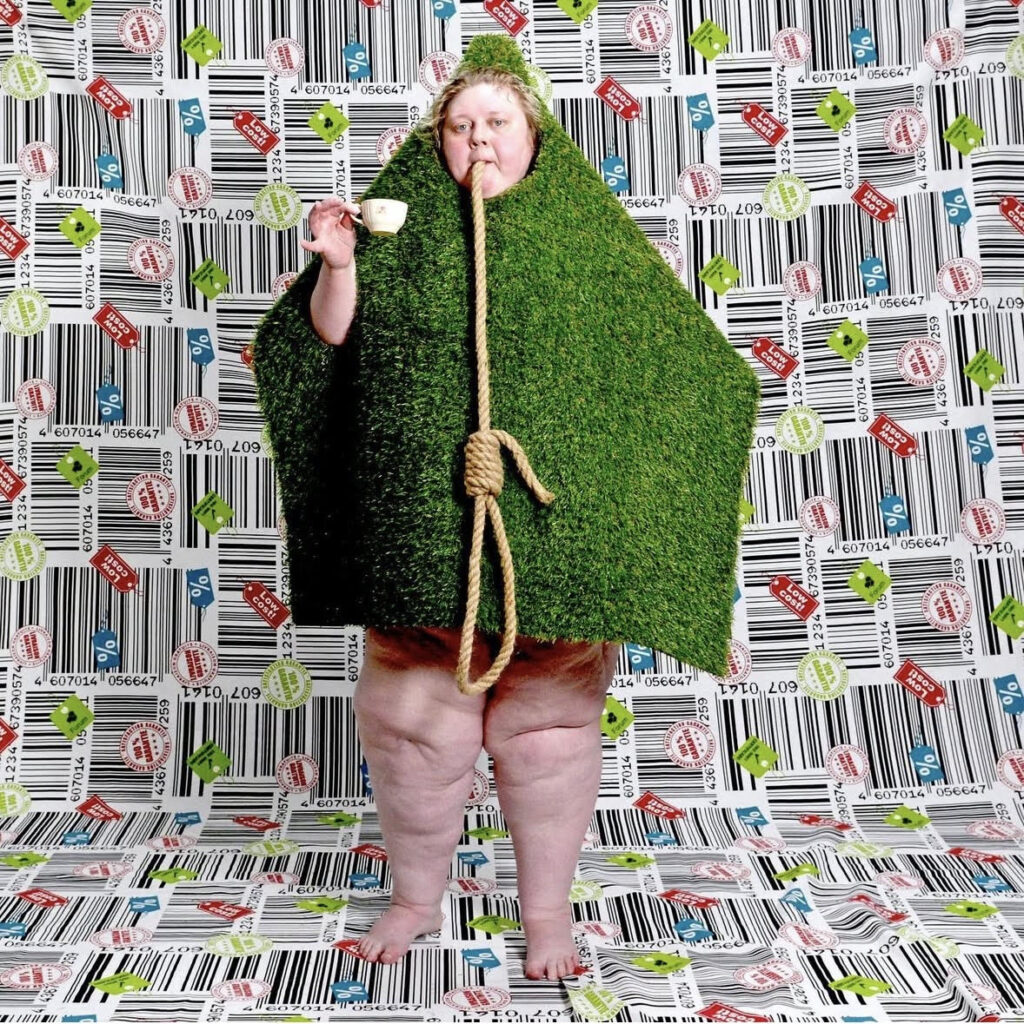
Your work can make people laugh and flinch at the same time. What kind of laughter do you trust, and what kind do you distrust?
liu: Honesty is visible in the eyes. Even in a person who laughs. When thereis too much laughter, suspicion begins.
Do you ever design an image to “catch” the viewer in their own assumptions, beauty standards, fatphobia, porn literacy, shame, thenforce them to sit with it?
liu: I’ve said before that if I tried to be provocative, I would be much hard and then no one would look at my art. I can’t be responsible for how people experience my art. I can’t be responsible for how people experience my art. Even an old classical art painting could have been violent when it was created hundreds of years ago, if the insides of the fish are visible. What seems too much now will be easy sometime in the future.The world is getting crazier, why not art too?
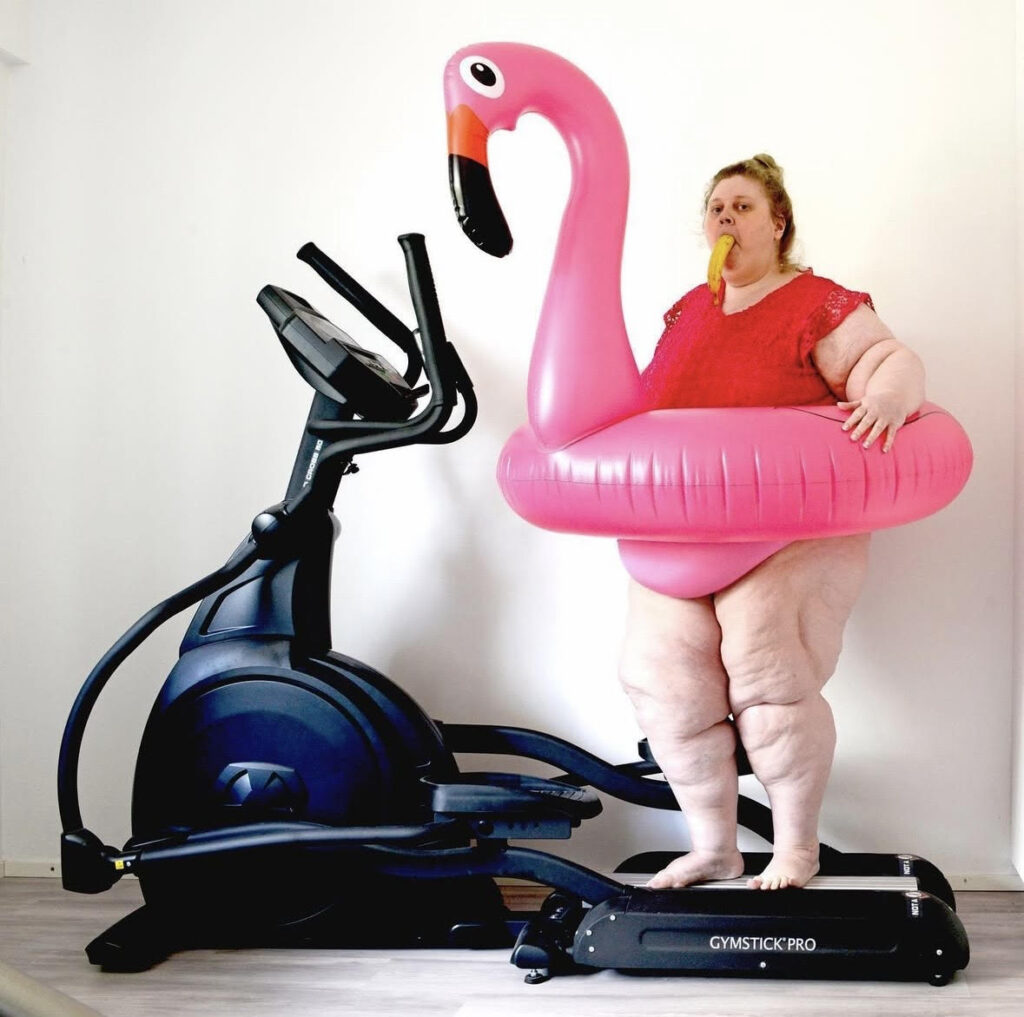
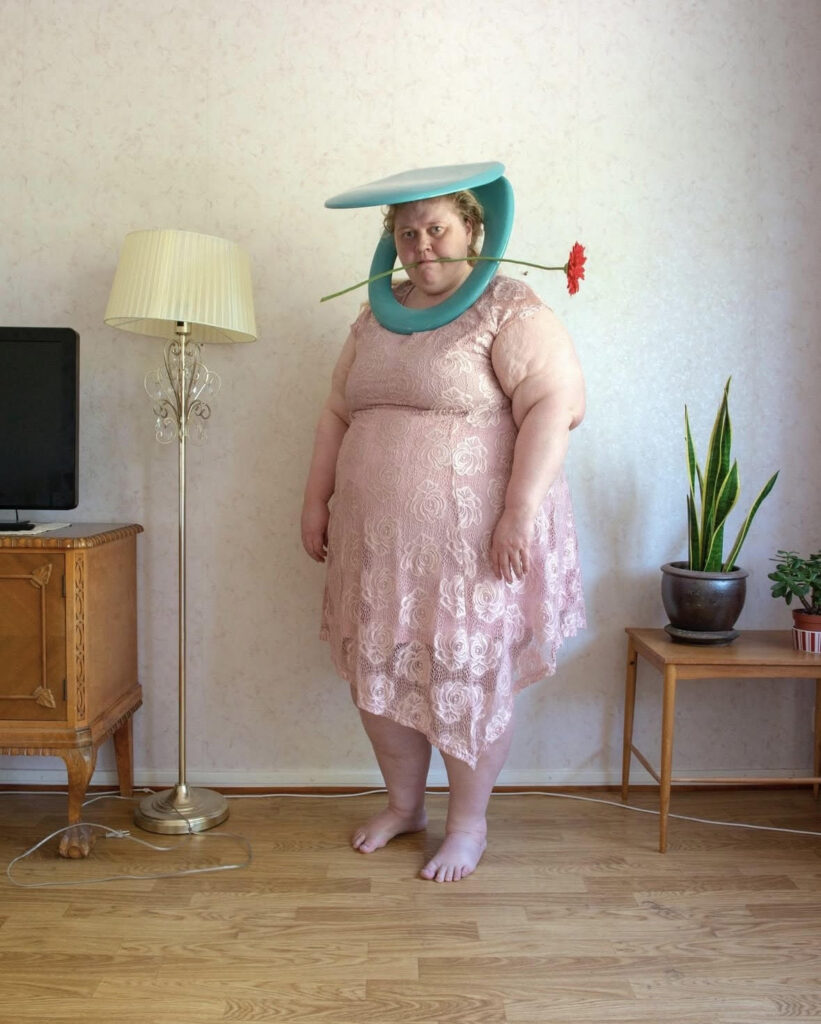
When viewers call the work “provocative,” do you feel they’re namingthe work, or naming their own discomfort?
liu: It’s hard to say why someone experiences something provocatively. I personally like being around real things. But fake is beautiful too. Too much fake or too much real, that’s the problem. Anarchistic “zen” state, that’s what I want in art.
Your body is central, but the work often feels less like self-portraiture and more like performance for the lens. What’s the difference for you between self-portrait and staged persona?
liu: I can’t think about it in such a complicated way. Maybe the only time a person doesn’t act out is when they sleep alone?
There’s a tension between pornography/fashion vocabularies and something bluntly domestic. Do you see yourself quoting those visual languages, sabotaging them, or using them as tools?
liu: I don’t think very analytically about making art. I’m like a meat grinder where you put a piece of meat in one hole, and it comes out of the other hole as minced meat. The piece of meat in this case is perhaps called life.
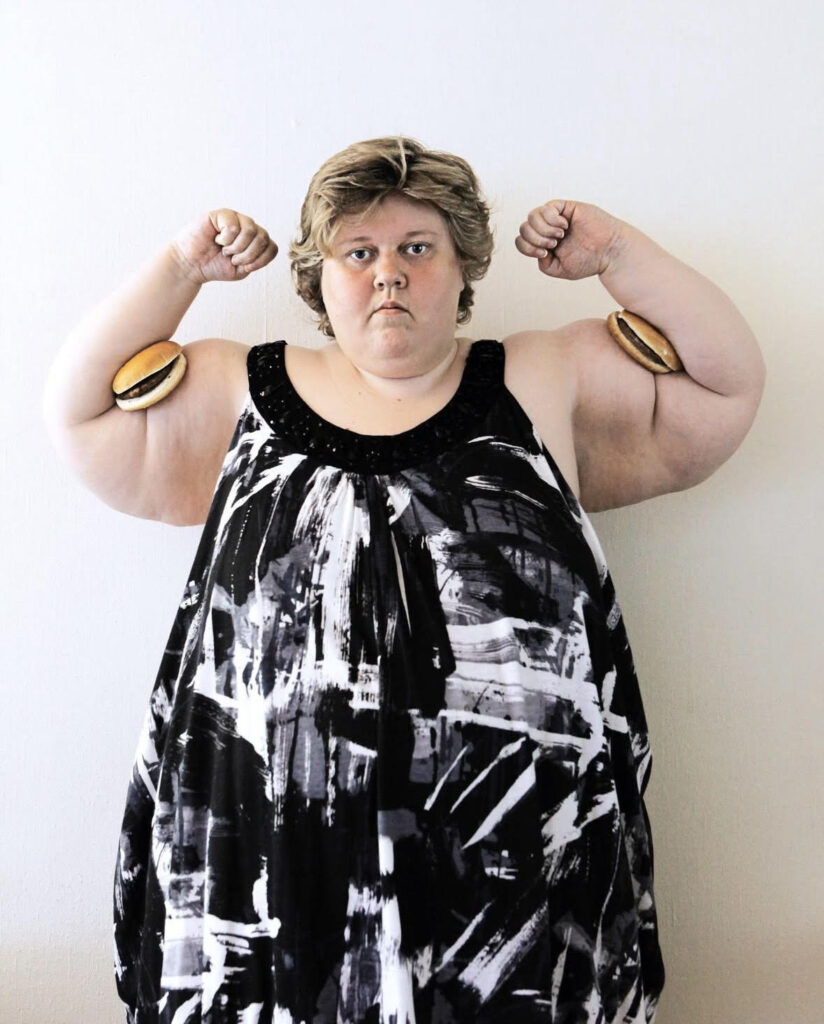
You keep returning to ordinary interiors in Turku, your own home, your parents’ home. What does that setting do that a studio couldn’t?
liu: Working in home is handy and cheap. I don’t have the money to rent a studio. And it’s easy when you don’t have to go anywhere when the urge to create strikes. It’s also easy that you have everything you need at home, tape, a washing machine, etc. And a coffee maker, because when a good picture is created, I drink coffee to celebrate it.
Do you think “home” in your work reads as comfort, captivity, comedy, or something more unstable?
liu: Probably all of those, and many other things besides.
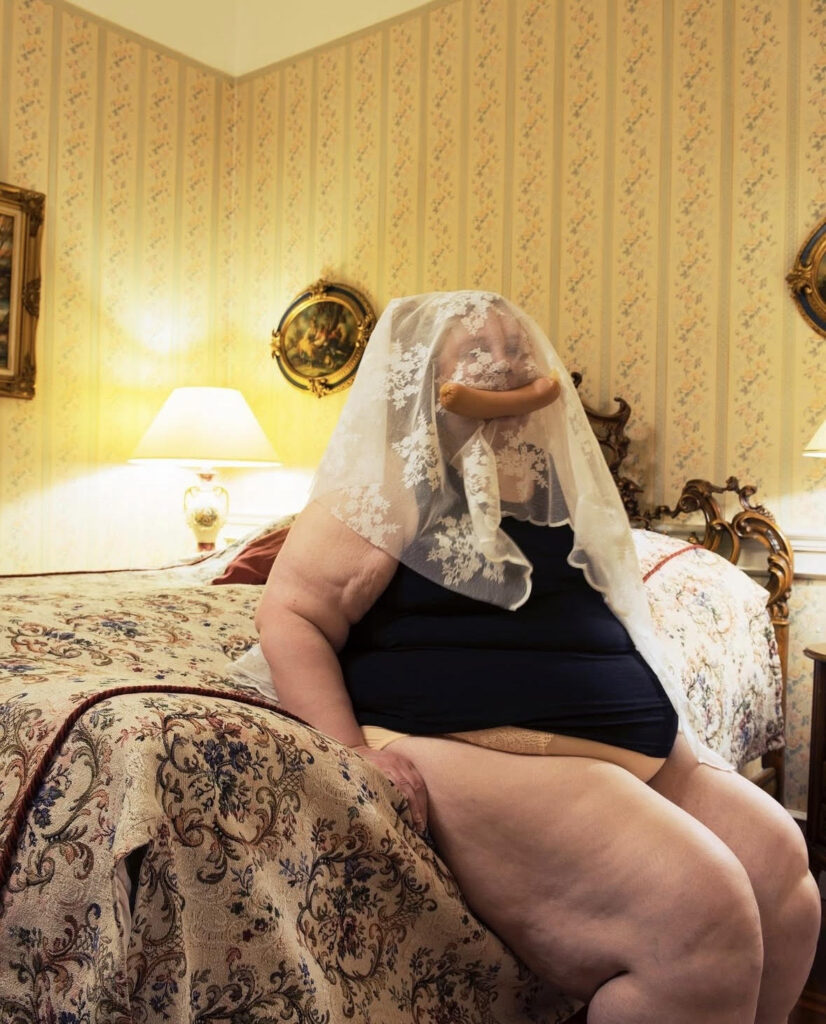
Some objects are loaded (food, meat, body-adjacent items). Do you think about disgust as a moral emotion, something people learn, and can art unlearn it?
liu: The world changes and people change. People’s tolerance and understanding change as time goes by. There will come a time when a fat person with a piece of meat will just be a fat person with a piece of meat. One day I too will be a dusty, boring artist that doesn’t make anyone’s head spin. So let’s take all the joy out of it before then.
Do you ever aim for “anti-climax” as a strategy, keeping the viewer waiting for a payoff that never arrives?
liu: I don’t do anything calculated. You can’t really do art like that. Or maybe you can, but isn’t that more of an advertising world than an art? I do like graphic design, and I applied to study it once, I didn’t get selected. Maybe it’s better that way, I kept my soul. This was sarcasm. Don’t burn me at the stake.
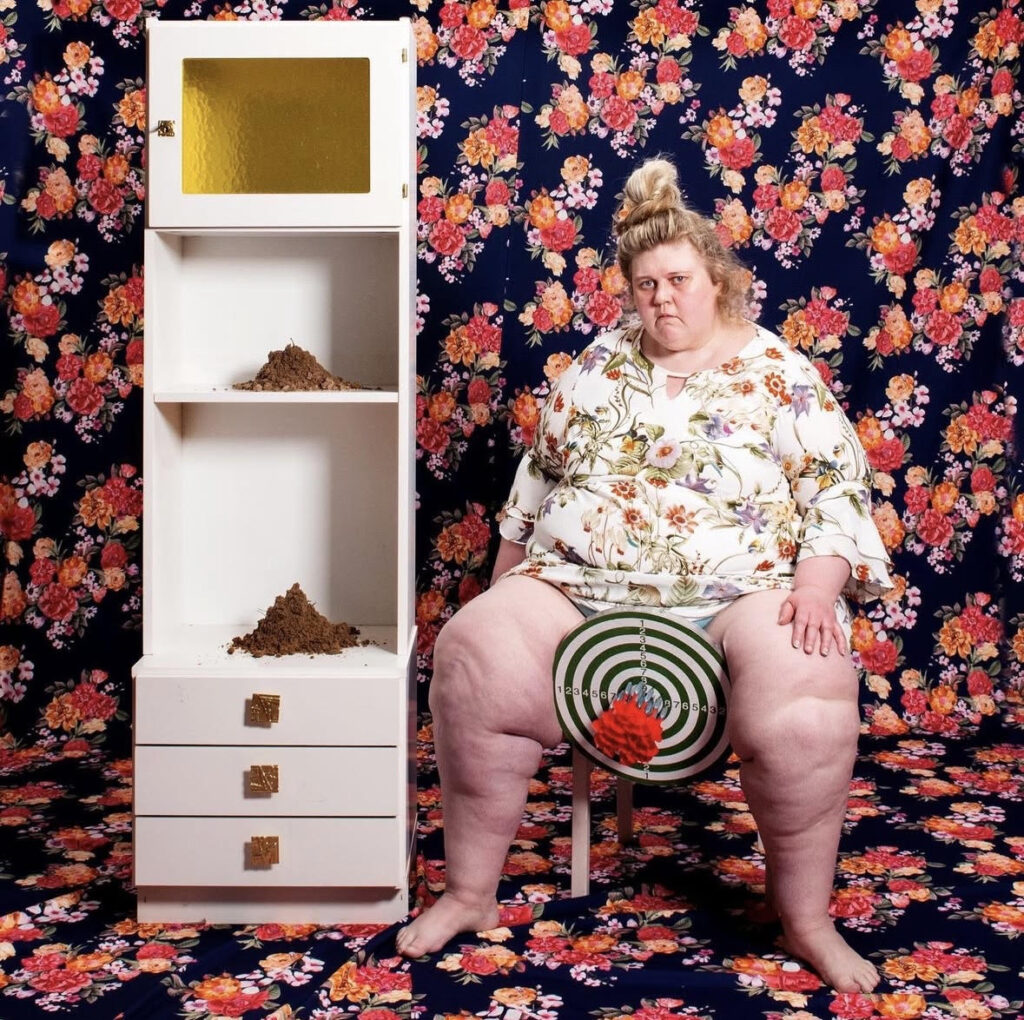
Your newer sculptures (including 3D-printed works) feel like props that escaped the image-world into reality. What changes when the jokebe comes an object you can walk around?
liu: Joke? Am I not a serious contemporary artist? (this was sarcasm, I’m fine with being a nobody, my self-esteem can handle being a zero or a joke).
3D printing is often linked to mass-production logic. Are you using it to critique consumer culture from inside its own language?
liu: I don’t think about things that complicated. But that doesn’t mean thatthe viewer can’t think that way when looking at my sculptures.
If your photos are “performances,” are the sculptures like souvenirs, evidence, or weapons?
liu: That souvenir word was wonderful! I loved it.
Your work has travelled widely—MoMA PS1 in 2023, and more recent international contexts too. Do institutions change how people read thework compared to seeing it online first?
liu: I haven’t noticed that. I think I’m a fat person with an object, A basic thing that can’t be changed for better or worse. Like a beautiful stain that stays, chlorite doesn’t help.
What’s the most persistent misunderstanding of your work, and what doyou wish people would notice instead?
liu: You can see my art however you want. There are no rules about how it should be experienced. It’s a moment between the viewer and the work. I don’t want to be a third party in that situation.
If your practice is partly about refusing shame: what would a shame-free relationship to the self actually look like, day to day, not as a slogan?
liu: Example you don’t have to worry if your hair was messy in public.
Can you walk me through your creative process from beginning to end result?
liu: There’s nothing exciting about it. But here are the main points of the process. 1. I list objects 2. I try to find an object from the list that would be my match. A bit like Tinder. 3. When the idea is ready, I buy the object. 4. I check the weather forecast to see when there will be enough light to take a photo or make a video. 5. I make a piece of art and I nameit.
Can you also tell me about your use of symbolism?
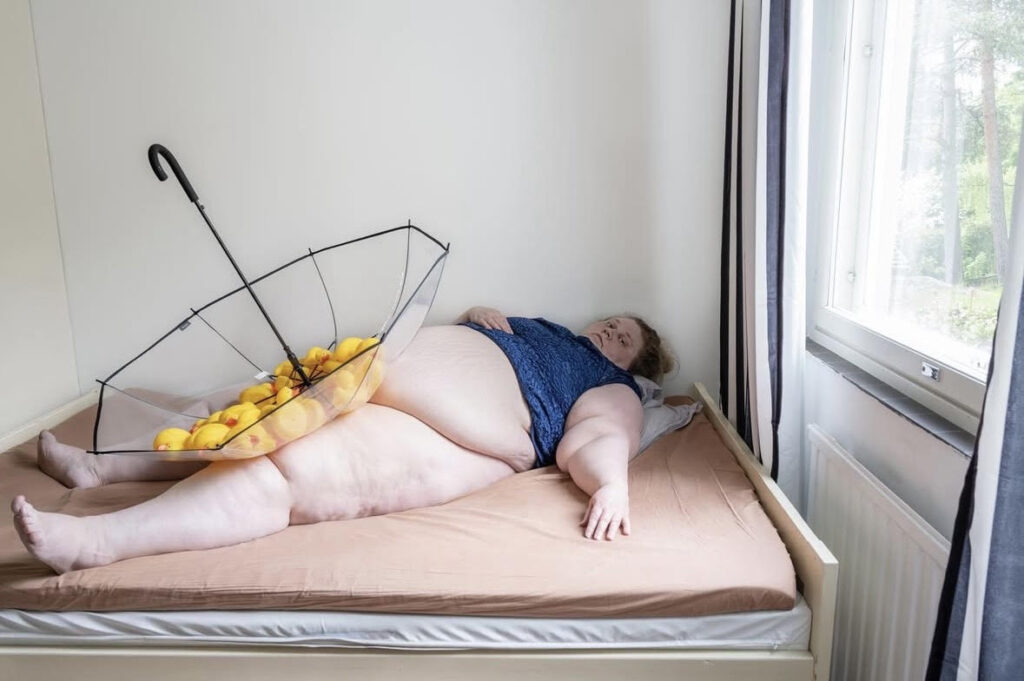
liu: Perhaps the best example of this is my photograph called Fountain, 2021. It has an umbrella and bath ducks. And the whole system is at my crotch. When you have to do a kind of pantomime, or talk while showing objects. So I think this is a classic way to depict it. It was important that the bath duck was in a classic shape. There are surprisingly many types of bath ducks. I also wanted the umbrella to be transparent so that I and the ducks could see well. It was also surprising how subtle the differences were in the handle of the umbrella. And add a surreal feel, I’m lying in bed in the picture.
So with what we just talked about, what are you hoping to convey?
liu: My previous answer could be a description of poor person’s travel. from the bedroom. Totally homebody person lying on a sunny beach and viewthe city’s sights, beautiful fountains. Or we can take a more serious talk, and talk about example Marcel Duchamp”s Fountain.
Outside of art, what’s something you’re obsessed with right now—maybe a hobby, a show, or even a food—that keeps you grounded or inspired?
liu: My all-time favorite as a prop for making art and as a food item is fish.
Can you tell me a story about a time when a connection with someone had a big impact on you?
liu: For me, there are two significant works with I had mind-blowing moment: Marcus Copper, Kursk, 2004. And Heli Rekula, Hyperventilation, 1993.
What qualities do you find most important in the people you choose to spend time with?
liu: Honesty and reliability are what I look for in a person. And person mustnot be crazy and violent. Jealousy is also an absolute no.
Anybody you look up to?
liu: My parents, and David Bowie.
How would you describe a perfect day?
liu: Sunny, but not hot weather. I’ve had a successful photo session, and I’m celebrating that with coffee and ice cream. And I also find a great new music song. And if it were a perfect day, I would get by an email offering me an incredibly amazing space for an exhibition.
Alright liu, I always ask these two questions at the end of an interview. The first is. What’s your favorite movie(s) and why?
liu: The film is a Dogma film called Idiots from 1998. Directed by Lars von Trier. I’ve only just begun to realize how much of an impact this film has had on how I make my art. That movie was something completely new.
The second is. What song(s) are you currently listening to the most right now?
liu: A band called Rinneradio. That saxophone sound is something so magical. Not the old-fashioned saxophone sound. I would describe Saxophone with an electronic music flavor.”