Share this
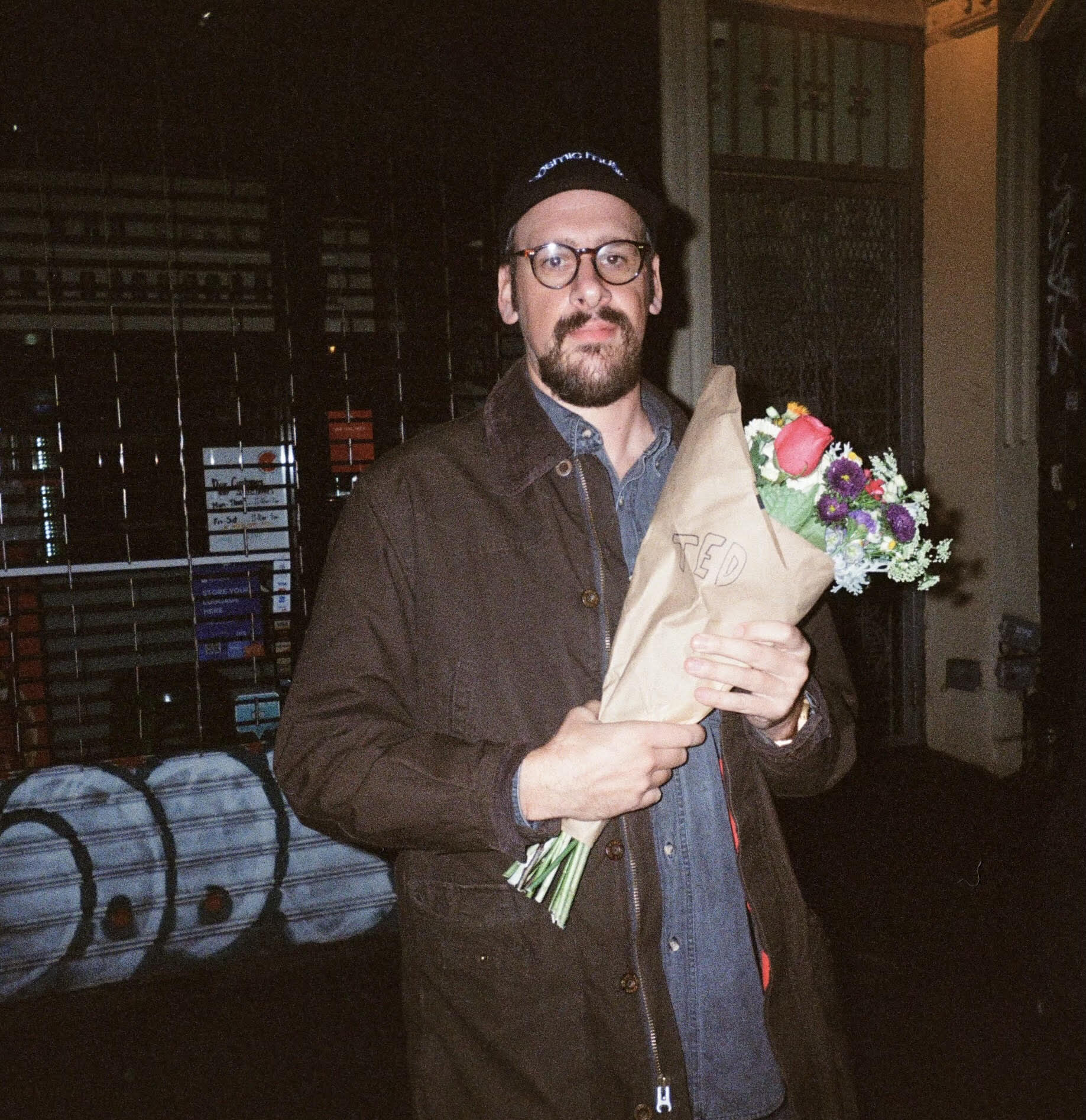
Ted Gahl is a Connecticut-born painter whose work blurs the line between memory and abstraction, figuration and dream. Working between a quiet studio in rural New England and Bushwick, Brooklyn, Gahl conjures emotionally loaded canvases that feel like half-forgotten stories: layered, elusive, and deeply personal. His paintings often echo the structure of altars, windows, or cabinets—spaces to archive ghosts, symbols, and interior states. Gahl studied at Pratt Institute before completing his MFA at RISD, but his work feels less academic and more like a raw process of excavation. Images come and go—faces, clocks, hands, doorways—trapped in grids or dissolving into atmospheric brushwork. There’s a sense of poetic friction in everything he does: clean graphic elements clash with expressive gestures, humor with melancholy, clarity with haze.
The result is a body of work that resists easy reading but lingers in the mind like a half-remembered dream. Over the past decade, Gahl has built a strong presence in both the US and Europe, with solo exhibitions at Harkawik (New York, Los Angeles), MAMOTH (London), and Galleri Jacob Bjørn (Denmark). His 2023 show Le Goon was a standout, described by critics as a “haunted diary” of painterly reflection. In 2022, he received a Pollock-Krasner Foundation grant, underscoring the quiet power of his ever-evolving practice. Whether riffing on art history, personal memory, or a strange image glimpsed in a dream, Gahl’s paintings don’t offer answers. Instead, they open up a space—strange, soft, and flickering—for you to lose yourself in.
Ted currently has a solo show at Duarte Sequeira, in Seoul, titled “Boda”.
Profile picture by Jonny Campolo.
Hi Ted! It’s a pleasure to sit down with you again! First question that I always ask. How does a regular day look like for you in Connecticut/Brooklyn?
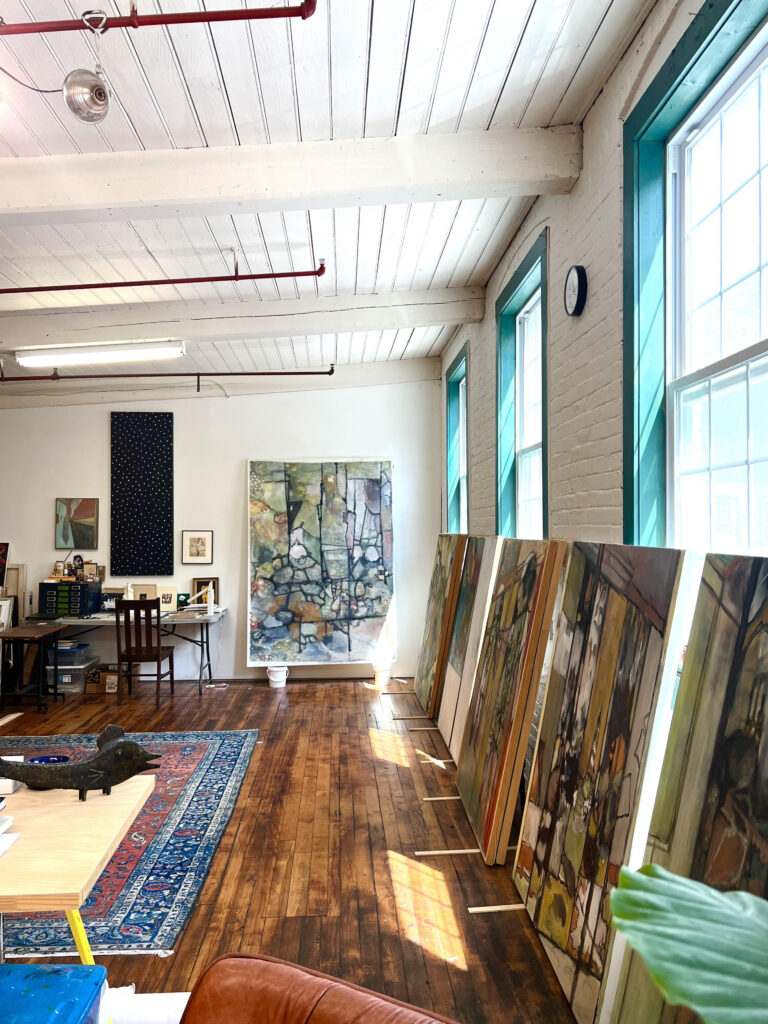
Ted: Thanks for taking the time to ask me some questions, I appreciate it. My days kind of vary at this point, as my wife’s schedule fluctuates a lot for her work. My favorite days are when we go to the Brooklyn studio together early, and have a normal work day, and get to eat lunch together and go home together.
My space in Connecticut is much more rural, so I end up there when my wife is away on longer work trips, or I need to decompress from New York. It’s definitely very helpful for that.
I’m curious, growing up, what kind of kid were you? What did you enjoy doing?
Ted: I spent a lot of time drawing. I was really prolific on works of paper, I have a lot from 1989 specifically for some reason. Other than that, I was pretty into nature, rock climbing and camping. I think a lot of that stuff definitely sets the tone for some of my work.
Do you remember approximately at what age your creative side started to show? And when did you start taking being an artist seriously?
Ted: I think I started to realize that making art was my only path to continuing school, and getting out of my town. I visited my friend at Pratt Institute in Brooklyn, and we had all kind of grown up romanticizing New York, and I knew I had to be there. It was an incredible experience for me. I spent a lot of time with my friend Marc who was an Architecture major from Sheepshead Bay, and we spent years exploring Brooklyn with this rotating cast of his incredibly interesting friends from his neighborhood.
Being there in New York helped me to narrow down that I really wanted to primarily work on making paintings. I ended up going to Rhode Island School of Design to further study painting, and then I started showing my work around 2010.
Ok Ted, with these next series of questions, I will try to delve into your work as best as possible. So…. Your work often shifts between figuration and abstraction — what drives that tension in your painting?
Ted: I have a tendency to cycle through and heavily focus on a lot of different ideas I want to try out, and they end up pulling me away from other works. So, some pivots are multiple ideas kind of meeting in the middle, while other pivots are more seamless and very much become their own identity.
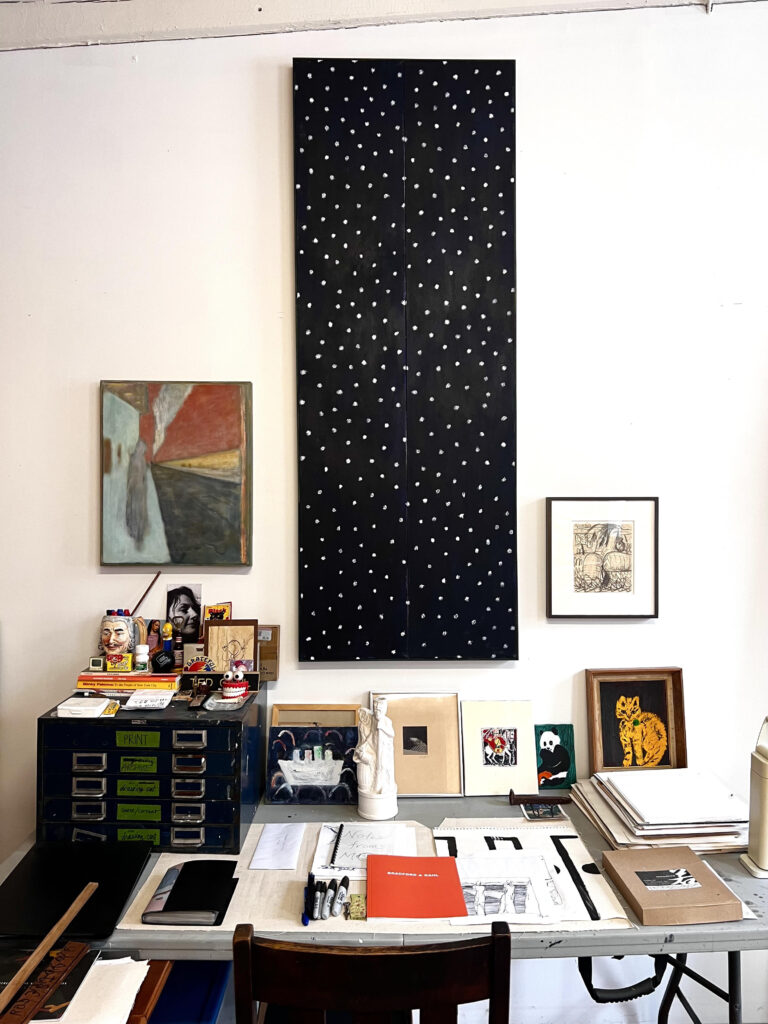
Can you tell me about your relationship with memory in your work?
Ted: I have a pretty spotty memory, but luckily I take a lot of photos to jog my memory. I keep folders with inspiring images I’ve taken over the years, and that can often help me to find a direction for work.
With that in mind. Time, memory, and repetition seem embedded in your work. Why are those themes important for you to document?
Ted: I think I gravitate towards objects with more of a patina to them, so those are some things I like to see in my own work. I have a fascination with time, especially as I get older. Time is very slippery, it can feel like forever, or just an instant, and I like to try and embed some of that into what I’m making. A mix of fragility and lightness, but also something that could feel solidified and has some age at the same time.
What role does personal memory play in shaping your imagery? Are you painting from real moments, or more from feeling and atmosphere?
Ted: I think all of the above. Recent work was based on the feel of specific locations, while at the same time I just made a small painting based on a photo of an antiquity in a museum. A lot of my more figurative work is mined from a personal narrative, but when it goes out into the world, it is open to interpretation.
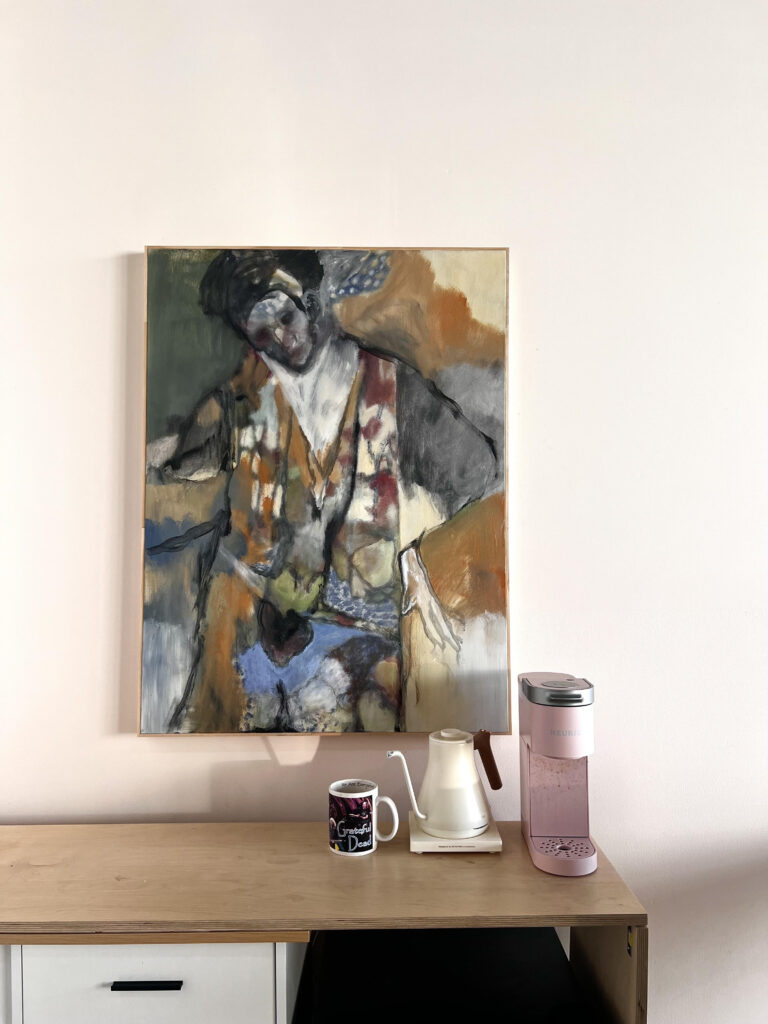
Why do you think certain objects or symbols — like clocks, rooms, or fragmented faces — keep reappearing in your paintings?
Ted: I think the people around us, the rooms we are in, the nature we are in, that’s all we’ve got. I’m just using that to build images. I think reoccurring imagery definitely starts to border on fixation for a lot painters, you really see that looking at work throughout history.
You currently have a solo show at Duarte Sequeira, in Seoul, titled “Boda”. What’s the story behind that title?
Ted: I was looking at the work for that show, and I felt very calm by this body of work. I wanted the title to be very simple, and very short and soothing. The word “Boda” was very beautiful to me and in Korean roughly translates to “ to see, to look at, to take in, to behold”. I felt like it made sense not only because this work is visual, but also because people would be hopefully seeing this show in Seoul, in the physical space, and spending time with it.
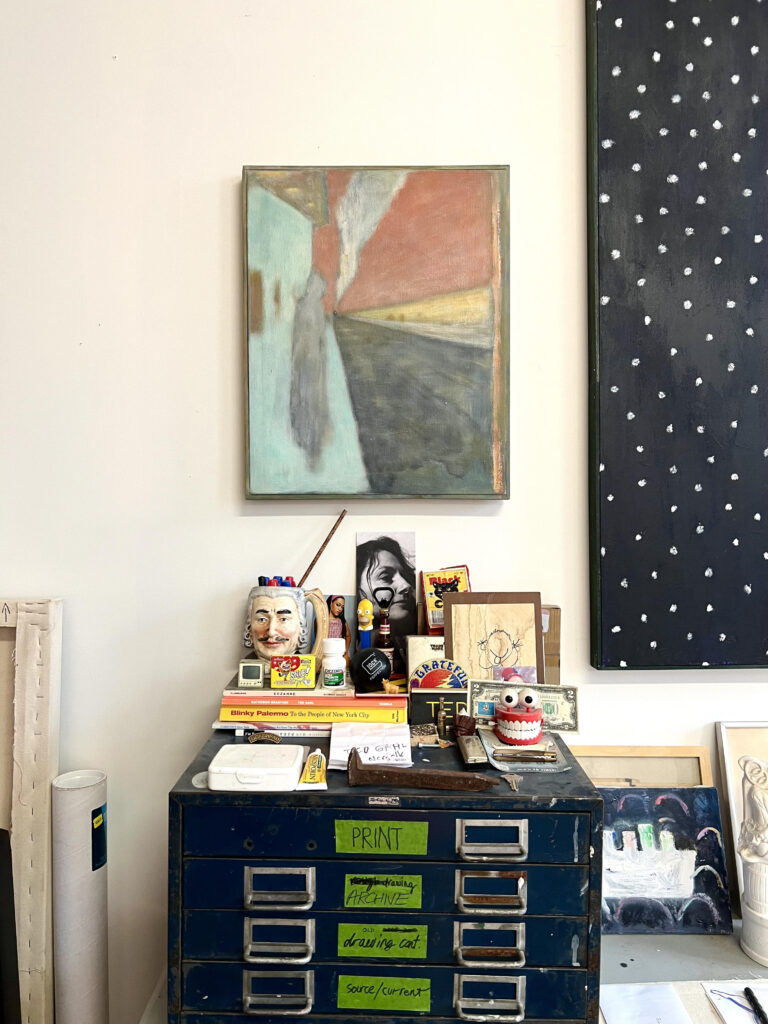
And what was your inspiration behind these new bodies of work?
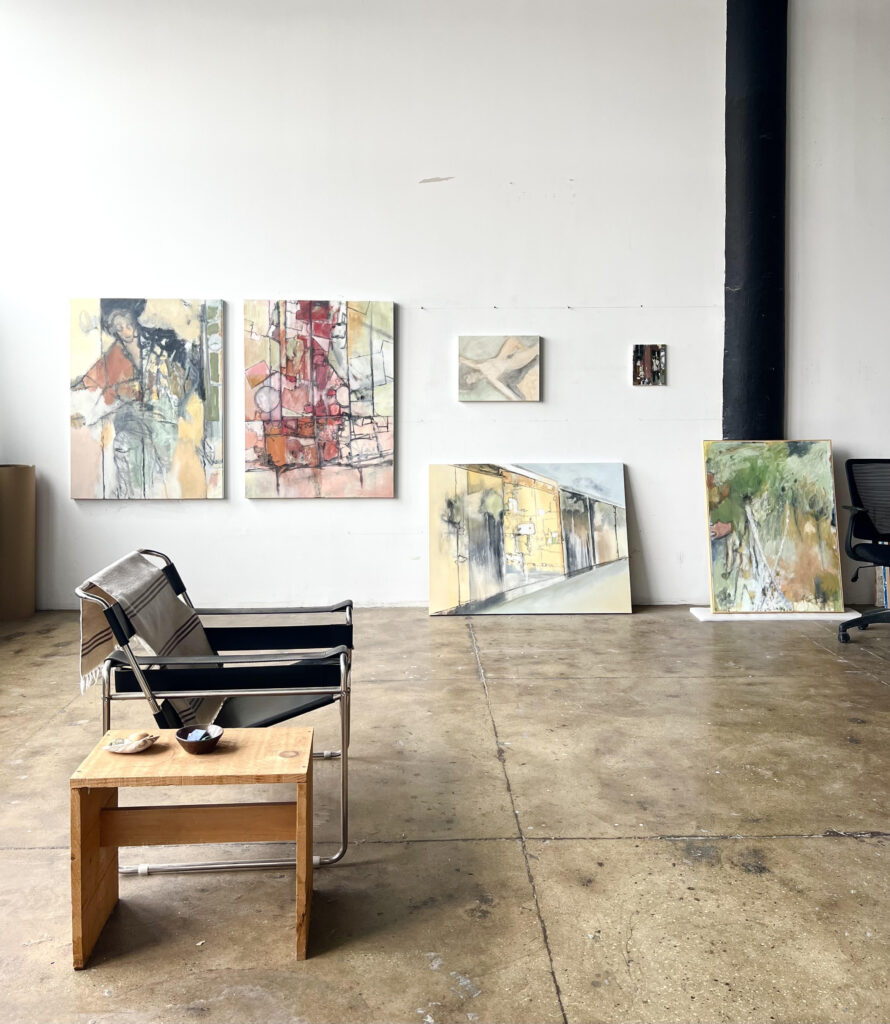
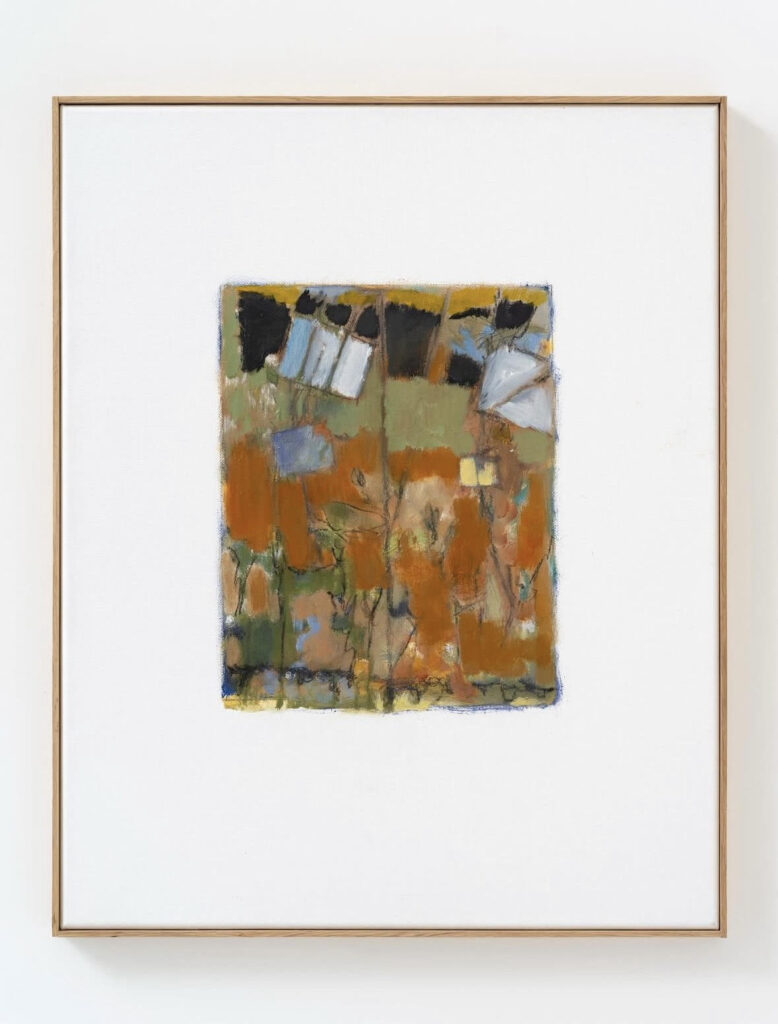
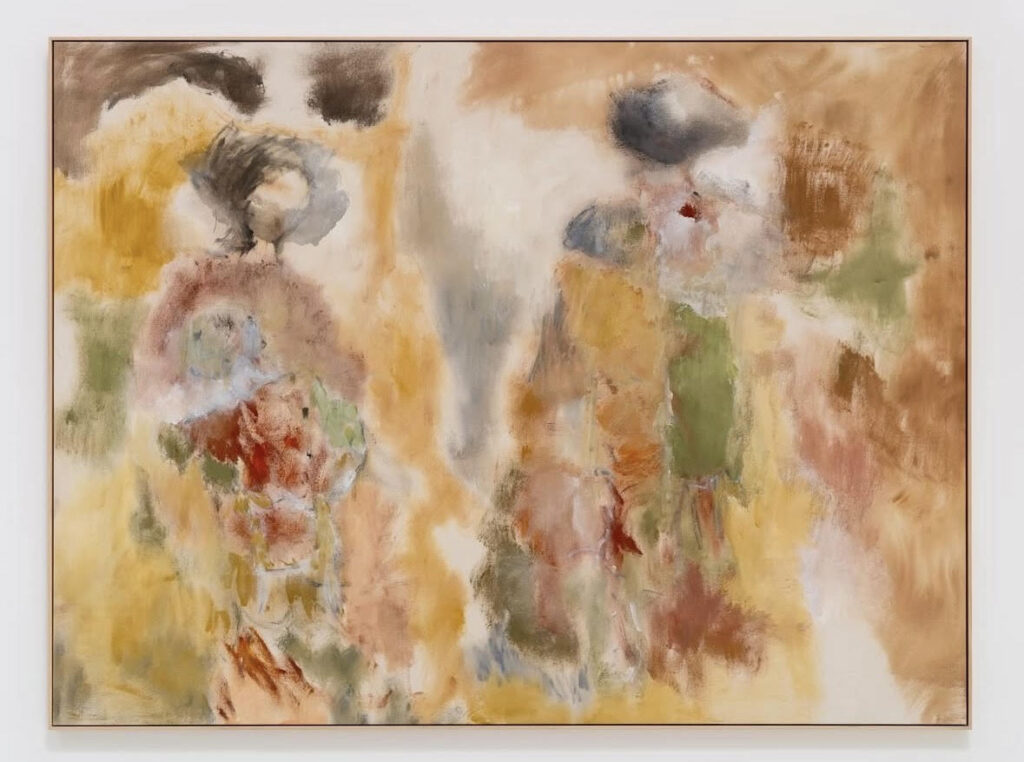
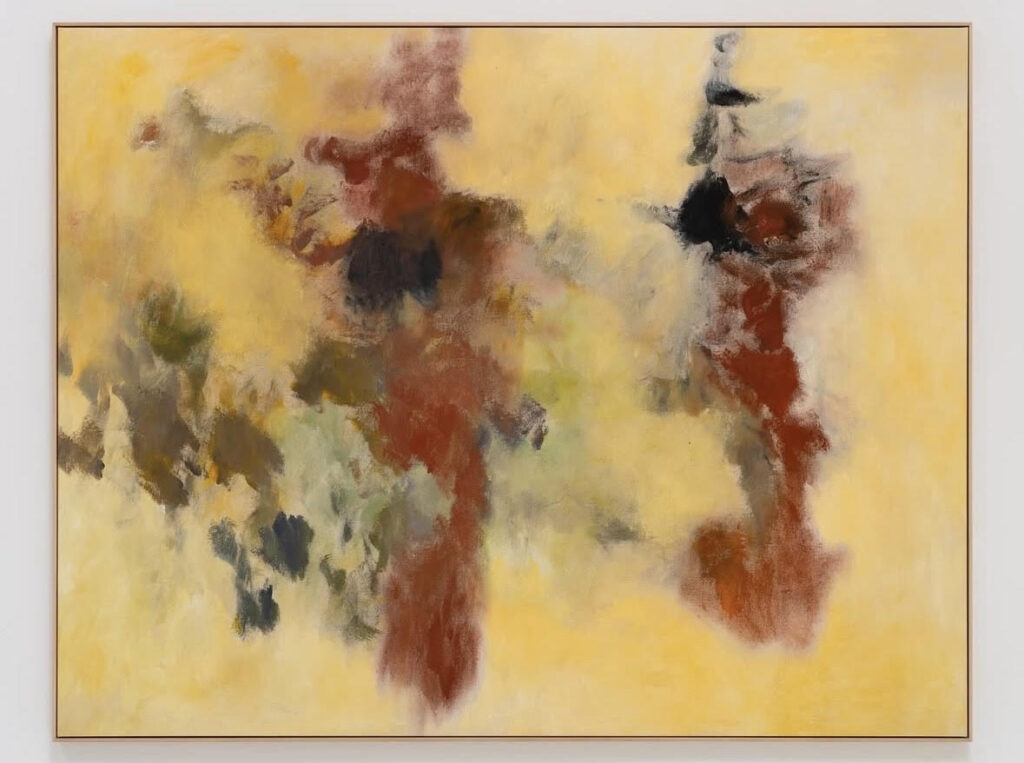
Ted: This show is further exploring abstraction inspired by landscape, with multiple figurative-based works on the periphery. A majority of the work was created on unstretched, raw canvas. The finished paintings have a rough, battered surface that I really like. A group of the paintings were directly inspired by farmland and pastures in Goshen, Connecticut, while others weave in and out of figuration, from the more obscured to the more accessible.
While we’re on the topic. Did you do any form of specific research for these new works?
Ted: A lot of trial and error. There were a number of works that didn’t make the cut. Unprimed canvas can be unforgiving, it’s more similar to watercolor painting than traditional painting.
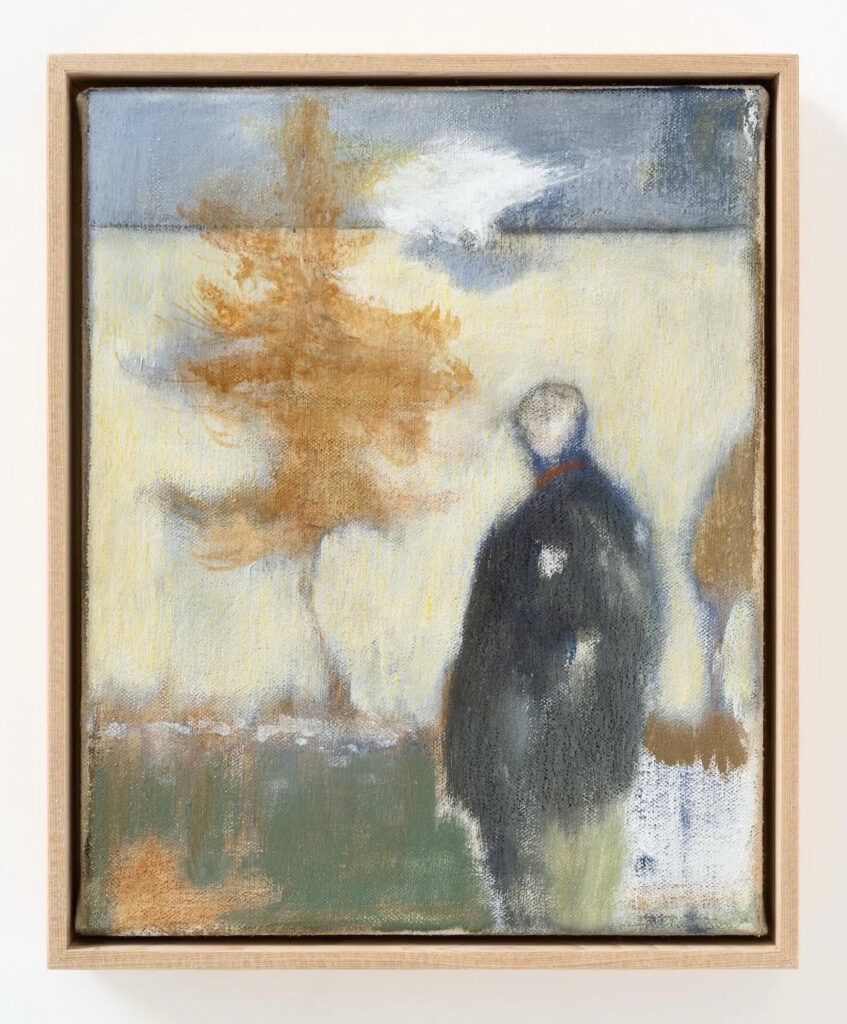
Some of your paintings feel like they’re built from fragments — like visual diaries or cabinets of emotion. Can you walk me through your creative process from beginning to end result?
Ted: Very few works are planned out from the beginning. A small percentage of my works are specific objects or images that I am trying to make in a very straightforward way. The majority of my painting process is instead a lot like sculpting, with constant addition and subtraction. The fragmented, layered physiques of these paintings come about that way. Most of my paintings live a lot of different lives before they leave the studio.
How do you approach color?
Ted: For a long time, if it was too bright, it was definitely wrong. I’m getting better about saturation, but I still have a tendency to favor nuance over noise. I can get stuck in a specific mode of palette that I use, and I have to sometimes try and break out of that. Looking at other painter’s color choices is one of my favorite things about painting.
So with what we just talked about, what are you hoping to convey?
Ted: That when I was alive, I made this. And, hopefully, you can see something in there and think about it, and slow down for a minute.
Ok Ted, now to something totally different. In a parallel universe who would you be? and what would you be doing?
Ted: I think in another life, exploring music full-time would have probably been pretty interesting. I loved playing drums when I was growing up, and nobody around me really played any instruments, and so it kind of fizzled out. I’m envious of musicians whose works reach such a wide audience. Art is much harder to reach people with.
Outside of art, what’s something you’re obsessed with right now—maybe a hobby, a show, or even a food—that keeps you grounded or inspired?
Ted: like to drive a lot, I like cars. Other than being in studio or at home, I’m probably just driving around aimlessly. I find the freedom and joy in driving to be a big part of the culture where I grew up, and I love that.
Can you tell me a story about a time when a connection with someone had a big impact on you?
Ted: Towards the end of his life, I was sitting next to my grandfather on the couch, and we both saw a large monarch butterfly land on a flower through the window. I looked at him and asked “What is the point of these butterflies?”
He paused, took a sip of his bourbon, and said “I don’t know…to suck the stuff out of the damn bushes?”
What qualities do you find most important in the people you choose to spend time with?
Ted: Let’s try and have a laugh.
Anybody you look up to?
Ted: Teddy Roosevelt. His resume and travels were unmatched. Check out his Wikipedia.
What motivates you?
Ted: That painting is always new and changing for me. I still learn so much from it, and it still pulls me in so many directions.
How would you describe a perfect day?
Ted: Spending any time I get with my wife, dog, and family, and then rigatoni for dinner. Keep it simple.
Alright Ted, I always ask these two questions at the end of an interview. The first is. What’s your favorite movie(s) and why?
Ted: Would be a long list but here’s some faves in no particular order:
- Dirty Rotten Scoundrels, To Live and Die in LA, Ronin, Punch Drunk Love, Blue Ruin, Get Shorty, Heat, Hell or High Water, The Thin Red Line, Belly, The Jerk, Jackie Brown, Caddy Shack
The second is. What song(s) are you currently listening to the most right now?
- “Eyes of the World” live 1990, by the Grateful Dead from “Without a Net”
- “Smooth Sailing”, by Queens of the Stone Age from “…Like Clockwork”
- “Steve Biko (Stir It Up)”, by A Tribe Called Quest, from “Midnight Marauders”
- “I Still Love H.E.R.”, by Freddie Gibbs and the Alchemist, from “Alfredo 2”
- “Demon Cleaner”, by Kyuss, from “Welcome to Sky Valley”