
Share this
It was the hottest June on record. I’d been melting in my flat in Stamford Hill all week. Morning, afternoon and night, the heat refused to leave the building. Photographing Diaspora Now at the Victoria and Albert Museum felt less like work and more like an escape.
I stepped off the train in South Kensington and joined the crowds moving towards the museum. Within minutes the city disappeared behind stone archways, cool corridors and galleries filled with silver, gold and centuries of history. Before the performances began, I wandered through the galleries, passing ancient coins, marble figures and delicate vases.
Outside, the museum garden felt like another world. Children chased each other through the shallow pool while parents watched from the edge. For the first time all week, I wasn’t thinking about the heat. As the crowd gathered, I spotted Hongxi Li quietly waiting before the performance.
I’ve known Hongxi for years. I first encountered her work at her RCA graduation show, where she stood on top of an enormous steel structure overlooking the audience below. It was one of those artworks that stayed with me. Since then I’ve watched her practice grow from degree shows to institutions like Spike Island and now the Victoria and Albert Museum.
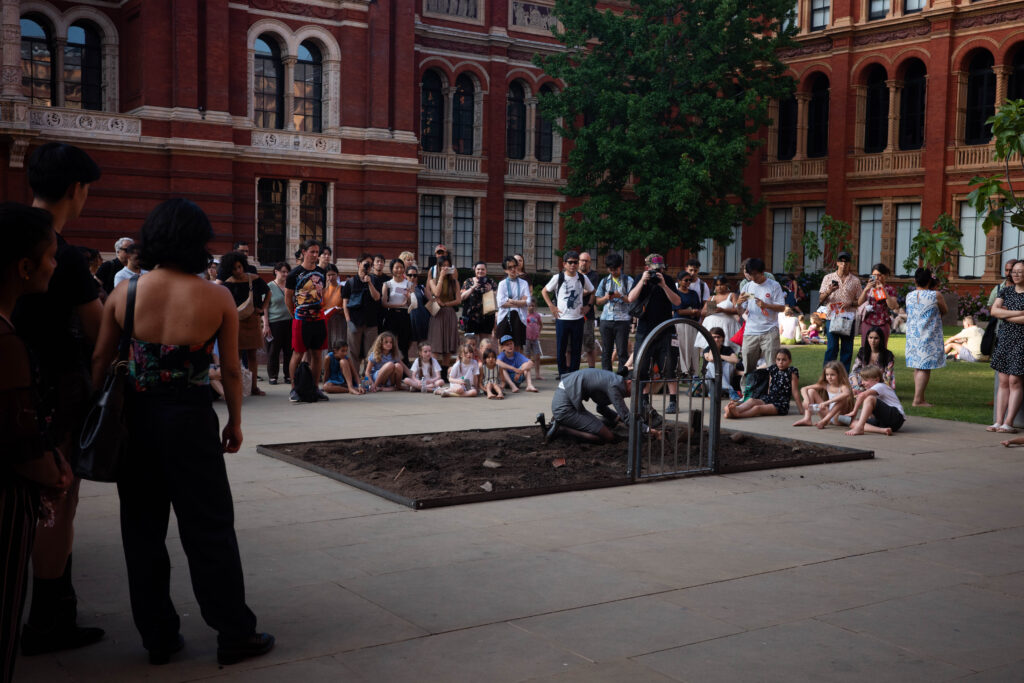
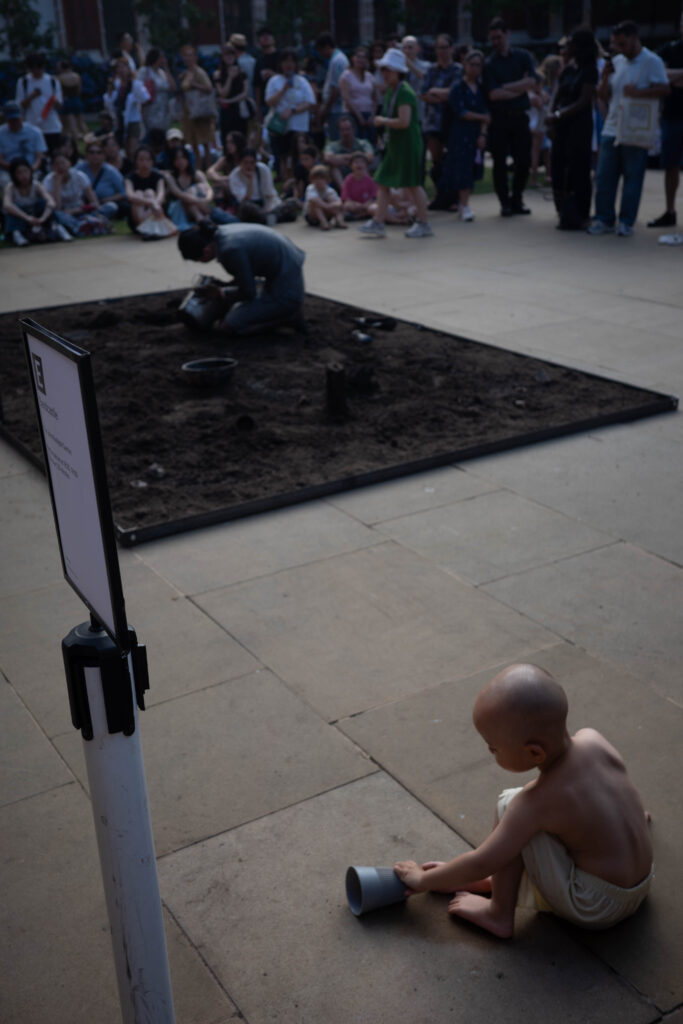
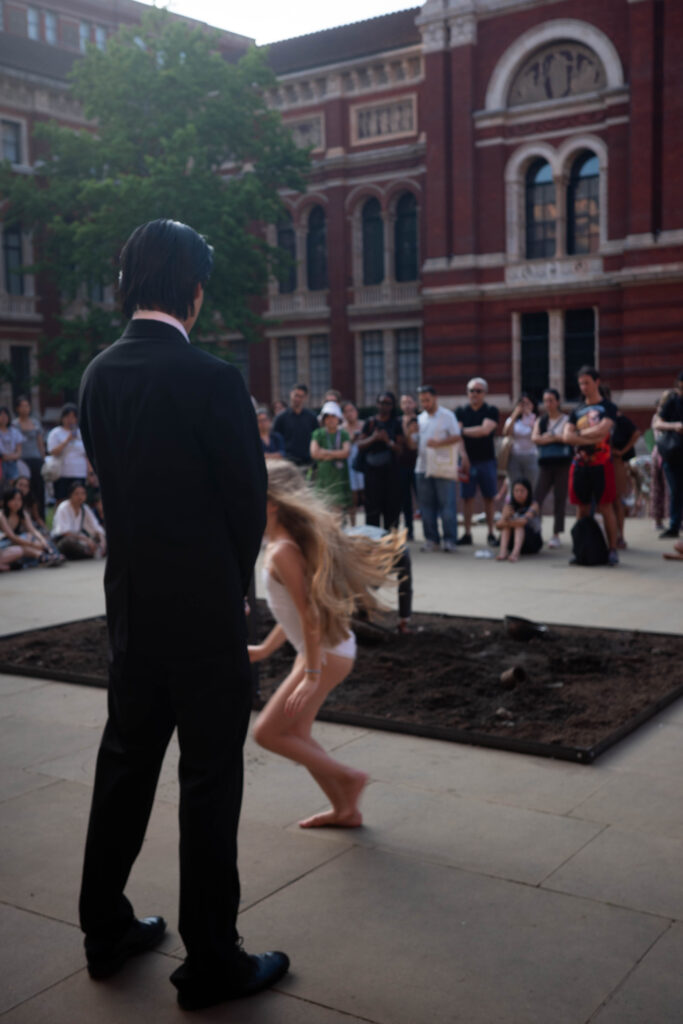
Across the courtyard sat a fenced square of mud. Hongxi stepped inside. The performance began. She dug. Lifted. Carried. Repeated. She carried heavy buckets of earth beneath an unforgiving London sun. Looking across the courtyard, I found myself almost as interested in the audience as I was in the performance.
People leaned forward. Conversations faded into whispers. Children who had been splashing through the pool only moments earlier now sat completely still.
Later, Hongxi explained that the work explored labour, overtime and repetition. After watching her repeat the same actions for an hour beneath the blazing sun, she didn’t really need to explain it.
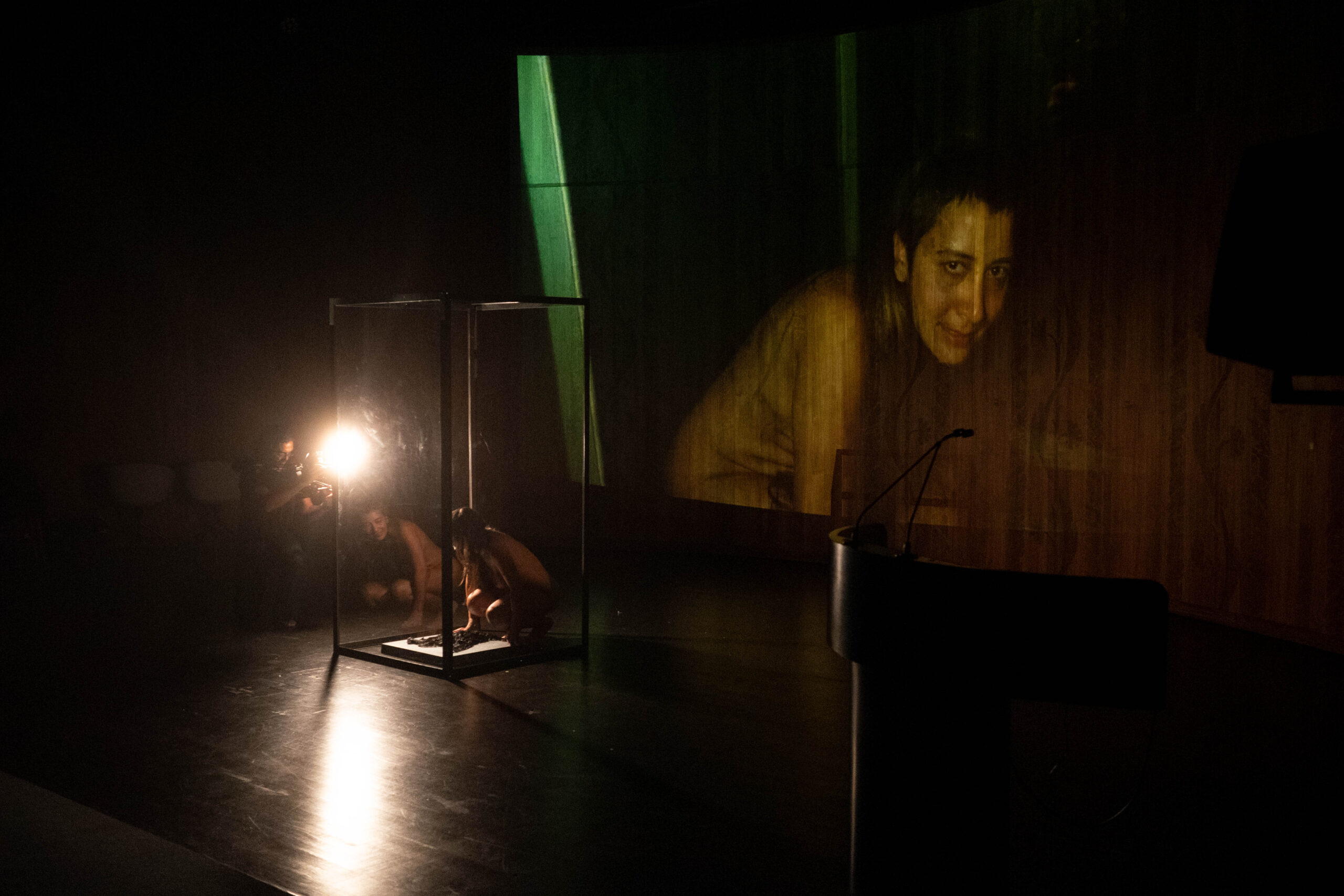
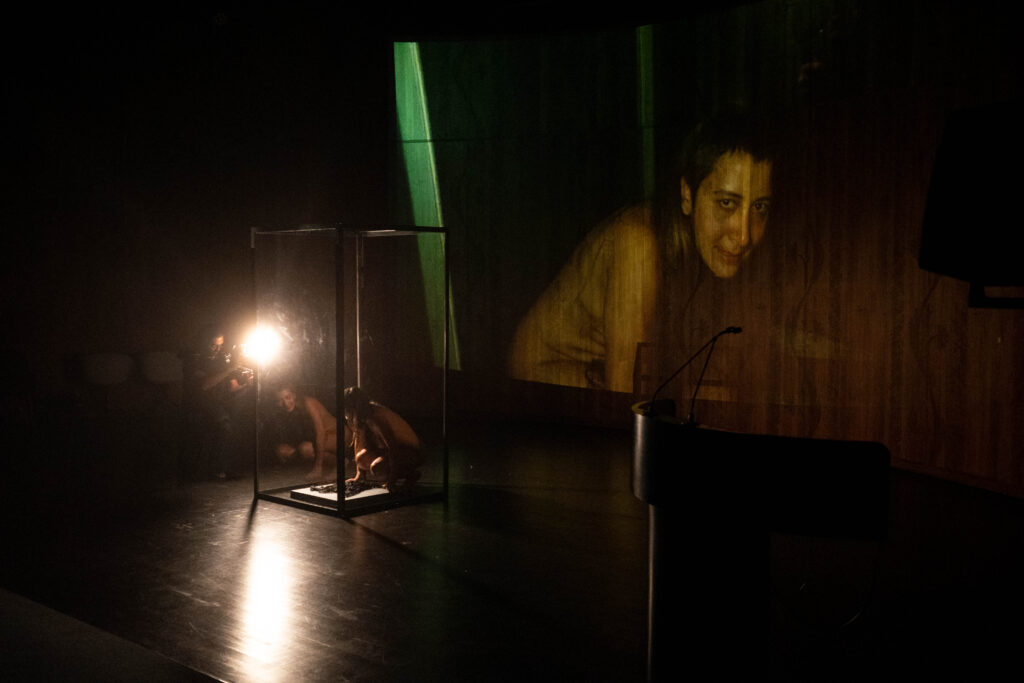
The work had already done that. Another performance pulled me back inside. Rieko and I climbed the museum’s staircases until we reached a darkened auditorium. A lone performer stood inside a glass structure while voices echoed around the room in a language I couldn’t understand.
Strangely, that never felt like a barrier. As a photographer, performance offers a different way of seeing. While everyone else remained seated, I was free to move. One minute I was beside the front row, the next beneath the balcony, searching for another perspective.
When the applause began, I slipped away. Outside, evening had started settling across the museum. Hongxi was still digging. As the afternoon unfolded, my attention shifted. I stopped looking only at the artwork. I started looking at the audience. The concentration. The curiosity. The stillness.
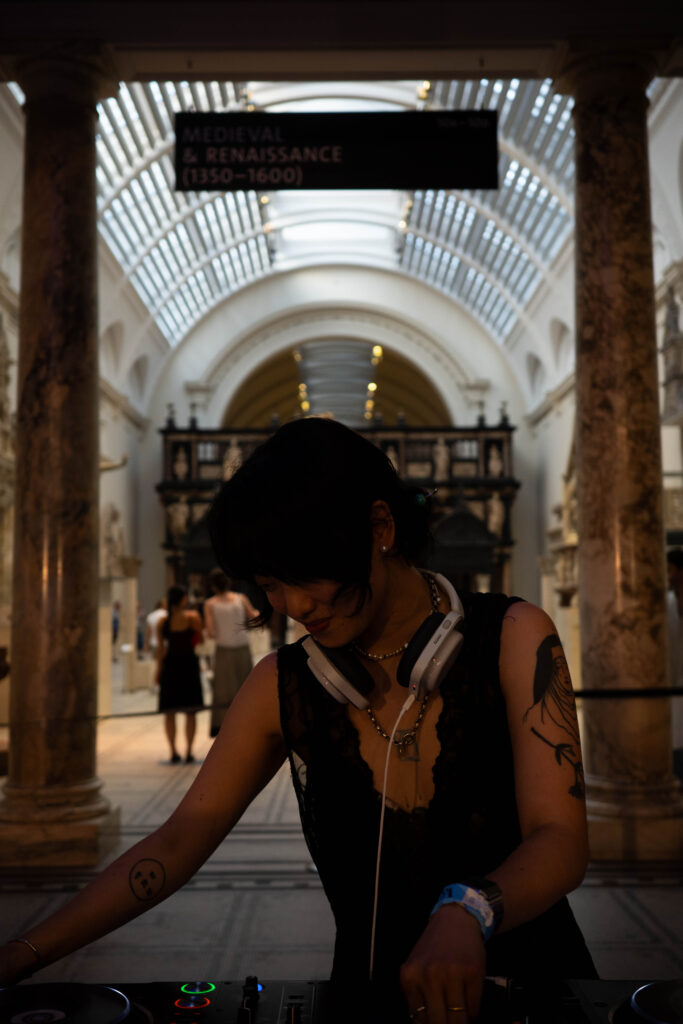
Those became photographs too. Later I photographed Object Blue during her DJ set. I waited for a single moment of connection. Eventually she looked towards my camera and gave a small smile.
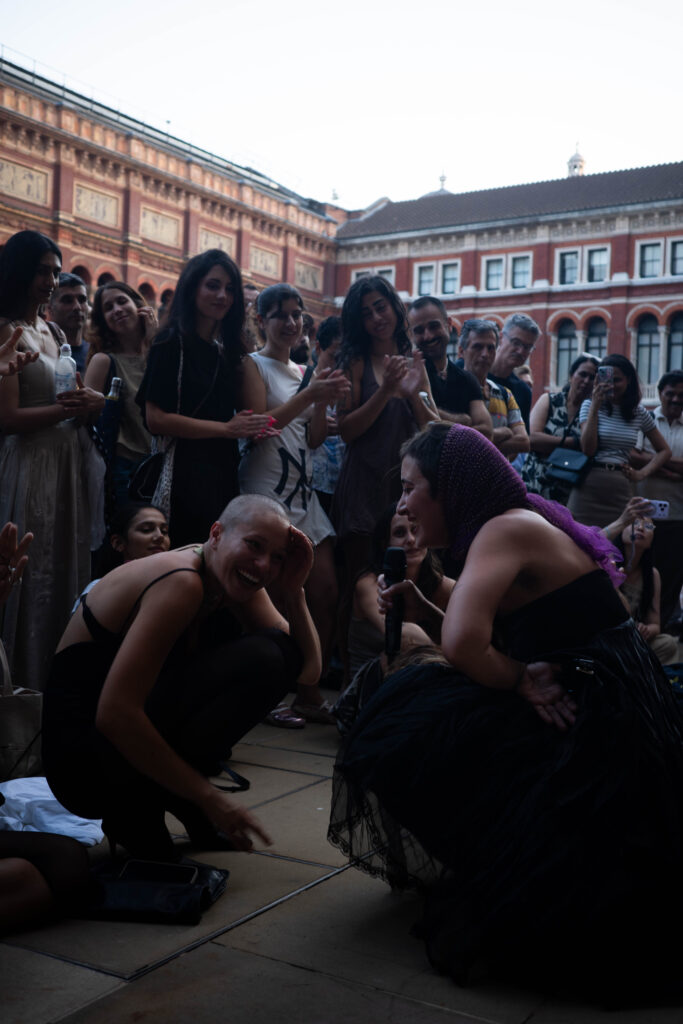
One frame. That was enough. The final performance took place back in the garden. A performer sang in her own language alongside fellow musicians. I couldn’t understand a single word. Again, I realised I didn’t need to.
Afterwards she explained that when she first arrived in Britain she couldn’t understand the conversations happening around her. For a few minutes, she wanted the audience to experience that same uncertainty.
It was one of the simplest ideas of the day. It was also one of the most powerful. During Hongxi Li’s performance, somebody sitting beside me quietly asked,
“What’s happening?” I paused. I turned to them, smiled, and said, “Art.” Later that evening I packed my camera away, left the museum and travelled back across London. I climbed the stairs to my flat and opened the front door.
The heat was still there. The next morning the sun rose again. London carried on melting. But for one afternoon, I’d escaped it.