
Share this
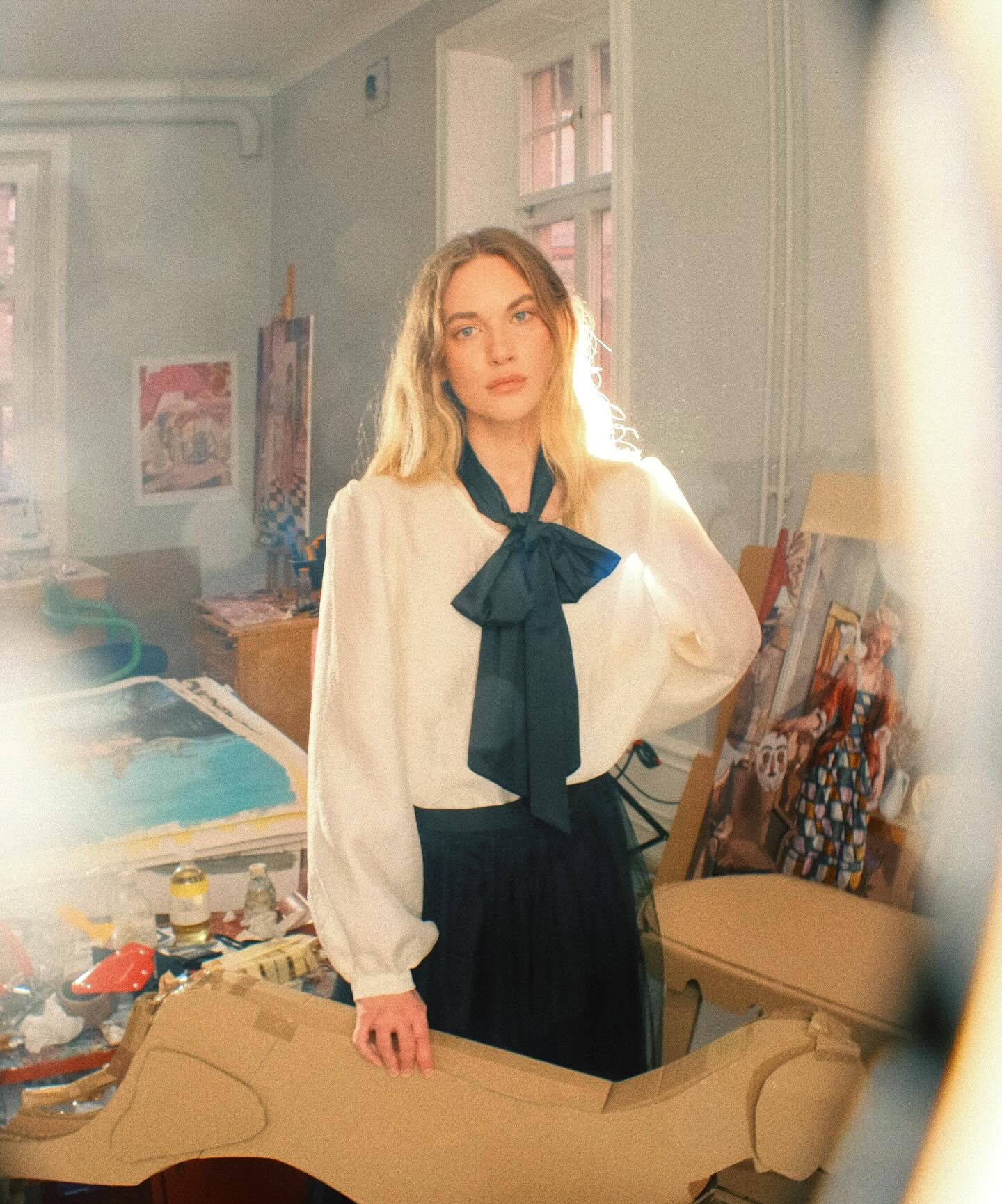
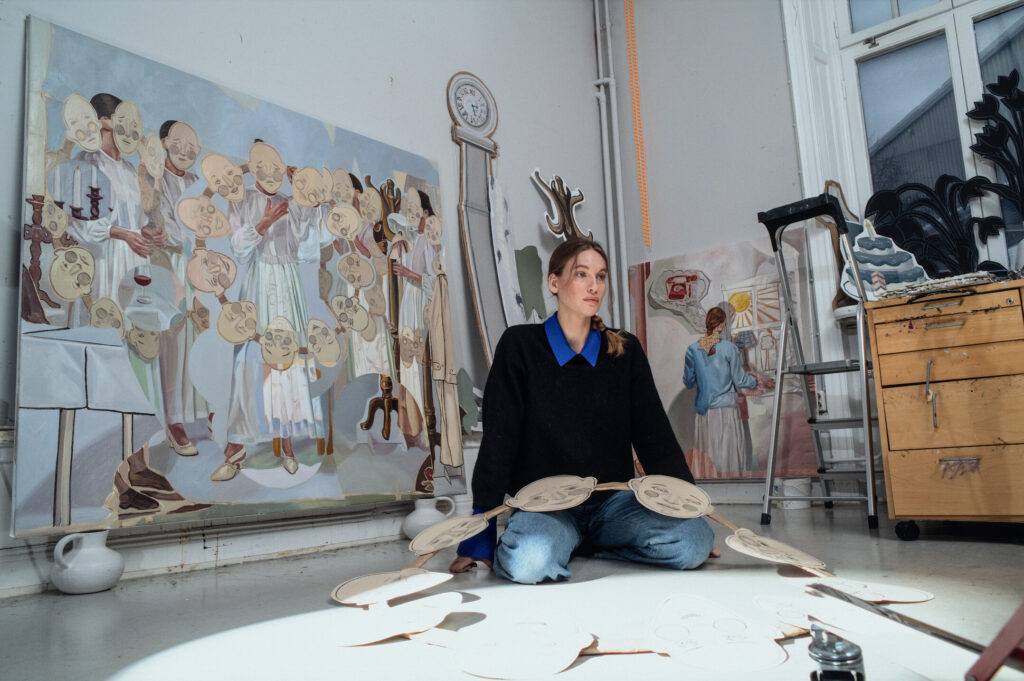
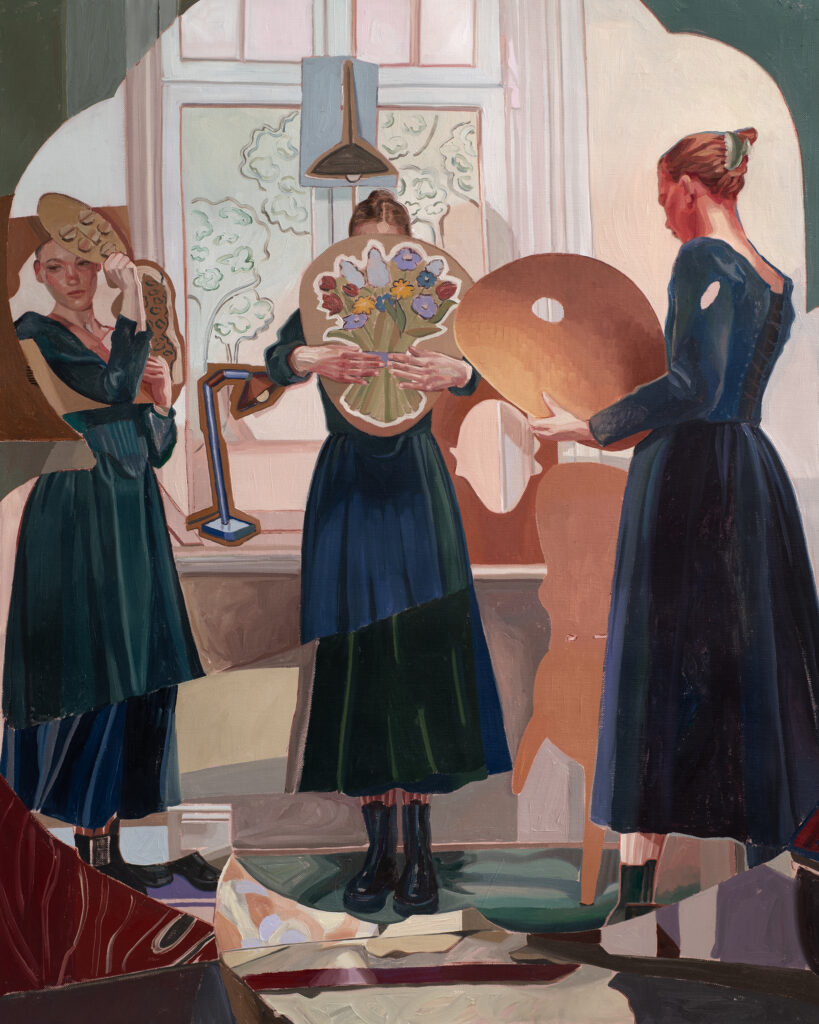
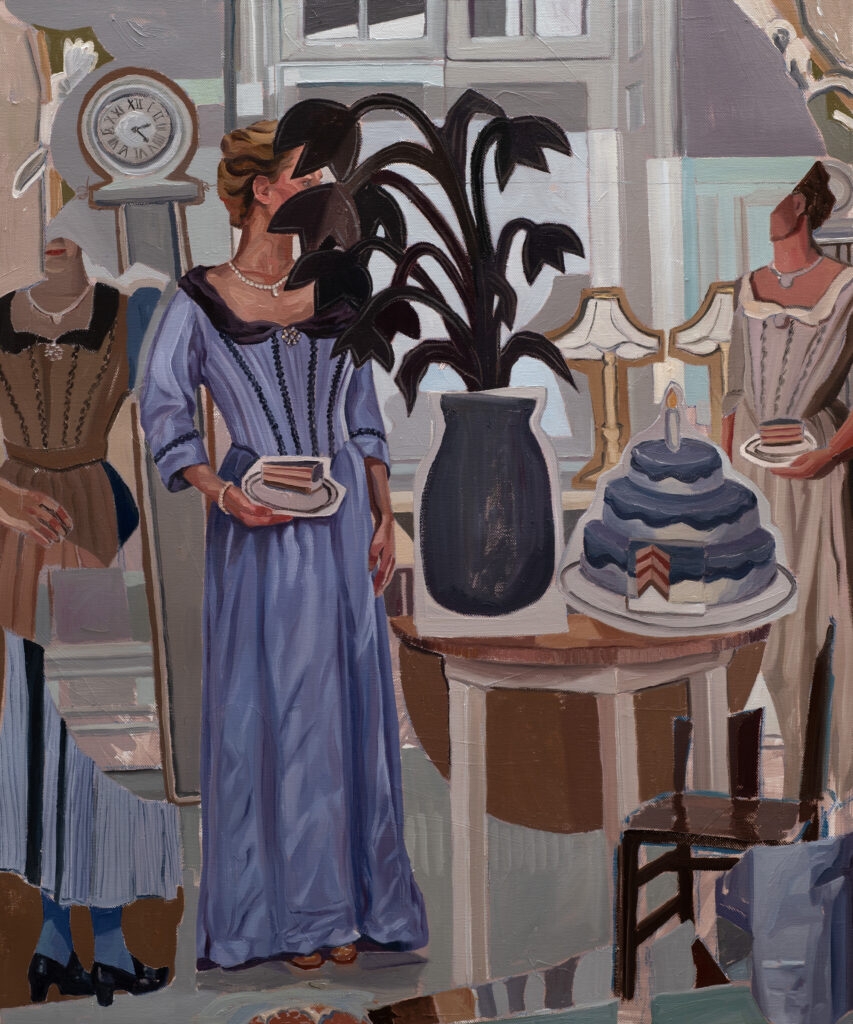
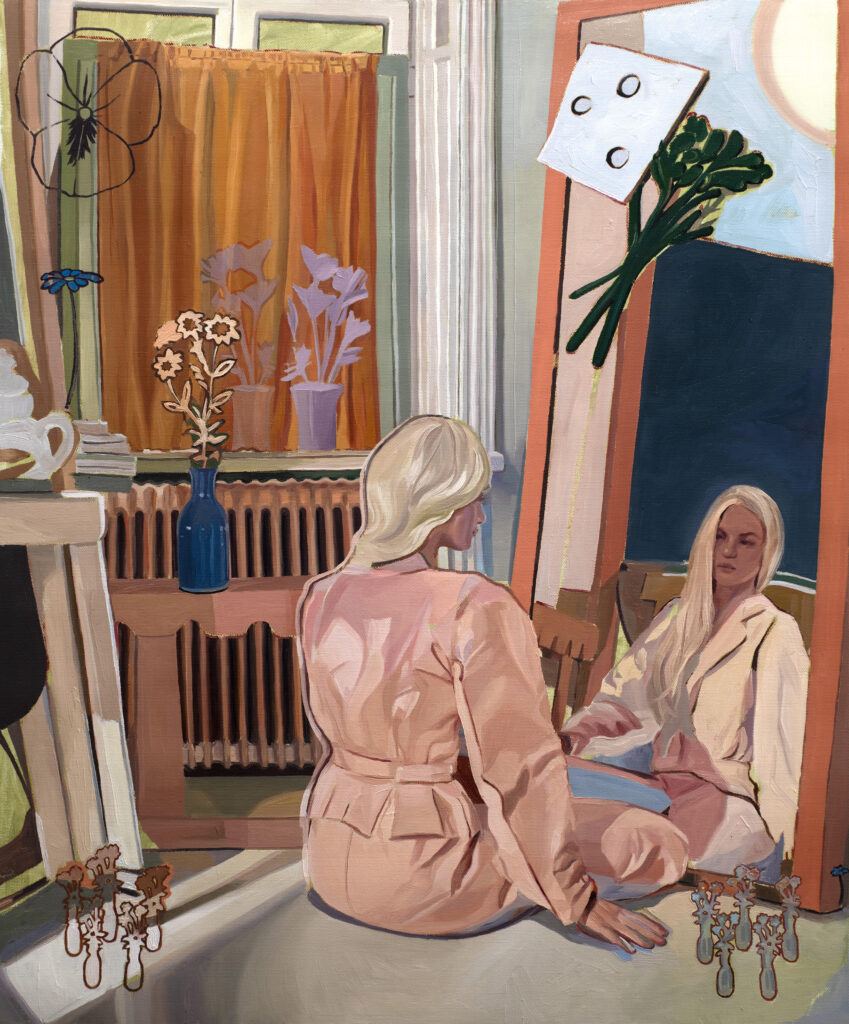
Based in Stockholm, Sweden, Alice Herbst often implements materials such as cardboard, paper and fabric to create props that give life to the atmosphere in her paintings. Like a set designer, she arranges these crafted objects and explores how the context encourages the viewer to imagine a story in motion.
Herbst pursued her studies at the Stockholm School of Art and later graduated from Gerlesborg School of Fine Art in 2017. Her work has been showcased in exhibitions worldwide and is held in collections across the globe, including the esteemed Collezione Maramotti.
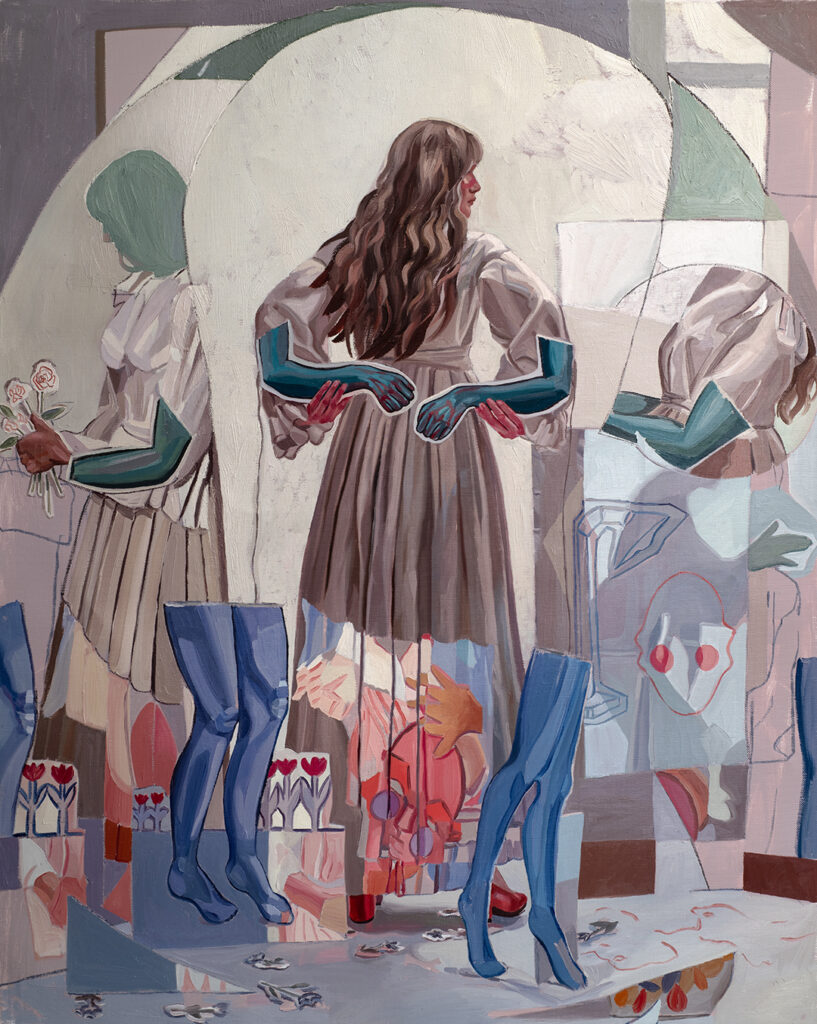
Alice Herbst builds worlds using imagination and studio materials like cardboard, projections, shadows, and light. These scenes feel familiar but reveal their flat, symbolic nature. The hands-on, time-intensive process reflects her dedication to analogue craft and offers a playful, almost therapeutic way to shape and transform narratives. She often appears in her own scenes, disguised in costume, behind a mask, or confronting the viewer, exploring how identity can shift and perform itself.
Photographs of these constructed worlds become the starting point for her oil paintings, where objects, shapes, and characters are reinterpreted in paint. This ongoing practice, called “The Whispering Game,” grew from her early experiments reusing fragments of past works alongside props and crafted objects. Like the children’s game where a whispered phrase changes as it moves from person to person, repeated motifs in her paintings transform over time, inviting viewers to trace connections and discover evolving meanings across her work.
Photos: Christofer Högman
Hi Alice, It’s a pleasure to sit down with you. First question that I always ask. How does a regular day look like for you in Stockholm?
Alice: I live with my partner and fellow artist, Christofer (Chris) Högman, and together we take care of our “baby,” a seven-year-old pug named Nemo.
Unfortunately, Nemo was attacked several times as a puppy, which left him quite fearful. Over time, we’ve learned how he prefers to live, which is with plenty of massages, treats, and walks in the forest. Thankfully, we’re close to a large nature reserve near the city and he enjoys the calmness of it.
Christofer and I share a studio, maintaining our individual art practices while also collaborating as Herbst & Högman.
I’m curious, growing up, what kind of kid were you? What did you enjoy doing, and how did you spend your time?
Alice: I definitely preferred to create things and there was often an aspect of world building, and also gamification of those creations. To give you a picture: when I was around the age of ten, I made dozens of hand-sized polymer clay tiles shaped as parts of a world and I could lay these out in different combinations on the floor.
Initially I created them as sort of ball-in-a-labyrinth game – to amuse myself on long car rides, but it ended up being a city puzzle with suburbs, a downtown, and parks. It even had a medieval part and a PR-event section for celebrities as well as a waffle house. I was very consumed by such things and I’ve heard that most kids found me a bit odd.
I also played football (soccer), which never was a favourite, and I attended kids art classes in the evenings.
Do you remember approximately at what age your creative side started to show? And when did you start taking being an artist seriously?
Alice: My pre-school teachers predicted that I would become an artist, but it first made sense to me in my twenties.
I applied to the art school for therapeutic reasons. Never with the intention of pursuing art seriously. Deep down it was obvious that I wanted to practice art, but I lacked every aspect of conviction and belief.
I met Christofer at school in 2015, and that was when we decided to take our work seriously and take control, instead of just adapting to the system. He inspired me. We spent the time before graduation building our social media platforms, which thankfully made it possible to pursue our work full-time.
Ok Alice, with these next series of questions, I will try to delve into your work as best as possible. So…. You often describe your process as similar to set design. What does working like a scenographer allow you to explore that painting alone wouldn’t?
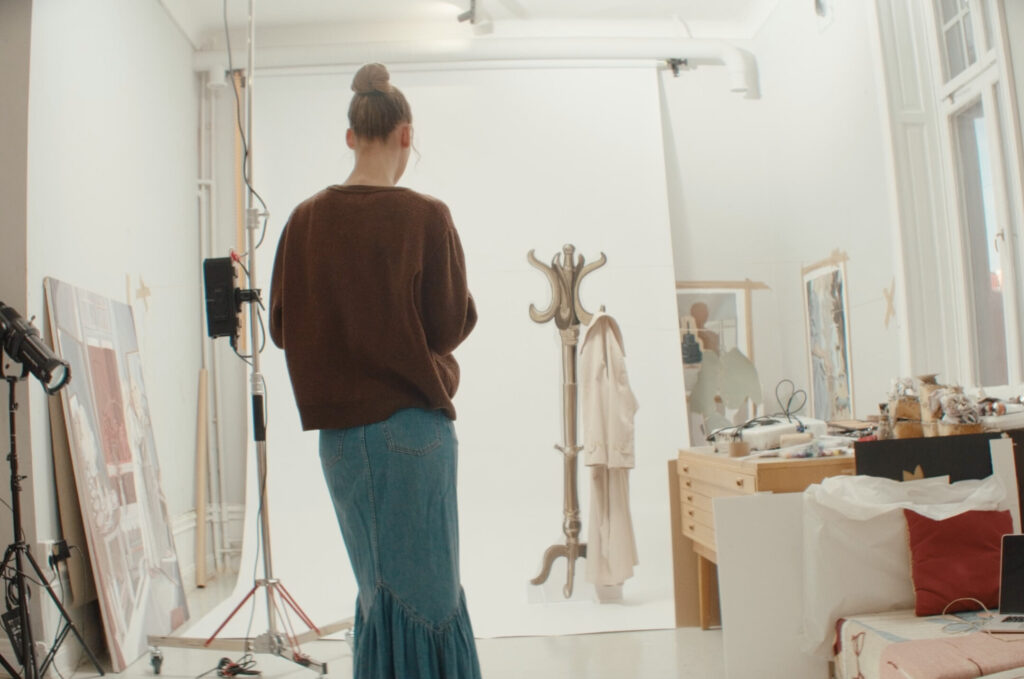
Alice: I seek a deeper connection to the subject, to possess tactile memories of it. The process builds anticipation and expectation within me.
Sometimes I create simple props and objects that I probably could have painted directly from imagination, without the necessity of making them beforehand. However, doing so would miss the entire point.
It is a nearly ritualistic procedure – which might sound a bit silly, but it closely resembles the fixation and joy I felt as a child.
By moving the props around, I can provoke new associations. I also keep them on hand to preserve the possibility of repurposing them. I see this as a form of slow worldbuilding, much like my puzzle clay city.
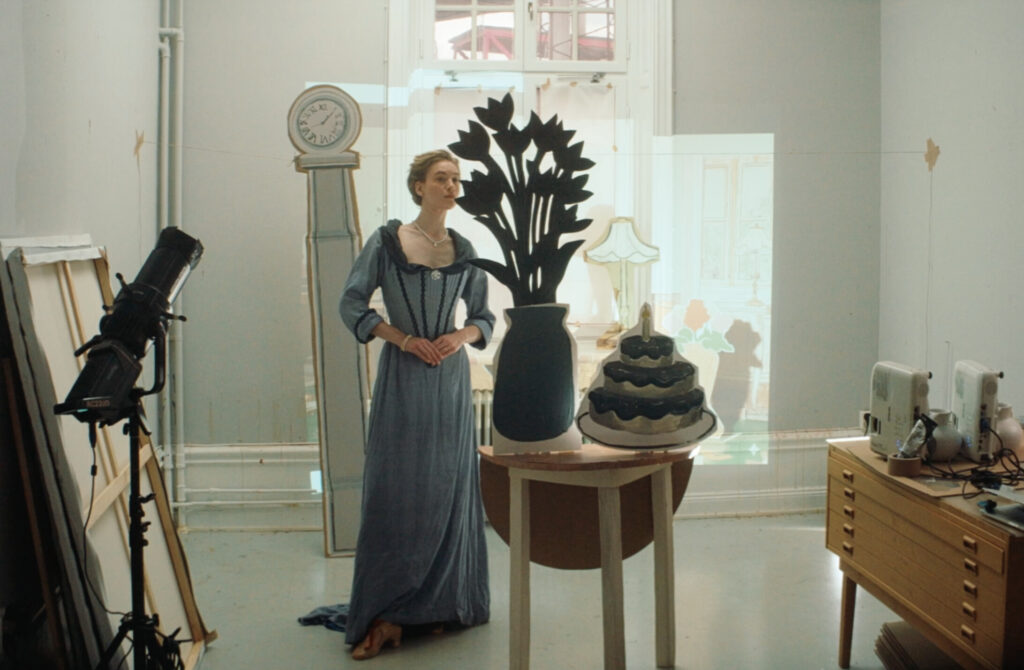
Your constructed environments feel familiar but deliberately fragile—made of cardboard, paper, fabric. What draws you to materials that openly reveal their own artificiality?
Alice: I have always found it empowering to work with simple materials that aren’t necessarily considered loud or glamorous. I also love how the light interacts with paper and cardboard, and how that quality can be captured in painting.
These spaces seem to invite a story without ever fully telling one. How important is it for you that the narrative remains unfinished or unstable?
Alice: When I look at art myself, I like to reflect on it without being handed the full story. If there is a definite answer it takes away all the curiosity that would trigger otherwise.
The Whispering Game suggests mutation through repetition. What interests you about watching meaning drift rather than settle?
Alice: The Whispering Game became the playful title when I started to define my process. It is the direct translation (From Swedish) of the kids game “The telephone”.
When a rumor, or a story, progresses through mouth to mouth it will become distorted.
I think it’s about giving in to what can’t be controlled. I am the initiator, whispering the first sentence, but then it travels, changing in meaning and substance. This is how I see my process, and it’s why keeping it open to interpretation is so important.
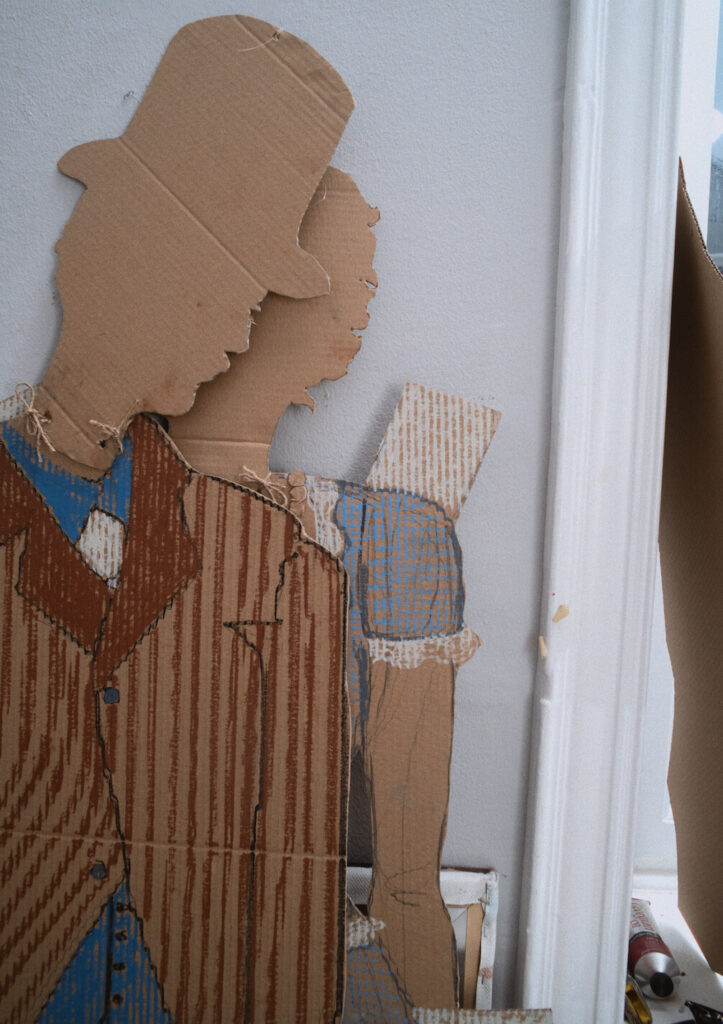
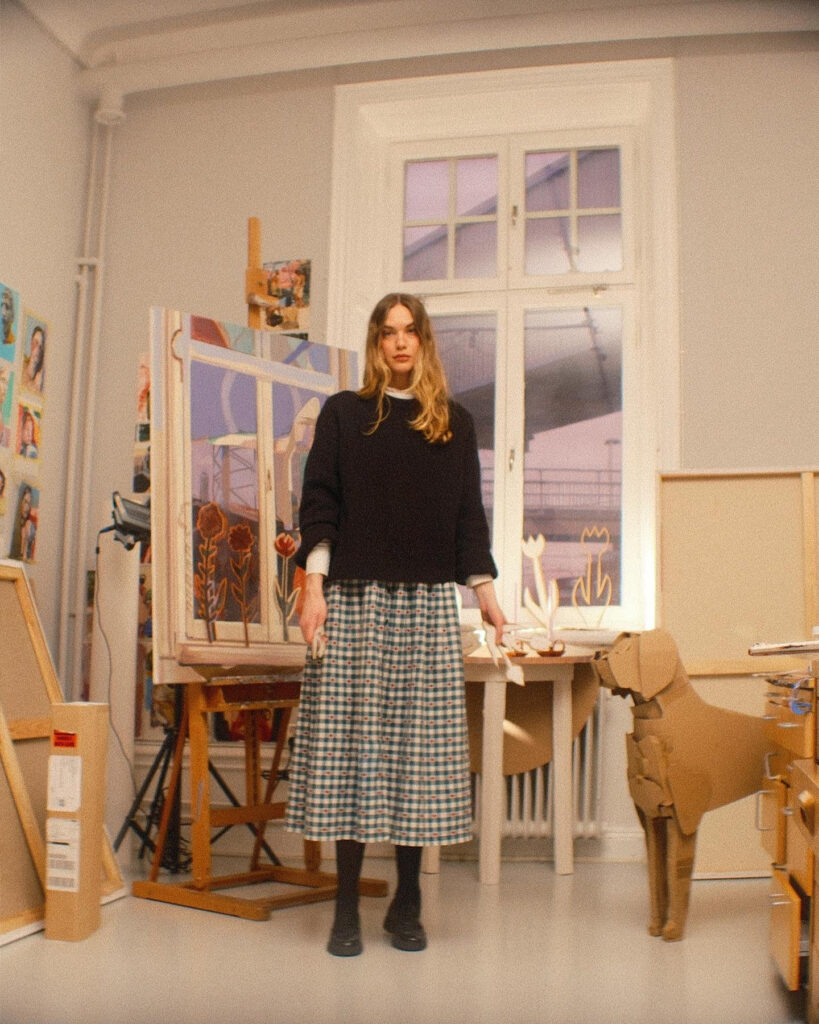
You reuse props, characters, and visual fragments across works. Do you think of them as memories, actors, or something closer to language? When a motif reappears years later, does it still feel like yours, or does it arrive with a life of its own?
Alice: They are tools for communication. Sometimes they are there to act as a world-forming clutter – for example a table used as a table or lamp used as a lamp. At other times the same prop becomes the focal point and symbol for something new, almost rebus-like.
Sometimes I feature them only in shadow form – through projections or negative space. Other times, they are added in post-production as a layer on top of something else, or hidden somewhere within the painting.
It is funny to me that some of the props seem to become a little more prone to an “aura-effect”. Visitors to the studio often notice certain props and exclaim “Oh, that is the one prop in so many of your paintings.” while pointing towards a specific flower or mask. It was a very unexpected outcome, some people clearly pay a lot of attention to them.
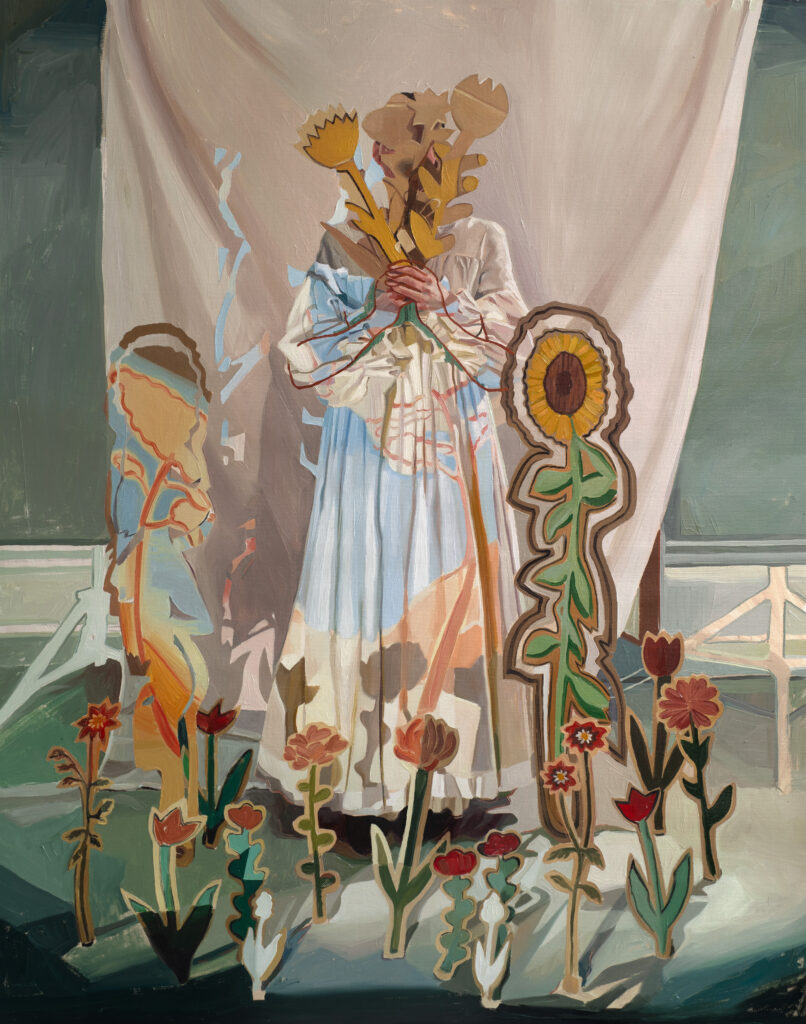
You often appear in your own scenes, masked, costumed, or confronting the viewer. What changes when you insert your own body into the world you’ve built?
Alice: I have, for many years, used my own body to inhabit different characters – long before I started to create the cardboard sets. To me the starting point was always to heal something within me and I naturally thought of my body as a vessel for communication.
Is performance in your work a way of hiding, testing identity, or making yourself more present? How do you think about vulnerability when you’re both the creator and a figure inside the image?
Alice: When I began practicing art in my twenties, I did so to process my teenage years which, in summary, went quite south for a while before I learned to put on the act of someone with confidence. The character-building helped me work through those experiences.
Of course it evokes old memories, but I feel that I face them by controlling how I enter and behave within them.
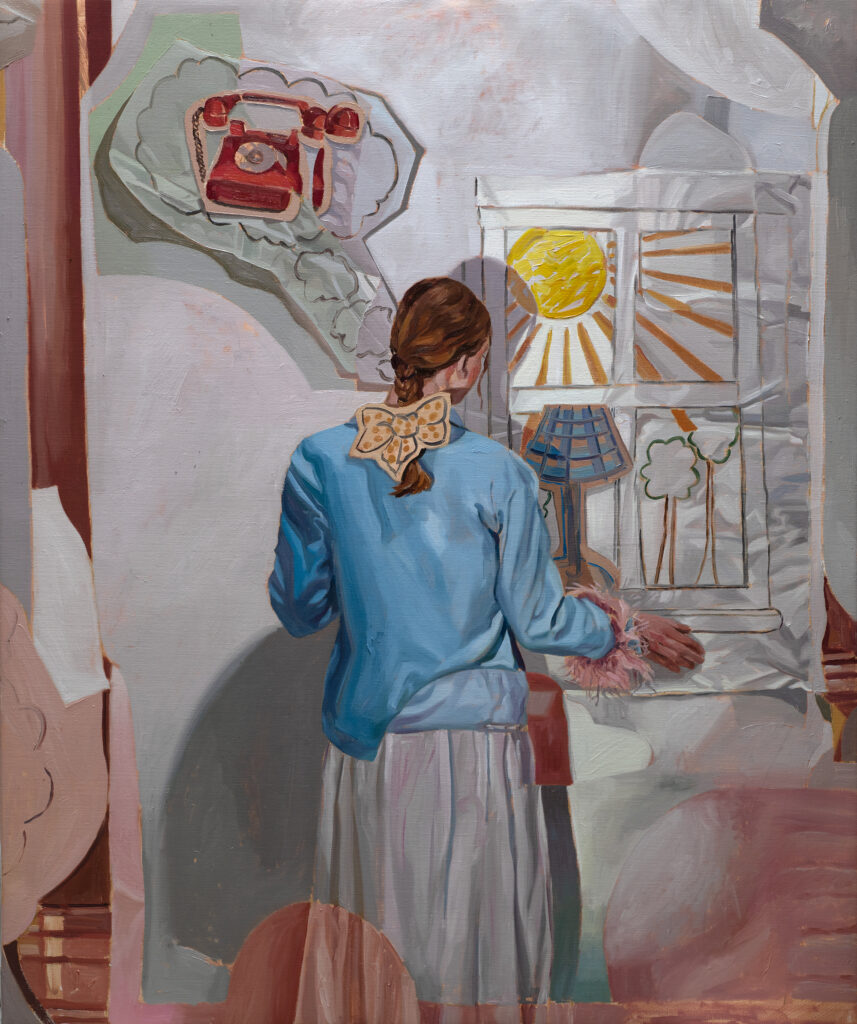
Photography acts as a bridge between your constructed sets and your oil paintings. What happens emotionally or conceptually when you translate a physical space into paint?
Alice: Except for being part of my ideas on repetition and distortion, I believe that, as a painter, and through enjoying painting as an expressive act – transforming an idea into paint feels inevitable.
I am always having an internal conversation about how a set might be translated into oil paint later. Painting is often wrongly considered a purely two-dimensional medium, yet even the most photorealistic works will reveal the hand of the artist to a trained eye.
When I work with visible brushstrokes and rhythm in my practice, it adds texture that is personally coded. Painting becomes a medium through which I can further extend and deepen my expression.
Do you see the paintings as documents of the sets, or as a second fiction entirely?
Alice: I think of it all as a stream, I suppose. Since I also use digital post-production, there are always additions to the initial set. This means that the reference photo includes both realistic and digital elements. What unites it all is the last step of translating it to oil paint.
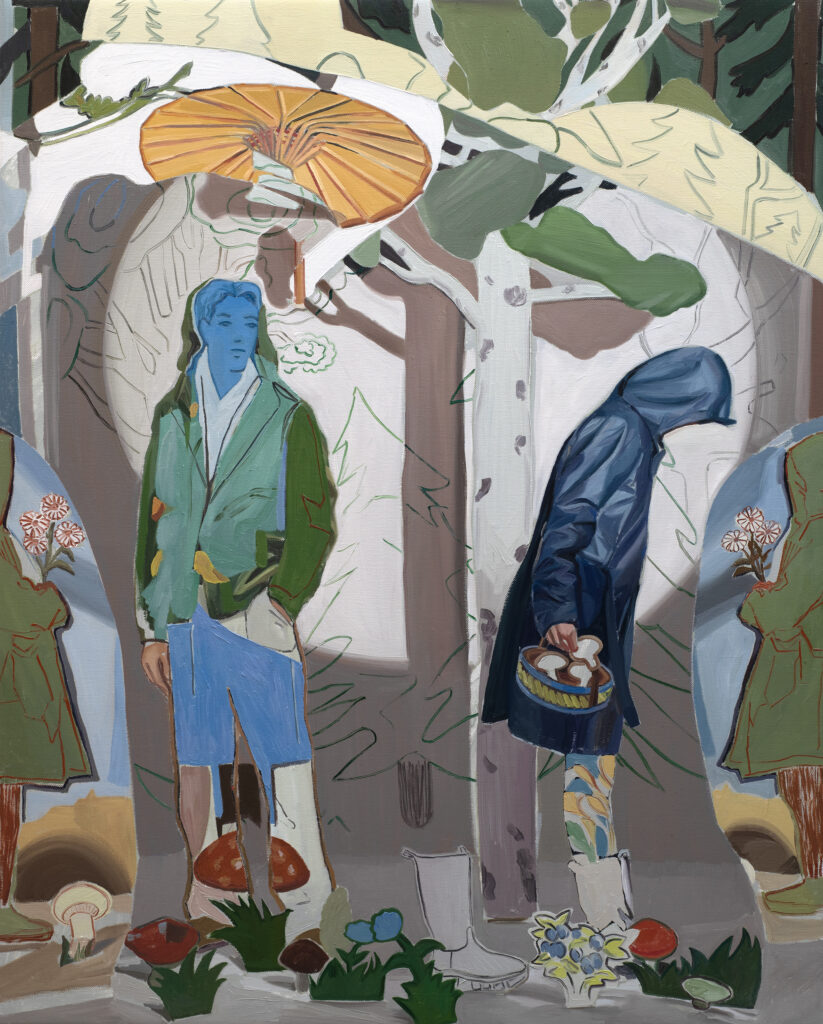
At what point does the original scene stop mattering and the painting take over?
Alice: I think painting never fully takes over; both the sets and the paintings are equally important. A few years ago, I stopped defining my practice strictly as that of a painter and shifted my mindset to that of an artist, because it felt less limiting.
The paintings carry the memories of the time I spent within the constructed scenes. I also began recording the process, so that others could participate if they wished. Over time, these videos have become an additional mode of expression, one that continues to evolve too. I like it all to intertwine and become as loose as possible.
Your worlds often feel slightly theatrical, slightly uncanny. What emotional state are you most interested in creating for the viewer?
Alice: I believe that if an idea becomes overly processed or too familiar, we stop paying attention because of its predictability. In the end, it’s all a play with the joy of discovery we felt as children, aiming to provoke the same curiosity and imagination.
When I add elements like shadows, projections, or a character turned halfway around, viewers are invited to fill in what’s missing. By using alternative ways of portraying something, the work demands attention.
How much do you trust the audience to complete the work through their own imagination?
Alice: Since everyone is wired differently I do not expect the same reactions. If it speaks to anyone, in any way possible, it is a happy moment.
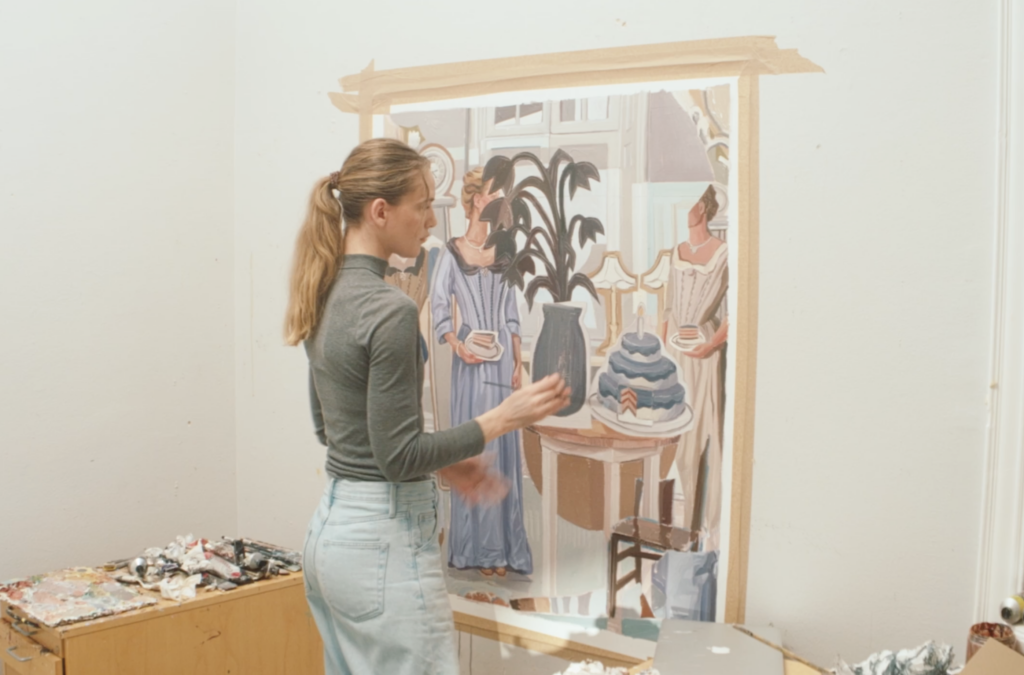
There’s a quiet insistence on craft in your work. Do you see that as resistance, devotion, or simply necessity?
Alice: The ongoing discussion and divide between fine art and craft is something I find fascinating. I often reflect on the common “problem” that many artists describe which is the fear of being perceived as decorators or crafters.
So yes, this can be seen as a form of resistance, but I also love the aspects of craft and technique. The easy option is to signal that you understand the unwritten rules and avoid these elements, but I think it’s more fun to find another way and let it make sense slowly. Something can be carefully crafted yet reveal additional layers of depth.
Your process is slow, hands-on, and deliberately analogue. What does slowness give you in a culture obsessed with immediacy?
Alice: My process is never fully analogue, but it remains a significant part of my practice. In one way, I am also someone who reveals my process and paintings to an audience very quickly after they are created – while many artists choose to do so only after months of deliberate studio work, often culminating in a show. Some would therefore insist that I am part of a fast-paced new wave.
It has its pros and cons – but I chose this path and it suits me. The slowness of everything in my process keeps me focused and grounded.
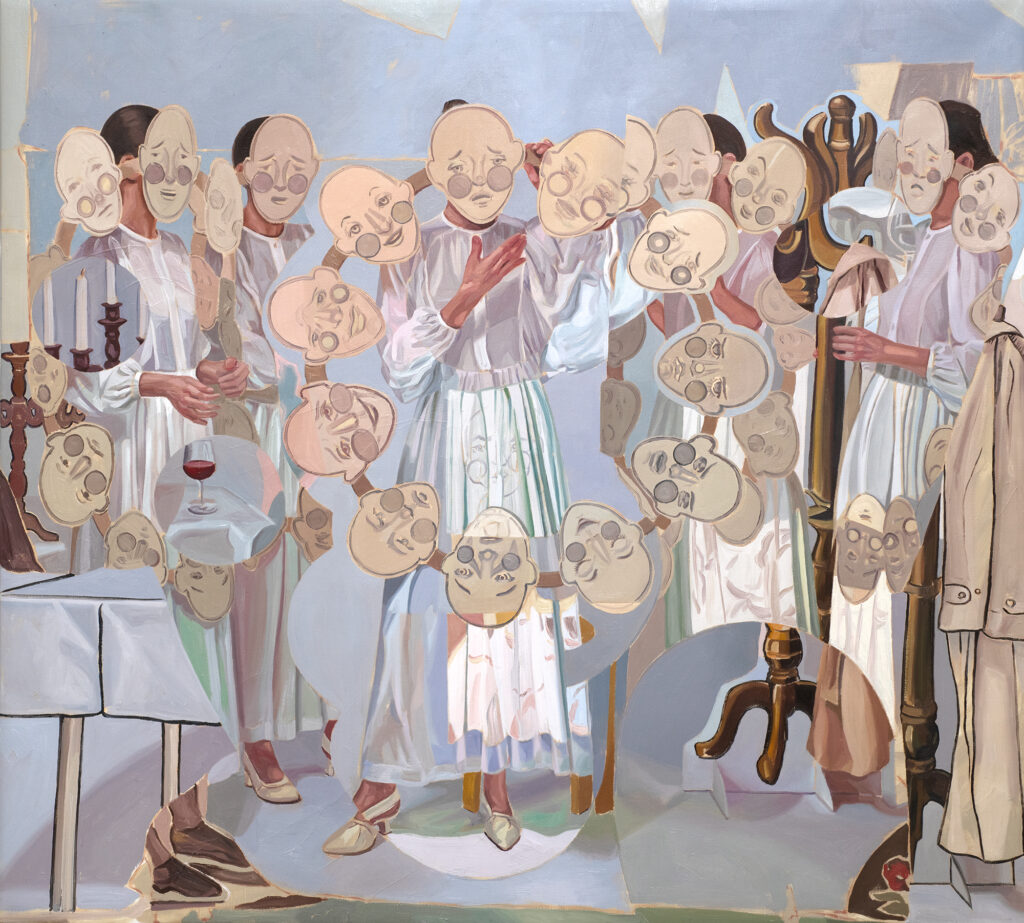
With that in mind, Can you walk me through your creative process from beginning to end result?
Alice: I begin with a clear visual image. I often receive new inspiration just before falling asleep.I do not question these ideas; I want them to flow freely and with sincerity. I write everything down so as not to forget anything, and this becomes the starting point for the creation of new props.
After the prop-making stage comes the installation, which consists of additions such as projections and light. The projections may be recorded shadow silhouettes of myself in motion, or digitally created animations. This is followed by my stepping into character for the photographs (Christofer takes the photos – which leaves some of the decisions to him.) after which I rework the images in post-production by adding new elements. This is a stage I deliberately keep open to unexpected decisions, working in a collage-like manner.
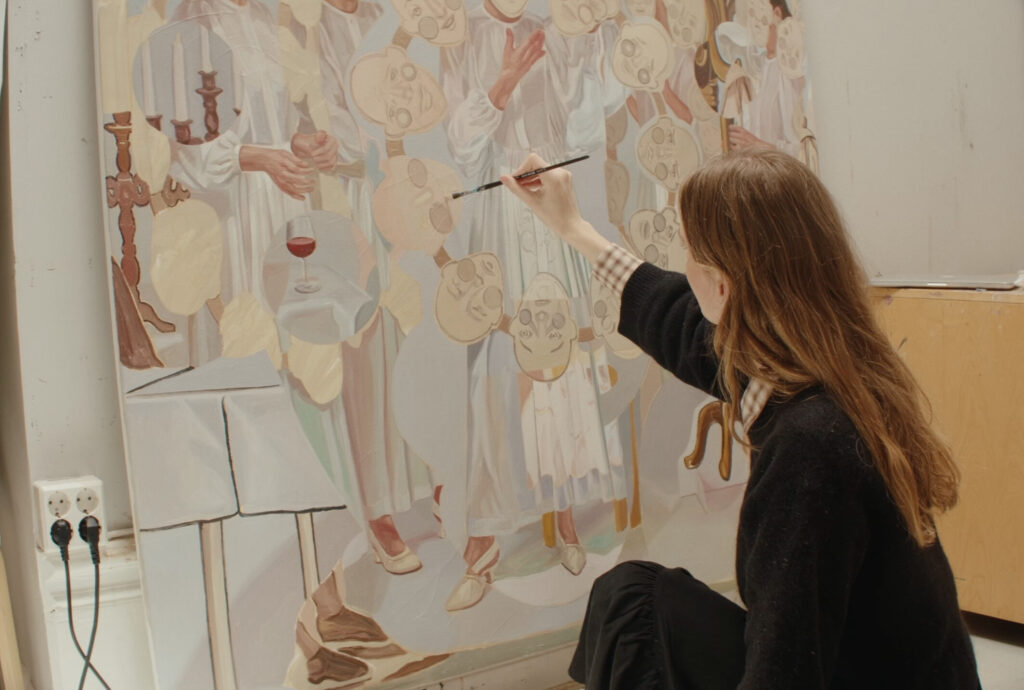
Nowadays, I always use a projector to create large-scale sketches on the canvas. When painting, I stay very close to my reference while simultaneously maintaining a dialogue with the oil paint. Some elements are added, while others are erased. The process ultimately becomes a dance with control.
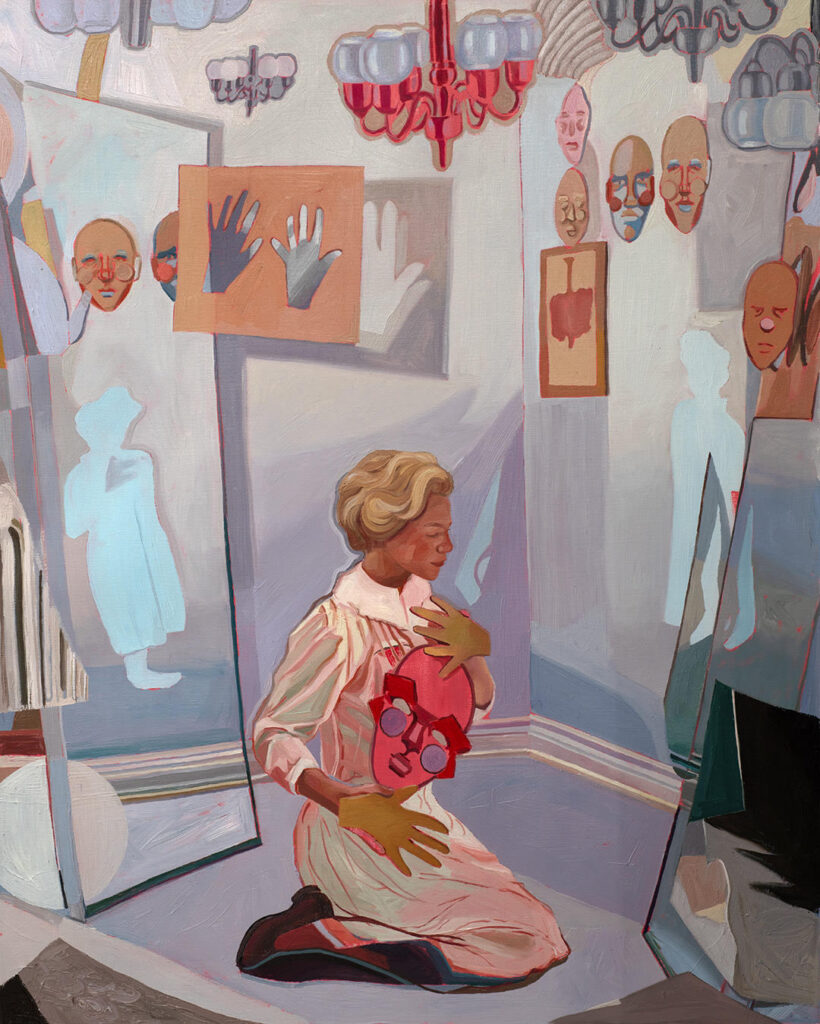
Can you also tell me about your use of symbolism?
Alice: The symbols are an automatic process of translating thoughts into images, it just happens. I never question this instinct but instead use it to form my communication. I think that I always was prone to see things very visually in my mind, and create automatic symbols for them, but I have become more aware of how to use it in my practice.
How do you approach color?
Alice: Haha, I just go for it I suppose. I am no expert and I don’t think I will ever be. All the paintings vary so much in color scheme, many of them are quite muted but colourful though. And I apparently like to use a lot of grays and beiges which adds a level of reality. They are comfort colours to me.
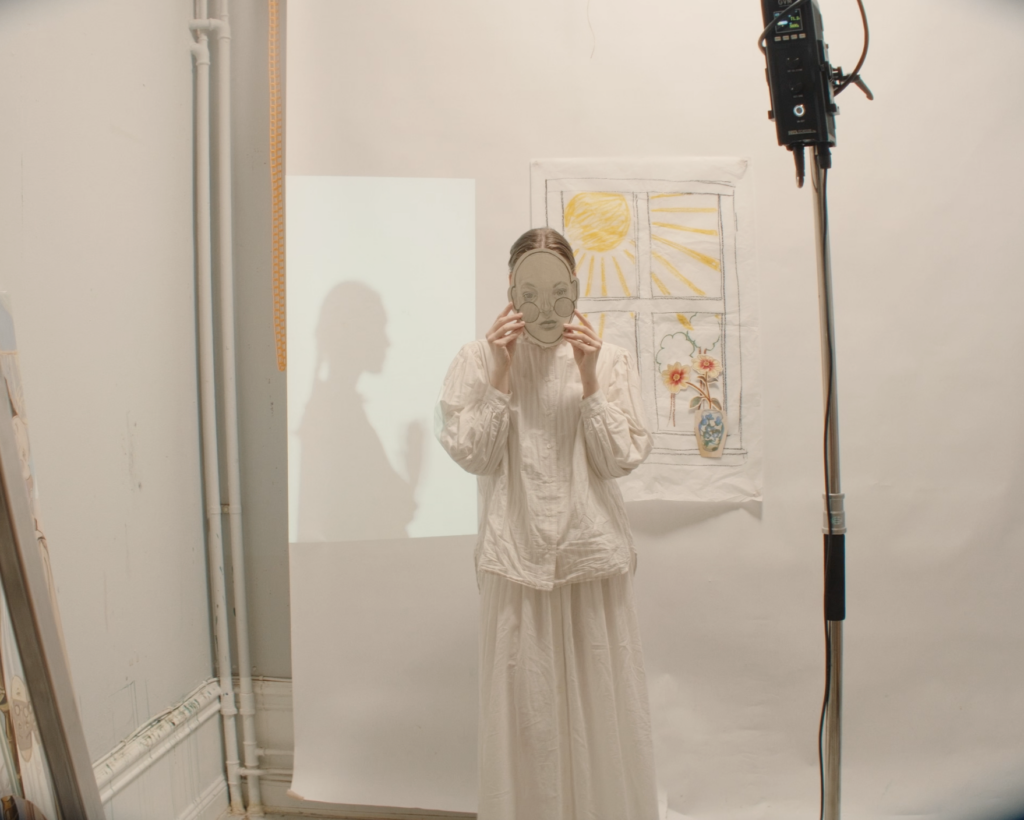
So with what we just talked about, what are you hoping to convey?
Alice: I aim for something as close to my initial vision as possible, something that feels true to it. The vision is complex, therefore, the paintings become maximalist.
When I look at art I tend to gravitate towards something that provokes playfulness, imagination and reflection. In a way I do “gamify” my paintings by hiding meaning within them. It is mainly done for myself though and a nod to my childhood.
There’s one thing in particular that sometimes comes up in discussions about my process. When someone asks, ‘But why do all this when you could just paint?’ I like to turn the question around: ‘But why do you paint when you could do nothing? Why do anything at all?’ It’s not about finding the simplest way to reach something, but about feeling something along the way.
Ok Alice, now to something totally different. In a parallel universe who would you be? and what would you be doing?
Alice: Perhaps a kids book author and illustrator, furniture designer, or something involving animal care.
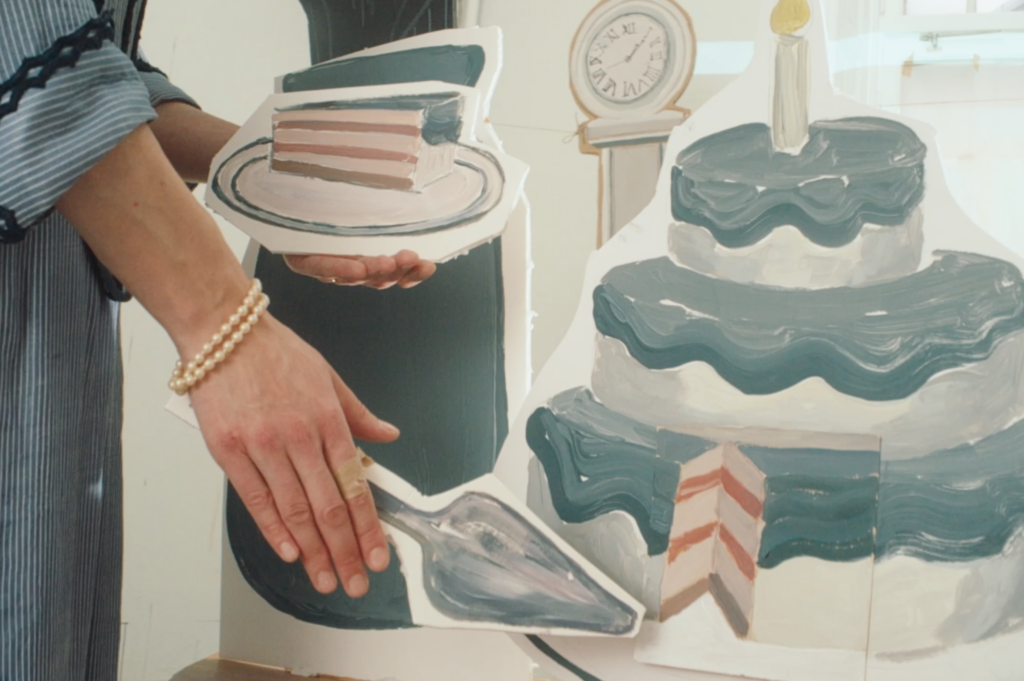
Outside of art, what’s something you’re obsessed with right now—maybe a hobby, a show, or even a food—that keeps you grounded or inspired?
Alice: I have turned to the board game hobby during Covid and this has resulted into a board game collection. I mainly play them solo.
Christofer and I often go to the climbing gym to boulder since a few years back, funnily enough I am very afraid of falling and I seem to sprain my wrists all the time, but it is a fun time.
Can you tell me a story about a time when a connection with someone had a big impact on you?
Alice: The one person that I felt the strongest connection to was Christofer and I think it is too personal to share those moments.
What qualities do you find most important in the people you choose to spend time with?
Alice: That they are open minded and kind.
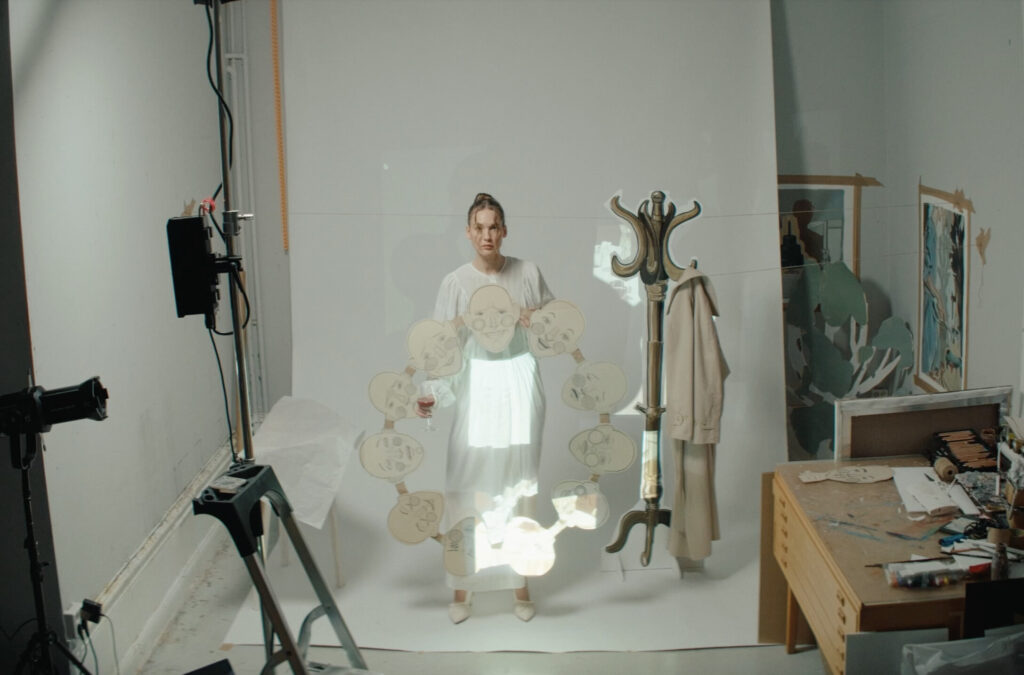
Anybody you look up to?
Alice: I tend to look up to people that fall into the Pippi Långstrump-kind of personality which is someone who questions rules and makes up their own, people that are a bit different. In a way the author of Pippi Långstrump, Swedish Astrid Lindgren is that person for me because she shaped a lot of my childhood with all her books and movies.
What motivates you?
Alice: The thought of being in charge of my life, I do not expect anything from anyone except from myself. And to have healthy goals.
How would you describe a perfect day?
Alice: It all depends on the need but I think that one of the advantages of my choice of practice is the unexpected nature of it. It is definitely not mundane even if I stand in the studio most of my days. I like how there are new challenges to face depending on opportunities.
Alright Alice, I always ask these two questions at the end of an interview. The first is. What’s your favorite movie(s) and why?
Alice: There is no favourite-favourite – but I recently saw Licorice Pizza, by Paul Thomas Anderson and it will probably stick with me. I also liked his movie Phantom Thread which I need to rewatch to remind myself a little bit of why. I suppose that they are quite unexpected and that is what draws me into them. Ruben Östlund also makes movies worth watching.
The second is. What song(s) are you currently listening to the most right now?
Alice: I most recently listened to a recorded live performance by Aurora. I tend to listen more to audio books and tv programs as of late, that is what is on in the studio most often.