
Share this
Lightscape arrives at The Shed as a seven-screen world of deserts, cities, machines, music, and bodies moving through an unstable American present
Doug Aitken has never been especially interested in keeping images still. His work tends to move across surfaces, buildings, landscapes, and formats, behaving less like conventional cinema than a kind of restless architecture made from light.
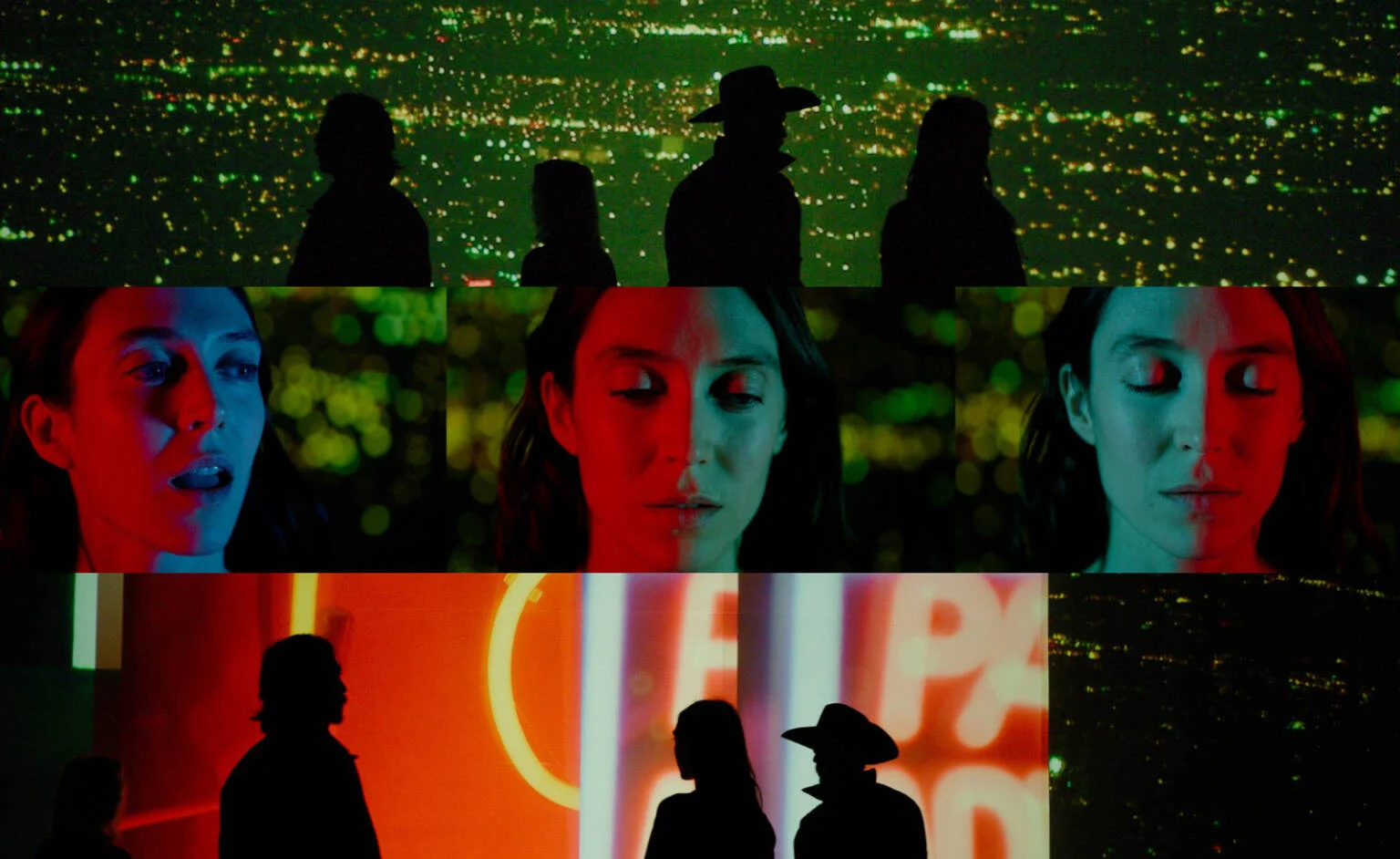
With Lightscape, that restlessness becomes the subject. Premiering at The Shed in New York from June 25 to September 13, 2026, the work expands film into a multi-screen environment where image, sound, movement, and space are pulled into one shifting field. It is not a story in the usual sense. It is closer to a contemporary myth built from fragments: desert roads, mountain landscapes, city nights, automated production sites, digital space, and people moving through systems larger than themselves.
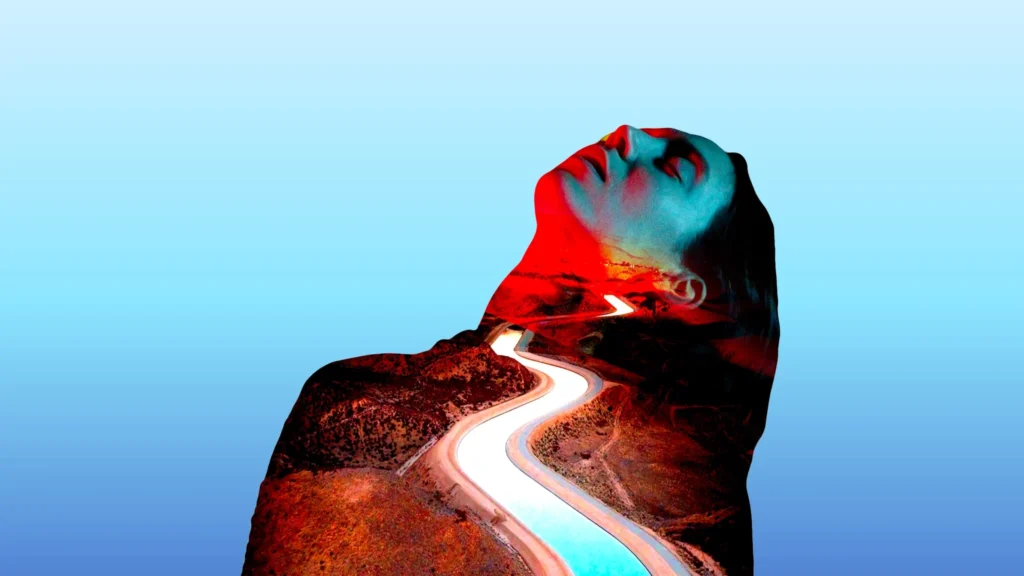
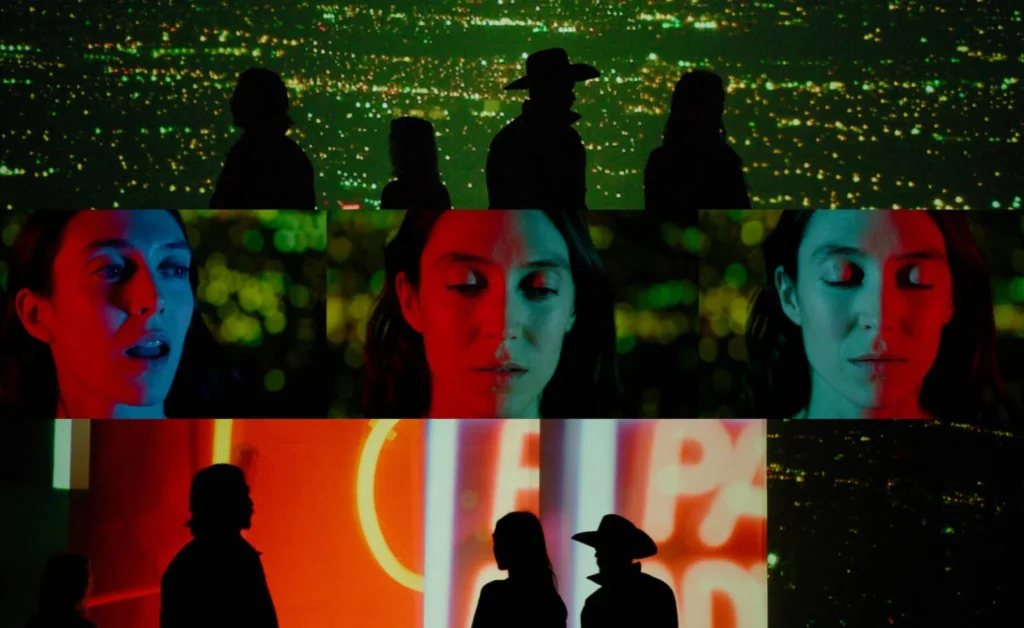
At the centre of the installation is a seven-screen environment, pushing the viewer away from a single fixed viewpoint. Instead of watching one frame unfold, the audience is surrounded by multiple images that echo, interrupt, and overlap. Characters move through sharply different worlds — arid landscapes, industrial zones, robotic workspaces, nocturnal city scenes — creating a portrait of America as something unstable, unfinished, and constantly recomposing itself.
The cast includes Natasha Lyonne, whose presence adds to the work’s strange, half-recognisable atmosphere. But Lightscape does not seem designed around celebrity or plot. Its figures appear more like signals moving through a wider system: migrants crossing open terrain, workers absorbed into automated rhythms, solitary bodies suspended inside digital or urban spaces. Their stories do not neatly converge, but they begin to resonate through gesture, sound, repetition, and emotional charge.
Music is not background here. It is structural. Developed in collaboration with the Los Angeles Master Chorale and the Los Angeles Philharmonic, the project exists across film, installation, and live performance. Its sound world uses voice, orchestration, repetition, and abstraction to move the work forward without relying on conventional dialogue. The result feels less like a film score than a nervous system.
That is what makes Lightscape feel so recognisably Aitken. For decades, he has treated the moving image as something that can escape the screen and become spatial, architectural, almost environmental. Here, cinema does not ask the viewer to sit still and follow. It asks them to inhabit instability — to move through a world where technology, ecology, labour, identity, and landscape keep sliding into one another.
The mythology Aitken is building is not ancient or heroic. It is provisional, contemporary, and fractured. It belongs to a present where people are constantly in transit, where machines shape the rhythm of bodies, where the future seems close but unreadable, and where America appears less as a fixed place than a set of colliding conditions.