
Share this
The Luxembourg-based platform for digital arts, Elektron’s, second exhibition in Esch-sur-Alzette, sets the scene for video works and interactive installments to creep into plazas and shopping centers—taking root in everyday spaces to reframe how we perceive ourselves and our surroundings. Beneath the digital sheen and synthetic textures of the artworks lies a philosophical proposition: that the future will not be shaped by human intelligence alone, and that it may not even center human consciousness at all.
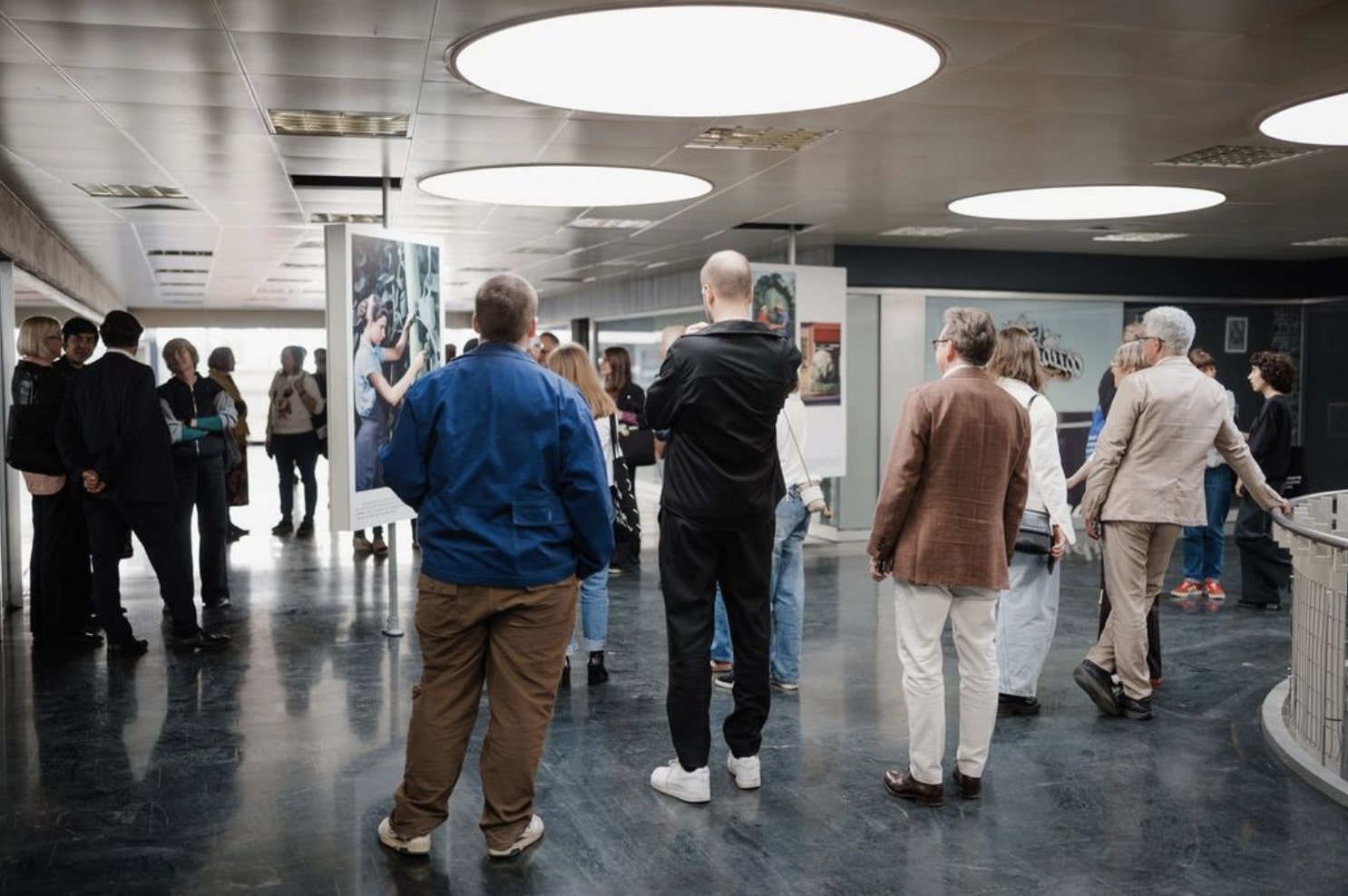
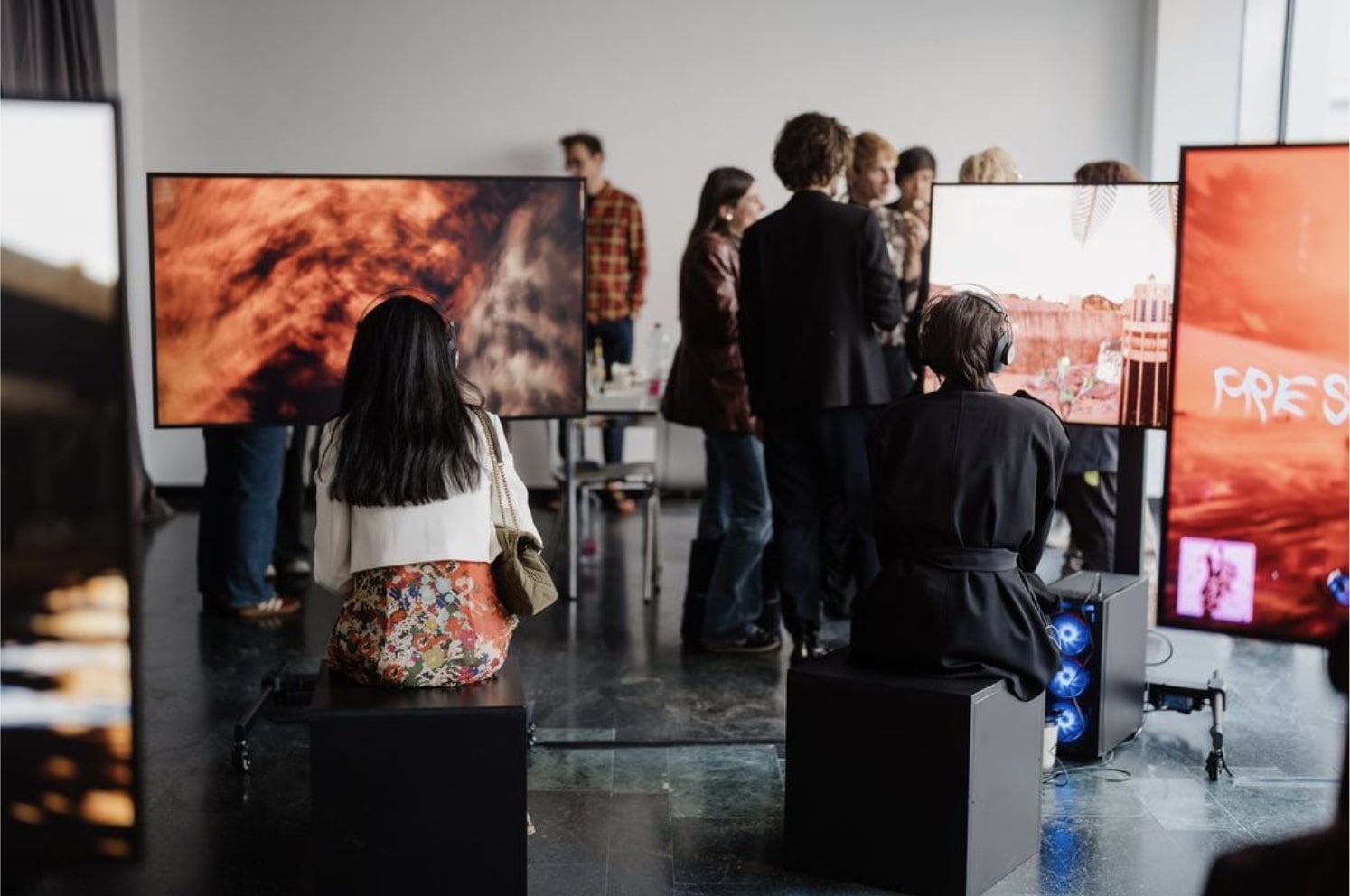
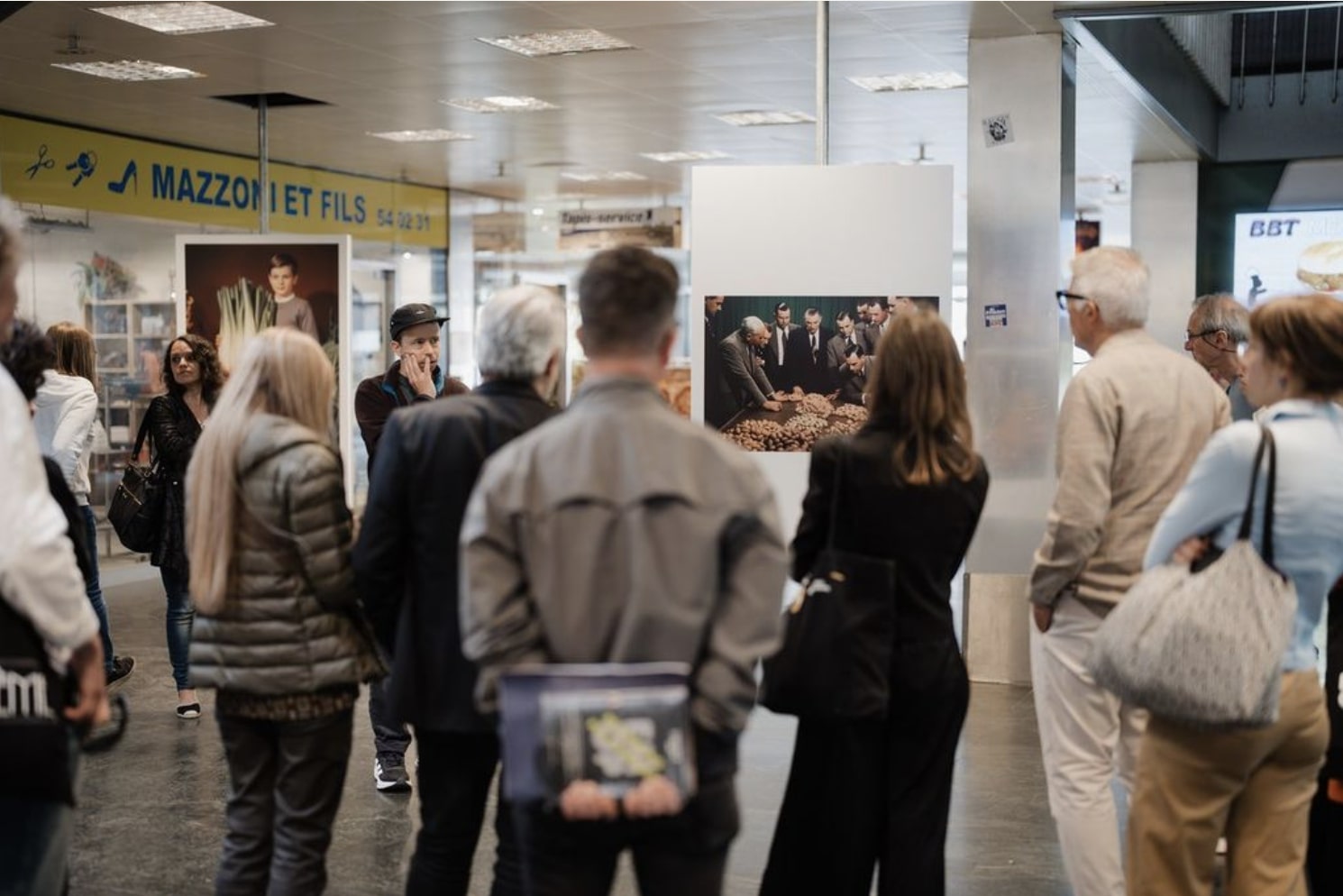
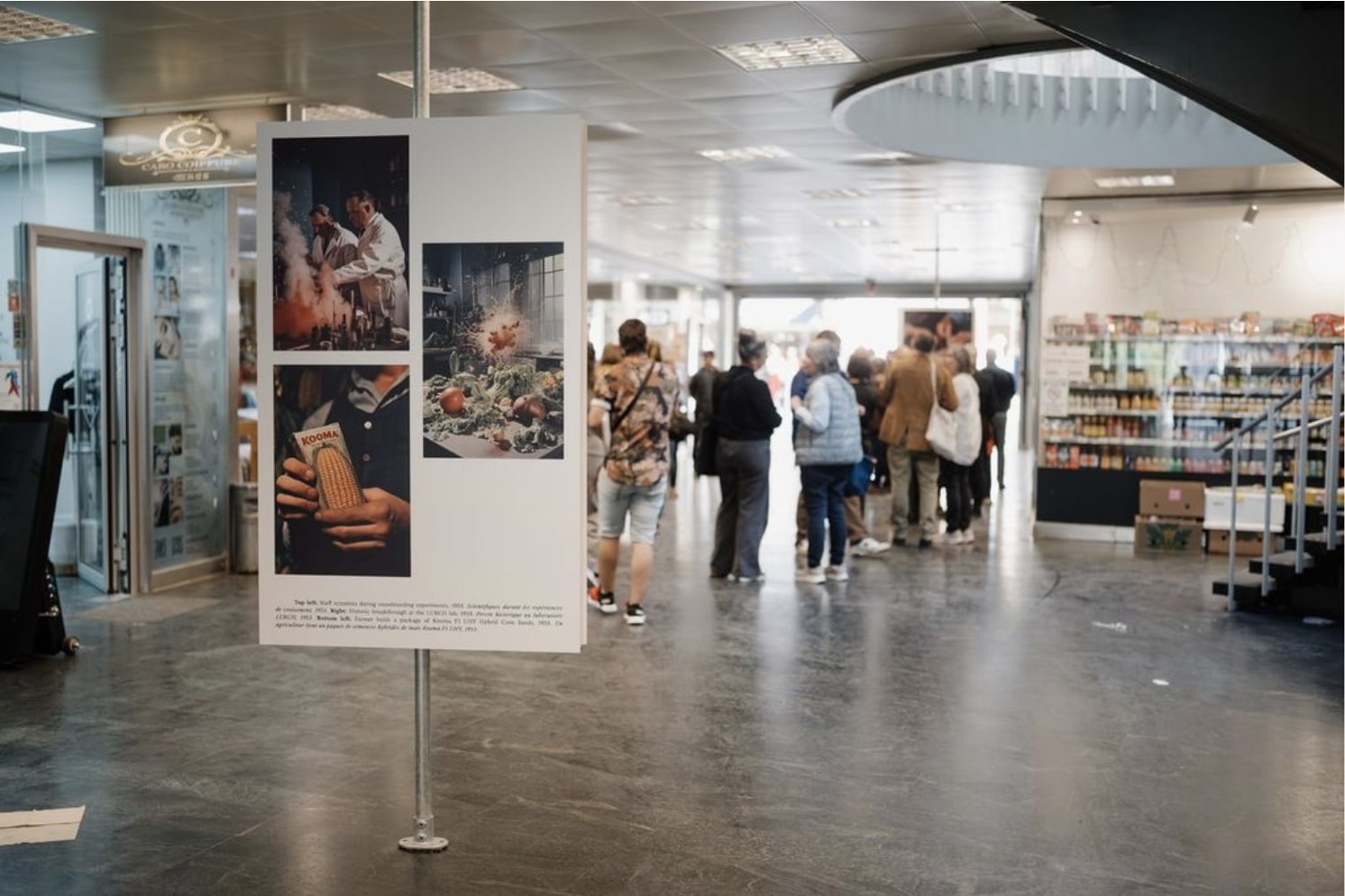
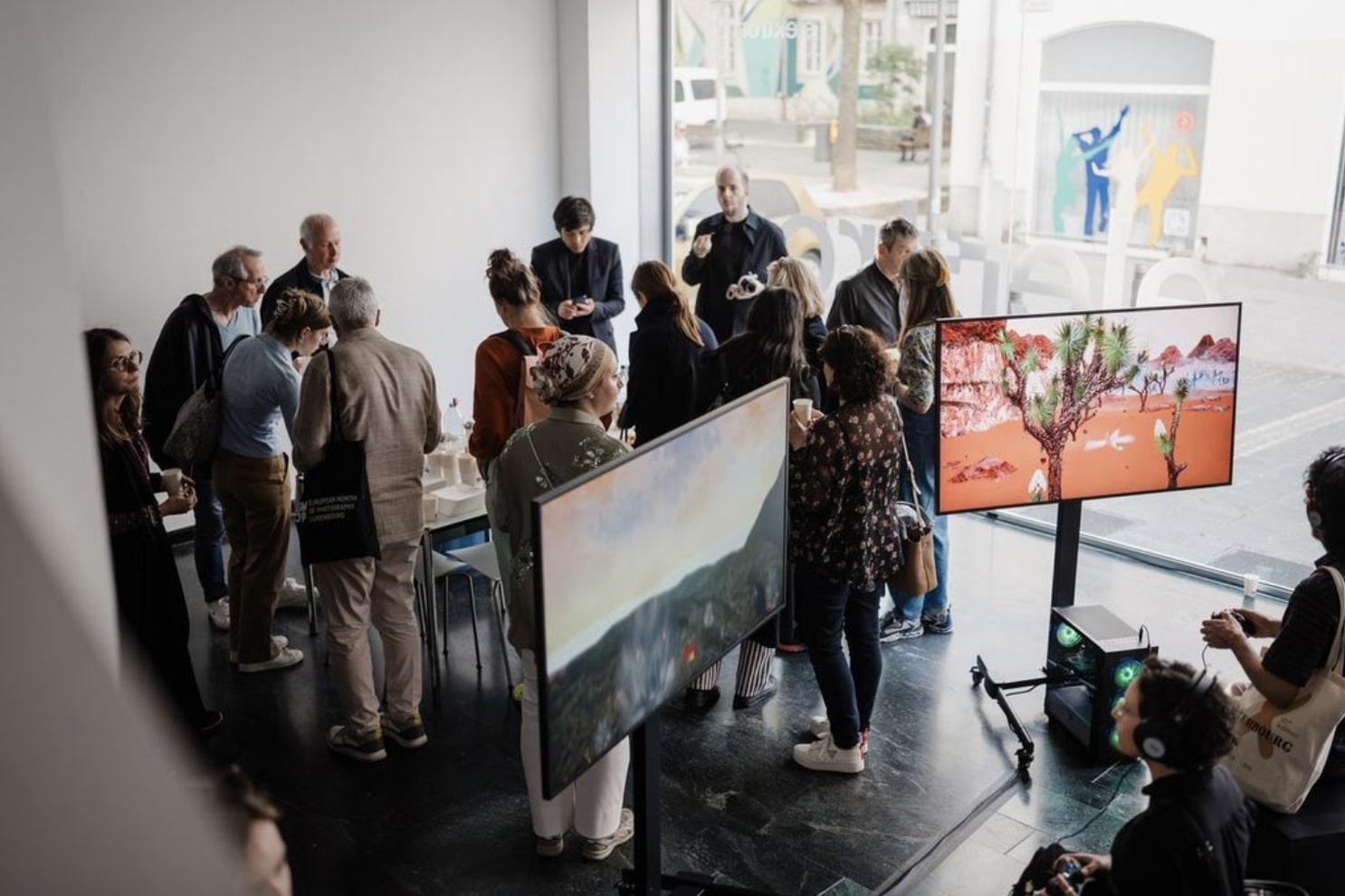
Walking around the artworks, primarily in Elektron’s main exhibition space at the charming 90s vibe shopping arcade Centre Mercure, what begins as a celebration of digital aesthetics and technological collaboration quickly becomes a meditation on the dissolution of the human ego—not only as a psychological structure, but as a civilizational scaffolding that places humans above other species, systems, and forms of intelligence. As artificial intelligence approaches parity with human cognition, and climate realities render our dominance unstable, Hybrid Futures asks us to relinquish the illusion of superiority and embrace what I would call an “eco-logic” of connectedness and collective agency. Something that seems both revolutionary, utopian and, frankly, scary.
Dissolving the Ego: From Selfhood to Symbiosis
In psychoanalytic theory, the ego maintains identity by distinguishing self from other—organizing perception into hierarchies of subject and object, inside and outside, human and non-human. But Hybrid Futures methodically unravels these boundaries, replacing the ego’s impulse to master with a call to entangle. This is evident from the two main concepts that the curators, Francoise Poos and Vincent Crapon, operationalize in the exhibition: Deleuze and Guattari’s highly popular concept of the rhizome pointing to a non-hierarchical structure without a center and Tim Ingold’s less prevalent (at least in art discourse) concept of the meshwork, describing the unique paths of any living being in a given environment. The latter provides materiality and agency to the rhizomatic framework, and the two concepts work well together as a sort of digital-organic fusion of radical post/transhumanism.
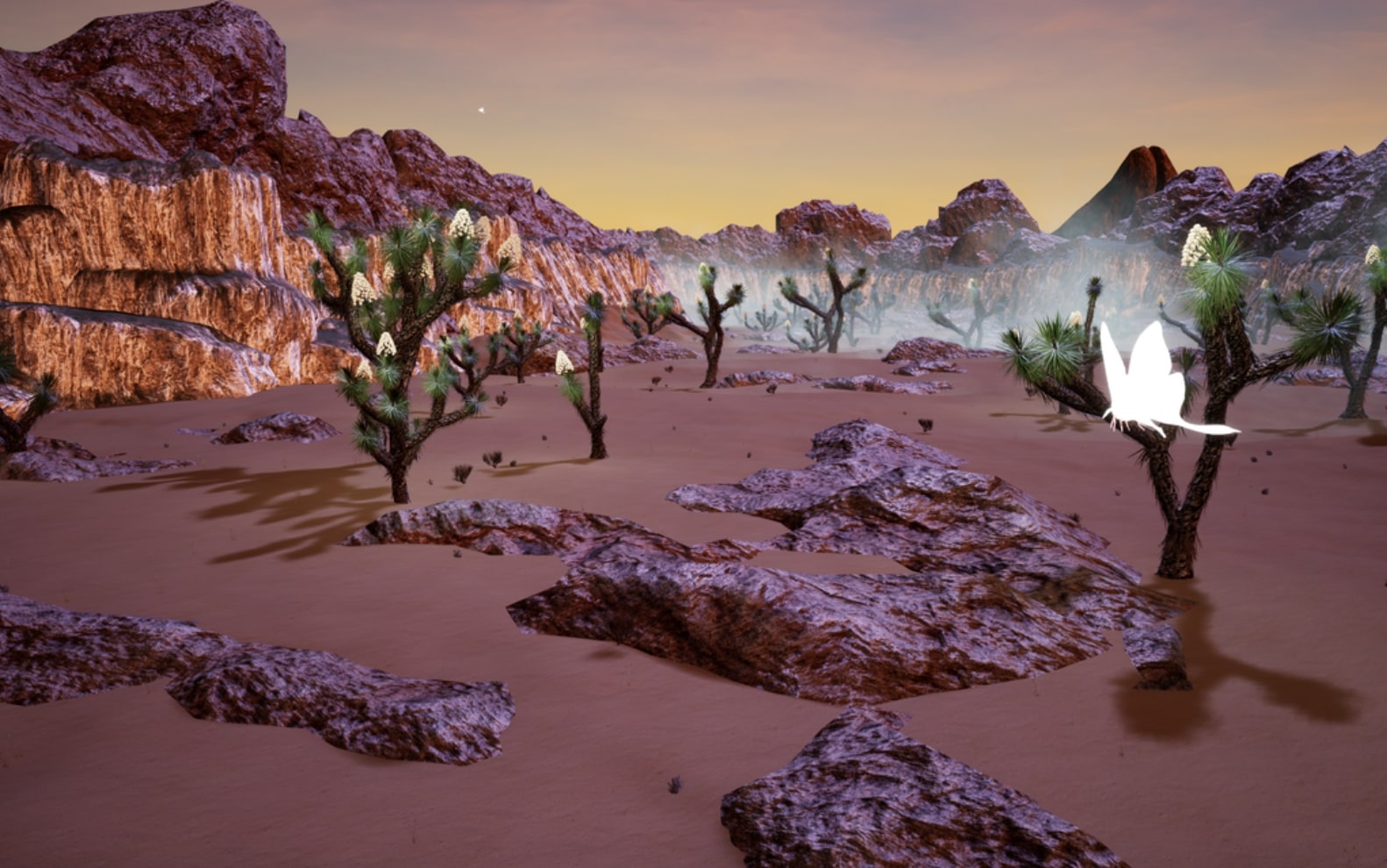
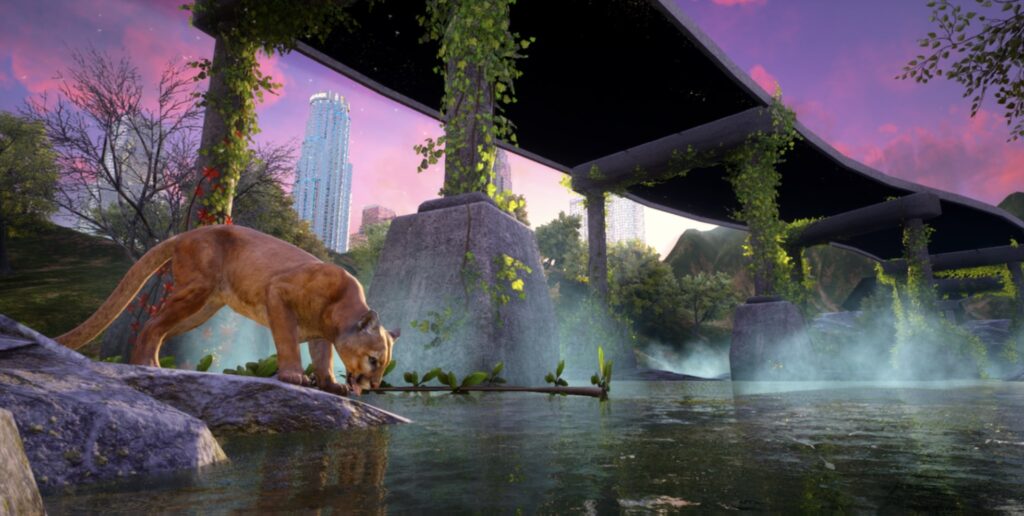
Take Alice Bucknell’s The Alluvials, for instance. Set in a speculative Los Angeles decimated by drought, the videogame artwork reframes the viewer’s perspective through a surreal, game-like interface inhabited by river species: wolves, moths, insects. Navigation is deliberately clumsy, disorienting, even “non-human” in its logic. This is certainly to the detriment of the human experience of the artwork, but the message lingers. The path of the player is the more-than-human meshwork in action: the POV doesn’t reward domination but demands a kind of non-linear non-teleological empathy. The human ego, here, is not the center of attention but one node among many, short-circuiting anthropocentric vision and agency.
Joey Holder’s video work Abiogenesis further fragments the human timeline. Simulating speculative marine evolution, her AI-generated modules showcase traits from deep-sea organisms like the Immortal Jellyfish (Turritopsis dohrnii) and the Pacific Octupus (Octopus vulgaris) that predate human existence by tens of thousands of years. Here, the ego’s illusion of centrality in time, too, is dismantled. Instead of origin myths or heroic futures, Abiogenesis proposes evolution without narrative—without us. The resulting affect is not entirely despair, maybe closer to uncertainty paired with humility. The artwork reminds us that there are timelines and modes of organic intelligence that are beyond even our best efforts of conceptualization.
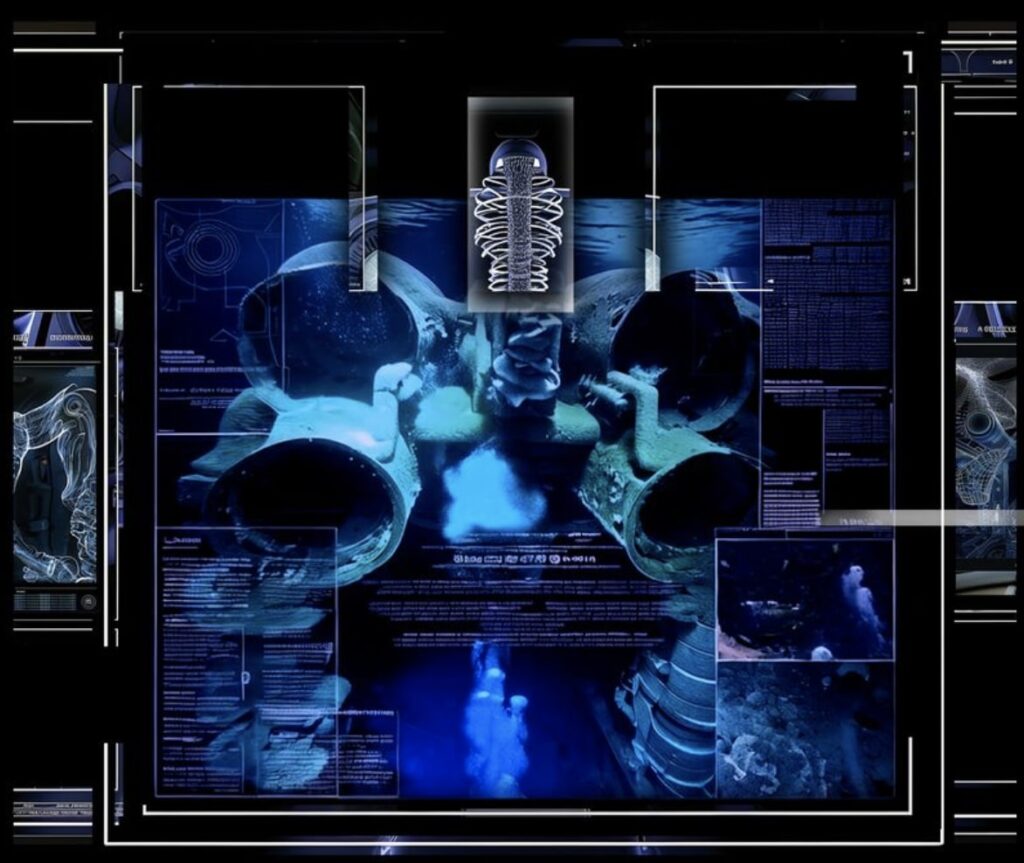
2025, commissioned by Elektron and HEK Basel © Joey Holder
From Individual to Network: Rhizomes of Consciousness
If Bucknell and Holder erode the ego’s coordinates in space and time, other works in Hybrid Futures go further, displacing the very notion of individual consciousness as the center of intelligence.
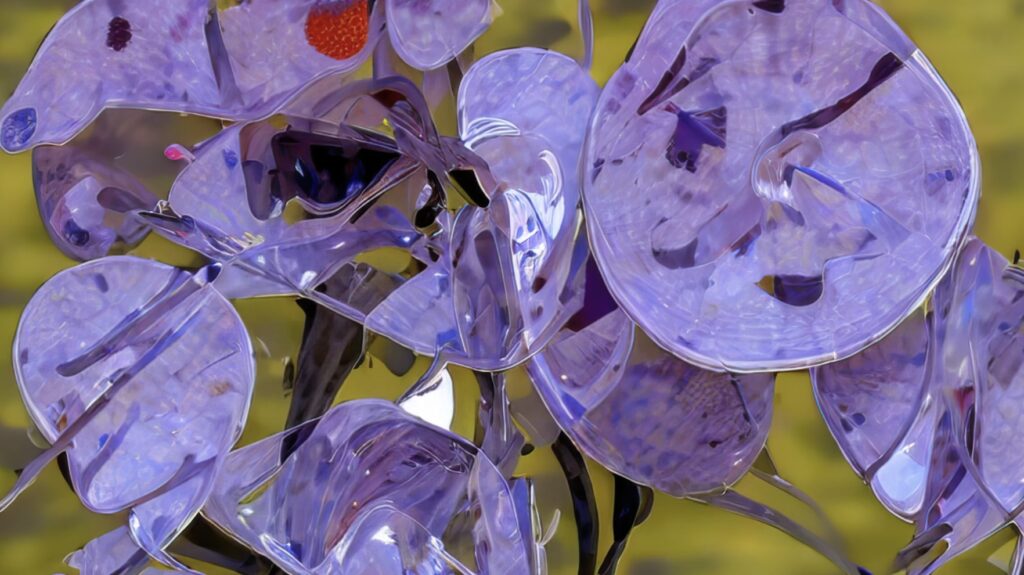
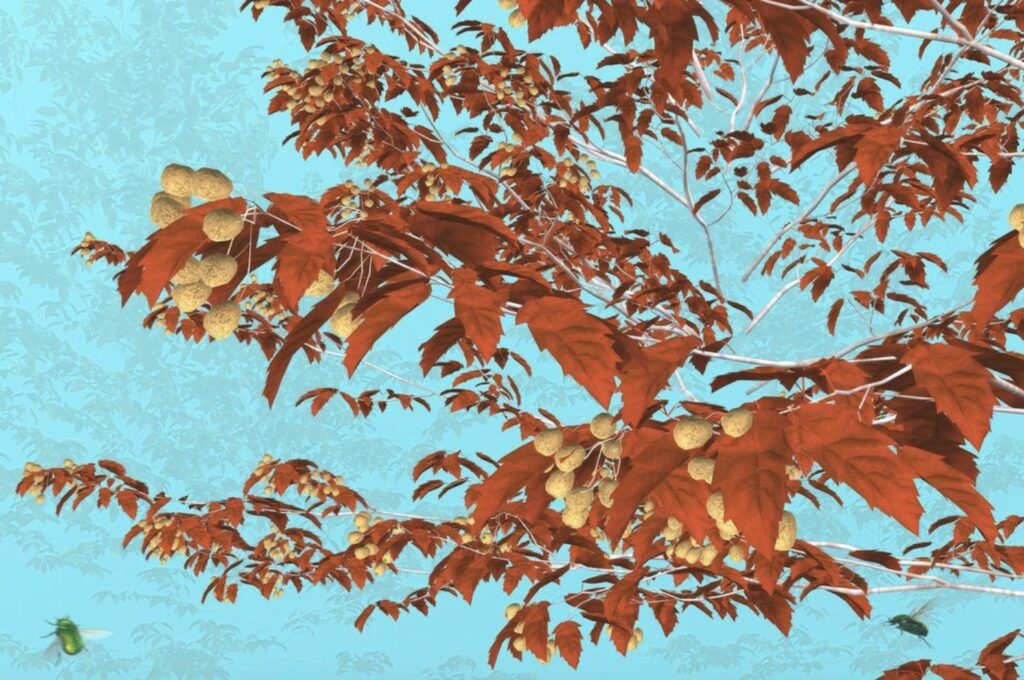
CROSSLUCID’s Vaster Than Empires is perhaps the most overt rejection of subject-object dualism. Inspired by Ursula K. Le Guin’s story of a planet governed by a singular plant intelligence, the video work merges speculative botany with artificial neural networks. Organic life and AI do not contrast here, they completely converge, and what emerges is not a machine imitating humanity, but a shared substrate of cognition that exceeds it. There is a radical merging of human and system going on here where, again, the viewer is asked to cast aside the impulse to control and maintain a sense of superiority over the situation that we find ourselves in.
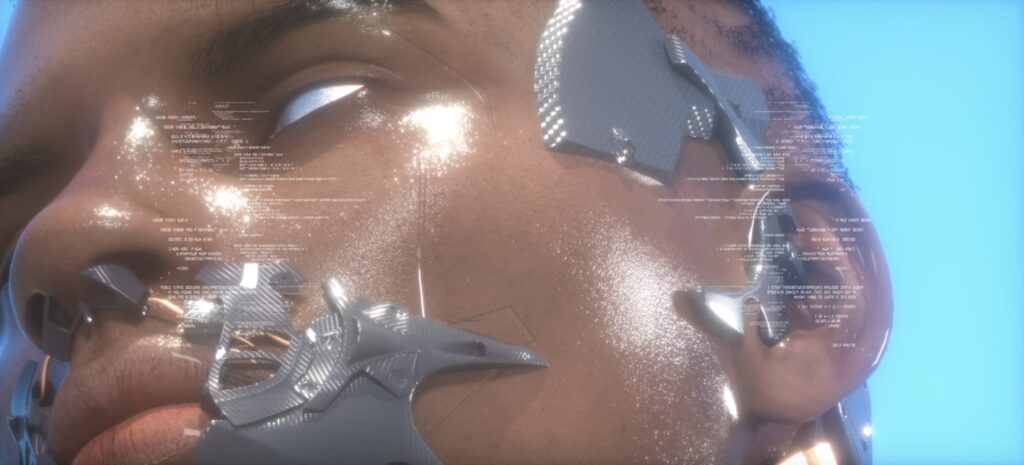
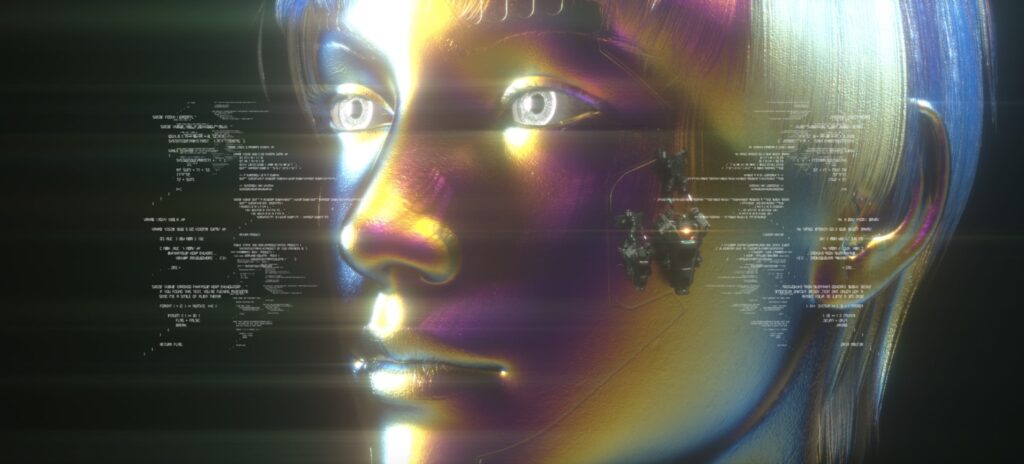
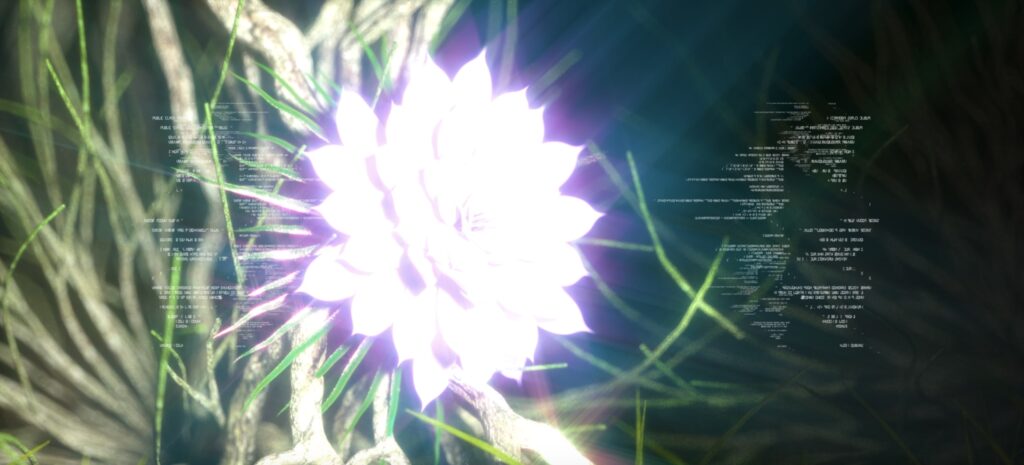
This same impulse, however more spiritual and energetic in nature, courses through Sybil Montet’s Geomancy, where data visualization and “geomantic” ritual (divination practice connected with the earth) intertwine. The visuals in Montet’s work are strikingly beautiful, almost deceivingly so. They evoke an uncanny synchronicity where machine logic is rendered sacred and environmental materials are turned into magical depositories. In this techno-spiritual fusion, ego dissolves not through alienation but through deep resonance with ancient, planetary patterns. A central feature of ancient ritual practices is its deep relation to liminal experiences of the transcendence of ego which is precisely what Geomancy reveals in a futuristic way. More than a political or utopian work, however, Geomancy reads more as captivating escapism, considering the dire state of the world.
Ecological Spectatorship: Seeing Through Inhuman Eyes
One of the exhibition’s most striking public interventions is Tamiko Thiel and /p’s Waldwandel / Forest Flux, which uses augmented reality to recreate forest landscapes in Place am Boltgen. As viewers walk through this square, their phones reveal unseen ecological transformations: tree species adapting, dying, migrating. This is not nature as scenery, but nature as subject—a time-lapse consciousness unfolding in slow motion. The human spectator is de-centered and the forest seems to be watching back at us through our phones.
Forest Flux undermines the stable human frame by extending agency to the landscape itself. The evident (although perhaps repressed) knowledge that forests don’t need us to perceive them, and that they evolve whether or not we pay attention, is present here. The artwork implicates us not as observers but as participants in a mutual transformation.
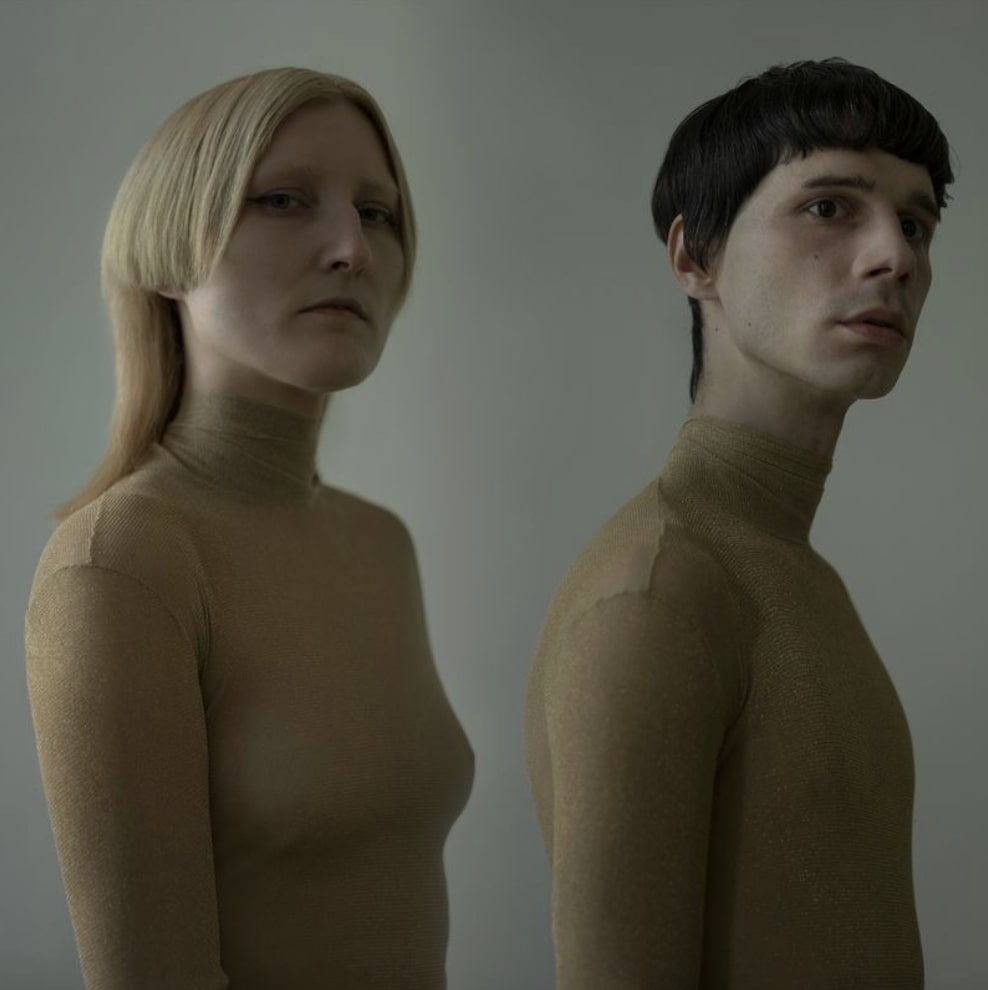
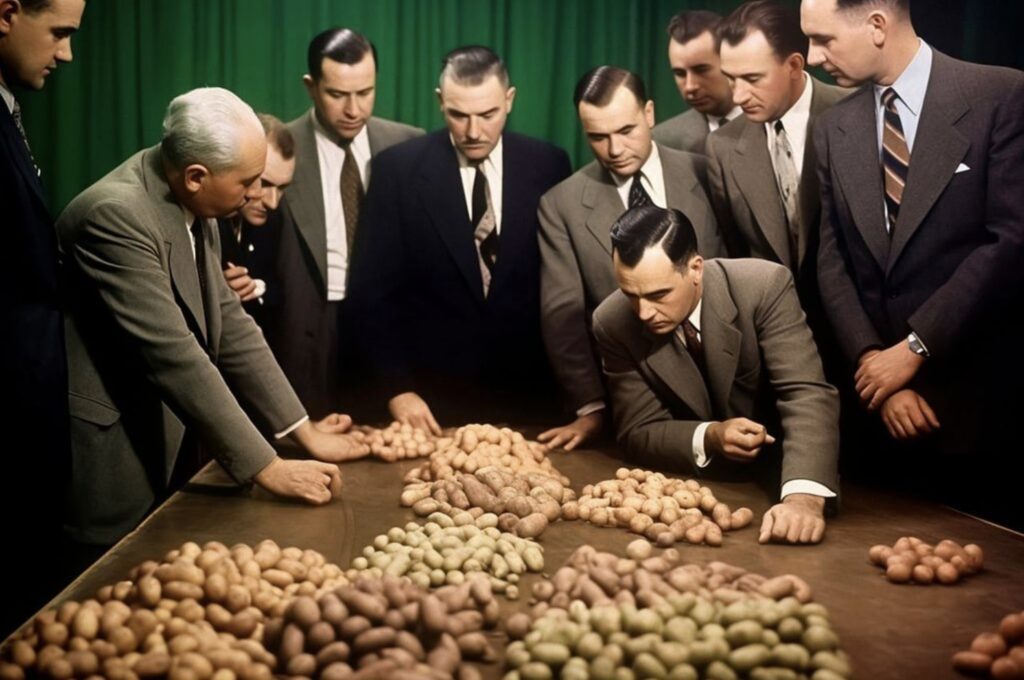
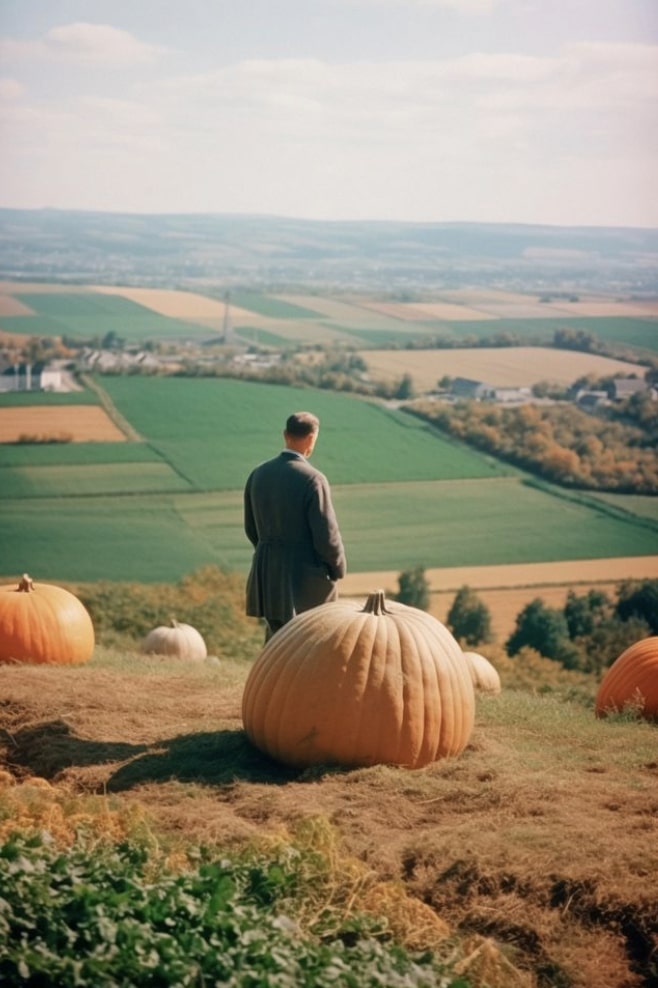
Similarly, Bruce Eesly’s New Farmer turns the gaze back on us, using AI to fabricate eerily pristine photos of fake agriculture from the green revolution of the 1960s onwards. The farmers appear too symmetrical, too perfect—uncanny androids of pastoral myth. The vegetables, too, become increasingly grotesquely engineered as the images continue up throughout time. AI, in Eesly’s hands, becomes both a mirror and a trickster: it mimics our aesthetic desires, only to expose their absurdity when taken to the extreme. Control, it turns out, is another illusion of the ego. At the same time, New Farmer confronts us with a scarier reality of humanity’s loss of control: It is not just the future that seems uncertain with the arrival of AI, it is also our past and how it will be transformed into dangerous fake narratives depending on who will be in charge of our archival memory.
Toward an Eco-Logic: Shared Agency in Hybrid Systems
Across these works, a shared message emerges: the future is not about artificial intelligence replacing human intelligence. Instead, Hybrid Futures suggest the imaginary of a future where both are enmeshed in a broader web of ecological and machinic systems and where agency is distributed, not centralized.
Ego-logic defines through separation: human over machine, mind over matter, self over world. Eco-logic, by contrast, is relational. In such a logic, even the question of AI “matching” human cognition becomes irrelevant. Why measure intelligence by a single standard, when cognition is already multiple and hybrid?
Hybrid Futures doesn’t simply critique the ego—it offers alternatives through non-linear storytelling, ritualistic approaches to data, entangled perspectives, and synthetic aesthetics, that the artworks enact through new forms of knowing. They don’t tell us to give up being human, but they ask us to give up being human alone.
We Are Already Hybrid
Elektron’s Hybrid Futures arrives at a moment when the limits of the ego—and the civilizations built upon it—are becoming impossible to ignore. Climate instability, algorithmic governance, and post-human artificial knowledge are not futuristic—they are here. As such, the exhibition invites us not to resist hybridity, but to recognize that we are already hybrid and to let artistic imaginaries make us grapple with these thoughts in a safe and dialogical environment. The artworks give us a shared space of exploration of the current technological and climatic realities that still seem too fictional to let us fully integrate them.
To survive this shift, their shared message is to trade the ego’s illusion of mastery for the eco-logics of co-existence. Intelligence must be reimagined not as what separates us from the world, but as what connects us more deeply within it. It may seem extremely scary to let that idea sink in and really become part one’s worldview. But digital art, Hybrid Futures suggests, helps us get there.