
Share this
The first time I met Hannah Lim, she was sharing a studio with her partner, the sculptor Hugo Harris, in Camberwell. We made photographs that day. The studio was large and open, desks crowded with work, shelves lined with objects in progress. I remember waiting for the light to shift, pulling a sofa toward the doorway and letting the leaves of nearby plants fall into the frame alongside their pieces.
There was a calm chemistry between them, an ease that made the whole process feel natural. It was a good way to spend an afternoon.
After the shoot, we went our separate ways. I returned to my work; Hannah to hers. Over the next few years, I watched from a distance as her practice steadily built, show after show, residency after residency, followed by a master’s at the University of Oxford.
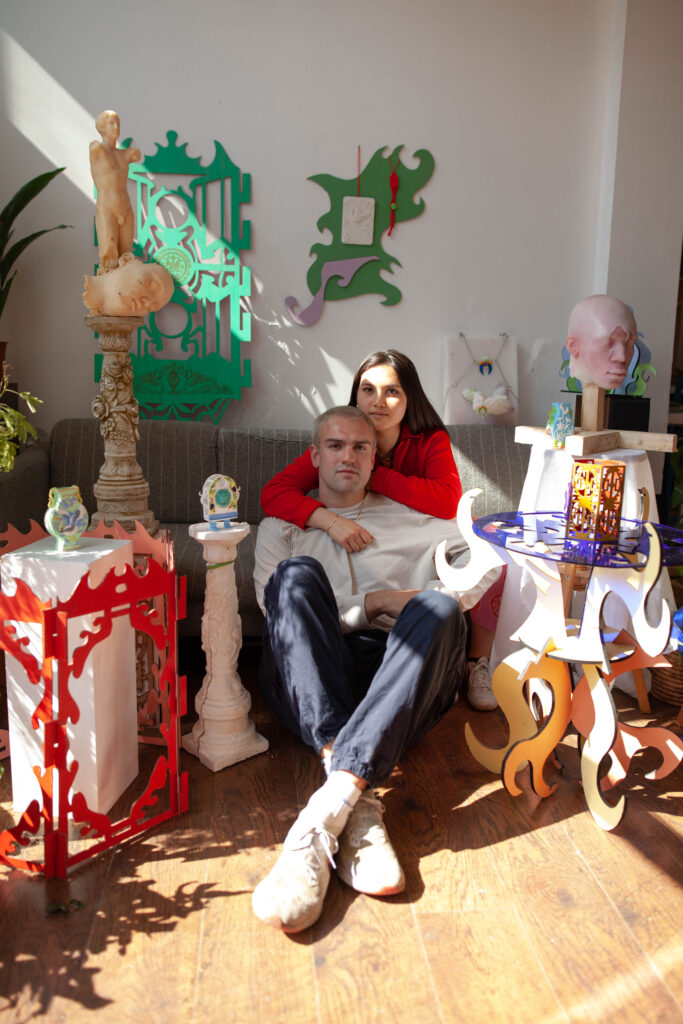
At some point, I showed my photographs of Hannah to a gallerist in London. She looked at them and said Hannah was going to do very well. When I asked how she could tell, she said it was the trajectory, the pace of the shows, the decisions she was making, the direction of the work.
So it wasn’t a surprise, years later, to see that Hannah was opening her first museum show at 27, at the Museum of East Asian Art in Bath, England, the city I’m from.
I was already in Bath when the exhibition opened, just after Christmas, so I went to see the work. Some pieces were familiar from earlier shows, others new, made in dialogue with the museum’s collection of centuries-old objects from across Asia. The relationship between them felt considered and in sync. It worked beautifully.
Afterwards, I sent her a few questions about the show.
Interview and photography by Brynley Odu Davies.
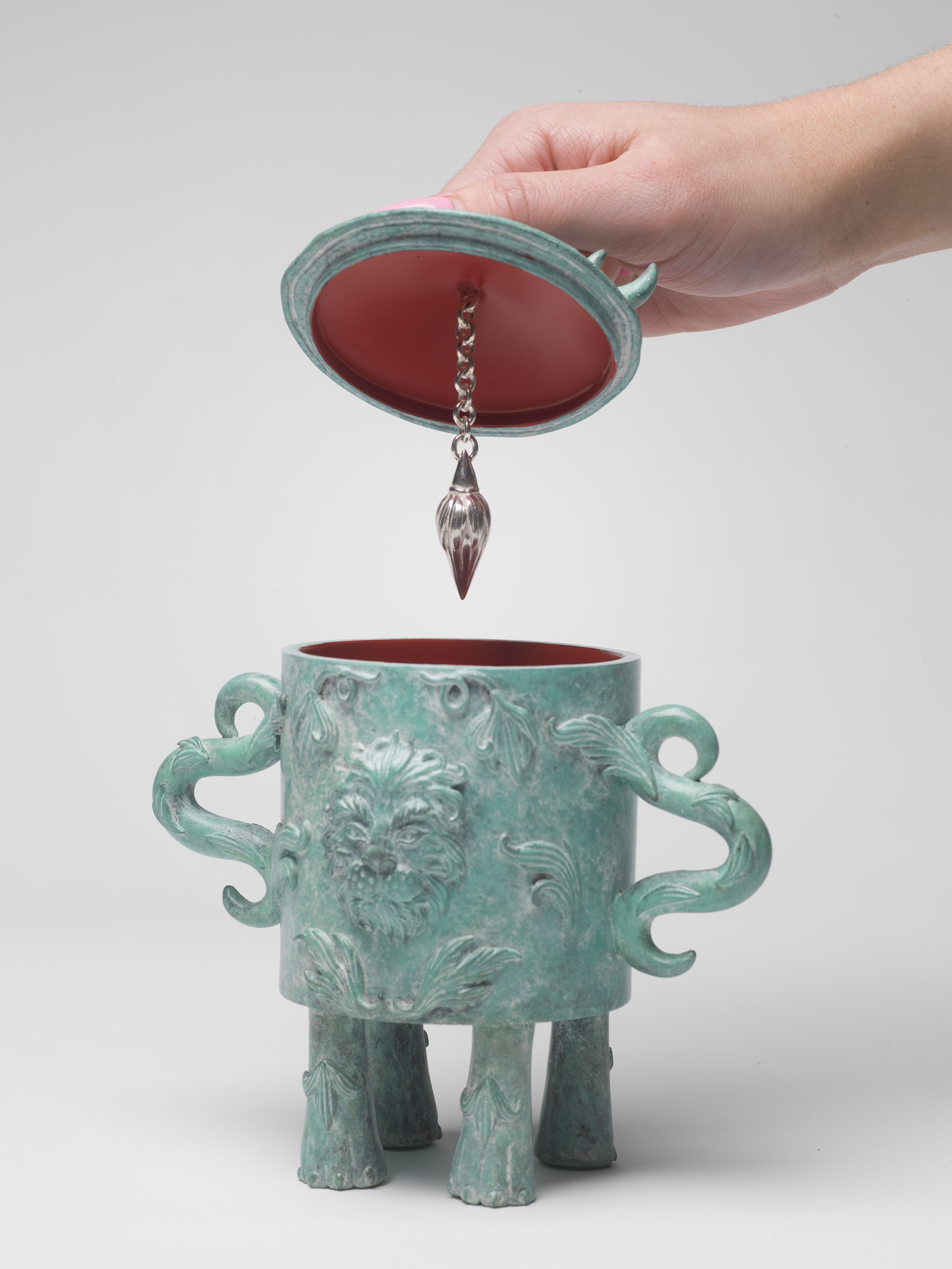
If one of your snuff bottles could come to life for a day, which one would you want as your companion, and what would you do together?
Hannah: It would probably have to be one of my snuff bottles that has a mythical creature on it — maybe the snuff bottle would be imbued with the spirit of that creature. It’d probably be quite fun to go and see some snuff bottles in a museum together.
If you could travel anywhere in the world to see one artwork in person, where would you go, and what piece would you choose?
Hannah: It’s not a single artwork, but I’d love to go to Jingdezhen and see the amazing ceramics and workshops there. I’d also love to see a full body jade burial suit. These burial suits are usually made from thousands of segments of jade and laced together, often with silk ribbon or thread. There are a couple of these burial suits at the National Museum of China in Beijing, so maybe that’s where I’d visit as well.
If you could magically borrow any object from a museum for a day, which one would you choose?
Hannah: I’d love to borrow and spend the day in the Kaufmann Office, created by architect Frank Lloyd Wright. The whole room is currently on display in the Victoria and Albert Museum storehouse. The office is a rectangular room made almost entirely of cypress plywood, including the furniture, walls, floor and ceiling. There’s also a beautiful abstract mural composed of plywood pieces behind the desk. I’m sure it’d be an enjoyable experience to spend the day working in there.
Was there a moment during your collaboration with the MEAA collection that surprised you or made you laugh?
Hannah: I was really surprised by the scale of some of the objects when I saw them in person. Before visiting the museum, I had made a list of the pieces I wanted to view. One of them was a table screen, which I had assumed was fairly small — it turned out to be a huge piece that took up the bottom half of one of the museum’s cabinets. It was beautifully decorated on both sides, which I hadn’t initially been able to see through viewing the collection online.
Which object in the MEAA collection do you secretly wish you could take home?
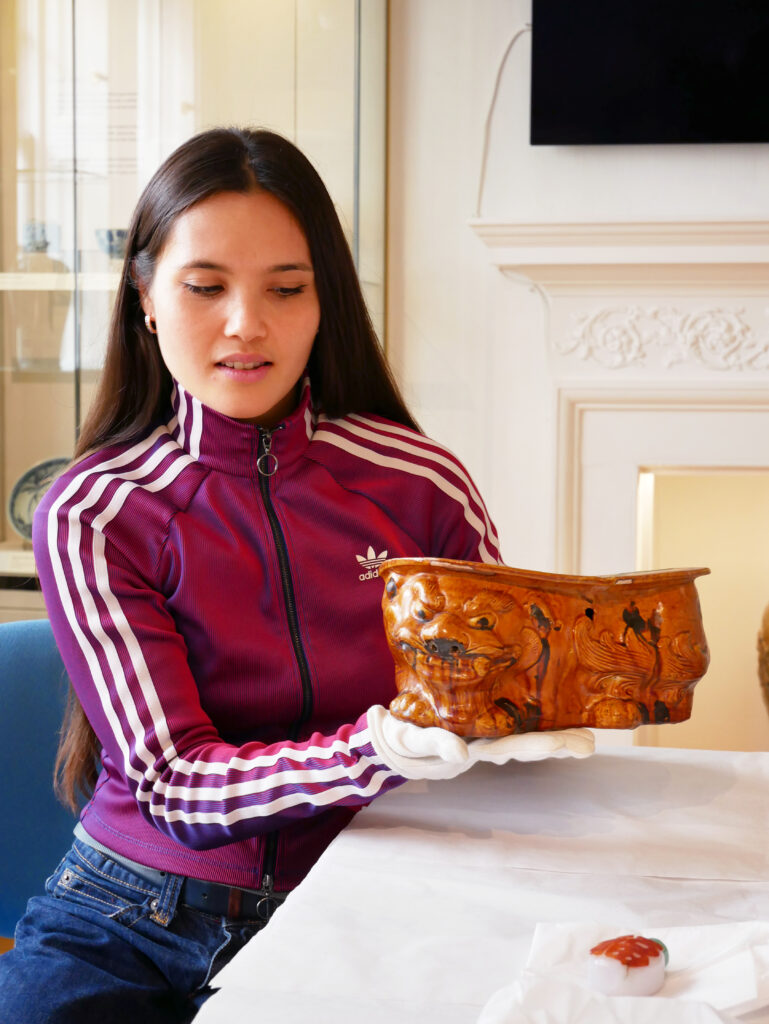
Hannah: This amazing tiger-shaped pillow in the collection. When I say pillow, you might imagine something made from soft fabric and stuffed with feathers — but this one is ceramic. Ceramic pillows are traditional, hollow, glazed porcelain headrests originating from ancient China, designed to keep the head cool in summer, support the neck, and protect elaborate hairstyles. They were also meant to ward off evil spirits. Ultimately, though, I just love the tiger pillow because it’s so unique — and I love tigers.
Is there an object from the MEAA collection that challenged you or made you think differently while making your work?
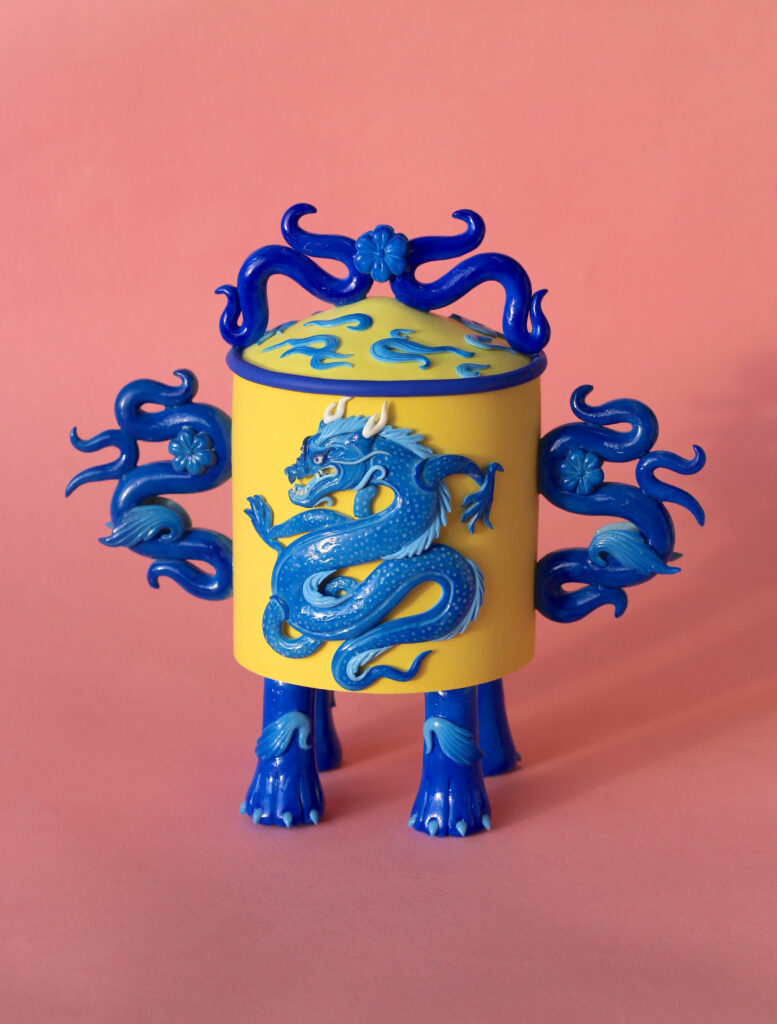
Hannah: I created the yellow and blue dragon snuff bottle in response to a striking dragon plate in the museum’s collection. I’ve never used only blue and yellow together in a piece, but it worked beautifully in this snuff bottle. I was challenged to emulate the vibrancy of the blue in the plate, which I achieved by using a lot of ultramarine blue chalk.
If your practice took a completely unexpected direction tomorrow, what would that look like?
Hannah: I’ve been thinking for a while that I’d love to create a large sculptural fountain. I’m not exactly sure how I’d do it or where it would be — ideally in a beautiful garden and open to the public. Maybe one day I’ll be commissioned to make one.
Which of your works in the exhibition reflects your mood the most right now?
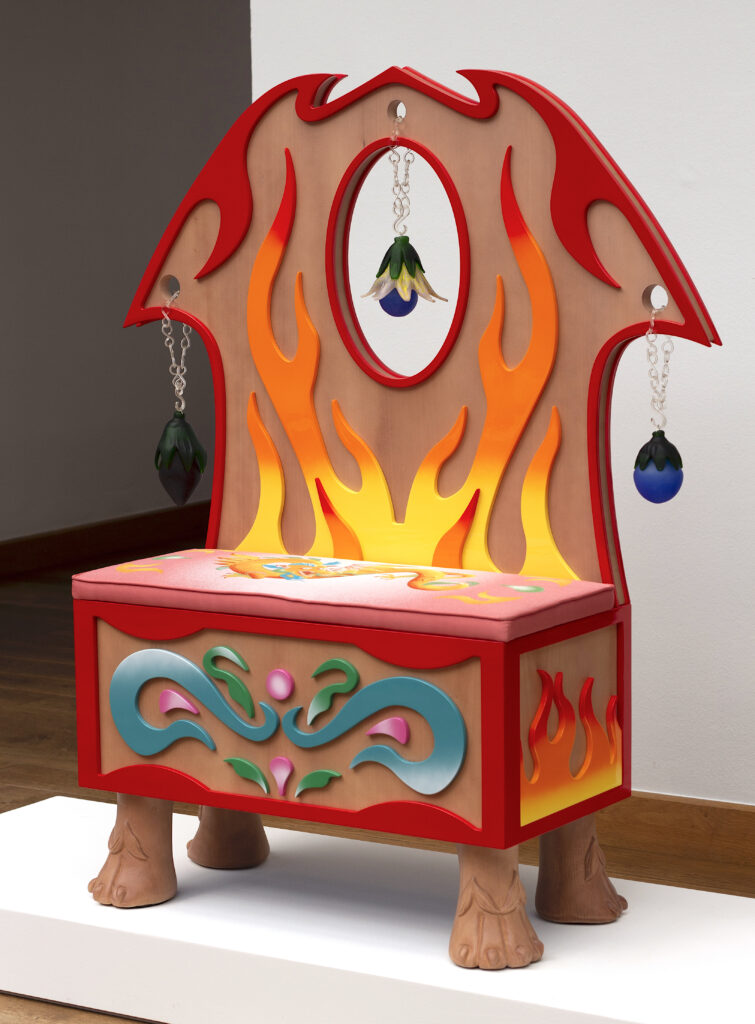
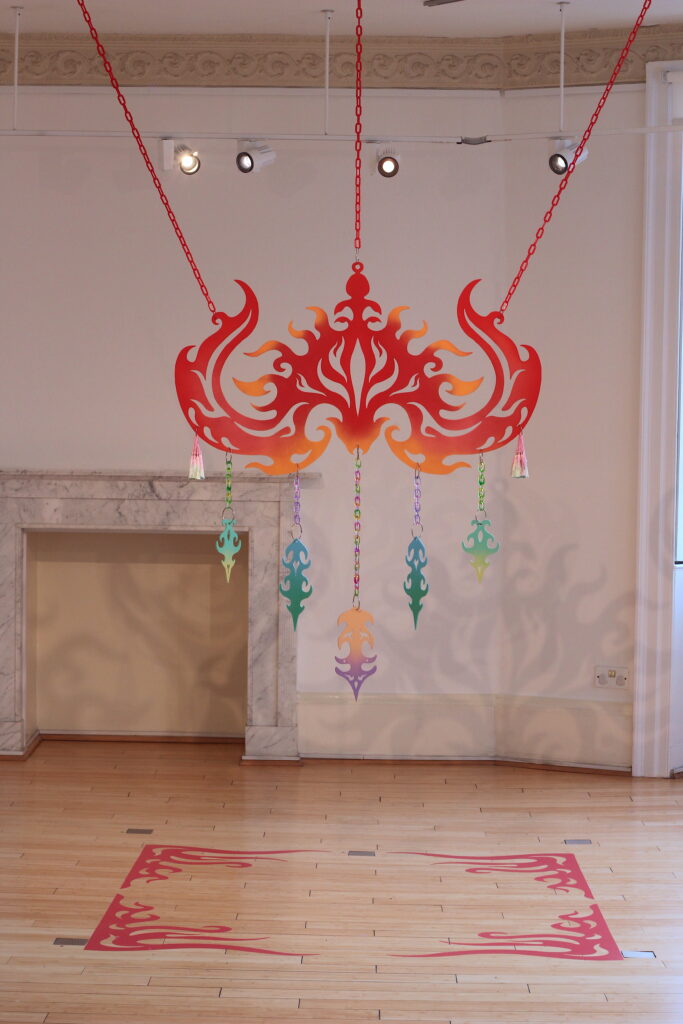
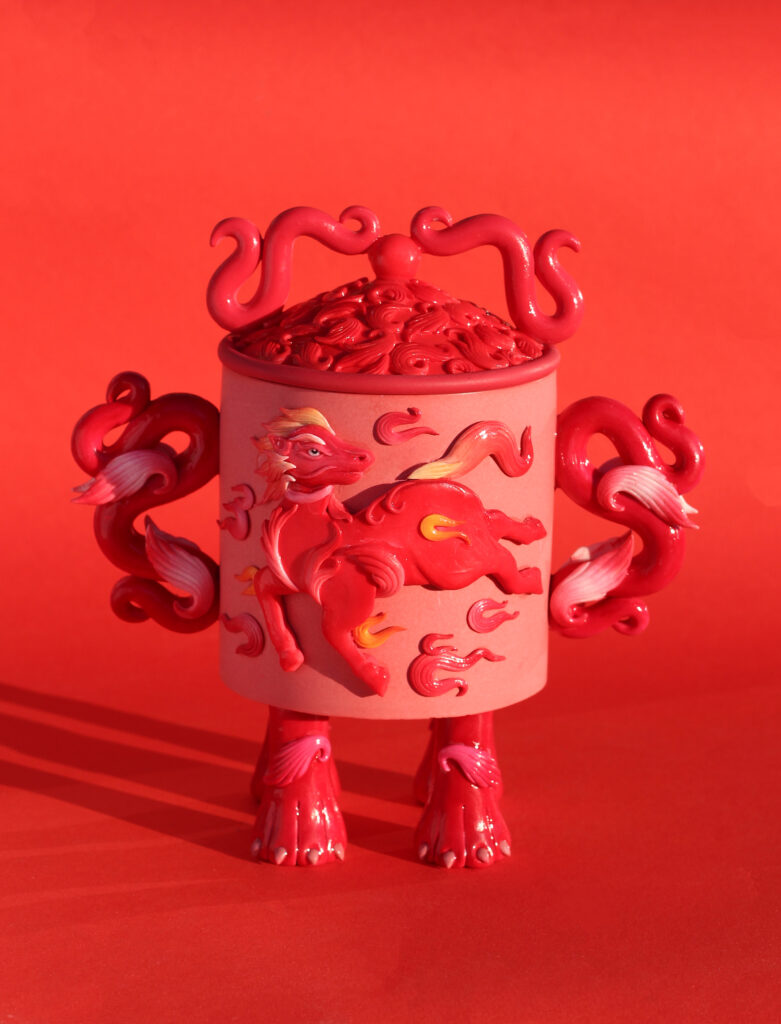
Hannah: Probably the Fire Horse Snuff Bottle. It’s the year of the fire horse, and I also have a lot of fire motifs in my practice and in this show, so I think it must reflect something of me and my mood.