Share this
Mark Bo Chu (b. 1989, Melbourne) is an Australian multidisciplinary artist whose practice spans painting, writing, science, and music. Raised in Melbourne, he later lived in New York before returning home, where he now creates work that elevates quotidian human activity—streetscapes, cafés, markets, bars—into psychologically rich, visually vibrant compositions.
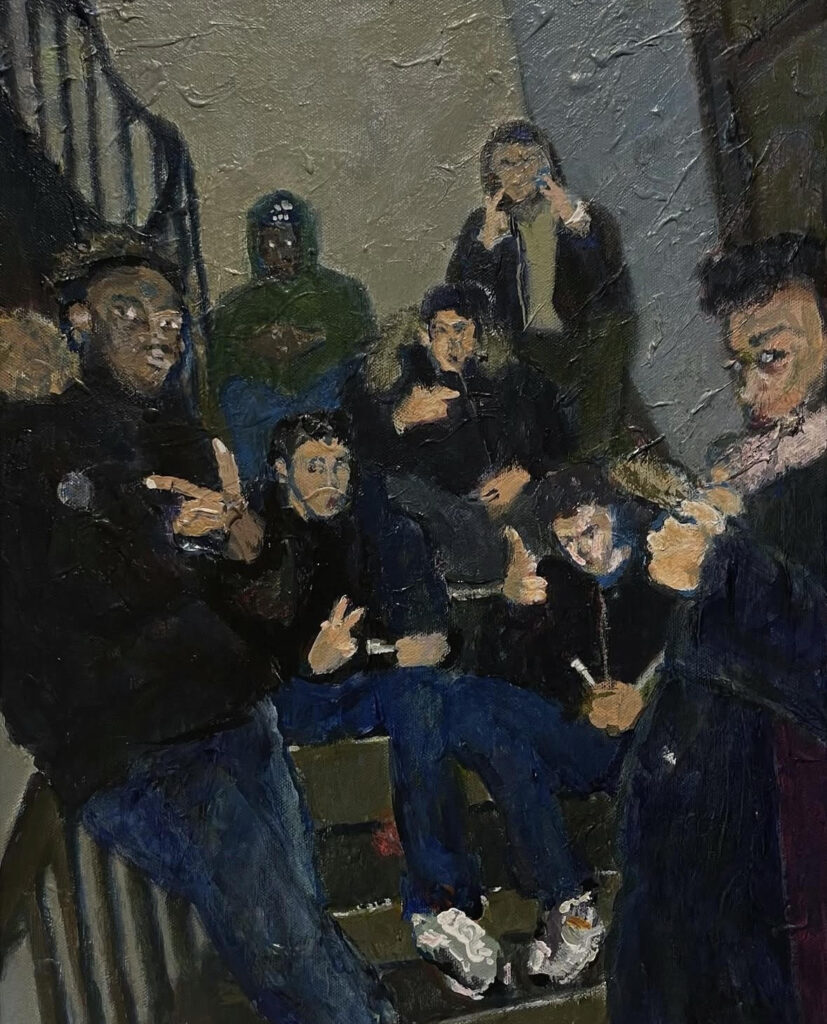
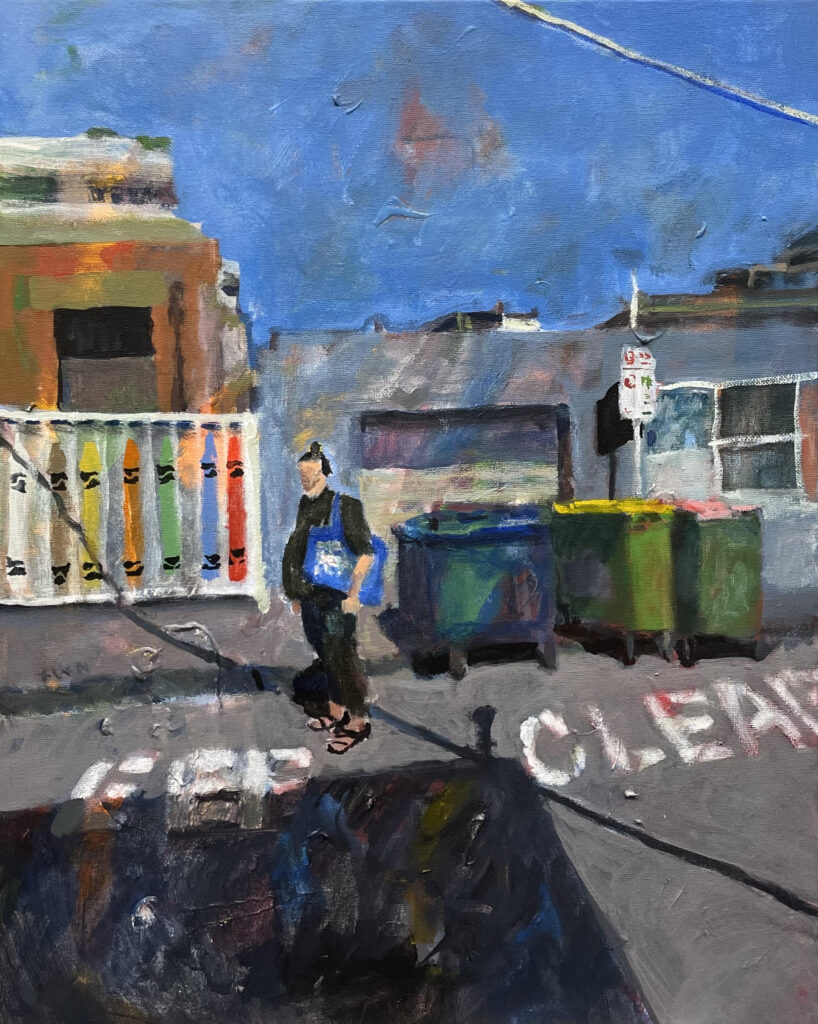
Holding an MFA in Fiction from Columbia University and a graduate of the Santa Fe Institute’s Complex Systems Summer School—where his aesthetics collective Comp-syn was a 2021 STARTS Prize semifinalist—Chu’s career defies conventional categorization. His paintings explore the hidden poetry in mundane spaces: a row of garbage bins, a tired barista, electricity poles, credit card machines—sometimes romantic, sometimes humorous. He describes the tension in everyday drama—“police parked outside Dan Murphy’s,” the awkwardness of first-date gestures—through richly saturated, textured canvases.
Chu’s varied achievements include a self-curated debut show (2013), a Highly Commended annotation for the Lester Prize (2022), and international press features spanning The New York Times to VICE. A published fiction writer and ex-pianist with recordings for major symphony orchestras, he channels his hospitality and food criticism background into exhibitions like Eat With Our Eyes, celebrating communal culinary scenes. As a published computational cognition researcher (Nature, Cognition), Chu consistently blends rigorous scientific insight with playful artistic inquiry.
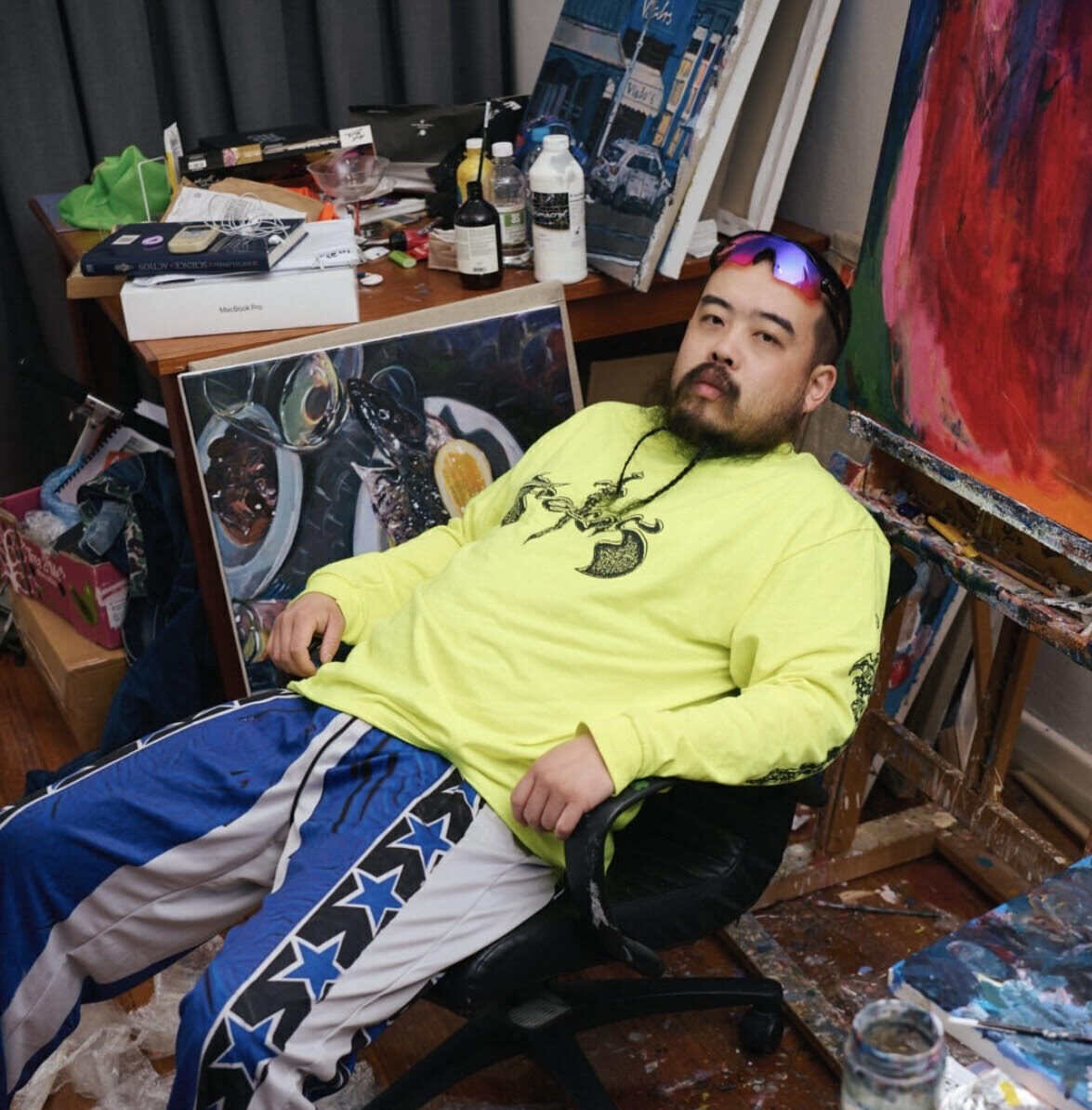
Profile picture: Jesper Hede
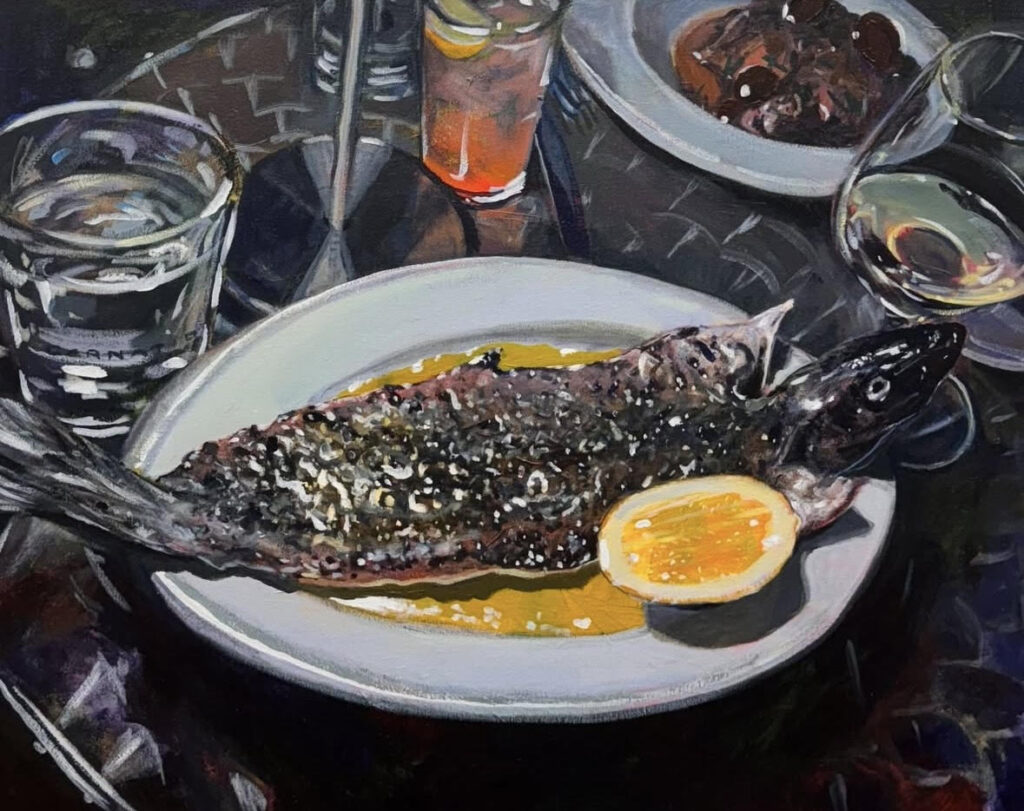
Hi Mark! It’s a pleasure to sit down with you! First question that I always ask. How does a regular day look like for you in Melbourne?
Mark: I look after my kids for half the day, so high-chairs, nappies, public libraries. In the other half, it always changes because I have new projects, but when a show’s coming up, I’m on the easel as often as I can, studying at the same time by listening to lectures.
I’m curious, growing up, what kind of kid were you? What did you enjoy doing, and how did you spend your time?
Mark: I loved the classroom and my friends and the internet.
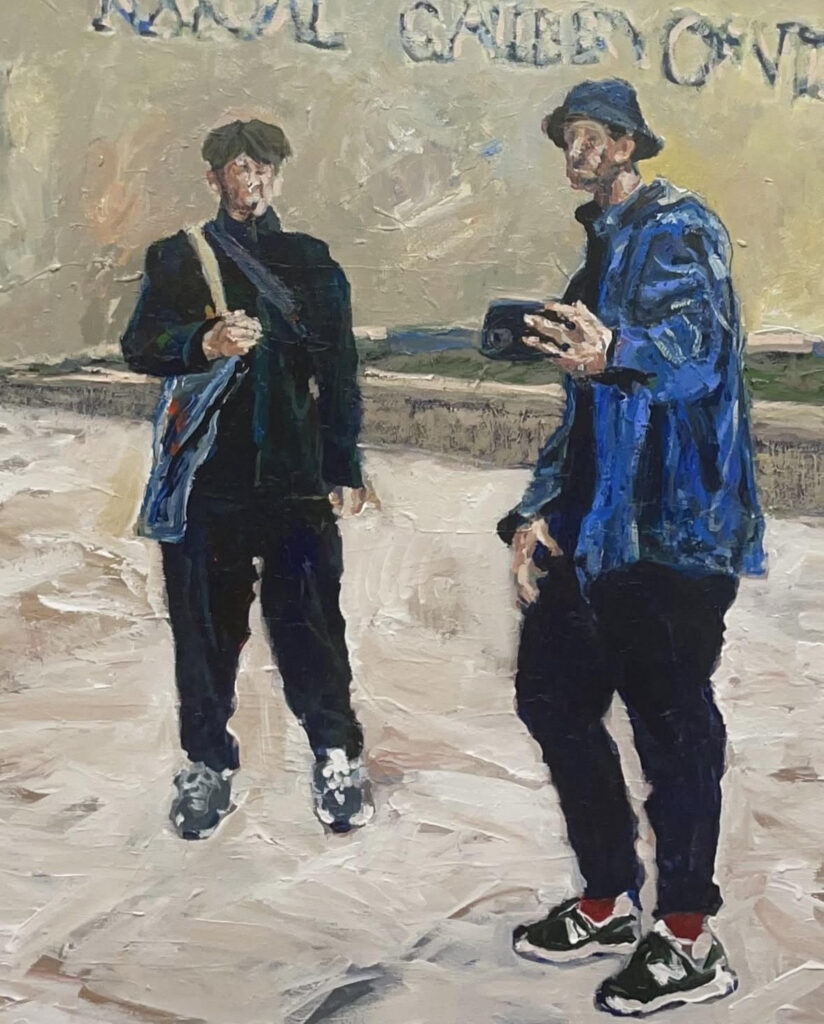
Do you remember approximately at what age your creative side started to show? And when did you start taking being an artist seriously?
Mark: I started piano when I was three. There’s creativity in being a classical pianist but the creative margins are small because it’s so technical, and you don’t make the music. By 2014, I’d been painting for a few years, though I was studying fiction in New York. I was in a group show in Chelsea, and randomly, a photographer from the New York Times snapped me delivering work. My writing professors saw it and they were like, I didn’t know you were an artist. I hadn’t thought of myself as one until then.
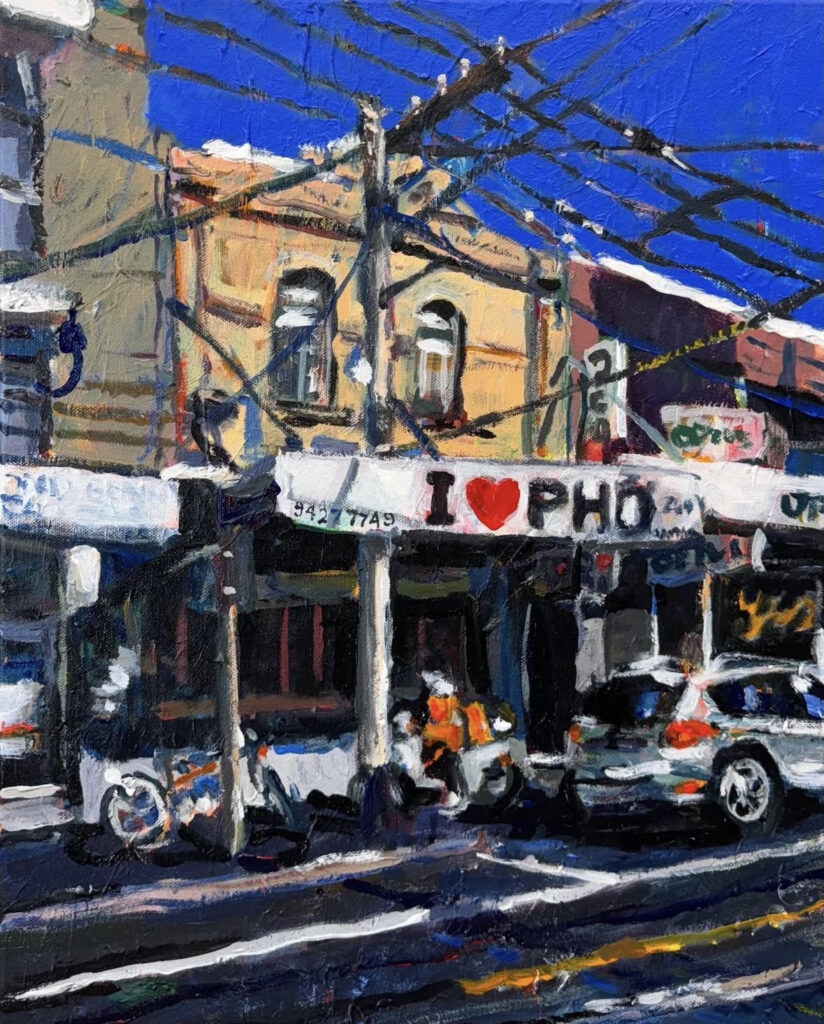
Ok Mark, with these next series of questions, I will try to delve into your work as best as possible. So…. Your work often feature everyday scenes. How do you come up with these scenes? What do you look for?
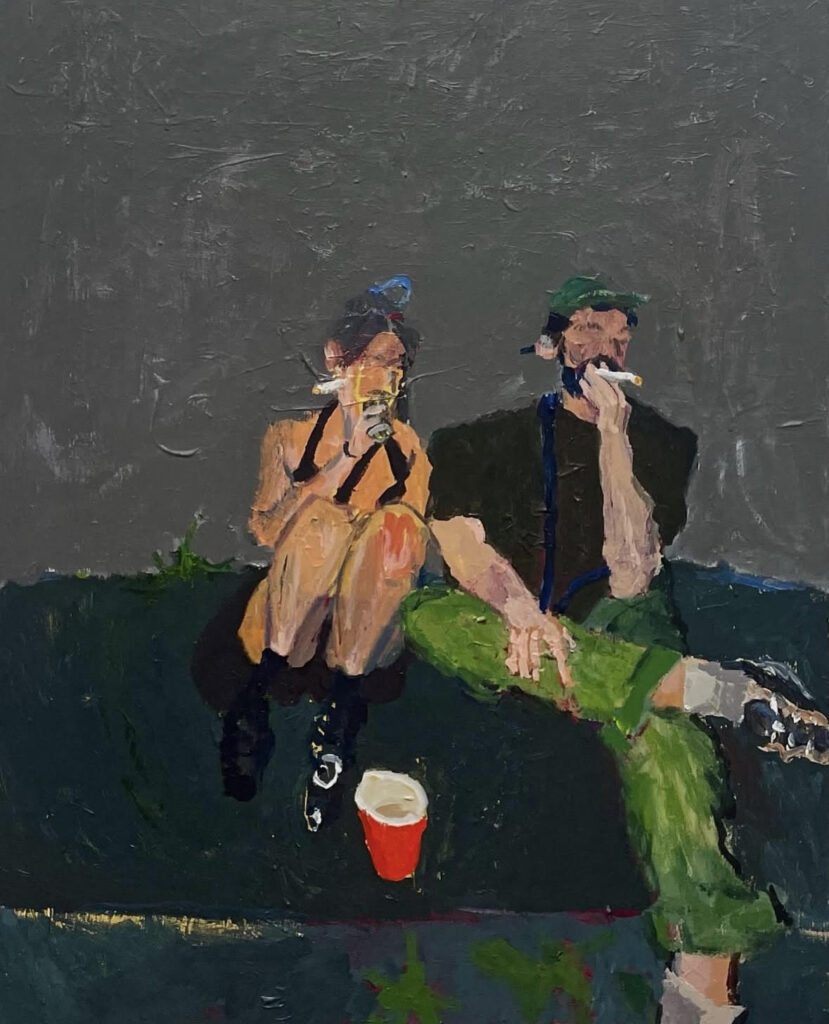
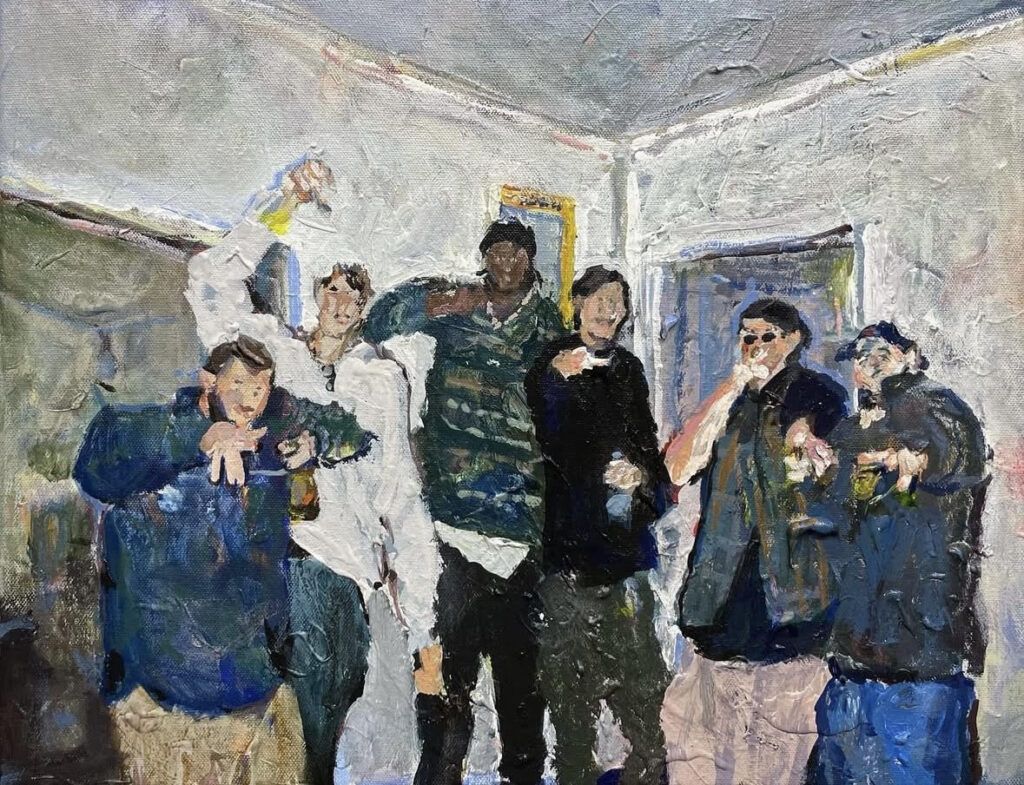
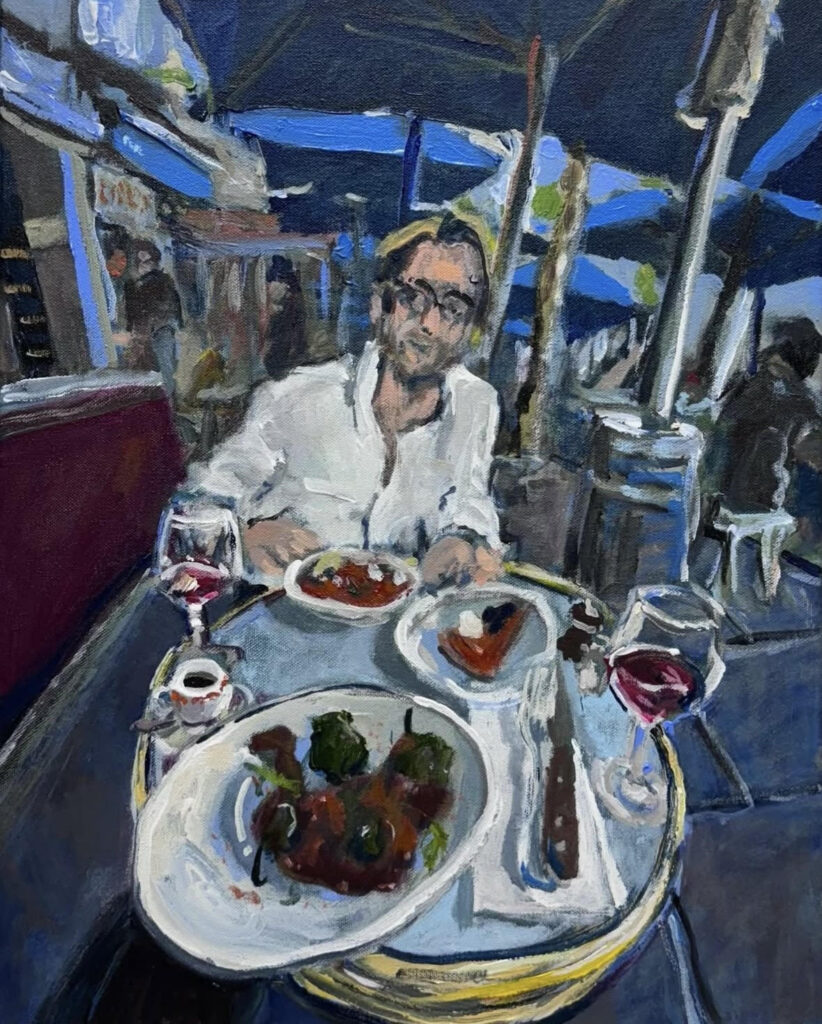
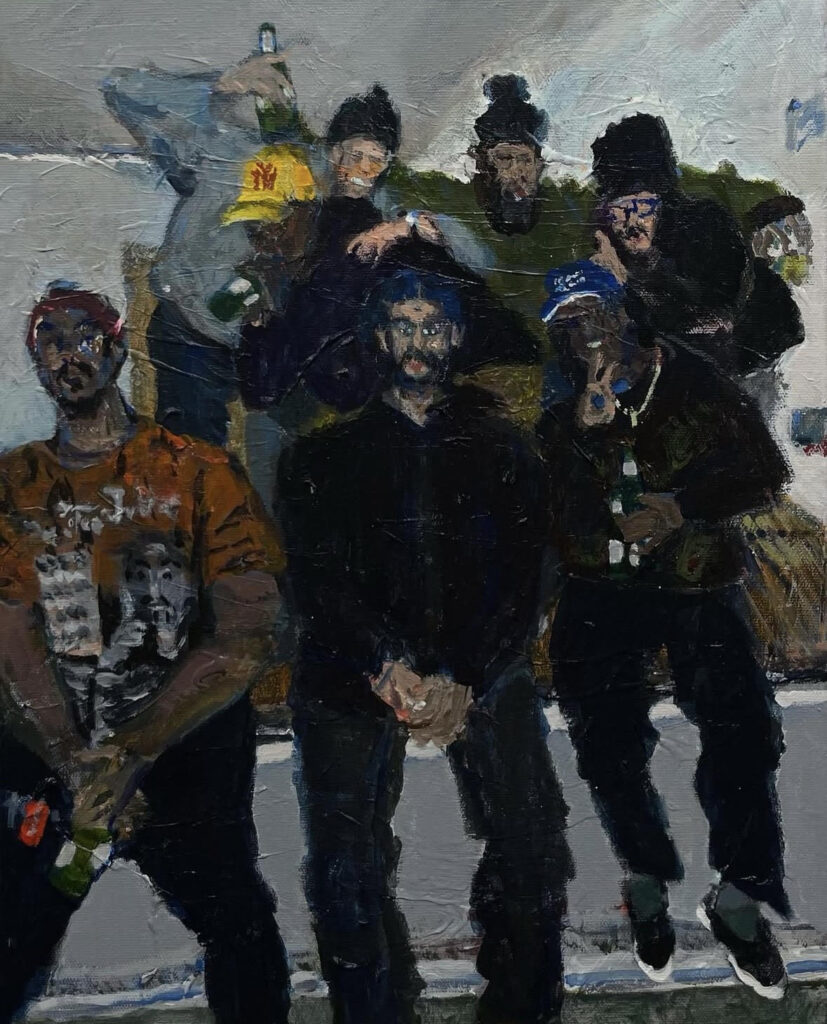
Mark: Juxtaposition. Balancing civic and design objects. Or clashing aesthetics. When people are present, I look for relatable humour, or honouring something quotidian, maybe even mediocre.
And who are the people in those scenes?
Mark: Strangers.
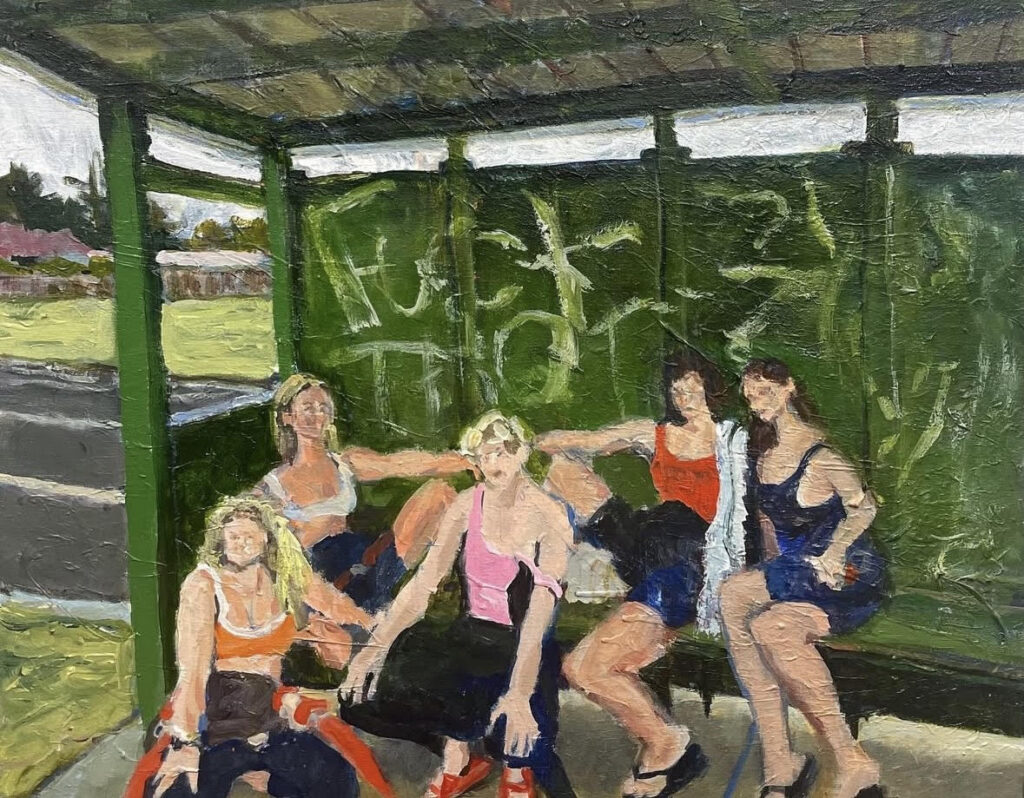
You hold an MFA in Fiction from Columbia. Do you think of your paintings as narratives, and if so, what stories do they tell?
Mark: I don’t believe in story. Our lives are cause and effect—I have asthma, I take Ventolin, I feel better—and statistics—I have asthma, Ventolin’s likely to soothe me, I take it. Literature’s a lot bigger than story, but my paintings aren’t. They’re just a few concepts bundled into a look.
Are there recurring themes or characters in your writing and art that you find yourself returning to?
Mark: Reality,
How do you think your scientific background influences your approach to art?
Mark: Science makes me ask why, again and again. I stopped taking the value of art as a given. Today I read something from the art critic Kenny Schachter about how the artist Paul Thek makes art just for the “doing”, and that that was how art should be. I thought to myself, how didactic is that? So many art writers make statements without offering much justification—like why is that specific relationship between artist and artwork so good compared to, say, transactional mentalities? Is it even possible to make art without transaction? What about the transaction when you find your materials? Or the resources you need? There’s a lot of hand-waving faith-based thinking in art, and I’m not into it.
You’ve published in Nature and Cognition. How does your research in computational cognition feed into your creative work—or vice versa?
Mark: Leading a research paper takes the strength of fifty paintings. It keeps your mind fit. It also can be isolating though. Artists generally don’t like thinking.
You co-founded the Comp-syn collective. What were some key takeaways from exploring aesthetics through data?
Mark: You can measure emotions and sensory experiences very accurately. In the future, our daily mental models and metaphors will probably reflect that.
In a world flooded with images and algorithms, how do you define ‘authenticity’ in visual culture today?
Mark: Have you been to the night markets in Hong Kong? You used to be able to get a Birkin bag for a hundred bucks. I don’t put much stock in authenticity.
You were once a concert pianist, what did your early experience with performance teach you about presence, expression, or discipline?
Mark: As a performer you guide the audience’s emotions, and often do it through considered technique. Slow down a little, the passage gets sadder. Play a wrong note, the mood shatters. But I didn’t have the discipline for practise, because my mind wandered. I had to find a job where a wandering mind could be useful.
Being the grandson of Chu Anping and son of Chu Wanghua, has your family legacy influenced your understanding of creativity or dissent?
Mark: Haha this question made me laugh! Um, my grandpa was believed to have committed suicide during the Communist Revolution but they never found his body. He was the editor of a newspaper in Beijing and openly criticized Mao. But intriguingly, my dad is enthusiastic about writing quite nationalistic music, including a famous work commissioned by Mao’s wife. He sees his work as political, but as China’s most popular piano composer, others disagree. I guess dissent over generations can take unexpected turns.
As someone who moves fluidly between disciplines, how do you define yourself—or do you resist definition altogether?
Mark: I want to be a philosopher and to me, a philosopher has to have terrain experienced.
How do you see the role of the artist changing in the age of AI, climate anxiety, and global instability?
Mark: Understanding how to interpret art is a great skill for learning how to understand the complexity of the world. But artists are nothing special. I have much more respect for delivery truck drivers. We seem to depend on them more and more, despite our better technology.
Can you walk me through your creative process from beginning to end result?
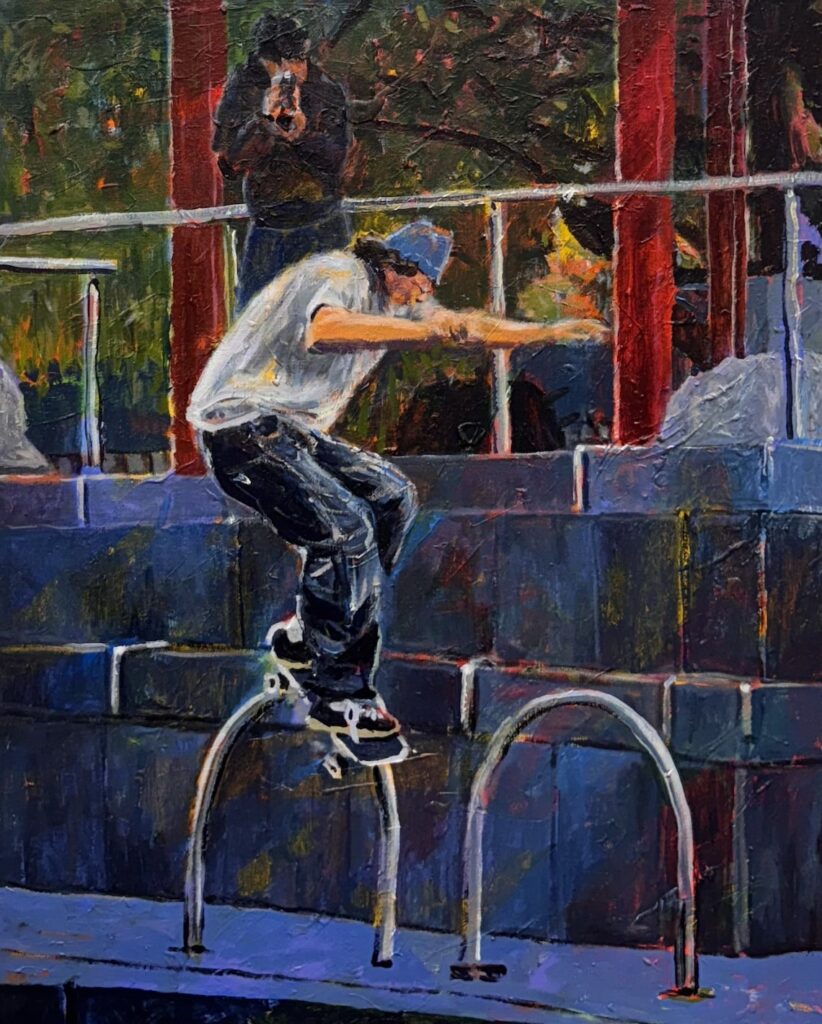
Here’s the formula! Take photo, crop to 4:5, add grid, pick up past palette, rule grid in multicoloured novelty pencil, block colours, details, highlights. Done!
Can you also tell me about your use of symbolism?
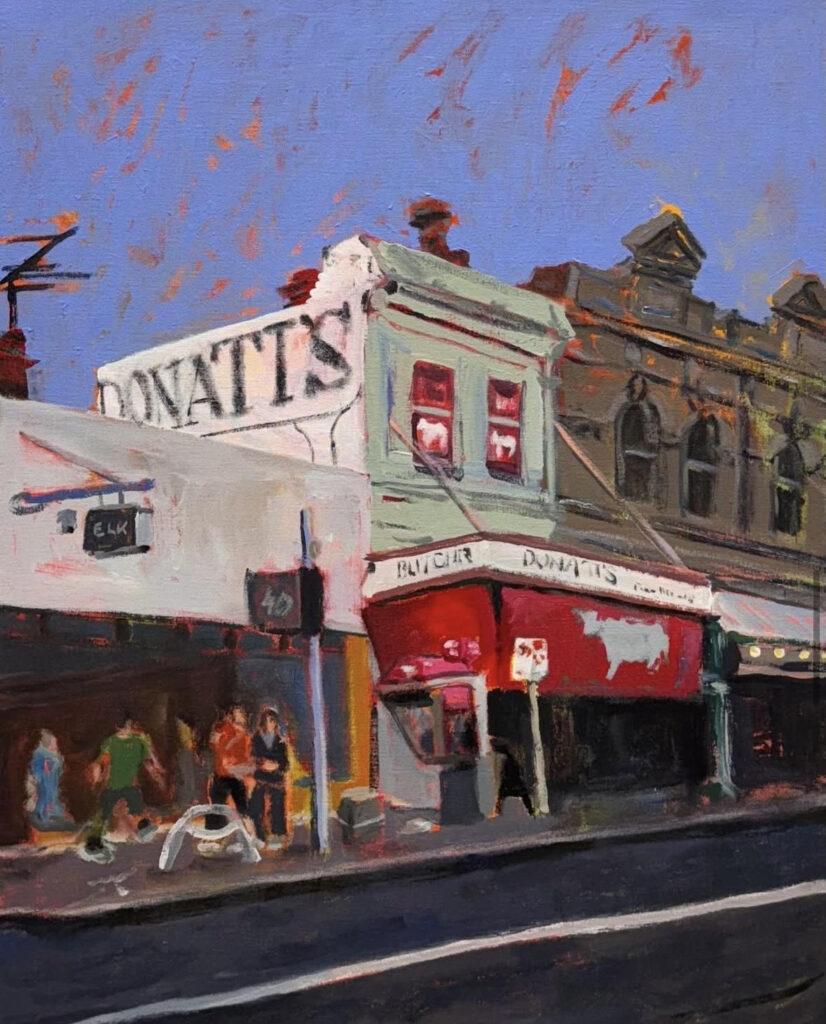
Mark: I use titles to unify the symbols. I recently painted the butcher, Donati’s, that’s famous for its operatic ambience. When I titled it The Theatre, it changes the red awnings to be more curtain-like, and makes the pedestrians audience members, and the road a stage, etc. The title sets up the symbolic context, the frame, the ontology.
How do you approach color?
Mark: I turn the saturation up, too much. I’m not nuanced enough to make beautiful muddy works like, say, Michael Borremans or Luc Tuymans. I haven’t suffered enough. I’m not even European!
So with what we just talked about, what are you hoping to convey?
Mark: It’s sensory to begin with. Getting visual attention, then having the eye dart around to build associations, maybe a concept, an opinion. Sometimes recognition is important.
Outside art, what’s something you’re obsessed with right now—maybe a hobby, a show, or even a food—that keeps you grounded or inspired?
Mark: When I heard about the parent trivia night at my daughter’s kinder I got very excited, but it’s sixty bucks a ticket! Prices like that keep me grounded.
Ok Mark, now to something totally different. In a parallel universe who would you be? and what would you be doing?
Mark: Clarence Thomas from the Supreme Court of the United States, sipping cocktails on a warm beach holiday.
Can you tell me a story about a time when a connection with someone had a big impact on you?
Mark: I don’t believe in story and now I have to tell one?!
What qualities do you find most important in the people you choose to spend time with?
Mark: I’ll hang out with anyone if they’re chatty.
Anybody you look up to?
Mark: My kids.
What motivates you?
Mark: My kids.
How would you describe a perfect day?
Mark: Laughing all day with friends and strangers.
Alright Mark, I always ask these two questions at the end of an interview. The first is. What’s your favorite movie(s) and why?
Mark: You’re in Denmark and I love Danish film. I’ve rewatched Festen and Pusher last year. They’re coarse and sophisticated and tense.
The second is. What song(s) are you currently listening to the most right now?
Mark: Nabokov by Fontaines D.C.