
Share this
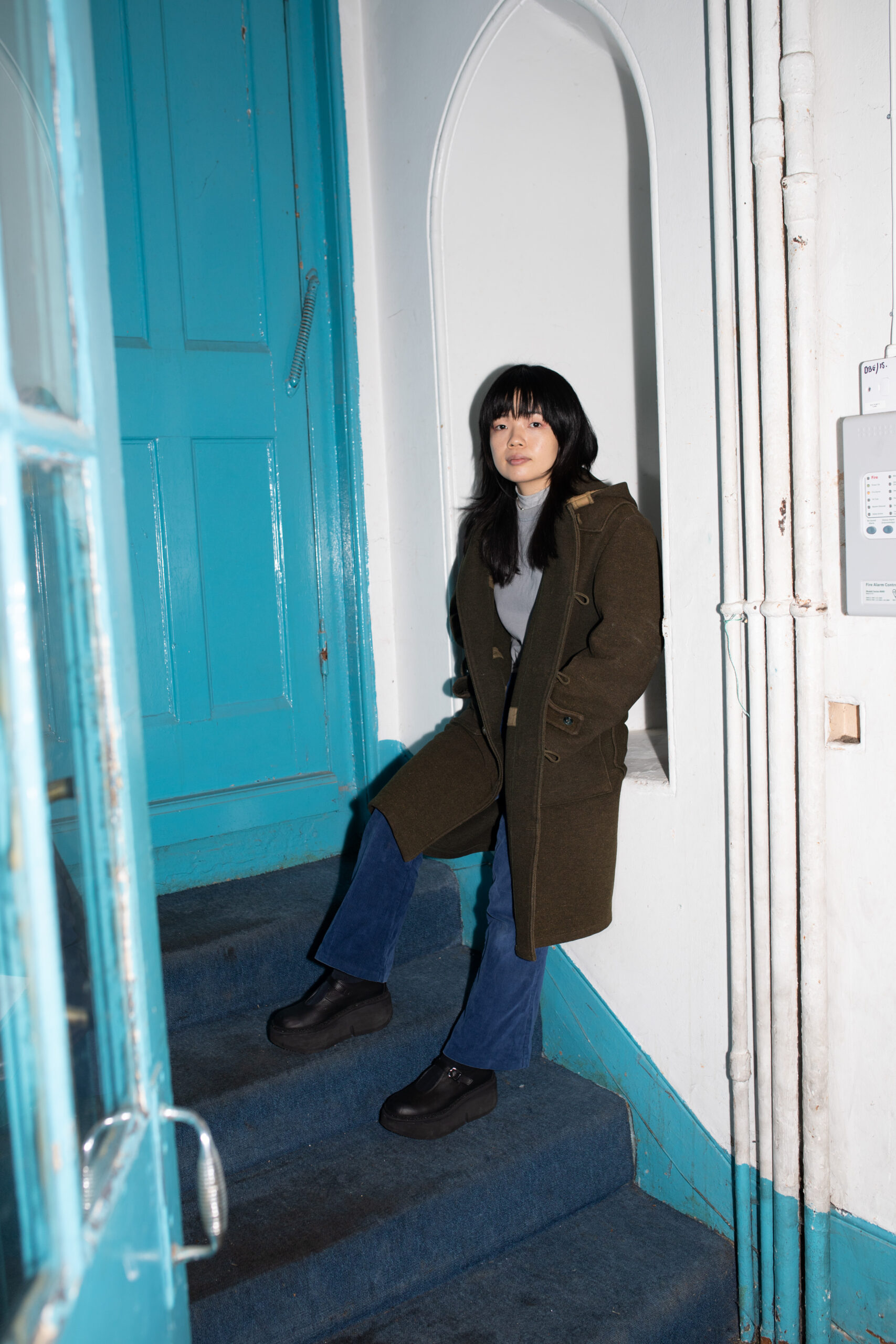
I first met Minami Kobayashi at the opening of a show in central London. She was friends with someone I knew, and the room seemed to buzz around her vibrant, lively, and effortlessly captivating presence. From the moment I met her, I was drawn to her charm and warmth.
Since then, I’ve loved seeing her paintings and talking with her, watching the way she transforms memory, imagination, and everyday life into something luminous and dreamlike on canvas. Her work feels intimate, slightly surreal, and entirely her own — much like Minami herself.
Text and photography by Brynley Odu Davies.
What do you miss most about being in Japan in your day-to-day life?
Minami: Being around my family, close friends, and my favorite river in my hometown. Missing them slowly changing is something I miss about. Also, the environment. Walking along the river, seeing the moss on the rocks, and stopping by the noodle restaurant, small sweets shop, and old book store were absolutely special.
I never thought those would become so special when I was a child. The texture of the air in Japan is different from anywhere in the world to me. That must be something that makes you realise it is your home.
And what did you love most about your time in Chicago?
Minami: Probably how supportive and chill everyone there was, my favorite part. I met quite a few people I love. The school had a strong sense of community, and I still carry that feeling with me. I loved the rabbit hole at the police station near my apartment. Lots of rabbits I saw on the way back home after a long studio hour.
When you start a new painting, what’s the very first thing that happens? Is it a colour, a feeling, or something you imagine?
Minami: I write/draw random things I am longing for. I look for something I want to think about through a day. Then I will read books that can be related to it. It helps me to see the subject from another perspective. It is a process to distance myself from the feeling and memories.
What does a normal day look like for you here in London? What’s your routine like at the moment?
Minami: I wake up like a zombie with a foggy head, and pick three cards from my card deck as I am practicing tarot reading this winter. Then I get to my studio and, most likely, happily paint through the day. Leave the studio while praying this will continue in the evening, and go see friends and family for dinner or a drink.
Your use of colour is so strong and so unique to you. Why is colour such an important part of your life?
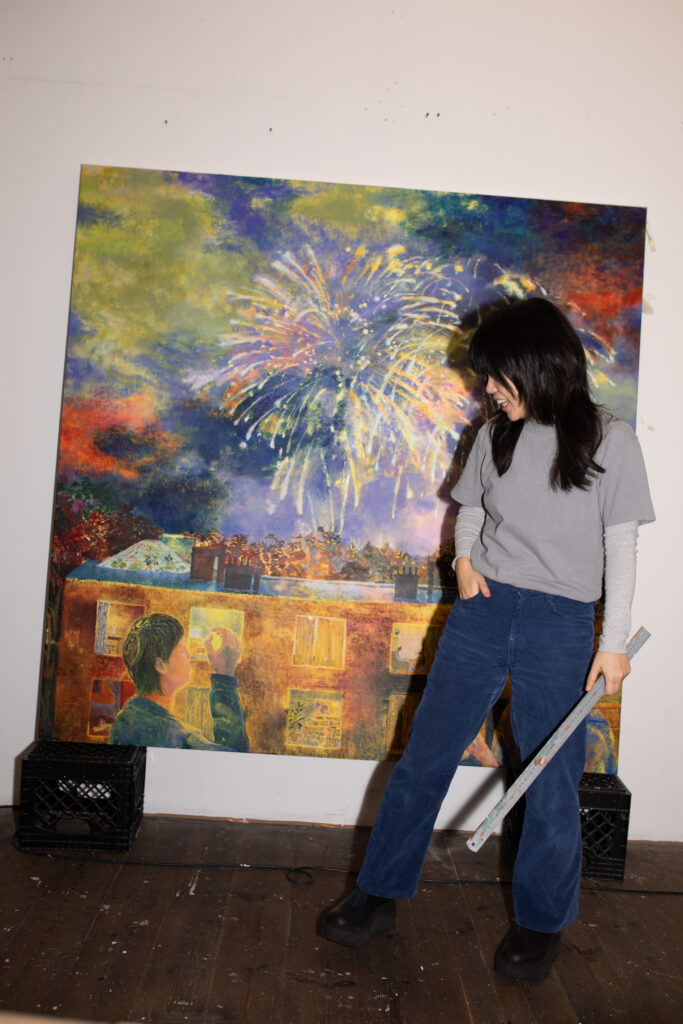
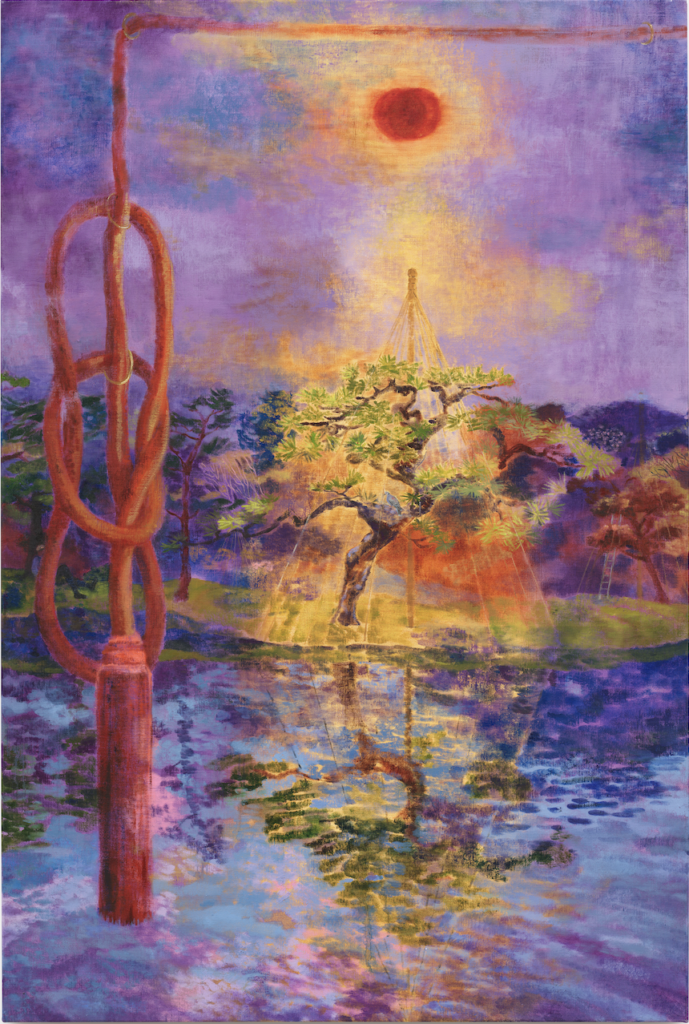
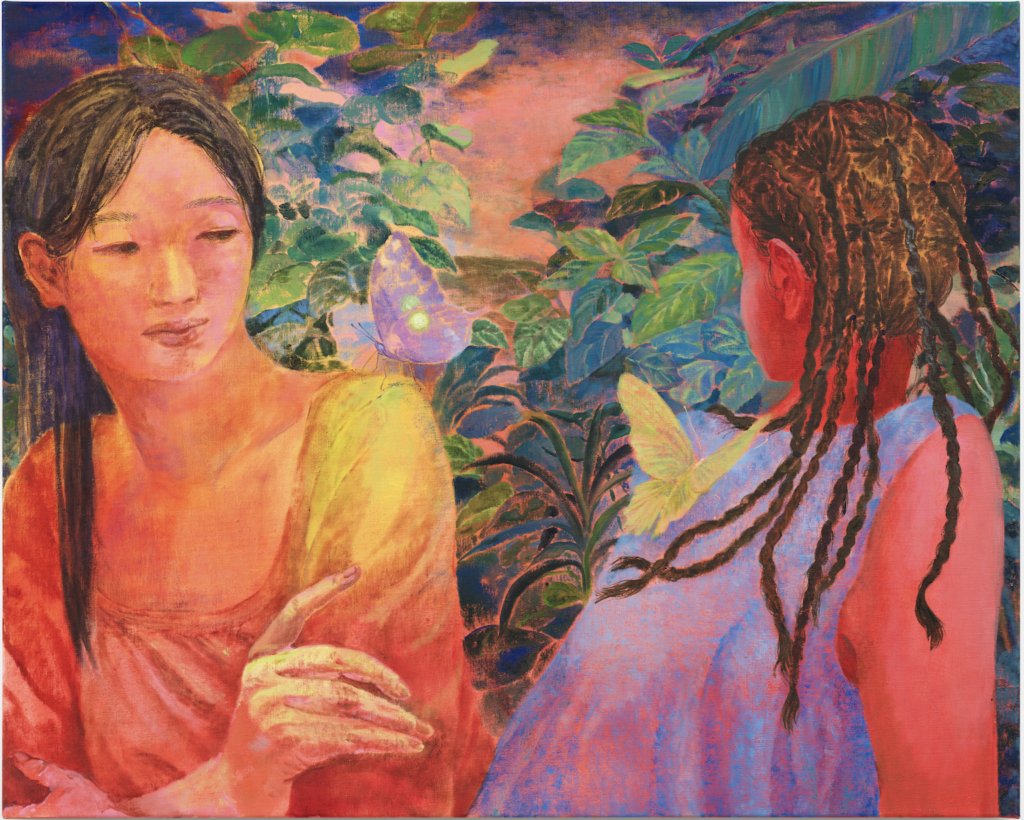
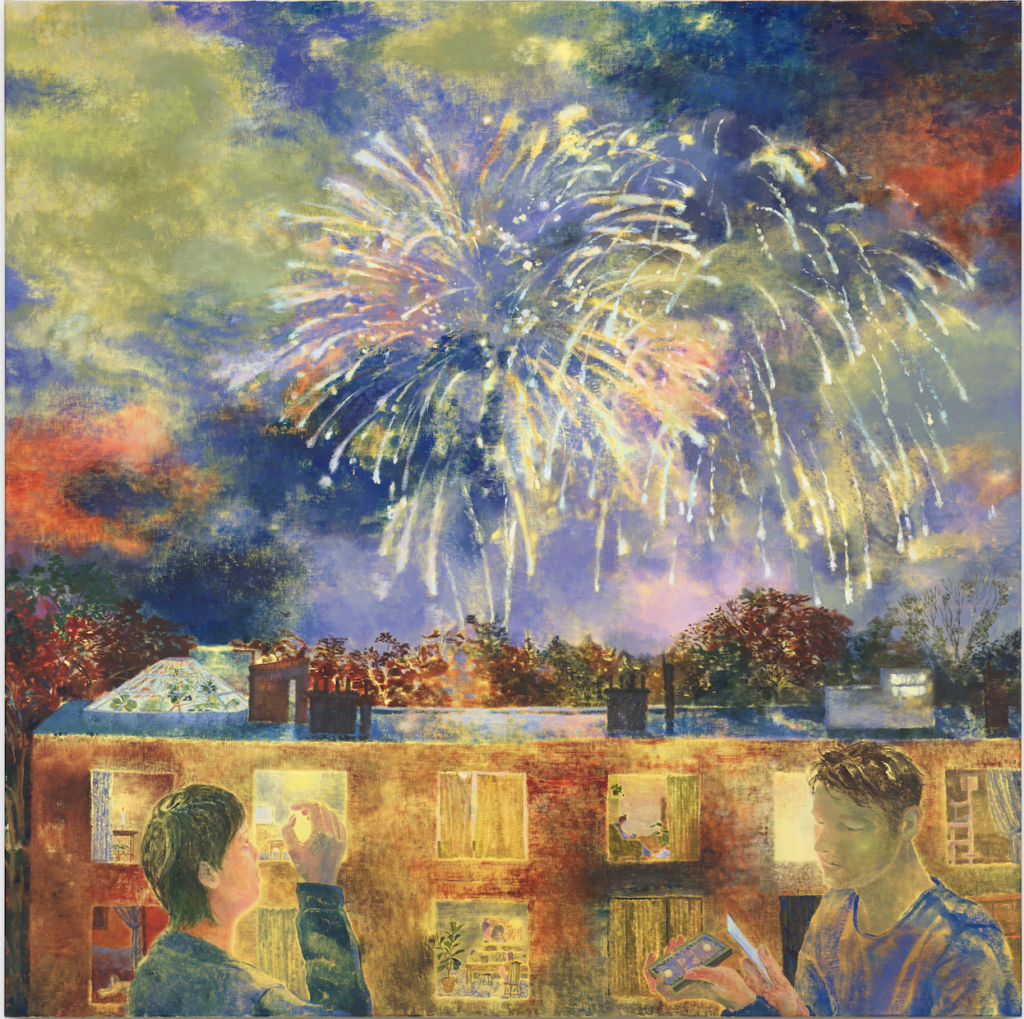
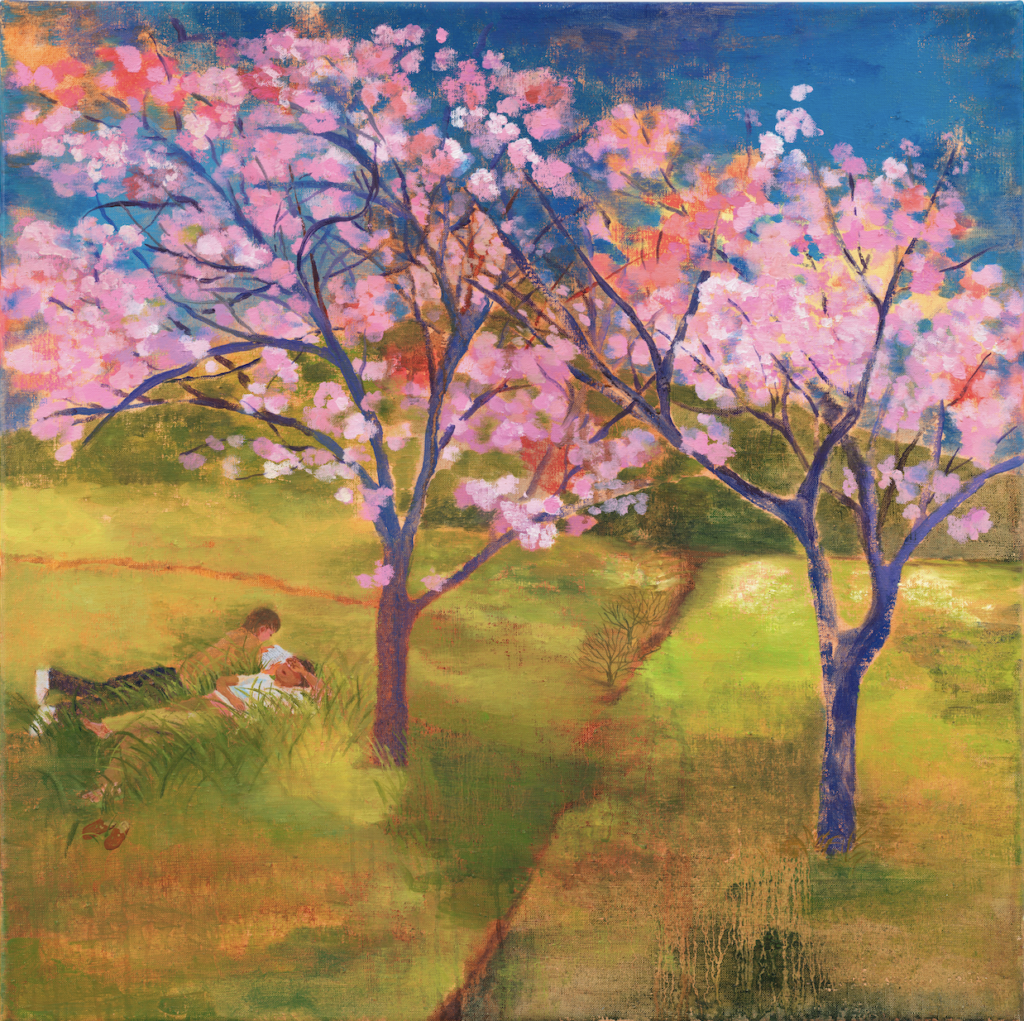
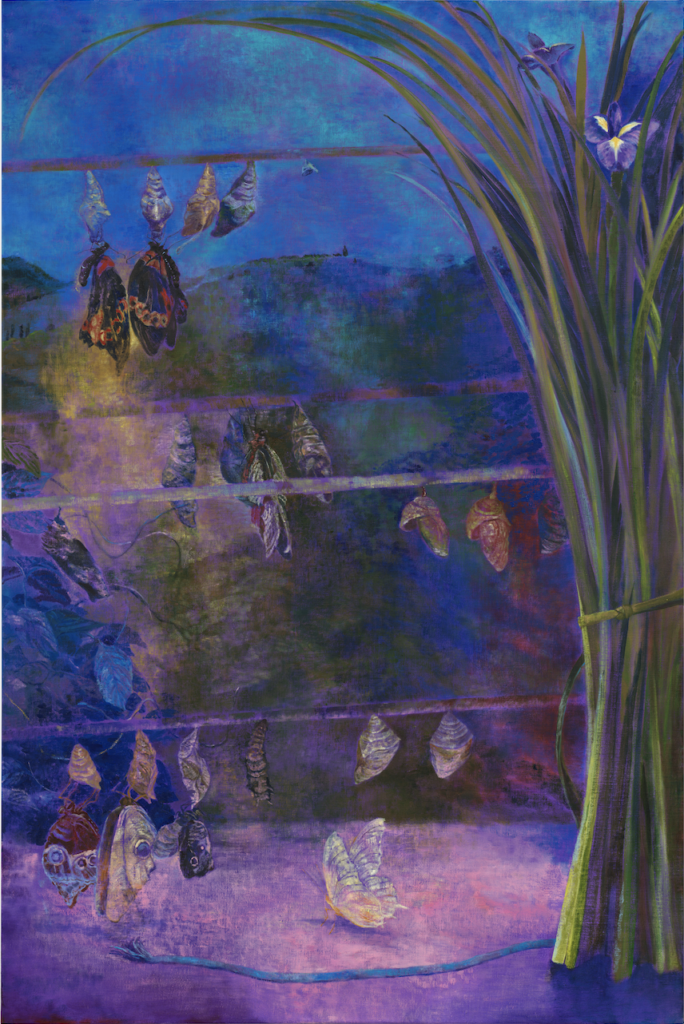
Minami: Color can represent emotions and feelings that are unexplainable. When I paint a mundane scene of daily life from memory, the colour pallet reflect how I felt at the time. My process involves layering colours in order to depict living things. I am looking to reflect nature where colour is so complicated; there is a system of layers beneath of the surface. Both literally and symbolically.
The last time I visited you, your studio was in a converted church. What was it like working in that space? Did it change anything about the way you painted?
Minami: It’s a very quiet and calm space to work. I don’t yet know exactly how I’ve been influenced by the environment, but it’s easier to focus there.
You’re always out at shows, always surrounded by other artists. Why is being part of an art community so important to you?
Minami: I learnt that having a community is very important through the experience of immigration. I used to feel like I was a plant without roots, but having a community helps me spread my roots, and grow bigger. People are inspiring. They bother me and make me happy the most. We live in such a multi-perspective world, and I enjoy learning what others are feeling and doing.
You love food, especially Mexican food. What draws you to it? And what’s your favourite thing to cook at home?
Minami: I got into Mexican food in Chicago. There were many $2 tasty taco shops there. There aren’t many Mexican restaurants in London, and I am sad about it. I love cooking Japanese food at home because it’s too expensive to eat out in London.
You have a big show coming up in Berlin, which is amazing. Can we talk about the show itself?
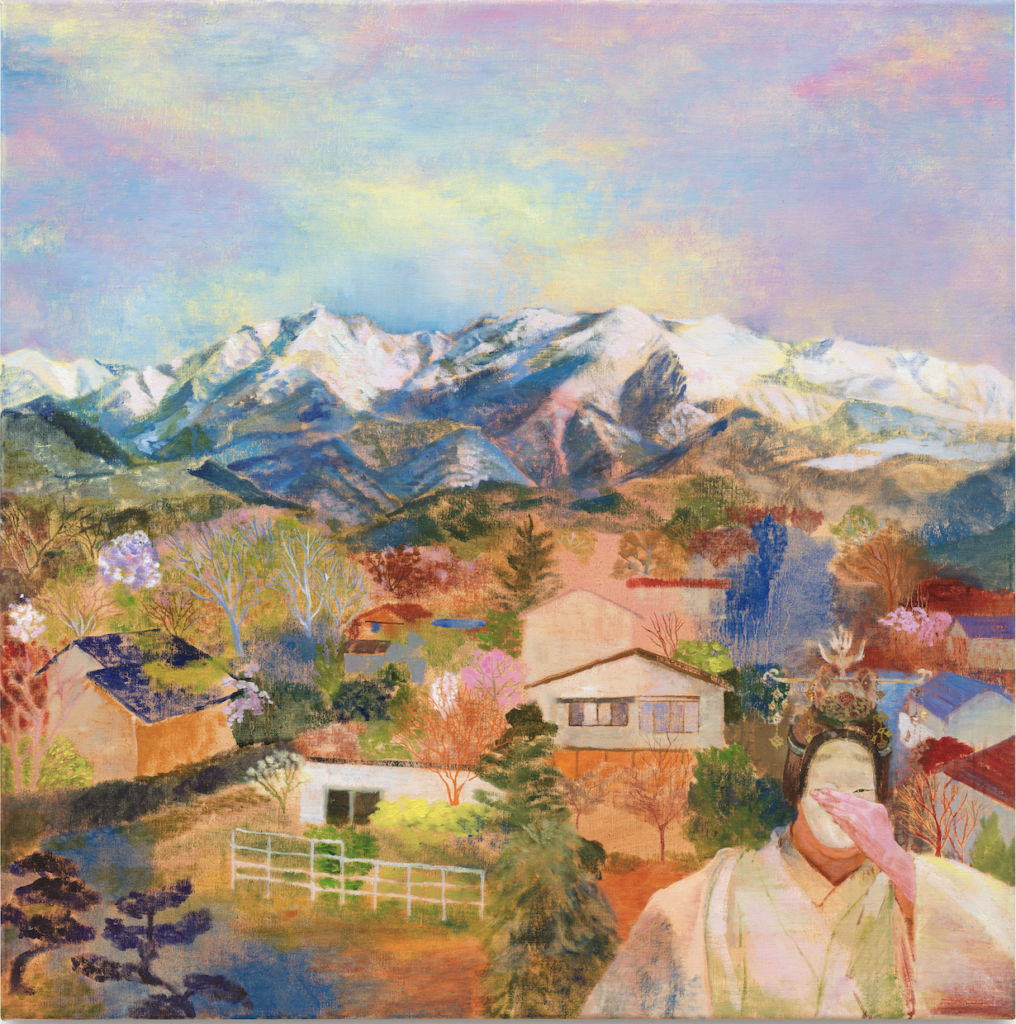
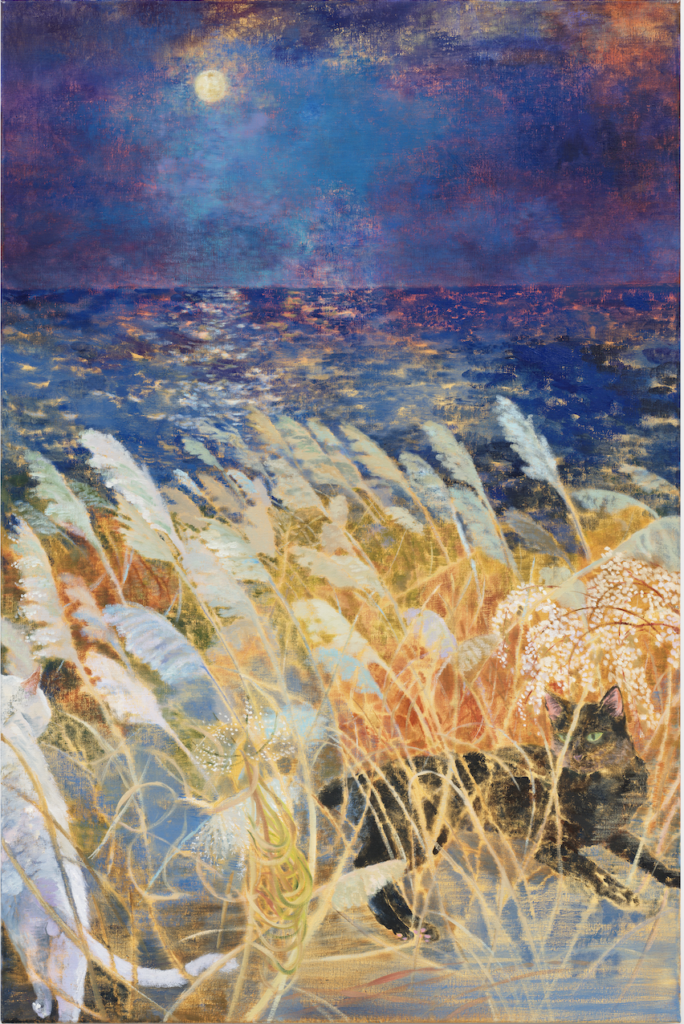
Minami: My solo show Half Waking at Tanya Leighton in Berlin is inspired by my personal memories, religious paintings. I have looked to Noh theater in which imaginary figures such as angels and spirits enter the natural world. Chaos and distraction surrounds modern life and society, so believing in the invisible and old folklore can help me to understand myself more deeply.
Who is your biggest art hero, the artist you always return to? And is there an artist you just don’t understand, no matter how hard you try?
Minami: Leonor Fini is my biggest queen. Since I encountered her painting when I was 18 years old, I often go back to her. My favorite surrealist.
Your paintings are often very large. How long does it usually take you to start and finish one?
Minami: It depends on the work. Usually 2 months.
Minami, you love dogs so much, they appear in so many of your paintings. Why are dogs such an important part of your work?
Minami: I grew up with dogs. The first dog I had was called Koro, which is my IG name. She was around during my childhood, and she had such a beautiful soul. Very kind and tender. She died when I was 13 years old but she is still with me. When there is a dog in the room, it becomes a more interesting and generous place for me so I often invite a dog in my work.
If you could tame any wild animal and have it as a pet, which animal would you choose and why?
Minami: I have a few in my mind: monkey, birds, elephant, horse, moth, mantis, Cameron, snake, and Tanuki raccoon. A baby elephant and a horse would be wholesome to dedicate my life to, but maybe my next life. I think Tanuki would be fun as they eat anything and look warm to sleep with. I will cycle to my studio with her in my backpack.
If you were hosting a dinner party and could invite five figures from history, who would they be and what would you want to eat together?
Minami: Leonor Fini, Hilma af Klint, Pierre Bonnard, Nagon Seisho, Shoen Uemura. Modern Japanese food would be fun to try with them. Nagon and Shoen would even be freaked out by how sushi is nowadays. I will have to teach Leonor, Hilma, and Pierre how to use chopsticks first, and it will be challenging. A pair of shiny bright shu orange color long thin chopsticks will be needed to attract Leonor to the activity.
When you compare Chicago, London, Tokyo, and Nagoya, the city you grew up in, what feels the most similar and what feels completely different?
Minami: The most similar part would be that all these cities have proper four seasons, and that is one reason I could live. Also, many young artists live in those cities. One of the big differences would be how it feels to be a female artist. There are many women in the prime position in the art world in Chicago and London, but I didn’t see many in Japan when I used to live there until 2016. It was a big change and absolute encouragement for me to be able to talk to many female mentors in Chicago.
If you could travel anywhere in the world right now, where would you most want to go?
Minami: Sri Lanka, national parks in Africa, or Antarctica.
What’s been your favourite British meal so far?
Minami: Nut-roast, Shepherd’s pie, and baked beans!!
What’s your favourite thing about being an artist?
Minami: ”No one can tell me what to do.” There are some people who would try to tell me something, but I have the magic words in my head.