Share this
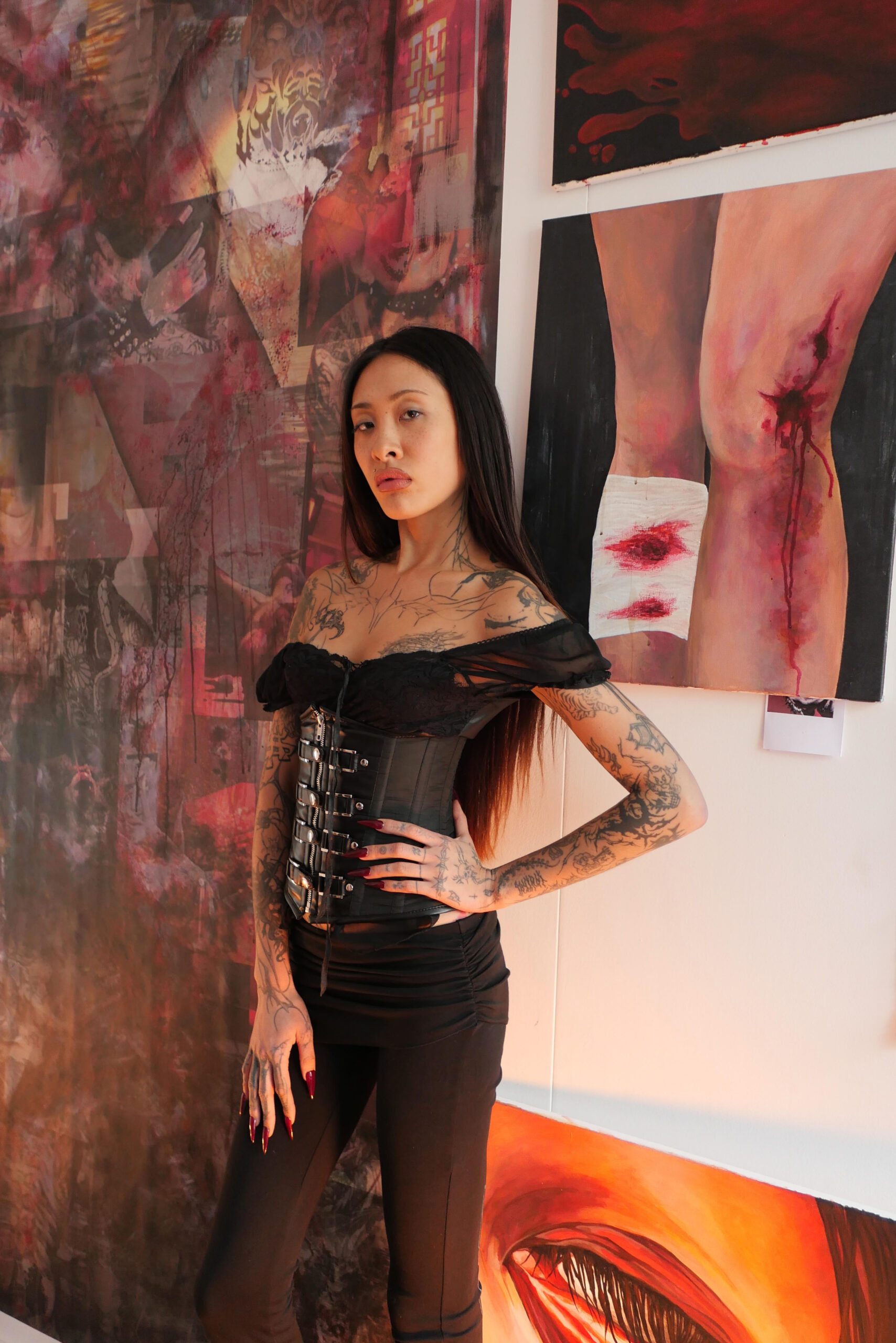
Inès Ting is a Vietnamese Chinese multidisciplinary artist, born and raised in Australia and France, currently based in London. She studied the Bachelor of Communication Design at Monash University in Melbourne, Australia. From there, she built her own brand and identity ‘Xenix’, which now embodies her work, from acrylic paintings, airbrush pieces, DIY fashion and illustration, tattooing and modelling.
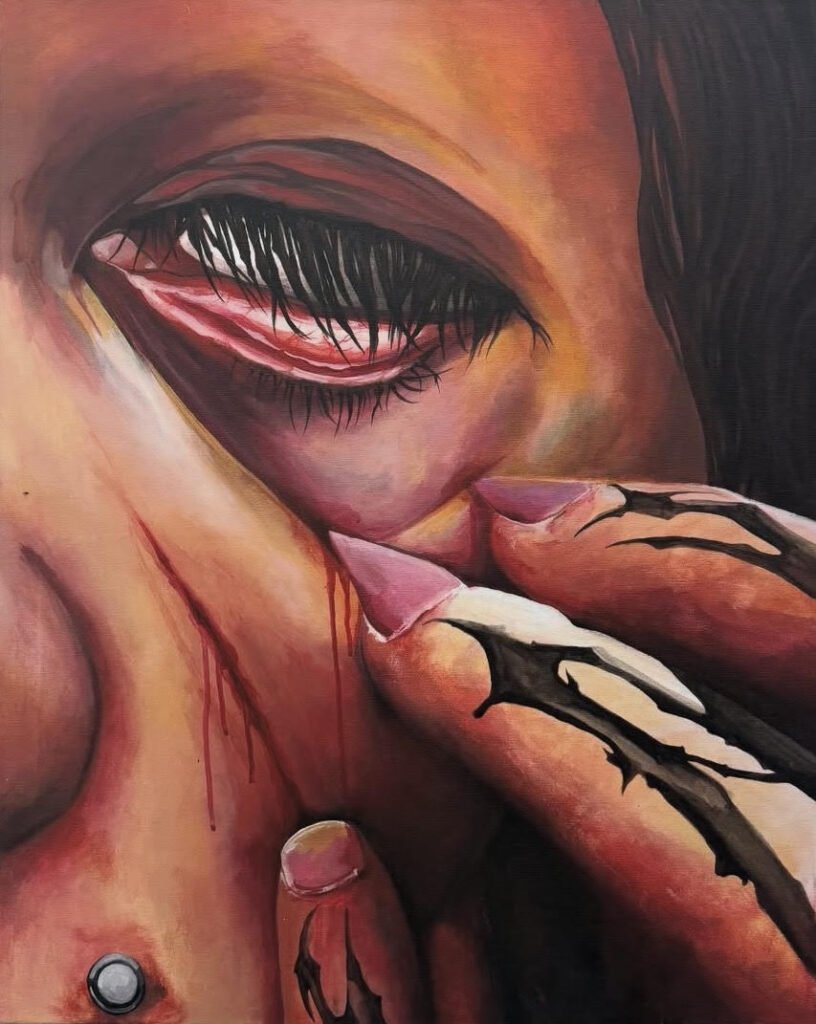
Inès’s works displays feelings of rage and themes of violence and sensuality one is told to suppress, specially as a female. She creates a darkly unsettling yet tranquil inner world through her subconscious feelings. The process of illustrating then tattooing onto skin, a painful yet therapeutic act mirrors the calming chaos expressed through her digital designs and paintings. Ines pairs destructiveness with beauty, fragility in fury. She jumps between mediums quickly, similar to her face paced nature, allowing her raw emotions to be expressed.
Profile picture by Hugo De Jonge.
Hi Ines, It’s a pleasure to sit down with you. First question that I always ask. How does a regular day look like for you in London?
Inès: Wake up, matcha, journal or read, go on a run. Then either go to my studio in London Fields to work on whatever project I got going on or to the tattoo studio in Bethnal Green to tattoo. I’ll go out for dinner and drinks most days, cooking at home bores me.
I’m curious, growing up in Australia, what kind of kid were you? What did you enjoy doing, and how did you spend your
Inès: Definitely more on the quiet side as a kid and a tom boy. I studied hard and did really well in school yet wasn’t very good at hiding the mischief my friends and I would get up to. I grew up right next to the beach so spent a lot of time there swimming tanning etc, beach kid. To relax I’d spend hours drawing.
Do you remember approximately at what age your creative side started to show? And when did you start taking being an artist seriously?
Inès: From as long as I can remember I’ve always been creative. My mom used to paint a lot so she’d force my sisters and I to draw a lot. But I never thought I could have a career as an ‘artist’, I did all the advanced maths and science classes at school thinking I’d be a vet or marine biologist. Art was always on the side as a hobby, it never felt like ‘work’ even though it came out of me most naturally and was my highest scoring subject. After a year of Science at university and 3 years of graphic design, I decided to take tattooing seriously and dedicate my life to my art.
Alright, so when and how did you get introduced to tattooing? And what was it about tattooing that intrigued you?
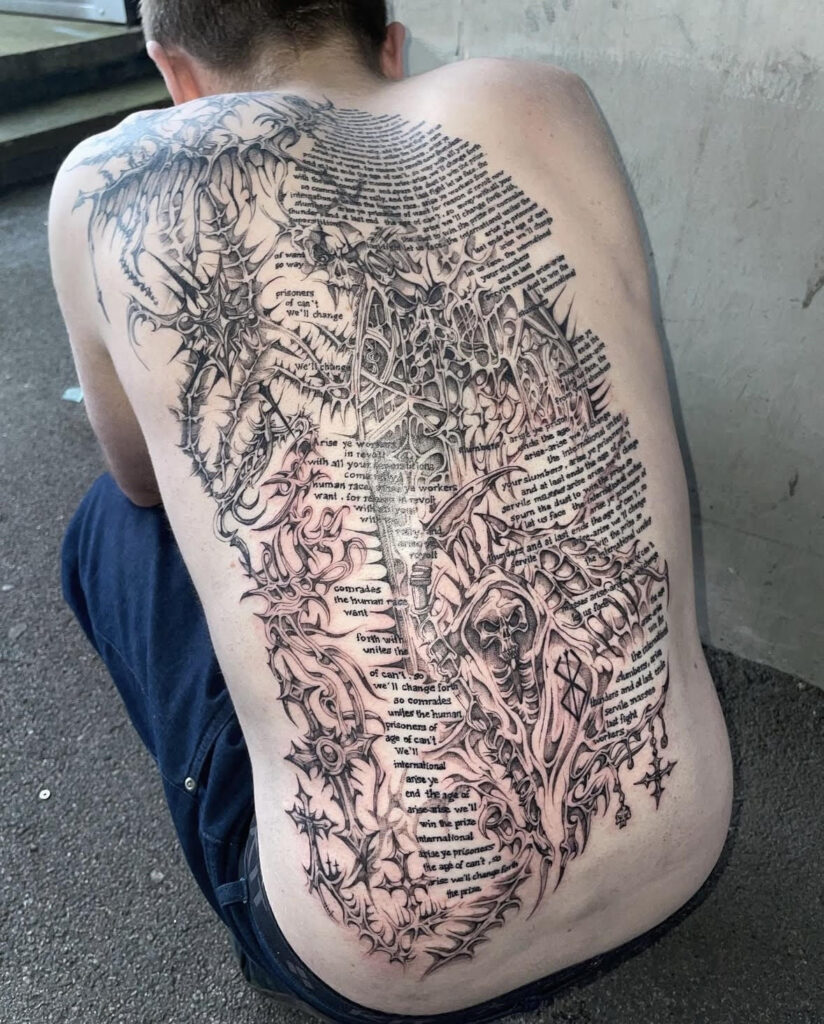
Inès: My sisters friend, Anita was stick and poking at that time and I was curious so she gave me some needles and ink and told me to give it a go. Was addicted since. I loved how it permanently marked skin and how much of a statement it was.
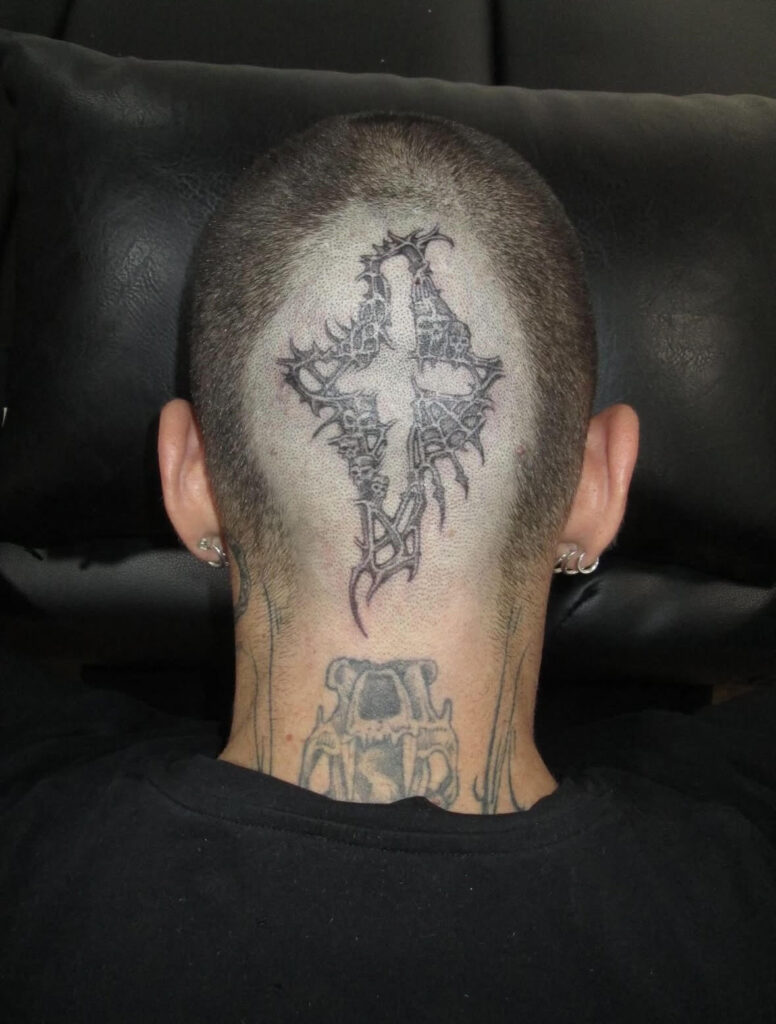
And who trained you, to get to the skills you have now?
Inès: I’m self taught. Didn’t know anything when I begun stick and poking in my bedroom. I’ve always been very DIY mentality, maybe because I’m quite impatient. I learnt the most early on from getting tattooed from tattooers I looked up to, asking them questions and observing as they tattooed me. I quickly went into tattooing between private studio and walk in shops which allowed me to level up being surrounded by so many talented tattooers.
Your work often feels like a collision between rage and serenity — a sort of violent calm. What do you think draws you to that emotional duality?
Inès: I find the harsh feelings and imagery that can be produced by rage, can be channelled and made into something productive and calming. The contrasting emotions resonates closely to me. I’m drawn to this polarity as one emotion drives a lot of my work, the act of making is self therapeutic and creates the opposing feeling.
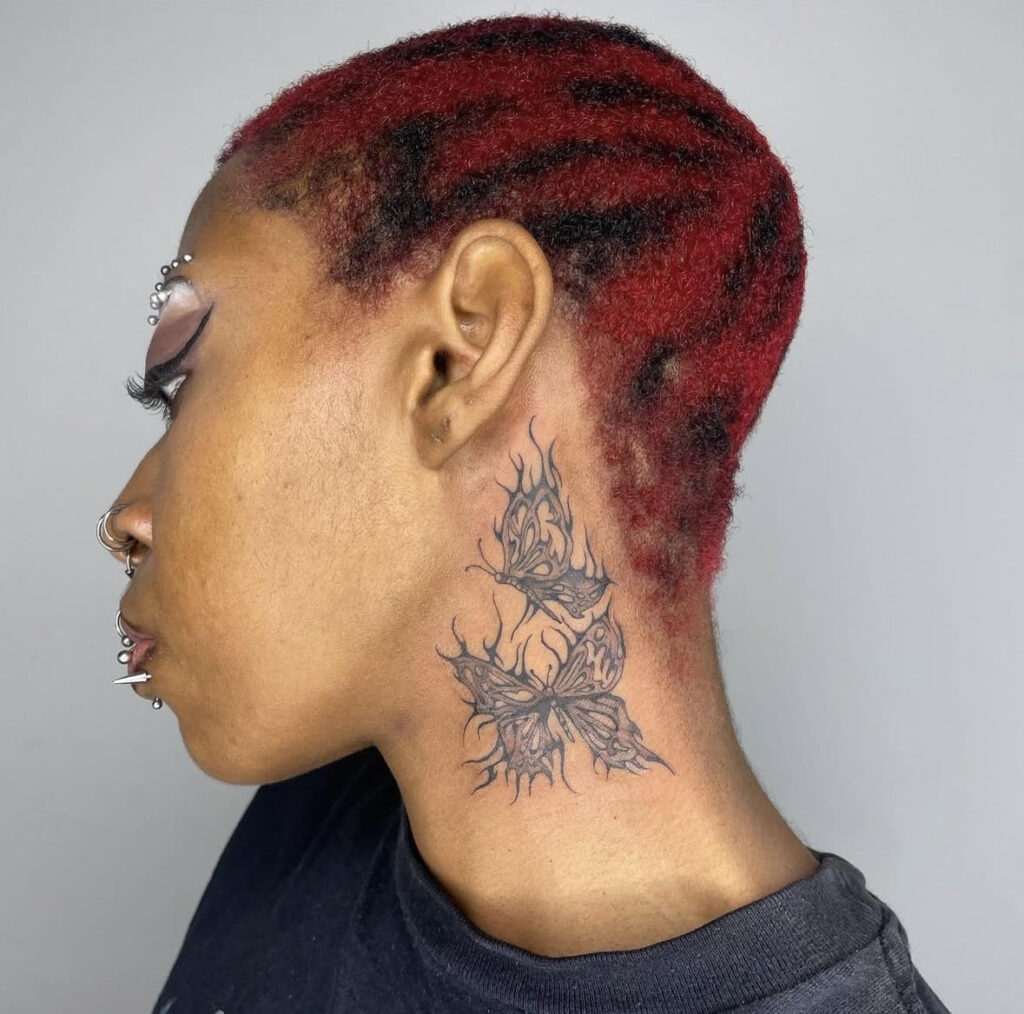
So what is it about these themes: rage, violence and sensuality, that resonates with you?
Inès: I’ve always been drawn to darker aspects of life, seeing the beauty and rawness within these themes. Channeling the unexposed and revealing it in an uncanny manner.
Is there a conversation between your body of work and the tattoos you put on others’ bodies?
Inès: My body of work comes from forming my own lore in ways. Whether it be someone buying screen printed merch I made, to a painting, zine or getting a tattoo from me, they’ve all gotten a piece from my subconscious world.
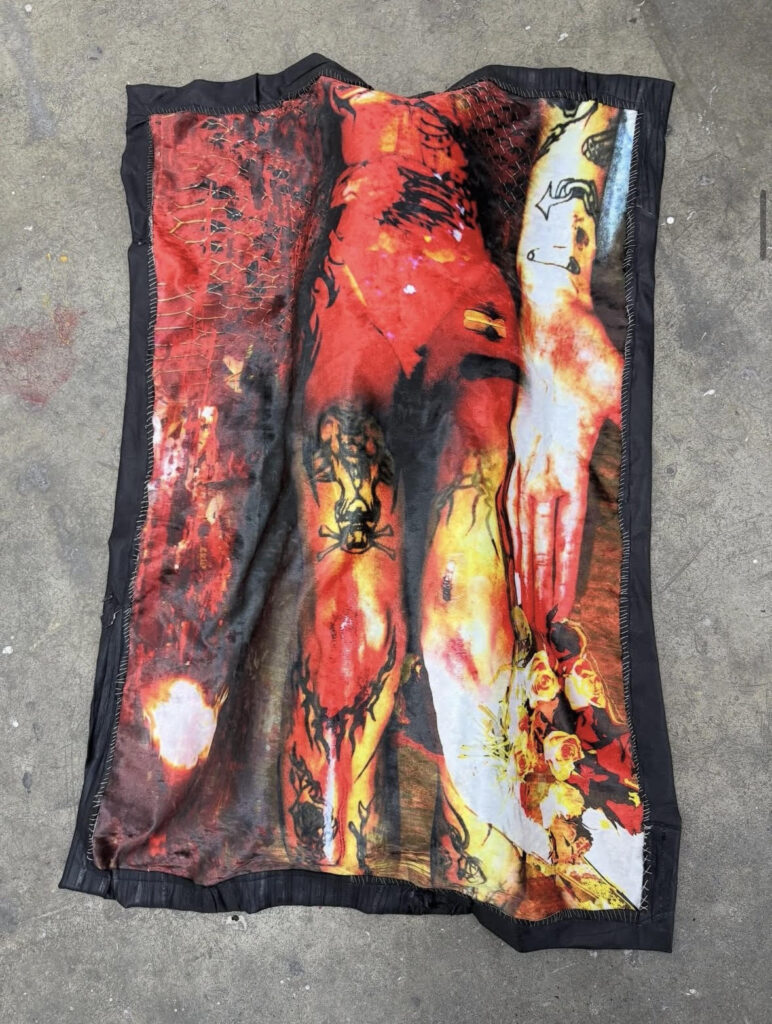
You’ve said that your pieces embody “fragility in fury.” What does that phrase mean to you on a personal level?
Inès: It means that behind outrage always lies something delicate. There is self destruction that lies in fury, so comes from a fragile place initially. Through my art I try to showcase this.
Is your art a release of something you already understand, or a way to uncover emotions you didn’t know were there?
Inès: Probably more releasing something I already know is very present. However as my work is very emotion based, most of the time when creating something I don’t fully understand what it was I was feeling until I look back on the work a couple months later and can fully see what it was I was trying to expose.
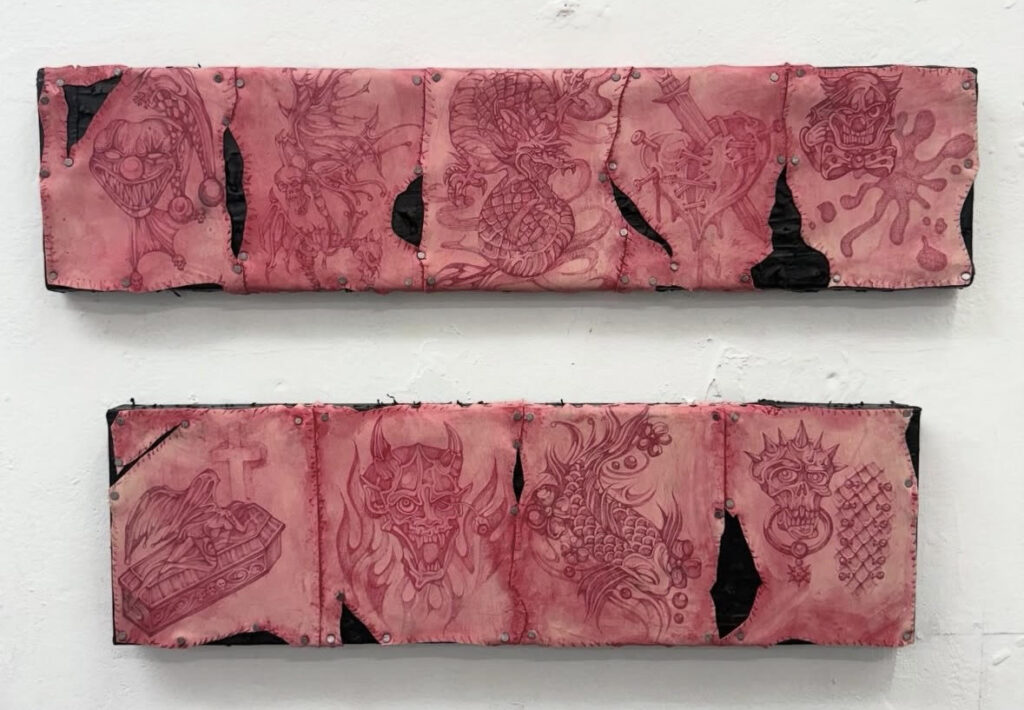
Many of your images feel like they come from dreams or subconscious visions. Do you see your creative process as a form of self-hypnosis or therapy?
Inès: Yes self therapy for sure.
How does your cultural background — Vietnamese and Chinese roots, growing up between Australia and France, influence the way you experience and express emotion?
Inès: I had a very western upbringing, and being full south east Asian in heritage made it confusing growing up as I sometimes struggled with my sense of place and belonging. However being so multicultural, I’ve always had an itch to travel and see as many cultures as possible. Both parents immigrated from Asia to western societies as kids, and culturally we are taught to suppress most emotions, I guess this is also why art was always the way for me to express myself.
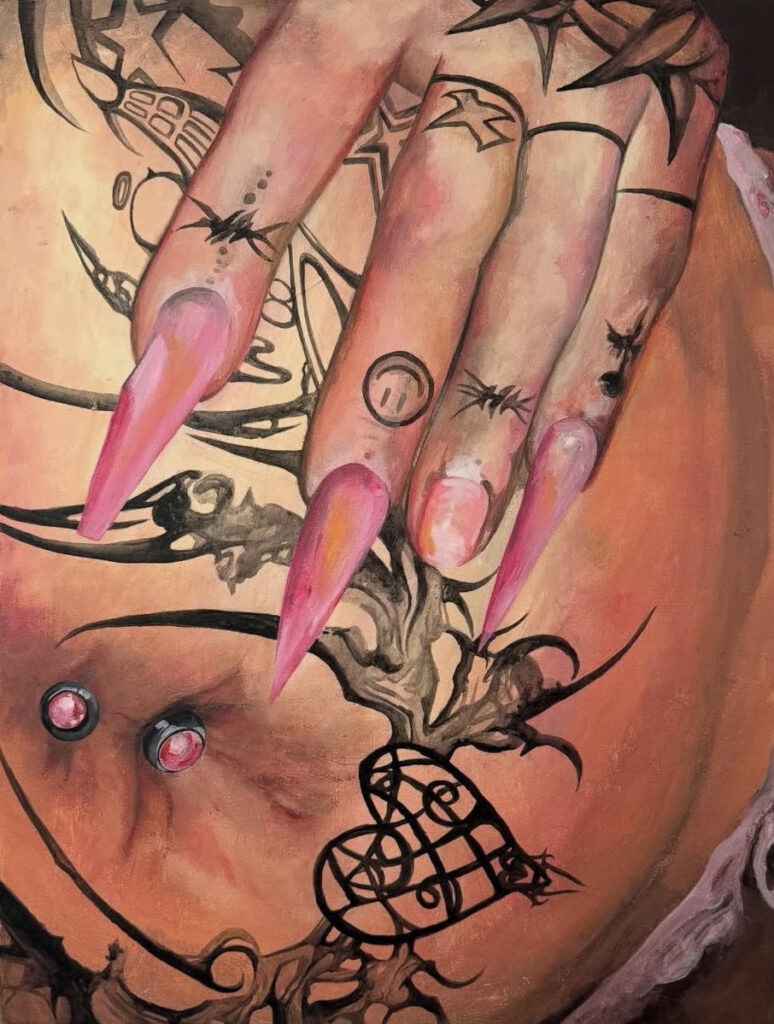
You move between different mediums: acrylic, airbrush, tattoo, fashion, illustration. What determines which medium a certain emotion or idea belongs to?
Inès: I get bored easily so like to have a mix of different mediums I can choose from depending on my mood and inspiration. Painting allows me to be messier and more experimental compared to tattooing which has no room for error. Yet I can tattoo and draw in any mental / physical state, whereas the more experimental mediums of painting, airbrush, screen printing clothes, I need to be more switched on.
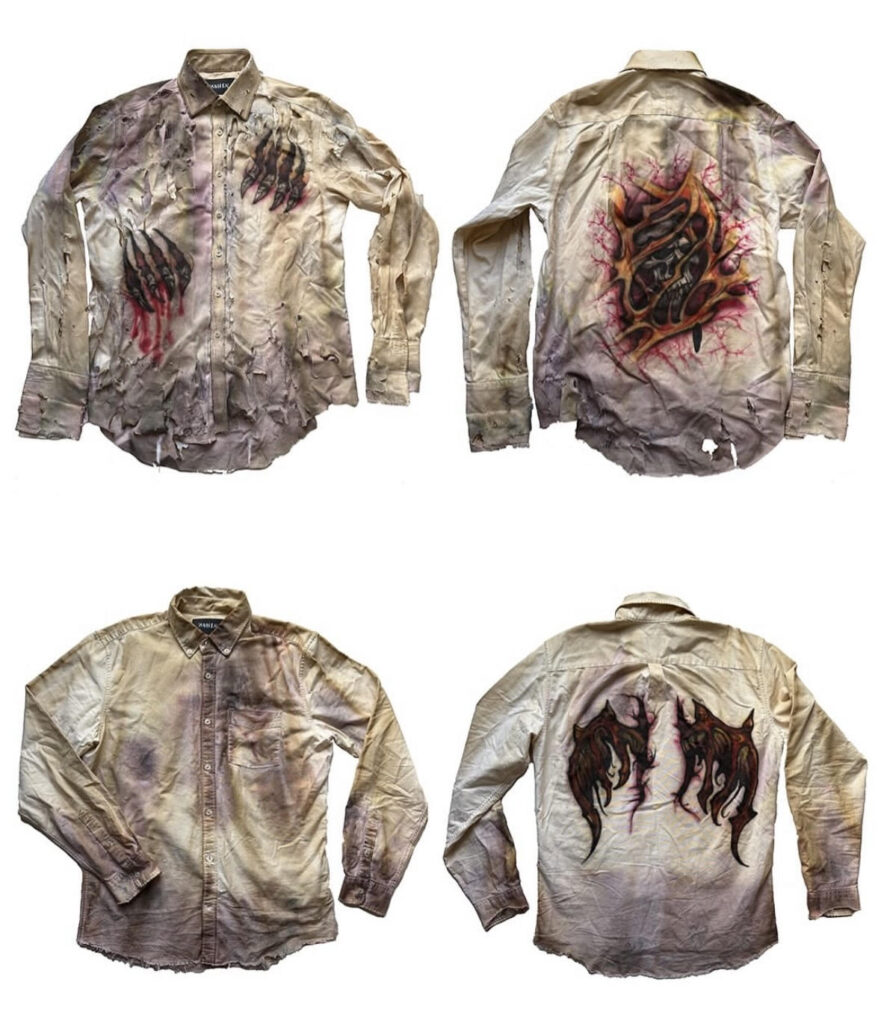
How do you manage spontaneity when working across so many techniques, do you plan or let chaos lead?
Inès: I always have a couple projects happening at once. I’ll loosely plan out what I want it to be and will be strict on myself with finishing it, but while undergoing the project I’ll let my imagination do its thing in its chaotic manner.
There’s an undercurrent of suppressed rage and femininity in your art. What does it mean for you to reclaim those emotions through your visual language?
Inès: In this patriarchal society, women are taught and pressured to suppress rage. My work provides power to use my voice and through the beauty of femininity, I can address feelings of rage that isn’t what we are accustomed to seeing.
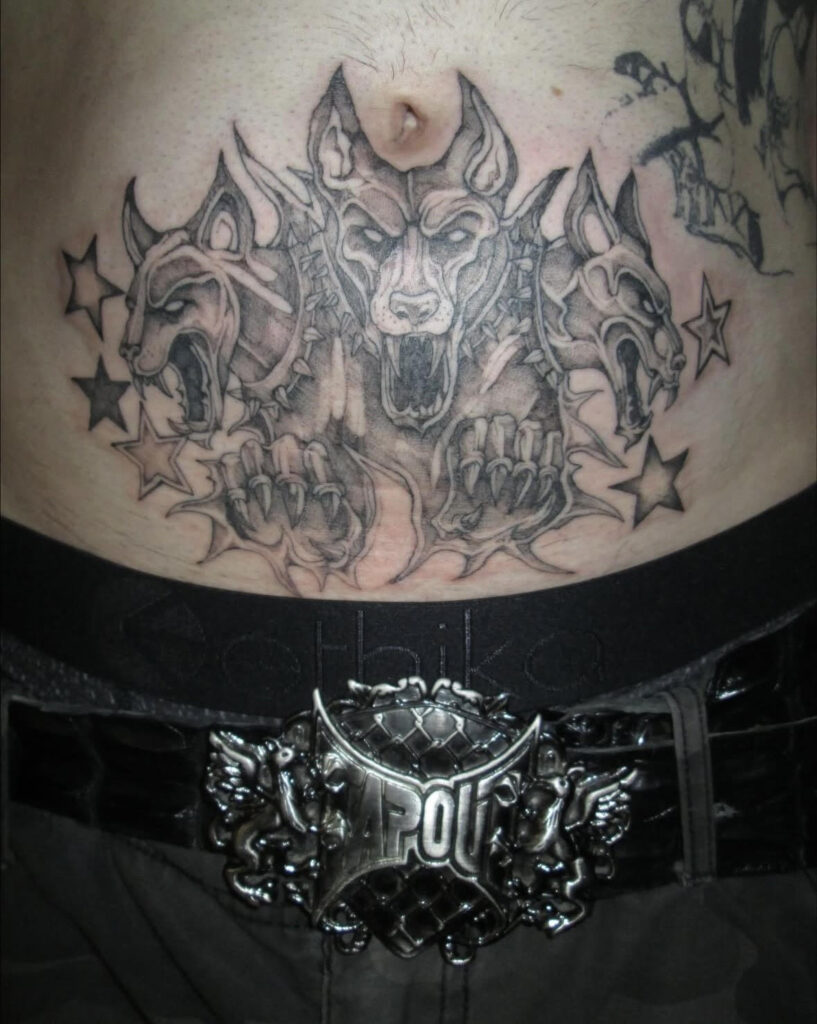
Your brand “Xenix” feels like both a mask and a revelation. Is it an alter ego, or an expansion of who you really are?
Inès: I’d like to say an expansion of who I really am. It was never intended to be a ‘brand’ more a portfolio of all my work, but I believe I live and breath my work so naturally ‘Xenix’ has become a reflection of myself.
As someone who creates art on skin, do you see the body as another canvas, or as something sacred?
Inès: The body is a canvas, and putting art on skin makes the body a living breathing art work itself. I also think the body is sacred though in the sense of treat your body well but do get tattoos, its not that deep in the end, it is just flesh and looks better 🙂
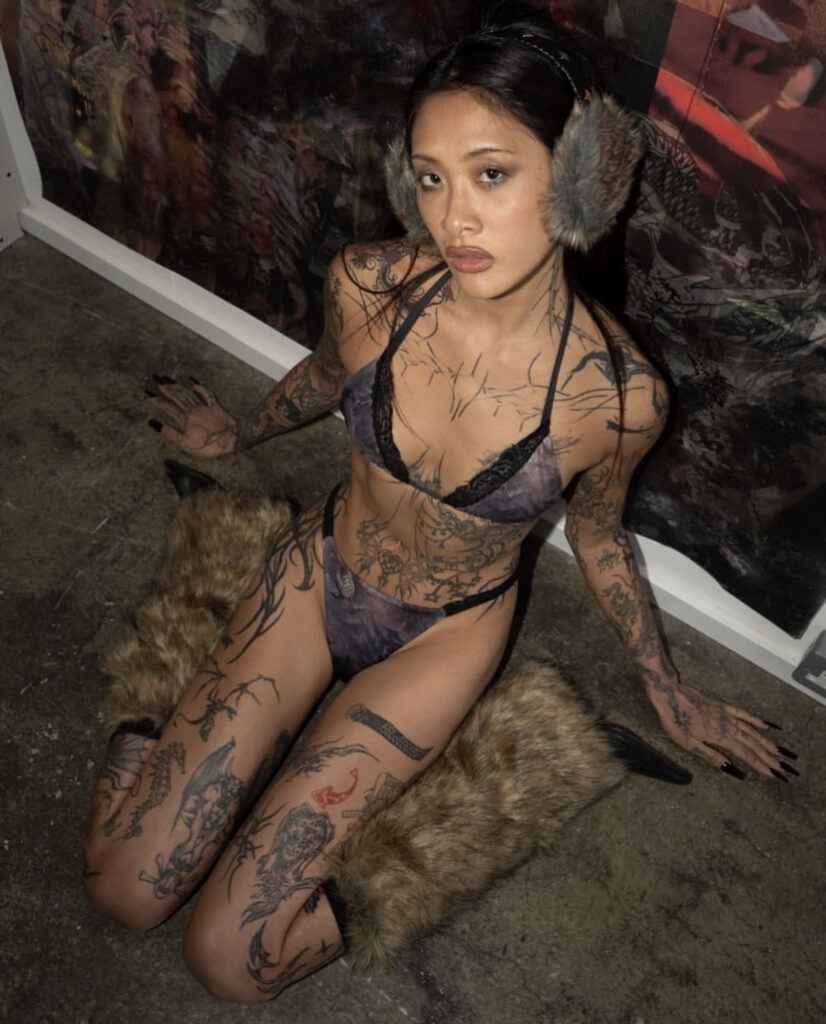
In an era when “feminine rage” is being aestheticized online, how do you keep your expression authentic and not performative?
Inès: My work has always been so emotive based that most of the time it’s my subconscious doing the work and then the work is made. Things online are always so curated, I tend to not overthink anything I do, I barely keep up to date with whats trending, been told I definitely am living in my own world a lot of the time.
Your pace seems integral to your process, you’ve described yourself as “fast-paced” and impulsive. Do you see that as a strength, a vulnerability, or both?
Inès: Both. It benefits me because I efficiently get shit done yet the impulsivity and need for constant stimulation can make it hard for me to relax or stay in one place for long.
How do you balance your identity as both an artist and a model, when your image becomes part of the work?
Inès: The modelling came unintentionally. I don’t see it in a way of having to ‘balance’ my identity, I feel I’m just doing my thing and part of that is making art and also modelling. They’ve definitely helped each other out though, making connections through one avenue benefits the other and vis versa.
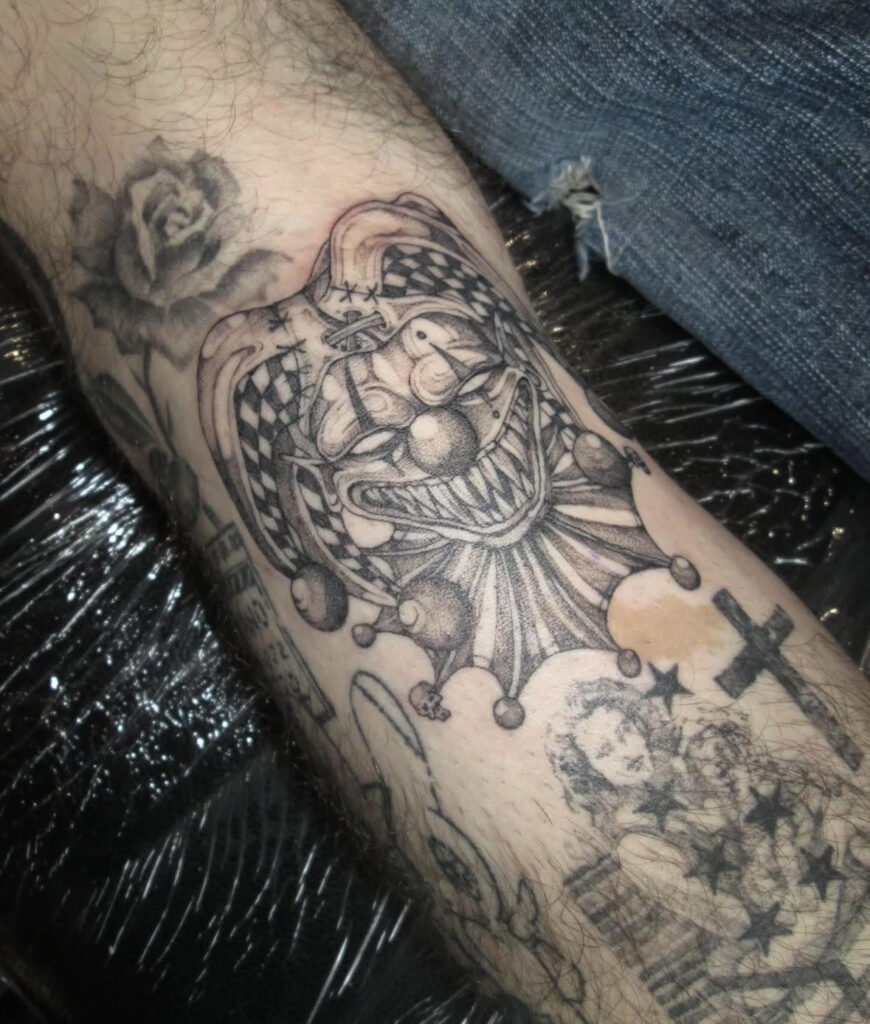
If you could tattoo one of your designs onto the sky for a day, which one would it be and why?
Inès: Probably a jester to freak some people out out.
Can you tell me about your creative process, from beginning to end result?
Inès: I’m constantly trying to stay inspired whereas that be from reading, watching films, listening to podcasts or music, visiting new places and cities, meeting new people. I can’t force creating, most ideas come randomly so I have multiple journals and sketch books scattered around home and studio. I’ll have periods where I’ll be addictively working on a project, I hate leaving work unfinished so create strict deadlines to myself to get it done. Then will have to step away and just have fun or travel to get new inspiration.
Ok Ines, now to something totally different. In a parallel universe who would you be? and what would you be doing?
Inès: Living and working at an animal sanctuary with endangered animals. But honestly might still end up doing that later in life, who knows.
Outside of tattooing, painting and modeling, what’s something you’re obsessed with right now, maybe a hobby, a show, or even a food that keeps you grounded or inspired?
Inès: Guiltily Love is Blind, some trashy reality tv has always been nicely brain numbing.
What qualities do you find most important in the people you choose to spend time with?
Inès: If you’re passionate and inspired about whatever it is you are doing and striving to be boss. Being curious and not afraid to be your weird self.
What motivates you?
Inès: I’m super grateful I’ve been able to make a life from doing what I love, with so much flexibility so this motivates me to keep going and make the most of any opportunity that comes. Can rest when we dead.
Alright Ines, I always ask these two questions at the end of an interview. The first is. What’s your favorite movie(s) and why?
Inès: I’ve never been able to answer this question.
The second is. What song(s) are you currently listening to the most right now?
Inès: Kp Inglegood superstar ‘heartbreak freestyle’ and juxtaposingly Drunk in Hell ‘I’m an arsehole’