
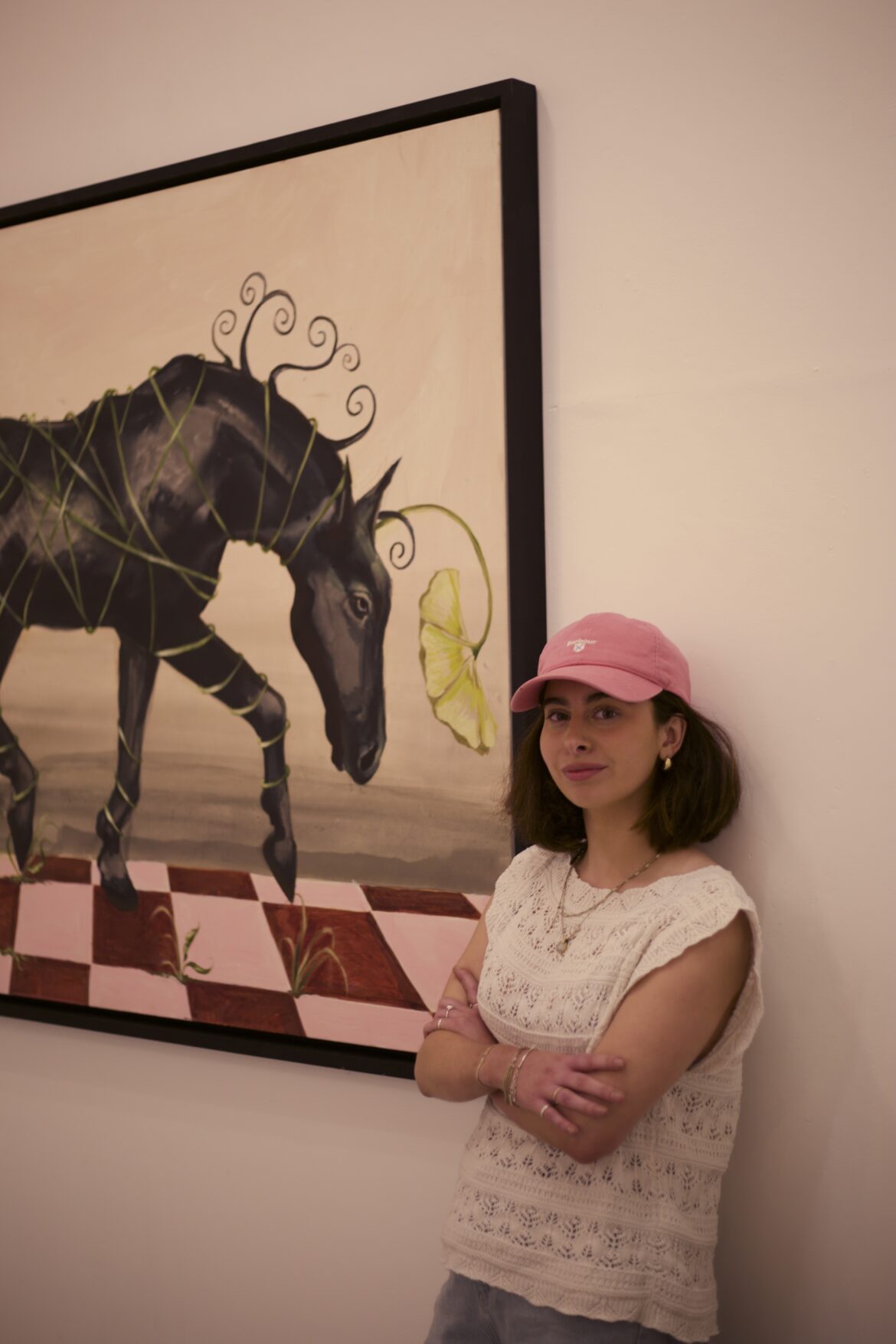
Profile picture by Georgina Lyn.
Darcy Whent’s practice delves into the psychological and ideological terrain surrounding motherhood — particularly the dysfunctional expectations and inherited responsibilities that come with it. Through a blend of personal enquiry and autofiction, she turns to painting and drawing as ways of excavating memory and emotion. Across her work, recurring protagonists and motifs reappear like echoes, creating an ongoing dialogue between the personal and the universal.
Working with found imagery and personal archives, Whent constructs her own narratives, exploring what motherhood has meant to her and how grief, memory, and time intertwine. She manipulates paint to revisit the past from the perspective of the present — not to recreate truth, but to reveal how memory reshapes itself into what we want to remember.
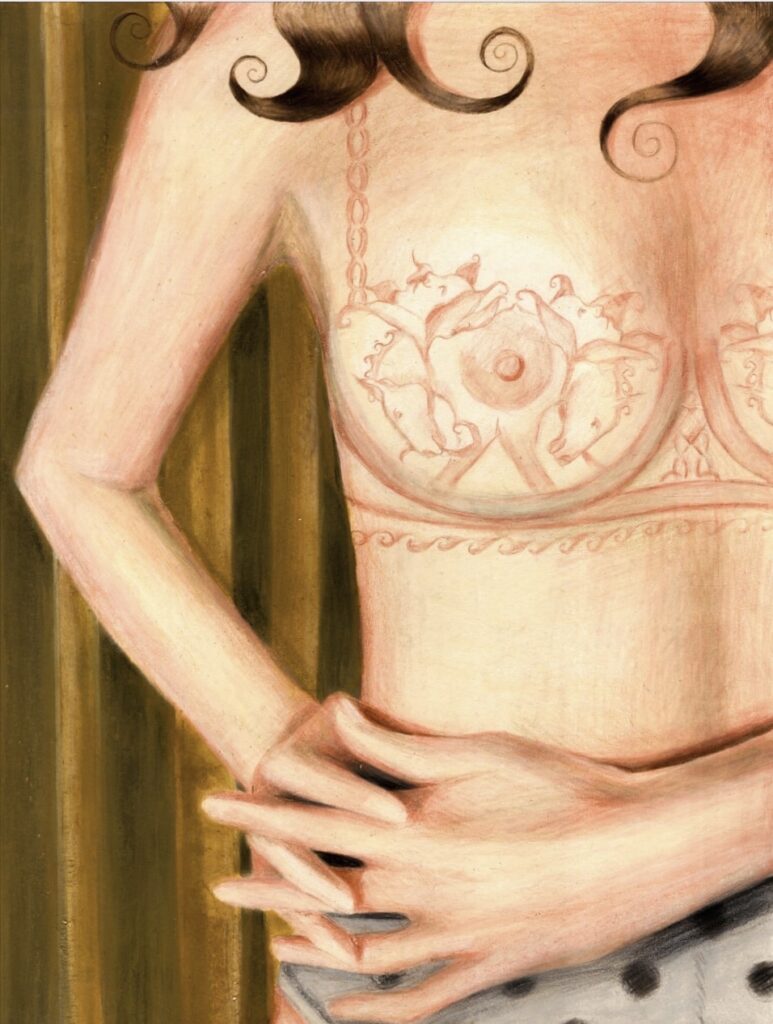
As she admits, her real childhood is fading, being slowly replaced by her own reconstructions — a process that allows her to remould earlier ideas of the mother and to understand consequence, social barriers, and inherited behaviours in new ways.
The notion of containment runs through her work — both physical and psychological. Childhood, she suggests, is defined by the environments that shape and control us, much like a domesticated animal shaped by its owner and surroundings. Her use of pattern becomes a visual strategy to evoke that sense of domesticity: comfort intertwined with confinement, seclusion with security.
Ultimately, Whent’s paintings exist in the charged space between girlhood and motherhood, where the self is in flux — a place that is, as she describes it, ineffable and undefinable. Through allegory and emotional texture, her work exposes the tensions of that in-between state, where memory, identity, and nurture collide.
Hi Darcy! It’s a pleasure to sit down with you! First question that I always ask — how does a regular day look like for you?
Darcy: I’m definitely not a morning person — I’ve tried to be, but it’s not in me. Time tends to slip away, so when I finally get to the studio, it feels precious. I usually work late into the night, when the world’s gone a bit quieter. My practice really needs solitude — it’s me and the work, and I like it that way. I move between making, staring, and circling ideas until something sticks.
Growing up in Wales, what kind of kid were you?
Darcy: I grew up in South Wales, surrounded by horses, dogs, and endless fields — those kind of landscapes that feel both expansive and isolating. I was introspective, always drawing or spinning stories, happily lost in my own world. I also always felt a duty to entertain — maybe that’s where the theatrical, slightly staged quality in my paintings comes from. I think I was constantly creating little performances, even if just for myself.
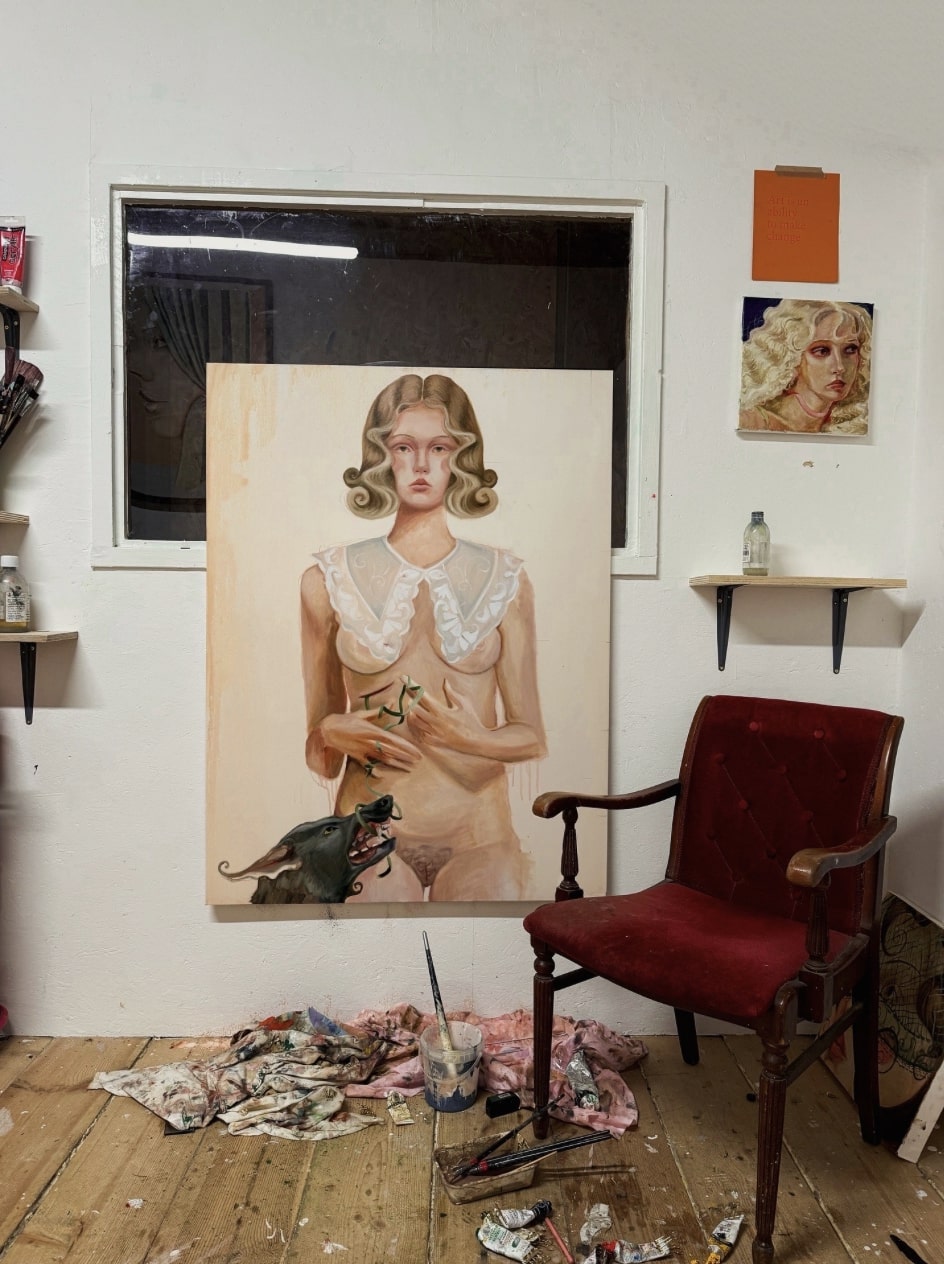
When did you start painting, and when did you start taking being an artist seriously?
Darcy: I’ve always been painting in some way, but it became serious when I realised it was the only language I could really speak fluently. I tried to run from it a few times — it’s a difficult thing to commit to — but it kept pulling me back. Painting has always been how I make sense of things I can’t explain.
You describe your work as navigating the “dysfunctional responsibilities” of motherhood. What does dysfunction mean to you, and how does painting allow you to reframe it?
Darcy: Dysfunction, for me, isn’t necessarily negative — it’s the space where love and chaos overlap. My mother has schizoaffective disorder, so growing up, care was circular rather than linear. We all cared for each other in unpredictable ways. Painting gives me a way to reorganise that experience — to make it tender, even when it’s uncomfortable. It’s about re-parenting the memory through image.
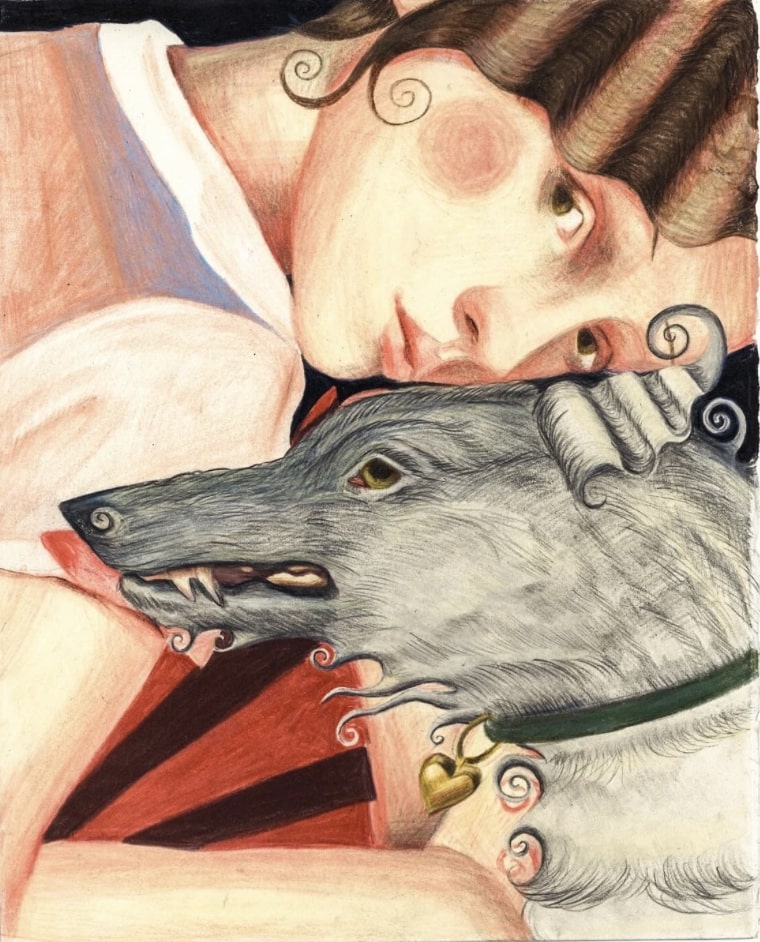
You talk about revisiting grief “from the perspective of the present.” Do you see painting as an act of healing, or as a way of preserving the ache of memory?
Darcy: It’s both. Painting doesn’t erase the ache — it gives it form, weight, presence. Memory has become more tangible to me than the idea of childhood itself. Each time I paint, the memory becomes more present than the thing it came from. So maybe I’m preserving the ache, but in doing that, I’m also softening it.
You’ve said, “My real childhood is beginning to disappear and be replaced by what I want to see.” How do you know when that transformation, between memory and imagination, feels complete enough to paint?
Darcy: When it feels slightly wrong. When something’s been rewritten in a way that feels both comforting and a bit deceitful. That’s when I know I’ve landed on it — when the fiction starts to feel truer than what really happened.
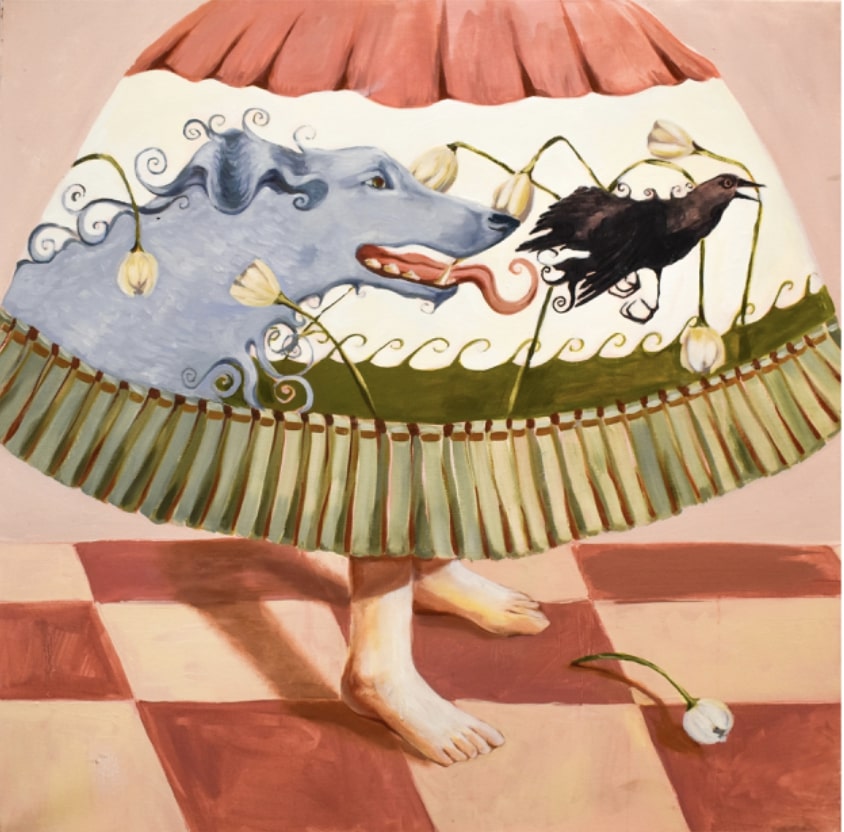
The “in-between” you mention, between girlhood and motherhood, feels central to your work. Can you elaborate on that?
Darcy: That space — between being cared for and becoming the carer — is where all the electricity lives for me. It’s a liminal zone, charged and confusing. You’re either girl or woman, innocent or rotten, decaying or blossoming — rarely allowed to be both. I try to paint that contradiction, to give it a physical body. Painting becomes a way to dwell inside that threshold, to show what can’t really be said.
Your paintings often carry a sense of quiet claustrophobia, domestic comfort mixed with confinement. Is that emotional tension something you consciously construct, or something that naturally emerges?
Darcy: It’s something that emerges naturally, but I’ve learned to recognise and lean into it. The domestic world — bedrooms, kitchens, gardens — can feel both protective and suffocating. That duality mirrors the emotional atmosphere I grew up in. My mother’s illness shaped the tone of our home — it was unpredictable, loving, and heavy all at once. She was both the centre of care and the person who needed it. My sisters and I often felt like we were all playing at being grown-ups together. That experience seeps into everything I paint — the quiet tension of safety with an edge, of love shadowed by instability.
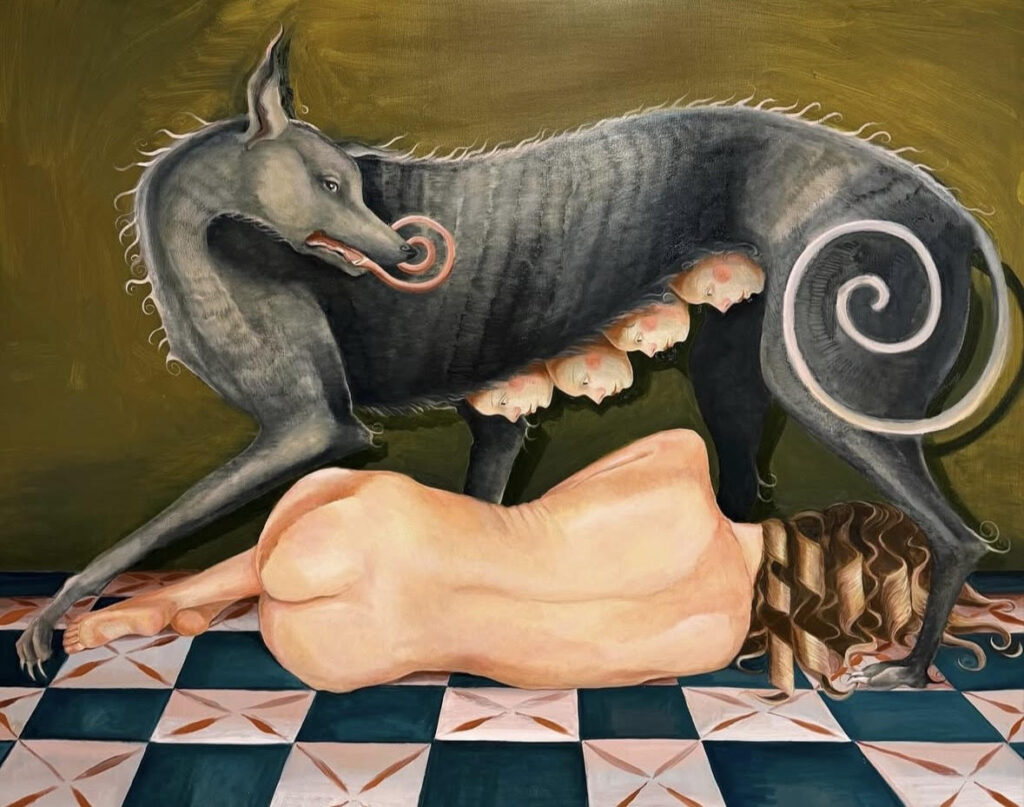
You said you love using allegory. What kinds of symbols or recurring figures do you return to, and how do their meanings evolve over time?
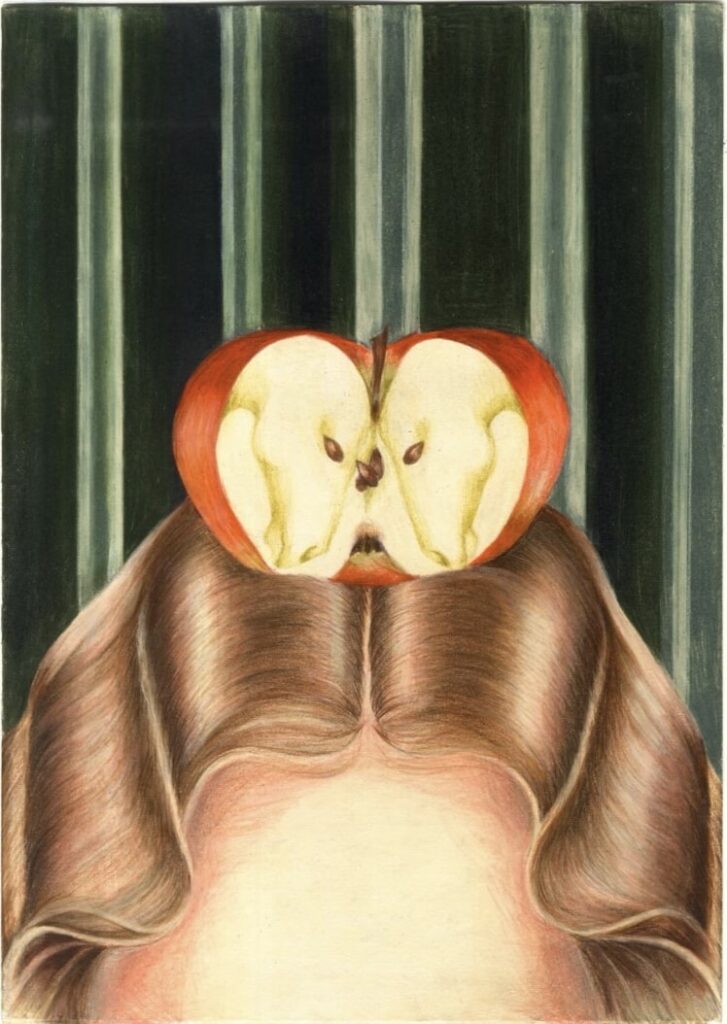
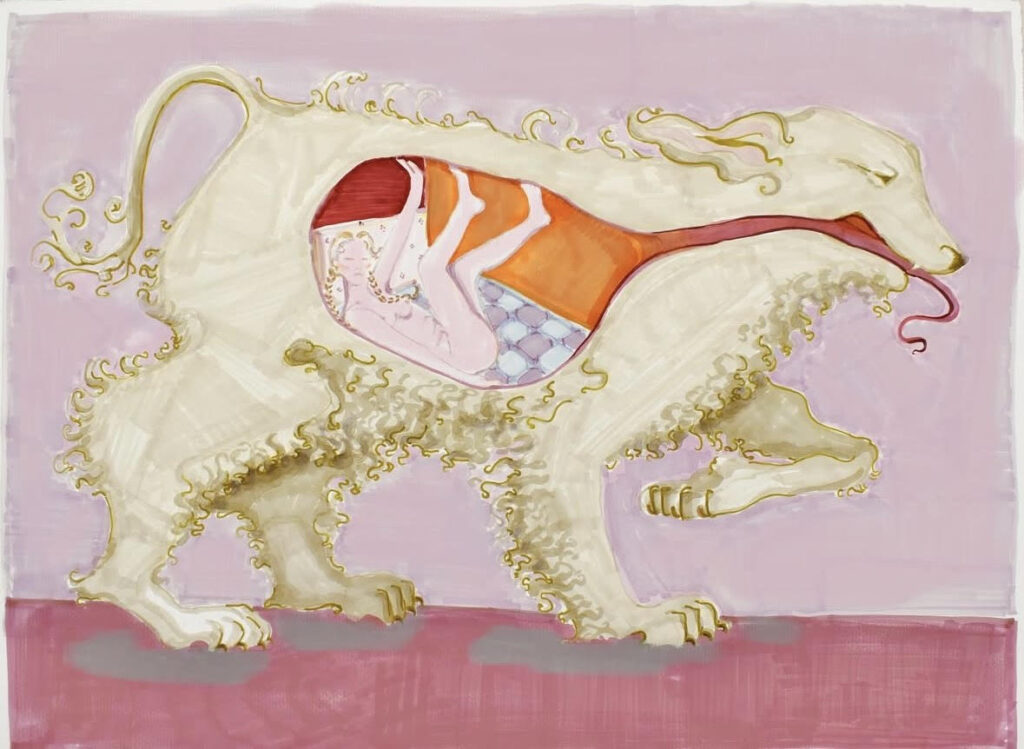
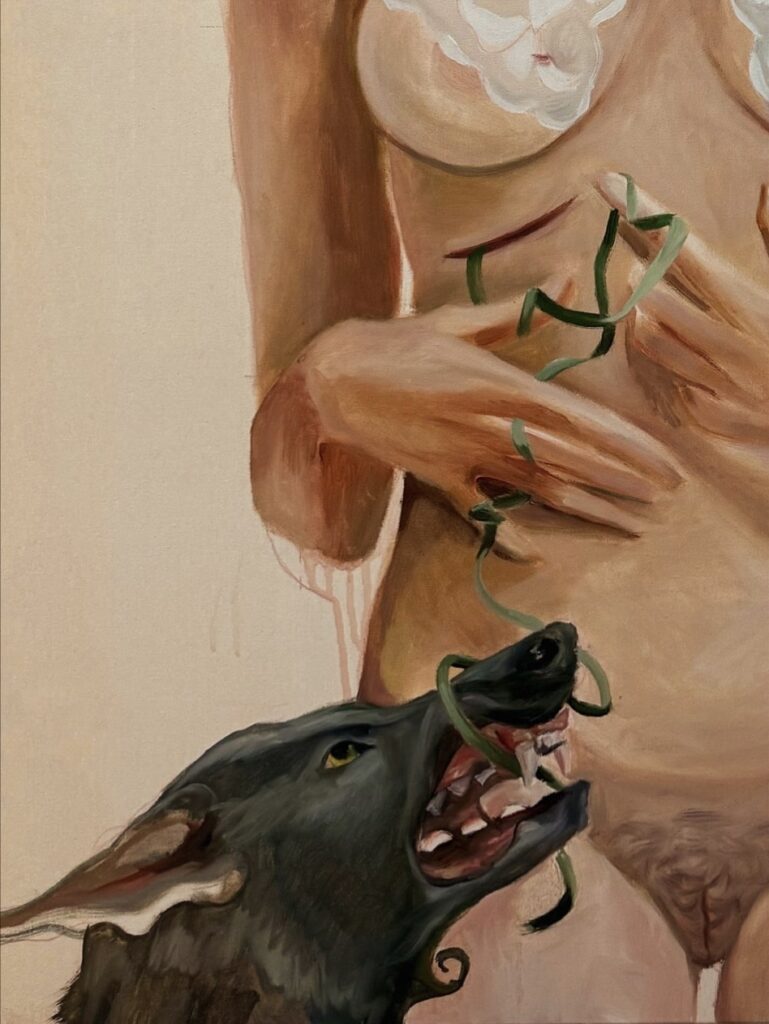
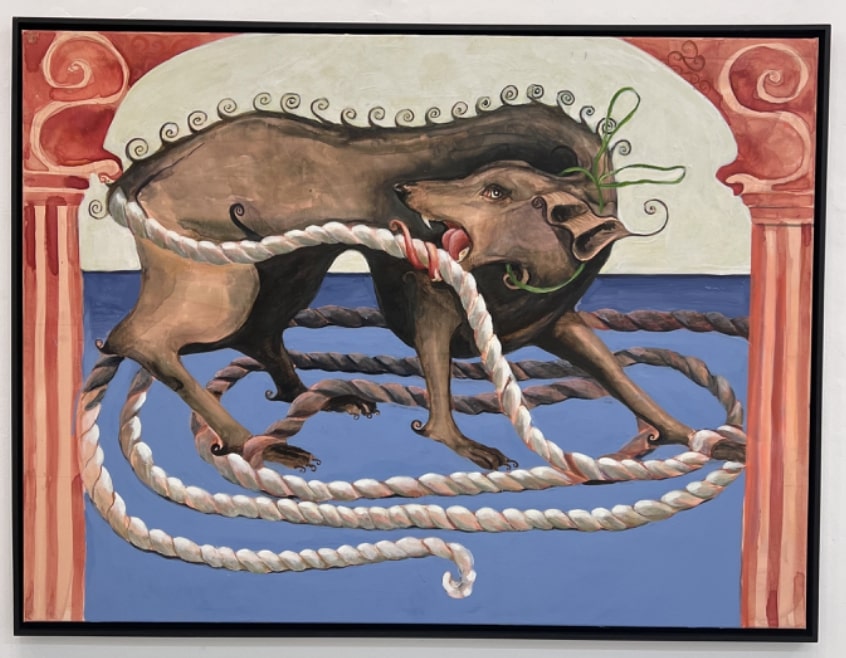
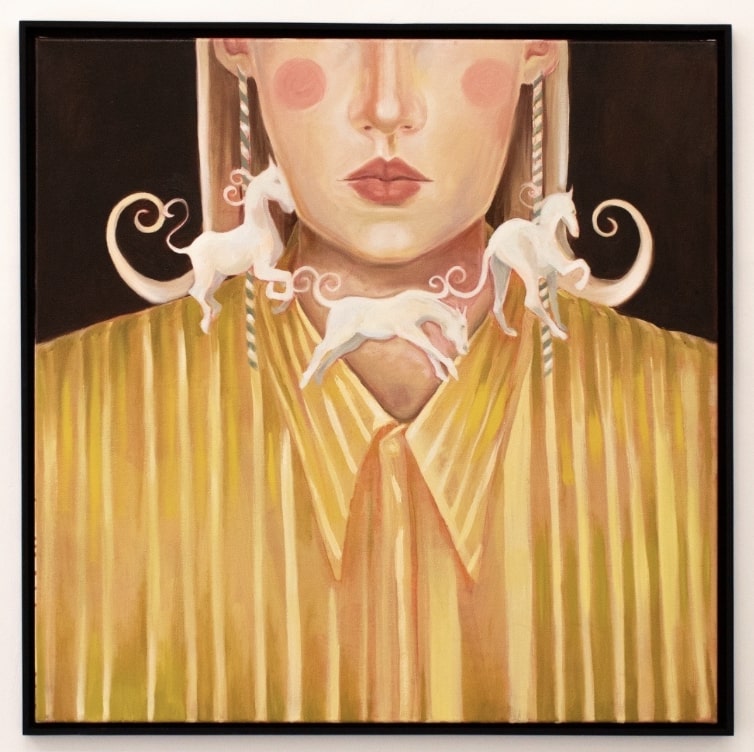
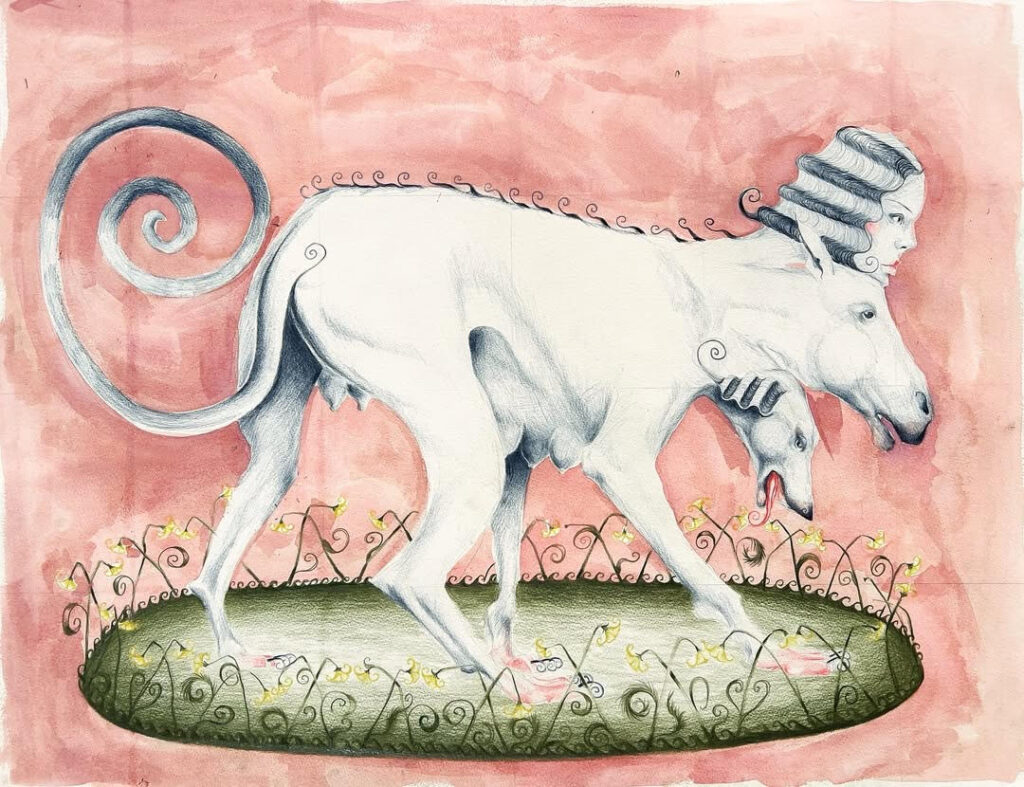
Darcy: Animals appear a lot — horses, dogs, birds. They’re anchors of loyalty and instinct. I also use patterns — curtains, wallpaper, fabrics — as stand-ins for repetition or containment. These symbols shift as I do. A horse might be freedom one year and burden the next.
Is the mother in your work a person, a presence, or an archetype?
Darcy: She’s all of those things. Sometimes she’s me, sometimes she’s my mother, sometimes she’s the idea of “mother” as a myth. She’s always there, whether visible or not.
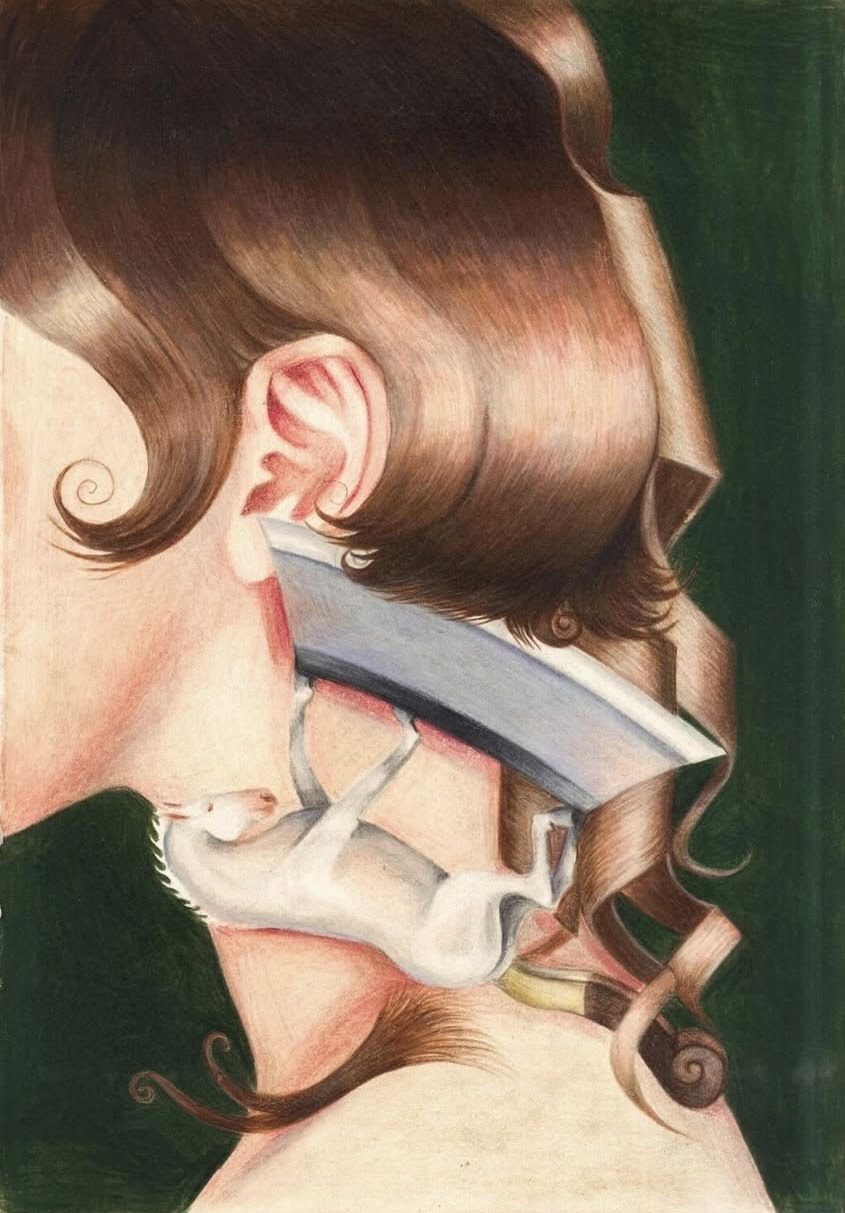
Do you see the child figure as an observer, a participant, or perhaps a mirror of the viewer?
Darcy: The child is a witness — someone watching things unfold without full understanding. I like that distance; it mirrors how I often feel in my own memories.
There’s a comparison you make between domesticated animals and human behaviour shaped by environment. Do you see this as a critique of nurture, or as a poetic metaphor for adaptation?
Darcy: More poetic, definitely. I’m interested in how we absorb our surroundings, how we become shaped by the spaces we live in — like animals adapting to captivity. It’s not a critique so much as a fascination with how resilience forms.
How do you navigate the risk of sentimentality when dealing with subjects like motherhood and memory?
Darcy: I think sentimentality only becomes a problem when it’s dishonest. I let emotion lead, but I always interrupt it with something slightly off — a gesture, a pattern, a colour that unsettles the sweetness. I want the work to ache, not to weep.
In a time when so much art leans toward irony or detachment, your work feels deeply sincere. Do you ever feel tension between vulnerability and self-protection in how you share your story?
Darcy: Constantly. Vulnerability is necessary, but exposure can be exhausting. Painting gives me a layer of distance — it’s me, but it’s also not me. That slippage between truth and invention is where I feel safest.
What role does fiction, or “autofiction,” play in protecting or transforming truth in your paintings?
Darcy: Autofiction lets me reshape memory into something that feels emotionally truer than the facts. It protects the real story while still honouring its weight. Fiction becomes a vessel — one that can hold contradiction without needing to fix it.
If you could describe the emotional temperature of your work in one word, what would it be, and why?
Darcy: Sweltering. It’s soft on the surface but thick underneath — heat you can’t quite escape.
You use found imagery and personal archives. How do those sources coexist — where does your personal history end and someone else’s begin?
Darcy: They bleed into each other. I love the uncertainty of not knowing whose memory I’m painting. Found images let me camouflage my own story — hide it in plain sight.
Pattern plays such a strong role in your work — almost like a second voice. Do you see it as decorative, psychological, or narrative?
Darcy: All three. Pattern is repetition, obsession, a kind of control. It’s decoration trying to disguise emotion — wallpaper holding everything together.
You mentioned the idea of being “contained to a space.” How does that containment show up physically in your compositions?
Darcy: Through framing and scale figures often boxed in, cropped, or repeated. I like paintings that feel like they can’t breathe properly.
Can you walk me through your creative process from beginning to end result?
Darcy: It usually starts with a memory, then an image something half-formed that I chase down through drawing. I collage, layer, and repaint until it feels right. It’s intuitive, messy, and obsessive. I rarely plan things properly; the painting tells me what it wants as I go.
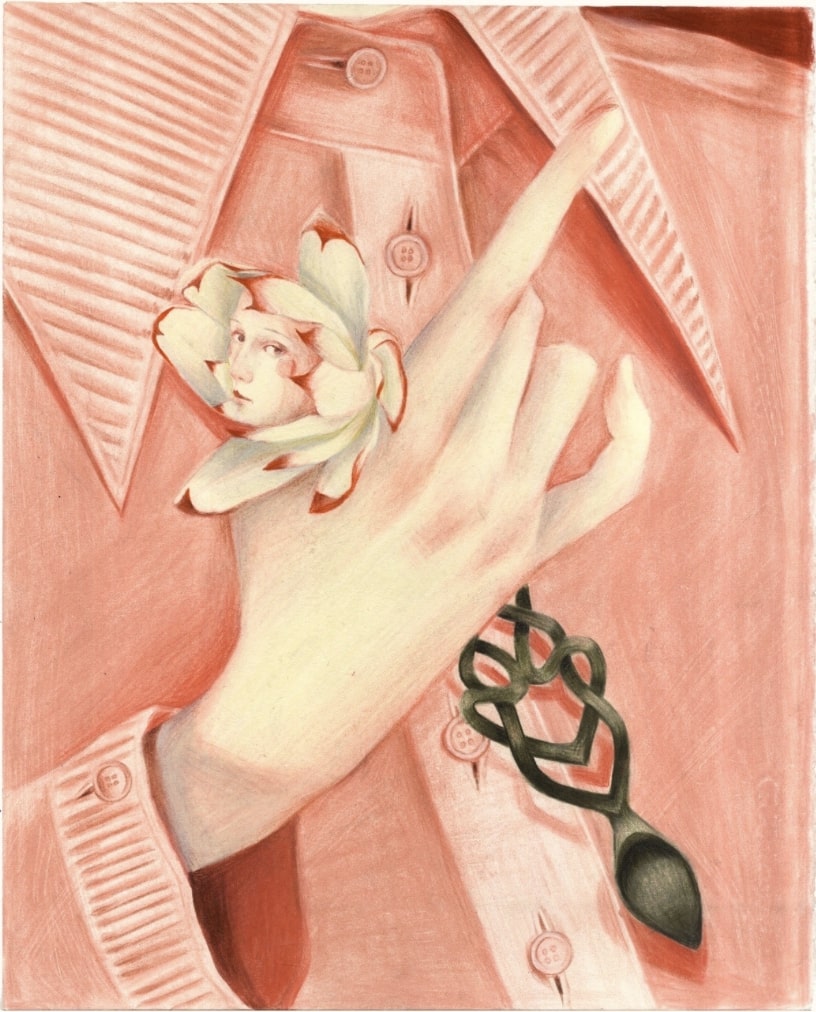
How do you approach colour?
Darcy: Colour carries emotion before image does. I use it like temperature to create air, warmth, or pressure. It’s instinctive, but I’m drawn to slightly sour tones, ones that feel lived-in.
So with what we just talked about, what are you hoping to convey?
Darcy: That love and chaos can exist in the same breath that contradiction can be beautiful.
Ok Darcy, now to something totally different. In a parallel universe, who would you be, and what would you be doing?
Darcy: I always used to dream of being a gymnast or a figure skater something about the control, the choreography, the glitter and the grit. I love the calmness of it all, the poise masking exhaustion. In another universe, I’d definitely be some Russian figure skater.
Outside of art, what’s something you’re obsessed with right now — maybe a hobby, a show, or even a food — that keeps you grounded or inspired?
Darcy: I’m obsessed with Mormons at the minute I can’t stop watching The Real Life of Mormon Wives and The Real Housewives of Salt Lake City. I’m fascinated by the contradiction of it all — the way belief, performance, and image intertwine. There’s something theatrical and unsettling about how they present themselves, but also deeply human in their desire to hold it all together. I think I’m drawn to those characters for the same reasons I’m drawn to painting — they’re constantly negotiating truth, performance, and identity.