
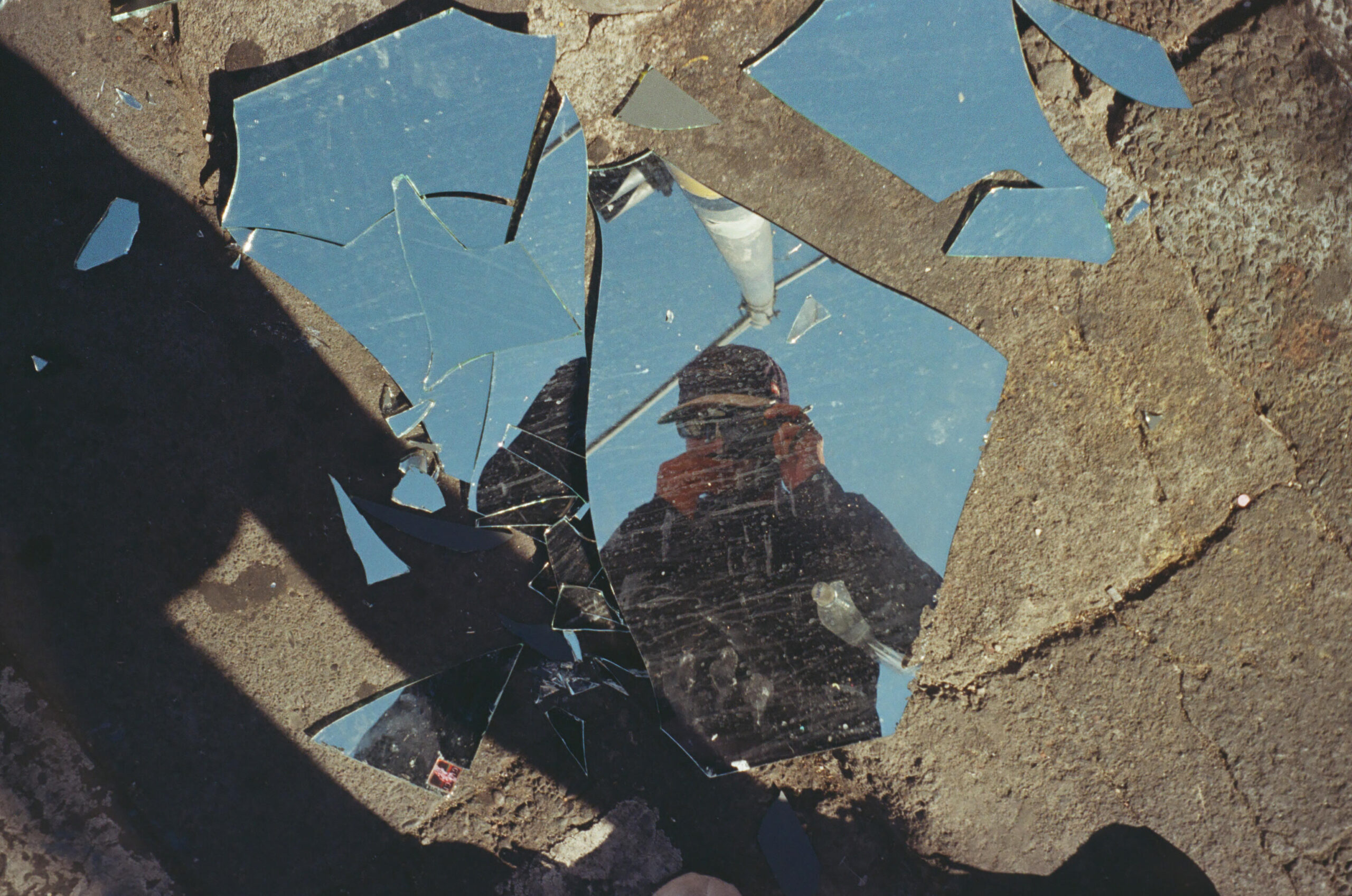
Share this
Angelo Navas, also known as Una Rutina, is a Venezuelan photographer born in 1995 whose work is rooted in the street as both subject and lived reality. Drawn early to drawing, graffiti, and the visual codes of urban life, his practice developed through observation long before photography became his primary medium. While studying Fine Arts, a pivotal encounter with Black Passport by Stanley Greene reshaped his understanding of how images can engage with violence, intimacy, and everyday life—quietly guiding the perspective he would later bring to the streets.
Working exclusively with analog photography, Navas embraces the discipline, patience, and risk that film demands. His images are shaped by instinct as much as technique, attentive to fleeting moments where light, gesture, and human presence briefly align. Photography, for him, is inseparable from movement—walking, watching, waiting—and from the material conditions of survival that have defined his relationship with the street.
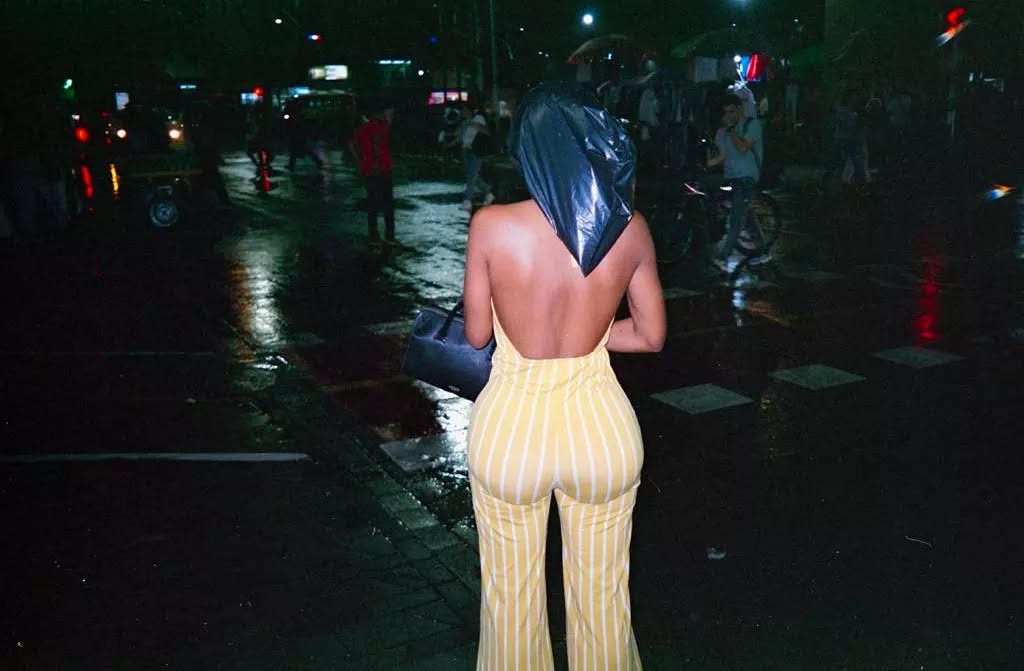
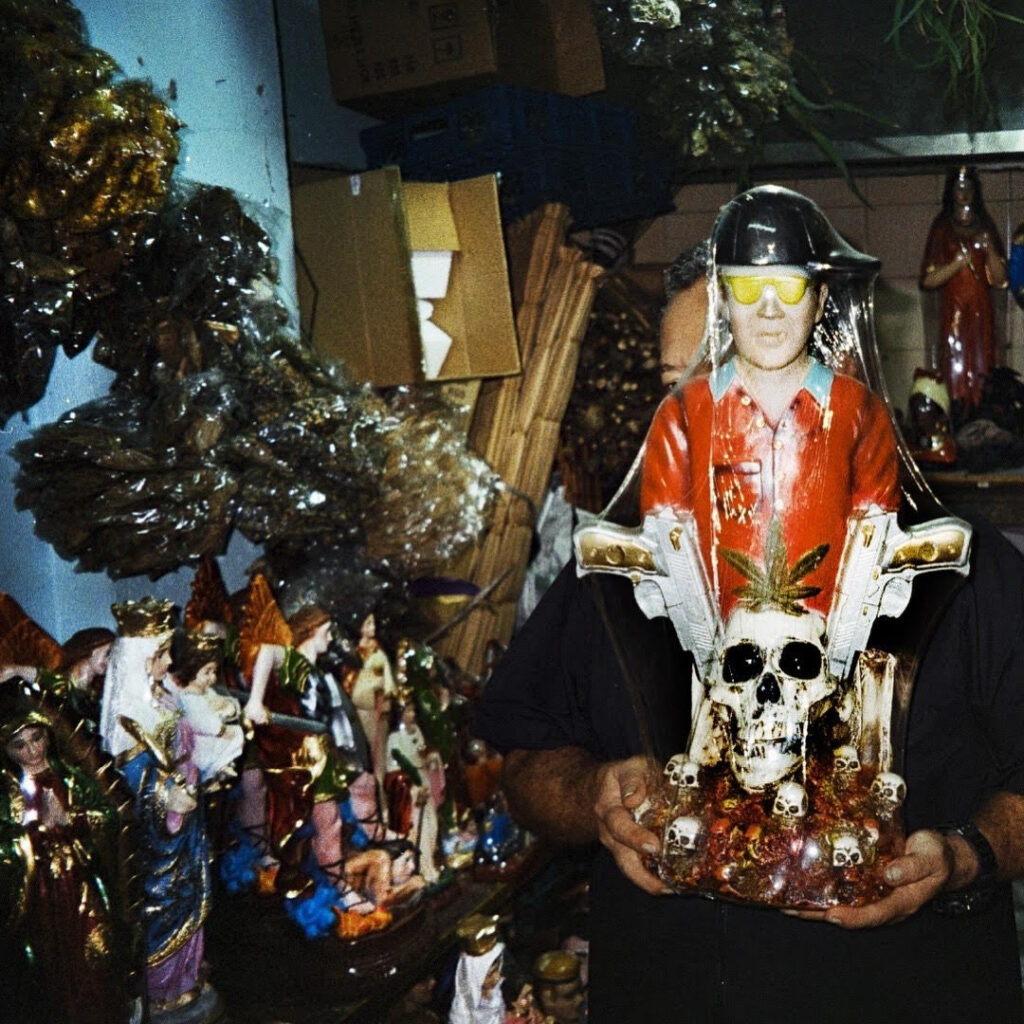
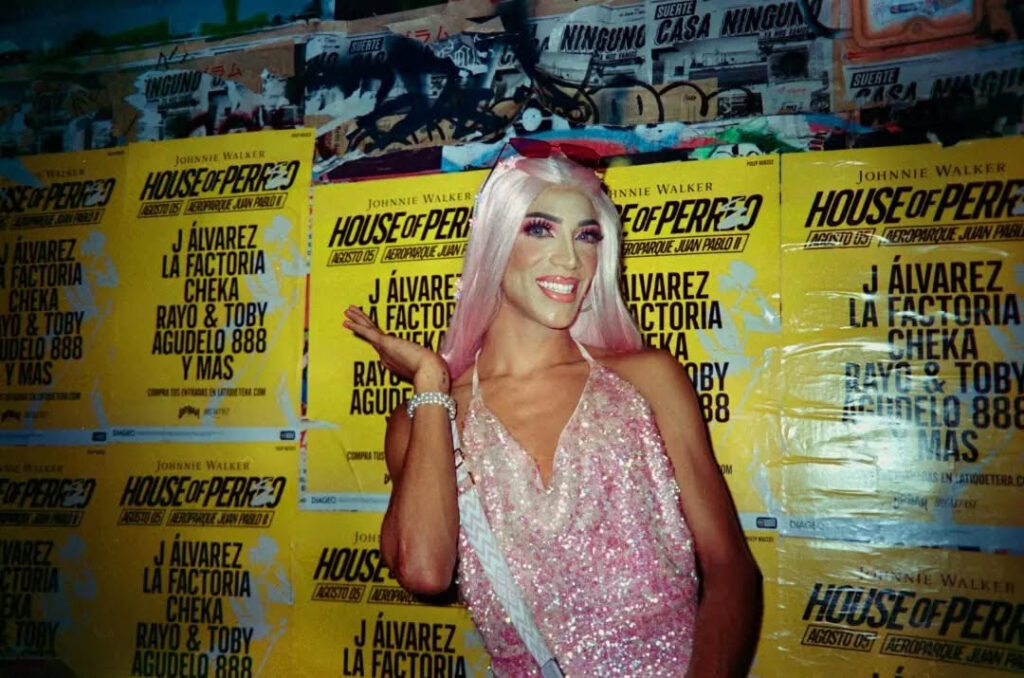
After migrating from Venezuela to Colombia, and settling in Medellín in 2017, Navas began to approach photography with renewed conviction. Walking through the city’s downtown became a daily ritual, allowing him to refine a visual language informed by anthropology and investigation. His work engages closely with the characters, rituals, and tensions of urban life, often tracing subtle markers of violence while maintaining respect, distance, and trust with the people he photographs.
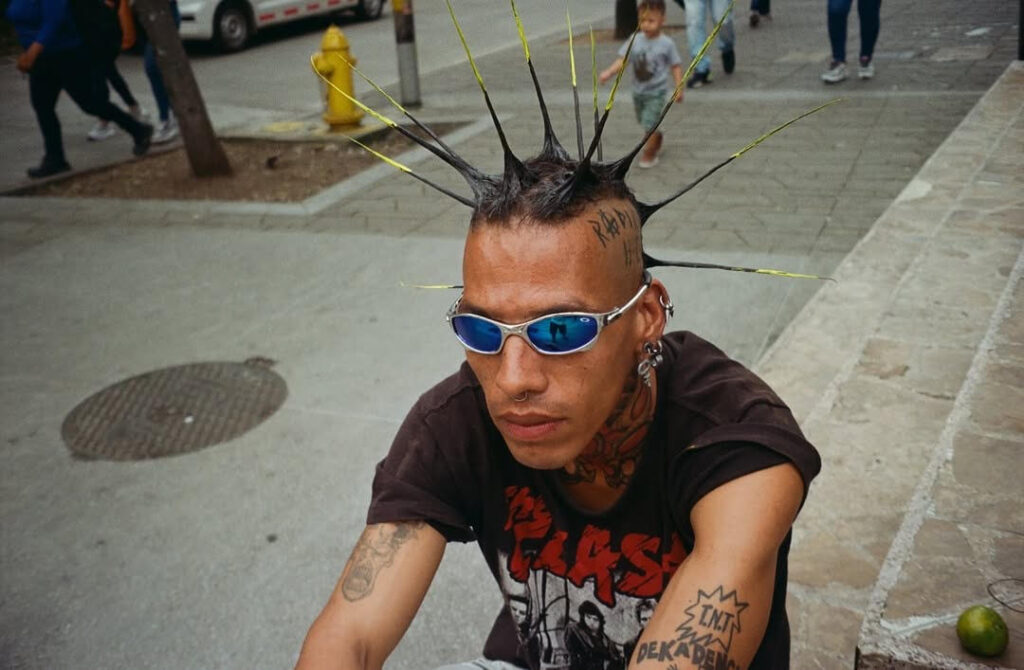
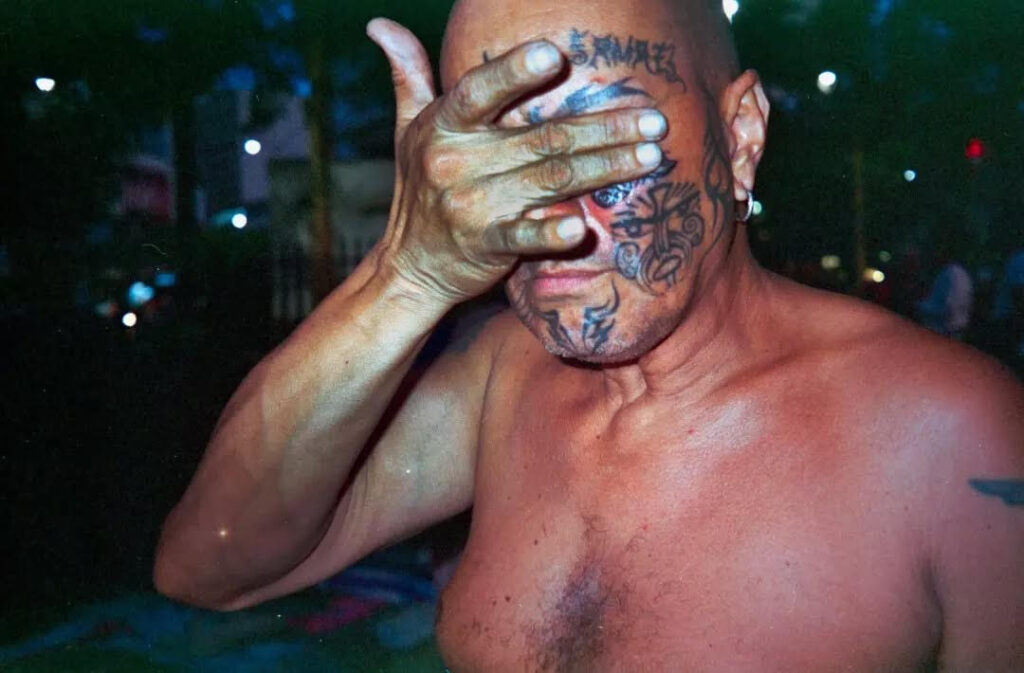
This focus has led to a series of visual ethnographies centered on bodily codes such as tattoos and haircuts, resulting in editorial projects including the self-published zine CURTIDO and the book C10, released through independent publisher BUGLOVE BOOKS. Alongside print, Navas has increasingly explored video formats since 2024, using short audiovisual works to expand the context of his street encounters and circulate them through digital platforms.
Approaching photography as a daily practice rather than a fixed project, Navas continues to move through the city as an open archive—documenting migration, survival, and overlooked gestures—treating urban life itself as an endless container of stories waiting to be told.
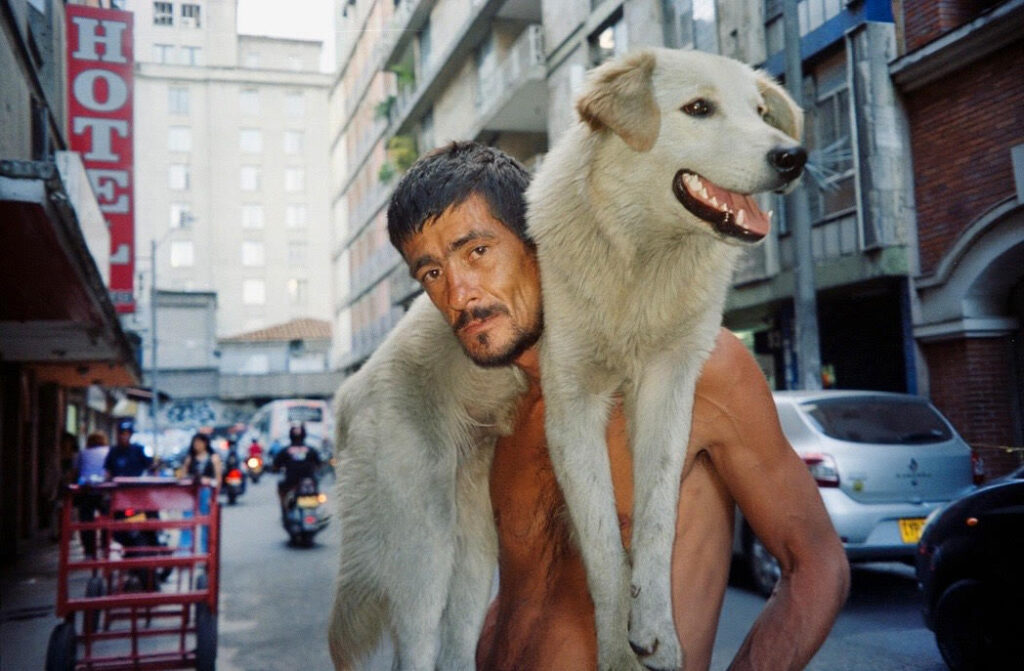
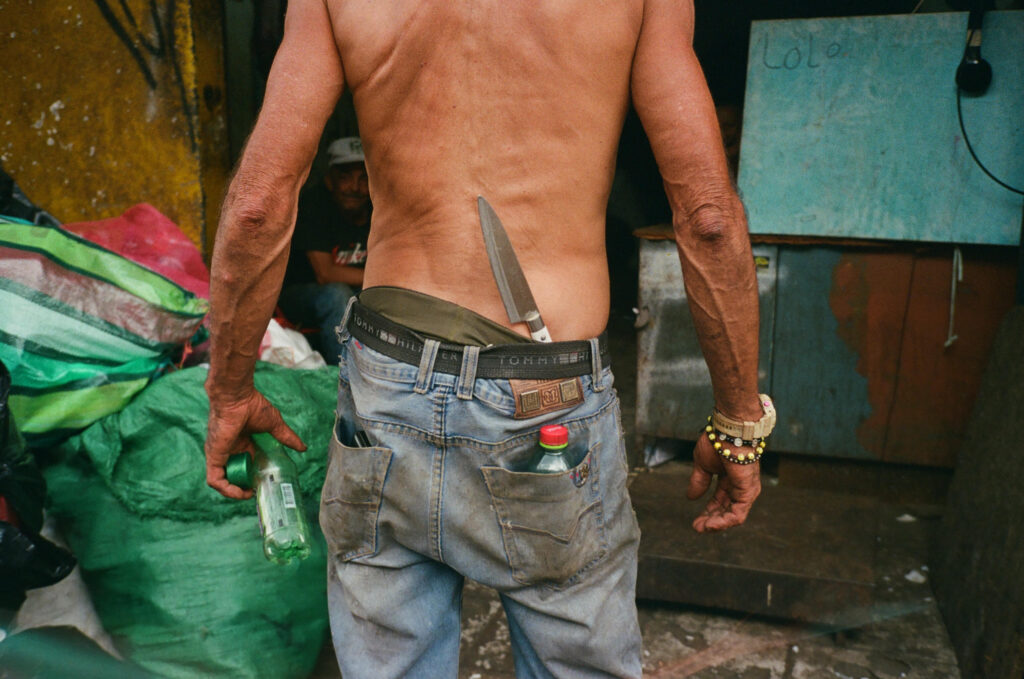
Hi Angelo! It’s a pleasure to sit down wot you! First question that I always ask. How does a regular day look like for you in Medellin, Columbia?
Angelo: My days fluctuate by moments. I usually wake up early, have coffee at home, and head out walking toward downtown Medellín. I carry with me two cameras: a Nikon SLR and an Olympus point-and-shoot. I arrive via San Juan Street and cross the La Alhambra area toward Prado, an informal market that takes shape beneath the Metro viaduct. There I look for vintage items to restore, resell, or trade. I also search for naïve art pieces, books, cameras—anything I can give a second life to.
Afterwards, I wander through the streets of downtown instinctively, trying to reach the busiest areas depending on the time of day, the energy of the moment, and whatever events unfold that day. If I manage to negotiate a garment, I move around the city to make deliveries. I can say that my day boils down to photographs and street trading.
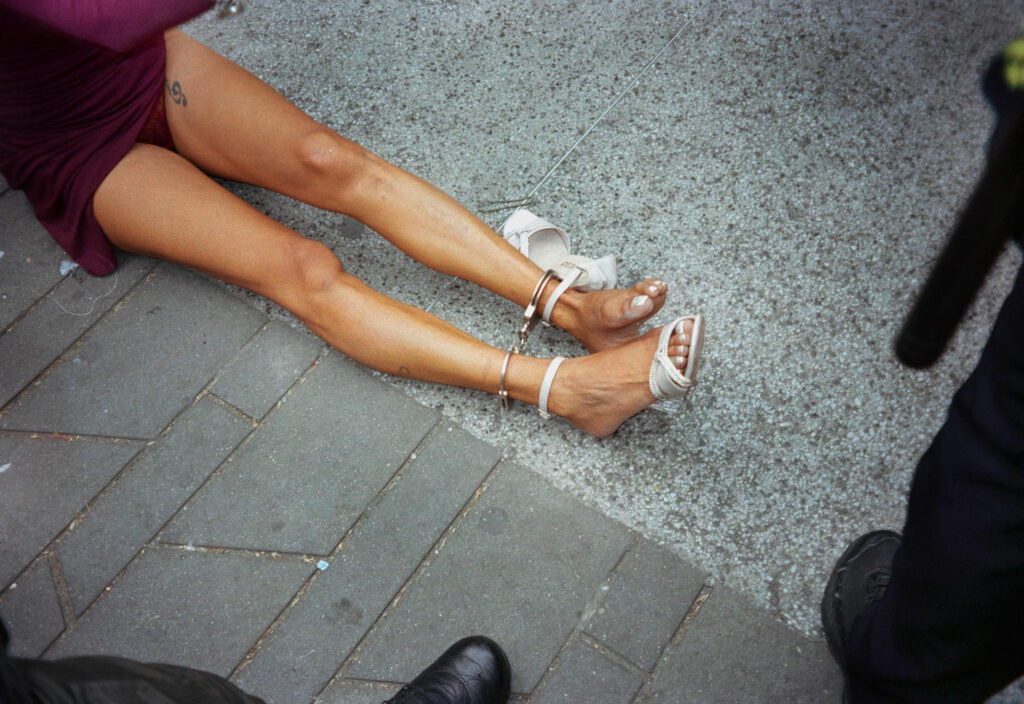
I’m curious, growing up in Venezuela, what kind of kid were you? What did you enjoy doing, and how did you spend your time?
Angelo: I was a happy child, despite the country’s social and economic turmoil. I liked baseball and playing in the street, and in many of those moments I took the opportunity to slip away and walk around my neighborhood, learning to recognize it. I really enjoyed going to the beach. At the age of eleven, I began to have contact with graffiti; it was part of the experience of the street.
So why did you decide to relocate to Columbia?
Angelo: I had the opportunity to leave Venezuela at a time when the crisis was intensifying. My intention was never to stay in Colombia; it was meant to be a place of passage. I arrived in Medellín, in the Cristorrey neighborhood, and began to explore the city—walking it, moving through it, and learning to understand it. Here I connected with several people through graffiti, and I felt comfortable in Medellín. I have now been in this country for eight years.
I gotta ask…. What are your thoughts on everything that’s happening in Venezuela right now?
Angelo: I think it is a scenario in which nothing that happens will truly benefit those who have been suffering the country’s political reality for decades. In my case, I deeply distrust all representatives across the political spectrum, especially because I have experienced hunger and hopelessness firsthand. There is no doctrine that, when applied to reality, contributes to a more just world. What from a distance appears to be a matter of ideological opposites is in fact an abysmal inequality between those who hold political and economic power and “the rest of the people.” For that reason, I can say that my contempt extends to every one of them, equally.
So how did you get introduced to photography? And how did you first start out practicing with your camera?
Angelo: I was always drawn to photography and the street; however, the path toward this practice was not a direct one. My first close encounter came when I acquired a Chinon camera, which I began to experiment with in a very basic way. Shortly afterward, Stanley Greene’s book Black Passport came into my hands; it introduced me to the role of the street photographer. The handling of analog technique, as well as his life story, opened up a horizon that felt possible for me. It then became a reference that shaped my interests and my current work.
From there, I immersed myself much more deeply in photojournalism, and encountering war photography had a profound impact on me. With this in mind, I tried to research further. A friend of mine explained the most basic operation of the camera to me, though I did not understand it immediately; I went through processes of trial and error. With the Olympus point-and-shoot camera I had the opportunity to practice in an automatic mode, which provides certain guarantees—especially in street photography, where you often have only one chance to capture the scene. Over time, I have continued to put these forms of analog photography to the test. I was able to acquire an SLR, and now, with much greater awareness, I have been refining my technique, gaining a better understanding of the interplay of values required to make the most of light.
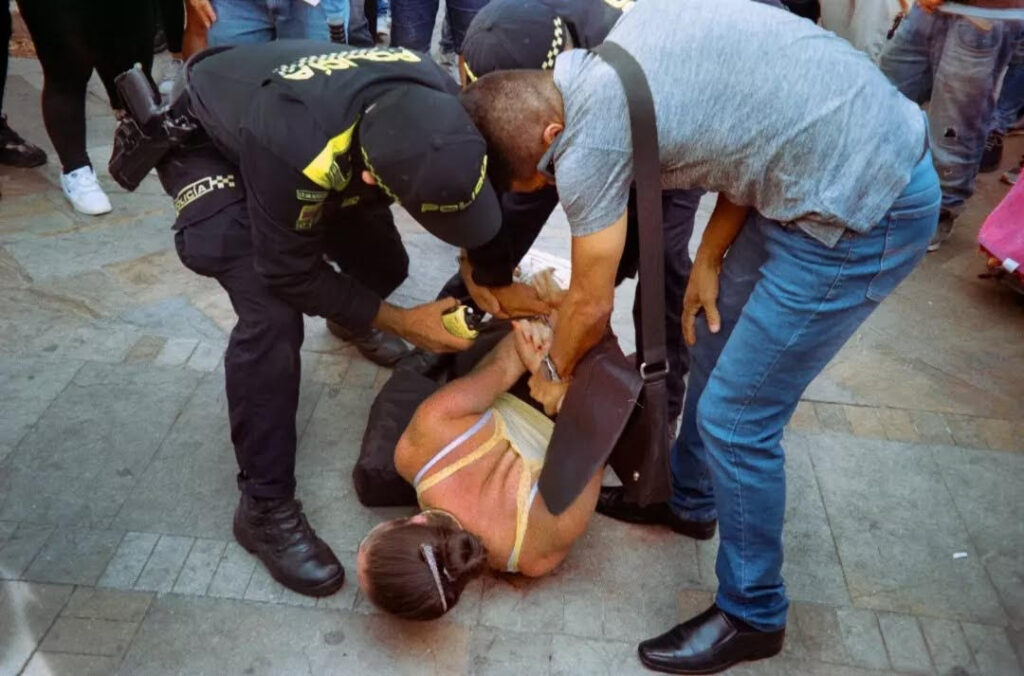
Alright, so what made you want to start documenting the streets, people and everyday situations?
Angelo: It is what I have had closest to me; in some cases, I have felt it is the “only thing I have.” The street is full of signs, events, actors, and atmospheres, and it proposes a game of observation and tracking. We all have different experiences of the same space; the photographic frame is not merely an aestheticization, but a fold made into memory—especially in places where everything that happens is so frenetic, like the center of a city. To pursue this inquiry through the gaze is to encounter sensitive material that deserves to be portrayed, sometimes becoming a mirror of humanity.
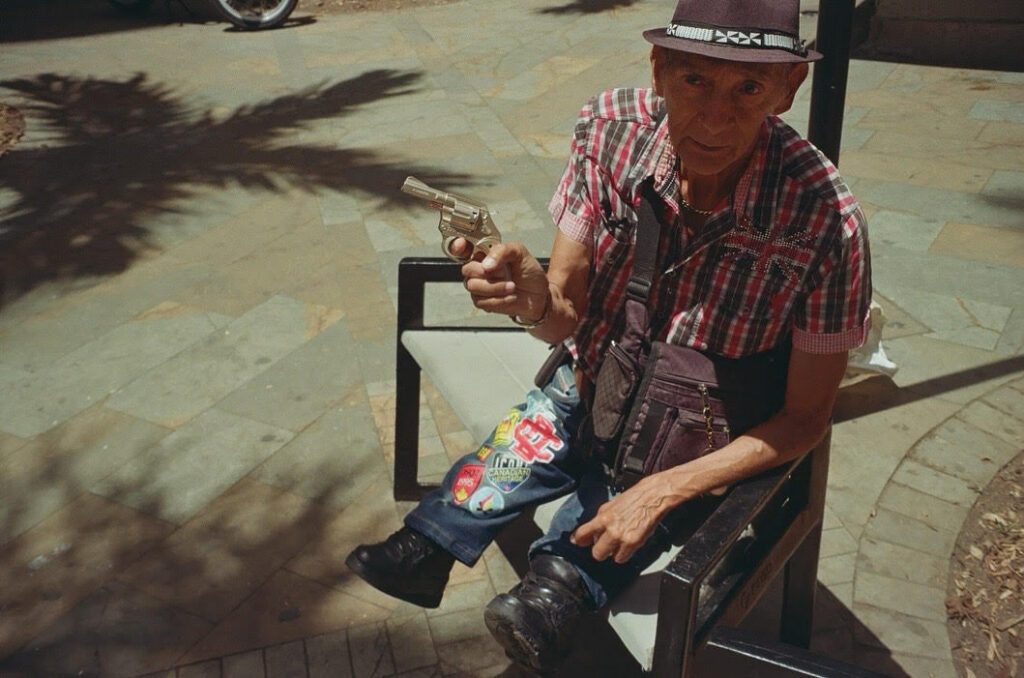
With that in mind, what do you look for when you’re out looking for your next motif to capture?
Angelo: I don’t go out with an idea in mind; I go out to observe, and I arrive at the scenes or encounter the characters. I feel this is the healthiest approach—to let the street offer itself. Now, over time and through the archive I have built, I have begun to identify certain motifs that repeat themselves, which I have been collecting. When viewing these photographs as a whole, I see their potential to transcend and to take shape as specific projects.
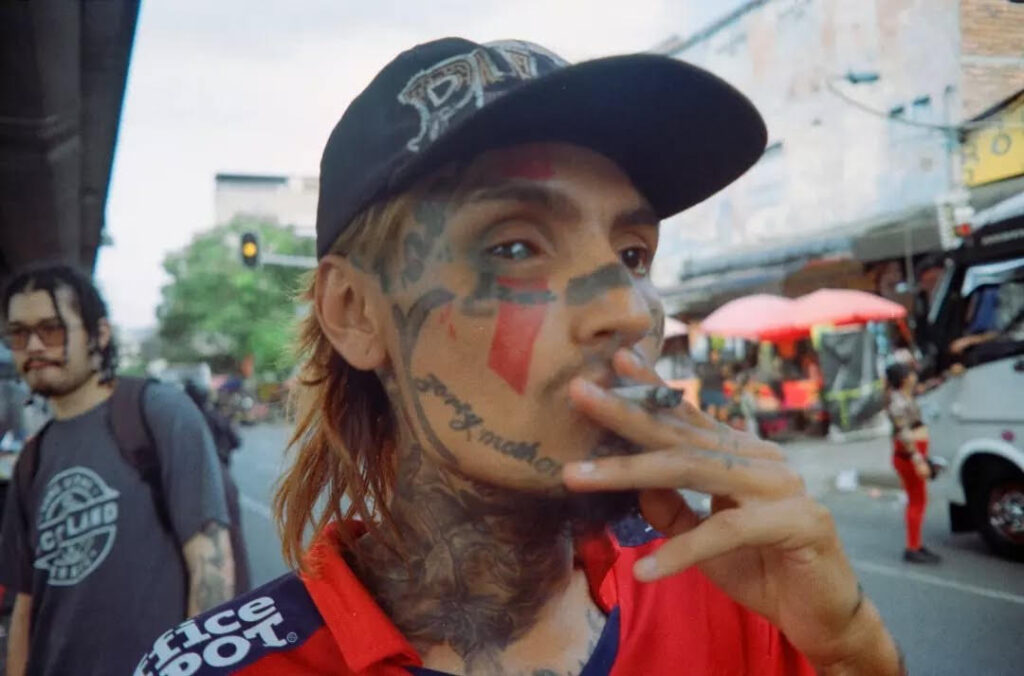
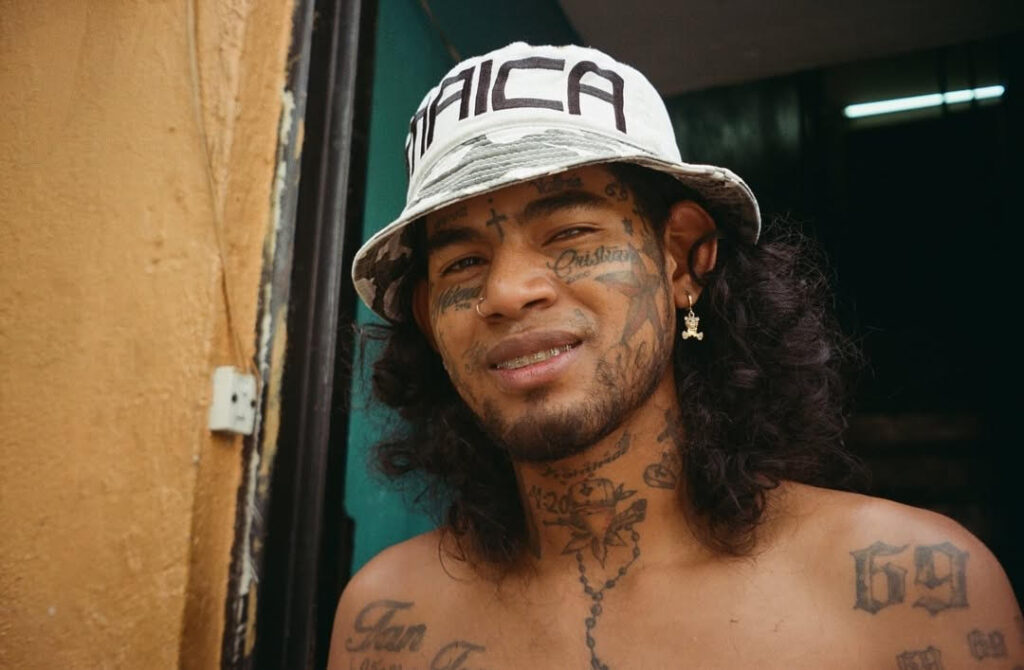
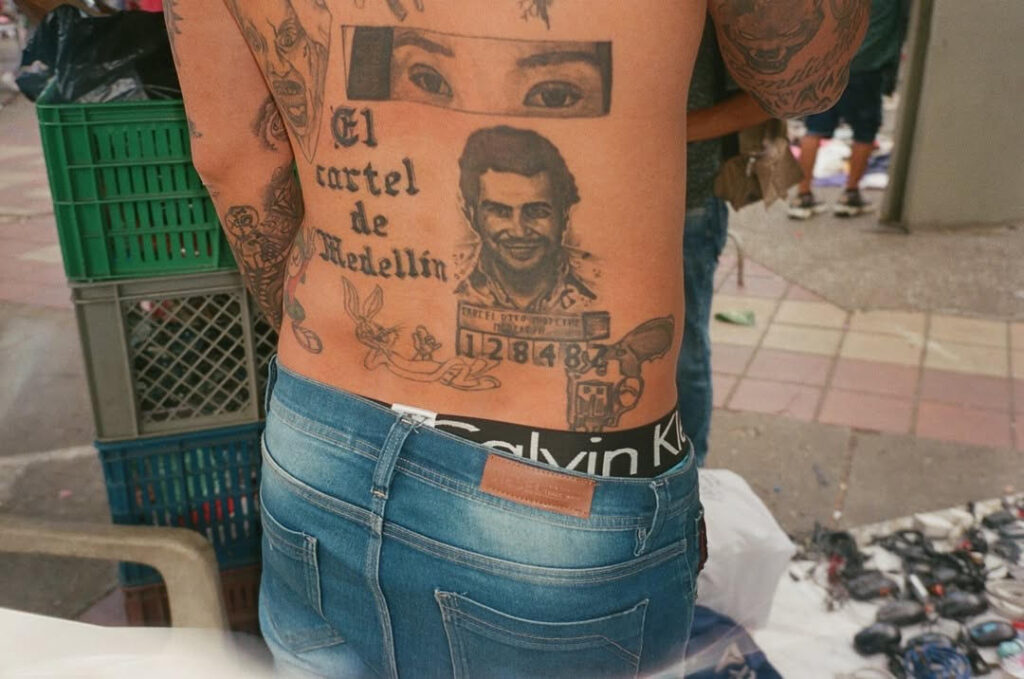
I have found that going out in search of “something” is irrelevant; it is possible to walk for an entire day and find nothing at all. That is why I prefer to limit the anxiety of the search and instead open my eyes, to scrutinize the surroundings for that scene, that face, that aesthetic that draws me in to the point where I cannot avoid pressing the shutter. In the case of CURTIDO, I encountered these recurring signs and was encouraged to create a fanzine dedicated to tattooing.
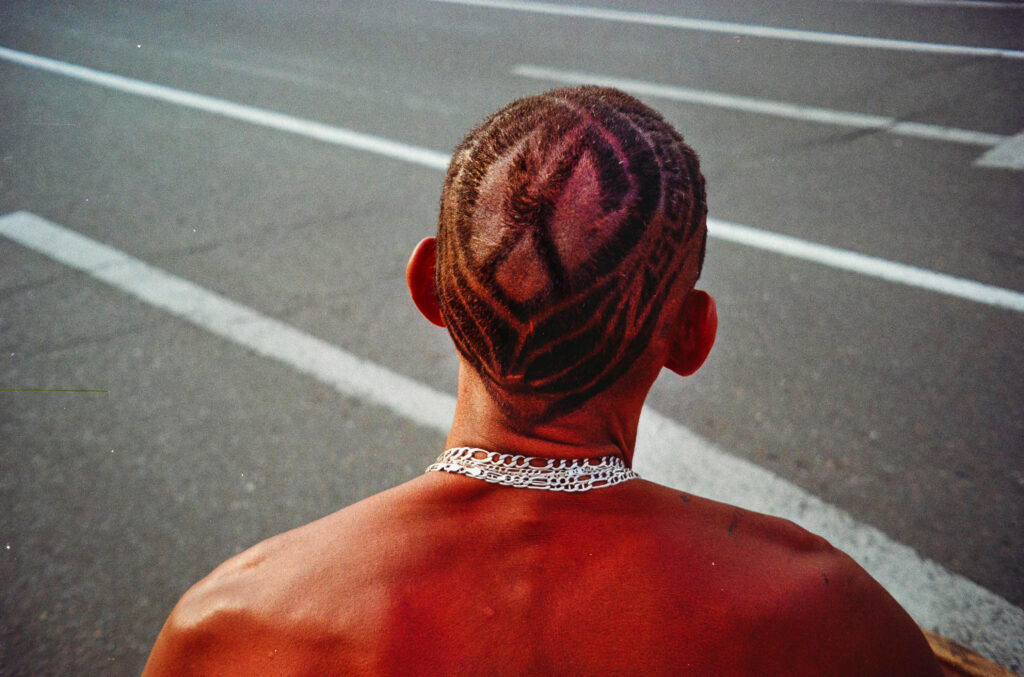
With the mullet series, what I did was a kind of tracking that began with a couple of photographs of hairstyles; in this case, I could speak of a search made possible by the fact that this style is quite popular in the city where I live. I wanted to create a collection that showed the diversity of people who wear their hair this way, from the very young to the much older.
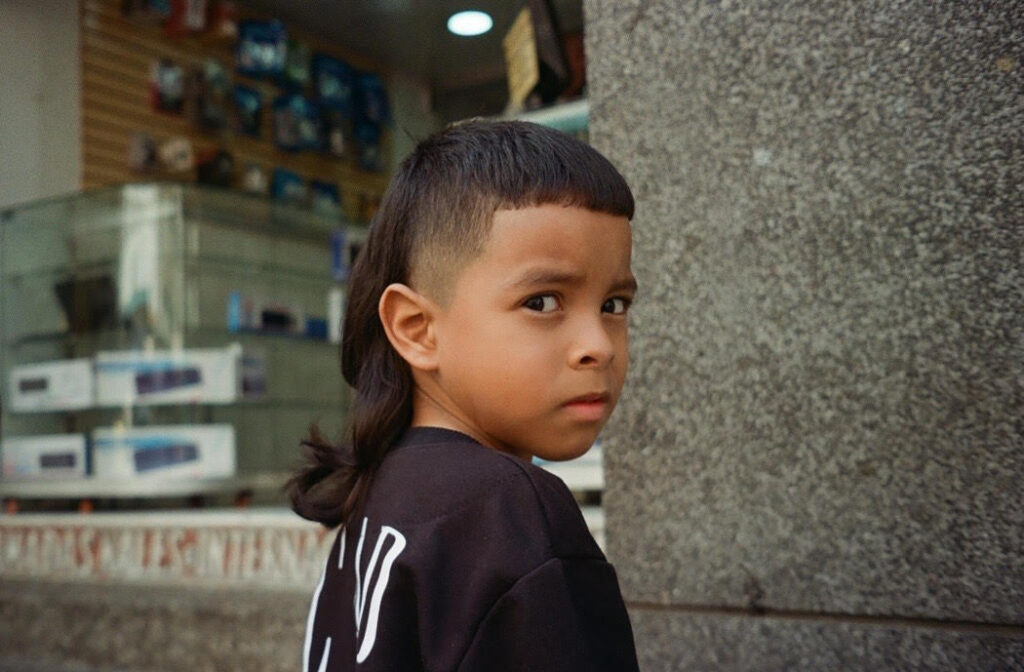
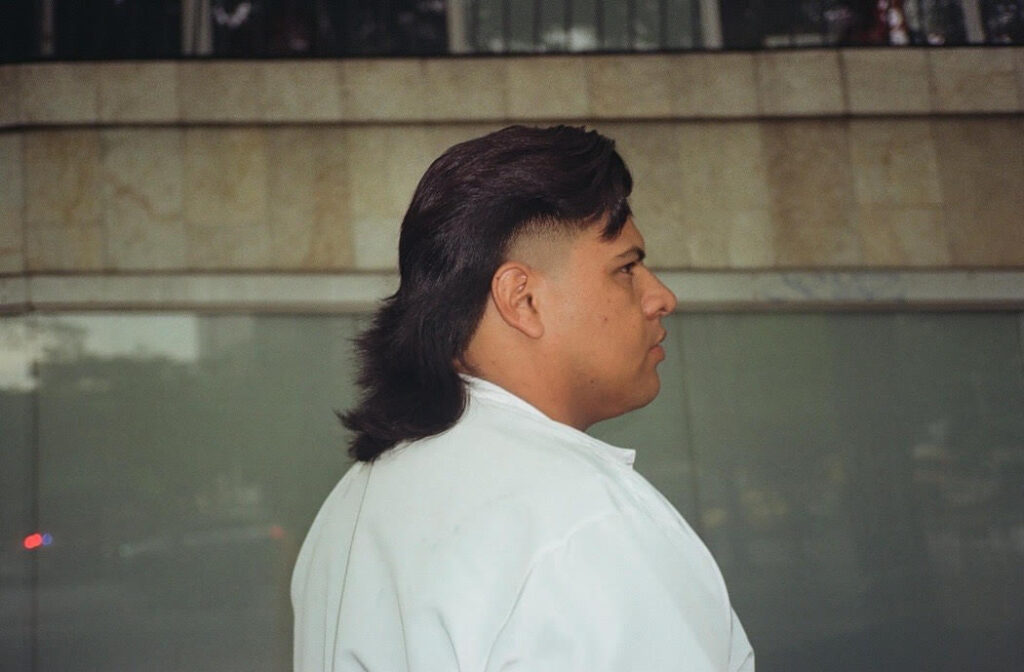
How important is authenticity in your work? And can a picture still be good, if it does’t have any?
Angelo: From a personal challenge standpoint, my intention is to refine a process based on what I feel is authentic in relation to the use of film and analog practice. It is my ethics and my vision of my own work that drive me to continue with a technique that has many virtues, as well as frustrations and disappointments. I would not want to evaluate—even my own work—in a binary way; I believe that being honest with myself means acknowledging how important it is for me to follow my own path and to feel it as authentic. I feel that some photographers engage in this exercise, and it becomes defined in the roles they choose to pursue. This applies to the technical dimension of making photographs.
As for content, I feel that my intention lies in documenting a shared reality in public space, with all the rawness and magic that this can encompass. Clearly, the image proposes a play of interpretations that escape my control, but from my point of view, I seek to capture the authenticity of the city and of everyday life by being there, in the moment. Producing reality could be considered an action lacking the “authentic” factor; it is not what I seek, either as a photographer or as an observer. I do not deny that everything has already been done—there are countless people photographing—but I believe that this diversity of visions is what makes the practice interesting and allows us to engage in dialogue around the possibilities of this craft of photography.
What makes photography and video your prefered medium of expressing yourself?
Angelo: I believe these are the most appropriate tools to collect what I observe and to leave a record; it is, in a way, an immediate exercise, even when I must wait for the results of developing a roll of film. Going beyond the merely documentary aspect of photography, I have found aesthetic possibilities that allow this memory to be infused with my own language and vision, and beyond that, with color and texture—as a conjunction of factors that I balance even within the frenetic nature that street photography sometimes entails.
In the case of audiovisual work, editing is a resource that allows the narrative to be extended, and through it I have been able to experiment beyond the still image, capturing complete actions that reveal the moments and spaces I inhabit. During the time I have been developing the project Una Rutina, I have been fortunate to find in photography not only a refuge for expression, but a medium open to experimentation and one in which I find—now more than ever—countless possibilities.
You’ve spoken about drawing, graffiti, and the street as parallel influences from a young age. How did those early visual languages train your eye before photography even entered the picture?
Angelo: Graffiti gave me the boldness that the street requires; nothing I do today would have been possible without the rigorous reading of the street that graffiti makes possible. Drawing was a gateway to graphic creation, an aspect that comes into play when capturing images through photography. Visual arts in general have also inspired me; cinema, for example, has provided me with resources that I have carried into photographic exploration.
You studied Fine Arts before fully committing to photography. Do you still feel like a fine artist who uses photography, or did the street pull you into a different lineage altogether?
Angelo: I feel that photography has taken me to a place different from art, considering that visual education passes through contemplation and understanding. I do not see myself as an artist in the traditional definition of the role, because I must admit that the street is a very different stage for creation than a studio; living the city is an experience filled with many things, and serenity it’s not necessarily the most common. Clearly, I draw on the crafts of art to develop my work, and it is through them that I am able to consolidate my projects so that they can exist either online or as objects in the physical realm.
You’ve chosen to work exclusively in analog, fully aware of the limitations and risks. What does analog photography allow you to feel or access that digital never could?
Angelo: Analog photography is a challenge that goes beyond the immediacy of the digital. Since I began making photographs, what I managed to obtain was a film camera; I did not have access to a digital camera. The analog process brings adversities, and it gives me great pleasure to feel that I can overcome them. The margin of error is sometimes unpredictable, and the years I have spent photographing have been a period of constant practice in order to achieve the results I envisioned. I have no issue with digital photography—the cellphone, for example, serves as a backup for my work. Perhaps a future project will require this modality.
Street photography often demands speed, but analog requires patience. How do you reconcile instinct with delay—especially when you won’t see the result immediately?
Angelo: Patience and respect for the timing of analog photography. At this point, I feel it is like a ritual that is part of the practice.
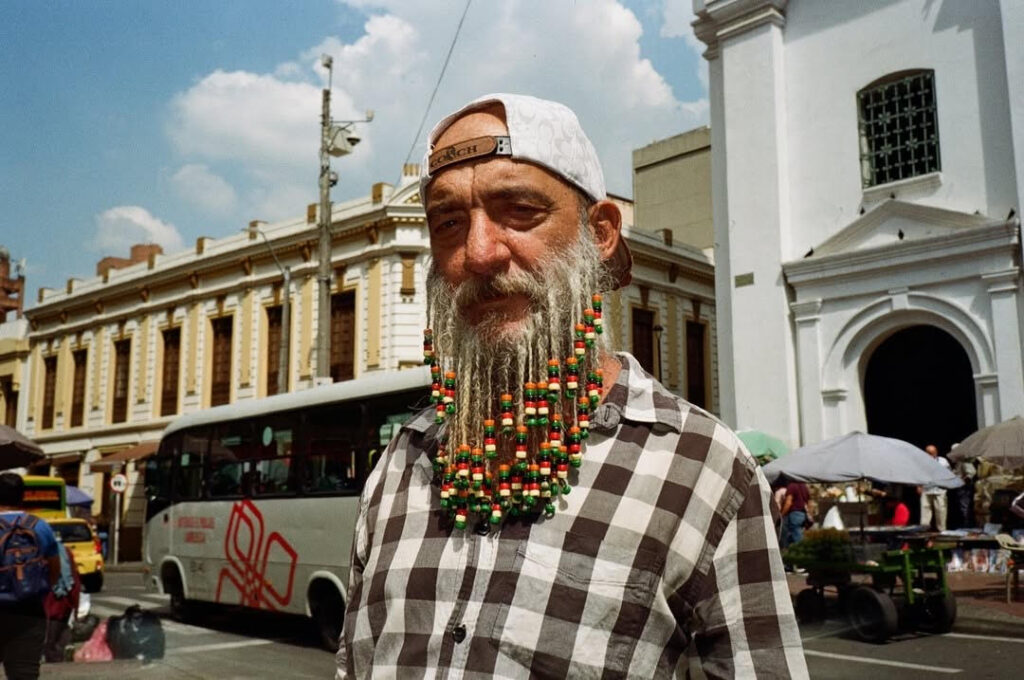
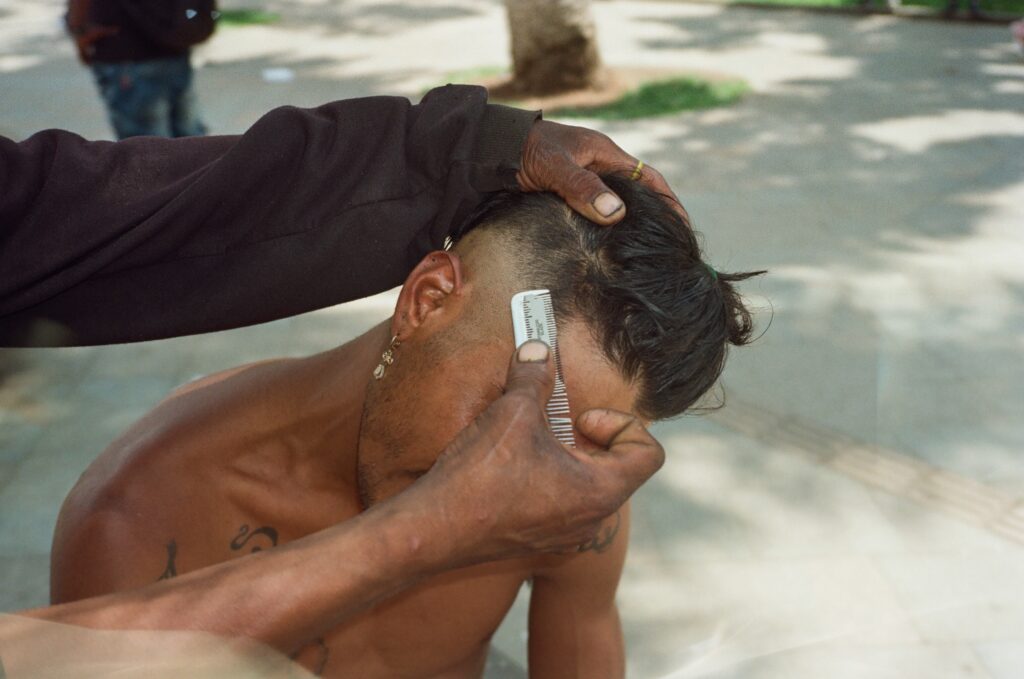
You describe the street not only as inspiration, but as a space of survival. How has that reality shaped your relationship to the people you photograph?
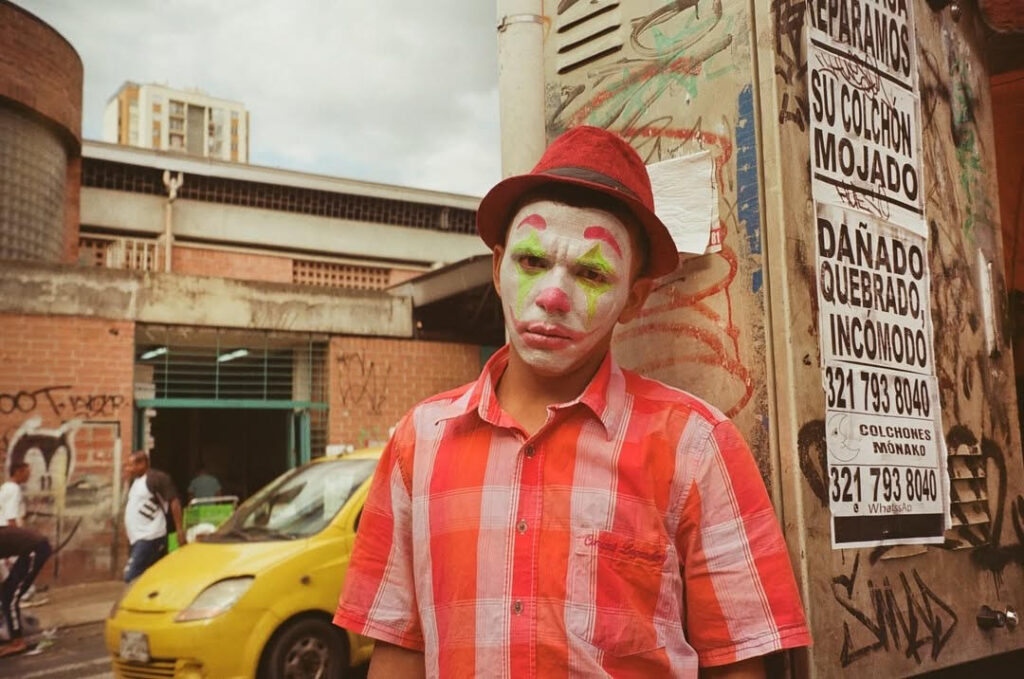
Angelo: I feel a natural bond rooted in empathy; I recognize in them the daily struggle, and I try to understand their forms, their aftermaths, their scars, their styles, and their gestures. I have photographed many subjects candidly, without permission, because the moment calls for it and because I know that dialogue will not necessarily lead to a photograph. However, in the case of portraits, I feel confident approaching and speaking with the subject, explaining in broad terms who I am and what my project is about. This opens a dialogue in which I get to know them a little, sometimes even listening to their story.
Naturally, I have encountered people who are reluctant and who have refused to be photographed or who, even when they agree, do so with caution, even with distrust. Understanding these reactions has been a way of growing beyond them and of losing the fear of approaching others.
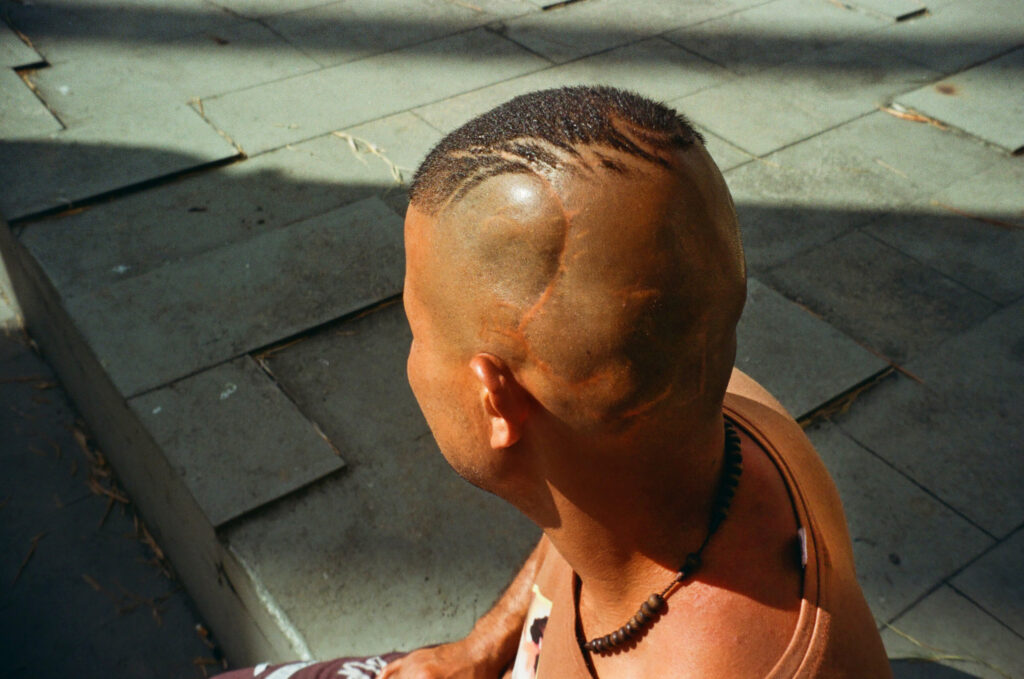
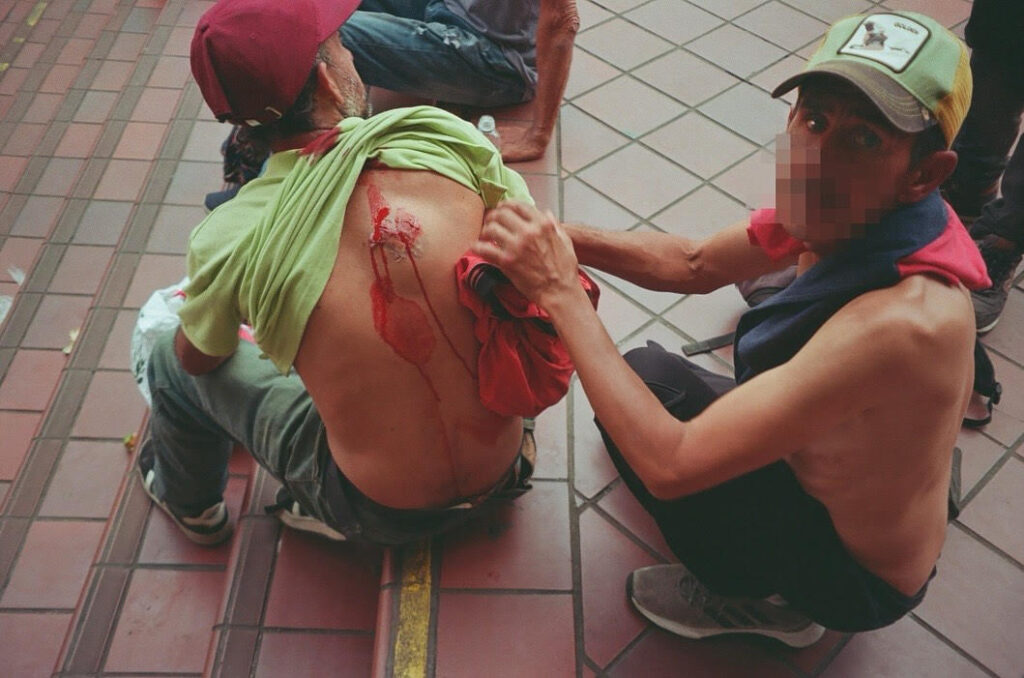
There’s an anthropological sensitivity in your work—attention to gestures, bodies, codes. How do you approach photographing vulnerable or violent traces without aestheticizing them?
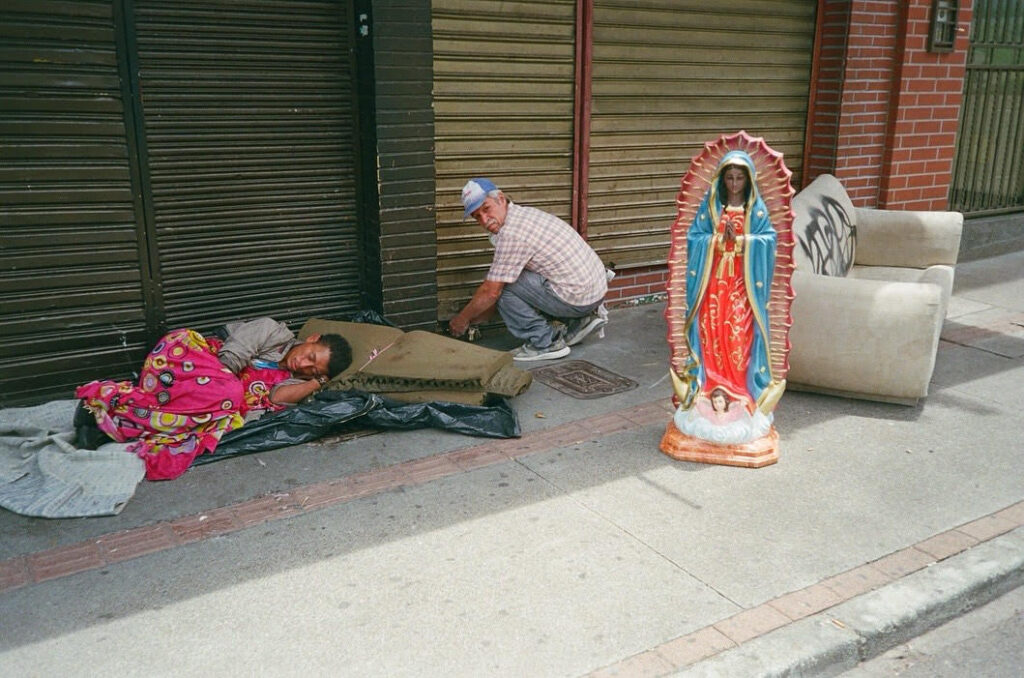
Angelo: I am very clear that my photography does not seek to validate, exoticize, or promote the actions or events framed within it. For me, generating memory implies accepting the full rawness of the scene without removing or adding anything, allowing elements to present themselves and events to unfold—even when they run counter to the entire moral system of our society. It is imperative to exclude the idea of aestheticizing the image as a kind of fetishization of its content, because it is necessary to acknowledge that images are indeed granted aesthetic qualities, but these are primarily related to the technique used to capture them and the way they construct a visual narrative that presents the documentation we seek as an offering of undeniable reality.
Honesty with oneself and with one’s work is fundamental. The photographed subject will never benefit from a photograph, and the world does not change no matter how much you hold a mirror up to it so that it may recognize its humanity—but it is still necessary to continue committing to this practice. At times, I also find myself in conflict with the interpretive gap that opens when my work is read, as it is often mistakenly assumed that the people I portray are inevitably in a vulnerable situation based solely on their physical appearance; this is a bias rooted in a lack of contextual understanding. I do not deny that there are difficult cases to confront—pain and violence, moments that cannot be softened—because these experiences are part of who we are. To document and to build memory, to make them visible and place them before everyone’s eyes, is a way of resisting oblivion.
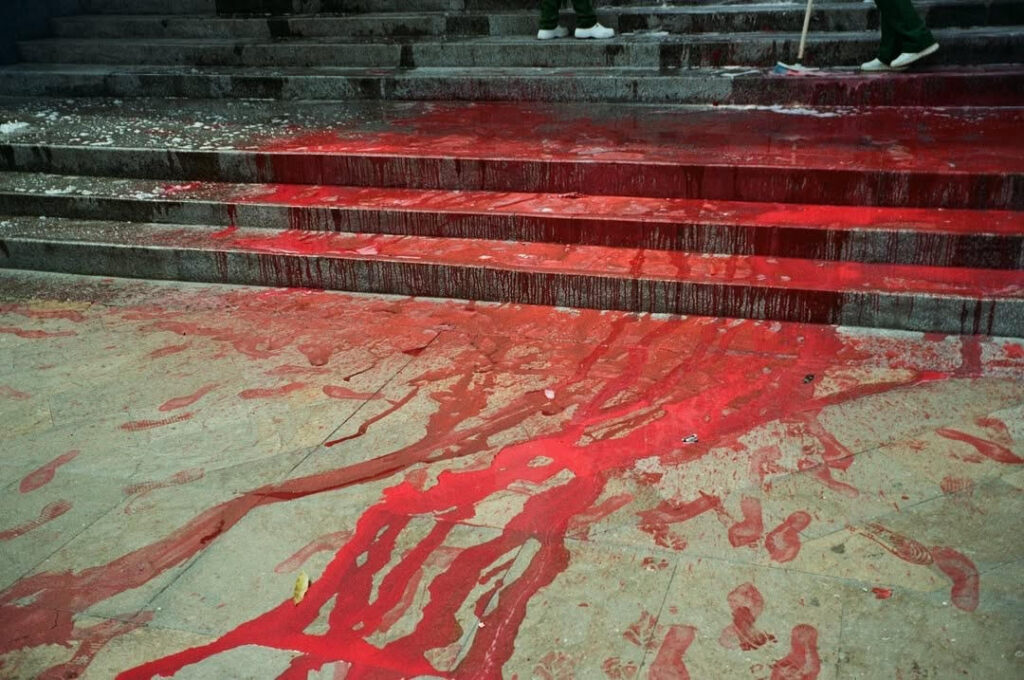
You mention respect and impartiality as essential. What does ethical street photography mean to you in practice?
Angelo: I must admit from the outset that I have no academic training in photography; everything I have done so far has been instinctive, guided by my personal ethics, with a clear awareness that there is an aspect of human dignity that cannot be violated, even when the scene is extremely raw. My intention is never to soften reality; I feel it is necessary to remind ourselves that if this exists, it is because there is a system that has enabled it, promoted it, and ignored it.
This is clearly controversial. There are people who have expressed their discomfort, viewing photography as a propagandistic issue in relation to a city’s image. It is important to understand that impartiality lies precisely in recognizing that multiple layers of reality coexist within cities, and that rendering them invisible does not make them disappear, just as making them visible does not expose a single, totalizing reality.
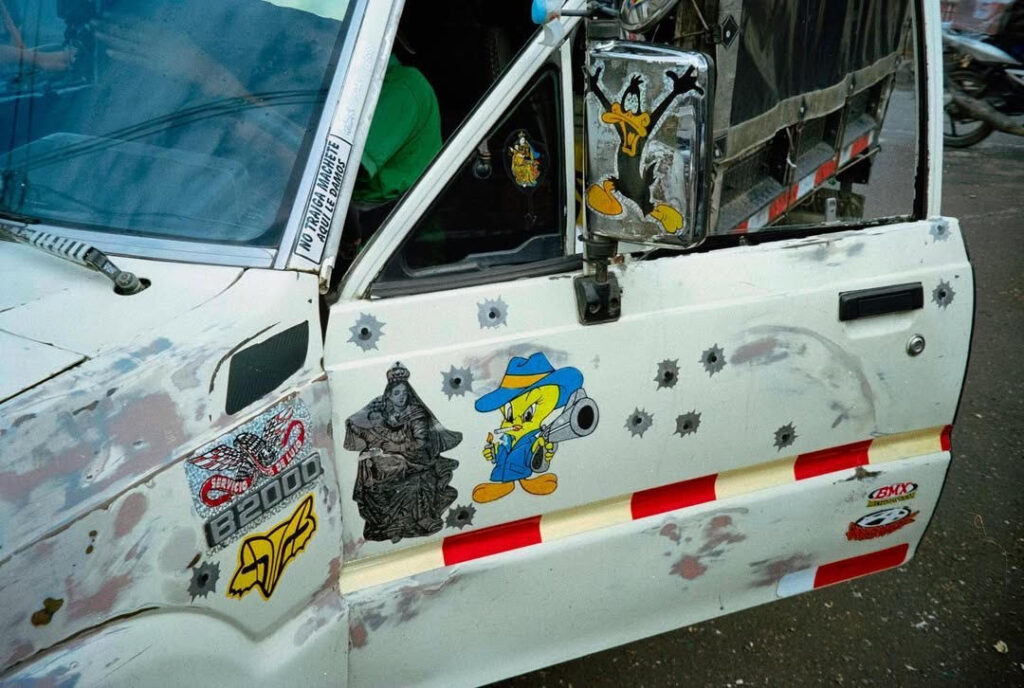
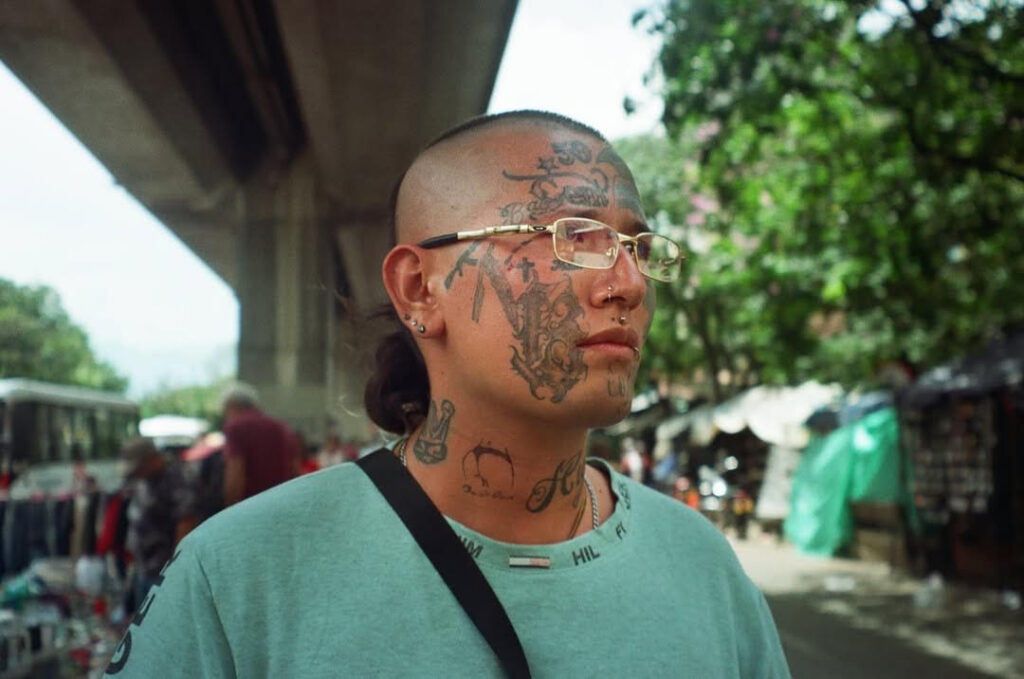
Migration, especially Venezuelan migration, appears as both lived experience and subject. How do you photograph displacement when you are inside the story, not observing it from afar?
Angelo: The portrayal of migration through photojournalism has an informative character without ceasing to be sensitive; however, in my case, there are languages, traces, marks, scars, and gestures that I can understand—not only because I am part of Venezuelan culture, but because I know that encountering it situated within another context results in new meaning. I feel a deep connection and sensitivity toward migrants, because I share, in some way, the confrontation we experience as people who come from an affected country and who are often judged. I am part of the diaspora; when I capture it, I take a step back with my camera and look at it from the outside. I understand what I see, but I look beyond tragedy—I want to scrutinize and analyze all the signs of our culture within the framework of displacement.
Violence appears subtly in your images, not sensational, but present. Do you think violence is something that can be shown quietly, without spectacle?
Angelo: Violence is what it is: it interrupts life, fractures reality, and makes itself visible. My intention is not to frame it as an excuse for controversy or with the sensationalist aim of shocking; however, there is no way to moderate it. Each person, from their own inner standpoint, will assimilate its meaning and be affected by it—or not—by this experience. Clearly, there is a sensitive perception involved, and this will have an effect on the viewer. Photography allows for a space within memory; turning one’s back on reality will not make it disappear.
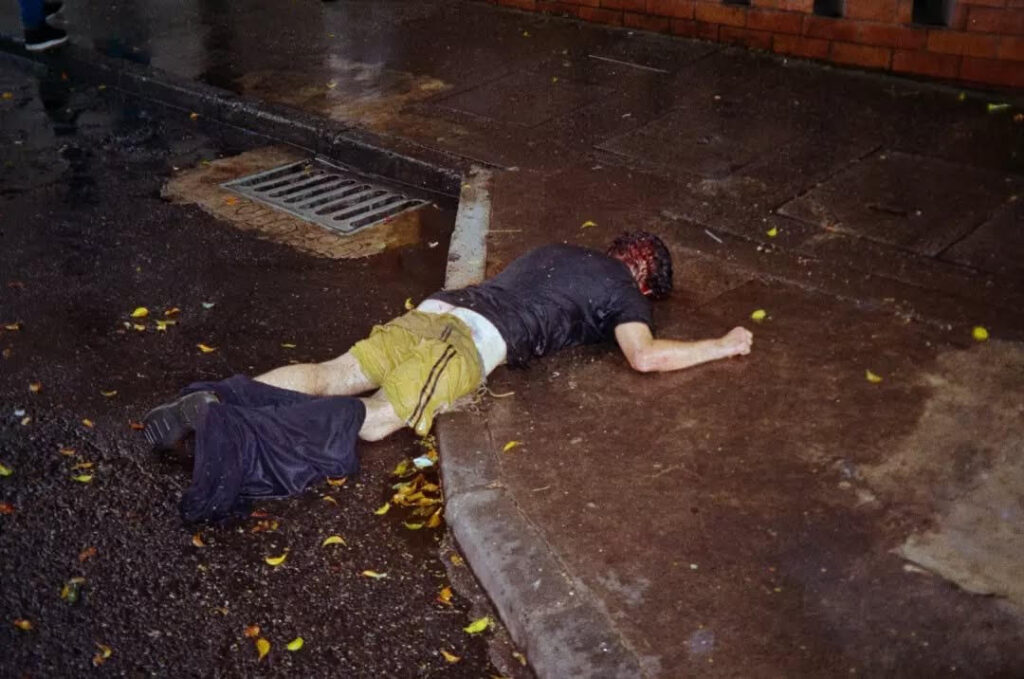
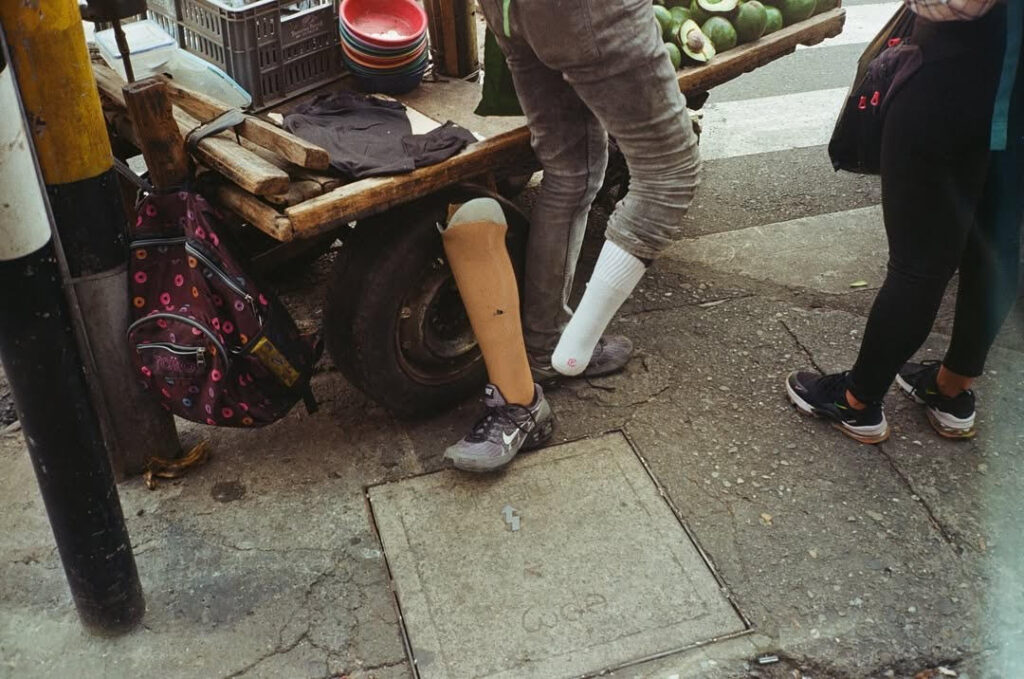
Your series on tattoos and haircuts read almost like urban ethnographies. What draws you to these specific rituals of the body?
Angelo: Among my particular interests is style as a form of identity expression influenced by both local and foreign cultures. It is a subject that I find enjoyable, and through which I track signs on bodies, analyze their recurrence, and observe how they speak of collective appropriations—open to being contemplated and interpreted not only as aesthetic decisions, but as individual expressions framed within culture.
Turning photographs into books and zines seems central to your practice. What does the editorial object give your work that the feed never can?
Angelo: Analog work possesses a visual richness that sometimes goes unnoticed in the digital realm, especially on platforms such as social media, where viewing is so limited. The printed photograph within an editorial context allows for closeness to detail and brings contemplation into a much more personal experience—something I value in those who have acquired the works published so far. At times, this is complex due to the difficulties involved in printing, as it is a costly process that can affect the final value of the product; however, through self-management, I have been able to materialize some of my projects and arrive at that physical object, which brings me great satisfaction.
CURTIDO and C10 feel like different rhythms of the same city. How do you know when a body of work wants to become a book?
Angelo: It was a matter of opportunity. In the case of C10, my friend Dani Moore—who has been building his independent publishing project, Buglove—saw in my work a strong proposal that could contribute to his project. Together, we made a selection whose main guiding principle was the localization of the photographs in the downtown area of Medellín, known as Comuna 10 (La Candelaria). With this book, I was able to present the most significant work I photographed between 2022 and 2024; it also functioned as a pause within a cycle, allowing me to review the weight of my work in retrospect.
In the case of CURTIDO, it emerged from reading a series of signs that became recurrent in my daily walks—tattoos with a narrative deeply rooted in Latin American culture, yet telling individual stories through subjects visibly marked, even in their behavior. When the number of photographs I took with this concern grew substantial, I felt it was an opportunity to address a single theme through a fanzine format, self-managed and produced in a limited edition.
I am currently planning the reprint of CURTIDO and working on other projects to consolidate the publication of a new selection of photographs taken between 2024 and 2025.
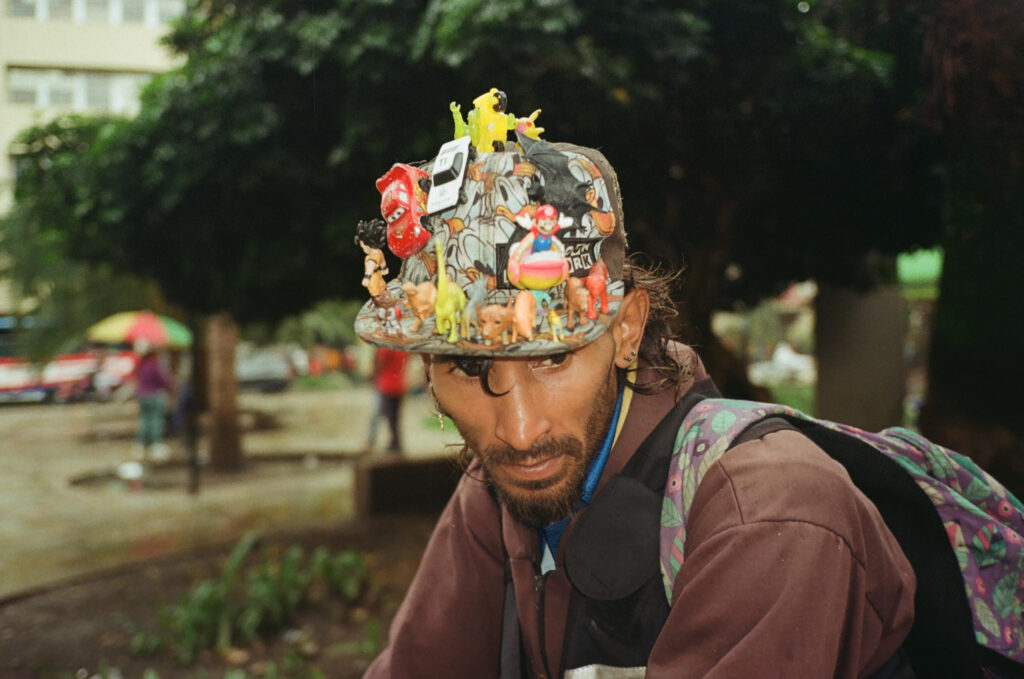
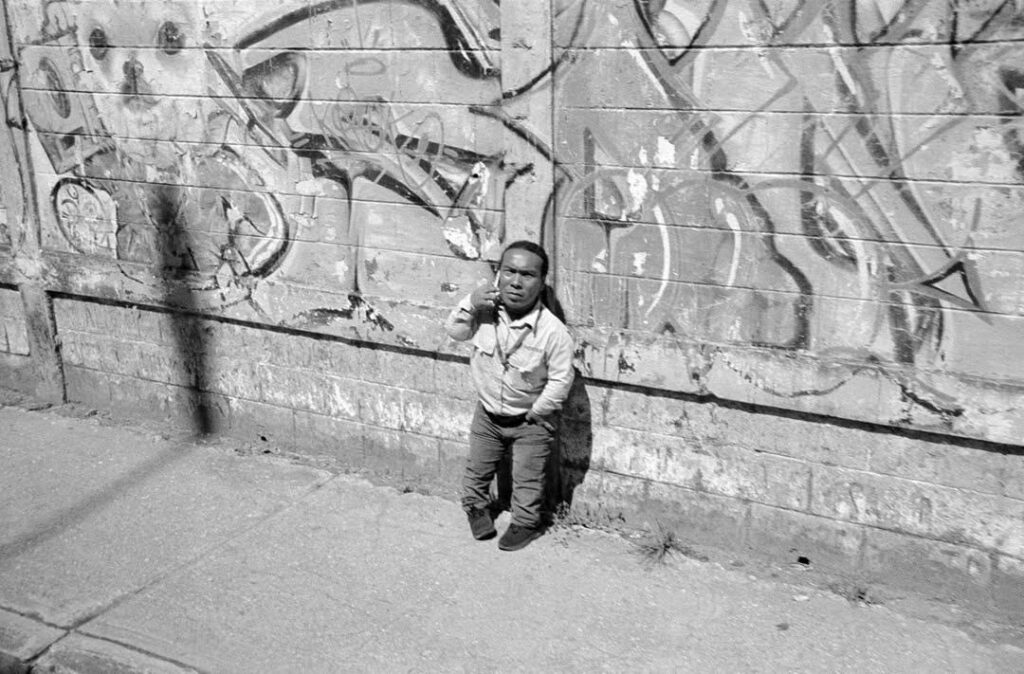
Recently, you’ve begun working with video through social media formats. What has moving image revealed that photography was withholding from you?
Angelo: Many of the photographs have a wide interpretive gap, as they are still images or capture isolated moments that can be taken out of context. Audiovisual work offers a somewhat broader view of the scenes I encounter; subjects in action become eloquent and add dynamism to the experience I offer when presenting my vision of the city.
I also use it as a matter of economy—relying on other media is vital so as not to miss relevant moments or characters, without depending exclusively on film. We must be honest: today it is a costly practice, and it is not always possible to press the shutter.
What I value in audiovisual work is the aesthetic language that can be achieved through editing; I like to integrate audio as a relevant and rhythmic part of the narrative.
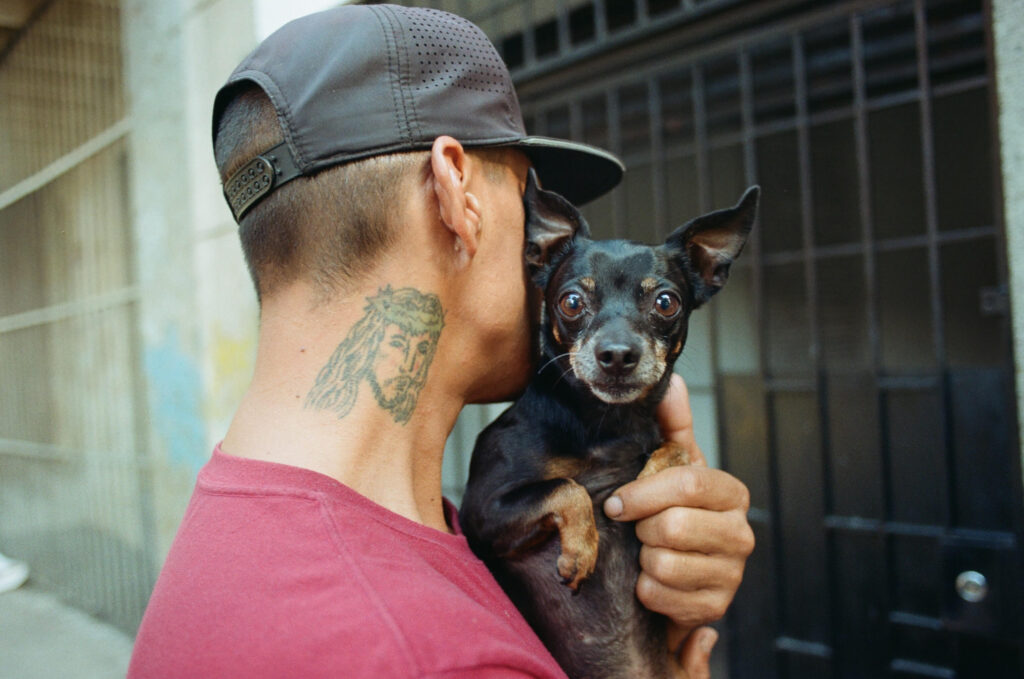
You describe walking the city as a daily ritual. What happens to your work when you stop walking—if you ever do?
Angelo: I try to stay active; I can’t deny that there are moments of stillness, but I always move beyond them and return to the street.
Your practice feels less about “projects” and more about continuity. Do you think of your archive as something you’re building intentionally, or simply living through?
Angelo: Everyday life presents me with moments to photograph, but I also go out in search of them.
Real quick. What’s the story behind your nickname “unarutina”?
Angelo: Una rutina as a synonym for rutinario, which in Venezuelan street slang refers to a person who has been shaped by the street and by life in general, someone full of everyday experiences. I did not want to self-identify as rutinario, but rather to describe my photographic practice as a routine driven to collect stories, confronting the full spectrum of perceptions and circumstances.
Can you tell me about some of your favorite memories from being on shooting in the field?
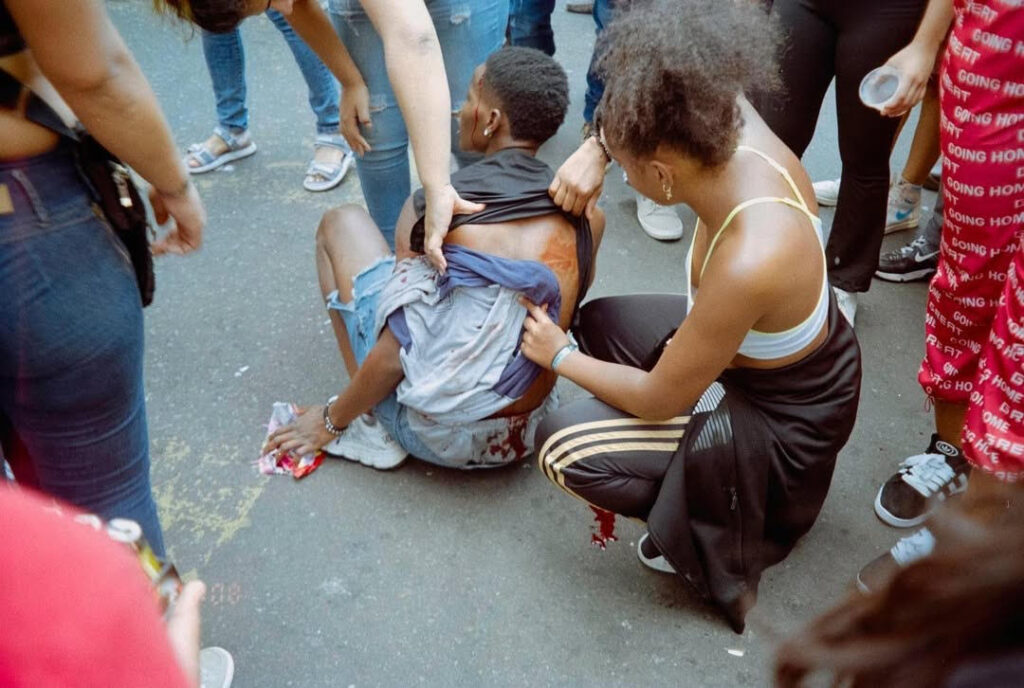
Angelo: The time I photographed a person who had been stabbed and, a few days later, saw him walking again, recovered.
Other than the camera and lens. Are there any essential items that you always bring with you when shooting?
Angelo: Cameras, Water, Comfortable shoes, a cap, and a personal items kit
So what do you hope that we, the observers, take with us after viewing some of your photos?
Angelo: They can take it however they want; I’m not going out with any kind of message or life lesson.
Ok Angelo, now to something totally different. In a parallel universe who would you be? and what would you be doing?
Angelo: A fireman
Outside of photography and filmmaking, what’s something you’re obsessed with right now—maybe a hobby, a show, or even a food—that keeps you grounded or inspired?
Angelo: Photojournalist documentaries.
Can you tell me a story about a time when a connection with someone had a big impact on you?
Angelo: I met a young man who belonged to an illegal group; I was able to strike up a conversation and photograph one of his tattoos. I was struck by how young he was and how deeply involved he was in crime.
What qualities do you find most important in the people you choose to spend time with?
Angelo: I’m fortunate to have people I respect because they contribute knowledge that enriches my work. I connect with people who have the strength to face daily challenges and who inspire me to pursue my projects.
Anybody you look up to?
Angelo: My mother
What motivates you?
Angelo: The search of the real things
How would you describe a perfect day?
Angelo: Sunny, no police around, with my camera and several rolls of film on me, freedom of time, and money in my pocket.
Alright Angelo, I always ask these two questions at the end of an interview. The first is. What’s your favorite movie(s) and why?
Angelo: La Haine, Amores Perros, El pez que fuma, El cangrejo. In terms of content and cinematography, in the case of the first two I feel a strong affinity with the themes they address through visual language, the use of color, the quality of the film stock on which they were shot, among other elements. In the case of El pez que fuma and El cangrejo, they are Venezuelan films, which I read through a perspective that may be shaped by my current situation.
The second is. What song(s) are you currently listening to the most right now?
Angelo: Songs from Venezuelan classic salsa (salsa baúl)