Share this
High above the everyday, Moncler Grenoble staged its FW26 collection not as a spectacle to be watched, but as a terrain to be inhabited. Set in Aspen, the presentation unfolded as a lived alpine ritual—part performance, part pilgrimage—where fashion, landscape, and physical experience collapsed into one.
Rather than isolating the runway from reality, Moncler Grenoble embedded its guests directly into the logic of the mountains. Days were spent navigating snow, altitude, and cold, allowing the body to register the same conditions the clothes are built for. By the time night fell, the audience wasn’t merely observing outerwear—they were already inside its purpose.
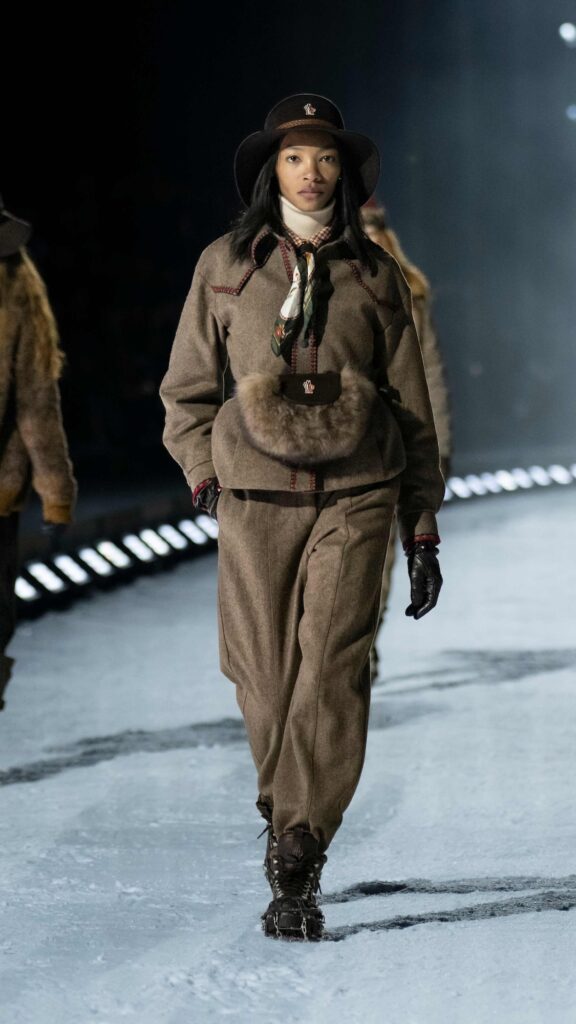
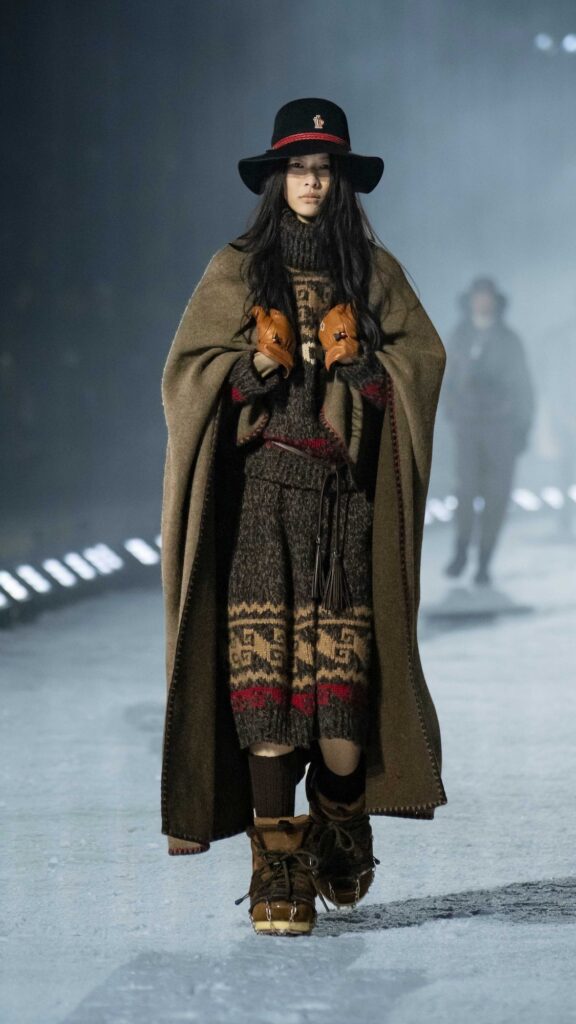
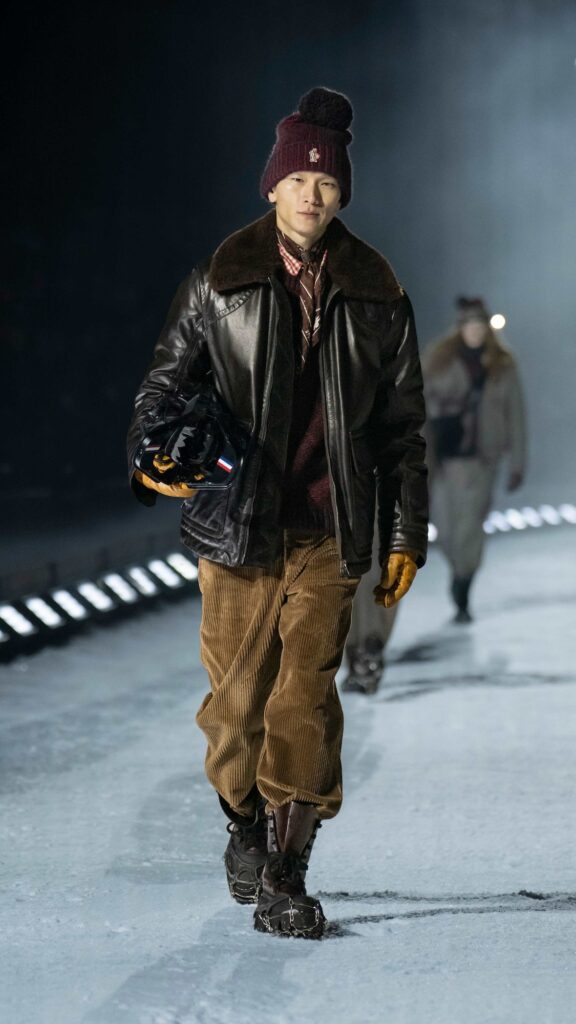
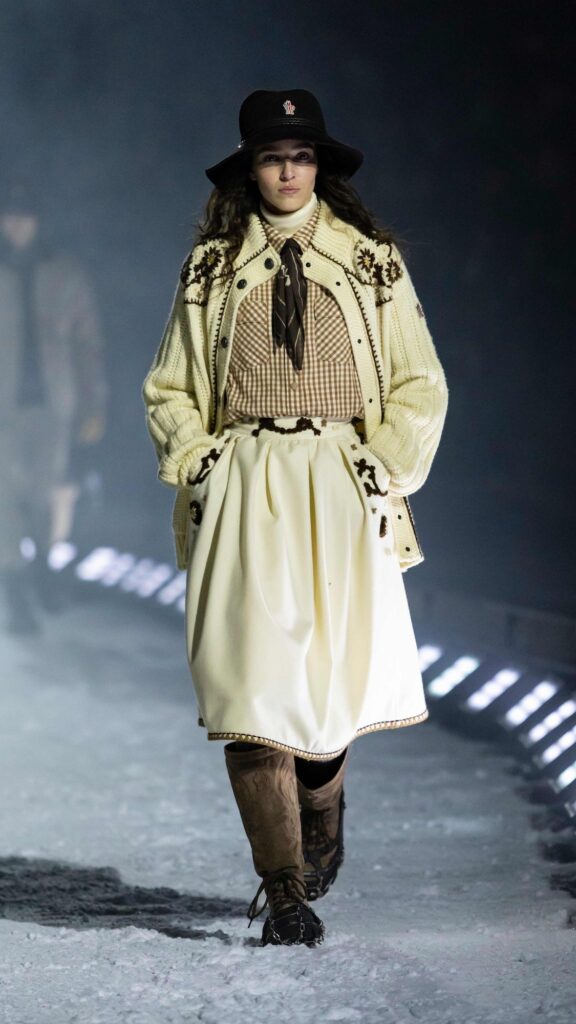
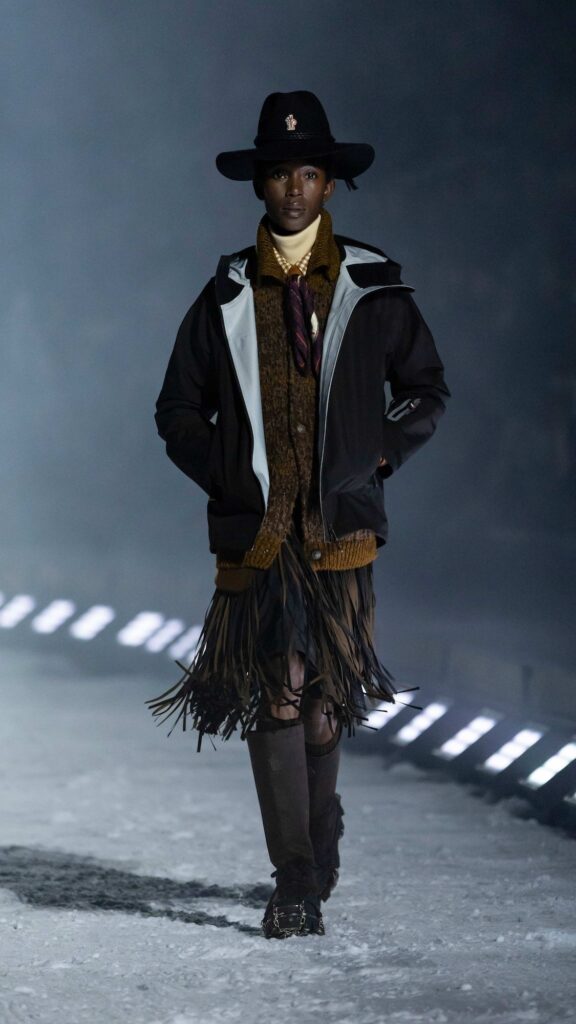
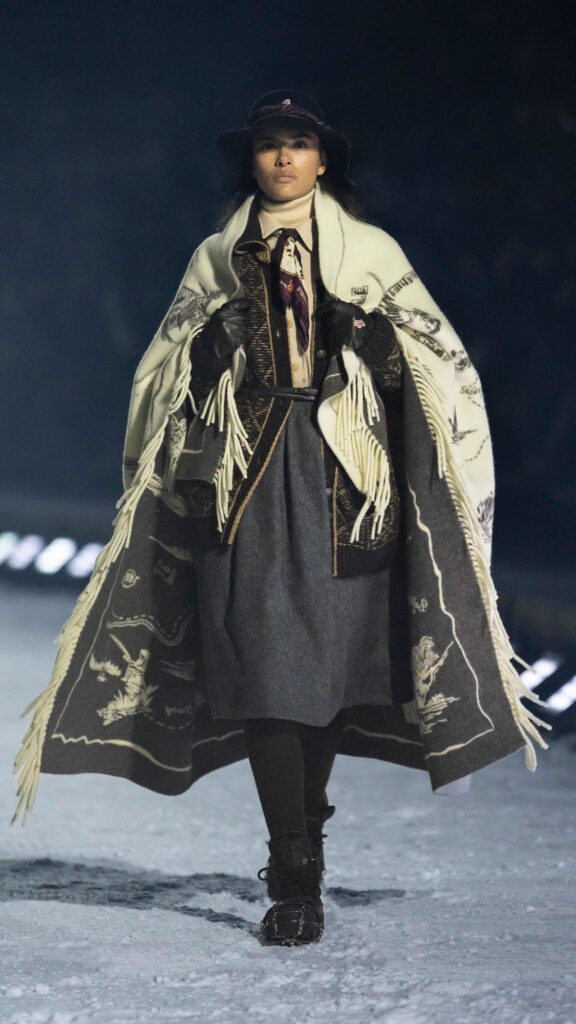
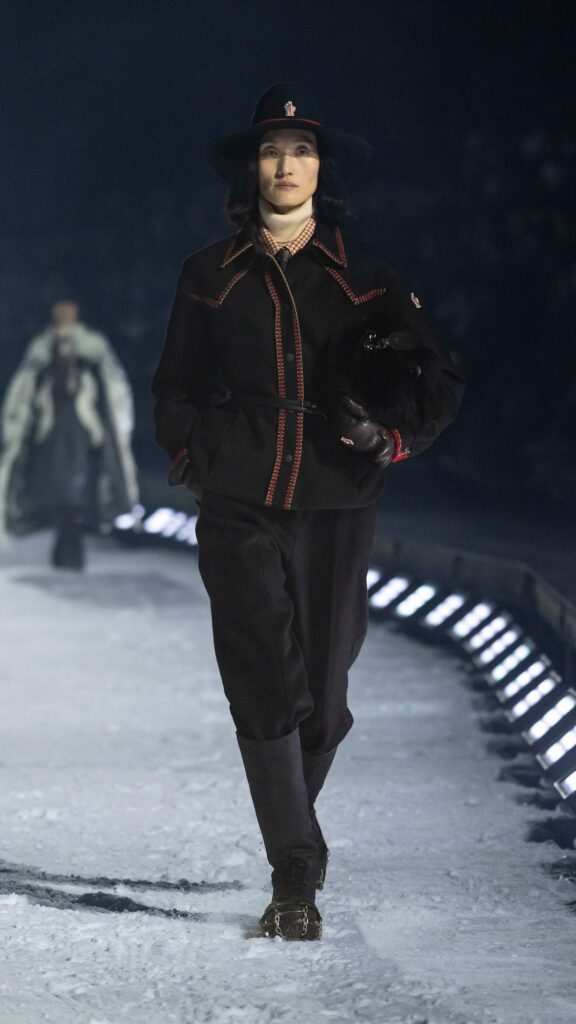
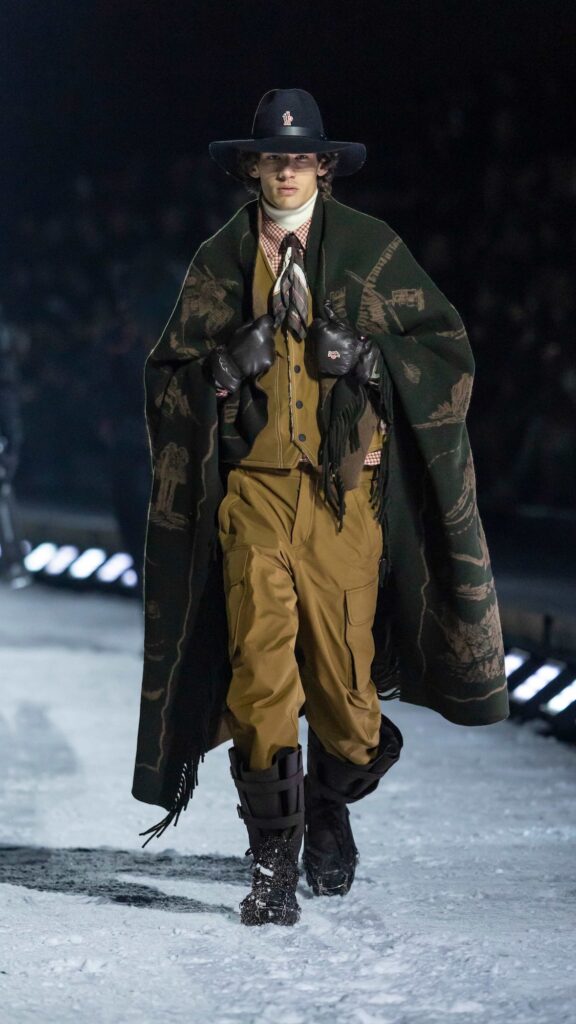
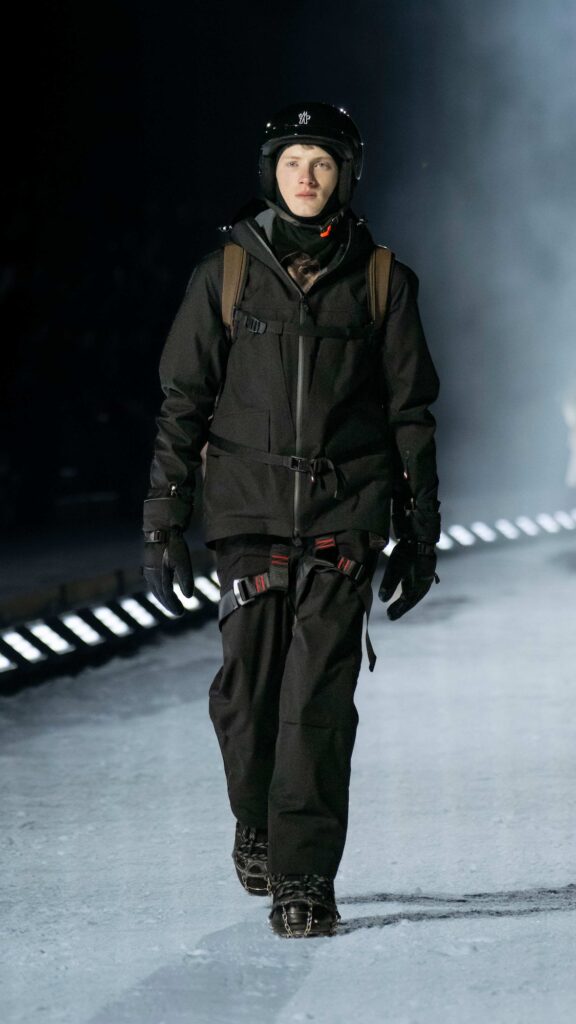
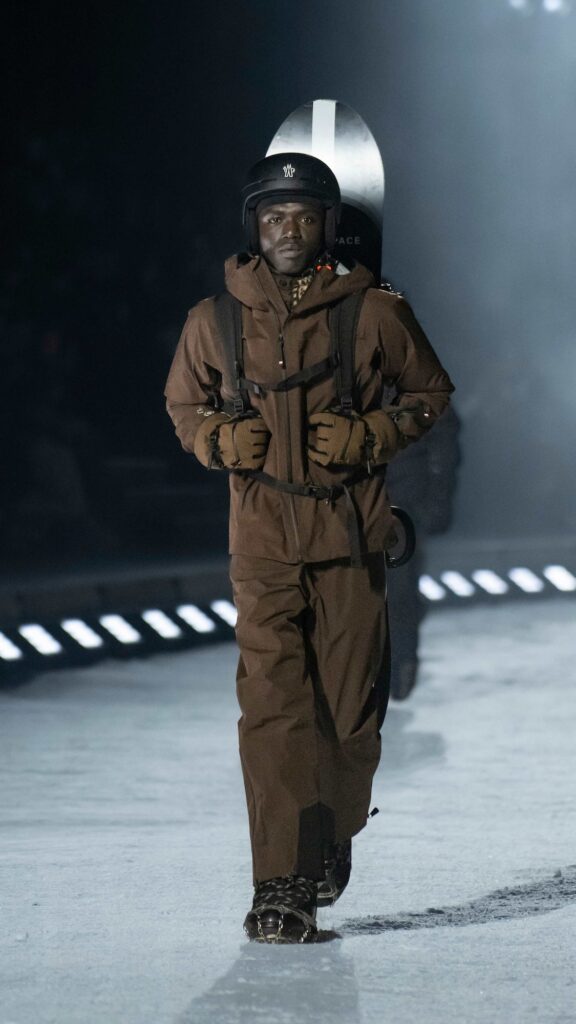
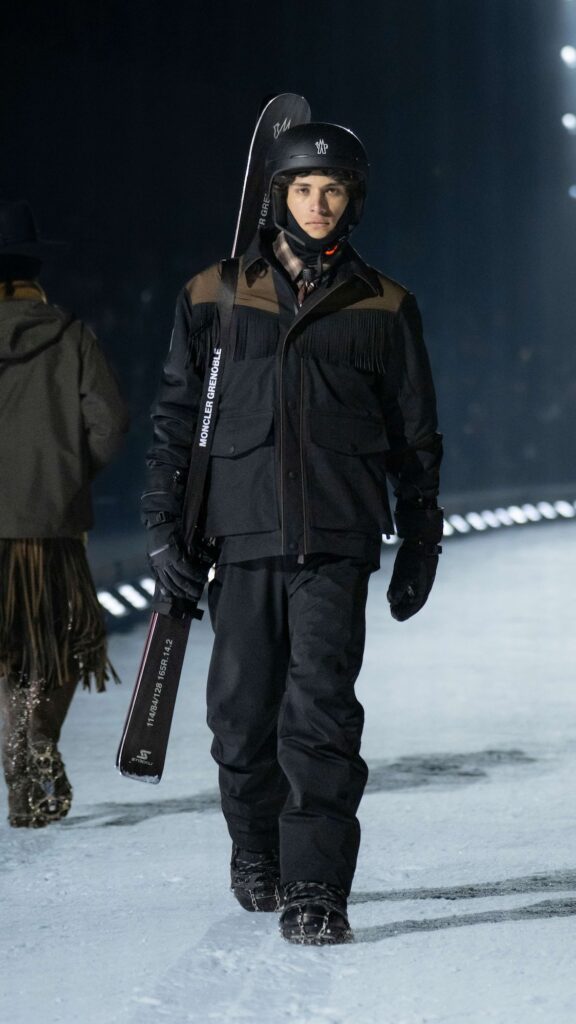
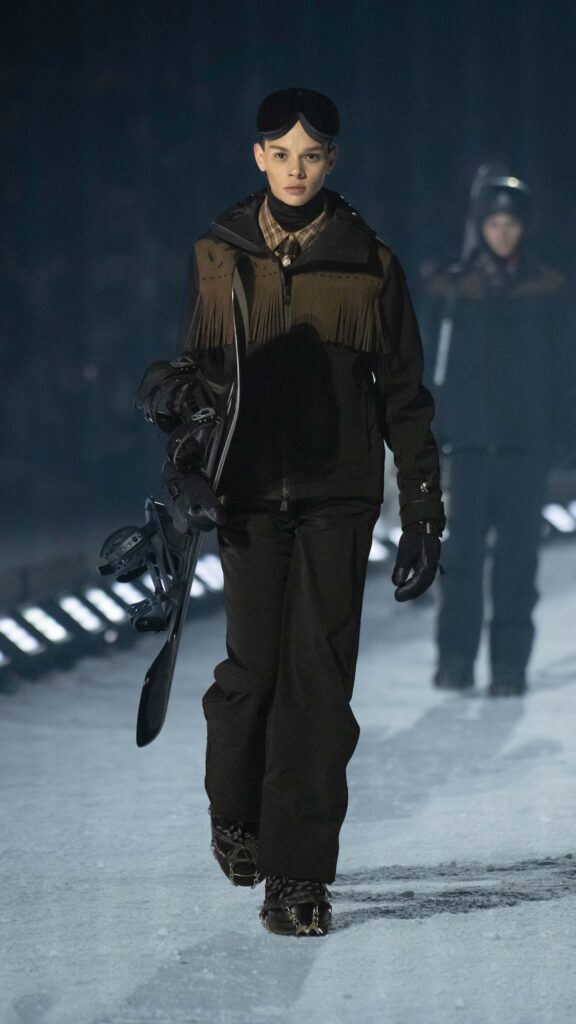
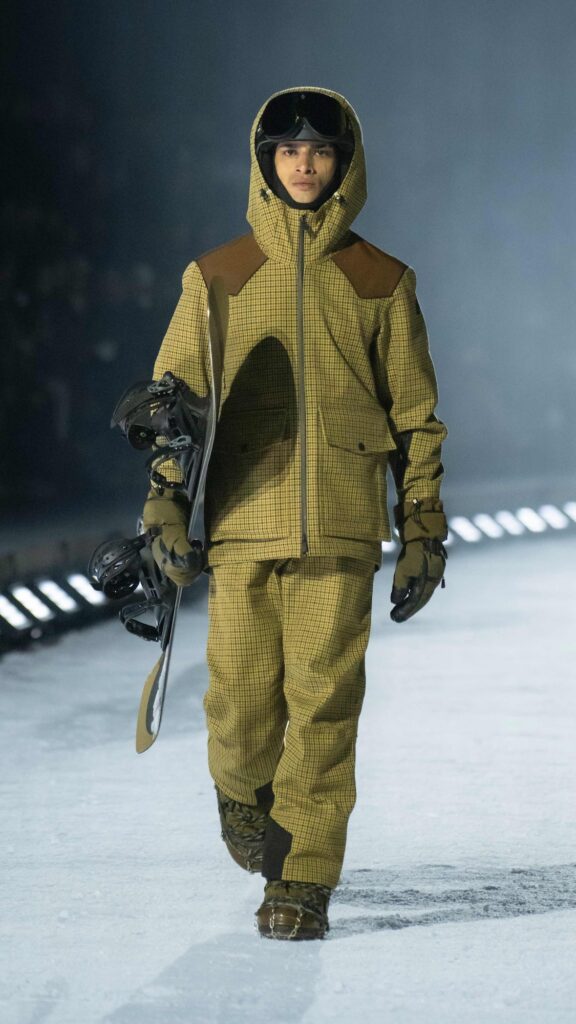
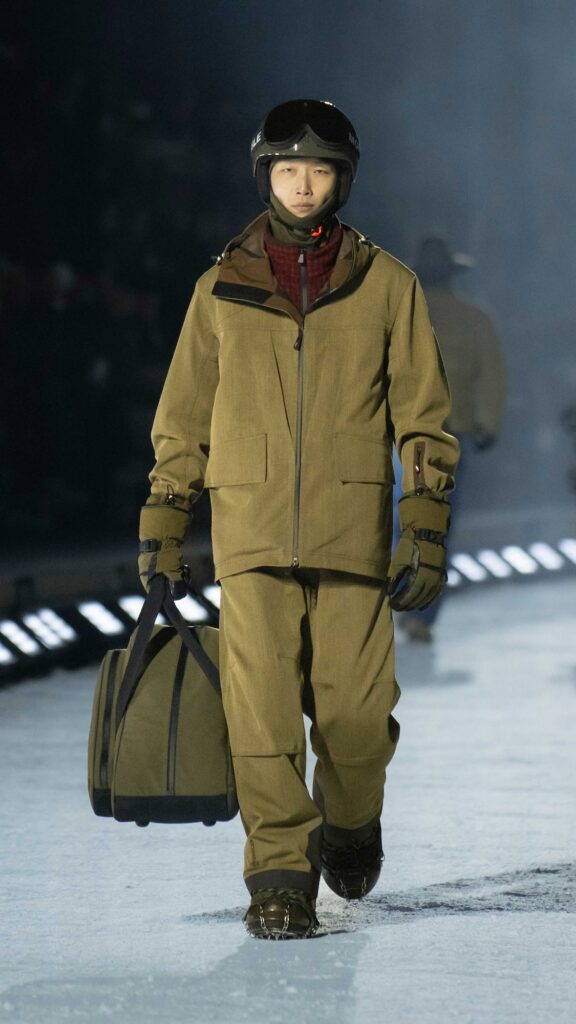
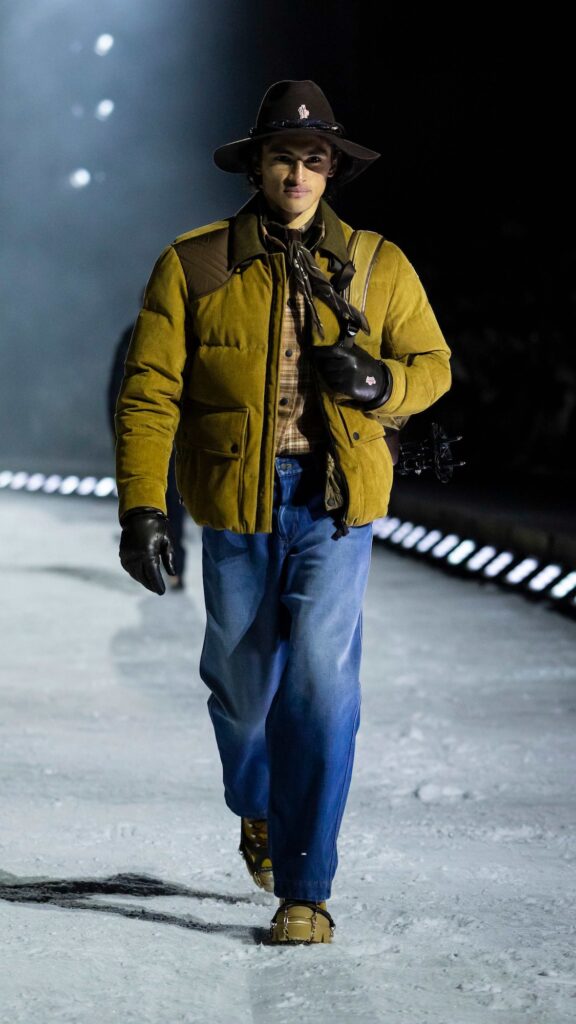
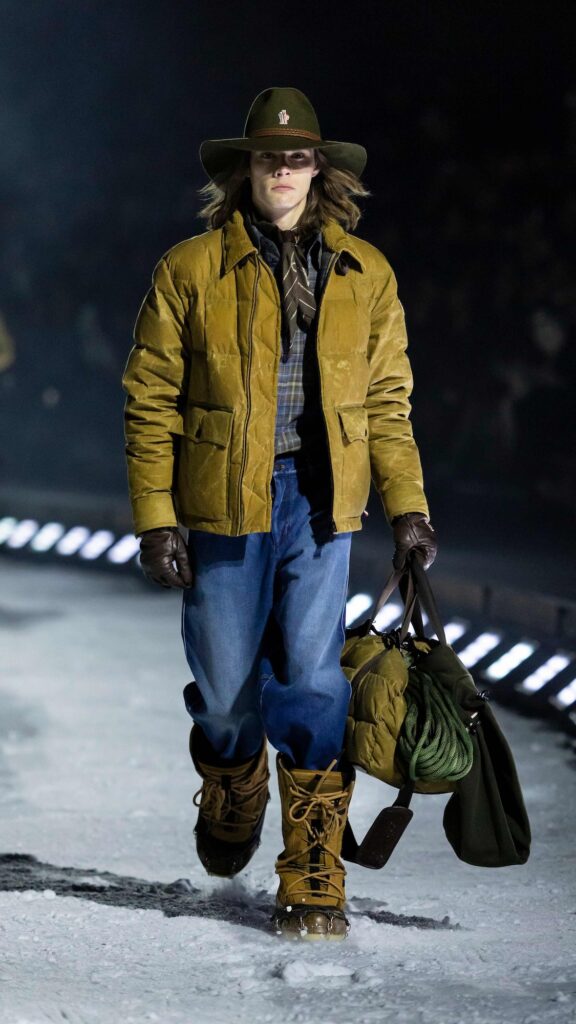
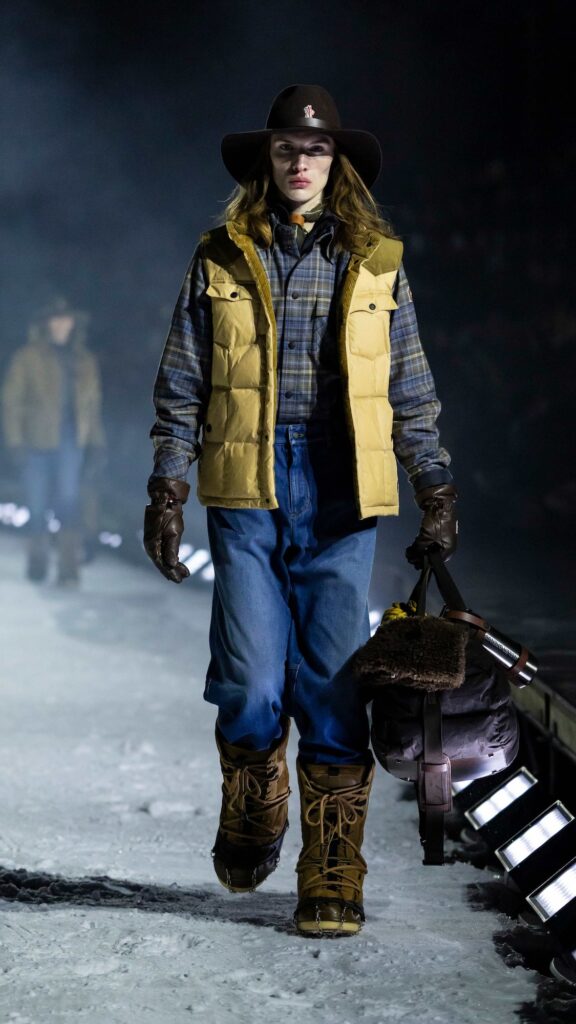
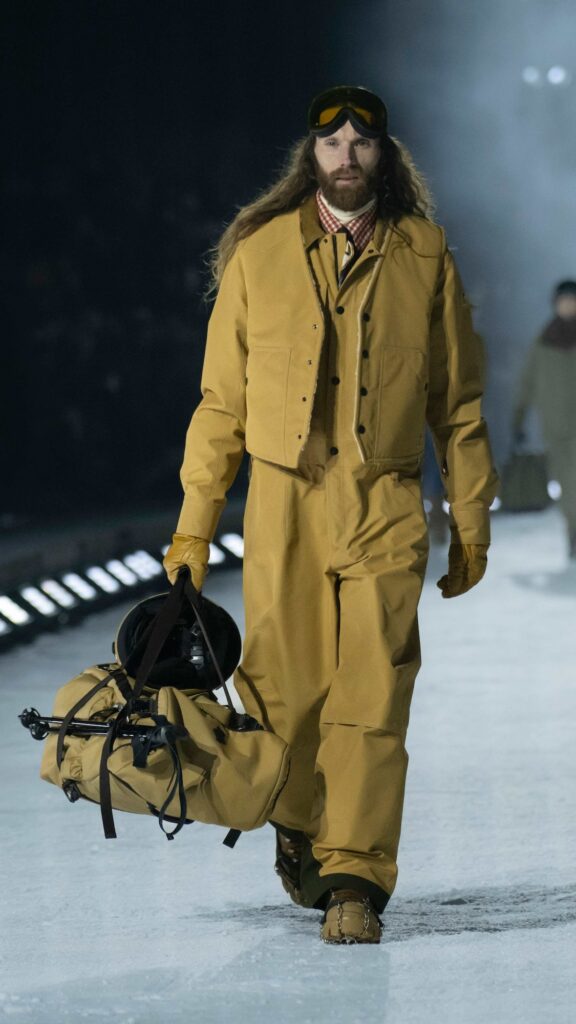
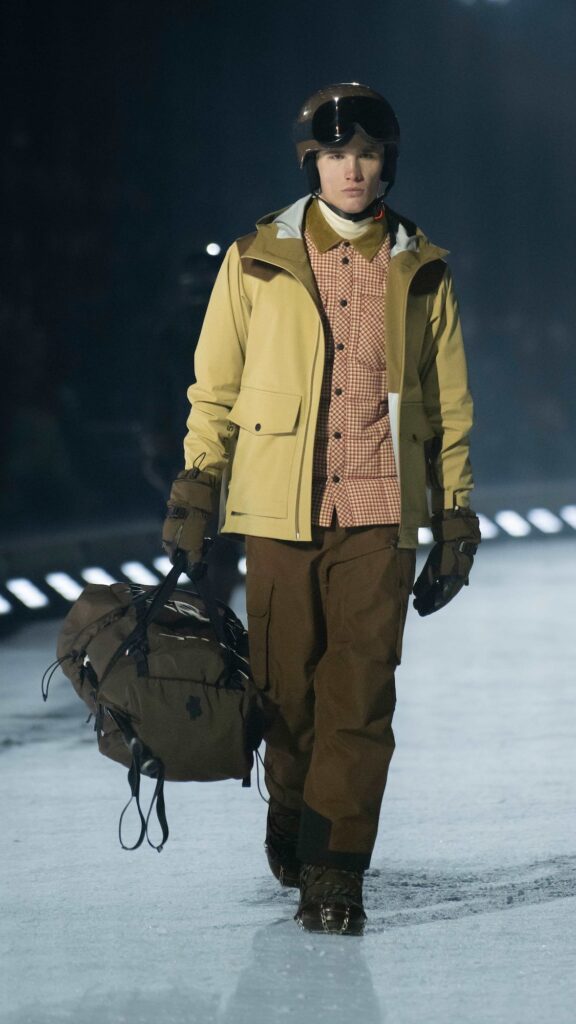
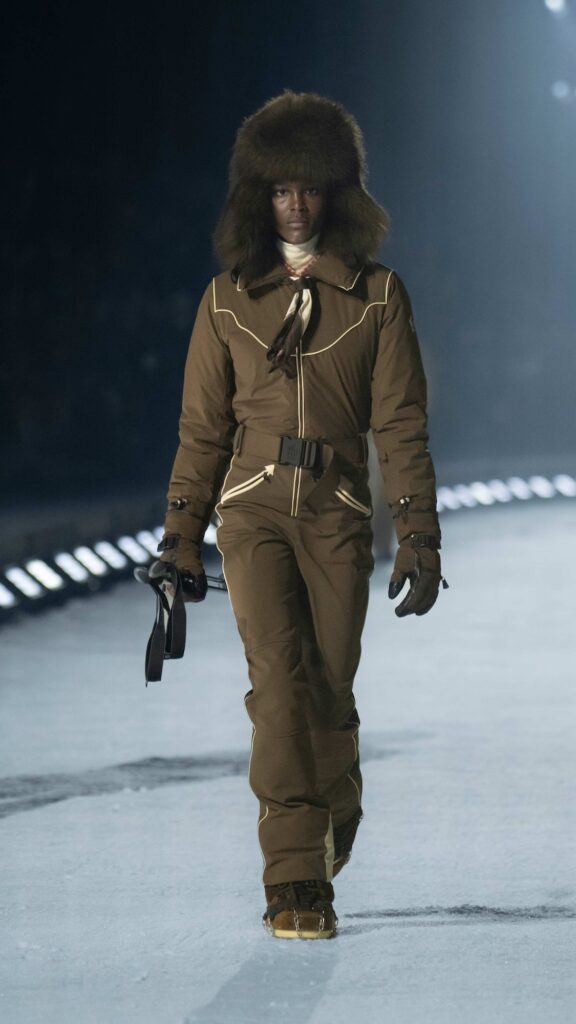
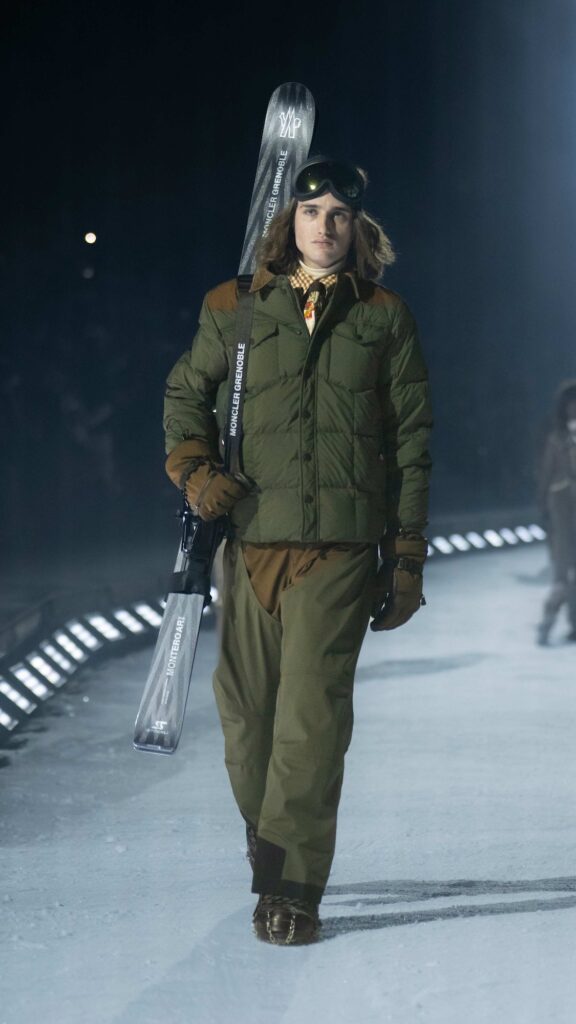
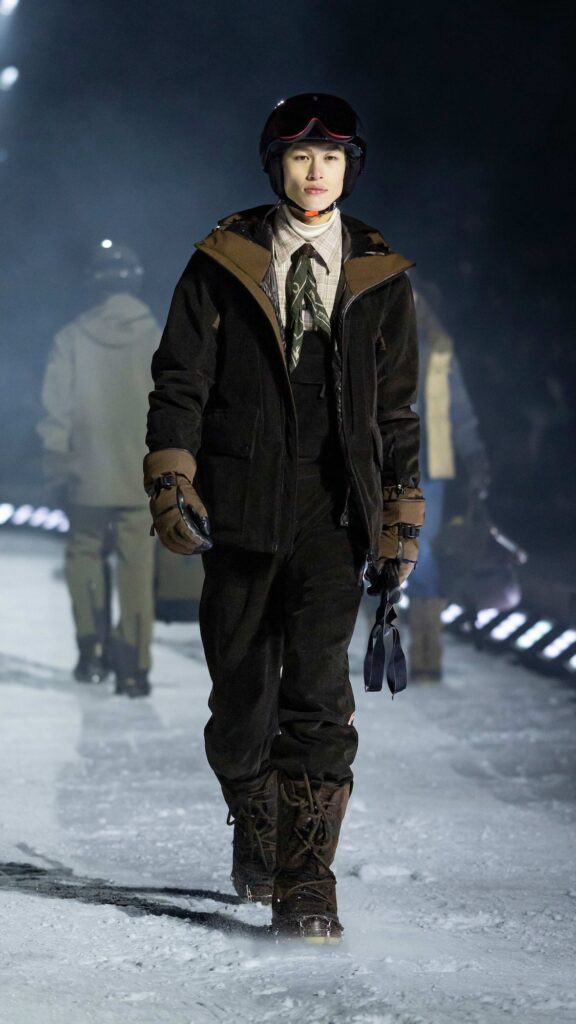
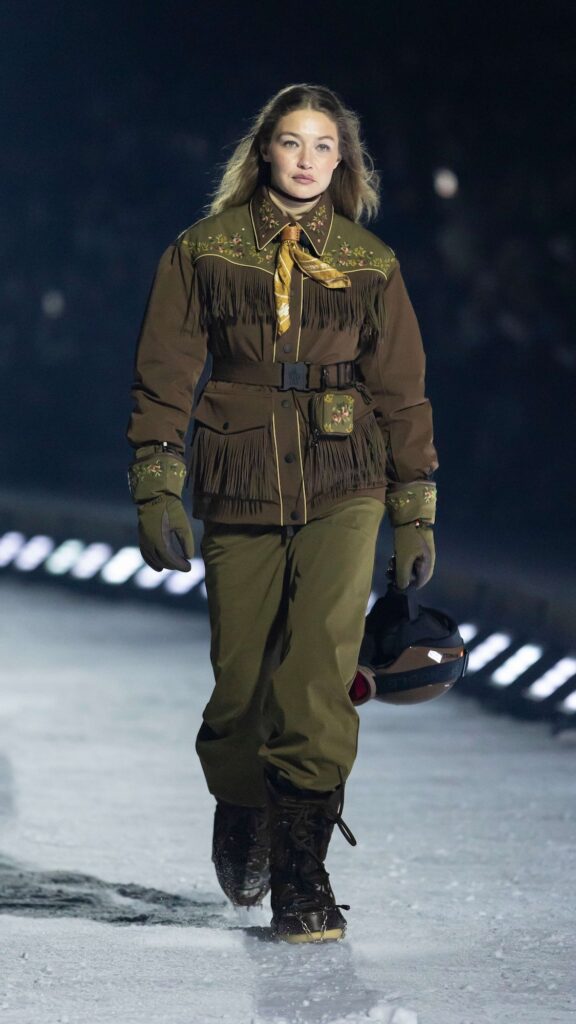
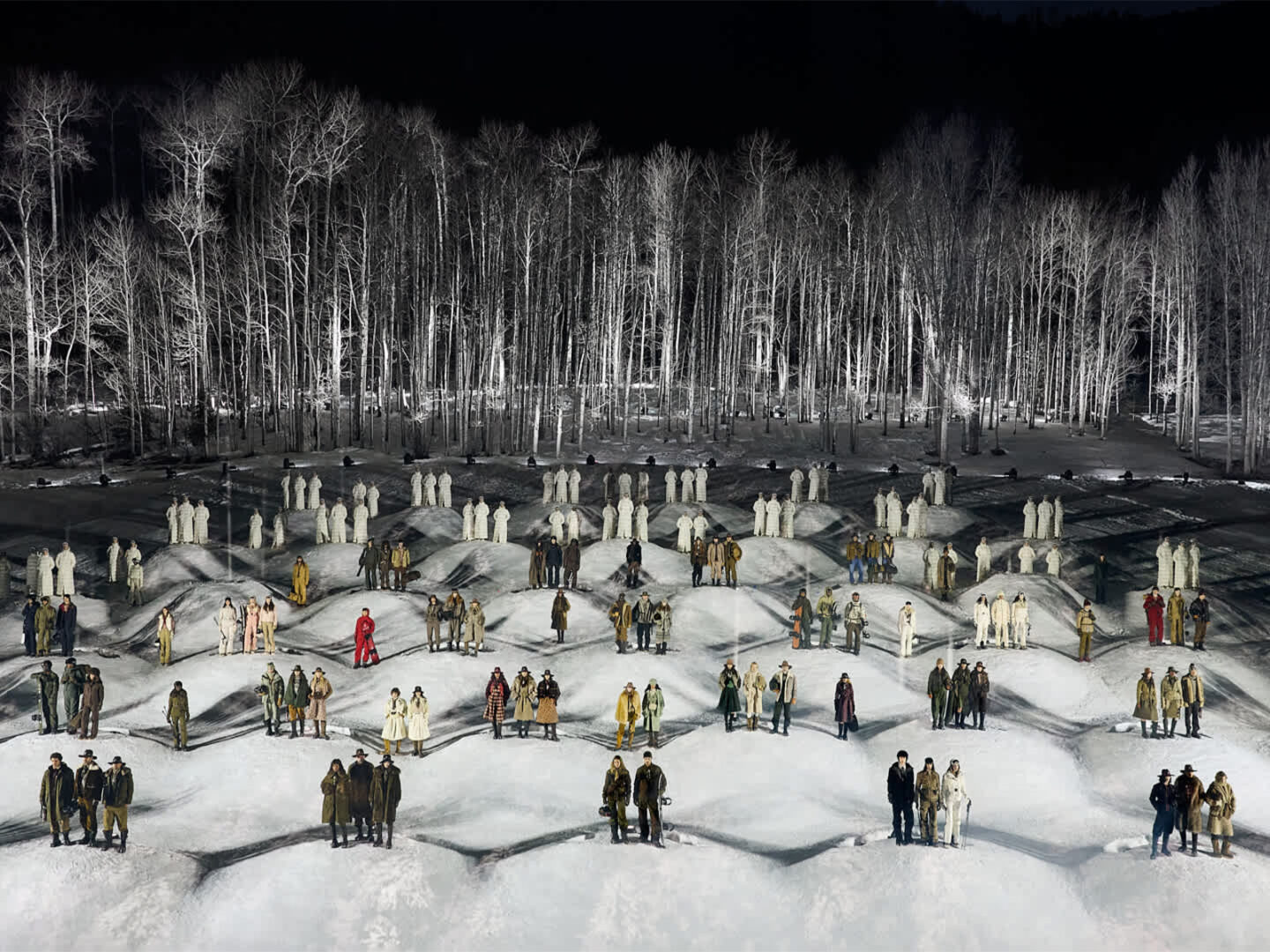
The show itself cut through a forested slope, illuminated by shifting beams of light that fractured the darkness like moving constellations. Models emerged as if from the terrain itself, their silhouettes reading as functional armor shaped by heritage. The effect was less fashion show, more alpine procession—a quiet insistence that performance wear can carry memory, symbolism, and emotion.
At the core of FW26 lies a reworking of Moncler’s origins, tracing back to its utilitarian beginnings in the mid-20th century. Instead of nostalgia, the collection treats history as raw material—something to be engineered forward. Classic mountain references are sharpened through technical precision, with silhouettes that feel both archival and futuristic.
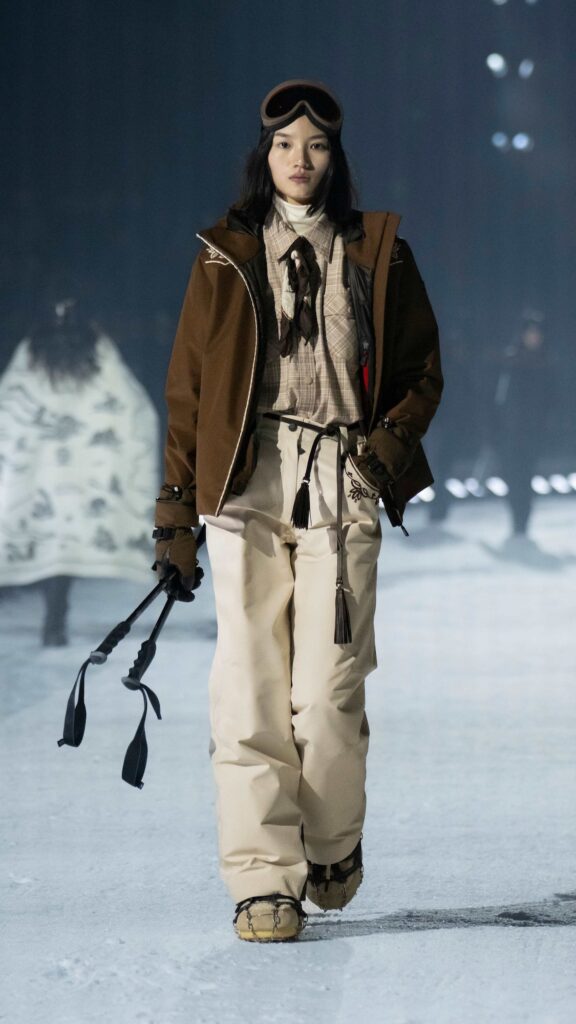
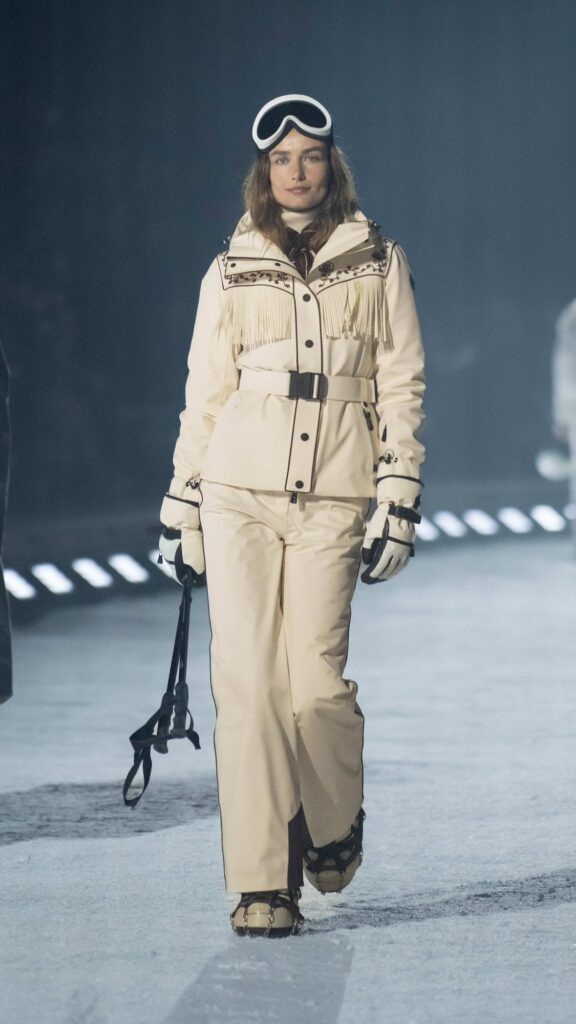
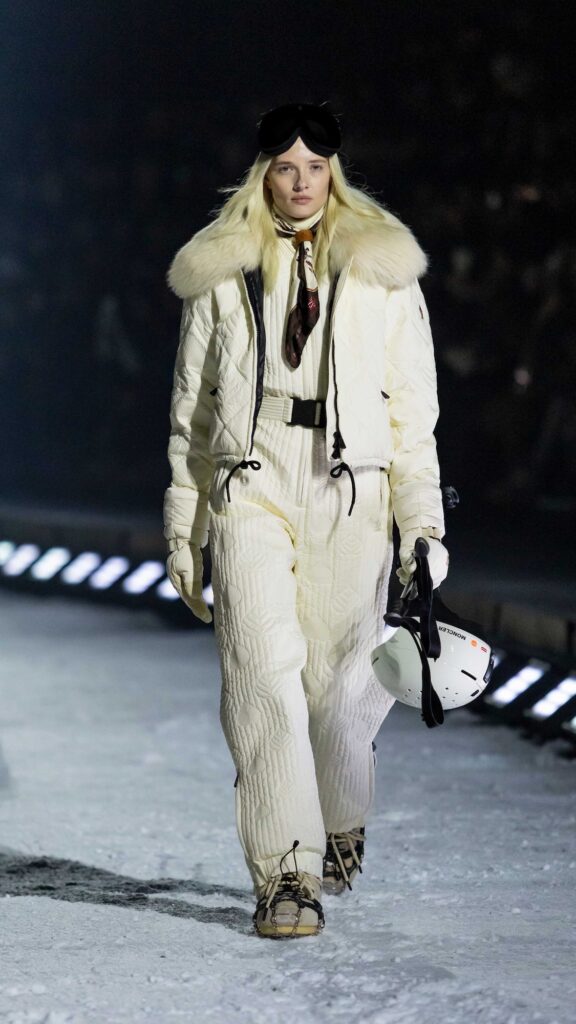
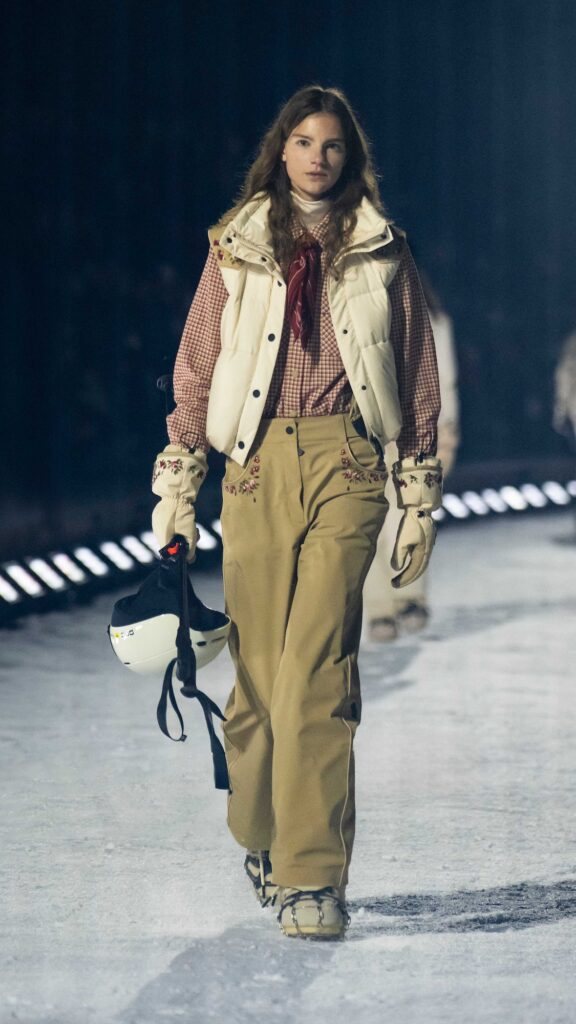
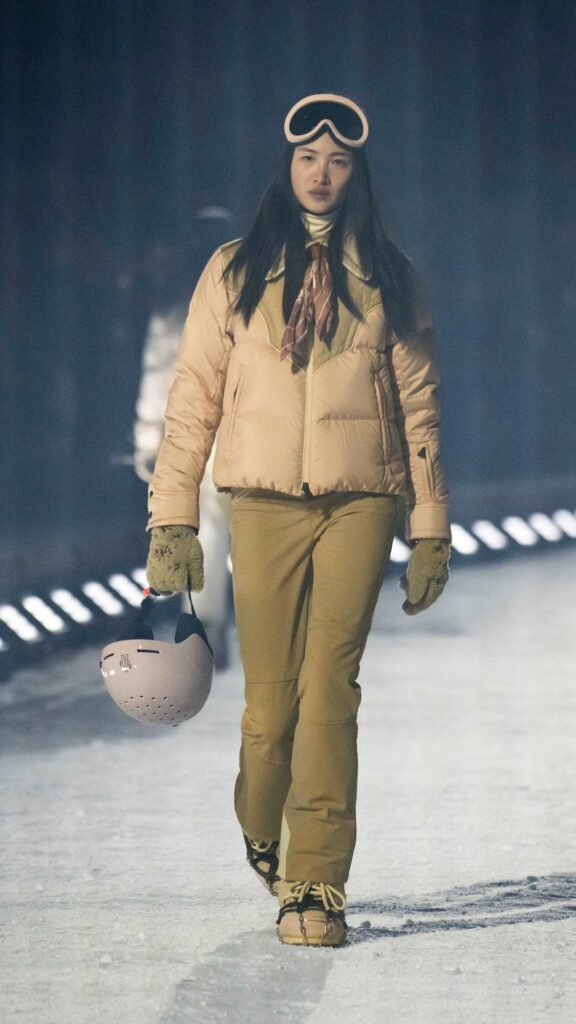
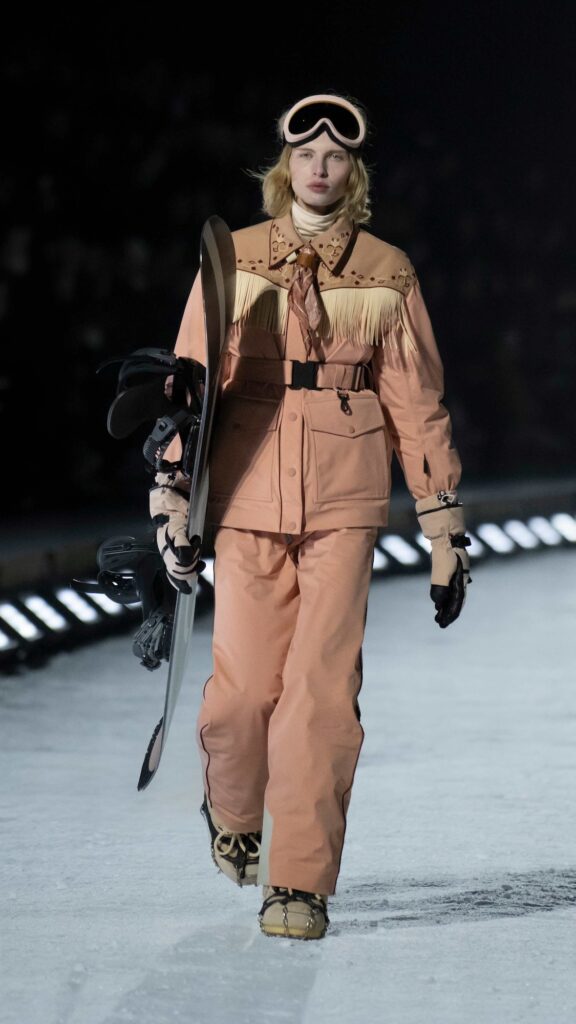
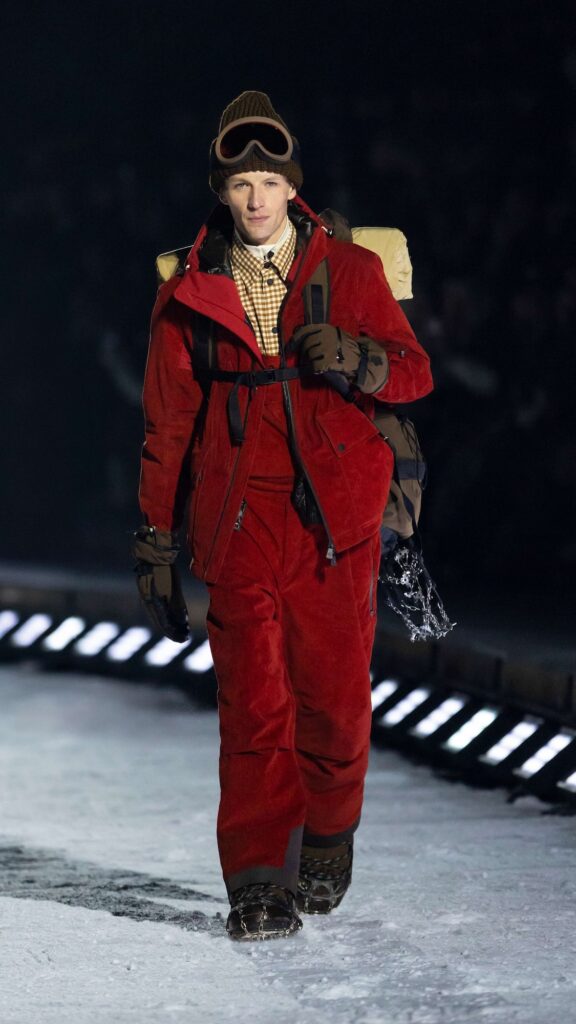
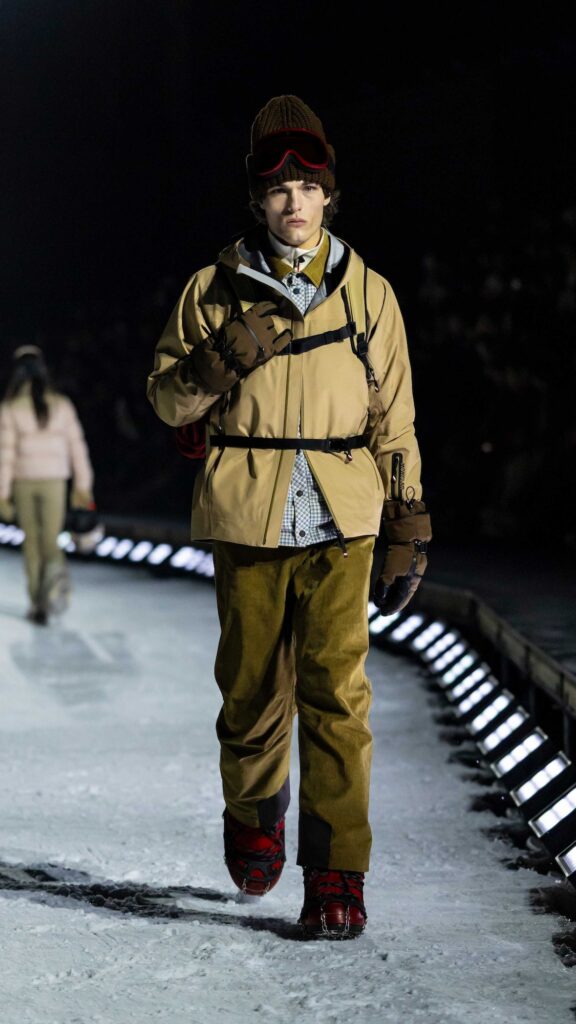
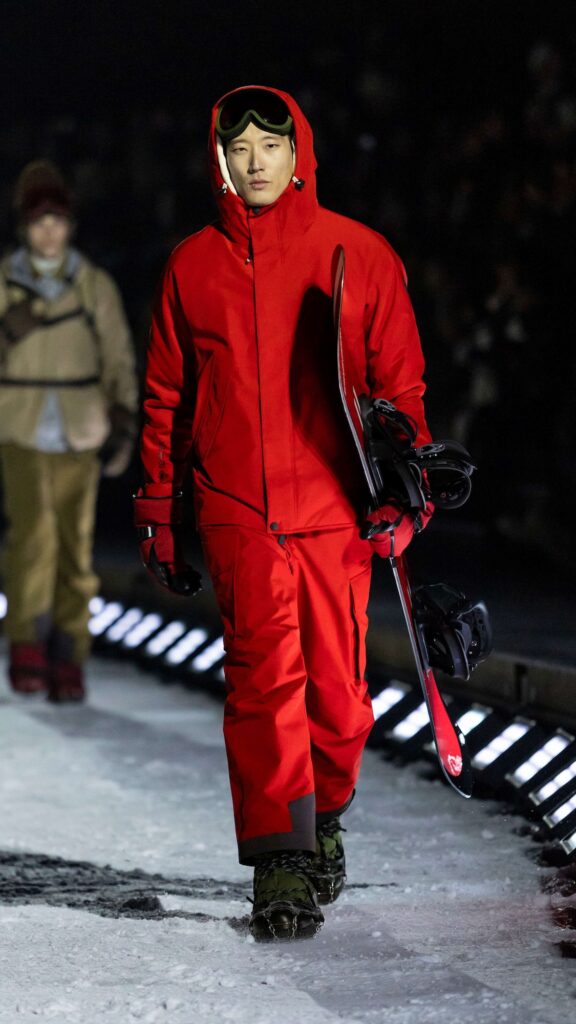
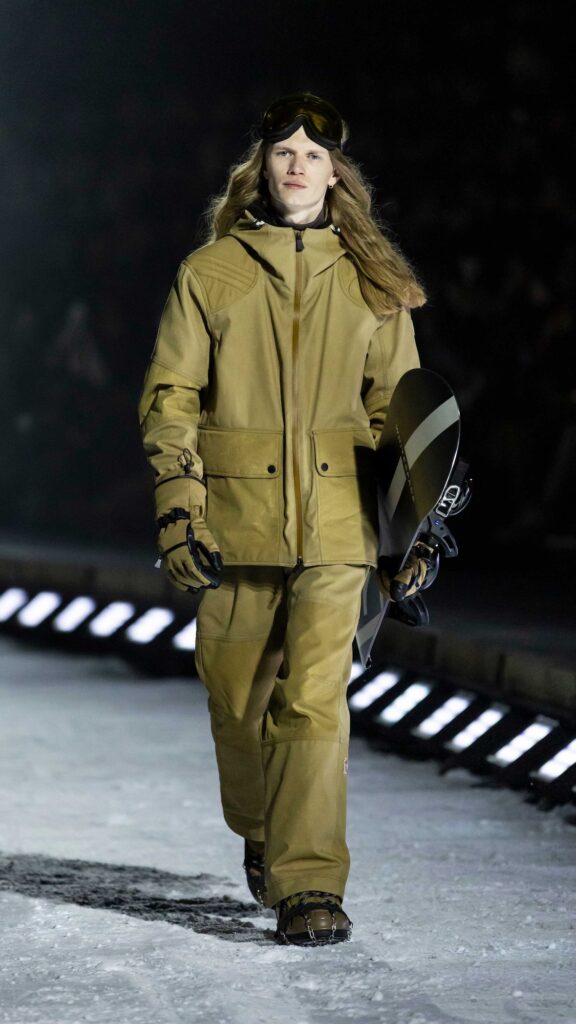
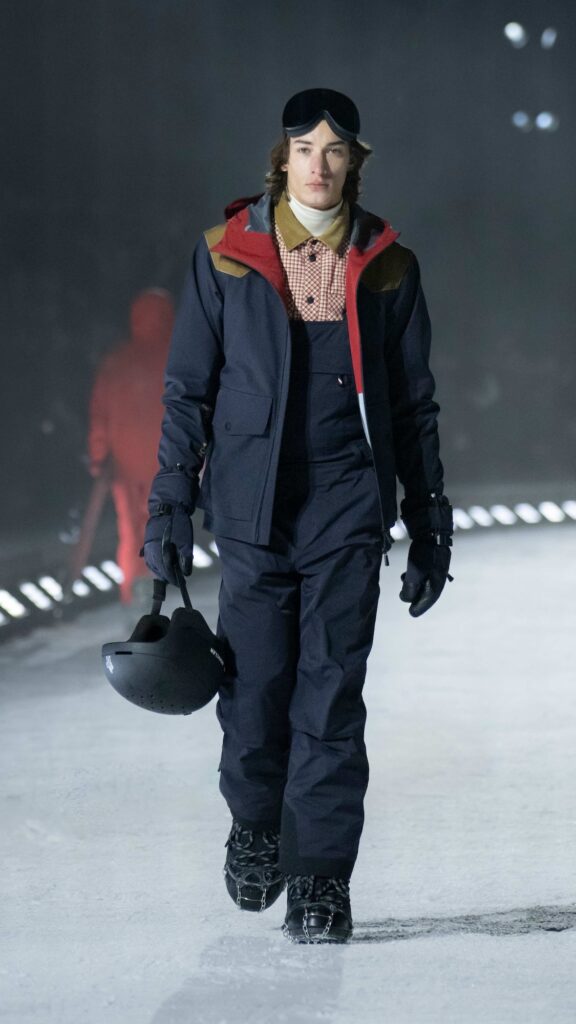
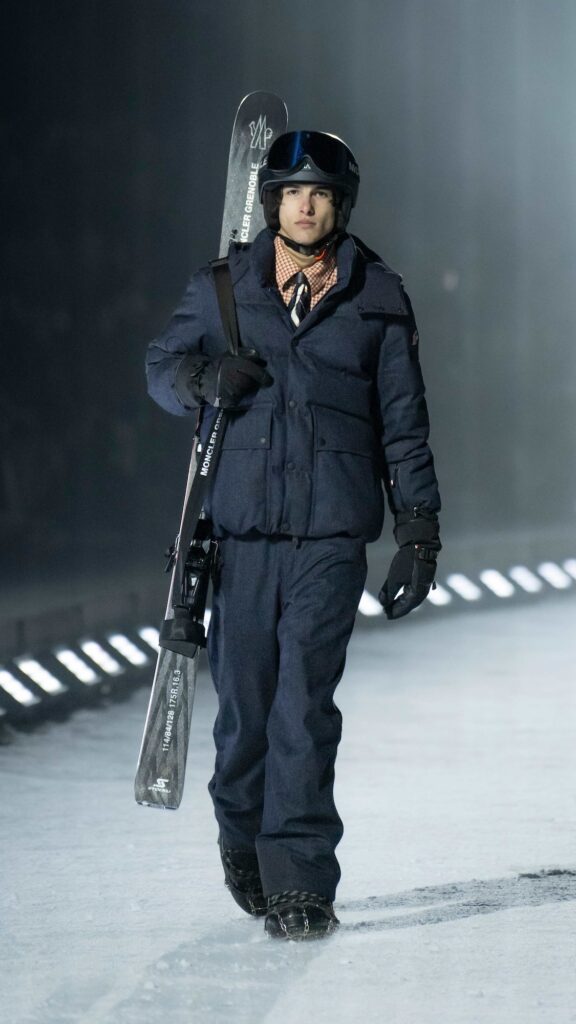
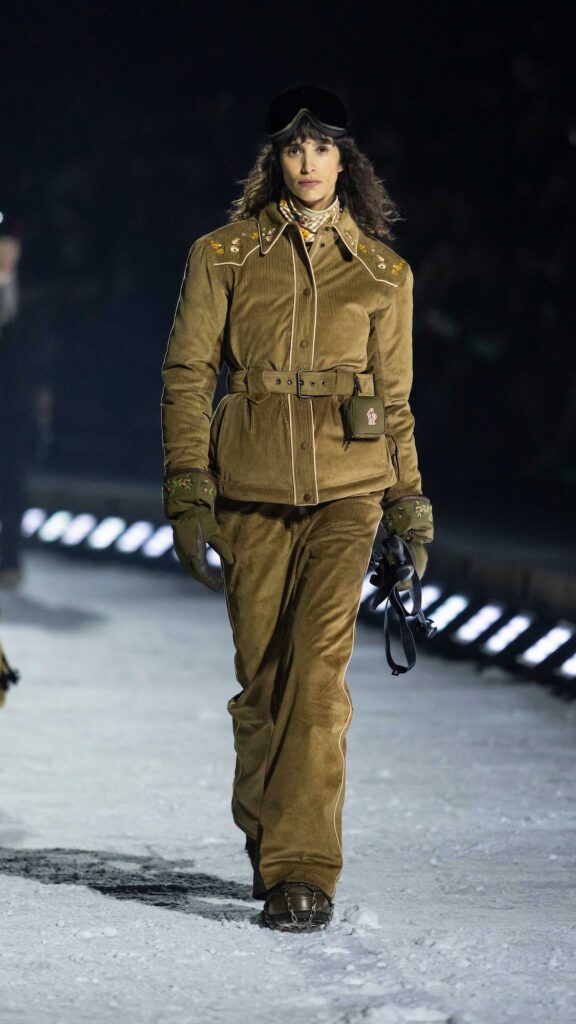
Visual storytelling plays a crucial role. Subtle graphic elements echo local cartography, wildlife, and regional codes, woven into textiles rather than printed loudly on the surface. Quilting becomes topographic. Patterns behave like coordinates. The garments suggest that place itself has been translated into structure.
Material choices reinforce this dialogue between craft and innovation. Dense fabrics, reinforced zones, and carefully calibrated volumes prioritize protection and mobility, yet never slip into purely utilitarian territory. Instead, they project a kind of elevated resilience—clothes designed not just to endure harsh climates, but to belong to them.
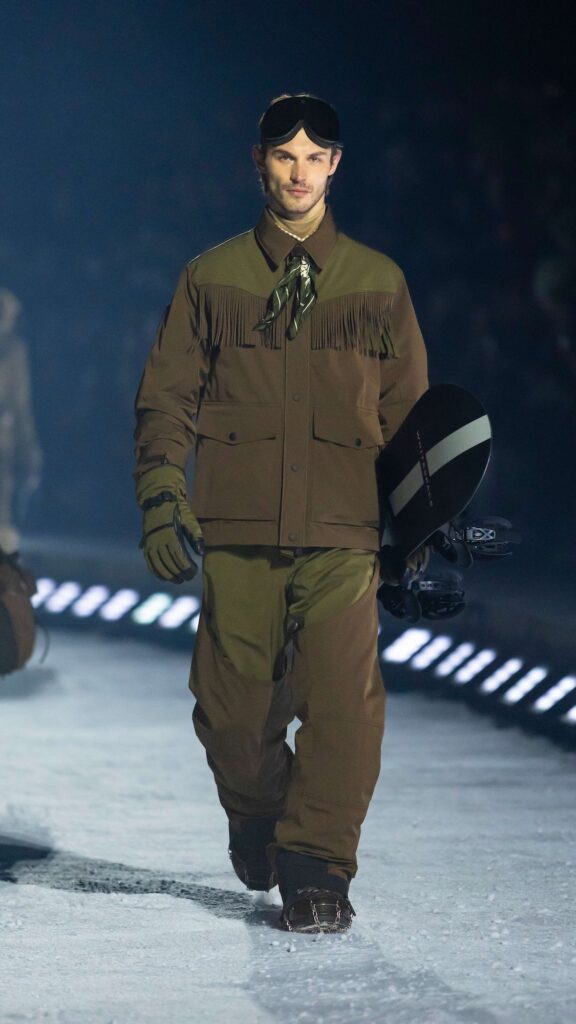
American outdoor traditions surface indirectly, filtered through Moncler’s European technical language. Think rugged elegance, where classic references are stripped of sentimentality and rebuilt with contemporary discipline. The result is outerwear that reads as culturally fluent—aware of its surroundings, but not bound by them.