
Share this
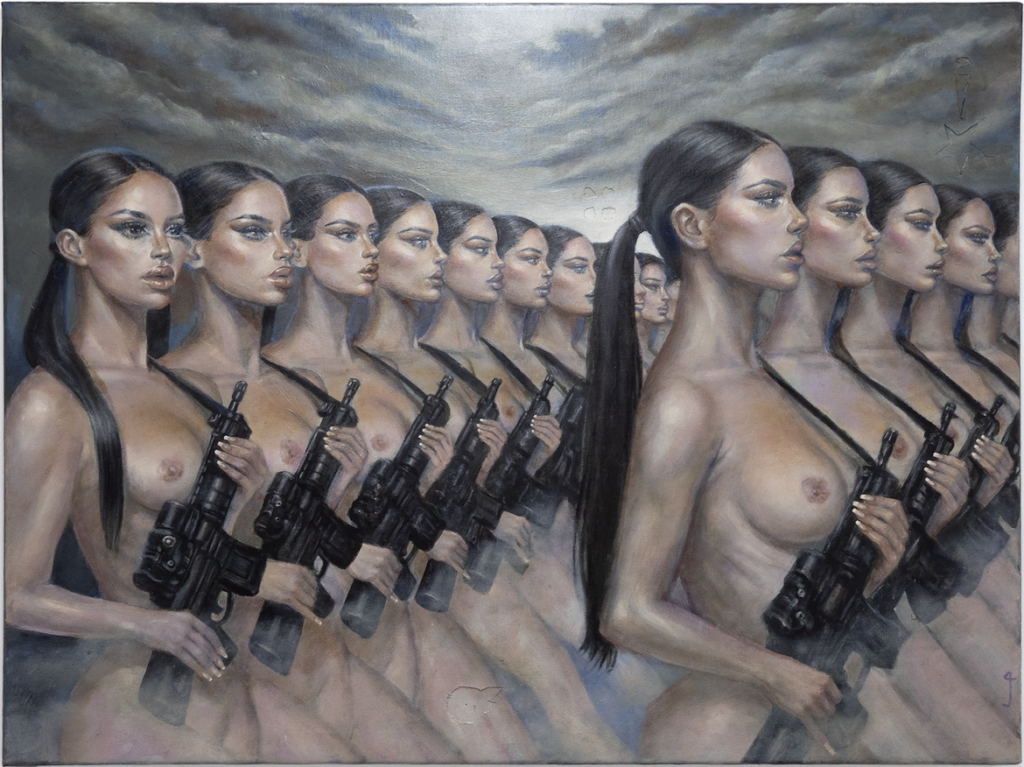
Lorena Infantes Prada is an instinctive painter. Born in Madrid and now based in Paris, she approaches painting less as a way to explain the world and more as a way to process it. Trained in the restoration and conservation of old paintings, she works with images that seem to appear and dissolve at the same time — figures, gestures and bodies that never fully settle.
She is currently presenting a duo exhibition in ESSAIS, Paris with artist Winnie Mo Rielly, while continuing to develop a practice driven more by intuition than by fixed ideas.
In this conversation, Lorena speaks openly about ghosts, beauty and deterioration, artistic collaboration, and the strange place where a painting begins — somewhere between revealing something and hiding it in plain sight.
Text: Lucía García Martín
Hi Lorena, how are you and where are you joining us from today?
Lorena: I’m pretty good, thanks. With my worries and things, like everyone I suppose, but relaxed right now. I’m speaking to you from Paris.
Who are you in one sentence that doesn’t sound like a biography?
Lorena: I paint to express myself and release things I wouldn’t know how to say any other way, because verbal communication isn’t really my thing, and doing it distracts me. I’m not trying to understand life or provide answers. I’m more interested in opening questions than closing them.
Right now you have a duo show active in Paris. Your work there seems to breathe a tension between figure and presence, between memory and erasure. If a ghost accompanied you, how would it dress and what music would it listen to? would it be protective? would it allow itself to be seen?
Lorena: My ghost would be an animal, so it would be naked, although my friend Claudia Mate would probably make costumes for it from time to time. It would listen to relaxing music, classical or Gregorian chants, to keep a high vibration that brings me peace, and when it’s feeling lively it would listen to flamenco. It would be protective, like a guardian angel, but it would also leave me alone when I need it. It wouldn’t let itself be seen, only by me, and by whoever I want.
Do you feel your work translates invisible forces that pass through us {desire, power, impulse} or would that be simplifying it too much?
Lorena: I like simplifications and knowing what people perceive. That can be one of many readings. Depending on who’s looking, it can mean something completely different. It used to bother me when someone didn’t understand anything or laughed, but now I see that it doesn’t necessarily mean they think it’s shit. It might just be that my representation makes them laugh, and that’s great. I think all artists are, in some way, translators, good or bad ones, and we’re here to make people connect or not. That’s the grace I see in art. Those invisible forces are there, but I don’t explain them, I just show their small traces.
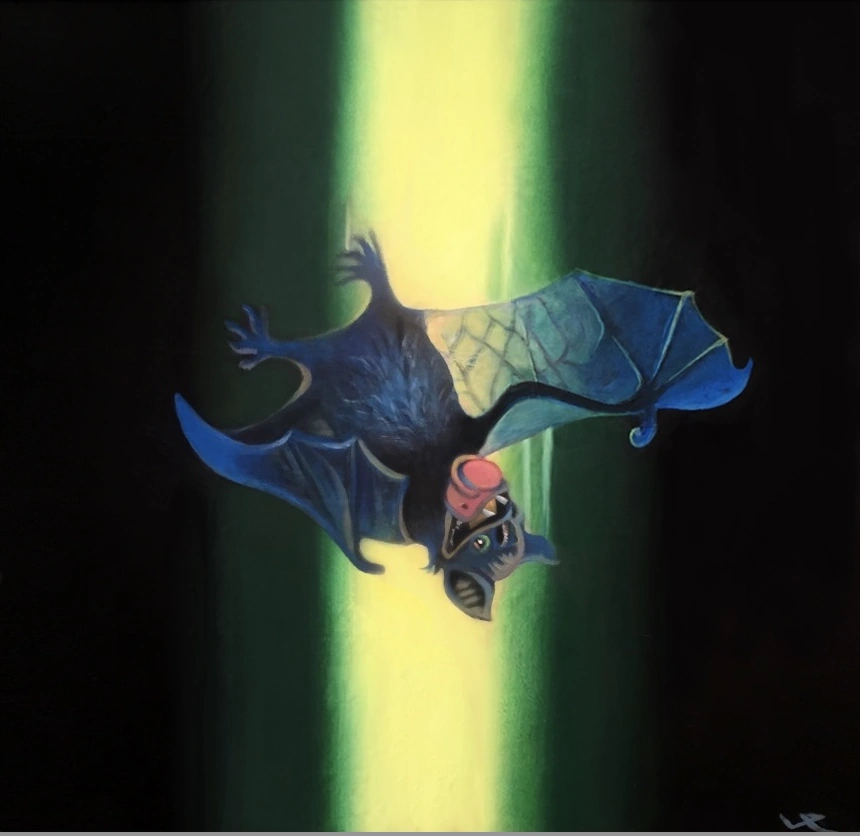
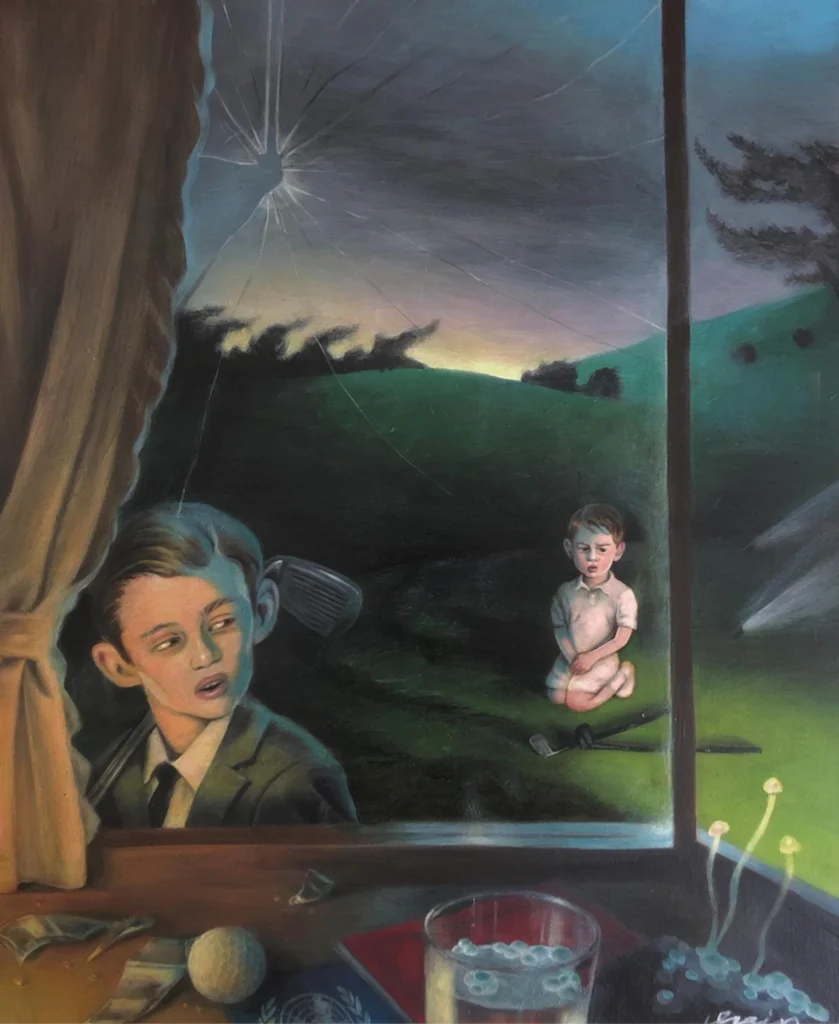
What’s the last book you read, or the one you’re reading right now? has anything changed in the way you think lately?
Lorena: Today I read a comic I really liked called “La abolición del trabajo”. As for novels, the last one I finished was “A Little Life”, and it was hard for me to finish it. I hadn’t read in a while and it was heavy. Now I’m reading “El sentido de consentir” by Clara Serra. Maybe it has changed something. In small ways, like looking more carefully, questioning things I used to take for granted, and paying attention to details that used to go unnoticed.
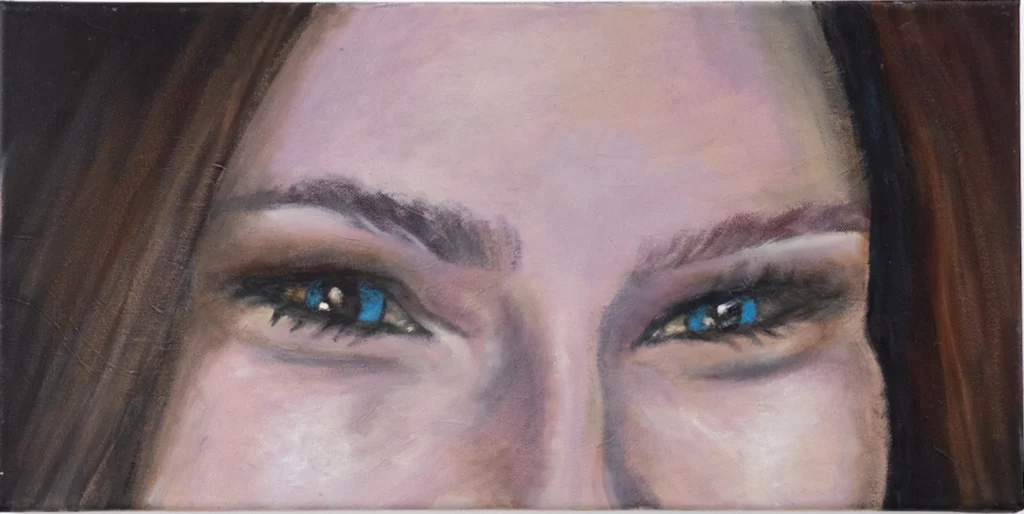
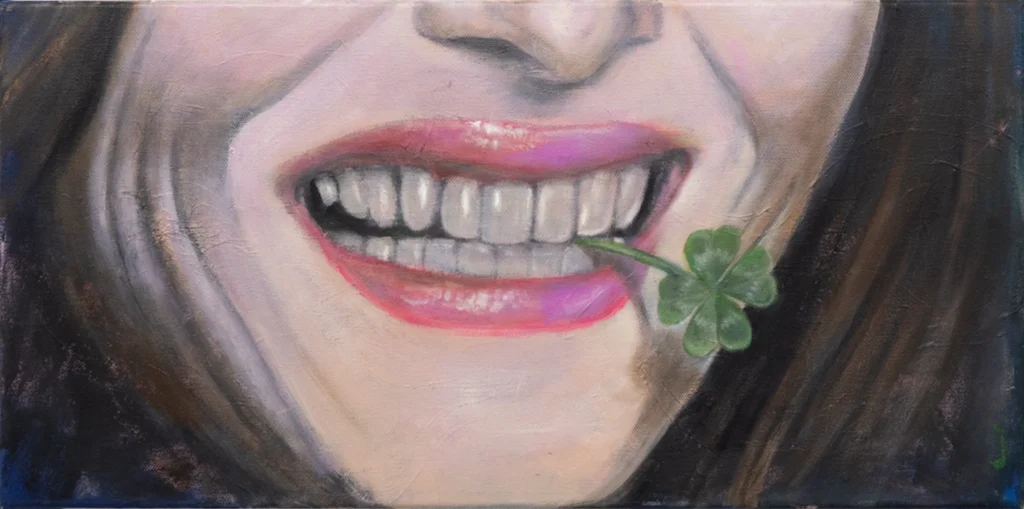
There’s a very marked materiality in your work {between layers and fragmentation} which might relate to your background in restoration and conservation. Do you work from the wound or from repair? what happens physically and mentally when you start a new piece?
Lorena: Both, but I’m interested in what remains, what leaves a mark and what transforms. When I start a piece, physically and mentally it’s like diving into another dimension. My hands move before my head, and little by little I find the rhythm of the work. It’s more about letting something speak through me than imposing something onto it.
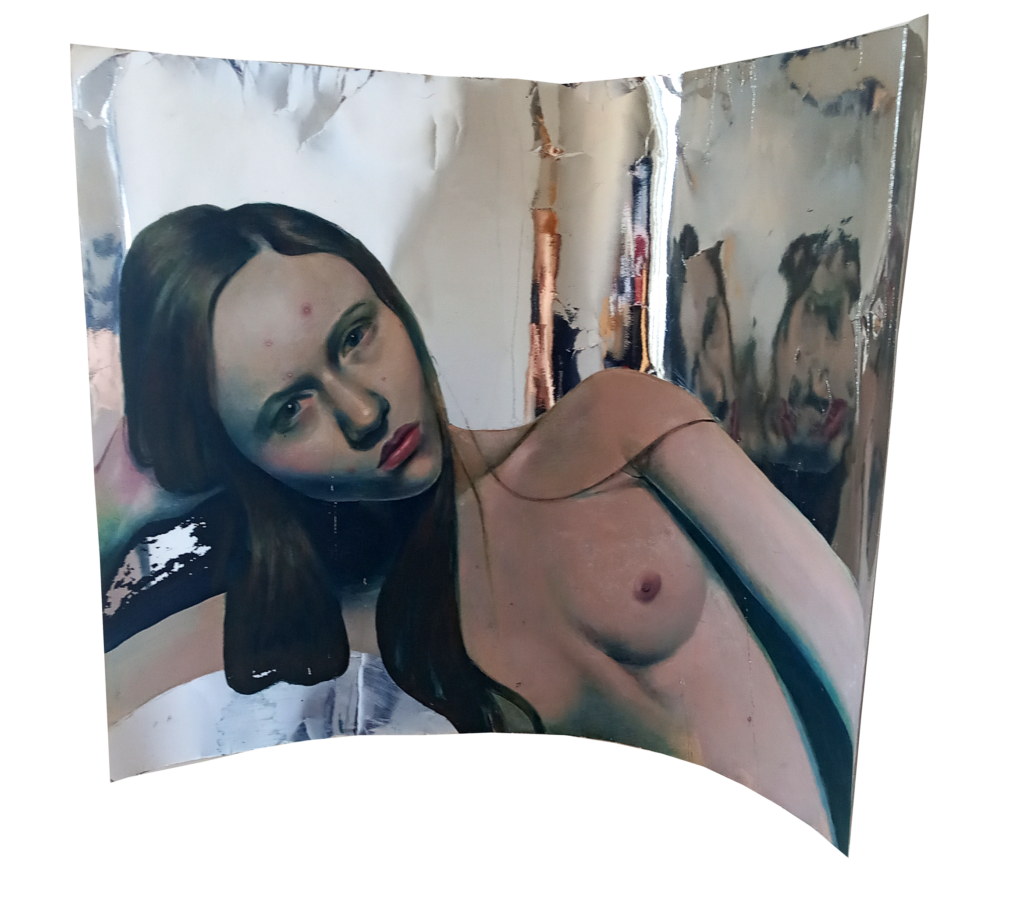
How does the internal narrative of one of your pieces form? what appears first, the gesture, the figure, a mental state, or intuition?
Lorena: It emerges very organically. Sometimes it’s a gesture, other times a figure, an object, or even a mood. It almost never comes all at once or fully planned. I start with whatever catches my attention in that moment. I move through obsessions, it might be the texture of a material, a color, a posture, and little by little, while I’m working, the story builds itself. Mostly through intuition.
You’re interested in dialogue with other artists, what kind of conversation do you imagine? does your work argue, seduce, or compete?
Lorena: This duo show with Winnie Mo Rielly has been my first experience like that, and I really enjoyed it. That’s why I want to repeat the experience in Madrid this year with another artist. I’ve always worked in a very solitary way, very immersed in my own world, and I never liked sharing processes or routines. But I’ve realized that isolation can also be a limitation.
I’m interested in dialoguing with artists I connect with, but whose practices are very different from mine. That’s where the conversation becomes interesting. My work doesn’t compete, it mostly converses, and sometimes it argues.
I’m very aware that things are rarely black or white. In a debate I can see one position and also the opposite. Sometimes I think one thing and the next day I think the contrary. I like surprising myself by discovering other perspectives.
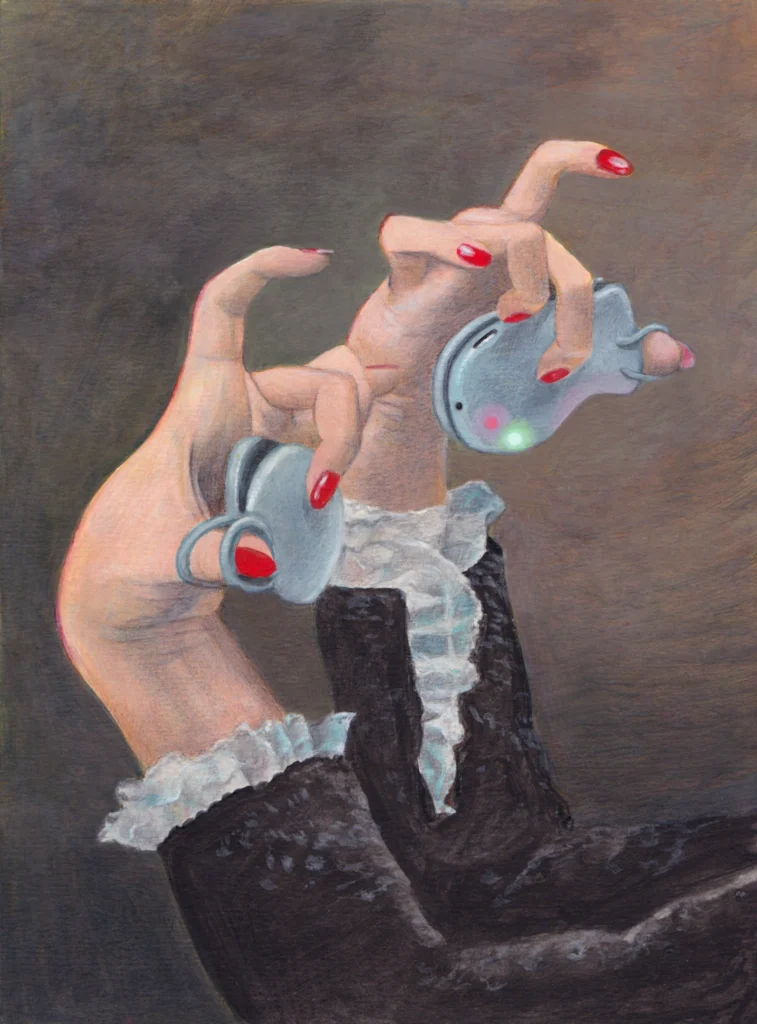
To the classic question “What does your work say about you?”, I’ll rephrase it: is there something about yourself that you still don’t dare to look at in your own work?
Lorena: Yes, probably. I think the work often knows things before we do, and maybe there are parts of me I’m still processing. I’m not very sharp at reading my own work. In fact, at my mother’s house there are almost none of my drawings left because over time I would start hating them and throw them away or give them away. They embarrassed me or I simply stopped liking them, and I still don’t really know why. I wish I had them now.
Sometimes I feel like I still don’t fully know myself. That’s why I’d like, at some point, to move more towards abstraction, to know myself better and also discover my limits.
I don’t think I need to understand everything right now. I want to make myself a little uncomfortable and move somewhere else. If I had everything clear, maybe I wouldn’t paint.
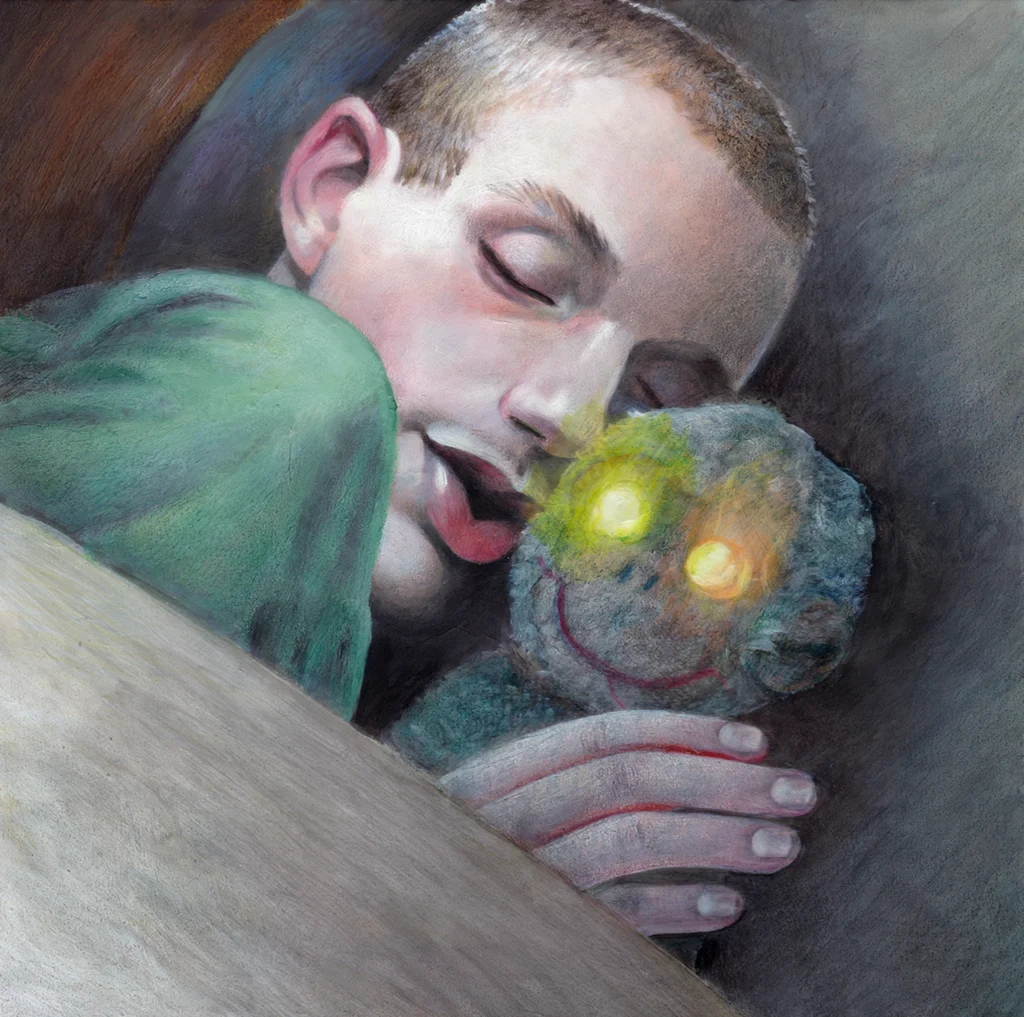
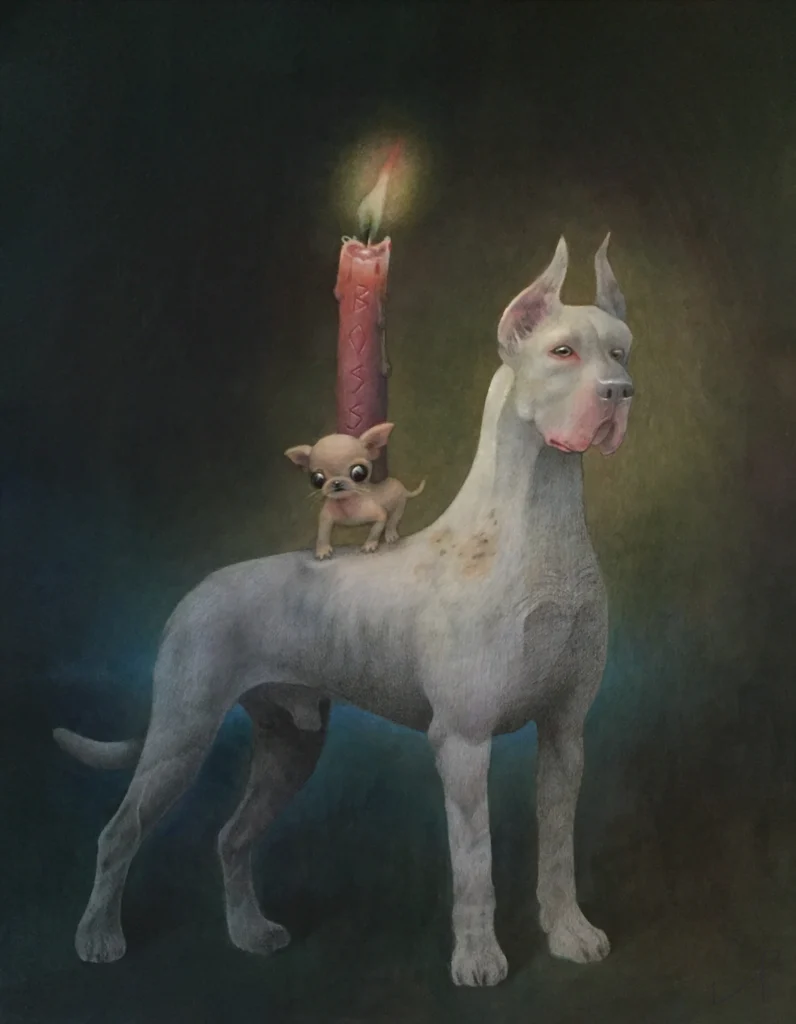
Your work can be seen as a friction between deterioration and beauty. If someone denied the word “beauty” in relation to your work, would it bother you?
Lorena: Not at all. Beauty is a very loaded and very subjective word. If someone doesn’t see it in my work, that’s fine. I’m more interested in the tension between attraction and rejection. If someone feels friction, even if they don’t call it beauty, then something is already happening.
I paint for myself, that’s why I do it according to my own taste. Of course I love it when people appreciate it and when I can make money from it, but my goal isn’t to make something decorative. That’s also why I moved to Paris, to surround myself with things that are very ugly and very beautiful. That duality makes me happy.
Living isn’t delicate. Do you think your work tries to soften that fracture or expose it without anesthesia? what comes first, the need to reveal something or the impulse to hide it?
Lorena: I don’t think my work softens anything. But I also don’t think it exposes things in a violent way. I try to stay in that uncomfortable point where something, for me, is beautiful and at the same time a little broken.
Living isn’t delicate, but it’s not only fracture either. There are layers, contradictions, and I’m interested in showing them without underlining them too much.
As for revealing or hiding… that’s a good one. I think they go together. Sometimes I paint to reveal something that unsettles me, and other times to hide it in plain sight. Painting has that ability: you can show a lot without saying it explicitly.
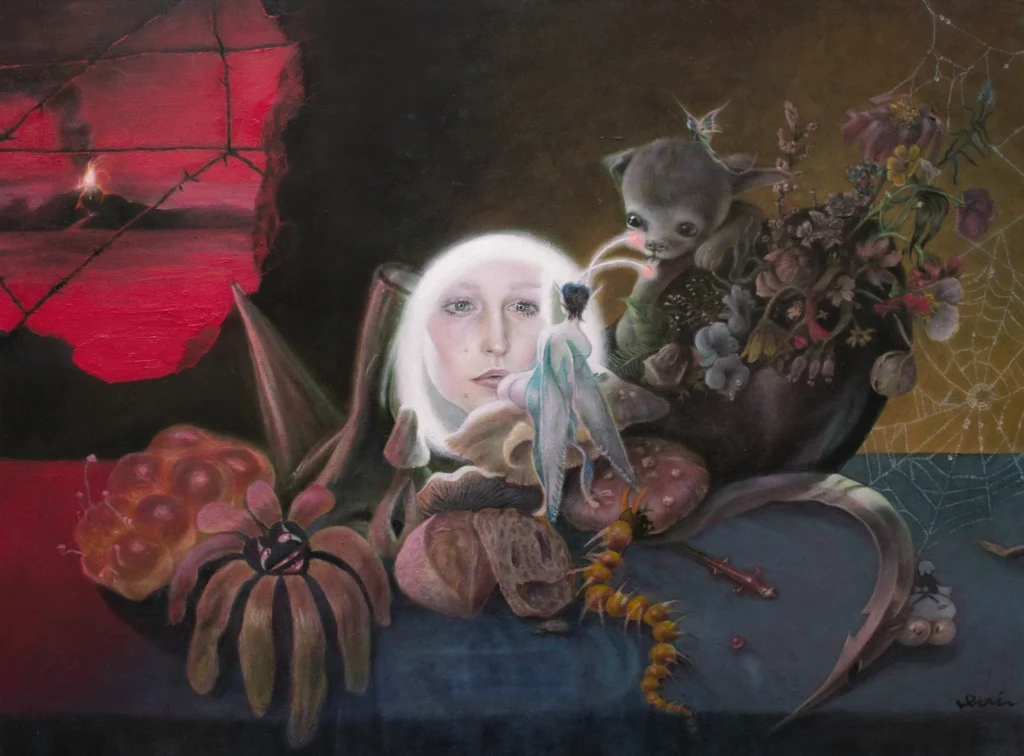
What relationship do you see between pain, madness and sensuality? are they separate states, or can they belong to the same energy?
Lorena: They can belong to the same energy. Pain, madness and sensuality all have something in common: they take you out of a neutral place and make you more aware of your body and your limits.
I don’t like idealizing them, but I don’t deny them either. Personally I’m not attracted to very extreme emotions or to losing control, but they’re there, they’re part of the human experience. And sometimes in painting they appear mixed together without me forcing them.
Does the passing of time affect you? If so, how do you deal with that feeling? are you protective of your time?
Lorena: Not really, to be honest. Lately I hear people talking a lot about aging, maybe because I’m no longer young, but honestly I love changing. Life shifts so much every year that it feels interesting to live through it.
I’ve always preferred older people, and younger people increasingly feel a bit tiring to me. I guess it also helps that I don’t feel physically limited, I almost never get sick, my back has never hurt… and my grandmother is 97 and doing better than me. Maybe that’s why I have such a carefree awareness of time.
And if life didn’t last that long… I’ve had such a good time that it would still be fine. What I am starting to do is protect my time more. I don’t want to waste a second doing things I don’t want to do or spending it with people I don’t want to be with. Time is gold, it’s the most valuable thing we have.
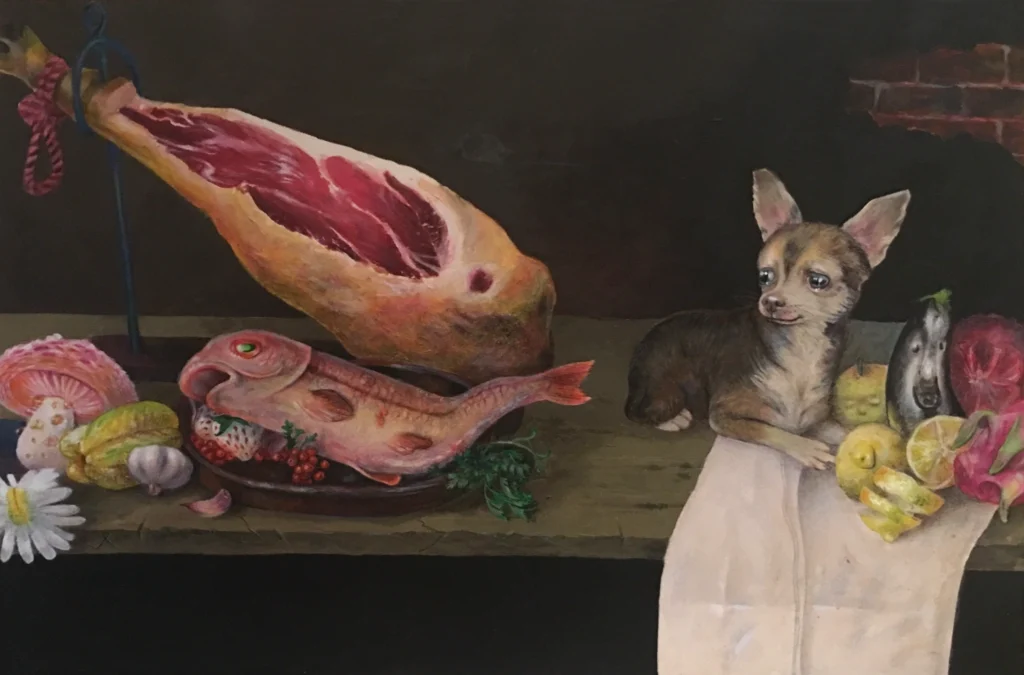
When two people stop loving each other, where do you think that love goes?
Lorena: Like everything, it transforms. Sometimes it becomes learning, or friendship… and other times it simply disappears and turns into a memory. But love always ends up being useful in some way.
What question would you like to be asked in an interview that nobody has ever asked you?
Lorena: Actually, the one you just asked is perfect! But maybe something like: what advice would you give to an artist without rich parents? And I’d say: try to be as sociable as possible, and if you can study fine arts or something similar, don’t do what I did, and study, it will help.