

Share this
From Anne Carson and Ben Whishaw to Kae Tempest, Siri Hustvedt, Tanya Tagaq, Leïla Slimani and Elizabeth Strout, this year’s Louisiana Literature festival turns the museum into a stage for grief, desire, memory, politics and transformation
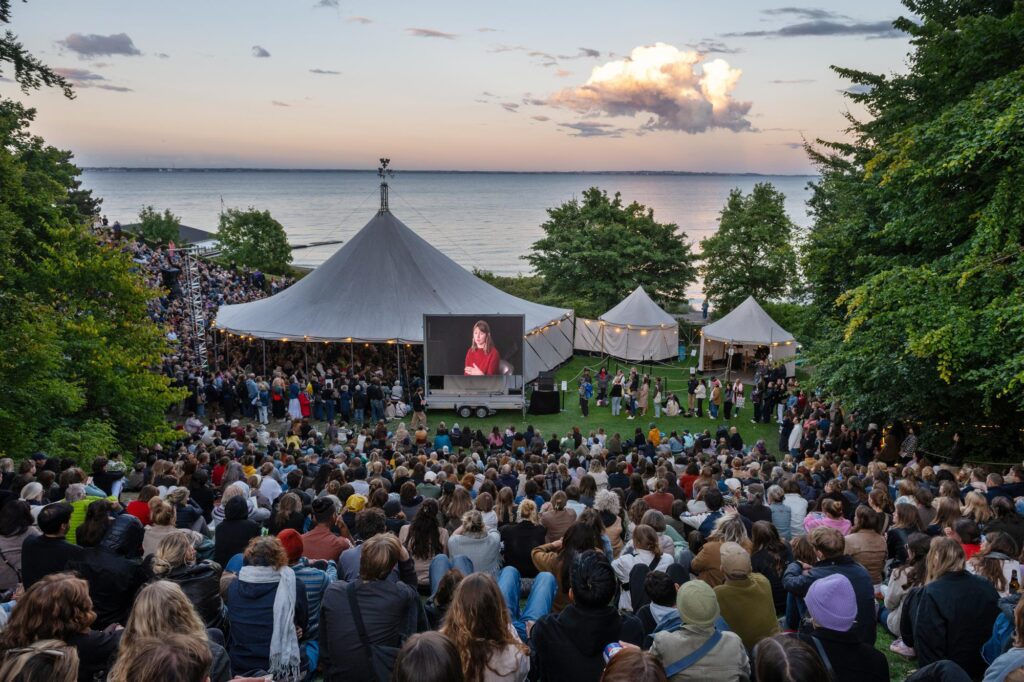
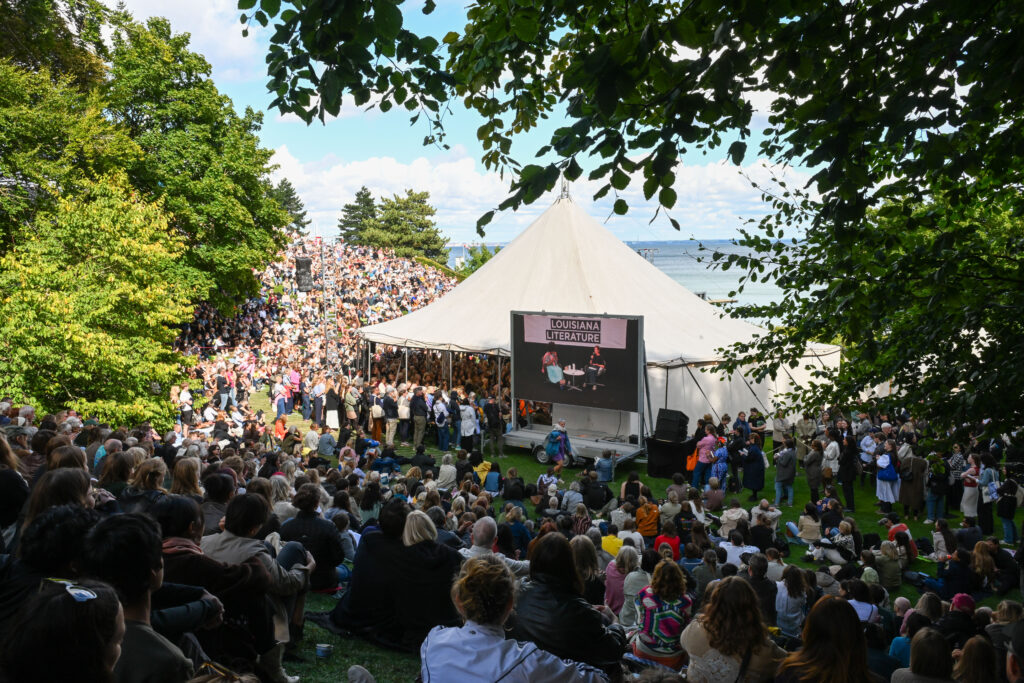
There is something almost cinematic about Louisiana Literature. It is not simply that the festival takes place at the Louisiana Museum of Modern Art, one of Denmark’s most iconic cultural institutions, with its sculpture park, glass corridors, sea views and carefully staged encounters between art, architecture and nature. It is also that literature, here, seems to move differently. It is not confined to the page. It speaks, sings, performs, mourns, argues, remembers, transforms. It becomes atmosphere.
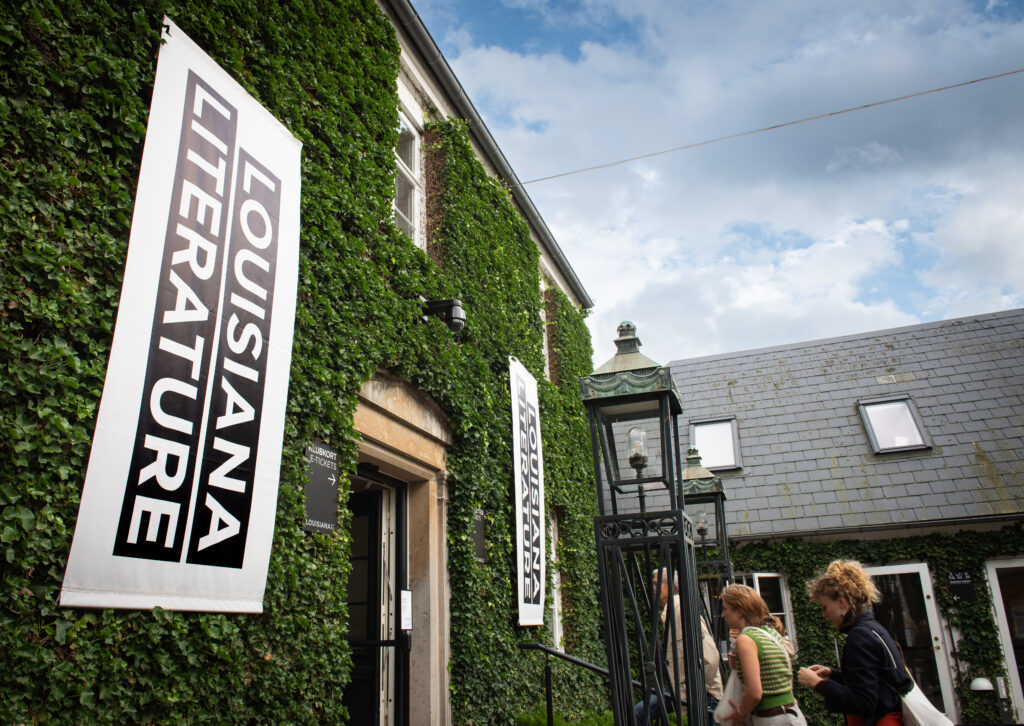
Running from 20 to 23 August 2026, this year’s Louisiana Literature gathers an expansive international program of novelists, poets, performers, musicians and thinkers across the museum’s Concert Hall, Park Stage, Villa Stage, Calle Stage and Lake Garden. The result is a festival that feels less like a conventional literary gathering than a constellation of voices asking what language can still do in a fractured time.
At the centre of the programme is a strong sense of literature as a living, bodily form. One of the clearest examples is Anne Carson, who appears in one of the festival’s major highlights: a performance based on her celebrated verse novel Autobiography of Red. Joined by actor Ben Whishaw, musician Kjartan Sveinsson, artist Robert Currie and a vocal choir, Carson will revisit the mythic, wounded world of Geryon, the red monster whose story has become one of contemporary literature’s most haunting meditations on desire, shame and becoming. Carson’s work has always existed somewhere between scholarship and spell, ancient myth and modern rupture; at Louisiana, that hybridity becomes theatrical, sonic and communal.
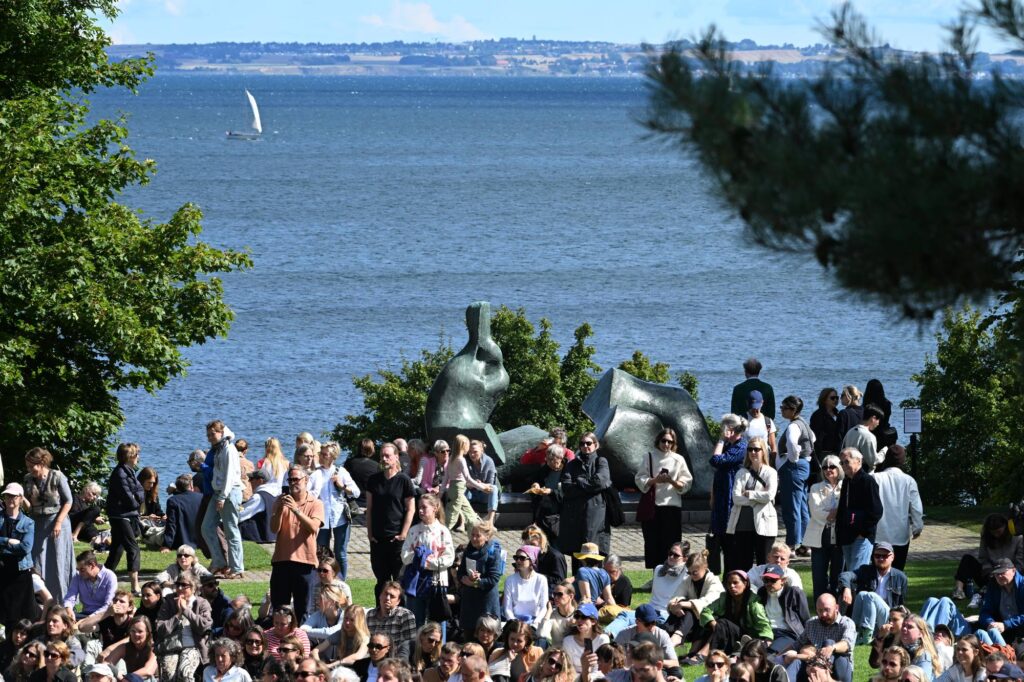
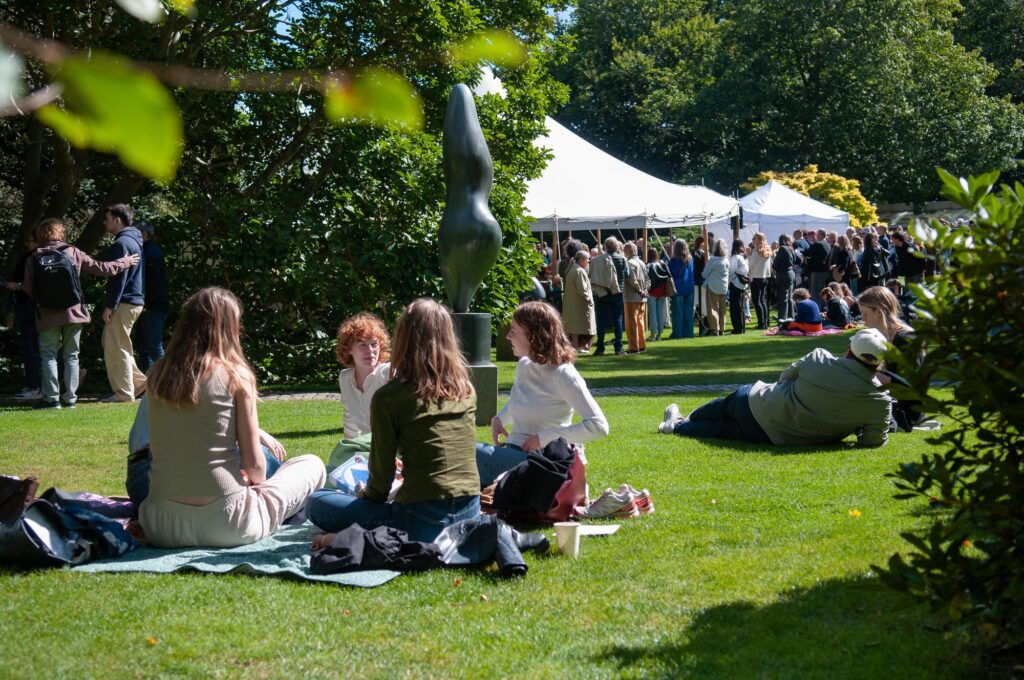
Carson and Whishaw also appear as part of Magic in the Lake Garden, perhaps the most evocative section of the programme. Taking place on Friday evening from 18:00 to 23:00, the Lake Garden becomes a twilight space of readings, rituals and performances. The line-up includes Olga Ravn, Lasse Raagaard, René Jean Jensen, Shadi Angelina Bazeghi, Simona Vencko Tayanna, Rasmus Daugbjerg, Nanna Storr-Hansen, Lasse Dyrholm, Zahna Siham Benamor, Anne Carson & Ben Whishaw and Andrzej Tichý. The programme frames the evening through folk magic, loss, transformation, Algerian poetry, Iranian modernism, refugee narratives and the porous boundary between human and non-human life. In the context of Louisiana’s landscape, this feels particularly potent: literature is not only read aloud, but placed inside the garden, under the trees, beside the water, as if returning language to older forms of ritual.
This sense of the literary as ceremony runs throughout the festival. Tanya Tagaq, the internationally acclaimed Inuk artist from Nunavut, brings her fusion of traditional throat singing and contemporary sound to the Park Stage, before returning later in the festival to discuss her acclaimed novel Split Tooth. Her presence opens one of the festival’s most compelling tensions: between voice as music and voice as testimony, between ancestral sound and contemporary form. In a programme deeply concerned with identity, land and memory, Tagaq’s work feels essential, not only because it resists easy genre categories, but because it insists that storytelling can be visceral before it becomes verbal.
The same could be said of Kae Tempest, who appears on Thursday evening. A poet, novelist, spoken word artist and musician, Tempest has long understood the stage as a place where language is pushed to its physical limit. Their first book in ten years, Having Spent Life Seeking, centers on Rothko Taylor, who returns to the town of their birth and confronts the childhood environment they barely escaped. Tempest’s work often carries the charge of confession, prophecy and social witness at once. At Louisiana, that intensity sits naturally alongside a programme preoccupied with family histories, political inheritance and the unstable relationship between self and society.
Among the international fiction names, the festival is especially rich. Elizabeth Strout, whose novels have made ordinary lives feel almost luminous in their emotional precision, appears in conversation around her ongoing literary universe. Douglas Stuart, who broke through with Shuggie Bain, brings his intense attention to class, secrecy, queerness and place. Katie Kitamura, one of the sharpest contemporary chroniclers of ambiguity, performance and emotional misrecognition, appears across several events, including a conversation with Vincenzo Latronico, whose Booker-shortlisted Perfection dissects the polished emptiness of creative-class aspiration in Berlin.
The festival also brings together writers whose work confronts history not as something settled, but as something still violently present. Antonio Scurati appears with M: Son of the Century, his documented novel about Mussolini’s rise to power and the persistence of fascism in the modern imagination. Leïla Slimani presents the final volume in her trilogy about the Belhaj family, moving from Morocco’s liberation from French colonial rule into the anxieties of the present. Georgi Gospodinov, whose work has made memory, grief and Eastern European history feel both intimate and philosophical, appears with Death and the Gardener, a farewell to his father that turns mourning into a meditation on care, inheritance and time.
There is also a striking thread of literature dealing with love after rupture. Siri Hustvedt appears with Ghost Stories, her memoir about her life with Paul Auster, his death, and the grief and love that remain. Kiran Desai brings The Loneliness of Sonia and Sunny, a romance moving between India and the United States while exploring migration, class, family bonds and the long afterlife of inherited expectation. David Szalay, winner of the 2025 Booker Prize for Flesh, appears with a novel about masculinity, sex, money and contemporary Europe as a physical condition as much as a political one.
What makes the programme feel particularly alive is how these international names are placed beside an unusually strong Danish and Nordic presence. The younger Danish voices in particular suggest a literature fascinated by bodies under pressure: from Sigrid Adamsson’s acclaimed debut Skyerne, narrated by a collective “we” observing the ecstasies and devastations of friendship, to Dean Butt’s fierce and poetic debut about children growing up amid neglect in a Danish-Pakistani family. Nana Fatou’s Toubab explores family across continents, grief, economic inequality and the experience of being both foreign and at home. Feline Kamber’s debut enters a grotesque, folkloric world of animals, earth and strange demonic presences.
Elsewhere, Runa Lily Luth and Ulrikke Bak bring the digital body into view through camming, desire, fantasy, shame and online intimacy, while Mikkel Rosengaard’s new internet novel Hamløber follows a doomscrolling Danish woman drawn into the orbit of an American internet provocateur. In these works, the screen is not a separate world from the body, but a place where longing, performance and danger mutate.
The festival’s Danish programme also moves through poetry, ecology, ageing, memory and political unease. Søren Ulrik Thomsen, one of Denmark’s major poets, appears in conversation with Line Knutzon on Sunday. Thomas Bobergreturns with poems that reflect on war, love and the dissolving boundary between inner and outer worlds. Signe Gjessing brings her metaphysical, playful cosmic eroticism, while Ursula Andkjær Olsen and Sophia Kalkau stage a participatory work about transformation, mobilization and breaking through paralysis in a time of crisis.
That word, transformation, may be the key to the entire festival. Transformation of grief into art. Of history into warning. Of private pain into public language. Of the novel into performance. Of the museum into a temporary city of voices.
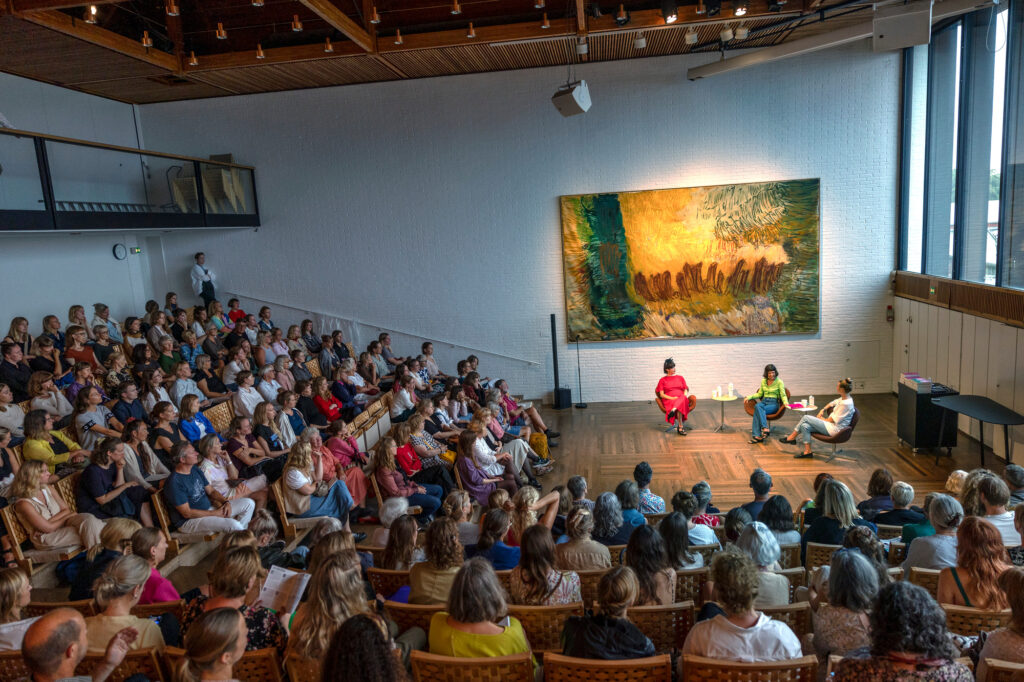
Louisiana Literature has always benefited from its setting, but the 2026 edition seems especially alert to place. The map of the program matters: the indoor Concert Hall, the outdoor stages, the cinema-like Calle Stage, the Lake Garden after dark. Each location shifts the way literature is encountered. A conversation in the Concert Hall becomes intimate and concentrated; a reading in the park becomes porous, exposed to weather, bodies and passing sound; a performance in the Lake Garden becomes almost mythic.
That is the deeper promise of this year’s Louisiana Literature. It does not treat books as finished objects, safely held at a distance. It treats them as openings: into other histories, other bodies, other griefs, other forms of consciousness. Across four days, the festival asks what happens when literature leaves the page and enters the air. The answer, judging by the programme, is not simple. It becomes song, ritual, confession, argument, memory, warning, tenderness. It becomes a way of gathering.
For more information about Louisiana Literature, click HERE.