
Share this
At Independent Art Fair New York, the designer stages more than twenty semi-unique pieces inside an architectural installation made for the body, the archive, and everything in between
Rei Kawakubo has never treated fashion as something that should sit obediently on the body. In her world, clothing can swell, distort, hide, armour, collapse, interrupt, or refuse the body altogether. It can be beautiful, but not in the way beauty usually asks to be understood.
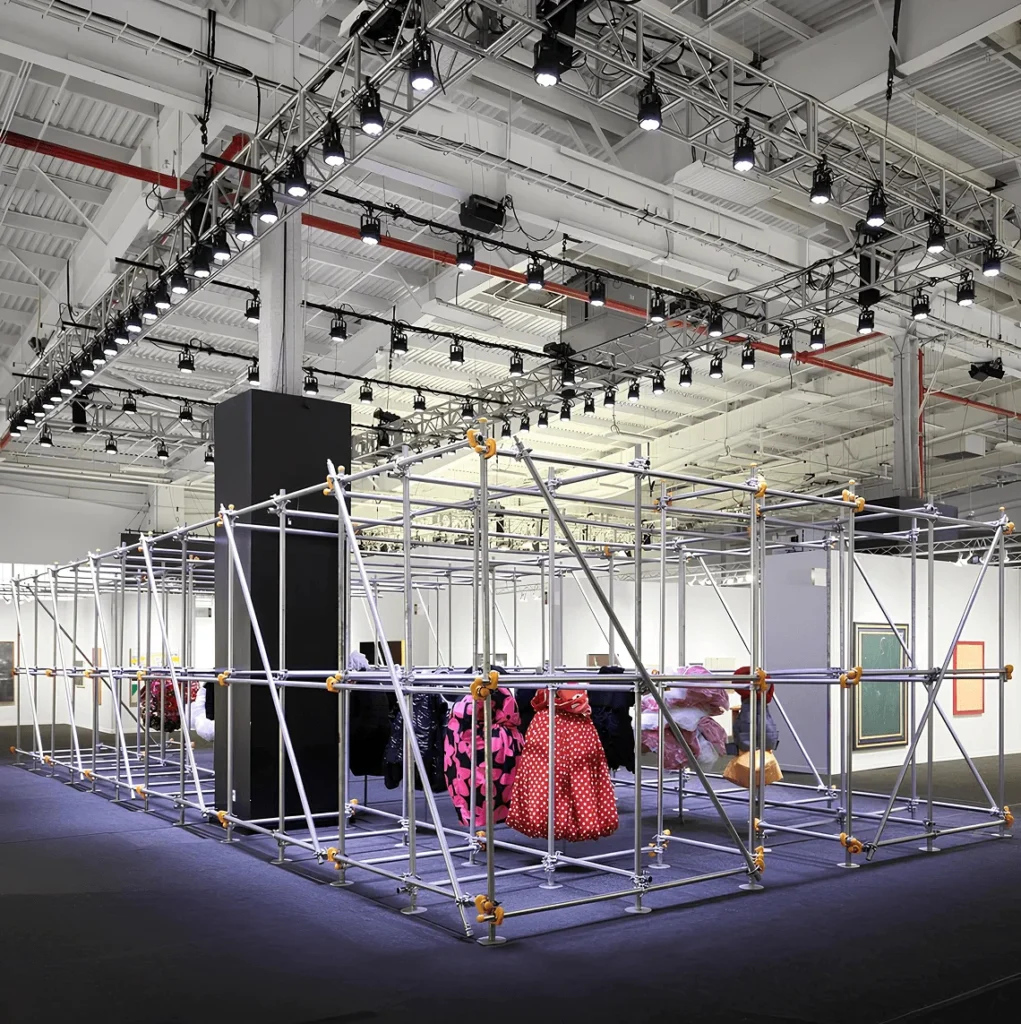
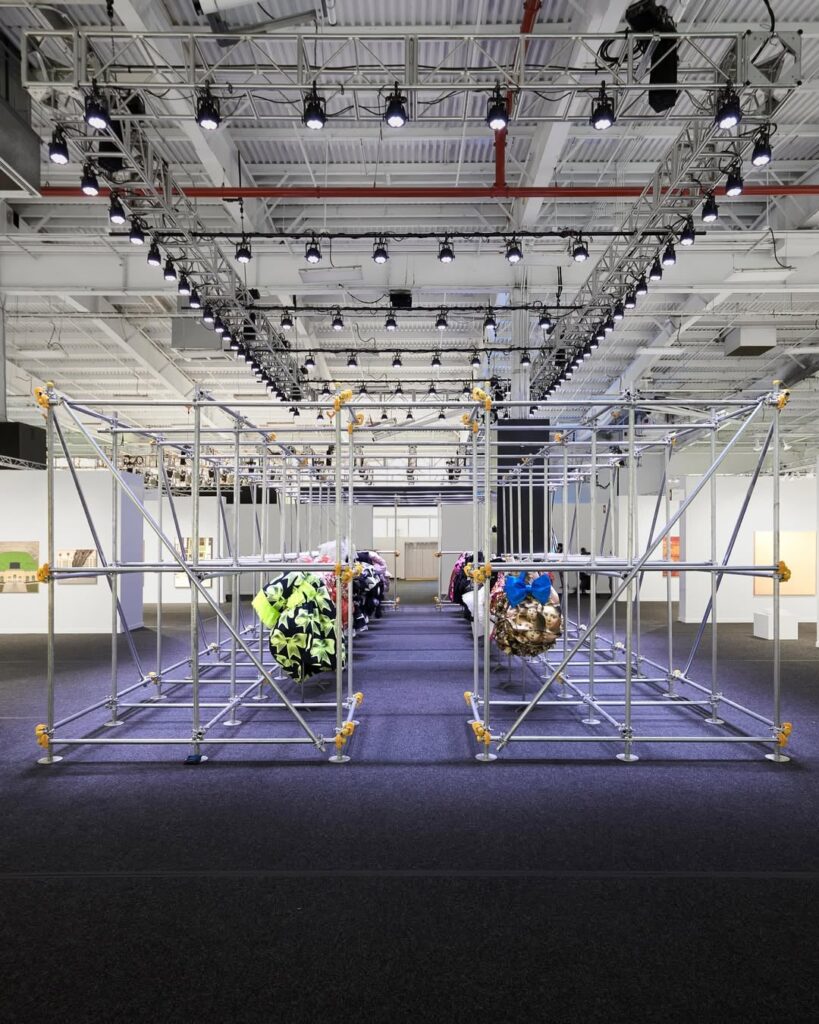
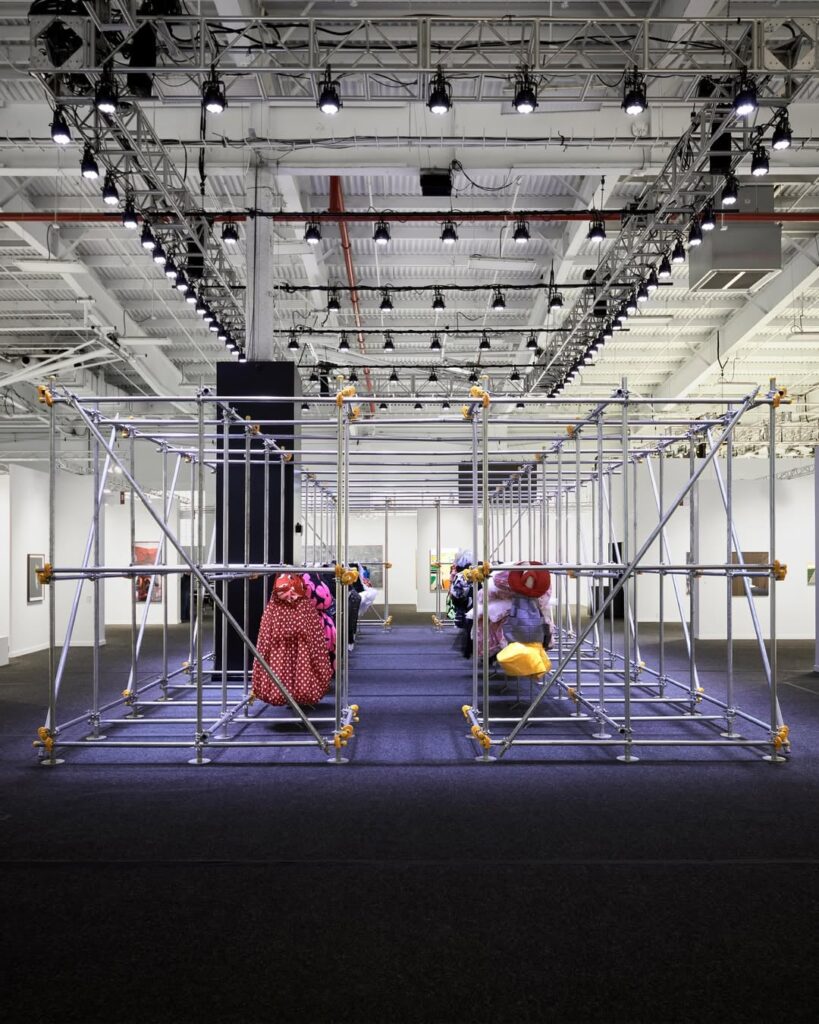
For the 2026 edition of Independent Art Fair, Comme des Garçons enters the centre of the art world with a rare New York presentation conceived by Kawakubo herself. Staged at Pier 36 from May 14 to 17, the project brings together more than twenty recent semi-unique selections by the designer, presented within a site-specific architectural environment.
The presentation marks the first New York showing of this kind in nine years, following the 2017 Costume Institute exhibition Rei Kawakubo/Comme des Garçons: Art of the In-Between at The Metropolitan Museum of Art. It is also the first time this particular series has been exhibited in New York, giving the installation the feeling of both return and interruption.
What makes the gesture interesting is not simply that fashion has entered an art fair. Comme des Garçons has always existed in that unstable zone anyway — not quite garment, not quite sculpture, not quite performance, not quite commercial object, but somehow all of them at once. Kawakubo’s work has spent decades asking what clothing can do when it stops trying to flatter and starts thinking for itself.
At Independent, that question becomes spatial. The pieces are not presented as archive in the nostalgic sense, or as relics of past runway moments. They are bodies of thought: forms designed to be approached, circled, resisted, and read through shape, volume, absence, pressure, and imbalance. The installation turns the fair booth into something closer to a chamber of ideas.
There is also something quietly provocative about bringing Comme des Garçons into this setting. Art fairs are usually built around transactions, visibility, and the polite choreography of value. Kawakubo’s work, by contrast, has always made value feel difficult. It resists quick consumption. It asks viewers to slow down, to accept discomfort, and to look at clothing as a philosophical object rather than a luxury surface.
That tension is exactly why the presentation works. Inside the noise of the fair, Comme des Garçons becomes a strange centre of gravity: not loud, not easy, but impossible to ignore. The garments do not simply display fashion’s proximity to art. They remind us that fashion, at its most radical, has always been capable of making its own kind of art history.