Share this
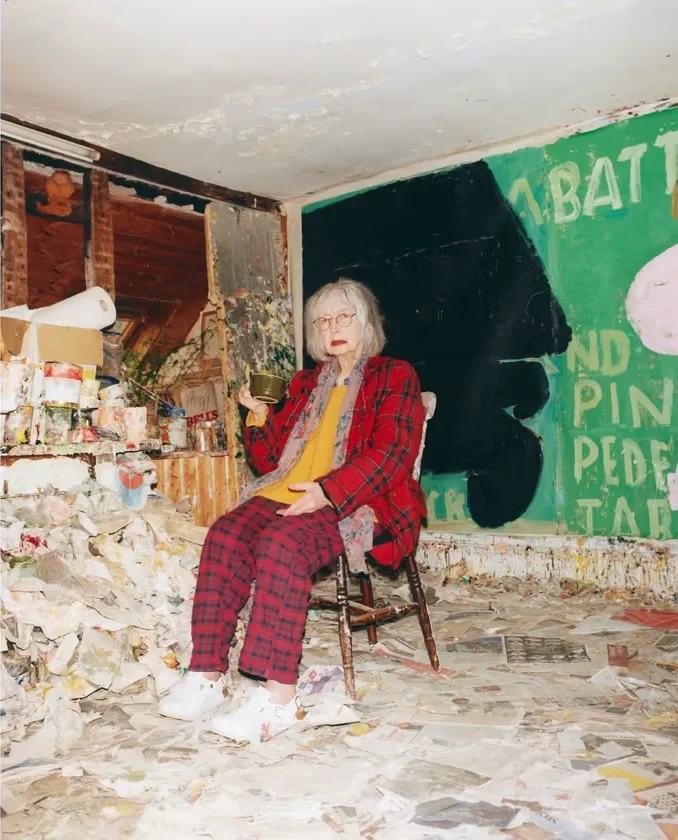
Photo by Will Grundy © Rose Wylie Courtesy Of The Artist And David Zwirner.
At 91, Rose Wylie isn’t doing the polite-late-career victory lap. She’s doing something closer to a joyful demolition job. This season, the Royal Academy of Arts hands Wylie its main-galleries spotlight for Rose Wylie: The Picture Comes First — her largest exhibition to date, bringing together 90+ works spanning decades, plus new and previously unseenpaintings and drawings.
There’s a quiet historical charge to that, too. Multiple outlets note the show as a milestone for the institution: Wylie becomes the first British woman to be given a solo presentation of this scale in the RA’s main galleries — a fact that lands less like a fun trivia line and more like a delayed correction.
Wylie’s work has never behaved like “proper painting.” It’s big, fast, captioned, and sometimes willfully awkward: figures can look cartoonish, then suddenly snap into a kind of devastating accuracy. The imagery comes from everywhere — mass media, film, sport, everyday life, scraps of memory — and she lets those references collide without hierarchy. One minute it’s dogs in a park and a plane overhead, the next it’s celebrity faces, pop-cultural fragments, and handwritten notes that feel like the painting is thinking out loud.
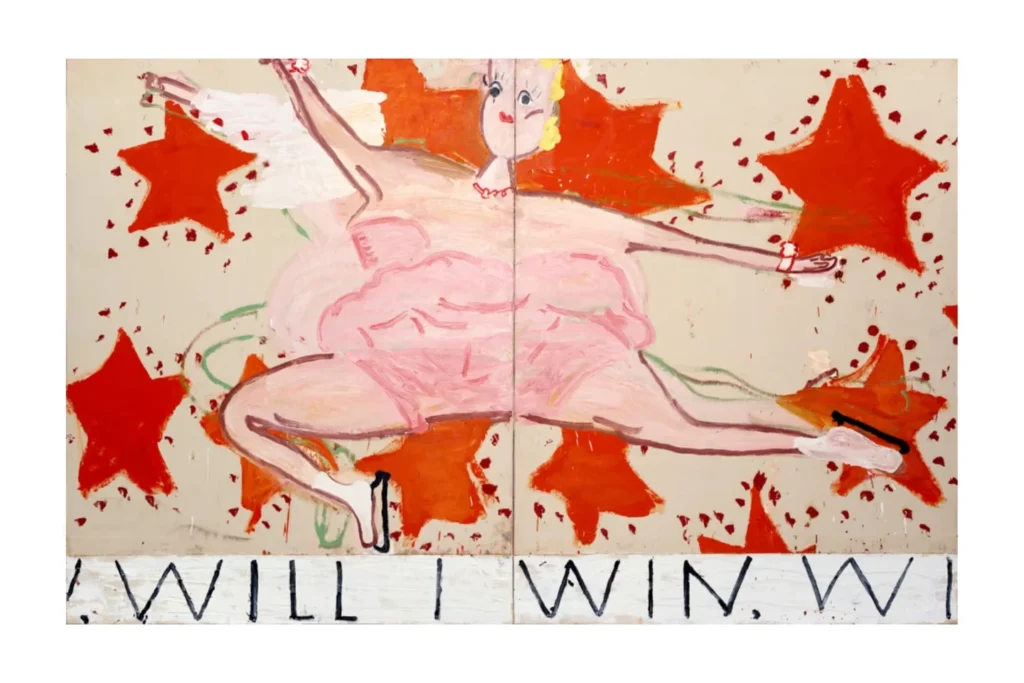
© Rose Wylie Courtesy Of The Artist And David Zwirner. 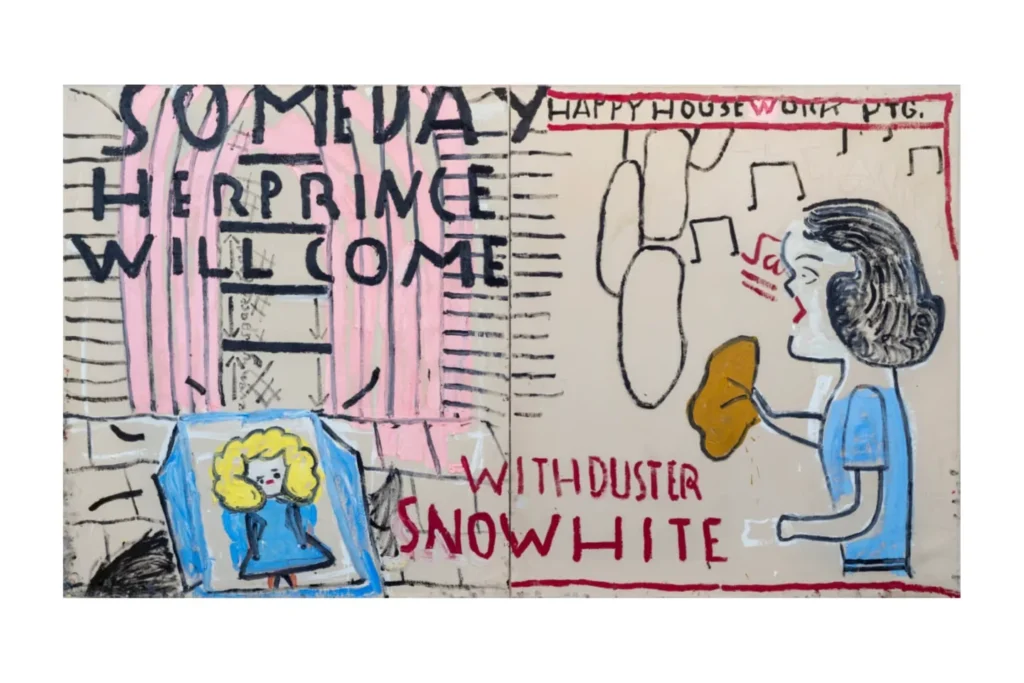
© Rose Wylie Courtesy Of The Artist And David Zwirner. 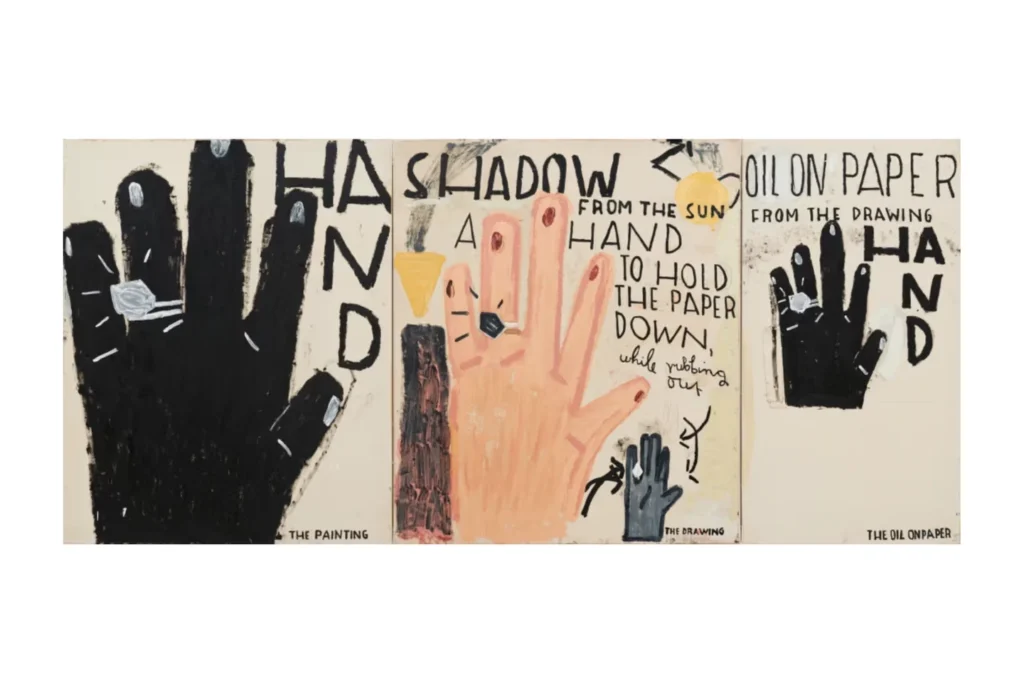
© Rose Wylie Courtesy Of The Artist And David Zwirner. 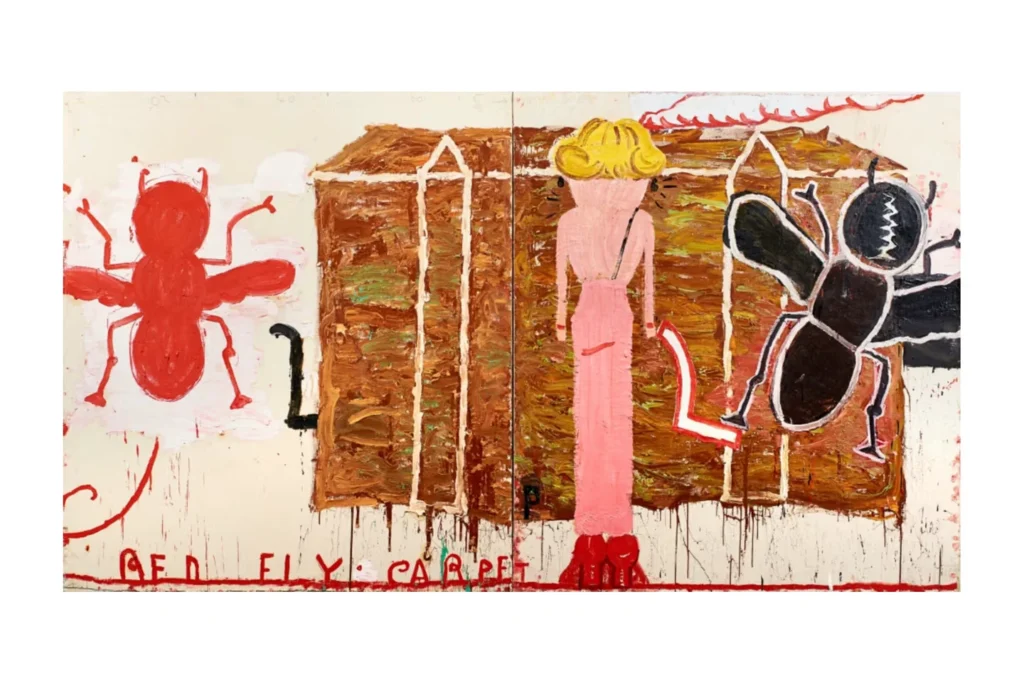
© Rose Wylie Courtesy Of The Artist And David Zwirner. 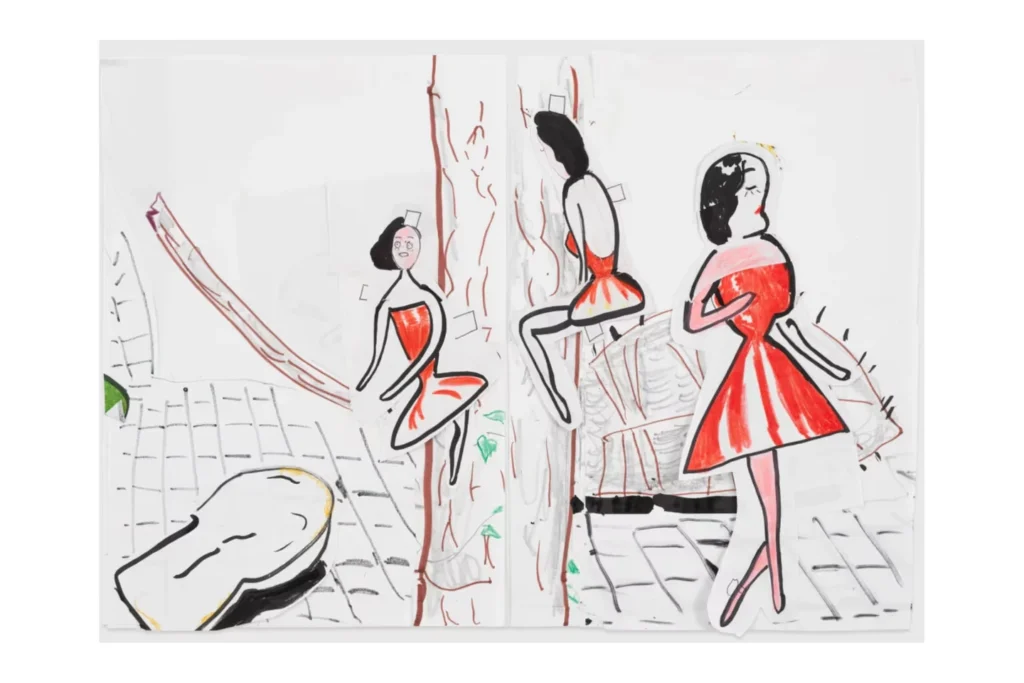
© Rose Wylie Courtesy Of The Artist And David Zwirner. 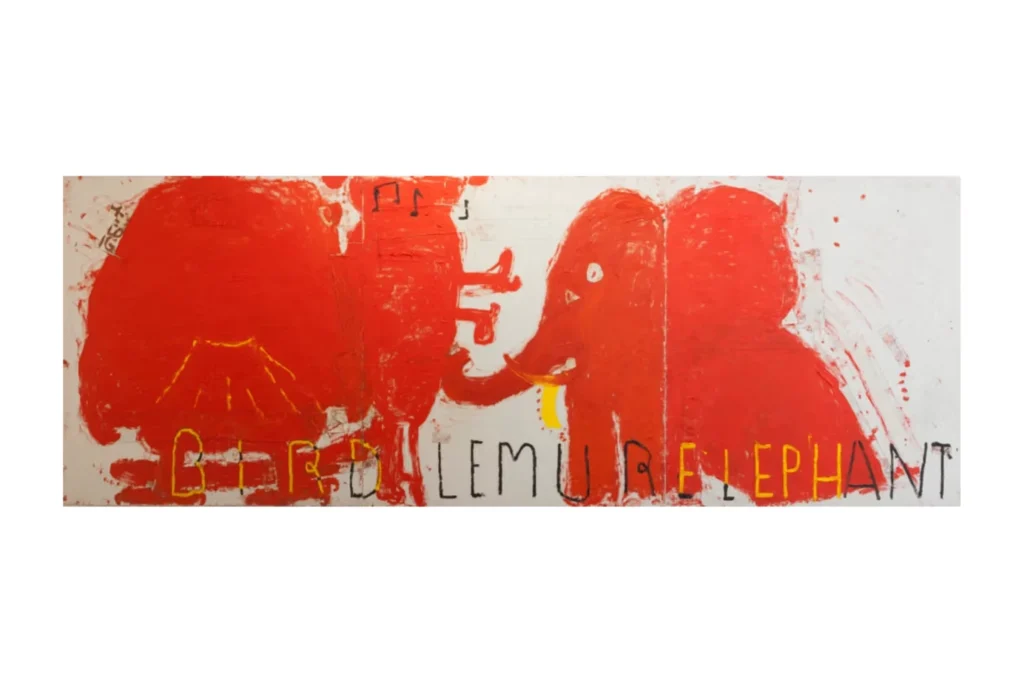
© Rose Wylie Courtesy Of The Artist And David Zwirner. 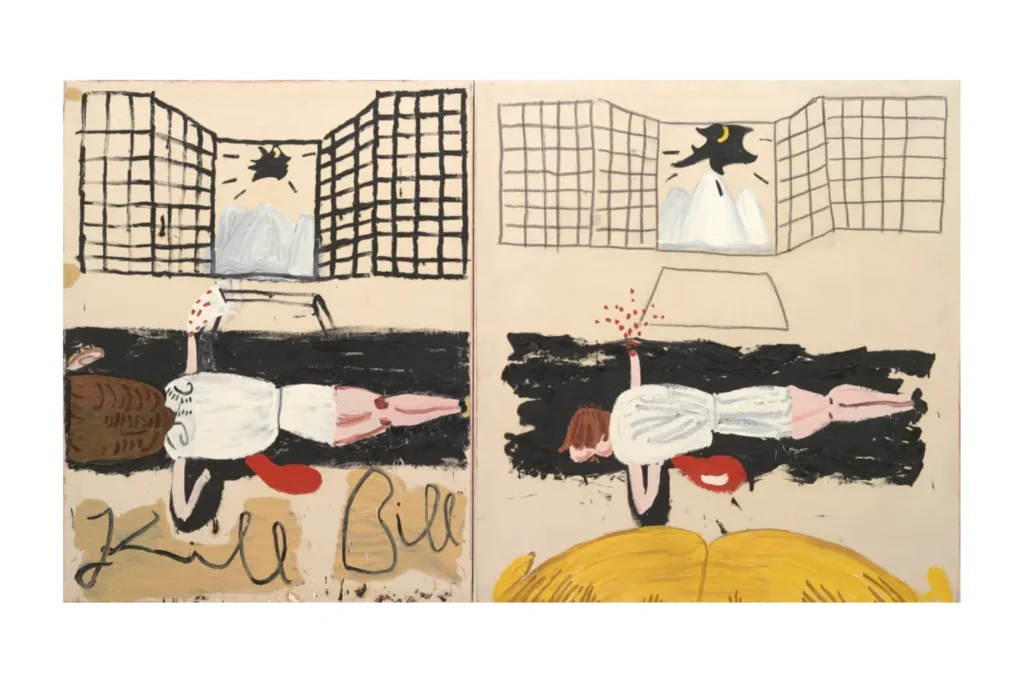
© Rose Wylie Courtesy Of The Artist And David Zwirner. 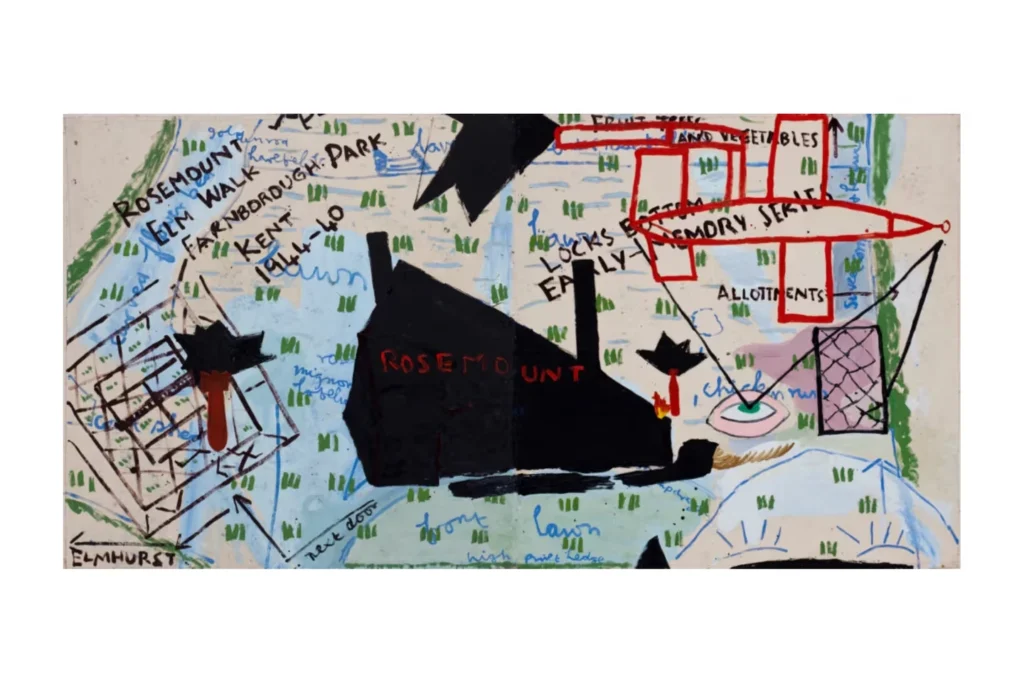
© Rose Wylie Courtesy Of The Artist And David Zwirner. 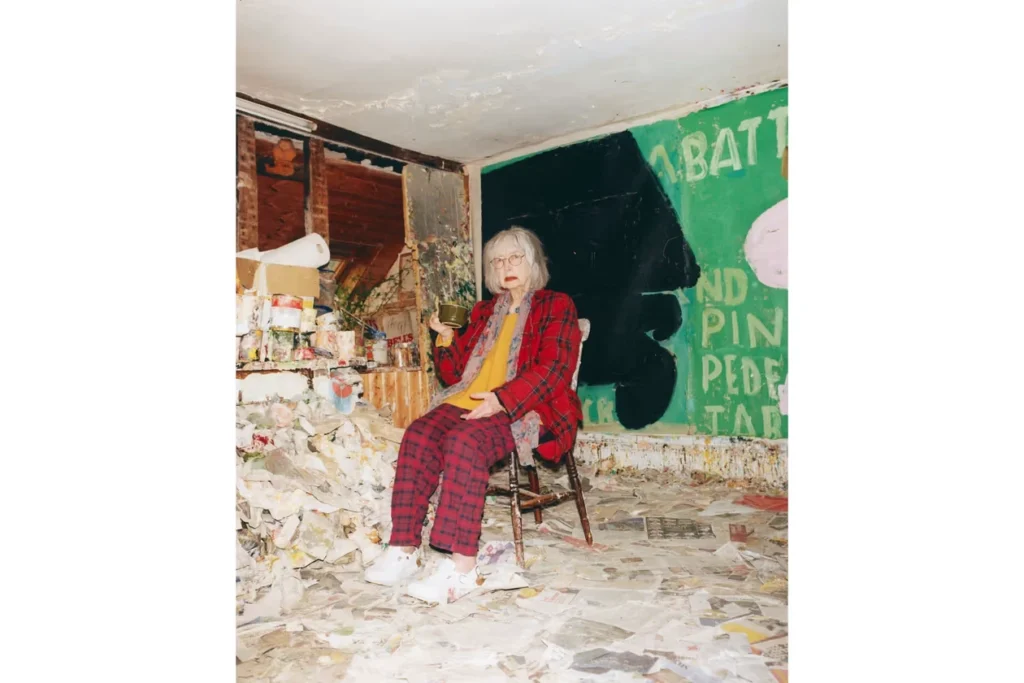
Photo by Will Grundy © Rose Wylie Courtesy Of The Artist And David Zwirner.
The exhibition is thematically arranged rather than treated as a neat timeline, so it reads like you’re walking through how her mind edits the world: childhood and wartime memory sit beside the banal and the spectacular; domestic details share walls with public imagery; the “high” and “low” collapse into a single, stubborn visual language. Critics have described the experience as immersive — not because it’s trying to be an installation, but because the scale and density of Wylie’s paintings make the rooms feel charged, like they’ve been rewired for her frequency.
Part of the power is how late her “arrival” supposedly was — and how irrelevant that story feels once you’re in front of the work. Wylie’s career is often described as late-blooming, with major recognition coming later in life, but the RA show makes the point more bluntly: she’s been building a vocabulary for decades, and it doesn’t get softer with age — it gets freer, louder, and more exacting.
If you want a clean takeaway, Wylie refuses it. The show title says everything: the picture comes first — before explanation, before taste-policing, before any demand that an artwork be “resolved.” That’s exactly why it hits now: in a moment obsessed with clarity and branding, Wylie’s paintings insist on mess, humour, bluntness, and the strange dignity of following an image to wherever it wants to go.
Rose Wylie: The Picture Comes First is on view at the Royal Academy of Arts, London from 28 February to 19 April 2026.