
Share this
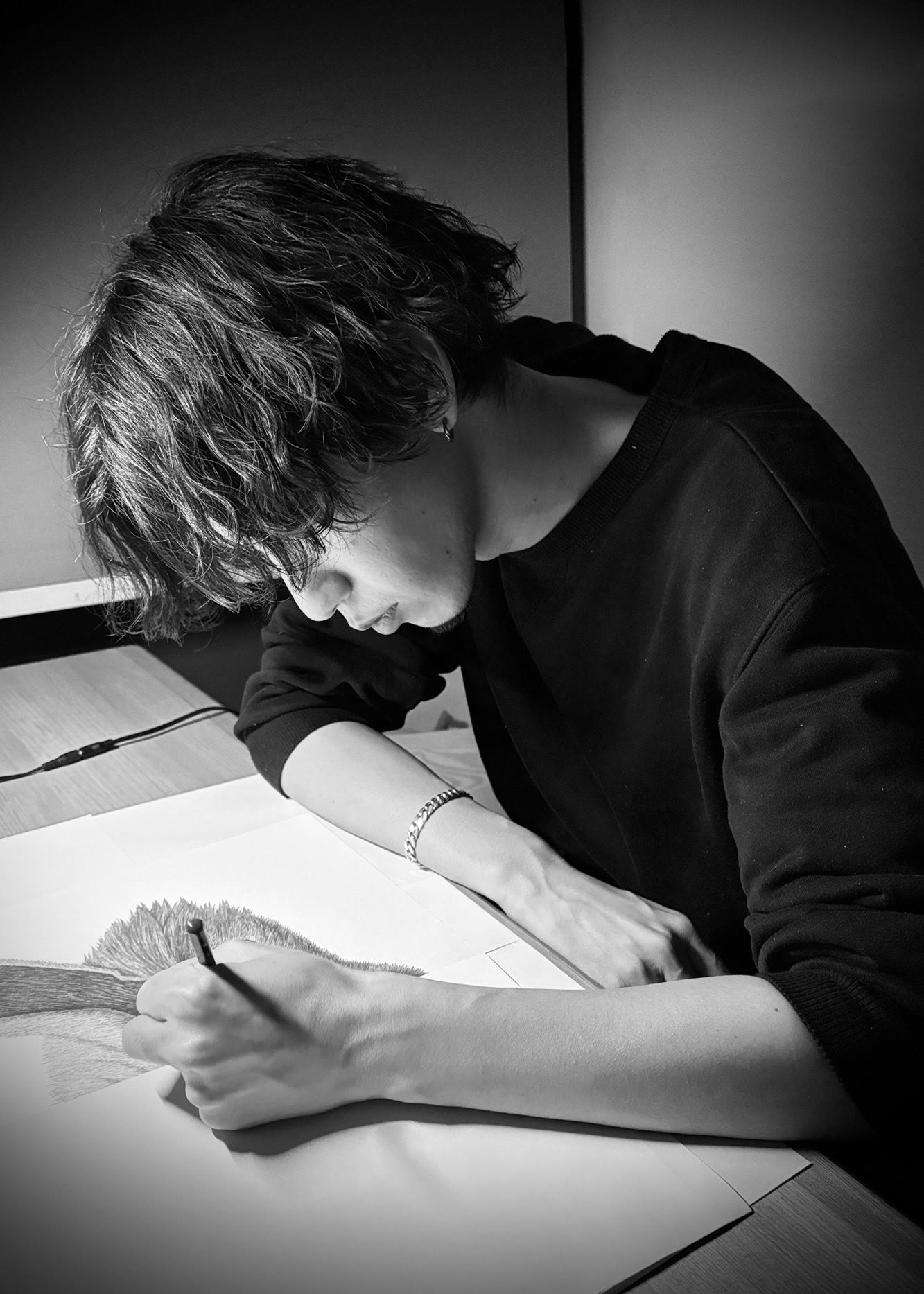
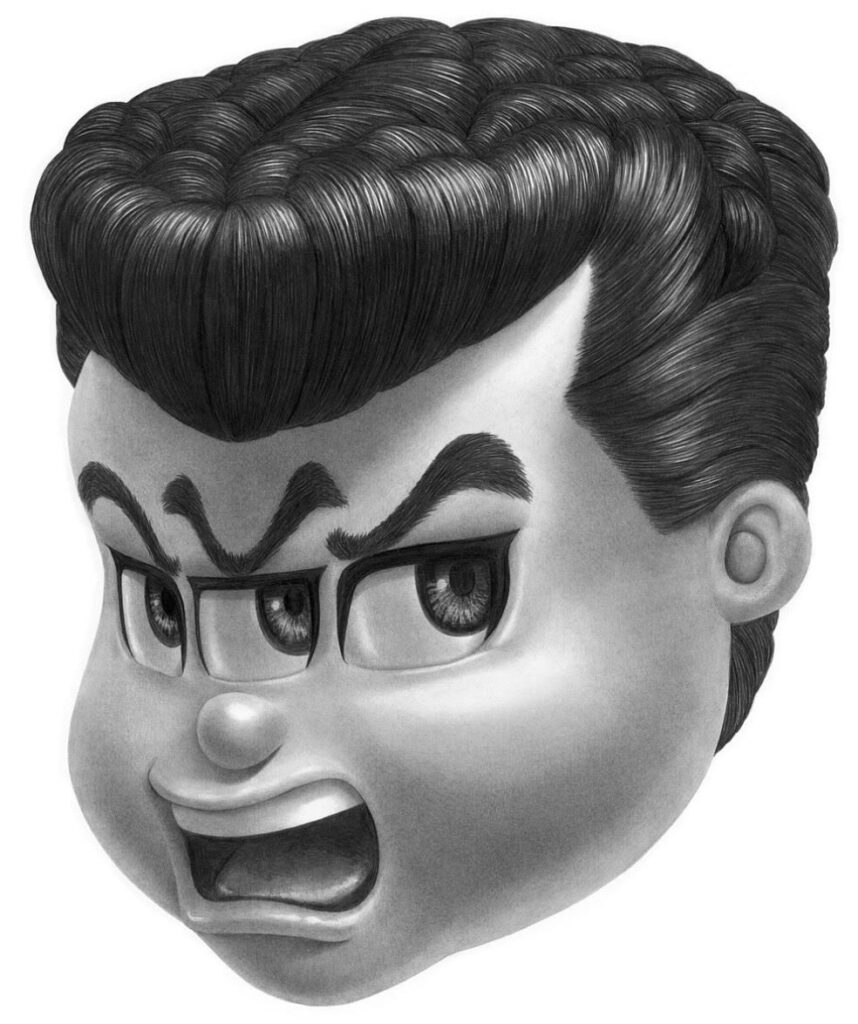
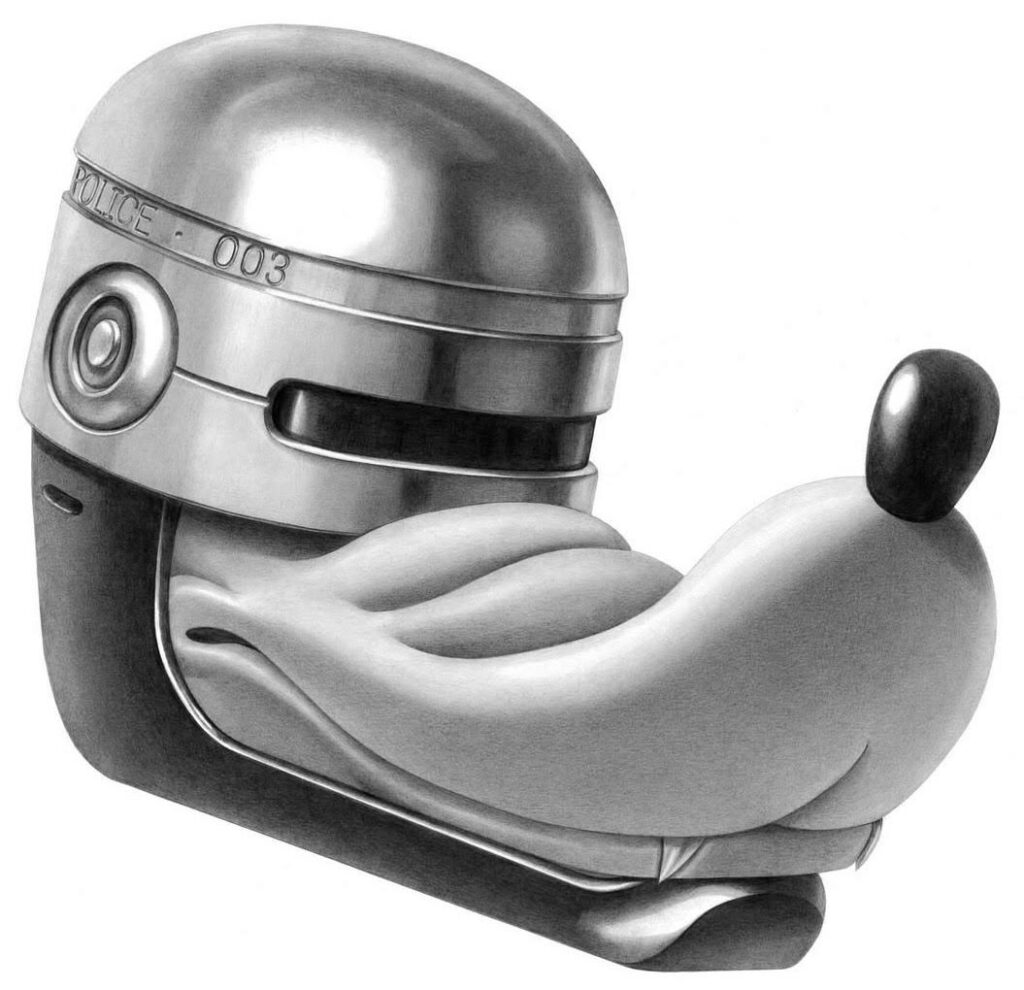
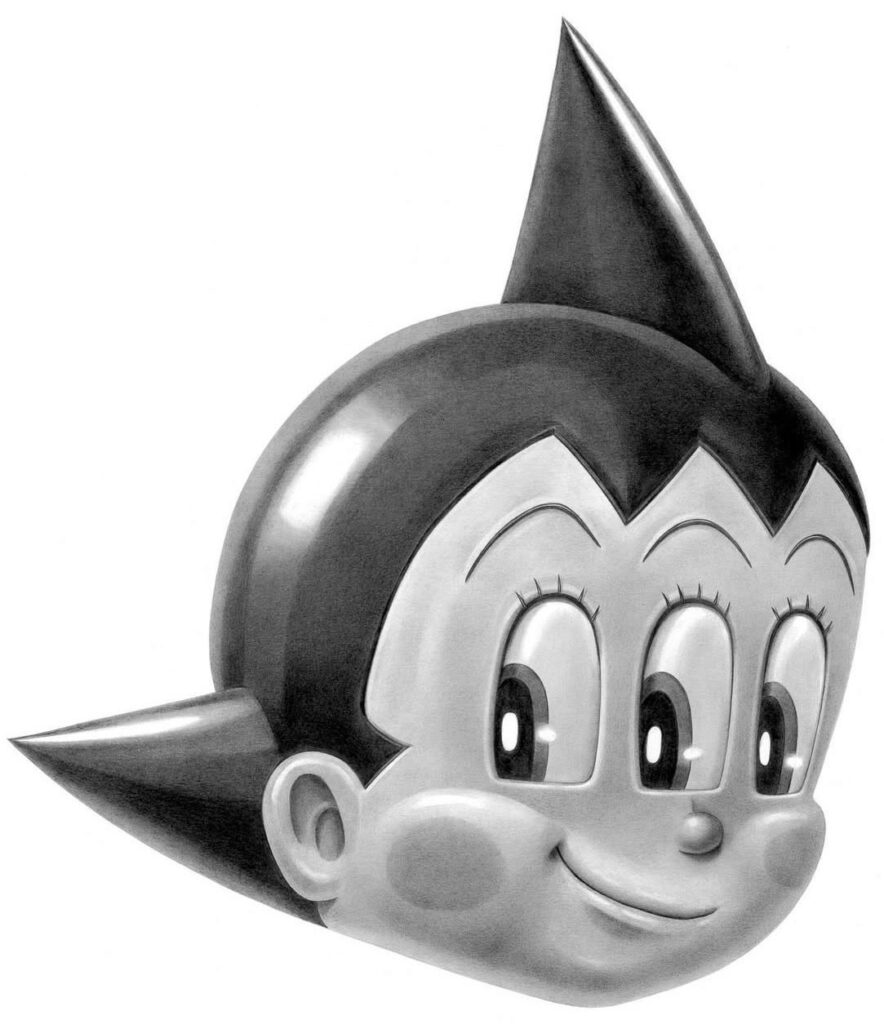
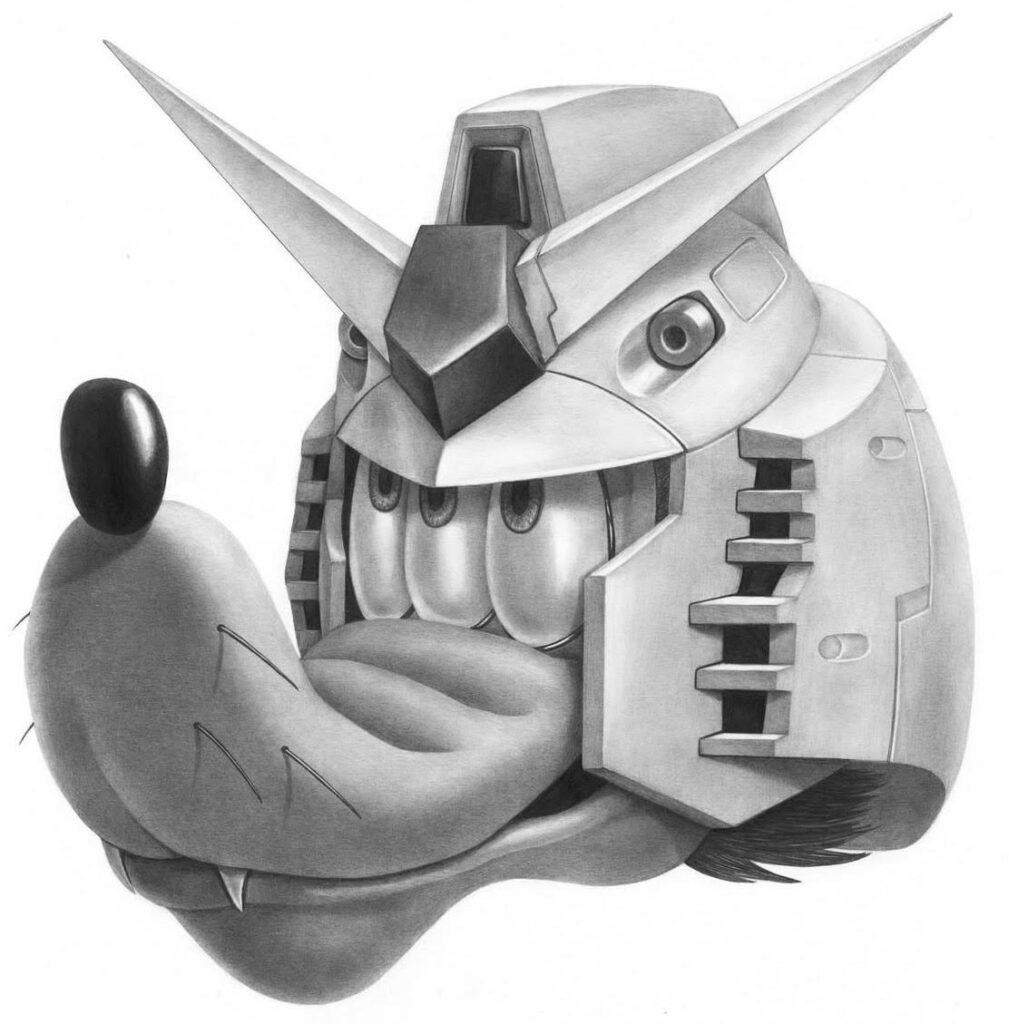
Shinnosuke Hariya is a Tokyo-born graphite pencil artist known for his hyper-detailed reinterpretations of pop-culture imagery. Working exclusively in pencil, Hariya blends Japanese and Western influences, drawing from video games, comics, anime, and classic cinema to transform familiar characters into tactile, almost sculptural images. His work bridges street culture and fine draftsmanship, exploring nostalgia, perception, and the uncanny shift from 2D iconography to lived, physical presence.
Hi Shinnosuke! It’s a pleasure to sit down with you! First question that I always ask. How does a regular day look like for you in Tokyo?
Shinnosuke: I don’t really have a strict routine. I usually wake up around noon, have some coffee and a cigarette, and then draw from night until early morning.
I’m curious, growing up, what kind of kid were you? What did you enjoy doing, and how did you spend your time?
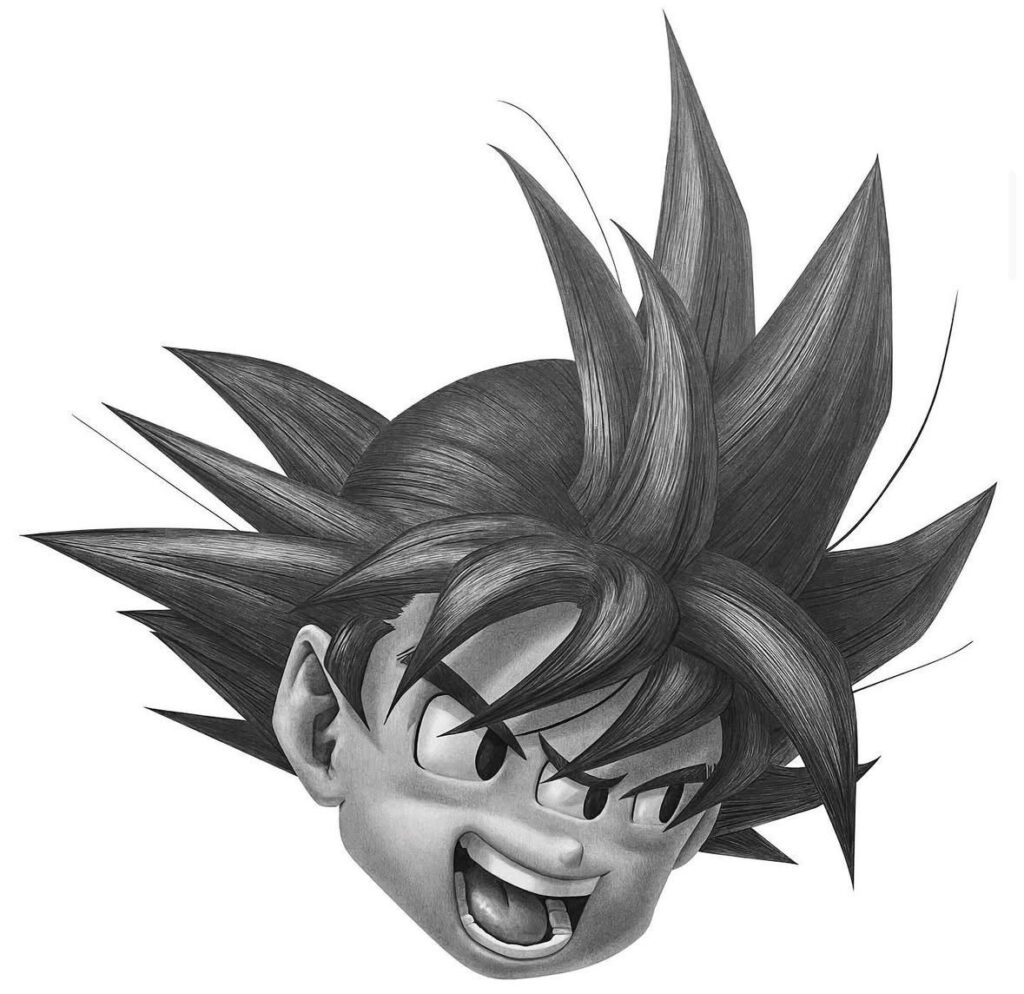
Shinnosuke: Honestly, I’m not that different from who I am now—I’ve always loved drawing. I used to copy characters from Dragon Ball, Yu-Gi-Oh!, and Pokémon. I also rode my bike everywhere with friends, and played games and sports with my brothers and friends. Riding bikes around is kind of a classic thing for Japanese kids.
You’ve said you’ve loved drawing since childhood, so when did you start taking being an artist seriously?
Shinnosuke: Around 22 or 23. I studied graphic design in art school, but I realized I preferred making things by hand. I did some color pieces, but pencils felt right. I also had a lot of older artist friends—they looked cool to me and inspired me.
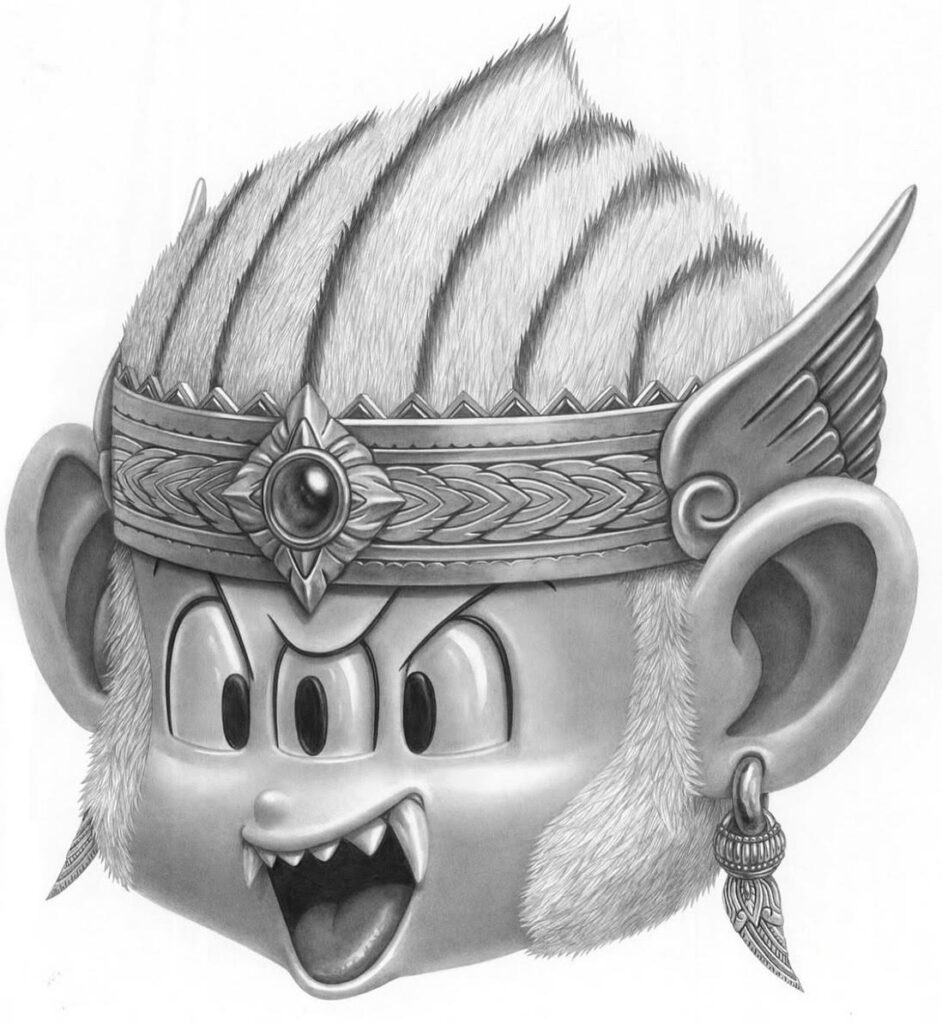
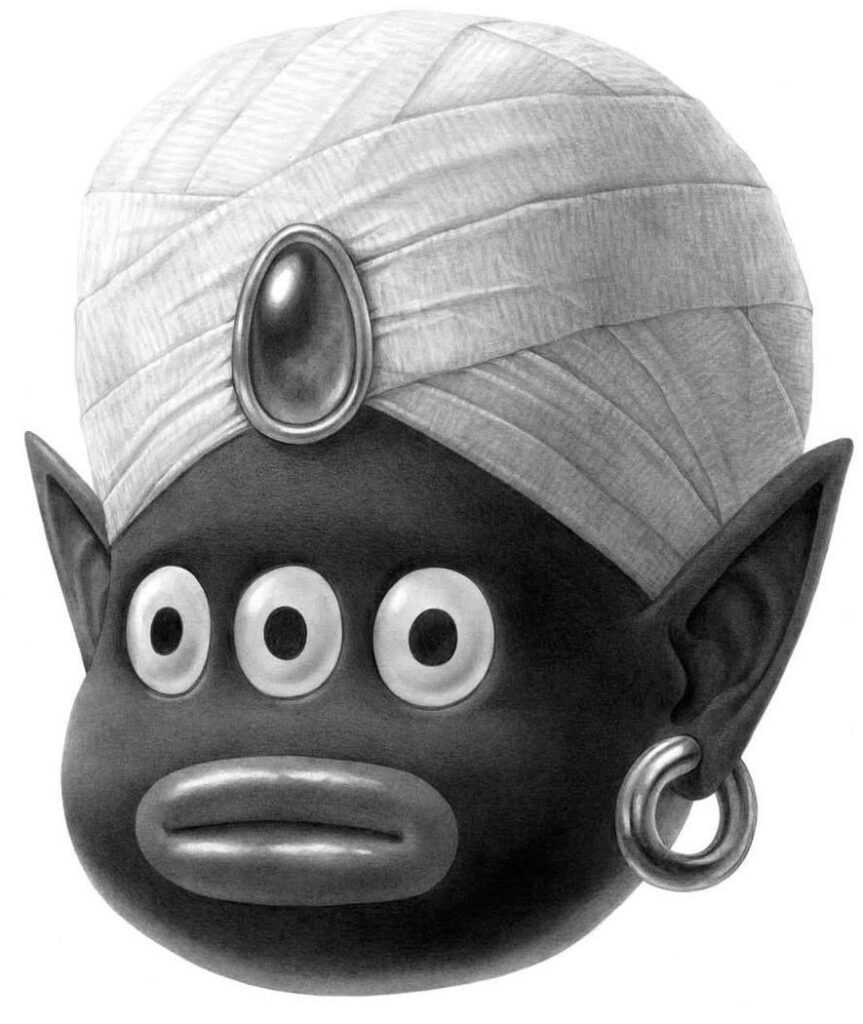
The “third eye” or multiple-eye motif recurs across your works, what does it mean to you personally?
Shinnosuke: I turn the motifs I love—like characters I grew up with—into “deities,” and the third eye symbolizes that.
Many of your pieces reinterpret pop-culture icons, what is your intention when altering these familiar characters? Is it parody, homage, or transformation?
Shinnosuke: I honestly just really love those characters, so I want to express that love in my work. There’s this instant familiarity that comes with using well-known icons, and I also want to stay connected to street and pop culture. All of that naturally shaped the style I have today.
There’s often a subtle tension between innocence and strangeness in your figures. How conscious are you of that emotional duality when drawing?
Shinnosuke: Not really. Drawing in graphite requires precision and pressure— I can’t erase everything. That tension combined with my childhood love of drawing might naturally create that duality.
The term “pop surrealism” often comes up around your work. Do you identify with that movement, or do you prefer to think of your practice differently?
Shinnosuke: I’ve never really thought about it. I just draw what I like.
What role does nostalgia play in your art, are you revisiting personal memories, or collective ones from global pop culture?
Shinnosuke: I revisit my own memories. I don’t really draw characters I don’t know well. If I ever work with an unfamiliar character, I make sure to look into where it appears and study the details before I start drawing.
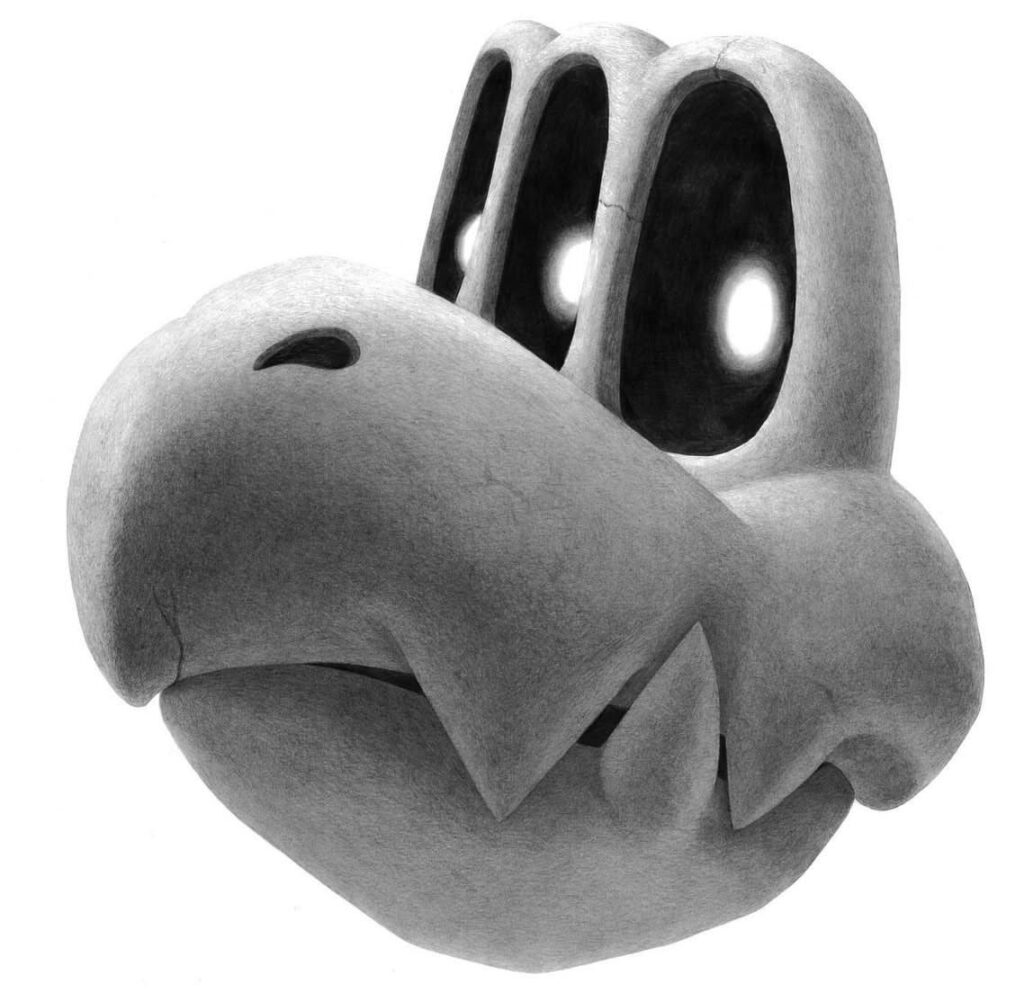
Your characters often look familiar but “wrong”, altered just enough to unsettle the viewer. What fascinates you about this border between the familiar and the uncanny?
Shinnosuke: I think viewers feel drawn in because they recognize something. And I want to share my own perspective on top of that. The reason I draw in such a realistic style is that I grew up watching video games evolve from 2D to 3D, and that moment when characters suddenly became “real” had a huge impact on me. I’ve always wanted to bring that feeling into my art.
Do you think your art is more about seeing differently or making others see differently?
Shinnosuke: Both matter, but my own perspective comes first. I draw from the viewpoint I want to see, and I hope others connect with it.
The eye is a recurring symbol of perception and consciousness. Do you think of your drawings as exploring inner vision — something psychological, rather than just visual mutation?
Shinnosuke: Exactly.
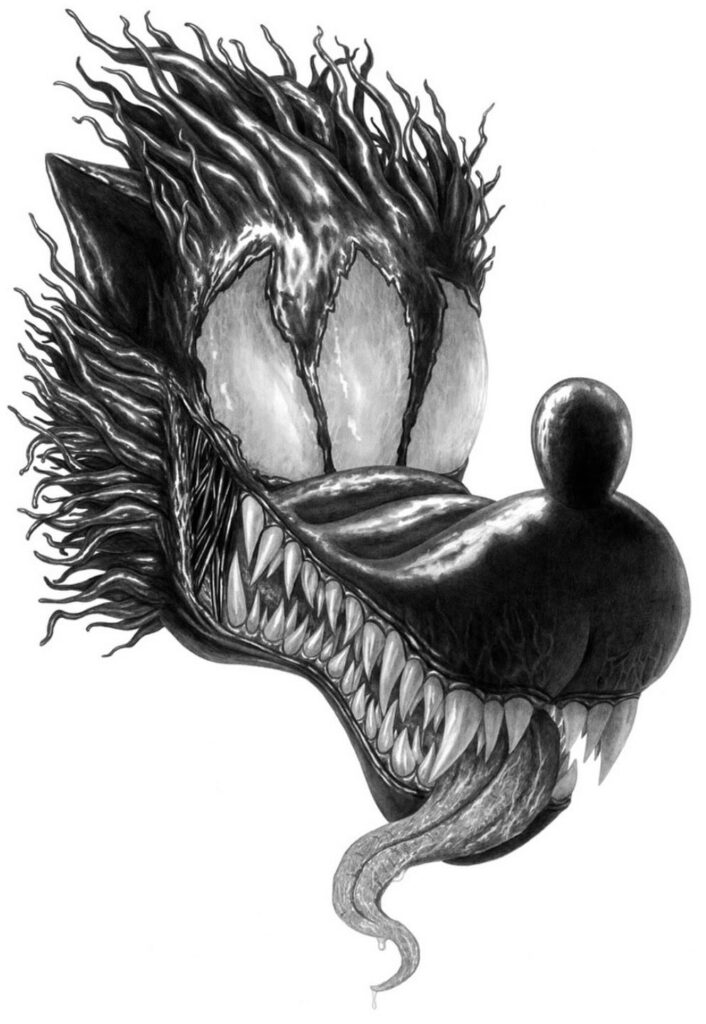
When you draw a famous character, does it become yours after the transformation?
Shinnosuke: I think it’s both. My work exists because the motif exists, but I’m also drawing through the lens of my own life and era.
In a world saturated with digital images, what does it mean to spend days crafting something purely by hand, in pencil?
Shinnosuke: Maybe it’s just how I kill time until I die. Haha
But seriously, drawing analog lets me put my energy into the work. There’s only one original in the world—that’s important. That’s why I want people to see my drawings in person.
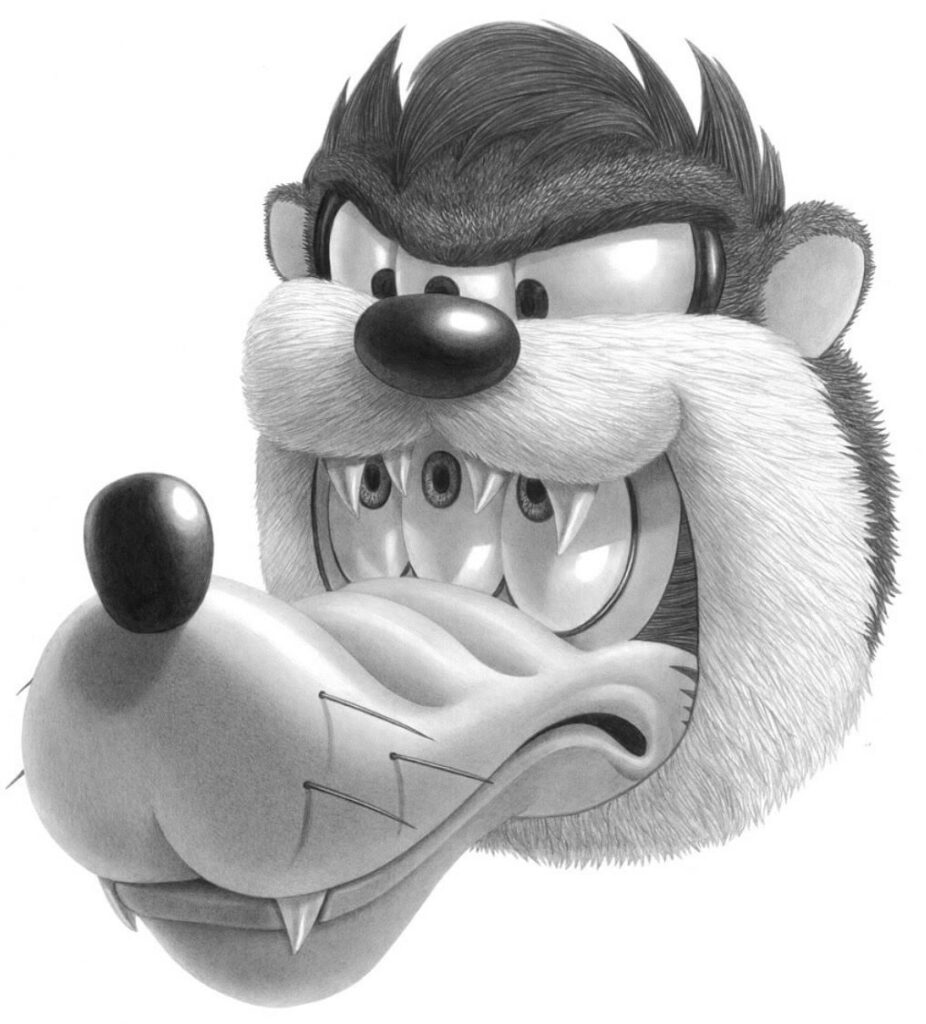
With that in mind, graphite is unforgiving, every stroke counts. What draws you to the discipline of monochrome, and what kind of control or freedom does it give you that color wouldn’t?
Shinnosuke: Partly because I just love drawing with pencils. I like drawing directly on the surface. If you see my work in person, you’ll notice the dents from my pressure. Also, with monochrome, viewers can fill in the colors with their imagination—it becomes a shared experience.
Your renderings have an almost mechanical precision, yet they feel alive. How do you balance technical perfection with spontaneity?
Shinnosuke: I barely sketch. I start with a rough idea in my head, and then figure out the texture as I draw. There’s spontaneity in that. And I stop before the texture becomes too eerie.
Do you ever use digital tools in your workflow, or is everything entirely analog?
Shinnosuke: Everything is analog.
Can you walk me through your creative process from beginning to end result?
Shinnosuke: I start with memo sketches or ideas in my head. Then I choose which one to develop. For textures, sometimes I rely entirely on imagination, but for certain motifs I go to zoos or aquariums to observe and take photos.
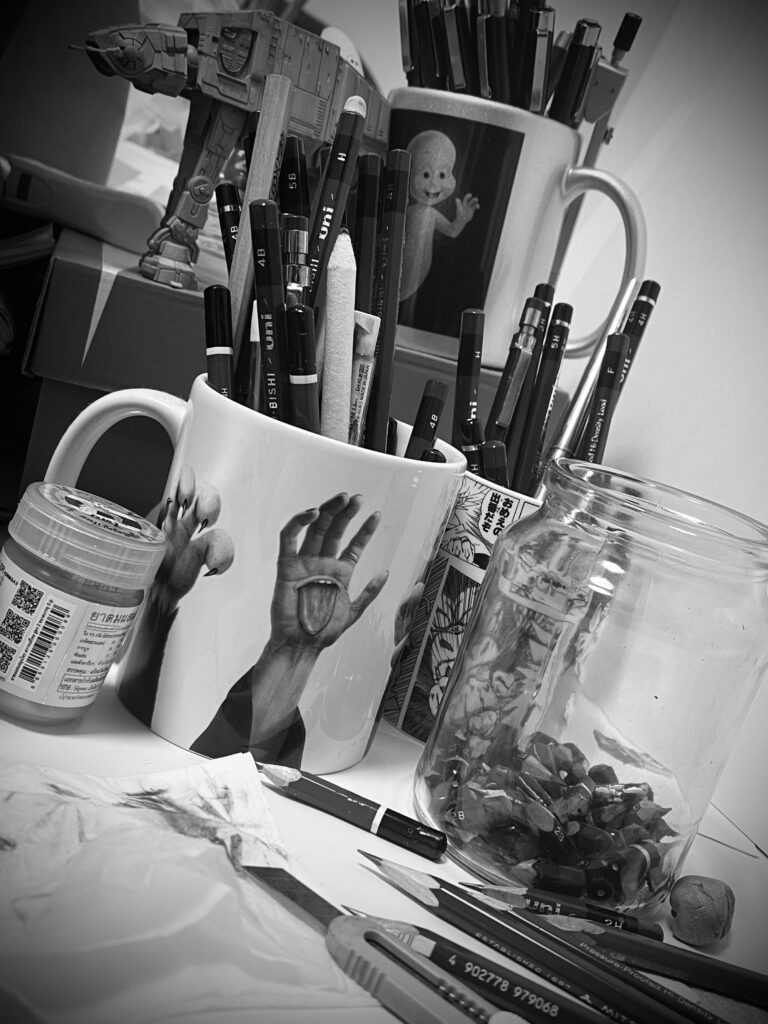
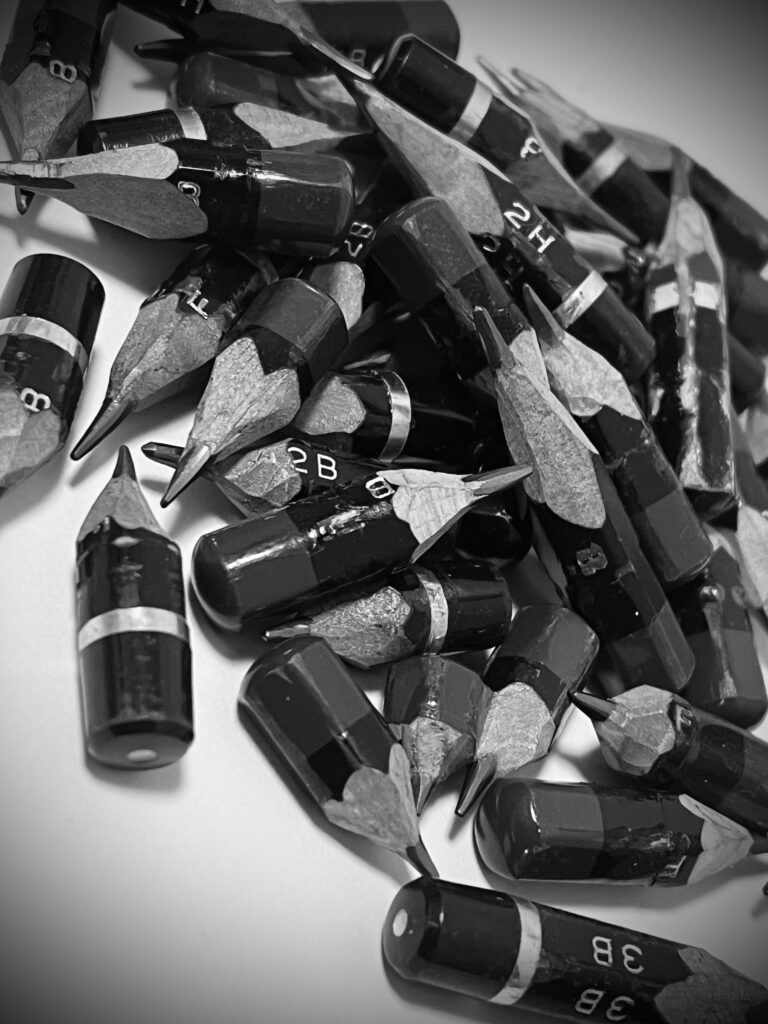
Technically, I begin with soft pencils for tone, smooth it with tissue, and then use harder pencils for texture. I even change pencils depending on the season because Japan is so humid.
How do you approach color?
Shinnosuke: It depends on my emotions and the image of the piece. The differences are tiny, so maybe only I notice them. Haha But I do think about “local colors” that are easy for viewers to imagine in grayscale.
Outside of art, what’s something you’re obsessed with right now—maybe a hobby, a show, or even a food—that keeps you grounded or inspired?
Shinnosuke: Walking. When I travel for exhibitions, I walk around the city—tourist spots, local neighborhoods, watching people. Also: NBA, ramen, movies, manga, anime.
What qualities do you find most important in the people you choose to spend time with?
Shinnosuke: People I can spend time with comfortably—where neither of us needs to overthink or be careful.
Anybody you look up to?
Shinnosuke: Akira Toriyama.
What motivates you?
Shinnosuke: First, the satisfaction of finishing a piece.
Second, seeing people enjoy my exhibitions and talking with them.
And seeing great work by other artists boosts my motivation too.
How would you describe a perfect day?
Shinnosuke: Drawing from morning to evening, then having dinner and laughing with friends. A day where nothing special happens is perfect.
Alright Shinnosuke, I always ask these two questions at the end of an interview. The first is. What’s your favorite movie(s) and why?
Shinnosuke: Hard to pick one, so here are a few:
Ready Player One, Who Framed Roger Rabbit, Space Jam, Soul, The Matrix, Straight Outta Compton. They expanded my world.
The second is. What song(s) are you currently listening to the most right now?Shinnosuke: I listen to a lot of different genres, but I usually end up listening to hip-hop the most. Recently I rewatched Straight Outta Compton, so I’ve been listening to N.W.A, Ice Cube, and Dr. Dre. As for Japanese artists, I often listen to OZROSAURUS, ZONE, and NORIKIYO.