Share this
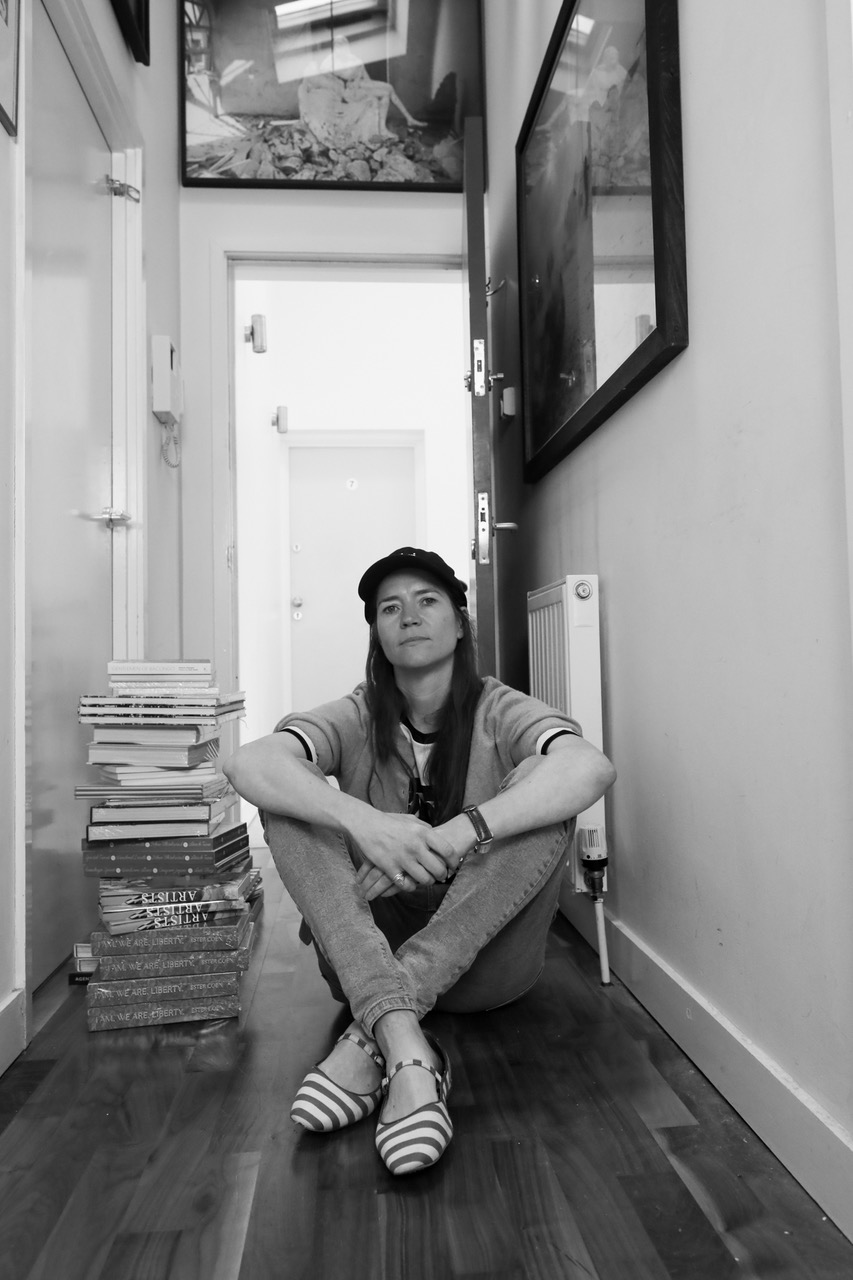
I first met Hannah Watson while searching for a home for my debut book Artists. After years of photographing artists across the UK and building up a large archive, I was eager to find the right publisher. When a gallery I worked with recommended Trolley Books, I reached out to a friend at The Photographers’ Gallery, who immediately replied, ‘Absolutely go with them, they’re amazing.’
That enthusiasm said it all. When I finally met Hannah, it became clear why Trolley inspires such loyalty. For twenty-five years, Trolley Books has shaped contemporary documentary photography, publishing groundbreaking voices, championing vital stories, and preserving the uncompromising vision of its founder, Gigi Giannuzzi. Hannah has continued this legacy with intelligence, humour, and generosity, qualities that define Trolley just as much as the books themselves. Recently, she oversaw the Liberty 150th anniversary publication, a unique project that marked a new direction in how to bring a brand’s history and creative vision to life through the medium of publishing.
This interview offered a chance to discuss Gigi’s legacy, the magic of Italian printing, her work with photographers at Trolley, and her advice for anyone entering the world of photography publishing as Trolley approaches its twenty-fifth anniversary.
What do you want the long-term legacy of Trolley Books to be?
Hannah: Maybe what my first impression was when I opened one of our books for the first time and saw the name Trolley on the title page, I thought this book is serious but is Trolley really a serious name for a publisher? Turns out that Trolley is just a way of seeing the world – independence, creativity, innovation, freedom, homelessness, being an outsider, doing things differently. The legacy is that you can be serious and off the wall and unique at the same time and make important books that don’t quite fit the mould.
Gigi was such a legend. Do you have a story about him that still makes you smile?
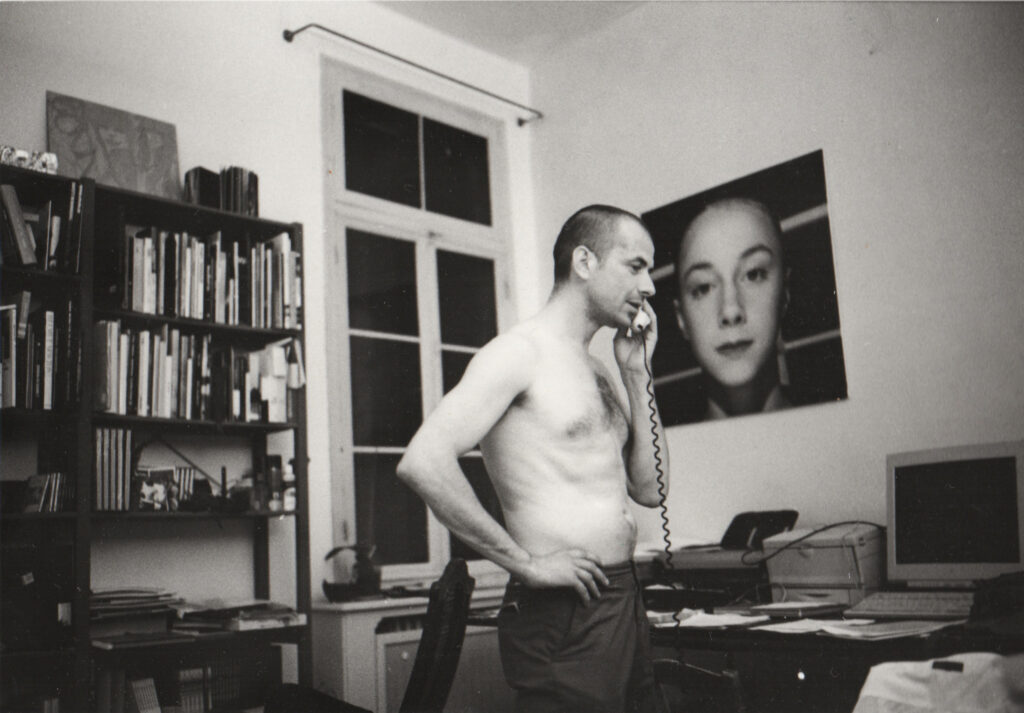
Hannah: There are so many you could write a book about them, in fact, we did, Trolleyology, which I often pick up and open at random to read one of the many stories people had about him, good and bad. A lot of others are unprintable. But one that makes me smile is when our friends Le Gun had a show opening at Rochelle School near the old Trolley Gallery in Shoreditch, they had some kind of marching band I seem to remember, and Gigi was wearing this billowing red cloak which I have no idea where it came from, and decided he was going to lead them around Arnold Circus till he had this huge procession following him. It was very Gigi, spontaneous and crazy and very fun.
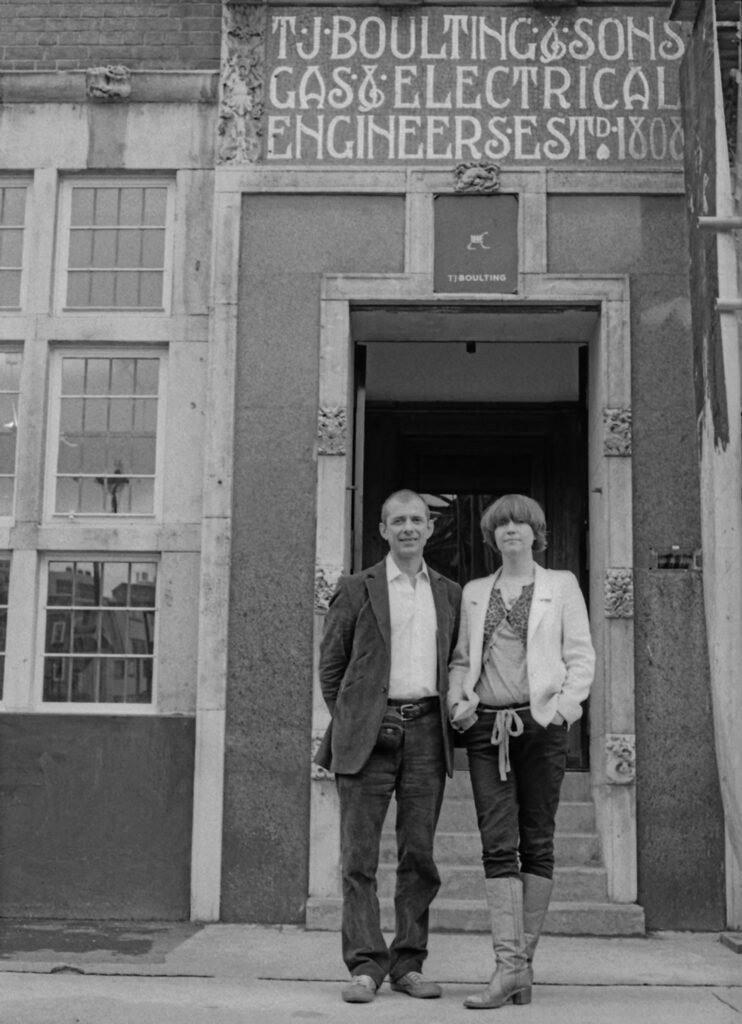
You closed your gallery TJ Boulting earlier this year but carried on publishing Trolley Books. How does it feel?
I closed TJ Boulting after thirteen fulfilling years, it was also the home of Trolley and all the books and the famous big green sofa, but for me it was time to work a bit differently. I loved having the gallery and working with the artists but now I’m looking forward to the next chapter and a more public arts role. In terms of Trolley, as soon as TJ closed I started working full time on a publication for the store Liberty for their 150th anniversary, which ended up as this incredible exhibition in a box.
Your recent publication with Liberty for their 150th anniversary was a major project. What was that experience like for you, and what made it special?
Hannah: The Liberty publication was unlike anything I’ve ever produced or probably will again. The curator of the overall anniversary project and exhibition, renowned art historian Ester Coen, is an old Trolley friend and asked that we could work together for their publication, which was a huge honour and an amazing opportunity to get to work with Ester too. The first thing she said, however, was that she didn’t want a book; she wanted something different, more interesting, which of course was the first challenge. But luckily I looked around the gallery and spied on the shelf a box produced by Photoworks during the pandemic when their festival was cancelled, where they sent everyone the artists’ works as posters in a box to create your own display at home, and it gave me the idea of creating an ‘exhibition in a box’ for Liberty. It could bring together all the different content, designs, archives, and cultural partners in different types of printed matter – posters, postcards, catalogues, even tattoos – all in a cloth-covered box with cutouts, which echoed the design of the exhibition inside Liberty. And I got to commission some amazing contributors such as Alice Rawsthorn, Emma Dabiri, Owen Hatherley, Louis Wise, and Barry Miles. The finished publication is like delving into the Liberty archives and is pretty special. I’m very proud of it.
Trolley Books has such a strong connection with Italy, from printing to design. What is it about Italy that makes it the perfect home for creating your books?
I would say that Venice is the spiritual home of Trolley; it was where we were founded and where I met Gigi twenty years ago. He had this big bohemian apartment right in the middle full of books and photography. It was where he would bring everyone together to work on the books, and because Venice is an island, everyone was on total lockdown with no means of escape, so it was actually quite productive, and you got a lot of work done.
It would also be fun, of course, if a little terrifying for some, bombing around the lagoon in Gigi’s boat. We have printed with the same person since 1997, Ubaldo Soso, and the printers Grafiche Antiga is inland towards the mountains near Valdobbiadene, the prosecco region. When we go on press, we stay in a prosecco vineyard, and the food is obviously amazing as well being Italy. So a definite perk of the job. Also, should add, the quality of the printing is really high; there is a big tradition of printing in the region. So it’s a great double whammy.
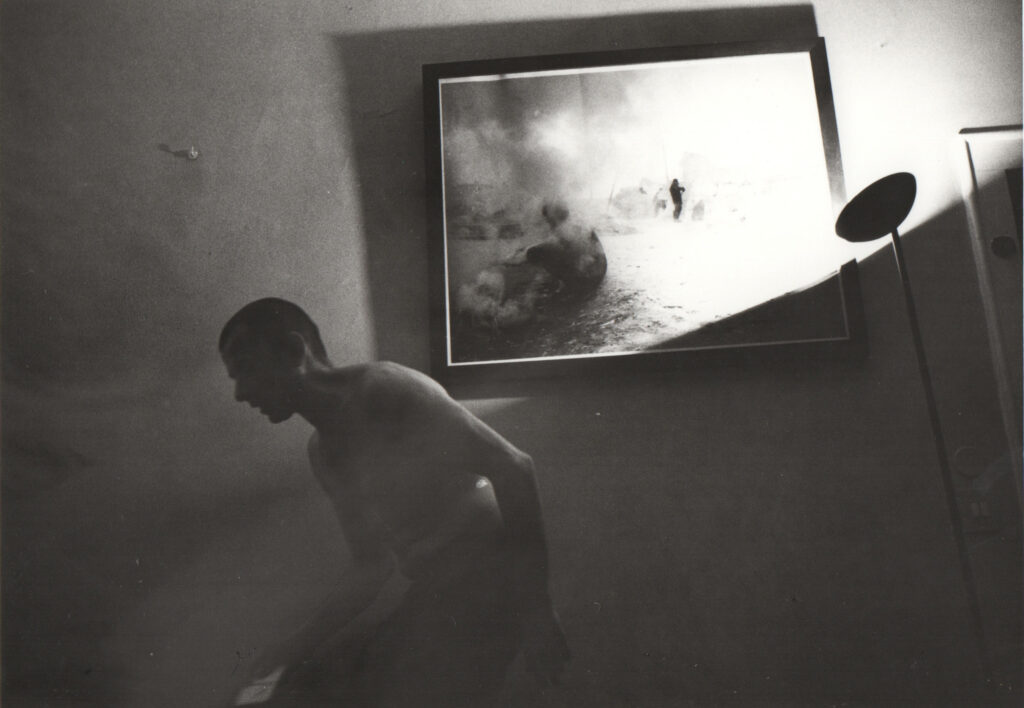
When you’re looking at a photographer or a project to publish, what makes you think, “Yes, this is the one”?
Hannah: Something original and unique always stands out; it has to have something to say, and something that makes the most sense as a book. When I had both the gallery and the books, I also knew what would work better for either; some work is just made to be a book but wouldn’t necessarily work as an exhibition and vice versa. It was only in a few instances where an artist I worked with had both, like with Maisie Cousins, her exhibition at the gallery had this shiny gold floor, so the book just had to be gold too.
You’ve had long-term collaborations with photographers like Sian Davey. Why do you think maintaining those relationships is so important in publishing?
Hannah: The book is a very personal thing to the photographers; it’s an artwork in itself, a testimony to what you want to say to the world. The process is like a long conversation until you get to where you want to be and have the finished object. It’s also quite intense and stressful, so maybe it’s a form of trauma bonding along the way that binds you together!
You’ve supported many women in the arts over the years. Why is that so important to you?
Hannah: First of all, it’s because the work excites me. Probably because I’m a woman in the arts and I understand where the work is coming from and speak the same language. I also enjoy working with women, and I’ve enjoyed building a community around it, for example, with the WooP women in photography group I have, which now has over 350 members and is important and we do interesting stuff, but it’s also fun. I guess girls do just wanna have fun.
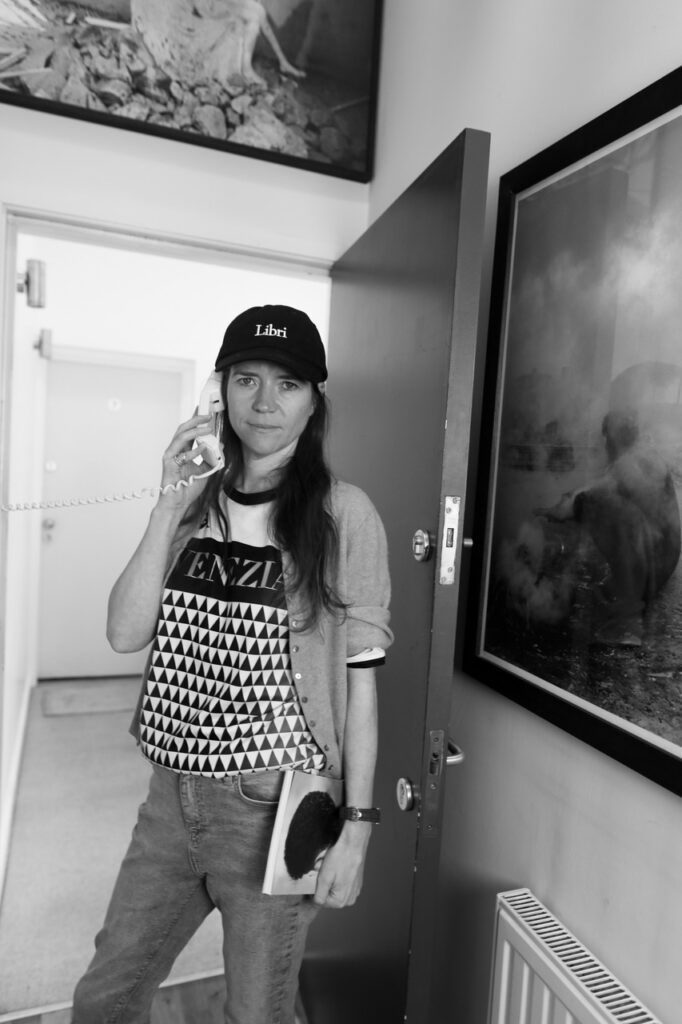
What’s the most rewarding part of bringing a photography book to life?
Hannah: I love seeing a project from the start when it’s just the images and an idea, then you start to get a vision of what the book could be with the photographer and designer and work on it together, it’s quite an alchemic process. Then the fun part is going to Italy to print it when the hard work is almost over. The most nerve-wracking bit is getting a box of the finished book. It always takes me a while to open it up and see the finished thing. Then you’re just excited to get it out into the world.
What advice would you give to someone getting into photography publishing today?
Hannah: Ha ha, save yourself and don’t do it, we’re all mad! But it’s a fun gang, so I would go to book fairs and see who and what’s out there, then start small and think creatively about how to make the finished object without spending a fortune. And be prepared to get a strong suitcase for carrying books around. Actually, get a trolley. Much better.
What’s the best thing about being a book publisher — and what’s the worst?
Hannah: The best is making a book that you’re really proud of, a beautiful object that hopefully means something out there in the world, and getting to collaborate with artists, designers, and writers along the way. And if I haven’t said it enough, going to print in Italy. Also, publishers are a nice tribe to be part of. I’d say I’m in three tribes – the art world, photography, and publishing – with a bit of overlap.
The publishers are all in the same boat, thinking we’re mad and not making much money, so we like to get together and have a moan. I’m in a WhatsApp group called ‘complaints department’. The worst thing about publishing is the risk – the cost of making a book versus selling it for a tiny margin, plus it’s a physical thing that has to be shipped and stored and looked after. Books that don’t sell are like kids that never grow up and leave home; they just stay in your spare room for years.
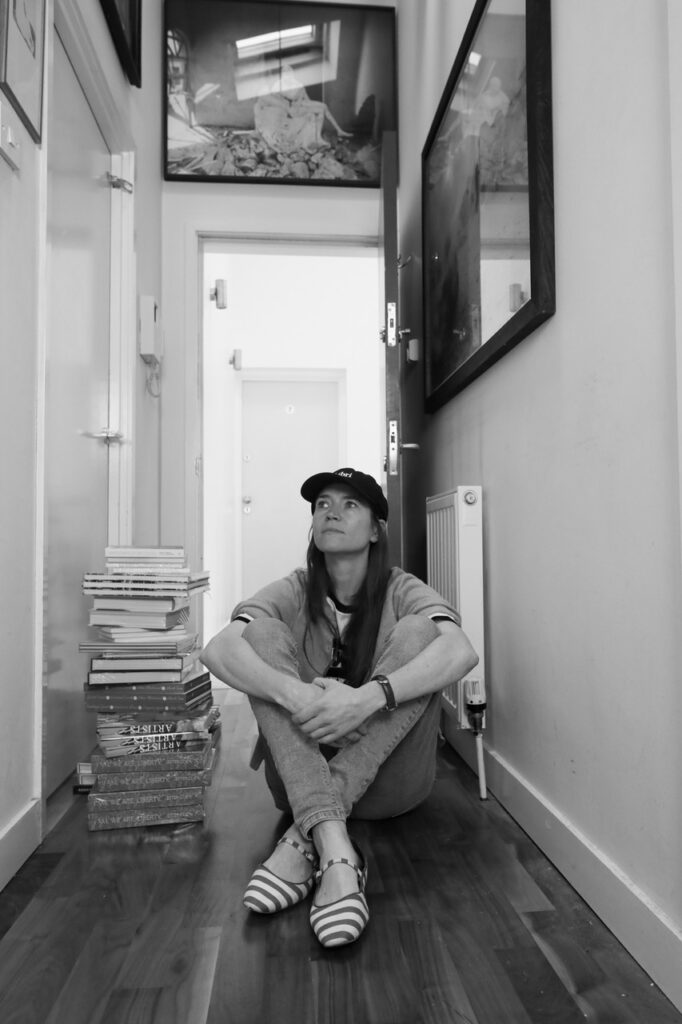
Looking ahead, what are you most excited about for the future of Trolley Books?
Hannah: 2026 is Trolley’s 25th anniversary, so I’d like to reach that at least and celebrate with a load of prosecco from Riva de Milan, the vineyard we stay in near the printers. The last party we had at the Italian Cultural Institute in London in 2016 was incredible, but I’m not sure whether they will allow us to do that again, I don’t think they were ready for it, and the old stone balcony nearly collapsed with all the smokers.
And I’m currently working on a book on UK art schools with Matthew Cornford and John Beck, which is a photographic record of art school buildings all over the country, which acts as a springboard to a wider discussion on the state of current UK arts education. And also a book with countercultural legend Barry Miles on the 80s. Beyond that, I’m not going to predict. Whatever happens in the future, I’ll always be proud of what Trolley has achieved so far.
And Finally… If you could hang any artwork in your bedroom — anything at all — what would you choose?
Hannah: I’d have a big abstract by Hilma af Klint above the bed. Something a bit dreamlike and with some witchy energy.
Would you rather be able to speak every language in the world, or be able to speak to animals?
Hannah: Speak every language in the world for sure. I only speak some Italian, and that’s pitiful.
If you could have any superpower, what would you choose?
Hannah: Getting Wordle in one.