
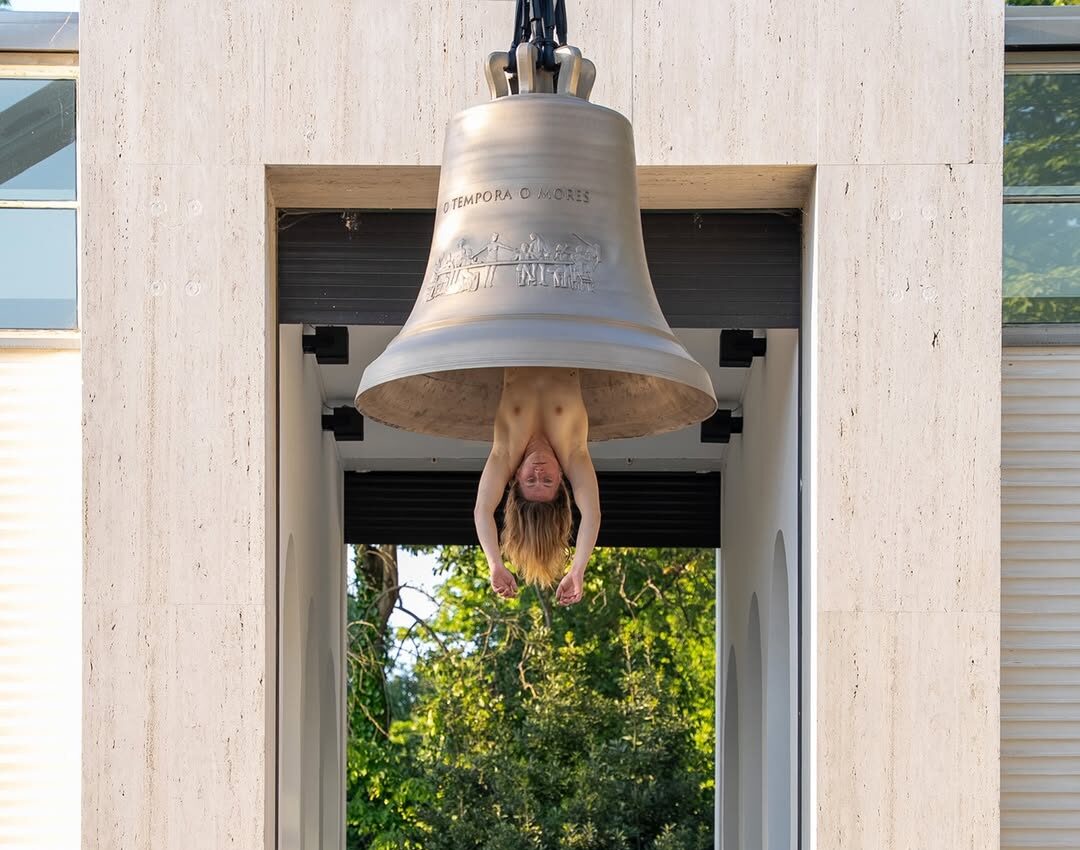
At the Austrian Pavilion, Seaworld Venice turns rising water, bodily endurance, and theatrical shock into a warning system for a city already living with catastrophe
Venice has always lived with water as both miracle and threat. It makes the city beautiful, impossible, theatrical. It also keeps reminding everyone that the future is already arriving from below.
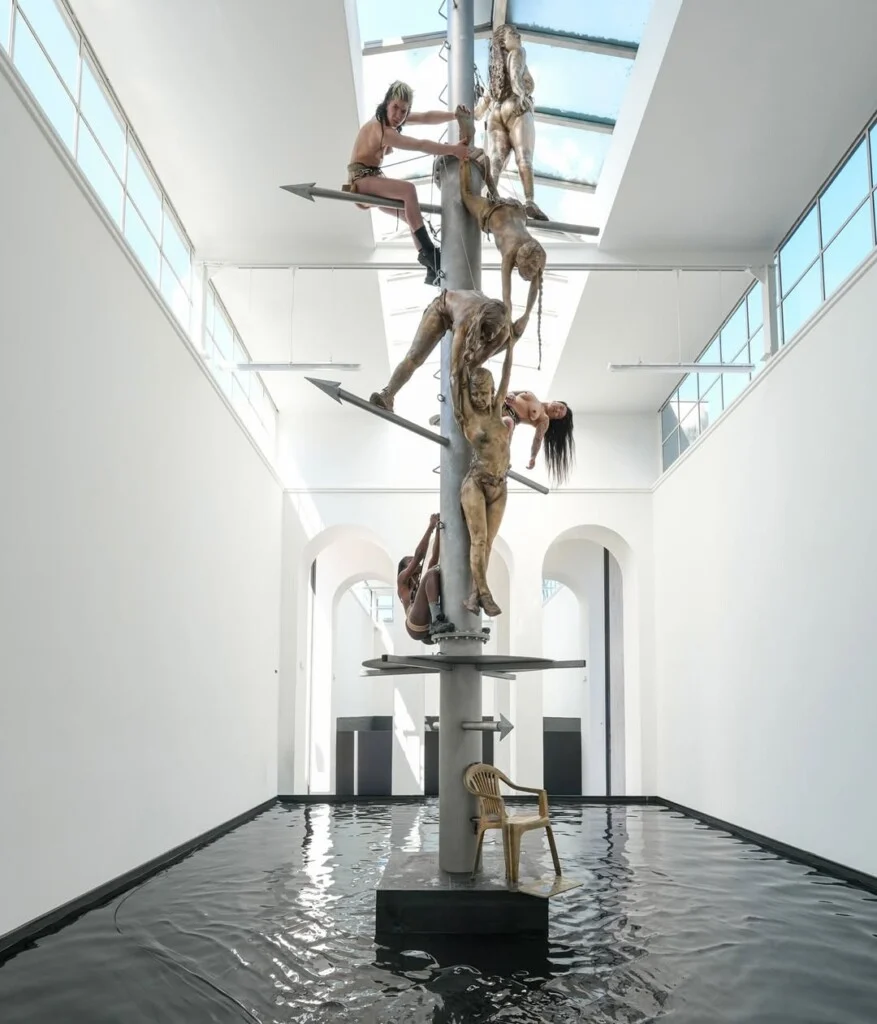
For the 61st Venice Biennale, Austrian artist and choreographer Florentina Holzinger has taken that unstable relationship and pushed it to an extreme. Representing Austria with Seaworld Venice, Holzinger transforms the Austrian Pavilion into an immersive, dystopian environment shaped by climate catastrophe, rising water, and the violent collision between nature, technology, and the human body.
The work continues Holzinger’s long-running interest in water as both material and symbol. Known for performances that fuse dance, theatre, opera, spectacle, nudity, endurance, and physical risk, she uses the body not as something pure or protected, but as the place where power becomes visible. In Venice, that body appears inside a landscape that feels half-submerged already.

At the centre of the project is a performance image that feels almost medieval in its bluntness: a figure trapped inside a bell, ringing out like a human alarm system. The body becomes both messenger and mechanism, a warning signal for a city that knows too well what it means to be surrounded by water. It is not subtle, and it is not meant to be.
That directness is part of Holzinger’s force. Her work has often been described through shock, but shock alone is too easy a category. What she stages is a more complicated form of exposure: bodies pushed into rituals of strength, humiliation, pain, desire, vulnerability, and spectacle. In Seaworld Venice, that logic is scaled up to the level of climate crisis. The performing body becomes a stand-in for a damaged planet, but also for our own strange appetite to watch catastrophe unfold.
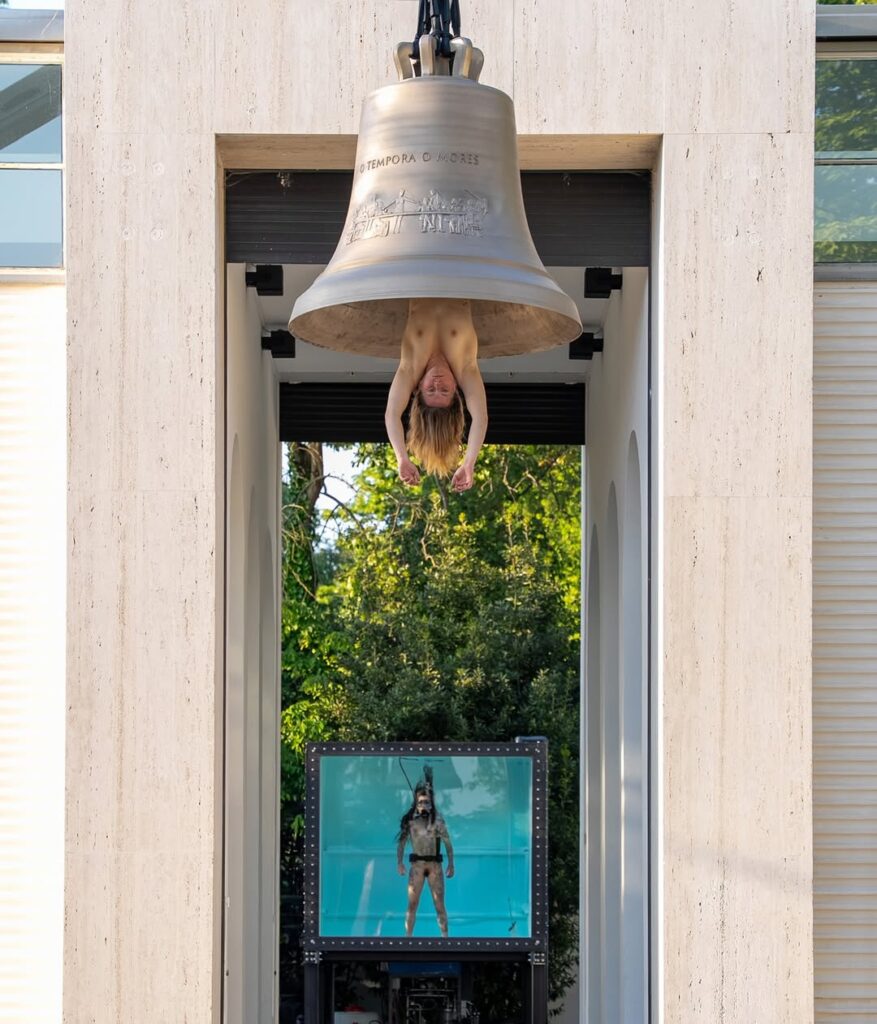
The Austrian Pavilion has always been one of the Biennale’s cleaner national containers: a controlled architectural frame inside a city overflowing with history. Holzinger breaks that cleanliness open. Instead of offering a calm national presentation, she turns the pavilion into something unstable, wet, theatrical, and anxious — a place where the fantasy of cultural order begins to leak.
The timing gives the work extra weight. This year’s Biennale, titled In Minor Keys, opens to the public from May 9 to November 22, 2026, after preview days beginning May 6, and has already been marked by political tension, protests, and debates over national representation. Inside that atmosphere, Holzinger’s flooded world feels less like a metaphor than a diagnosis.
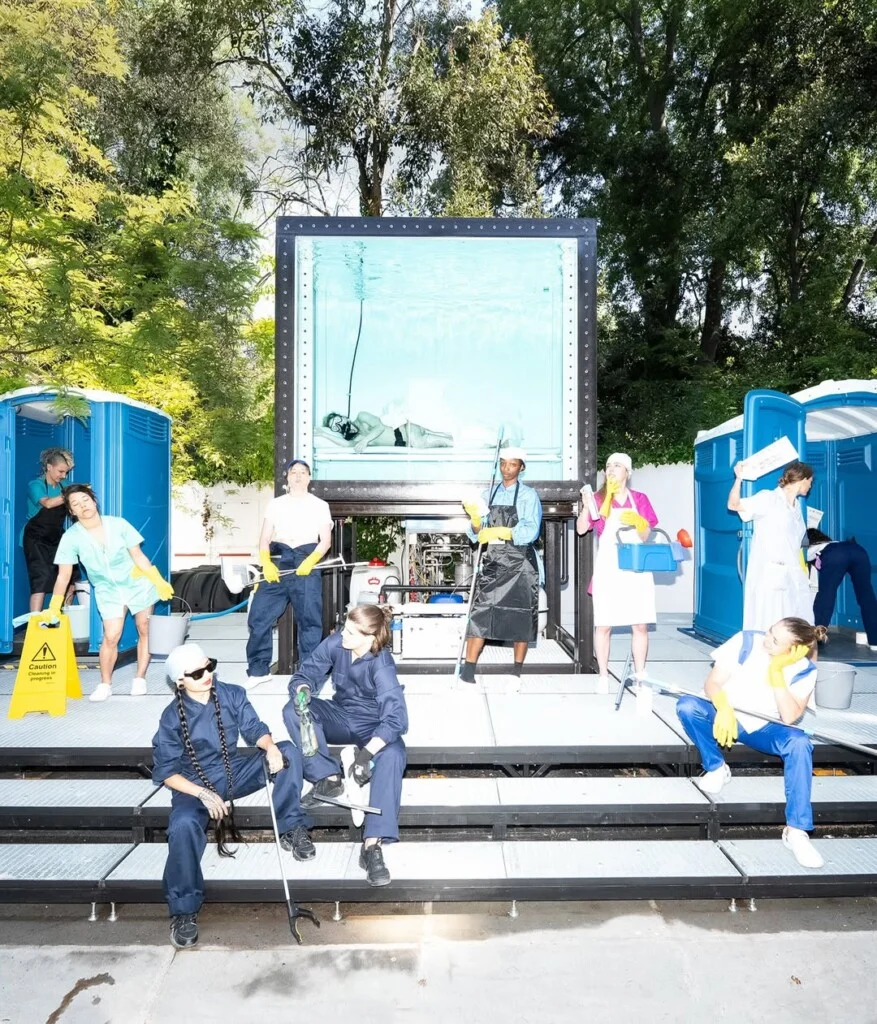
What makes Seaworld Venice compelling is that it refuses the soft language often used around ecological collapse. It does not ask viewers to care through gentle beauty. It stages alarm, discomfort, and complicity. The flood is not elsewhere. The warning is not abstract. The city is already in the water.