

Share this
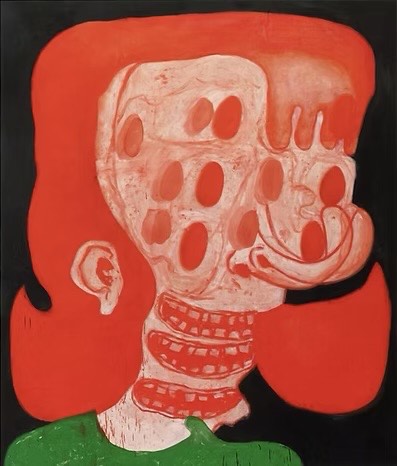
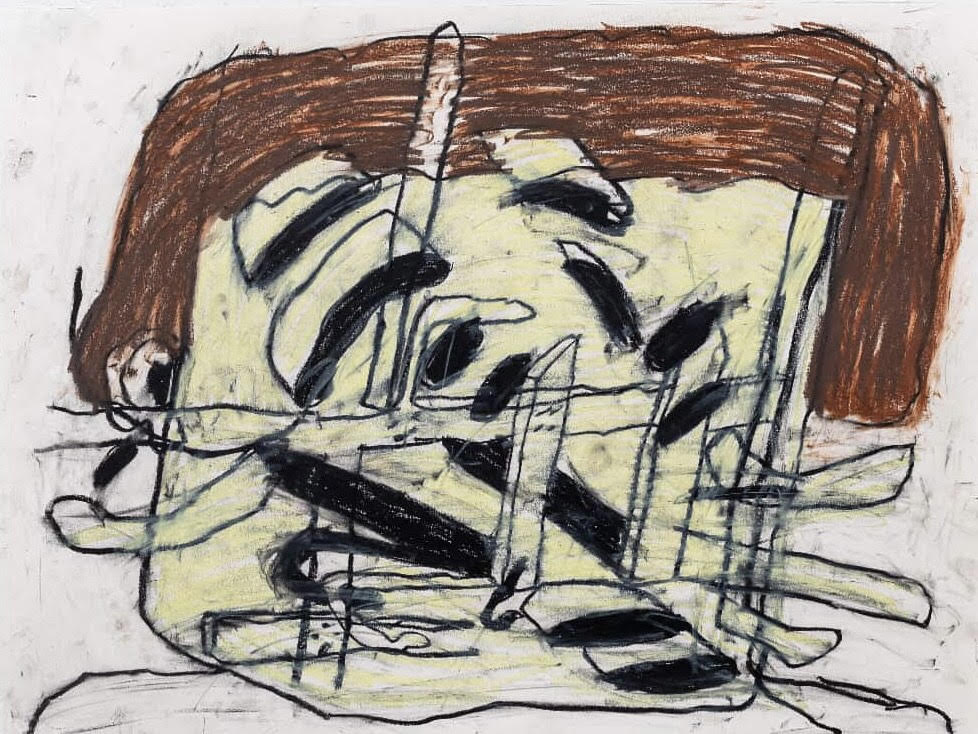
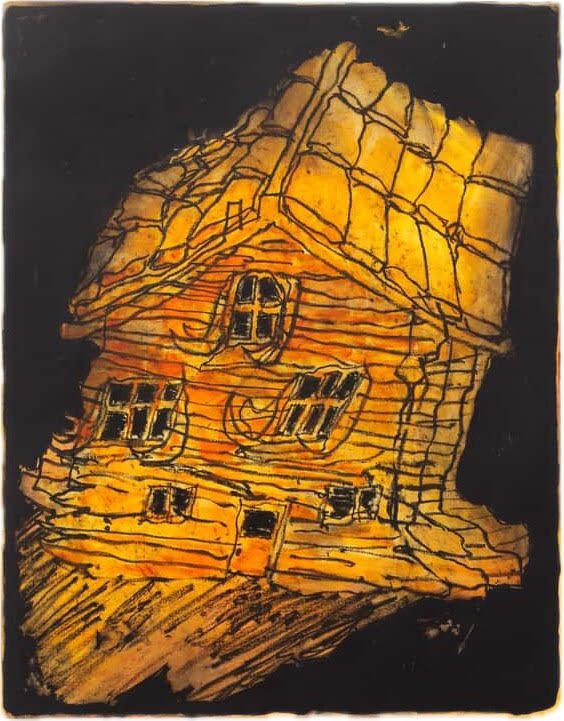
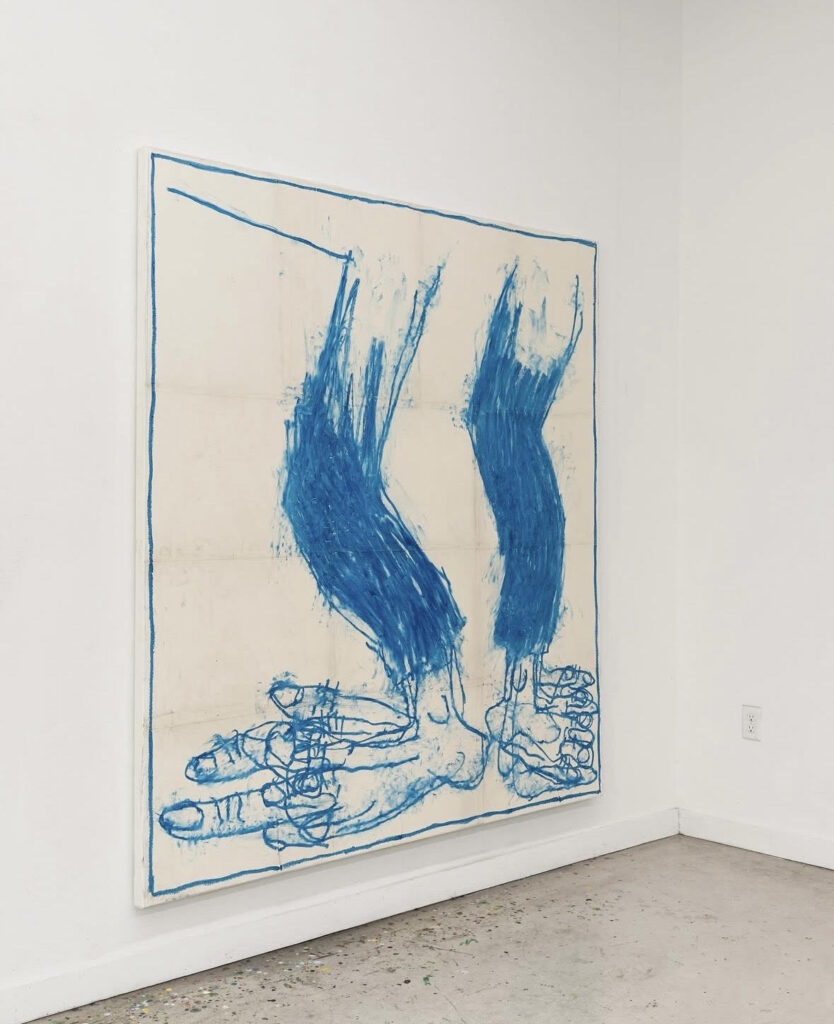
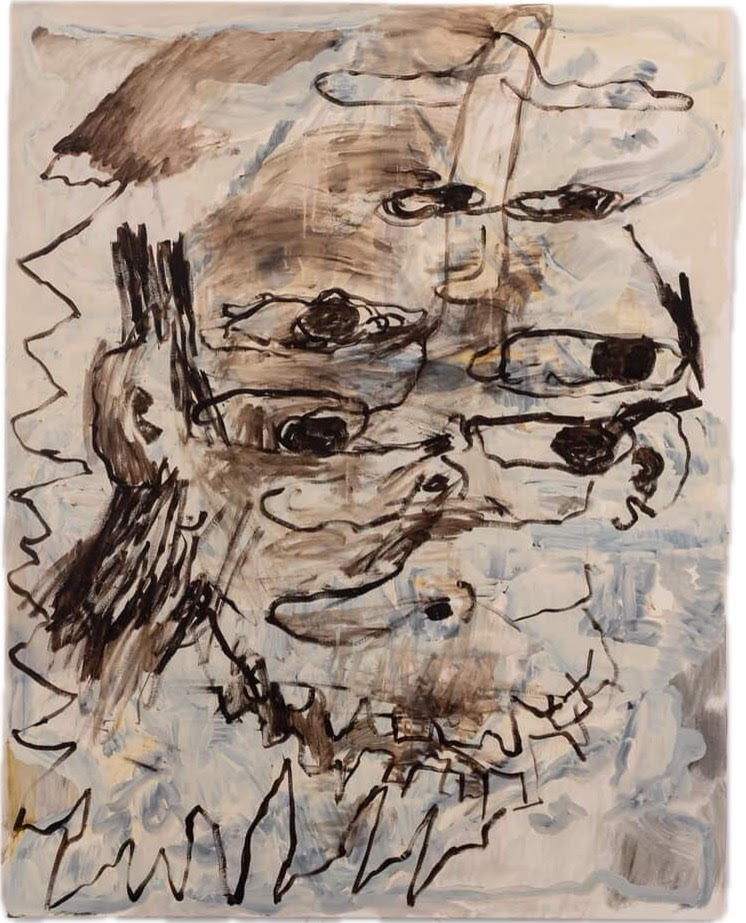
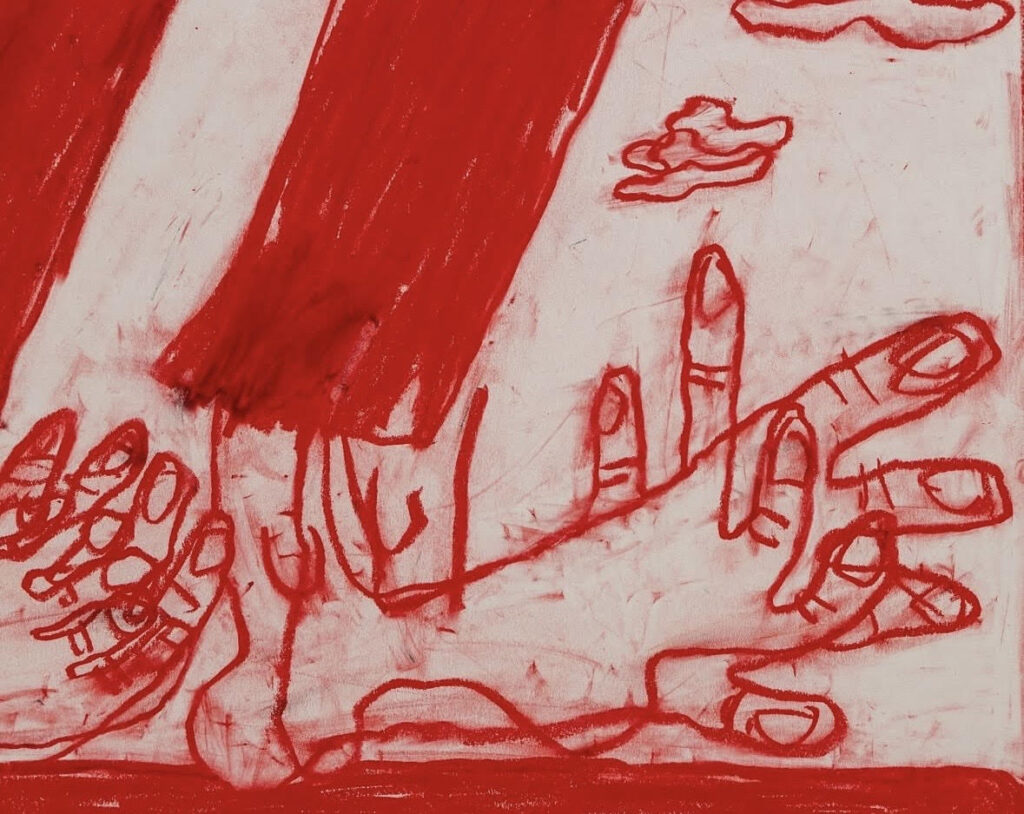
Taylor Anton White’s paintings operate somewhere between construction and collapse. Pulling together fragments of everyday life — cars, suburban traces, scraps of text — his works are built through layers of paint, industrial materials, and improvised structures. The surfaces feel worked, disrupted, and constantly in motion.
Born in San Diego in 1978, White arrived at painting later than most, after nearly a decade in the U.S. Marine Corps and a brief detour into psychology. That delayed entry informs a studio practice driven less by planning than by instinct, where paintings evolve through repetition, erasure, and reconstruction until they assert their own logic.
Balancing chaos with control, humor with tension, White’s work blurs abstraction and figuration while tapping into personal memory and the uneasy undercurrents of American domestic life.

Hi Taylor! It’s a pleasure to sit down with you! First question that I always ask. How does a regular day look like for you in Richmond?
Taylor: Thanks, it’s my pleasure. Let’s see, my day usually starts with me going to the studio to see if I still like the thing I was working on the previous night. I’m pretty much always in my studio working, or going to get materials I need. I probably need to be more social, but this feels normal to me I think. I walk around outside a lot too.
I’m curious, growing, what kind of kid were you? What did you enjoy doing, and how did you spend your time?
Taylor: I’m an only child, so I’ve always been comfortable doing things by myself for long stretches of time. Drawing was a part of my life from very early on, but I never really saved any of it, or thought of it like it was some special thing. Skateboarding was a huge love of mine, along with playing guitar, and most of my friends were into the same things. My neighbors had three boys around my age, and they became close friends for a long time. They had a trampoline too, and their Mom would take us to the pool in the summer. We used to steal their groceries and make lunches out of them, and sell them to construction workers and keep the money. We had lots of woods to build forts in, and construction sites to sneak around in. I had a great childhood.

I know you didn’t start painting until you were in your mid 30’s, after the Marines and a turn toward psychology. How did you get introduced to painting?
Taylor: I thought I wanted to go to college for Psychology after the Marines, but mostly because I didn’t know what to go to college for, and it sounded responsible. That all fell away the day that I found out that the school had an art department. I had this great painting professor named Joseph DiBella, and he really was tremendously influential on how I came to love painting. All of my other art professors seriously influenced my painting too, and it’s how I go introduced to painting obtuse feeling things and not limiting painting to just canvas and stretcher bars.
That “spontaneous encounter” with an art class changed everything. Looking back, do you think art was always waiting for you, or did it genuinely arrive as an interruption?
Taylor: Yes, it has always felt like art patiently waited for me to notice it, and remember my connection to it from childhood.
What did that “delayed” entry give you that you think a more conventional art-school path might not have?
Taylor: I think I needed to first go on a huge quest so I could really learn to trust myself, and I definitely found what I was looking for in my twenties in the Marines. When I started school, I was already married with two kids, so it felt like the stakes were high, and I approached it in a very intentional and focused way. I think if I would have done it when I was 18, I wouldn’t have been ready.
With that in mind, when did you start taking being an artist seriously?
Taylor: Right when I started school. It felt incredibly natural to me, and I just immediately knew that I was supposed to follow this for the rest of my life.

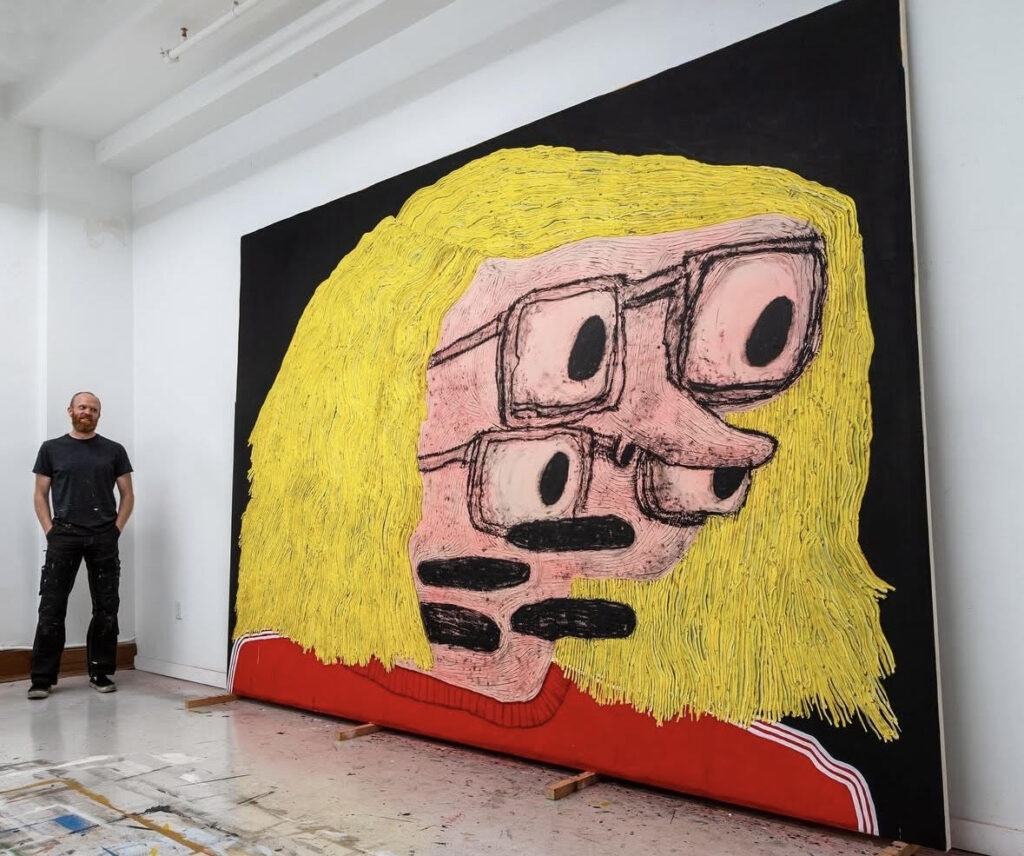
Do you ever feel that your time in the Marines still lives inside the work — in the discipline, the physicality, or even the way you tolerate chaos?
Taylor: Yes absolutely. You learn to force yourself though absurd hardship, and to focus on solving the most immediate problem in the moment, without trying to solve the whole picture at once. You also learn how to fail over and over and keep trying. I think this all helped me tremendously as an artist.
Ok Taylor, with these next series of questions, I will try to delve into your work as best as possible. So…. Your work sits in a constant tension between chaos and control. Do you see that tension as personal, cultural, or both?
Taylor: I suppose that would be both personal and cultural, but I really don’t think about it in a very direct manner, it’s just something that always seems to be there in painting for me.
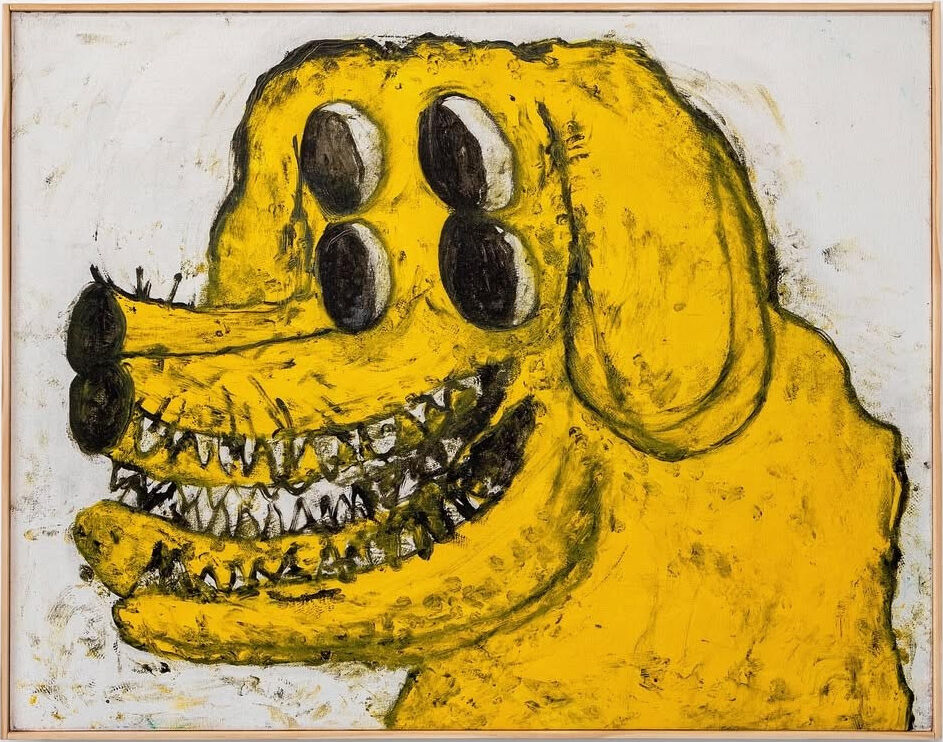
Cars, suburban fragments, scraps of text — these elements feel familiar but unstable. Are they memories, symbols, or simply residues of lived experience?
Taylor: I’d say that I use all of those things, and they’re often used in like a stream of consciousness, where all of those things are at play, and they can be used without a lot of consideration. Sometimes for me to arrive at something that feels alive, I need to get there through not making any sense.
How much of your work is autobiographical, and how much is about collective memory, especially the mythology of American suburbia?
Taylor: Oh all of it is autobiographical in my view.
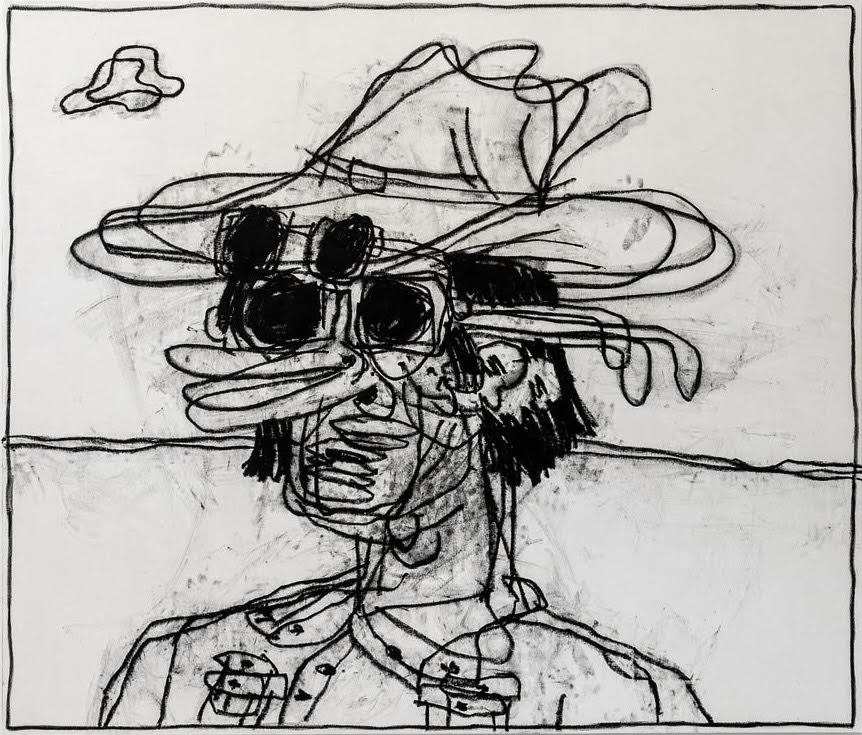
You’ve described working obsessively and returning to motifs again and again. At what point does repetition become a trap, and at what point does it become a language you trust?
Taylor: For me, that repetition with certain shapes or forms is really a way to keep them moving, like evolving into other things. I often will leave something if it just doesn’t keep changing. I want each painting to teach me something about painting, and once I understand something too well, I usually shift to a new project.
Do you think abstraction allows you to be more honest about memory than realism ever could?
Taylor: Absolutely. Like using some weird shape as shorthand for some event, or place, or for the personal pleasure of making a certain shape. For instance, I’ve always loved drawing the number four in the two major ways. LIke this one (4) and the other one that my keyboard doesn’t do. Also, I view abstraction as a form of realism.
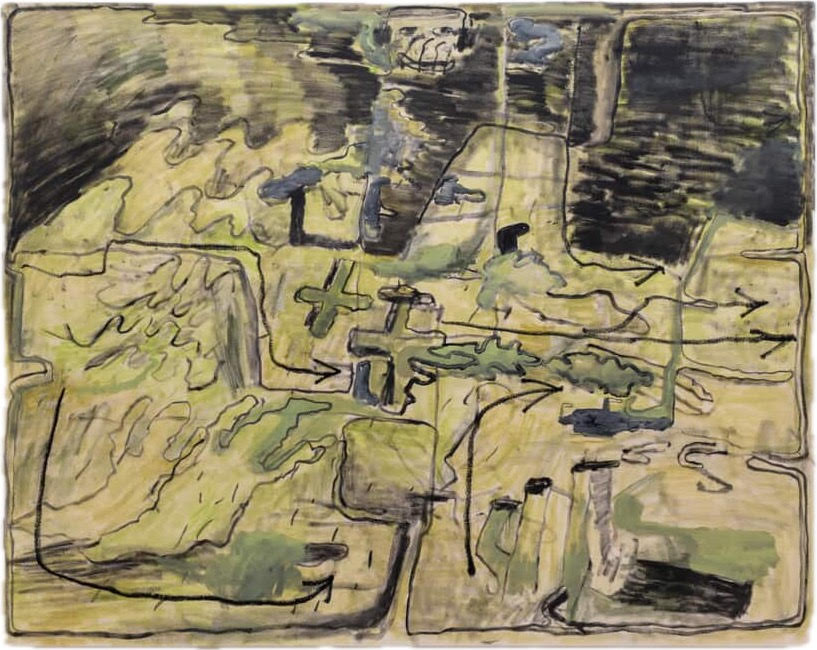
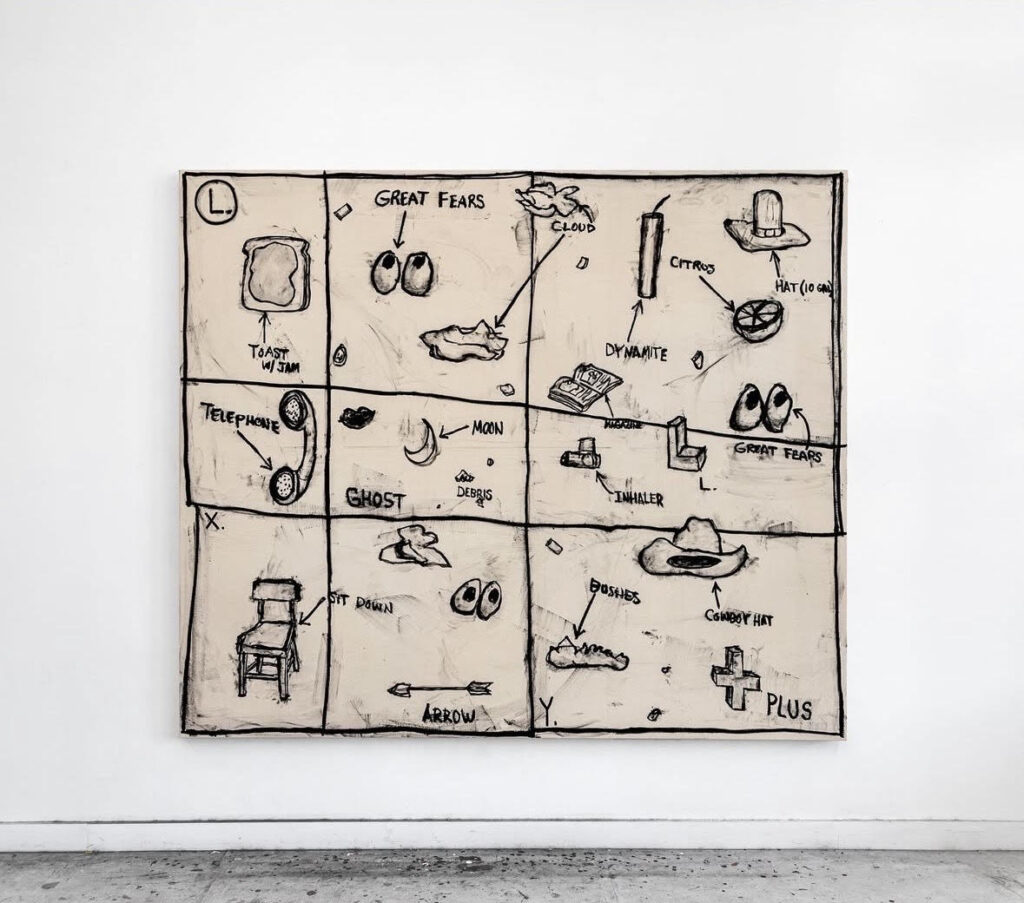
There’s a sense of humor running through your work — sometimes subtle, sometimes abrasive. What role does humor play in your work?
Taylor: This really just feels natural to me. I’ve always loved the feeling of something that is lethally serious and also super dumb. I think I’m attracted to humor in art it because it feels irresponsible, non-academic, and it just makes everything more fun for me.
You’ve described your process as starting without a plan and moving through destruction and reconstruction. What does destroying a painting allow you to access that refinement never could?
Taylor: Sometimes the kind of freedom I need only shows up when the thing I’m working on is totally hopeless feeling to me. Often right then, some ultra dumb approach makes the most sense, and it’s what I needed all along.
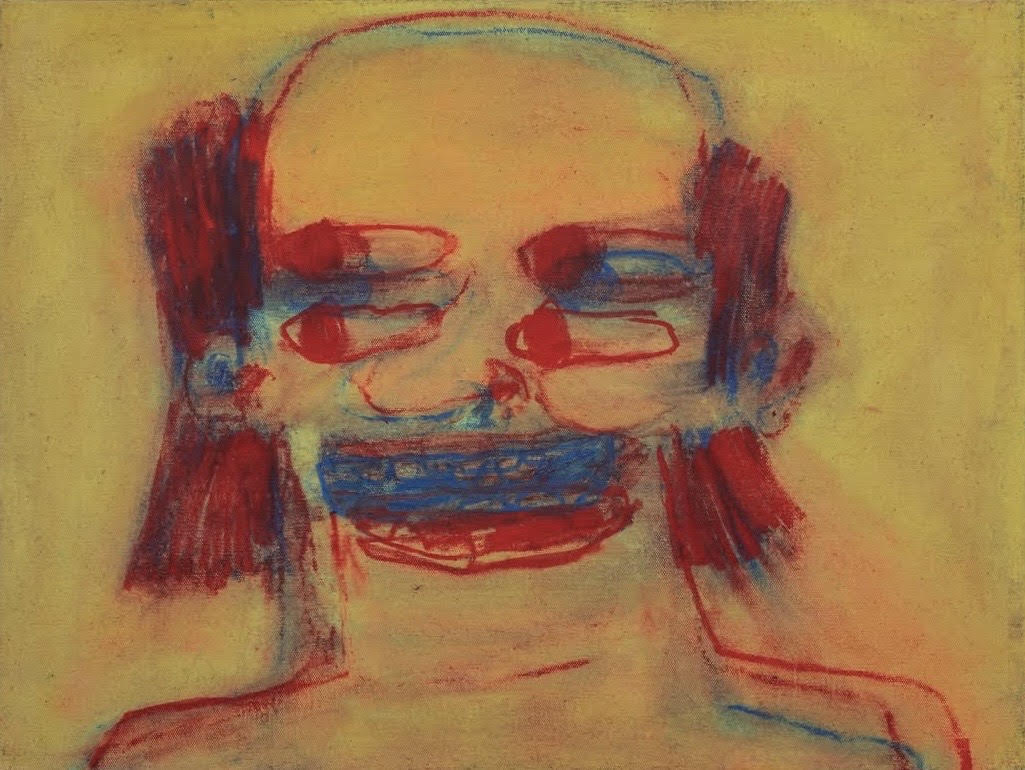
How do you approach color?
Taylor: I’m fairly arbitrary about color choices, at least from the start, and then I start to become more intentional and specific. Color always felt difficult for me when I started painting because I was being too mindful about color theory, and once I let go of that and just used my instincts, it started to become something I really love.
Can you tell me about your use of symbolism?
Taylor: The use of symbols in my work most often starts with my interest in drawing that specific shape, and then it starts to have a kind of symbolic meaning to me. That shifts around a lot too – the meaning of something is usually dependent on the context it’s in for me. Sometimes I also use arbitrary symbols to confuse things, to send a viewer down the wrong path, or to create a terrible problem for myself to get out of.
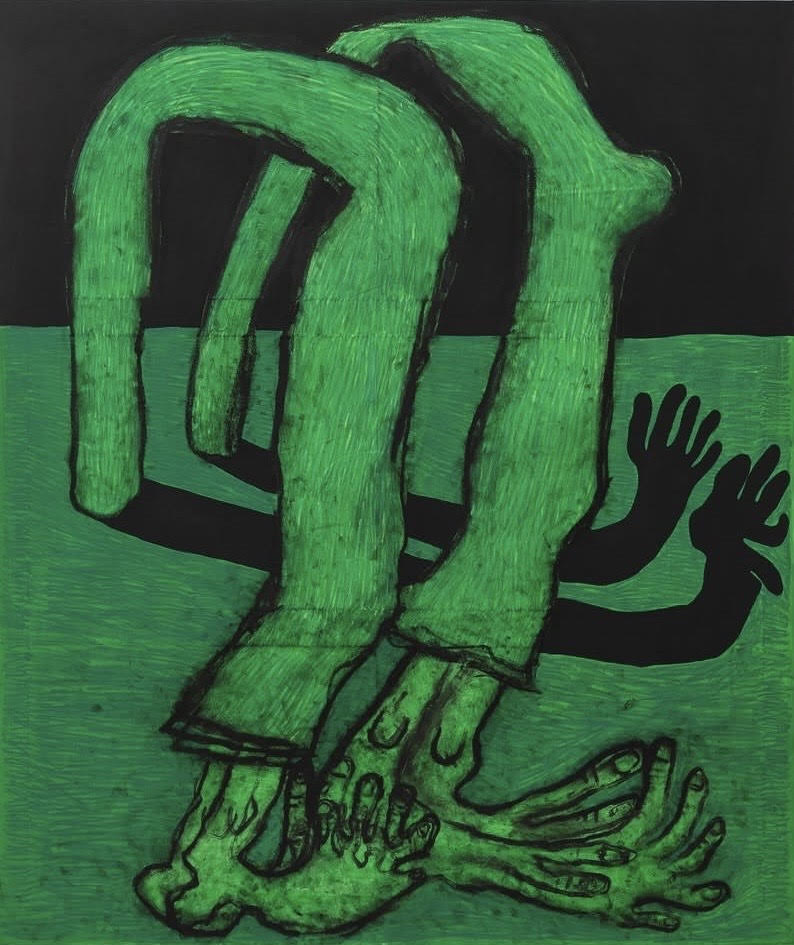
With that in mind… You’ve said you sometimes use symbols to deliberately mislead the viewer. What interests you about letting the audience “get it wrong” — and do you ever worry about losing them entirely?
Taylor: I often don’t trust symbols that behave too well. If they point too cleanly in one direction, they can sort of flatten the experience of looking. So sometimes I let a symbol lead the viewer somewhere that doesn’t quite work, just to reopen the image. I don’t really worry about that losing the audience because I feel like it comes from a place of generosity, like an invitation.
The audience is also going to see everything though whatever lens is dominating their mind, and intentionally subverting my own meaning is a way of letting go of my own certainty in a painting.
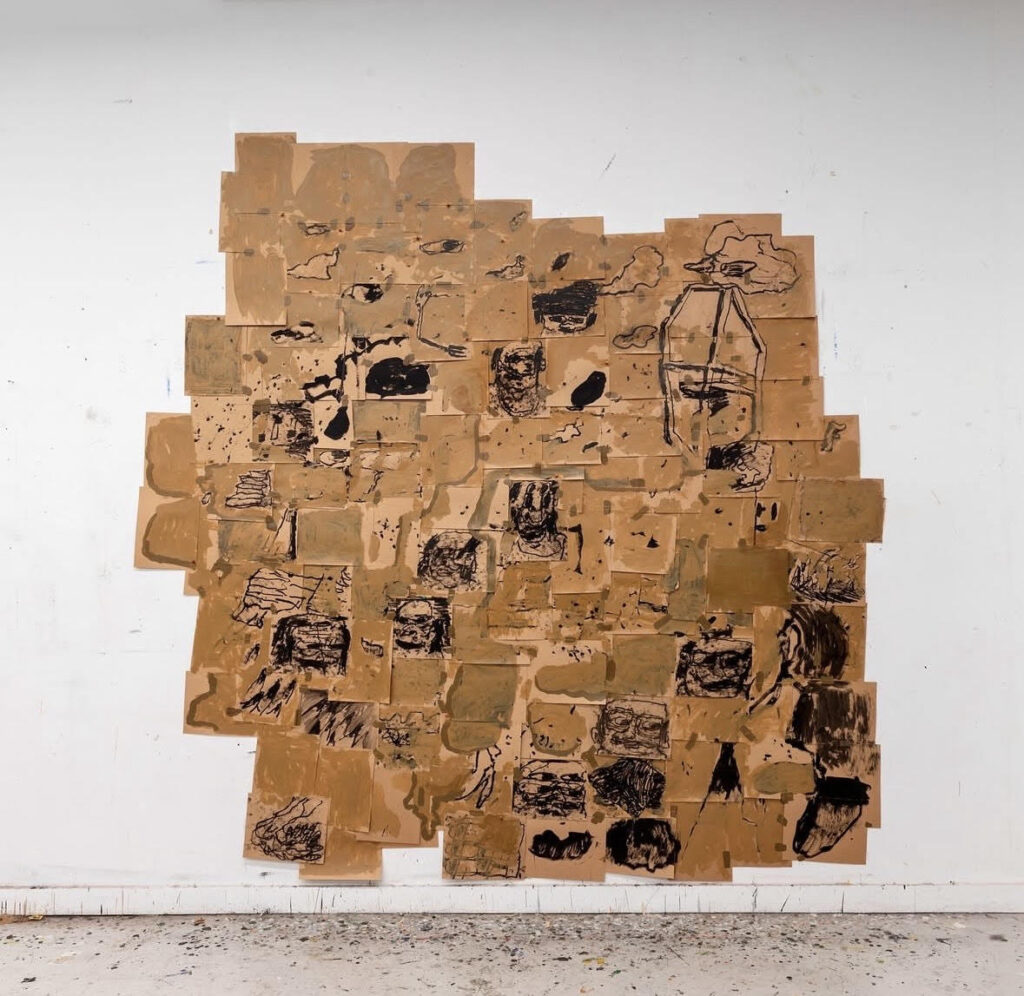
Ok Taylor, now to something totally different. In a parallel universe who would you be? and what would you be doing?
Taylor: I’d probably be something with a whole lot of arms, and I would have little snacks and drinks all around, and I’d have great abs, and a new car, and I’d have so many pets, and I would pet them with all of my hands. I would also be in charge of everything and I would be the only artist at Art Basel forever and also the Venice Biennale and everyone would wave at me and I would wave back with all of my arms. I would live for thousands of years and everyone would love me.
Outside of art, what’s something you’re obsessed with right now—maybe a hobby, a show, or even a food—that keeps you grounded or inspired?
Taylor: I’ve been eating like 4 oranges a day lately, and I found this zone near my house that feels like it’s an energy field. I go there every day. Maybe it’s fantasy too. It might also be something with the oranges. I’m probably not supposed to talk about it. I think it knows if I talk about it.
Can you tell me a story about a time when a connection with someone had a big impact on you?
Taylor: Oh my high school art teacher, Horace Williams. He really loathed me and it kinda stuck in the back of my mind, and probably had the effect of making me see art as some deviant thing. He was super funny too. He’d show up to class with a box of donuts and give one to everyone except me, and I liked him more for it. Often, when I put a chair in a painting, it’s a nod to him because he used to make us draw chairs, without drawing the chair directly, by drawing all the negative space (or the holes). He had great stories, and he even met Elvis when he was in the Army in the 1950’s. All of his students loved him, and it was kind of an honor to be ridiculed by him.

Alright Taylor, I always ask this question at the end of an interview... What’s your favorite movie(s) and why?
Taylor: It’s probably Groundhog day. I like the scene when the groundhog is driving.