
Share this
Jonathan Anderson’s debut Dior Cruise collection turns LACMA into a cinematic collision of Hollywood noir, American shirting, and West Coast mythology
Los Angeles has always been a city that reads like a sign. A road name, a billboard, a gas station, a movie title, a sentence half-burned into the horizon. Few artists have understood that better than Ed Ruscha, whose work has spent decades turning the language of the American West Coast into something dry, cinematic, and quietly haunted.
For Dior Cruise 2027, Jonathan Anderson brings that Los Angeles sensibility into the house’s new chapter. Staged inside the newly opened Geffen Galleries at the Los Angeles County Museum of Art, Anderson’s debut Cruise collection for Dior unfolded like a film set built from Wilshire Boulevard, old Hollywood glamour, California noir, and the mythology of the American road.
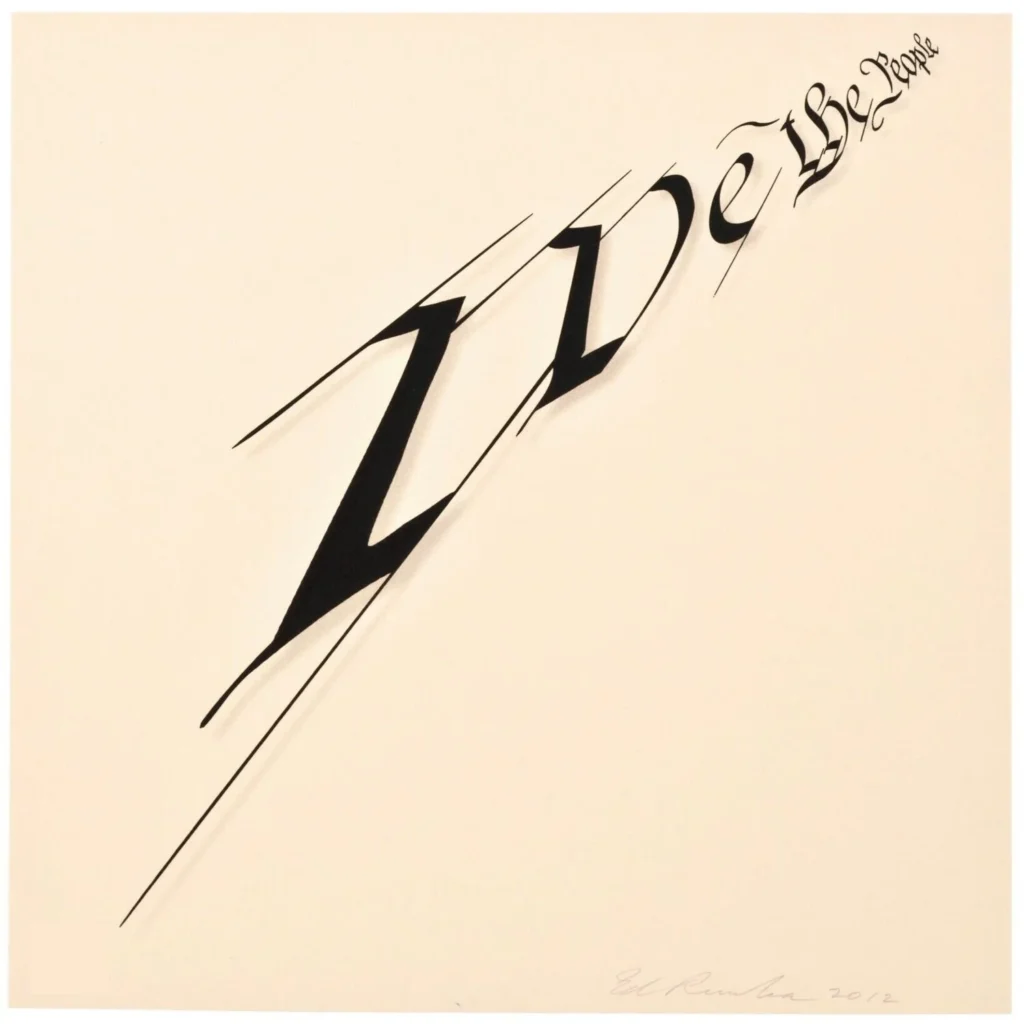

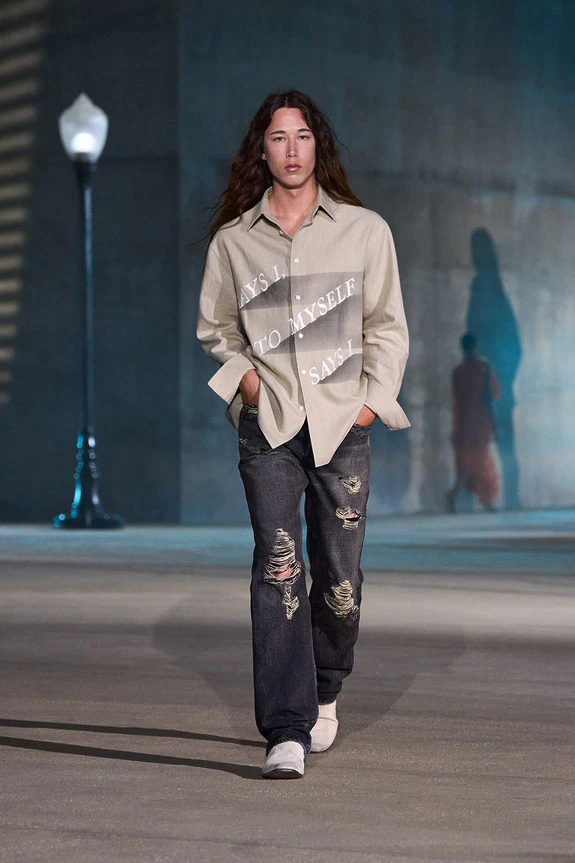
At the centre of the show was Anderson’s collaboration with Ruscha. Created exclusively for the collection, the artist reimagined a series of Dior Homme shirts through his unmistakable typographic language, drawing on works including We the People from 2012 and Says I, To Myself Says I from 2024. The result was less a fashion-art crossover than a meeting of two systems of image-making: Dior’s couture precision and Ruscha’s deadpan, text-based Americana.
The shirts carried shadowed lettering, industrial textures, and the strange atmosphere of a city built from light, asphalt, desire, and illusion. Worn with distressed denim threaded with silver-chain embroidery, they brought a rougher Californian ease into Dior’s polished universe — not casual exactly, but looser, sun-damaged, and slightly cinematic.


Elsewhere, Anderson pushed the collection deeper into Los Angeles mythology. Saddle bags arrived with glossy automotive finishes and motor-key charms, while Philip Treacy created feathered typographic headpieces that made language literally hover above the body. Tailored coats leaned into film noir, giving the collection a feeling of movement through backlots, boulevards, hotel corridors, and late-night city light.
What makes the Ruscha collaboration feel so right is that it avoids the obvious trap of treating Los Angeles as pure glamour. Ruscha’s LA has always been more complicated: banal and mythic, funny and lonely, flat and infinite. Anderson seems to understand that. His Cruise 2027 collection does not simply borrow Hollywood as a backdrop. It treats the city as an image machine, a place where clothing, cinema, cars, language, and fantasy all keep reflecting one another.
For Dior, this is a pointed opening move. Anderson is not just paying tribute to the house’s relationship with Hollywood. He is widening the frame, placing Dior inside a stranger American landscape where French couture meets roadside signage, movie lighting, and the dry poetry of the West Coast.