
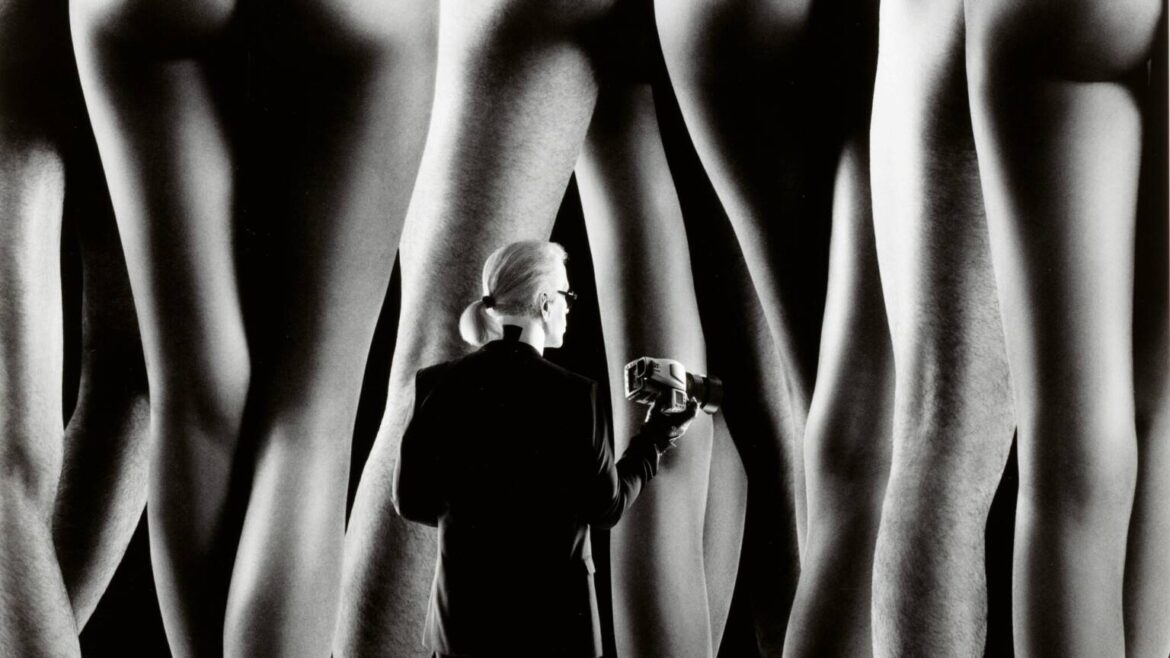
Before Karl Lagerfeld became the image — the ponytail, the black sunglasses, the high collar, the gloves — he was a hand moving quickly across paper. Drawing, editing, thinking, rehearsing. Turning fashion into line before it became fabric.
At Sotheby’s Paris, that private machinery is being opened up with KARL, Karl Lagerfeld’s Estate VI: Inspirations, a landmark sale running from July 2 to 8, 2026. The auction brings together more than 1,000 previously unseen sketches, alongside personal objects and archival material that reveal a more intimate side of one of fashion’s most prolific minds.

The scale is almost absurd, which feels appropriate for Lagerfeld. His creativity was not neat or occasional. It was constant. These drawings span decades, from the 1970s onward, moving through working studies, fashion concepts, early ideas, and political sketches that were never shown publicly during his lifetime. They show drawing not as decoration, but as a method of thought: fast, disciplined, sharp, and endlessly generative.
What makes the sale interesting is that it does not only present Lagerfeld as the grand public figure behind Chanel, Fendi, and his own label. It looks at the systems behind the persona. Among the lots are objects that feel almost devotional in their specificity: his fingerless gloves, around 200 iPods, and traces of the controlled personal universe through which he organised sound, image, work, and daily life.
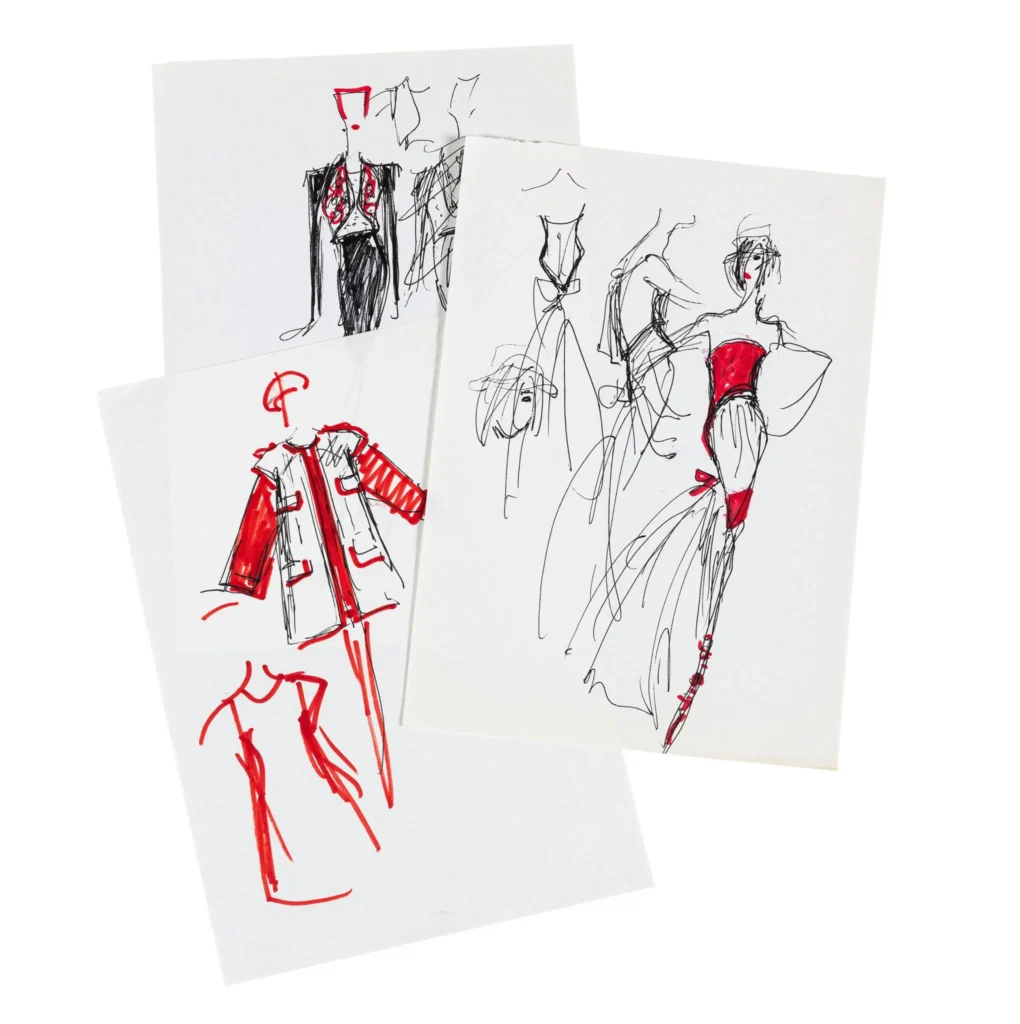
There is something strange about seeing such private material enter the auction room. Lagerfeld understood fashion as spectacle, but he also understood control. His image was hyper-visible, yet tightly managed. The archive complicates that mythology by showing the labour underneath it: the repetition, the volume, the speed, the restless need to keep producing.
The democratic structure of the sale adds another layer. All lots are unreserved, with bidding starting from just one euro, turning what could have been a closed collector’s event into something more open. A parallel exhibition in Paris runs until July 7, allowing visitors to encounter the archive physically before the final sale.

This is the sixth instalment in Sotheby’s exploration of Lagerfeld’s estate, following earlier sales in Paris, Cologne, and Monaco. But this chapter feels especially revealing because it returns to the beginning of fashion’s process: the sketch, the note, the small object, the private system before the runway image appears.