Share this
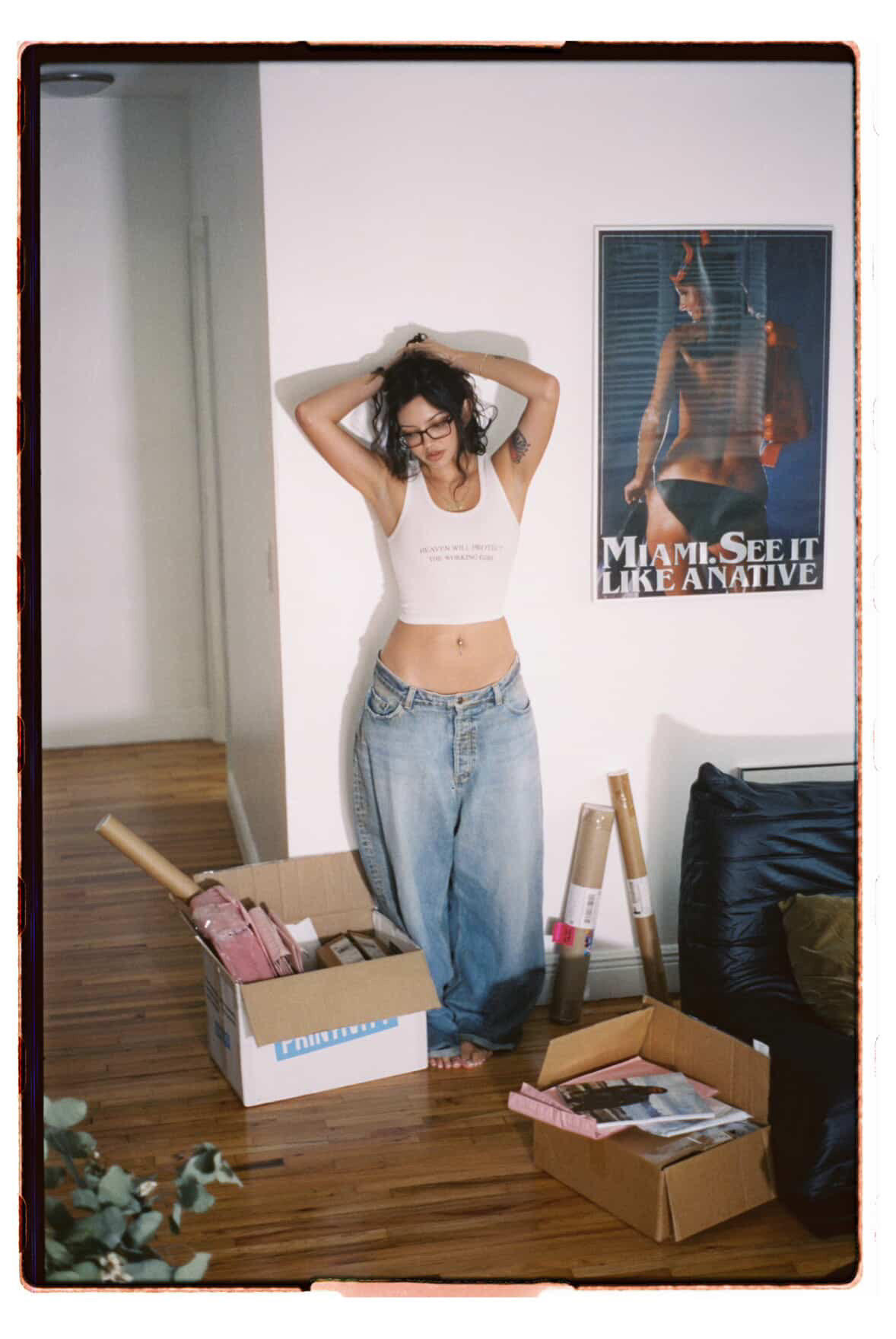
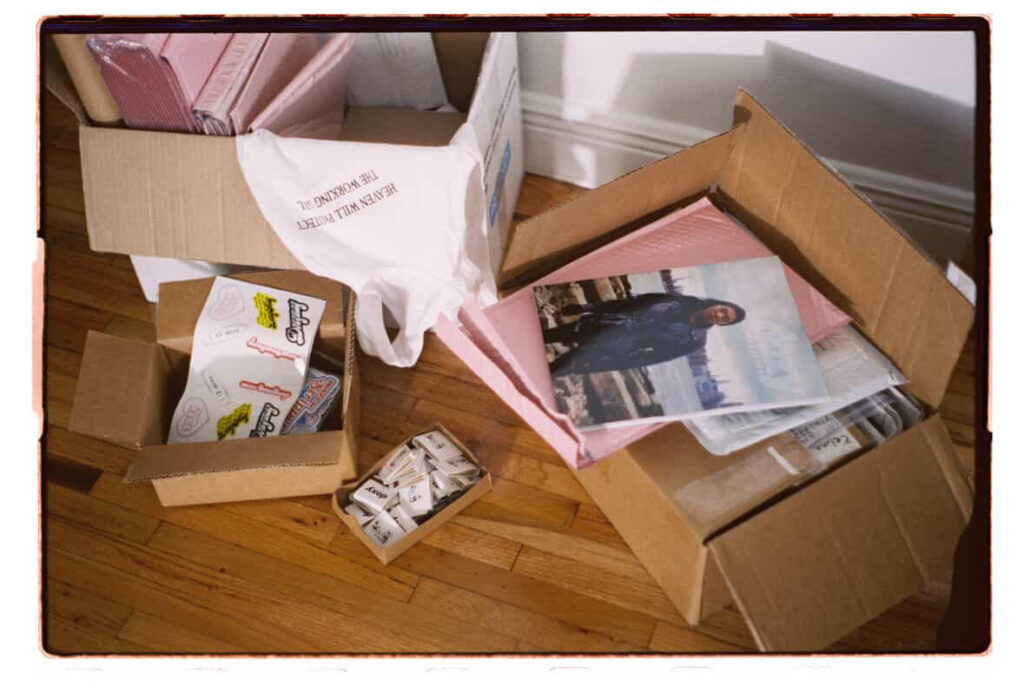
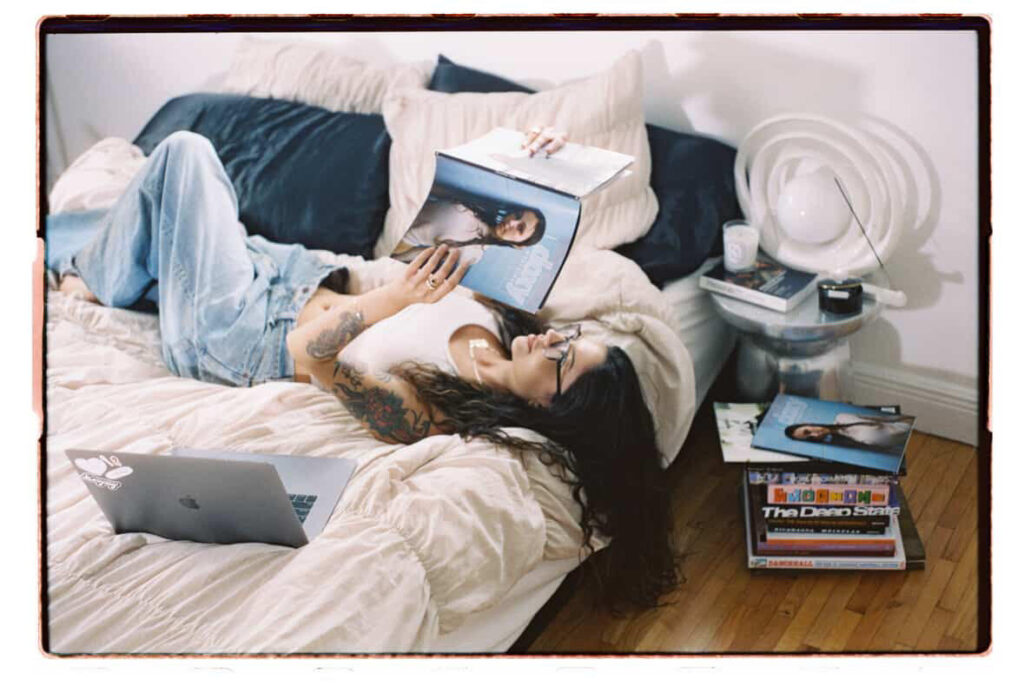
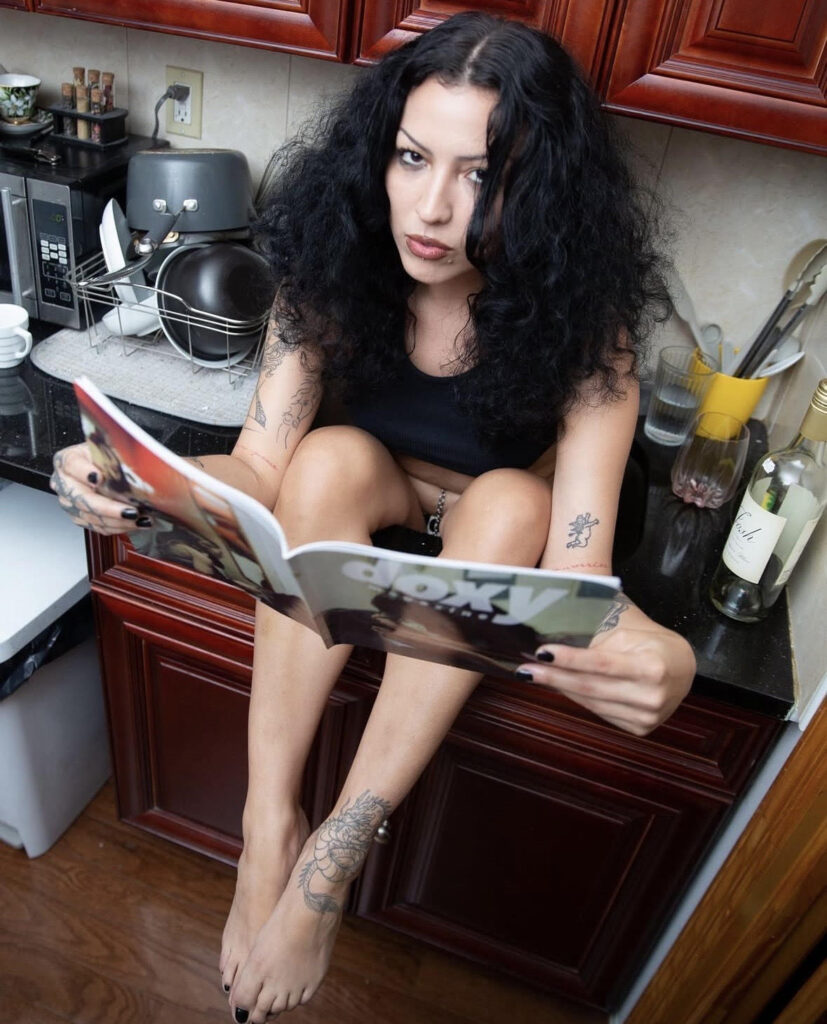
Celina Reboyras, 29, is a South Florida born, NYC based interdisciplinary artist, and writer. Celina holds a BA in psychology and women and gender studies. She is also a sex worker, and the founding editor of Doxy Magazine– a publication dedicated to advocating for the working girl. Celina has words featured in polyester zine, dreamboy book club, and several other independent publications. Celina values the preservation of tangible items in a digital world, and doing everything possible to contribute to creating a better world for sex workers.
Profile pictures by Ada Lillian Garcia.

Hi Celina! It’s a pleasure to sit down with you! First question that I always ask. How does a regular day look like for you in New York?
Celina: Omg hi, the pleasure is mine! So the usual day varies quite frequently for me, especially now that I split my time between Miami and New York. Sometimes, I’ll start my days by going for a run along the beach, and others I wake up at dawn to incessant honking because I forgot to move my car for street cleaning. This is usually followed by a coffee and a sweet treat for breakfast, then several hours spent writing or working on whatever creative project I have going on at the moment (usually Doxy related). Later, I’ll hit up some events with friends like a gallery opening or a reading, then dreadfully hang out with my sugar daddy. Pretty much doing anything I possibly can to procrastinate taking nudes for Onlyfans.
I’m curious, growing up, what kind of kid were you? What did you enjoy doing, and how did you spend your time?
Celina: I was a really impulsive child who feared nothing. I spent almost all of my time outdoors when I was a kid. When I was in the third grade I became very obsessed with frogs. I used to steal the tupperware containers from my mother’s kitchen and ride my bike to local canals, where I would capture baby frogs and tadpoles using the tupperware containers. I even tried creating a habitat for them with an inflatable pool that was poorly hidden on the side of my childhood home. My mom eventually put two and two together when frogs began to take over our backyard and all her tupperware went missing. As I entered my teens, I pivoted more towards online chatrooms and MySpace. I hold a profound love for the computer room.
Ok Celina, let’s jump right into it! You’re explicit about being a sex worker, but you never frame it as confession. What does it mean to claim sex work as a position of expertise rather than an identity people are invited to interpret?
Celina: While I have been a sex worker for nearly a decade now, and I’ve worked in almost every field of sex work- I don’t know that I do consider myself to be an expert in sex work. I still feel like I’m constantly learning. Perhaps the word “expertise” is just subjective to me, as the way it is to many sex workers. I do know that working on Doxy has allowed me to learn so much, while also meeting incredible women along the way.

Sex work is often treated as metaphor in art and media, rarely as material labor. How do you insist on its reality without letting it become spectacle?
Celina: Sex work is still very much considered a taboo line of work within the public eye, which to me means that it will always be seen as spectacle. However, I believe the reality of sex work existing as labor and spectacle can co-exist at once. Yet insisting on its reality asmaterial labor requires sex workers to be compensated. So, if you’re hiring strippers to perform for an event, make sure you’re paying them- and adequately too!
You’ve spoken about control over narrative as a form of survival. What does narrative control look like in practice, not symbolically, but materially?
Celina: I would say that narrative control both as an editor for Doxy, and as an individual are intertwined within another. Not only is survival dependent on it but so is our quality of life. In practice, it looks like safer work environments, acceptance from the outside world, and probably a larger influx of income.

As the founding editor of Doxy Magazine, you’ve built a platform that refuses rescue narratives and liberal sympathy. What did you feel was missing, or actively harmful, in existing sex-work coverage when you started it?
Celina: In most mainstream media, sex workers are always given this sad existence, with a sad upbringing and back story to go along with it. And while these stories may hold truth and resonate with a lot of us, they also feel demoralizing.
Conservatives explicitly hate us, and liberals pity us. You begin to think “Is this what the outside world thinks of us?” Not every sex worker has a tragic tale, not every individual’s entry into this line of work stems from survival and a place of destitute. A lot of these stories portrayed in the media usually end with a man coming to our rescue, as if that’s some sort of aspirational goal for sex workers everywhere?
Get real. And if sex workers aren’t being given a sad backstory in media coverage, then they’re being overly sexualized which is exhausting to witness. I felt I needed to do something different when I started Doxy.
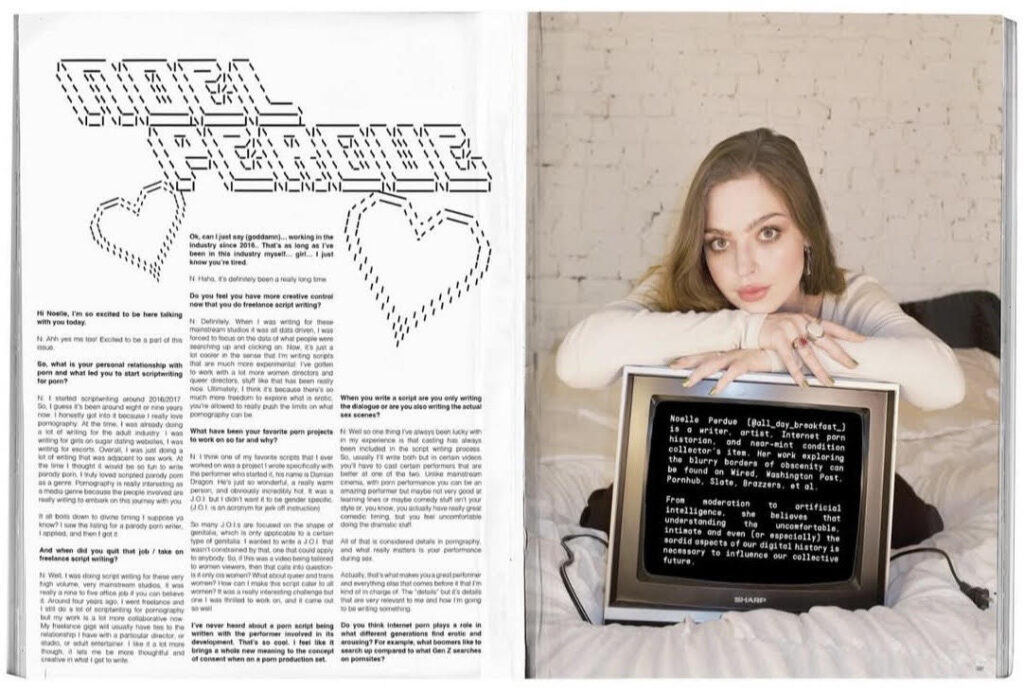
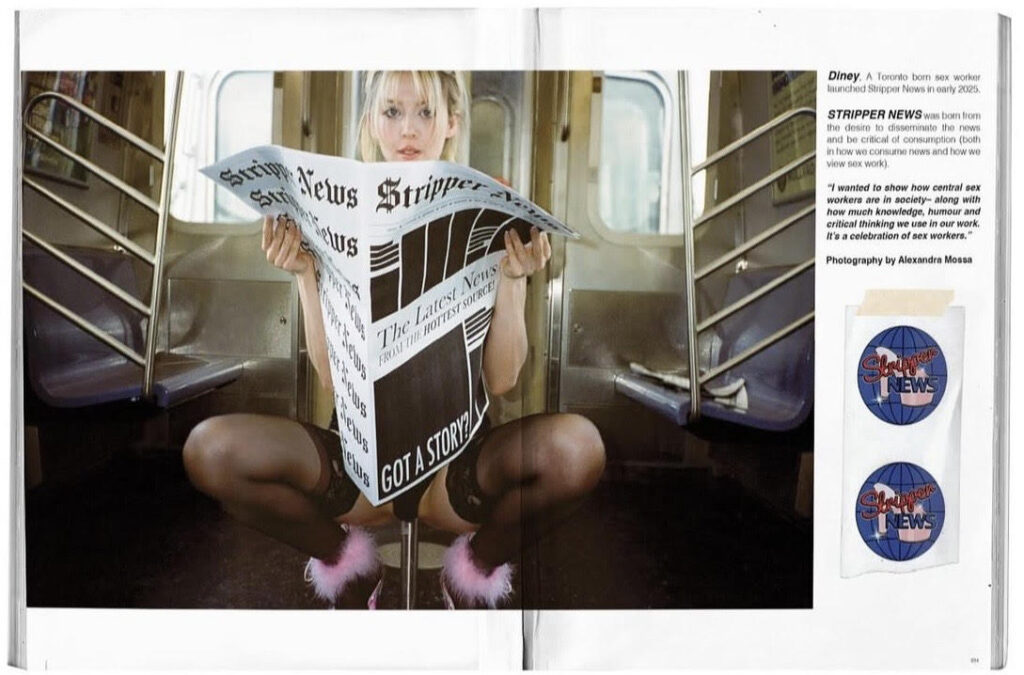
Doxy doesn’t seem interested in educating outsiders. Was that an intentional refusal, and what do you think happens when sex workers stop explaining themselves?
Celina: That actually is not intentional haha. I do want to educate outsiders, but I want to do so without training wheels, metaphorically speaking. I’m unsure if over-explaining ourselves versus us choosing not to will really weigh different outcomes. I just know that I’m really tired of asking permission for acceptance.
Editing is often invisible labor. How has being an editor shaped the way you think about power, authorship, and whose voices are amplified, even within marginalized communities?
Celina: Editing is imperative to constructing narrative control, especially when you’re discussing taboo topics within marginalized communities, and we just discussed how important narrative control is. I would say being an editor of my own publication has shaped the way I practice mindfulness. I want to always send an important message that focuses onawareness and inclusiveness. I believe that voices from marginalized communities need to be heard the most.
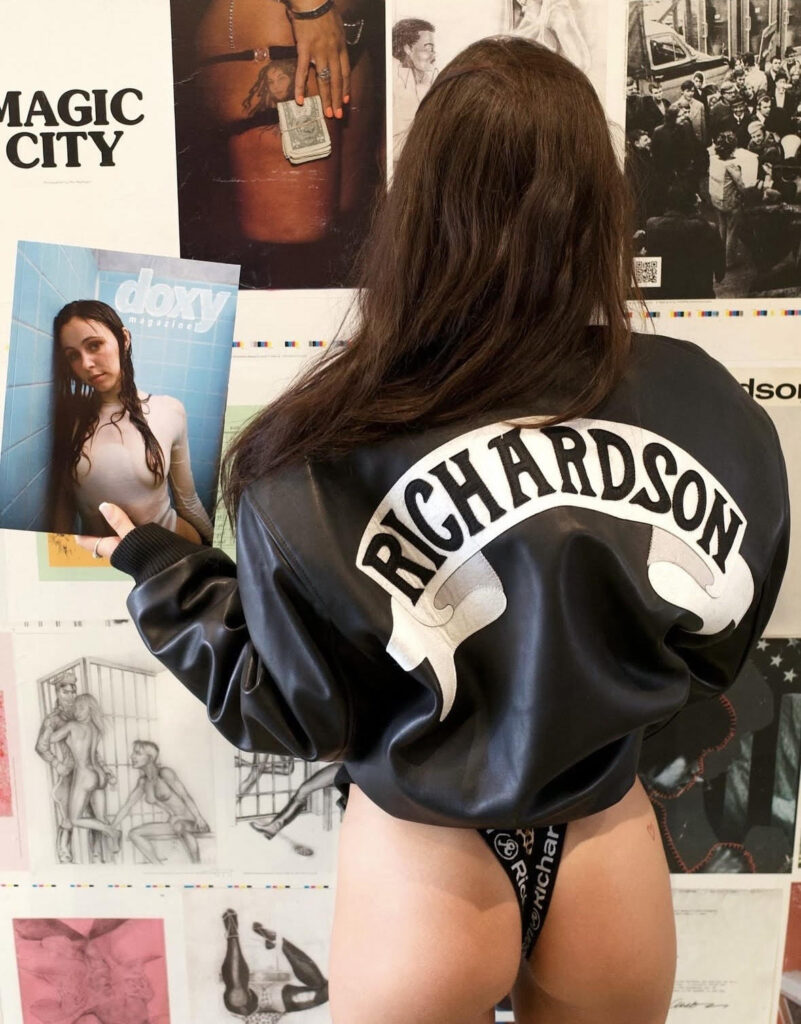
Visibility is often sold as progress, but you’ve been critical of it. When does visibility become extraction rather than empowerment?
Celina: I think visibility becomes extraction when it’s rooted in profit, or when it just sends the wrong message all together. For example, the movie Anora- while I appreciated the quality of the film itself- I still felt it sent this very distorted message about sex workers. On one hand I’m grateful for the sex worker visibility especially with the film making a sweep at the Oscars last year. Yet on the other hand, we have to ask “Did this have a positive effect on the outside world’s perception of sex workers?” And ultimately, who is really benefiting from the success of the movie, aside from the man who profited financially and further established his career as a director?


You operate inside art, publishing, and sex work simultaneously, spaces that often consume each other unequally. Where do you feel the most resistance when you refuse to perform legibility?
Celina: I don’t know if I do feel much resistance in any of them to be quite honest. I guess I don’t really care about legibility anymore.
Many institutions want sex workers’ stories but not their leadership. What are the structural red flags you notice when organizations claim to support sex workers?
Celina: I’m kinda bad at picking up on red flags, as I approach being 30 years old my new thing is practicing discernment. However, I’d say a notable red flag is whenever an institution has more to gain from your story than you do by handing it over to them.
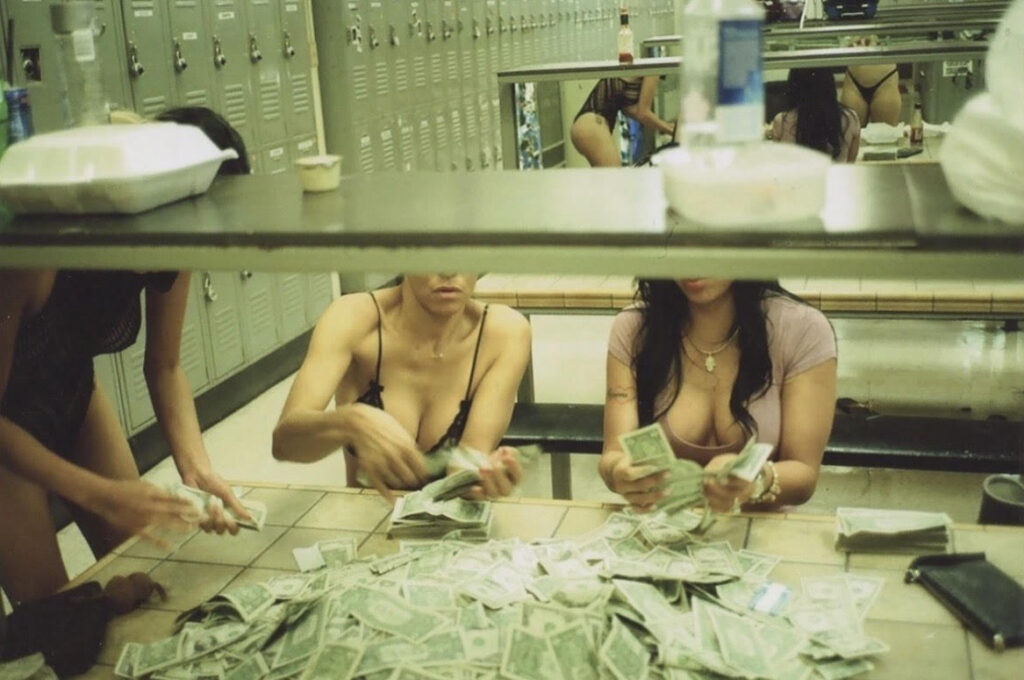
You’ve been outspoken about liberal feminist frameworks that center morality over material conditions. What do you think mainstream feminism still fundamentally misunderstands about sex work?
Celina: Haha mainstream feminism is so irritating to me at this point. Liberal feminists still overemphasize this narrative of victimhood onto sex workers, while completely ignoring one’s agency which ironically enough is the entire concept of feminism. Liberal feminists believe sex work is exploitative, but what they refuse to understand is that all labor is exploitative under capitalism. Being a stripper is no different from being a construction worker, both jobs utilize the body as a form of labor, and receive compensation as a result.
Refusal feels central to your work—refusal to soften, to aestheticize, to translate. Do you see refusal as a political act, an artistic strategy, or simply self-preservation?
Celina: Wow, I really love this question. Refusal is central to the core of who I am, I feel as though I came out of the womb refusing to conform to societal standards. I don’t know if it’s because I have like 4 planets in Aries and we’re known for being really stubborn. However, I would say my act of refusal is a little bit of all three but mostly it just feels integral to my moral and belief system.

What does solidarity actually look like to you when it’s not symbolic or performative?
Celina: God haha like doing anything that is a step above an instagram re-post. It’s so easy to be performative online. To me real solidarity looks like participating within the community, mutual aid, helping educate others on stigma, or simply supporting sex workers monetarily.
Your work across writing, performance, and image-making feels precise rather than emotive. How do you think about emotion in your work, something to express, or something to control?
Celina: I really love expressing my emotions in my work, but I’m also a perfectionist. Lately, I tend to intellectualize my emotions before I even begin letting myself feel them. I guess as much as I express my emotions in my work, I’m also adding a layer of control. My relationship with control is something I’m working through.
Language itself seems to be one of your primary materials. How do you decide when to be direct and when to withhold?
Celina: Honestly, I would say I’m still learning when is the right time to be direct and when is best to withhold. Which makes writing more fun, the learning process.
If sex work were fully decriminalized tomorrow, what do you think would still remain unresolved in how sex workers are represented and treated?
Celina: While decriminalization would create an overall safer environment for sex workers when it comes to policing- stigma would still be very prevalent. Stigma which outpours onto clients, family, and social circles. Not to mention many mainstream institutions such as housing, banking, and social media would probably still uphold their anti-sex worker policies.
What kinds of conversations about sex work are you personally tired of, and what conversations do you wish were happening instead?
Celina: Hmm I would like less conversations on what to say or do to bypass certain social media regulations to avoid being shadowbanned or losing our platforms. Don’t get me wrong, Ithink they’re important conversations and all of us should be aware- it’s just exhausting. In its place I would love to see more conversations on how we can create our own platforms to avoid this as an issue entirely. Sex workers should not have to exist in a constant fear of being de-platformed.
When you look at the cultural landscape right now—art, media, publishing—what feels genuinely dangerous, and what feels falsely radical?
Celina: AI feels genuinely dangerous, and also inherently patriarchal. I’m nervous about the problems sex workers will begin to face as AI continues to advance, along with increasing surveillance. I can’t think of anything that feels falsely radical right now, but probably any deprecation of sex workers in the media that claims to come from a pro sex worker standpoint.
Ok Celina, now to something totally different. In a parallel universe who would you be? and what would you be doing?
Celina: In a parallel universe, I’d be my mother’s mother. I’d like to be the one to raise my mother and bring her up in an environment where she feels secure.
Outside of the above mentioned, what’s something you’re obsessed with right now, maybe a hobby, a show, or even a food, that keeps you grounded or inspired?
Celina: I’m currently staying in Miami for the winter and I try to walk to the beach every day and just spend a few minutes staring at the ocean. The ocean makes me feel grounded. I’m also really obsessed with the show Heated Rivalry and I’m so excited for the next season, although that doesn’t really inspire me or keep me grounded, it’s just entertaining and very heartwarming.
Can you tell me a story about a time when a connection with someone had a big impact on you?
Celina: The first time I met up with Stella Barey, we spoke for hours about how she wanted to change the future for sex workers. She was in the process of soft launching her new social media platform for online creators to sell their content. Run and owned by her, a sex worker. I was the first person to interview her on it for our last issue of Doxy Mag. She began talking about the possibility of having a sex worker run bank and loan institution, this way sex workers would no longer be stripped of their checking accounts, or be denied mortgage loans. Every time I hop on the phone with her, I always hang up feeling so inspired. My relationship with her has had such a large impact on the future I envision for sex workers.
What qualities do you find most important in the people you choose to spend time with?
Celina: Consideration, self-awareness, and one’s capacity for forgiveness.
Anybody you look up to?
Celina: Marsha P. Johnson and Lolita Lebron
What motivates you?
Celina: My community, my friends, the way I envision the future of sex workers to look when I am 65 years old. And on the off chance none of those are motivating me for the sole reason of feeling depressed, then I operate purely out of spite. Spite is a great motivator.
How would you describe a perfect day?
Celina: I’m actually planning my perfect day soon, for my 30th birthday. It’s me with all of my best friends on a yacht in Miami, the sun is shining bright and it’s a perfect 82 degrees. The ocean water is really blue and the sun is touching the ocean and doing that little glimmering dance that it loves to do with the water. Meanwhile on the yacht, there’s a magician, he has a bird. He’s doing magic tricks (with the bird) for me and my friends while we sip champagne in our bikinis.

Alright Celina, I always ask these two questions at the end of an interview. The first is. What’s your favorite movie(s) and why?
Celina: Uptown Girls – I really resonate with being a parentified child, and a child-like adult. I also have a weird relationship with my younger self. Moonlight – Miami representation, along with queer representation within the black community. Huge and not talked about enough. It’s also just so beautifully written and shot. Wild at Heart – I love Nicholas Cage and Laura Dern together. A beautiful love story, directed by the goat David Lynch. May he rest in peace.
The second is. What song(s) are you currently listening to the most right now?
Celina: Lately, I’ve been listening to a lot of Crystal Castles and Vanessa Amara. Two songs that have been on my rotation the most are ‘A New Kind Of Love’ by Frou Frou, and ‘Baile Inolvidable’ by Bad Bunny. I love songs about love, clearly.