

Share this
There is a particular tension built into the phrase protégé. It suggests proximity to power, but also the risk of being permanently framed by someone else’s name. With the launch of DIARY 1999, Myles Henrik Hall begins to test what it means to move beyond that position. Long associated with Matthew M. Williams, Hall is now placing his own vocabulary into the world: one shaped less by fashion mythology than by the rhythms of youth, friendship, travel and the visual codes of everyday life.
Hall is only 26, but fashion has been part of his working life for well over a decade. According to recent coverage, he joined Matthew M. Williams’ studio at 14, and has continued working closely with him while also developing a parallel identity as photographer and creative director, shooting figures including Ken Carson, Destroy Lonely and Playboi Carti. That dual position matters. It means DIARY 1999 does not arrive from nowhere, nor does it feel like a brand assembled purely for market entry. It comes from someone who has been observing style both from inside the system and from behind the image.
That observational quality runs through the project’s premise. DIARY 1999 is described as a label built around the things Hall and his circle actually wear — in the studio, on the road, at performances, in motion. The references are said to be deeply American, but filtered through Japanese and European influences, giving the collection a shape that feels familiar without becoming generic. The emphasis is not on reinvention for its own sake, but on refinement: taking the textures and uniforms of a lived environment and making them legible as design.
The result is a debut that leans into community rather than spectacle. Coverage of the launch frames the line around a “for the youth, by the youth” spirit, with pieces including jersey garments and Japanese denim rooted in an Americana-inflected sensibility. That slogan could easily have felt overdetermined in another designer’s hands, but here it reads more like an operating principle than branding language. DIARY 1999 seems less interested in selling aspiration from above than in formalising a style language already circulating among the people Hall knows best.
What makes the launch interesting is not simply that Hall has started a brand. Fashion is crowded with first collections. What matters more is the point of view. Hall comes out of an ecosystem shaped by image, music, speed and cultural crossover, but DIARY 1999 does not appear to chase novelty in the loudest possible register. Instead, it works in a more intuitive mode, taking clothing that could be dismissed as casual or familiar and treating it as something worthy of focus. There is an implicit argument in that move: that youth style does not need to be exaggerated to become meaningful, only seen clearly.
And perhaps that is where Hall’s background as a photographer becomes most useful. He understands that clothes do not live alone. They gather meaning through posture, context, friendships, and the environments they move through. DIARY 1999 feels shaped by that awareness. It is not just about garments, but about the social image a garment enters once it is worn.
For now, the first collection is available through the brand’s own channels, with wider retail presence also appearing through select stockists. But the more interesting development is symbolic. Hall is no longer simply being introduced through his association with Matthew M. Williams. With DIARY 1999, he is starting to build a language that can stand on its own — one grounded in real proximity to youth culture, and sharp enough to translate that closeness into fashion.


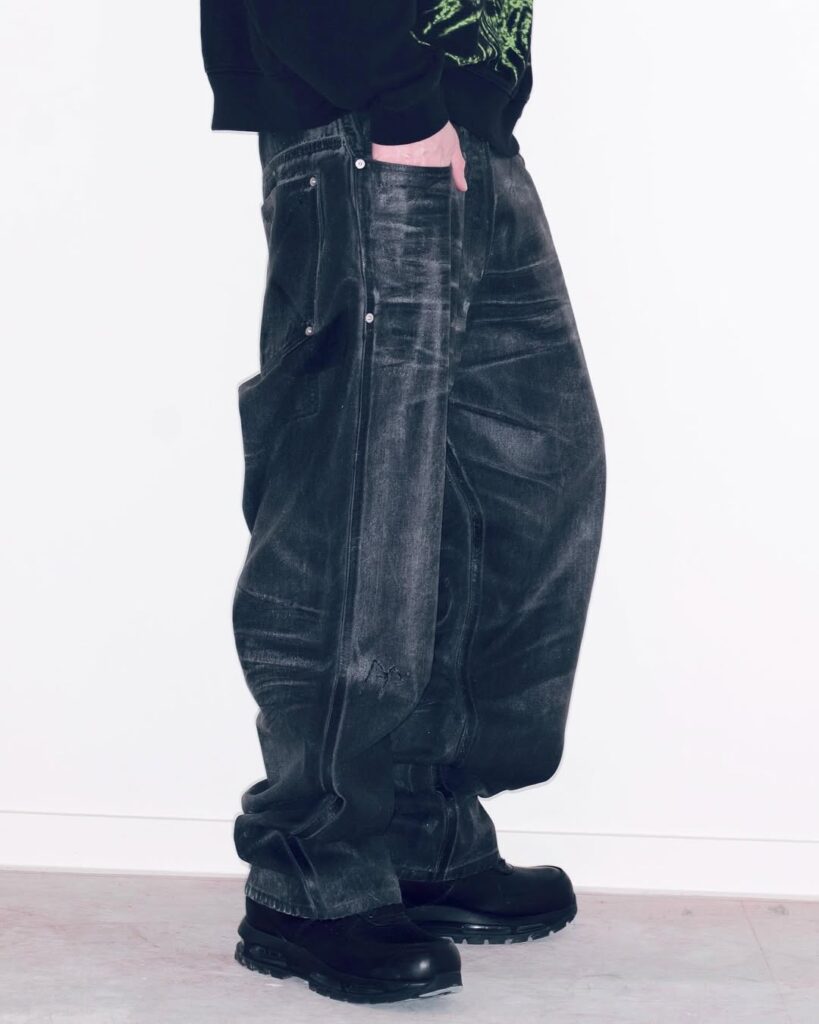

Photos: Matthew M. Williams